
I’m just back from a doctor’s appointment, my back really hurts from carrying my tube amplifier to a gig 25 steps. I have to be back next week for some X-rays. I hope it’s nothing bad.
But the band we shared the stage with played with no amps and sounded great. This got me thinking; are we on the verge of another pivotal era in the history of guitar playing? Is guitar modeling the future of our beloved instrument?
But, more importantly, should I or you embrace this new technology? Has the industry nailed it exactly? Or even close enough? I know some tone legends are walking the digital-amp path as we speak and rocking people by the thousands around the globe.
Is this a sign we should follow their lead?
What follows is a very personal take on a subject that’s becoming more and more important and common to us all. In other words, I’m just an amp guy, like you, trying to shake my prejudice against modeling.
Table of Contents
Big News!
First, let me tell you that, besides my back pain, I came across some news that convinced me to write a piece that can help me, and of course, you, to leave our biases behind.
The rumors were that one of the biggest tone nerds in the world, Mr. The Edge (sorry to call you a tone nerd, man, but you’re seriously next-level involved with tone) abandoned tube amps for the Sphere residency.
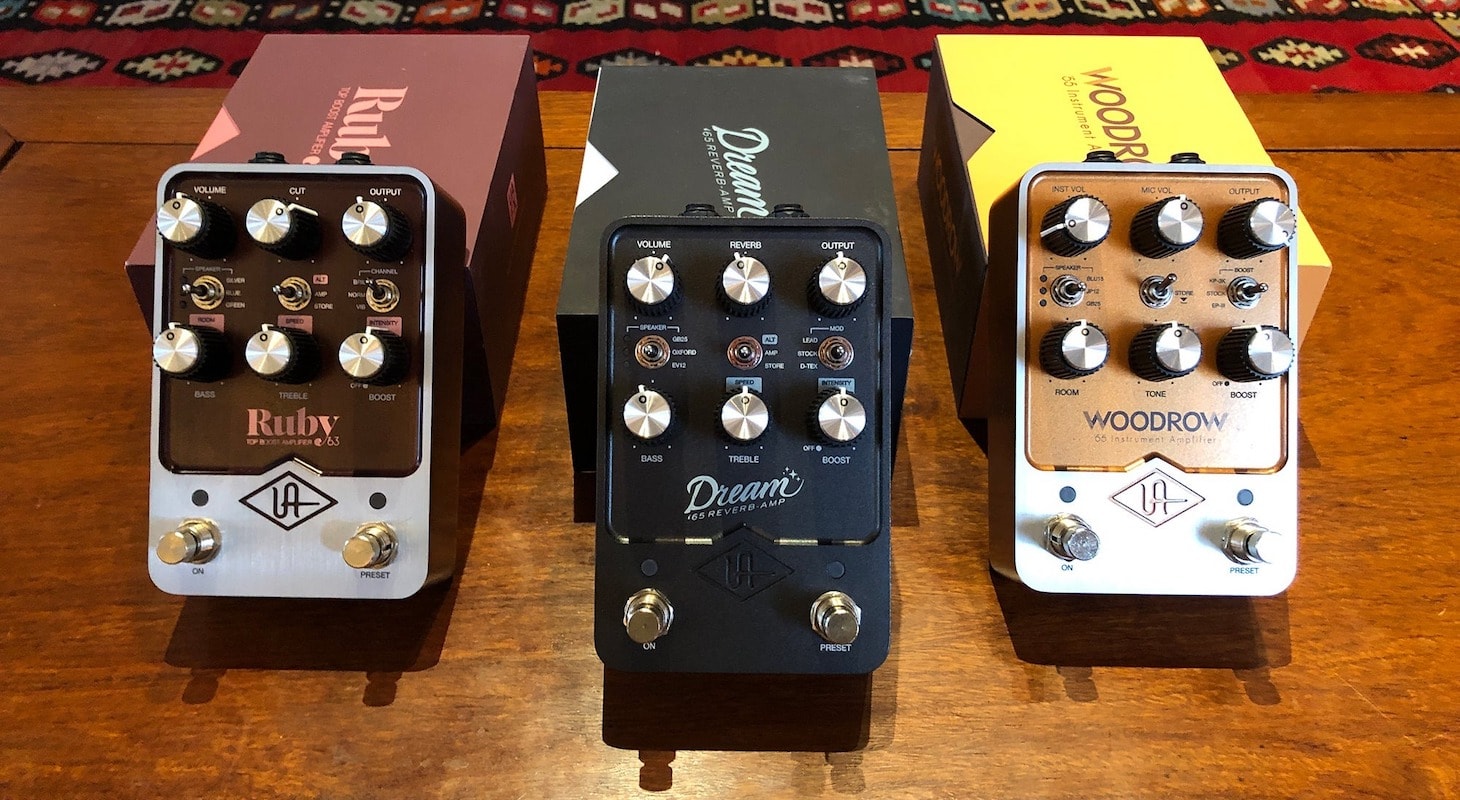
But the real news I’m talking about is that The Edge confirmed using Universal Audio UAFX pedals live replacing his amps.
I mean, this is huge news because that guy can spot an ant climbing on his guitar cable from a mile away. He has one of the most refined ears in the industry.

Moreover, the last time Premier Guitar did a Rig Rundown on him, the whole thing lasted for about an hour, and the man had a vault full of priceless vintage amps blasting under the stage. They were so loud they made tuners go loco.
Can you imagine how picky The Edge is about guitar tone? Furthermore, can you imagine how much money he spent on moving those specific amps around the globe?
Well, if a guy like that is willing to make the move from the real tubes to the digital version of them, it can mean one thing, and one thing only: the technology has finally reached a level of being au pair with the real thing.
(No, I’m not going to be so obvious as to write “Even better than the real thing”, don’t worry, you’re in the right place).
Plus, it also means that this is the first time that you can spend a mere fraction of what The Edge invested in his real amps to sound just like him buying the three UAD models he uses live.
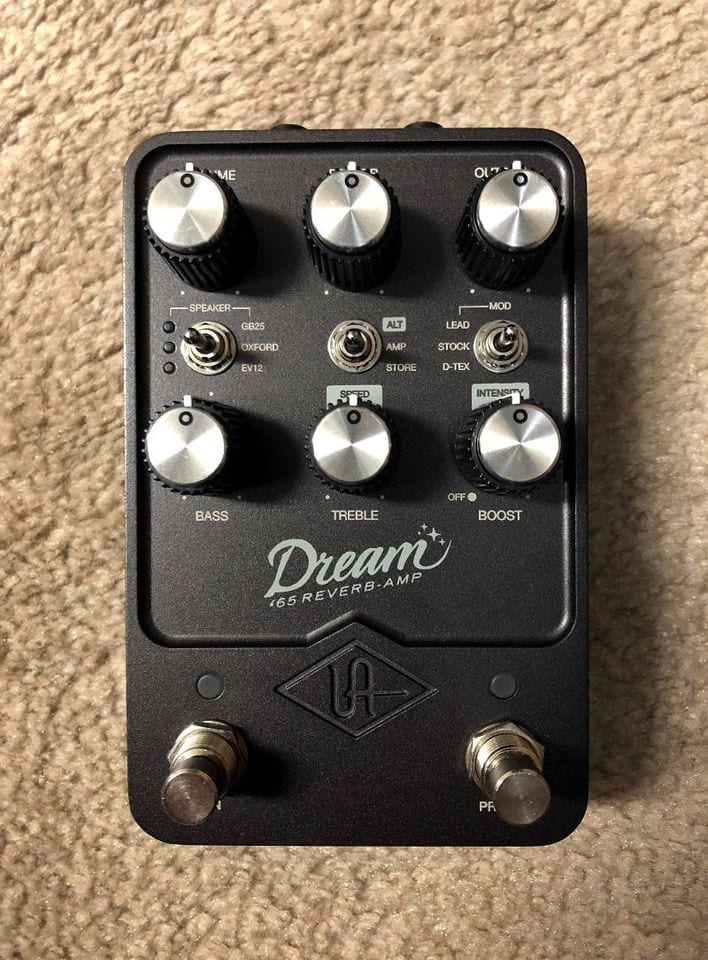
- The Dream ‘65 Amplifier replaces blackface Fender amps
- The Ruby ’63 Top Boost Amplifier replaces The Edge’s AC-30s
- The Woodrow ’55 Instrument Amplifier replaces the tweed Fender amps.
Each of these pedals comes at a hefty price tag for a pedal but at a very modest investment for a classic amp sound.
This got me thinking of several case scenarios that made this technology leap possible. Let me open at least one question mark here. I’m not going to claim being right or wrong, this is just my honest take on this topic.
Who are We Playing for?
Who are we, guitarists, playing for? Let me tell you that I was born in the ‘80s, therefore, I took my first guitar-related baby steps during the ‘90s. That was the moment new transistorized, small amps made it massively into the market.
I was able to save some small money from a holiday job and buy my first Crate GA-15R practice amp with distortion and built-in reverb. All of a sudden, I didn’t need arena volume to play the guitar like Kurt Cobain jumping around in my bedroom.
That was quite a revolution, because amplifiers became lighter, more reliable, and could do obnoxiously distorted tones at bedroom volume. I felt that, in a way, that democratized the electric guitar.
Yet, the first time I plugged into a valve amp, I didn’t think it was rubbish, on the contrary, the tone just got three-dimensional full of harmonic overtones and rich dynamics. The overdrive wasn’t at all compressed, but lush and musical.
That said, my first tube amp (which I still own and love) was a Sovtek MIG-50, built like a tank to sound just like a Bassman or a JTM-45. If you’ve ever played a no-master 50-watt tube amp, you’ll know there’s no way to play it at bedroom volume and make it go into overdriven sounds or natural distortion.
Nevertheless, back then, I had countless nights enjoying my Sovtek on stage, cranking it to get air to move my jeans and sweet overdrive. But cutting my teeth on cranked tube amps made me a spoiled adult and an obsolete gear in the mechanism.
That’s not to mention what it did to my back.
Nowadays, players are playing to different audiences using different channels. Indeed, most players don’t even think about playing guitar loudly in a bar. Their idols don’t even do it. On the contrary, they have their home studio set up in their bedroom, garage, or basement, and instead of putting an SM57 in front of the speaker cone, they go straight into the interface and use a DAW full of plugins to modify the sounds.
They’re more of a broadcasting legion of players than live concert guitarists.
Moreover, they (or should I say we?) record a guitar line and process it after it’s been recorded. That way, they (we) can go through a bunch of amplifier models, delay pedals, reverb units, and weirdo effects until we nail the tone. And if that sound doesn’t work once all the other elements in the song are in, dialing in another sound is very easy without having to redo any takes.
What’s more, all of this can happen silently while mom and pops are sleeping next door.
Final Thoughts
Beyond making and recording music in a home studio, many guitar players have become influencers, and therefore, need gear that sounds its best through digital channels. They need to nail to-die-for tones for people on the other side of the screen rather than a crowd of roaring fans.
In that scenario, why would you dream of a full Marshall stack or a gleaming Twin Reverb or Super Reverb?
Our audience has changed, the way we consume music has changed, and the way we make music has changed too. In this new state of affairs, emulators are way more practical than real amps and, according to our man The Edge, sound very, very close.
