
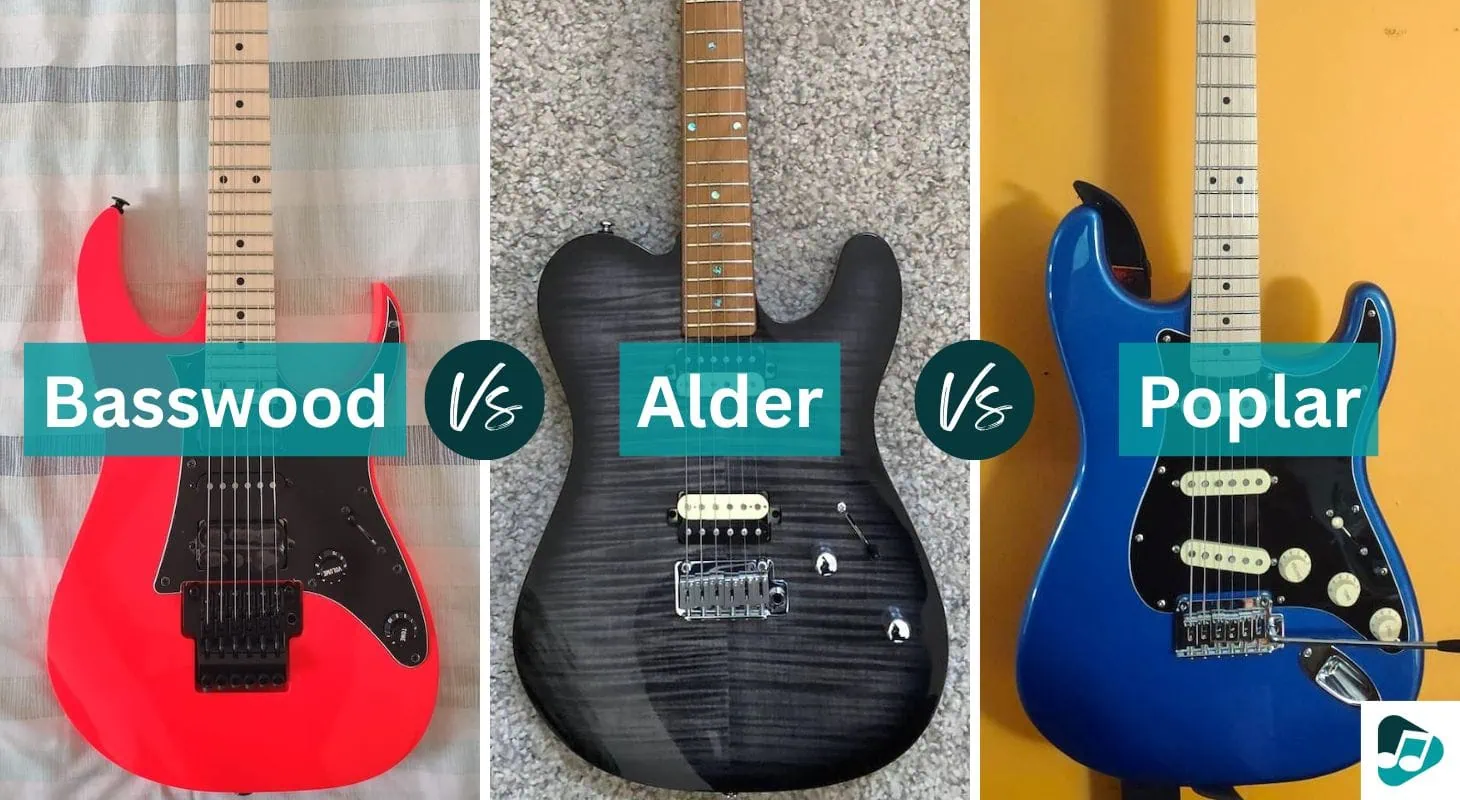
Of all the different tonewoods there are for guitar bodies to be made from, basswood, alder and poplar are three woods that are surprisingly similar in many ways.
These similarities can make it difficult to choose between them and figure out which wood makes the best guitar body for your needs.
I’ve tried a range of different guitars over the years, in all three woods and more.
In this article, I'll go over how they are similar, and more importantly, how they are different, so you can decide which one is right for you.
Basswood
Top 3 - Popular Basswood Guitars
A fairly cheap wood due to its high abundance, basswood is soft and easy to work with.
It’s a relative newcomer to the world of tonewoods. The first basswood guitars of note emerged in the 1980s. Basswood’s mahogany-like mid-forward tone suited high-gain shredders of the time, earning extra points for lacking mahogany’s enormous weight.
Being cheap doesn’t mean that basswood is a low-quality wood, though. It’s used to make many mid-range guitars, and can even be used to make high-end guitars if used right.
Basswood varies considerably in quality: some pieces sound great, others sound awful. In my experience, lighter basswood guitars (like Music Man or EVH guitars) sound better than heavier ones.
The tone of basswood is on the fatter side with emphasis on the mids, while remaining quite soft and warm. Because of this, basswood sounds great with humbuckers.
I’m very partial to the awesome high-gain sounds of the EVH Wolfgang series. The basswood is nice and light, and rapidfire classic hard rock and metal licks just fly off the fretboard.

EVH Wolfgang Standard
I also feel like basswood retains its clarity and power in dropped tunings, even at higher gain levels. I love the sound and feel of the chunky drop D riff of “Unchained” or to go further, the Killswitch Engage version of “Holy Diver” on a Wolfgang.
That doesn’t mean that basswood lacks the ability to push your sound. A well-made basswood guitar can have great dynamics with a very defined tone.
Basswood is valued for the sustain it provides to low and mid-range guitars, making it a favorite among metal guitarists.
Alder
Top 3 - Popular Alder Guitars
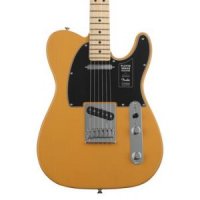
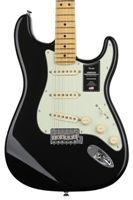
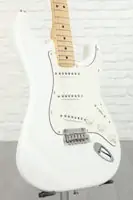
Alder is a medium weight tonewood, widely popular and used in a variety of guitars. It’s the classic tonewood for Fender guitars, the other being ash.
Initially, Fender adopted alder as a cheaper, more abundant alternative to ash in the mid-1950s. To this day, it’s the predominant tonewood for Fender guitars.
Its abundance, especially with red alder trees easily reaching 100 ft tall, makes it relatively inexpensive as well.
Tonally, alder is similar to basswood, but brighter and with slightly less sustain.
The mids of alder aren’t as pronounced as basswood, but there is more emphasis on the highs and a bit more breathing room for the lows.
In many ways, alder’s natural resonance is the sound of a classic Fender guitar. Alder’s natural sound features a sharper upper-midrange attack than basswood, ideal for that iconic single-coil snap.
Whenever I’m playing an alder guitar, I find myself inexorably drawn towards double stops and hybrid picking. Alder simply begs for classic country or old-school Southern rock playing.
Alder guitars are great for the “Sweet Home Alabama” tone or awesome ‘70s rock tones.
Poplar
Top 3 - Popular Poplar Guitars
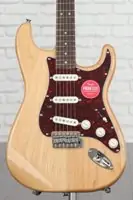
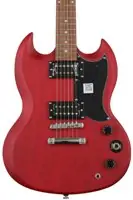
Poplar grows quickly, and tends to feature knots and burls in the wood grain. Accordingly, it’s often used for heavier finishes rather than a natural wood-grain-showing finish.
Poplar has become very popular in recent years for making affordable entry level guitars due to how cheap and abundant it is.
Poplar is softer than most other woods used for electric guitars, so makers tend to avoid using it for the guitar neck, where string tension can warp this softer wood. Likewise, its relatively flat tone is fine for electric guitar, but unpopular for acoustic guitars.
The even, balanced sound of poplar allows an electric guitar’s hardware to take center stage. I prefer using poplar for testing pickups to identify the pickup’s unique sound.
A lot of beginner-level Squier guitars (their super popular Sonic series, for example) are made from poplar. They’re great for beginners, but not really to my taste.
A Few Popular Guitars
These three tonewoods are all fairly popular among guitar manufacturers, which means there are quite a lot of different guitars made using these woods.
Here are a few of the more popular guitars made with each of these tonewoods.
Basswood Bodies
Basswood’s fat, mid-focused, and warm tone makes it a very suitable and popular tonewood for high gain guitars. Despite the name, basswood’s sound isn’t as low-end-heavy as one might expect, and it’s not as commonly used for bass guitar as for shred-ready axes.
Basswood’s versatility also means that it’s used to make a wide range of different guitars.
The list includes higher-end premium guitars from EVH like the excellent 5150 Series that packs a real punch when it comes to fast and hard playing.
Basswood Shredder!

The 5150 Series guitar from EVH packs a real punch when it comes to fast and hard playing. When you hold it, you'll be surprised to find how much wrong the 'basswood is for cheap axes' stereotype can be!
Schecter Omen-6 is a more intermediate level offering that keeps a high level of quality at a more affordable price.
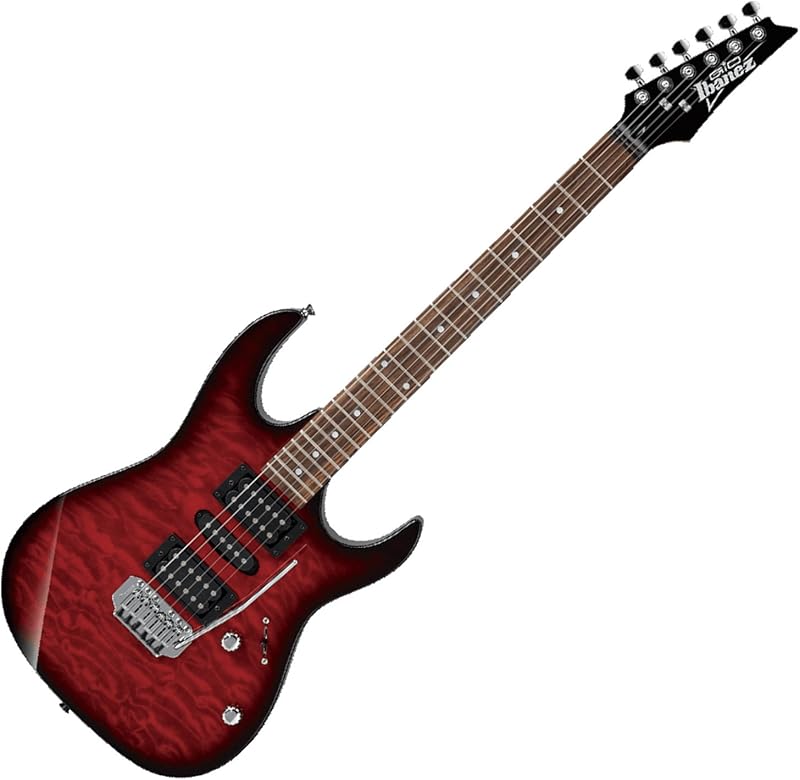
At the entry level, there’s the Ibanez Gio GRX70QA. Not only is it an affordable, quality basswood bodied guitar, but also a great option if you’re looking for something close enough in looks to a Strat type guitar but with more flexibility.
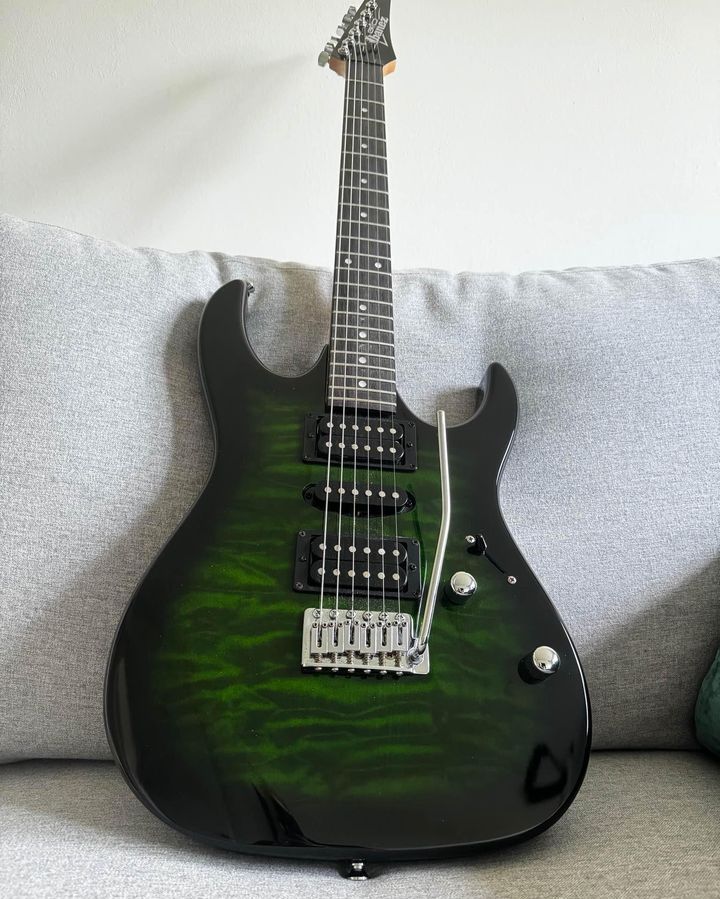
Ibanez Gio GRX70QA
The MusicMan Axis and Majesty are two other high-end heavy-metal machines with a lightweight basswood body.
By far my favorite basswood guitar is the EVH Wolfgang, a high-powered rock and metal machine. I consider that the gold standard of basswood humbucker tone.
Alder Bodies
Alder is most commonly used in Fender guitars and can be found it a range of different models.
The modern Fender sound is perhaps the best on display with the American Professional II series.
If you’re more into the classic Strat sound in the vein of Clapton or Hendrix, then look no further than the Fender Player II series.
Awesome Alder!
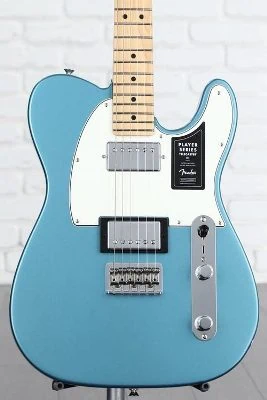
For a vintage sound, or if you’re looking for something a little more jazz orientated, the Fender Player II Telecaster could be a great mid-range choice with a good balance of quality and affordability.
Alder in many ways is the tonewood of the classic Fender tone, but don’t let that fool you into thinking alder guitars have to be expensive. Alder’s abundance means that Fender uses it for a range of instruments, including the very affordable Duo-Sonic.
For those with heavier tastes, ESP guitars uses alder in their Black Metal series.
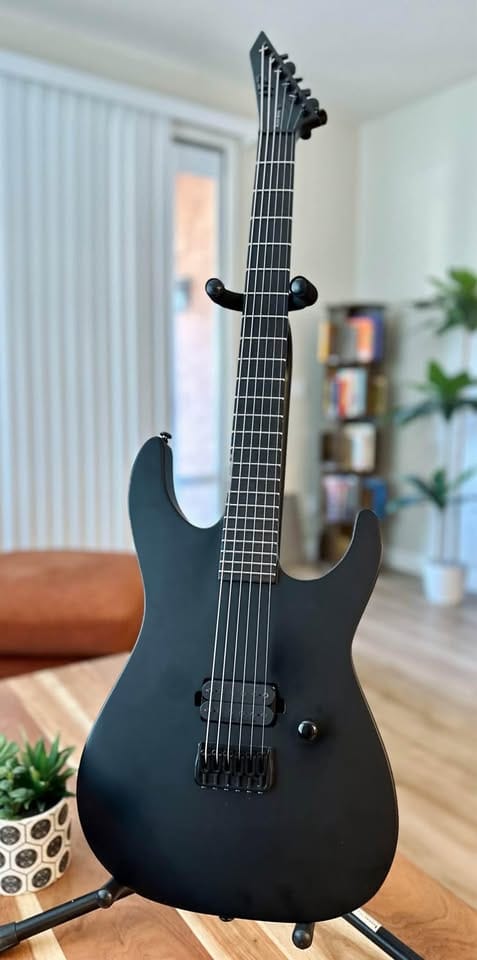
ESP LTD M-Black Metal
For shredders, Ibanez’s iconic line of Steve Vai signature guitars, the JEM features alder bodies.
No matter what, alder usually sounds to me like a classic Strat or Telecaster-style guitar. Of course, pickups and playing styles have an effect on this sound. Really, when I think of alder, I think of an old-school Tele like the American Performer.
In my opinion, alder sounds its best at lower gain levels or edge-of-breakup. For me, that’s classic or modern country tones.
Poplar Bodies
Poplar is becoming much more popular in cheaper, Asian made guitars, making it a fast-growing alternative for inexpensive entry level guitars.
Most notable beginner guitars in this category are the Jackson Dinky and the Epiphone SG, but poplar can also be found in more low to mid-range guitars like the Squier Classic Vibe if you’re looking for a budget Fender style guitar.
Poplar Powerhouse!
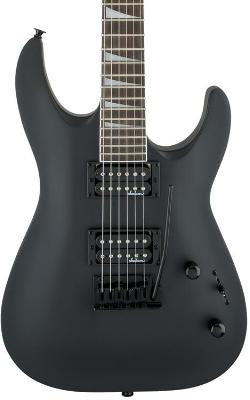
The Dinky JS22 is not only one of their cheapest offerings, it's also hugely popular. It's designed to shred, but it's plenty versatile even for beginners, making it a truly value for money axe for the masses.
I wouldn’t recommend a poplar guitar to an advanced player, unless they were looking to tinker with pickups. If you’re keen to start modding a guitar of your own, poplar is a great choice due to its relatively neutral character.
However, I prefer basswood and alder for most applications. When I pick up a poplar guitar, they often feel cheap under my fingers: that’s not always a bad thing, but it’s rarely what I’m looking for in an instrument.
Guitar Body Wood – Key Factors to Consider
With all the similarities between basswood, alder and poplar, it’s important to remember that they also have their differences and things that you should keep in mind when choosing which guitar body wood to go for.
The main things I take into account are:
- Weight & Hardness
- Price/Sustainability
- Tone
Weight & Hardness
In my experience, the lighter a piece of basswood is, the better it sounds. If you’re like me, prioritizing comfort while playing, this is an ideal situation.
That’s why high-end EVH guitars feel so light.
On the other hand, basswood is quite soft. This makes it easy to work with, but also makes it more susceptible to denting. I’ve managed to ding basswood guitars with my guitar lead on more than one occasion.
Alder, on the other hand, is a touch denser, but nowhere near as hefty as, say, mahogany. When I pick up an alder guitar, it’s never heavy enough to be noticeable. It is slightly denser, so be prepared to carry around a bit of extra weight.
The classic Fender guitars aren’t exactly famous for being too heavy to play for hours. Likewise, alder is harder than basswood, and won’t dent as easily. I’ve put alder guitars through countless gigs and tours, and they’ve come out the other side in better shape than I did!
Poplar is similar in weight to alder, but it’s much less durable. It’s softer and easier to dent. I might gig with a poplar guitar in a pinch, but no way woul I put it through the rigors of regular gigging or touring.
Price & Sustainability
Basswood is a fast-growing, widely available hardwood. In fact, it’s one of the fastest-growing woods in North America.
Accordingly, basswood tends to be relatively affordable.
The variability of tonewood quality, however, means that basswood guitars vary in price. An individual piece of wood might not cost more than another to chop and refine, but lighter, more resonant pieces command higher prices once they are used to make guitars.
Alder is similar in terms of price and availability to basswood. Like basswood, it’s not an endangered tree, and it grows relatively quickly.
Alder guitars do tend to command the highest prices of the three woods in this list, but that has more to do with its status as a heritage tonewood than anything else. Vintage-spec alder Stratocasters don’t command the prices they do because of alder, for example.
The good news is that both alder and basswood are sustainable, affordable woods, if you want a great mid-priced guitar.
I’ve learned over the years that, with alder and basswood alike, you get what you pay for. A higher price tag means a better piece of wood!
Poplar is by far the most affordable, abundant wood of the three. It grows so quickly that it’s readily available year-round. Poplar also grows widely throughout North America, so it’s not as if there’s a small crop of endangered poplar trees.
That’s why it’s so popular for cheaper guitars. It’s very available, abundant, and sustainable to use for guitar building.
Tone
Although basswood is fairly well-rounded, its highs aren’t as pronounced as alder or poplar, so you’ll want to pair it with something like a maple neck if you want a bit more brightness.
I find basswood not to be very resonant compared with, say, mahogany, so you’ll want some high-output pickups if you don’t want to push up the volume on your amp and pedals. Fortunately, basswood’s natural sound responds very well to higher gain levels.
When I pick up an alder guitar, I’m always impressed by its nice and even frequency range, with some added brightness and bite. I prefer a rosewood fretboard to help soften the guitar’s tone, and to add some more warmth to the tone.
Overall, alder is an excellent wood with not a lot of draw backs.
I always find that poplar has a very neutral, almost flat tone. There is no real emphasis on the low, mid, or high frequencies in the sound.
This makes poplar a fairly unexciting tonewood with no real dynamics. I like to spice up poplar’s tone with pedals and amp settings.
Poplar isn’t a bad sounding wood, just don’t expect a guitar made with poplar to stand out much on its own.
My Final Take
If you're looking for a warm wood that plays well with a lot of gain and aids heavier playing, my money is on basswood.
Poplar has a bit of a wider range tonally and if you’re looking for a decent sounding beginner guitar without breaking the bank, then look no further.
If you’re willing to spend the extra money for a crisp, dynamic sound, then I would definitely recommend going with an alder body guitar.
Any of these woods can be used to make a great guitar. Tonewood is a crucial piece of your tonal puzzle, but it’s only the first step to making a great-sounding instrument. Your choice of pickups, amplifier, and hardware shape your tone just as much, and arguably even more, than your choice of wood.

My opinion is that the body wood is very important in the electric guitar, although maybe not as much as in the acoustic. I can hear the diferrence, and if someone doesn’t maybe he should compare two totally different woods; northern heavy ash and poplar, basswood or other light weight wood. Even two pieces with the same weight, for example swamp ash and alder will have a different sound. For me, there is not better tone in the neck position than heavy of medium weight ash strat, and for the bridge position it is better to use softer woods. If you want a twangy telecaster the first choice is ash, then alder, but for the good cut in the mix, especially on stage, it is better to have body wood made of softer woods which can be twangy as well if built correctly..
Guys and gals,….master innovators like John Suhr, Sterling Ball and Edward Van Halen used Basswood as the basic body, then depending on the models, add maple tops, rosewood or maple necks. Every Goddamn piece of wood has distinct tonal qualities, and these great gents put the mockers on the so called “myth” that wood type makes no difference. C’mon! Play a million guitars, and choose the one that felt like yours from the second you picked it up. PS: Opinions are like….. well, you know. Peace out!
Poplar and basswood are terrible woods to have in a guitar in my opinion, not because it is sounding bad in any way, it doesn’t. but because it is such a soft wood and that makes it a very fragile wood, it does not take much to make deep dings in a poplar body, just if you happened to hit it in something slightly, where in a guitar made from alder or other harder and denser woods wouldn’t even make a scratch, in no time at all you will find your guitar having dings and bruises all over. Of course luthiers are letting us know that poplar is a good wood, that’s because it is so easy to work with, it would be a luthiers dream to only work with poplar, it is up to us guitar players to say No! we don’t want your bad wood!
If poplar dent easy it will not take much more to dent alder not much different on the Janka Hardness scale 590 for Alder 540 for Poplar now if if it’s White Poplar it’s hardness is the same as Basswood 410 on the Janka Hardness scale. I got a strat body thinking it was Yellow Tulip Poplar but it was White Poplar oddly enough. It is my best sounding guitar unplugged. But all my guitars sound great though an amp.
I build custom guitars and have seen a number of bodies coming out of China lately made from mahogany. While a number of these offerings are of very good quality, I was wondering how mahogany stacks up as a tone wood. Any thoughts?
I build bespoke solid body electric guitars and this is how it works:
Some wood is heavy (dense). Some wood is light (less dense). A heavier (denser ) wood is not, by nature, more resonant and does not give greater “sustain”. Sustain is intrinsic to the actual piece of wood itself and not to the type/species of wood.
Hardwood/Softwood describes the nature of the bark of that tree species and not the wood itself. Some”Hardwoods” are quite soft and vice versa. A “softer”, less dense wood is more easily dented but a “harder” wood is harder to work with and can still dent.
Wood affects the Tone of an Accoustic/Hollow Guitar but has very little to do with the Tone of an Electric Guitar but quite a bit to do with Sustain. Electric guitars might sound different when played “unplugged” but plug ’em in and all that is negated. “Tone” (whatever that is) comes from the pickups, strings and anything in DIRECT contact with the strings, along with AND ESPECIALLY the Frequency Responses dialled in by the Tone and Volume Controls.
Anything else is bullshit and just plain wrong.
Sustain = How long that piece of wood (often unrelated to the species of wood or it’s density) can hold a note.
Tone – (A large part) of the sound of a guitar played either Accoustically or through Electrically Powered Amplification. They are quite different from each other.
You are all the way right with this comment! Type of wood has nothing to do in electric guitars!!!! Absolute nothing! It’s just a way of marketing and fooling dummies. The wood may affect the sustain but only 1 percent and only in clean playing, under distortion that is also out of the question.
Thank you for the information…
Buying guitars will become so much easier when the majority finally realizes that tone wood is a myth! It’s been thoroughly debunked by some guitar players that wanted to know once and for all, look up Darrell Braun Guitar on YouTube, and some went even further than he did to answer those questions. If those test they performed can’t convince you, then nothing will. If the sound is flat here and there then the pickups and (or) electronics are garbage, for example, GFS pickups and electronics from Guitar Fetish will challenge anything out there for sound quality and they don’t ask for your first born in exchange! Paying $2000 extra for a little more of this here and a little of that there is outdated and archaic, everybody can own a gig worthy guitar these days for some very decent bucks, look up guitar Max on YouTube and listen to him play those budget guitars and tell me you’re not impressed, that for me settled it! I am 56 years old and been plucking strings since I was 9 and let me tell you, guitar players have never had it so good, I own a 1989 Gibson Les paul Standard and a 2020 HarleyBenton HB-35 plus and it’s stock, you would be surprised to know which one gets the most use! Tone wood? Pfffff, what a waste of a subject, it will do nothing more than send you on a unicorn hunt, but what do I know, am just a guy! Peace ✌️
Very well said. I totally agree. In an electric guitar, the wood used probably contributes to just 10% of the total sound. If you got good pickups, good electronics, good amp and good pedals, your used guitar will sound good.
Tone woods is def not a myth, I don’t know where you heard that but that is completely wrong, in acoustic guitars it makes a huge difference, not so much in electrics but still a tiny bit. not a myth.
I think people are talking about electric guitar. For electric guitar, it’s a total myth. The tone is all in the pickups and amp.
your ear needs some development if you can’t hear the difference between a rosewood fingerboard, and a maple fingerboard., all else equal.
There’s a lot of comparisons of wood sound in Electric guitars in YouTube, take a listen. In my ears sound totally different, much more than 10%, maybe 40% or even more.
they aren’t talking about Acoustic guitars, they are talking about electric and for this, it makes very little difference.
I have a semi hollow with an Alder body, Maple top.
I have the same model in Mahogany/Maple and same hardware. They sound really similar. They weigh about the same , I use the same two amps.
I have to agree with the comment made by John Adams. I have seen and heard guitars made out of everything from guitar picks to epoxy molds, and with the right pickups and hardware they all sound sweet.
Most guitarists have many guitars, and every guitarist has their favorite. What makes it their favorite? I would say comfort, not the wood used. If it’s comfortable, and fun to play, that all that matters. How many times have you come across a cheap guitar ($200+) that feels so right in your hands? Believe me they’re out there. I have put active pickups in it, and changed out the tuning machines and it became a great guitar! Just saying…
Couldn’t agree more mate!
I have a 3 or 4 month old American made fender bass precision and it is cracking in the wood not the finish and won’t give me another bass. Paid $1500 for it. I had a 1975 that never cracked until about 10 yrs .It’s just not right.
your ’75 was likely alder, or ash?
It seems that poplar wood is the least desirable woods of the three.
I have a MIM Stratocaster that I have add two humbuckers and removed the three single coils. The result is fantastic; everyone that hears this guitar wants to buy it. I also use different strings than most people.
Sorry, can’t divulge this information.
My guitar is as heavy as any Les Paul and that’s a downside although I Love Les Pauls. Just saying this poplar wood guitar talks!!
As has been proven many times over, the body wood on a guitar has very little to do with the sound, it is the bridge, pickups, electronics. The term tone wood is a false claim put out by those trying to sell it.
proven by whom, and by what, and how many times over and over?
Great information regarding guitar woods