

Big amps are great. There is nothing quite like stacking a 100-watt head onto a 200-watt cabinet and just ripping some massive riffs.
But a big stack isn’t always necessary and some situations call for a smaller rig. If you just want to practice some technique without waking up the neighbors, your Marshall stack is going to be overkill.
Fortunately, these days, you don’t need big wattage to get big tones. Since the “lunchbox” amp craze launched about a decade back, there’s no shortage of low-wattage tube amps perfect for home use.
Best 5 Watt Tube Amps - Perfect for Home Use!
Table of Contents
1. Bugera V5 Infinium

The Bugera V5 Infinium is a wonderful throwback to vintage amps packed into a compact, lightweight little amp.
The Infinium looks like it came straight from the ‘50s or ‘60s. It has those vintage-looking cream-colored knobs and even an old-school power switch. For guitar players like me, raised on the old-school cool of classic rock, this is a massive plus.

Bugera V5 Infinium. It's the BOSS Katana 50 in the background, so you can use that as a reference to judge the size of the Bugera V5.
That vintage aesthetic carries over to the tone as well. I tried out a few Cream and Hendrix riffs through the Bugera, and got a very satisfying Clapton-esque “woman tone” from this amp, even at lower volumes.
Even though it is just a 5 watt amp, the Infinium sounds fantastic. The amp has a fairly warm tone and fuller mid-range that I feel other amps of this size often lack.
A feature that your roommates and neighbors will appreciate is the built-in power soak: you can set this amp to a 0.1-watt output. Even at that seemingly paltry setting, the Infinium doesn’t lose any definition in its sound. I was concerned about tone loss at such a low power output. This means you won’t be disturbing your neighbors while also not missing out on tone.
Sometimes, power-soaked signals can become thin, fizzy, or lifeless. Obviously it doesn’t sound like AC/DC live at Donington, but it’s a pretty good tube tone at lower volume.
The drive on the Infinium sounds great. I never felt the need to add a distortion pedal. With the gain all the way up, the Infinium creates a nice sounding dirty crunch.
The cleans aren’t the most impressive. They aren’t overly bright or warm, but rather subdued. But I think they are good enough for a small practice amp. I expect a little more sparkle and chime from a clean tube amp. If you’re using this primarily for clean playing, I’d use an EQ and a compressor to give this amp’s clean tone some character.
The built-in speaker, as you’d expect for a practice amp of this size, is nothing to write home about. It offers a passable tone. I did, however, plug the Infinium into a Marshall 2x12 cabinet, and it absolutely roared to life.
The amp does have onboard reverb, but it is digital. It isn’t the worst digital reverb I have heard, but I would suggest going with an analog reverb pedal instead. In this day and age, there’s really no excuse for digital reverbs to sound as cold and distant as this one. If you have a reverb pedal you prefer, I’d use this over the built-in reverb.
One thing that may scare off pedal-dependent guitar players is the lack of an FX loop. You have to put all your effects between your guitar and the amp. This will have a different color and character than an FX loop. I generally run pedals into the front of an amplifier anyway, so this doesn’t bother me, but I know many guitar players who rely heavily on the more “neutral” coloring of a loop for their tone.
Perhaps the feature that I appreciate the most on the Infinium is the Tube Life LED indicator. This is just a simple way that the amp shows you when you need to replace its tubes. It just makes keeping your amp healthy a bit easier by taking away some of the guesswork for when your tubes need replacing.
The Infinium is one of the cheapest tube amps around. This alone makes it a very appealing practice amp in my opinion. If you just want something small that is just meant for practice, you shouldn’t expect to pay the same as a bigger, full-featured amp.
Read the full review of the Bugera V5 Infinium for a more in-depth take.
PROS
CONS

2. Marshall DSL5CR
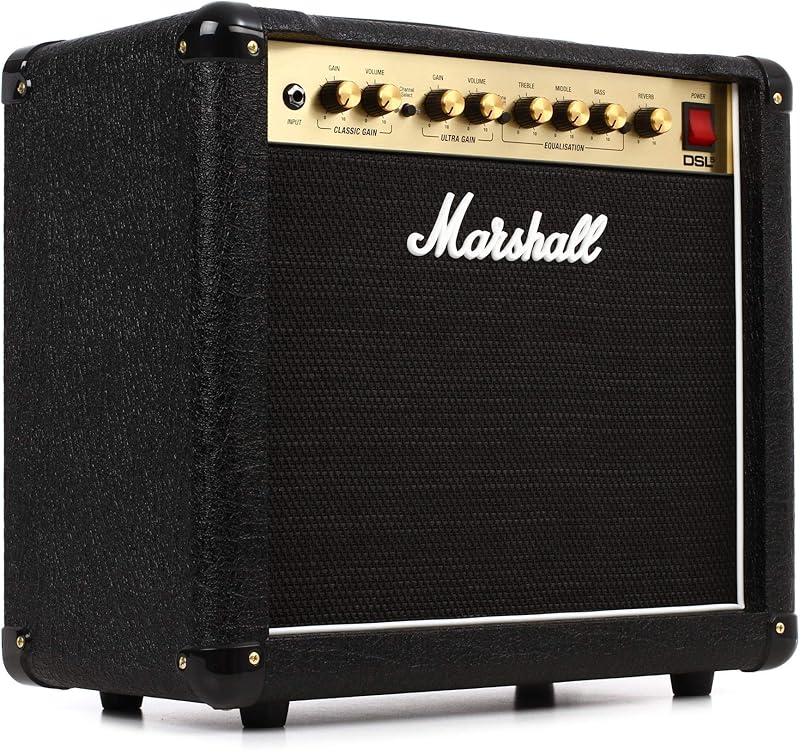
First things first: this is a Marshall. It’s loud. Especially for a 5 watt amp. I can usually just turn down the volume on a smaller amp, but with the DLS5CR I did end up using the 0.5 watt power mode.
There is, luckily, no tone loss in 0.5 watt power mode. So, even at a lower power output, you will still be getting the most out of the amp.
The DSL5CR is, for all intents and purposes, a Marshall Super Lead in a smaller enclosure. Its bigger brother, the DSL40, is a firm favorite of mine for just about any hard-rocking guitar tone. The DSL5CR feels very similar in sound and response, but on a smaller scale.
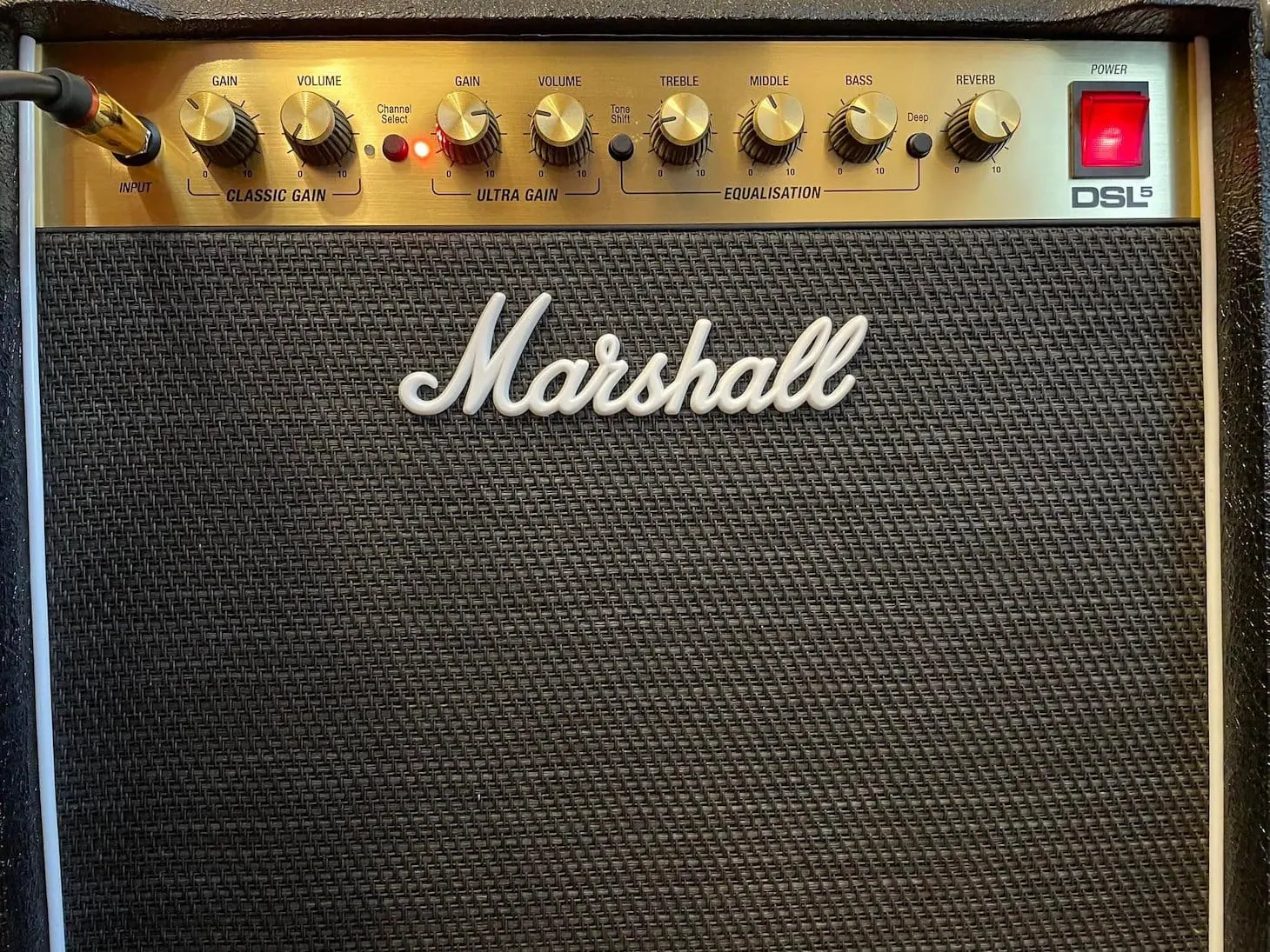
Marshall DSL5CR - A closer look showing its tonal controls.
Speaking of tone, the DSL5CR sounds fantastic. The amp features two channels called ‘Classic Gain’ and ‘Ultra Gain’.
“Classic Gain” is a satisfyingly honky classic rock tone. With minimal tweaking I was able to coax out some awesome sounds. I ran through my usual repertoire of amp-tester riffs: The Darkness’ “Black Shuck,” AC/DC’s “If You Want Blood,” and Thin Lizzy’s “Jailbreak.” This little Marshall passed with flying colors.
Cranking the gain offers classic Marshall saturation, perfect for '80s hard rock and metal. It’s thick. It’s crunchy. It doesn’t need any extra pedals, except maybe an EQ.
The amp also features a Tone Shift button. This tightens up the sound by scooping out the midrange. I think of it as flipping between a British and an American sound. If you want to further shape your tone, the DSL5CR also features a full 3-band EQ. Of course, being a Marshall amp, the EQ doesn’t do much. You just find the spot where it sounds good and don’t move the knobs.
The clean channel is a bit less impressive than the gain. I don’t find it to be very exciting, but it is still more than good enough for what is really just a practice amp. As with other small tube amps, the clean channel is a little lifeless, but this is a Marshall. If you wanted a clean tone, you’d look elsewhere.
The built-in reverb adds some color to amp’s tone, but I can typically take or leave reverb for most applications that I’d bring a Marshall to. It was a lot of fun cranking up the reverb and running through some high-gain Van Halen and Gary Moore riffs, however.
The FX loop and footswitch are pretty handy features for those who need to switch tones mid-song. I’d likely use this amp for at-home practice where that’s less necessary than in a live setting, but it’s good to have nonetheless.
This is a great at-home amp for anyone who prefers their tone through a Marshall, especially if you’re a fan of the full-sized DSL series.
PROS
CONS
3. Fender ’57 Custom Champ
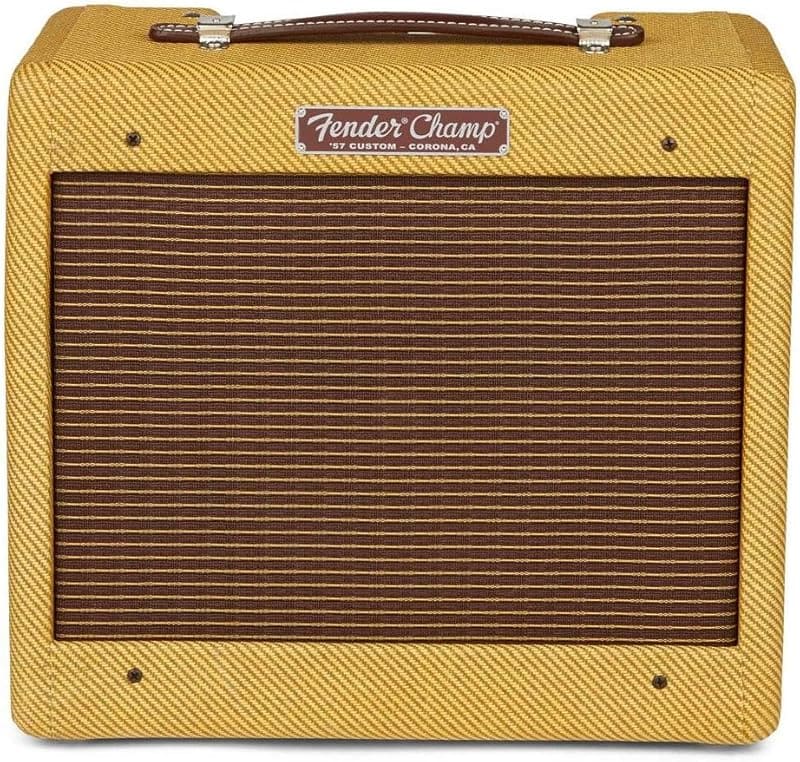
The Fender Custom Champ is a modern recreation of Fender’s iconic Tweed amp. The Tweed was one of the best amps ever made, which means the Custom Champ has some big shoes to fill.
And fill those shoes it does. This is one of the best sounding 5 watt tube amps ever. The clean tone, especially, can easily compete with more powerful amps, a welcome surprise in this pint-sized combo.
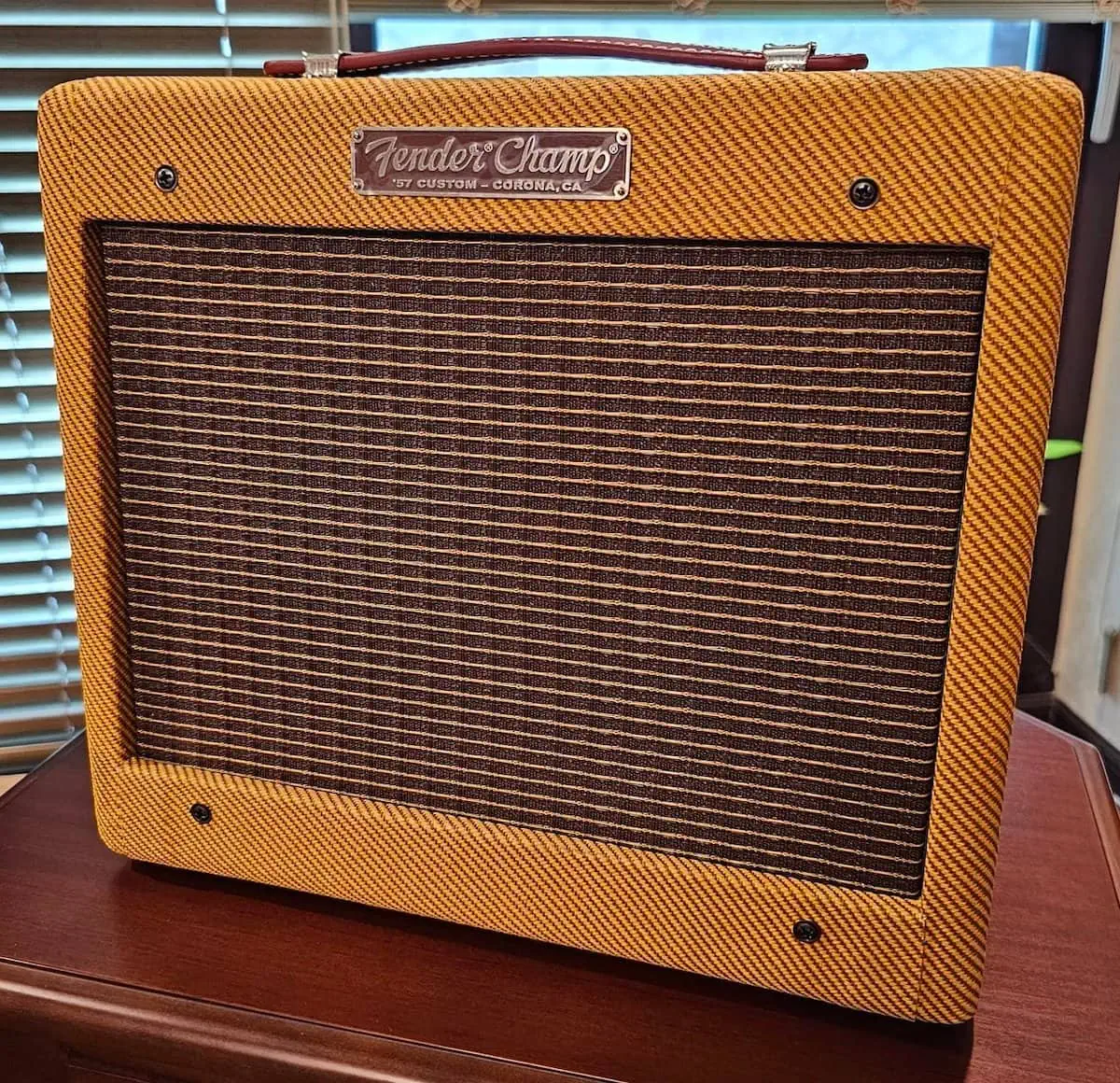
Fender ’57 Custom Champ
The clean tone is very smooth and crystal clear. It is also the most vibrant clean tone out of all the amps on this list. I would actually forget that I was testing the amp and would just start jamming because the clean sounds so good.
I added my Keeley compressor to the signal chain and ran through some clean country picking, and every note was as clear and precise as through a full-sized Fender.
As you’d expect from a Fender amp, the Champ is also a great pedal platform. Adding delays, reverbs, and even overdrive pedals is smooth and easy. The Champ plays really well with effects pedals. If you’re the kind of player who likes a “neutral” amp to run pedals through for a range of tones, this is it.
I tested quite an assortment of both digital and analog pedals and never once felt like the amp was struggling or I was losing any tone.
This leads to a contentious issue: the Champ quite literally only has a volume control. It only gets louder or softer, with no tone control. It’s clear to me that this is aimed at players who use their pedals to control tone, so the Champ offers minimal tonal coloration, and is just a preamp, poweramp, and speaker.
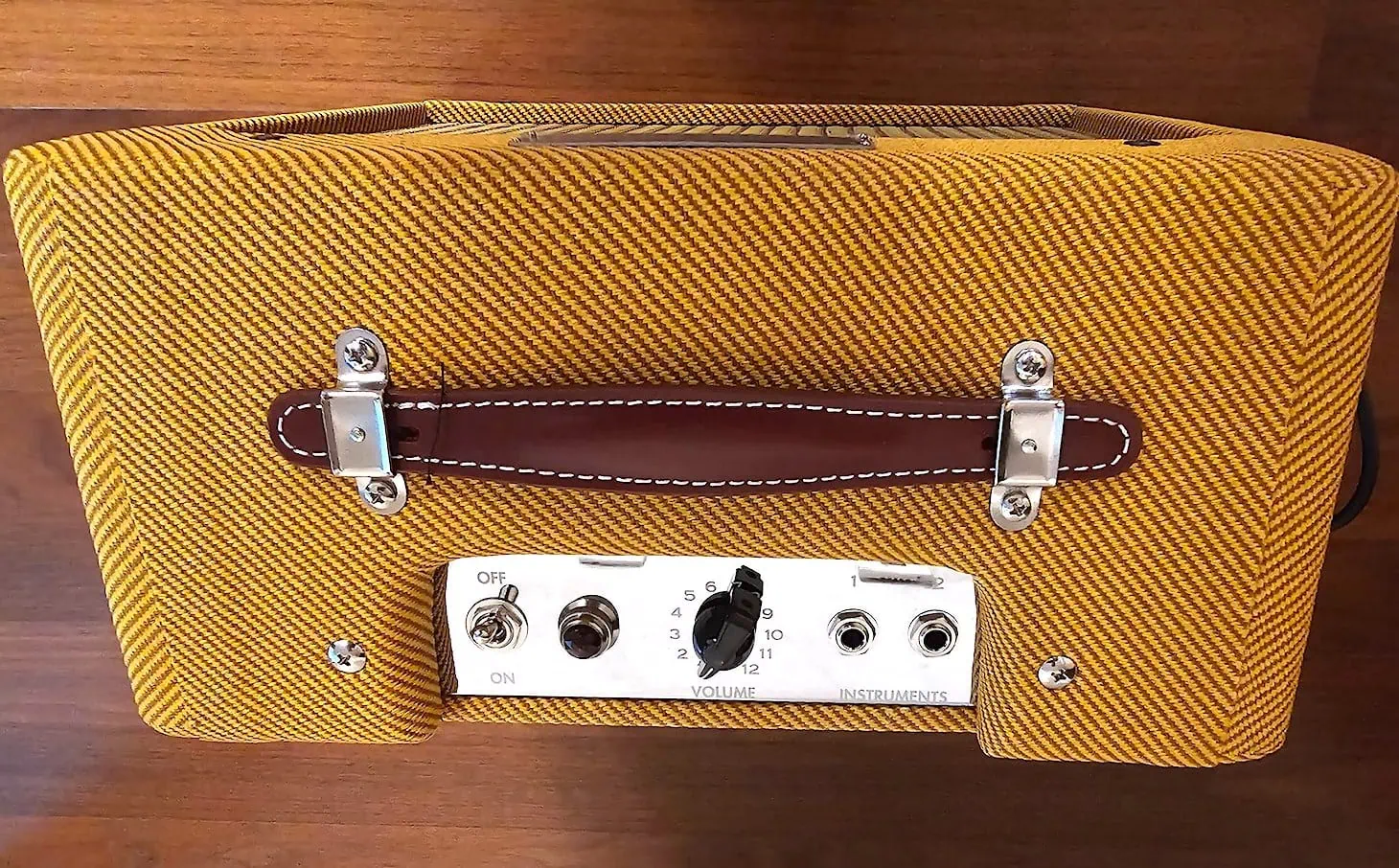
Fender ’57 Custom Champ - Tone Controls (or the lack of those)
The Fender Champ is not a cheap amplifier. You’re really paying for the brand name more than anything else here, so I’d avoid it if you’re on a tight budget.
If you need an amp that only does one thing, but does that thing really well, and you don’t mind spending the money, the Champ is a fantastic choice.
It’s a great amp for recording purposes or low-volume gigs in cafes or small bars. We’re talking venues with fewer than 100 people in the room at capacity.
PROS
CONS
4. Supro Delta King 10
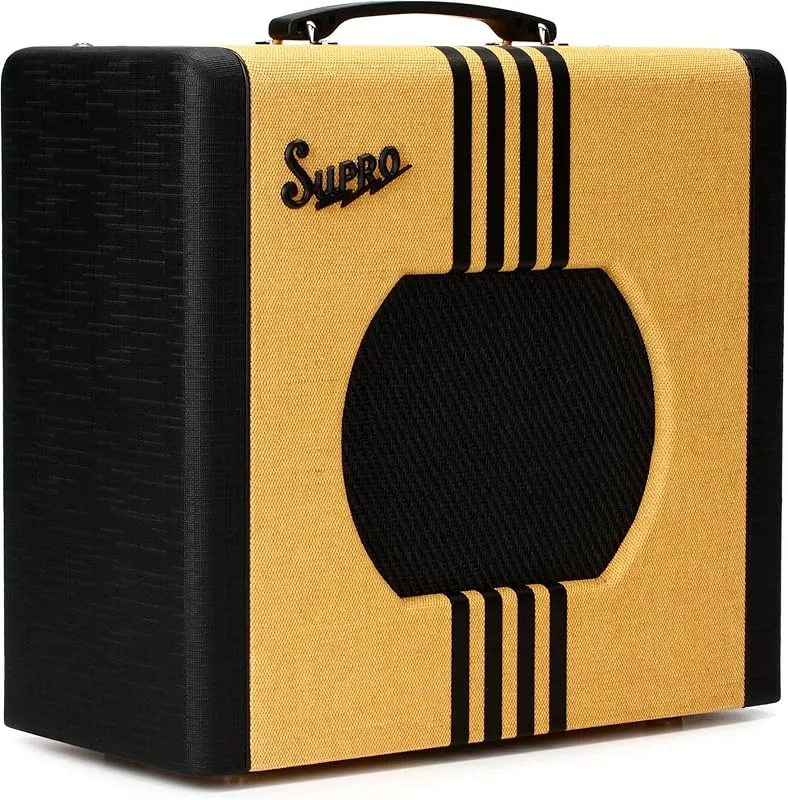
Supro amps are best known as the “secret weapon” of many classic rock recordings. The Delta King, with its retro-cool design, is a fantastic amp worthy of the name.
First things first: the Delta King looks unlike any other amp. It looks more like the ancient TV unit my grandfather had back when I was a kid. The racing stripes, too, wouldn’t feel out of place on a tracksuit, but that might just be the 90s kid in me!
Ever since the Supro brand was resurrected in the mid-2010s, they’ve been a real favorite among discerning guitar players. It definitely feels like an “if you know, you know” type of amp: it’s a distinctive look, but not one that most audience members would be familiar with.
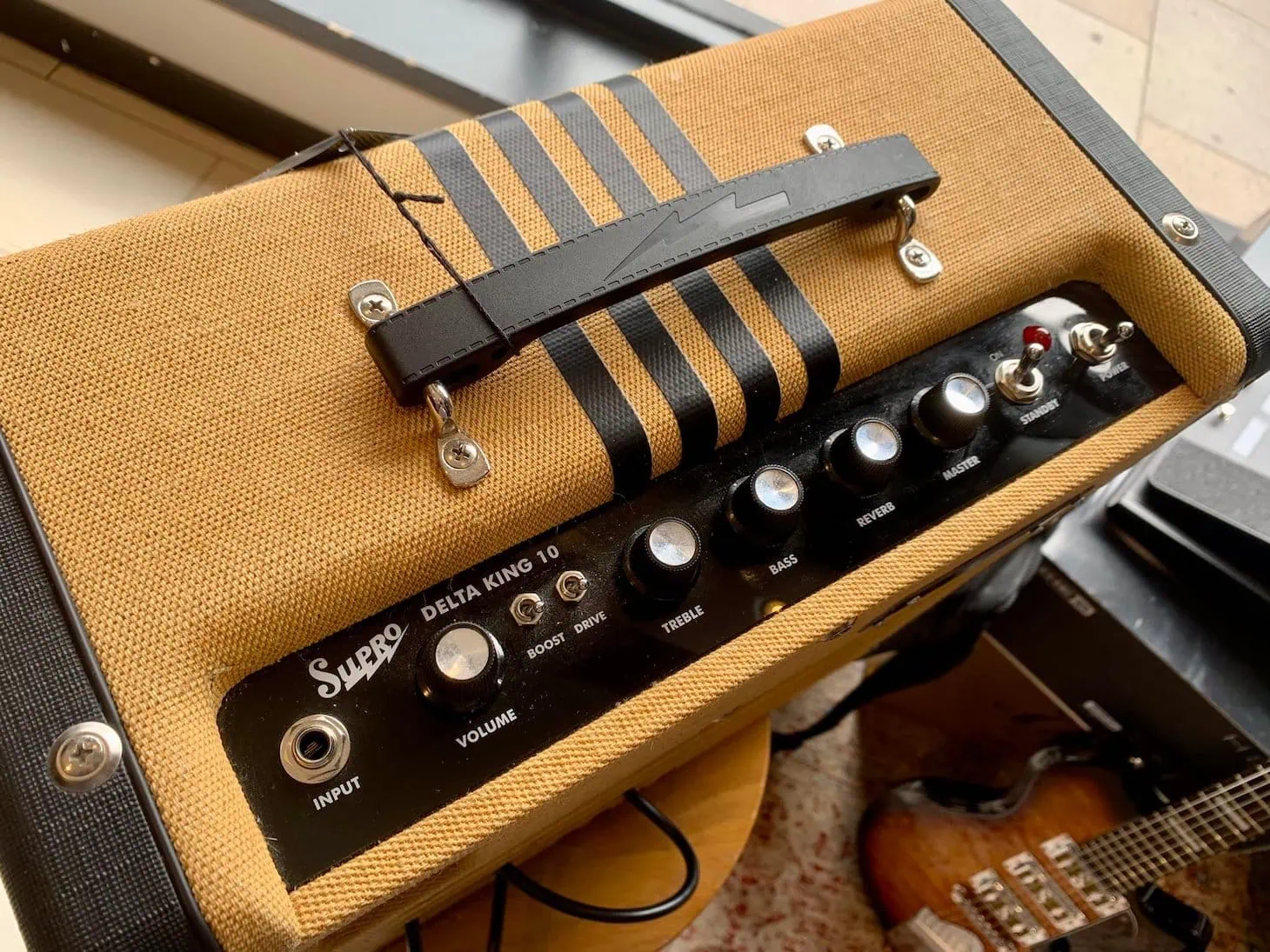
Supro Delta King 10 - Tone Controls
As the Delta King is vintage in looks, it’s similarly vintage in sound. It doesn’t offer much by way of clean sounds, as with its mid-century predecessors. Turning the volume up past about 12 o’clock pushes the amp into welcoming, old-school tube saturation.
Picturing debut album-era Led Zeppelin, I immediately launched into “Good Times Bad Times,” and had great fun playing those classic riffs through this classic rock tone machine.
Turning up the volume even further simply increases the saturation. The “Boost” switch just adds volume with a little extra “oomph” in the sound. The “Overdrive” switch pushes the amp further into overdrive, a great sound for classic rock solos. “Good Times Bad Times” really is the perfect song to showcase this amp’s best features.
You can switch on the Overdrive at lower volumes when practicing at home to access some of this harmonically rich sound. The switches are mostly useful for keeping the Supro drive sound intact at different volumes, a smart inclusion by the manufacturer.
With the boost on, you could probably play a smaller venue with a drummer. The clean sound simply does not have enough volume to compete with a band.
One cool trick I tried with this amp and my usual setup was plugging the Delta King’s line out into another amp, lending this amplifier’s saturated tube tone to a larger, more neutrally flavored amp. It’s a handy feature if you’re using borrowed backline but want to stick to your usual tone.
The reverb effect is welcome, adding depth and dimension to this amp’s tonal palette. It isn’t going to offer the ambient soundscapes some shoegaze players demand from reverb, but it’s enough echo to keep most of us happy.
You’ve probably heard the sound of this amp before on vintage-flavored guitar hits. Led Zeppelin. The Black Keys. Aerosmith. It’s that lively, rich American tone.
PROS
CONS
5. Tone King Gremlin
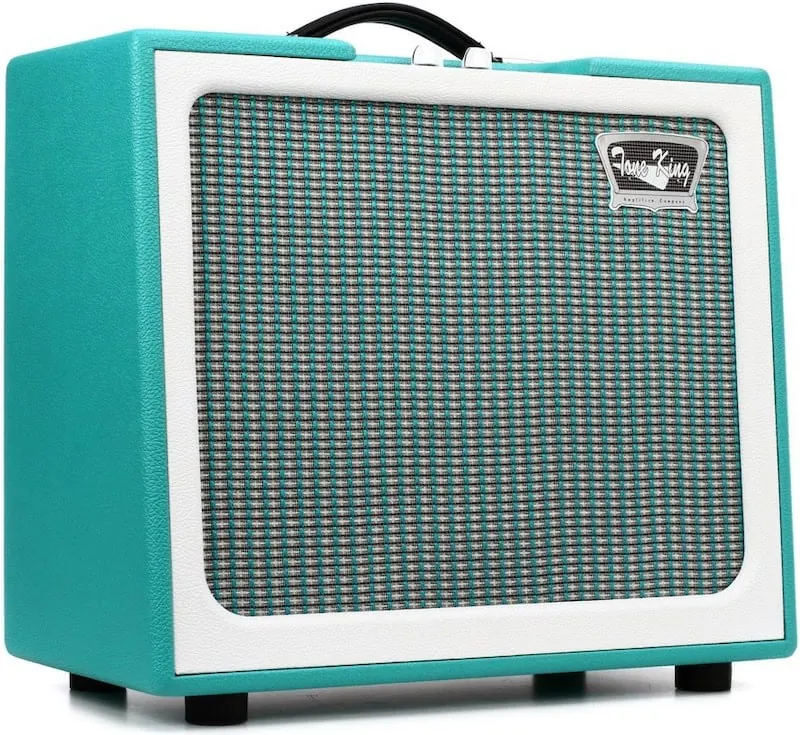
When is a Fender not a Fender? When it’s the Tone King Gremlin, an unabashed celebration of classic mid-60s American tube tone.
The Gremlin, sitting in my living room in the 21st century, could not look more out of place. It looks more like an old TV than a guitar amp, and the turquoise color certainly stands out against the ubiquitous black backline. You definitely wouldn’t lose track of your amp at a gig with a shared backline!
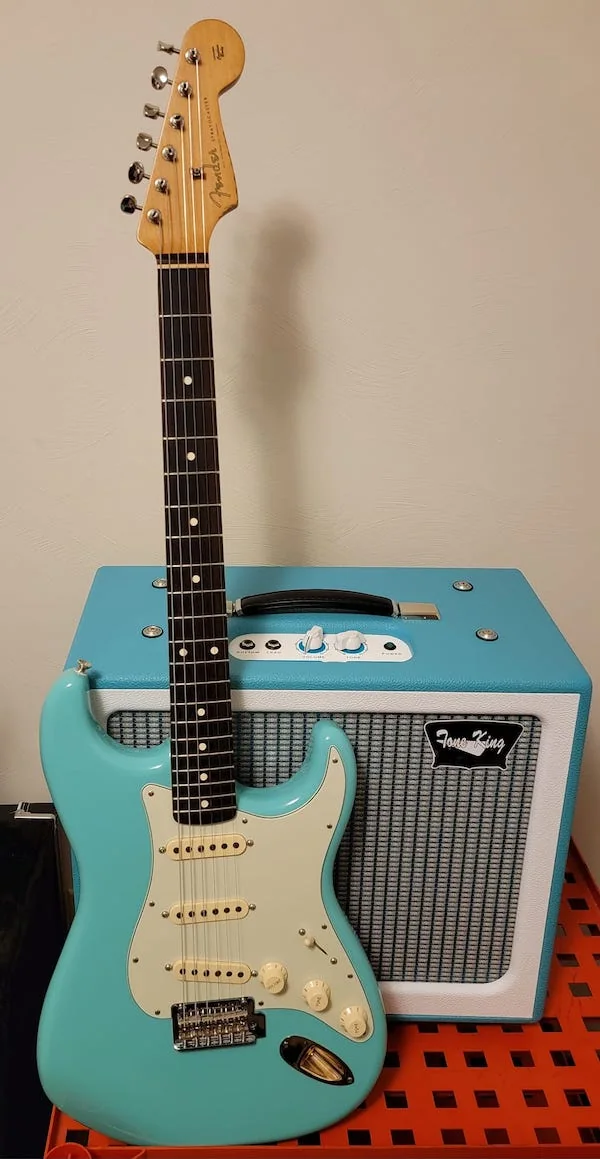
Tone King Gremlin next to a Fender Stratocaster in Miami Blue.
Looks aside - this amplifier isn’t called the “Looks King,” after all - the Tone King has plenty on offer in the sounds department. Its two-knob layout offers brutal, attractive simplicity. No messing around with delicate EQs or extra effects. Just two channels, Rhythm and Lead. Two knobs, Tone and Volume.
The Rhythm channel has plenty of clean spank and sparkle. With a compressor on, I played through Zach Top’s “Sounds Like the Radio,” and all the clean, glassy country twang of a classic Fender was there in spades.
The amp does lose some bottom end warmth past about 4 on the dial, but even that relatively low volume is more than loud enough for home playing.
The Lead channel is a much dirtier beast. It sounds best fully dimed, with volume and tone all the way up, Neil Young style. If you like the thick, raunchy saturation of an ultra-hot tweed amp, you’ll love the Lead channel.
This little amp is deceptively loud. I didn’t think I’d need the attenuator, but I could hear the windows starting to rattle as I pushed the Lead channel volume past 6, so on the attenuator goes.
I found best results with the attenuator at the lowest or second lowest setting and the controls all cranked. Those of us raised on old-school tube amps will miss the feeling of reverberation in our chests, but even at bedroom volume, the tube saturation of the Tone King is very convincing.
The Gremlin isn’t exactly cheap, but if you’re looking for vintage Fender tones without the vintage Fender price tag, this may well be the amp for you.
PROS
CONS
6. Blackstar HT5R MKIII
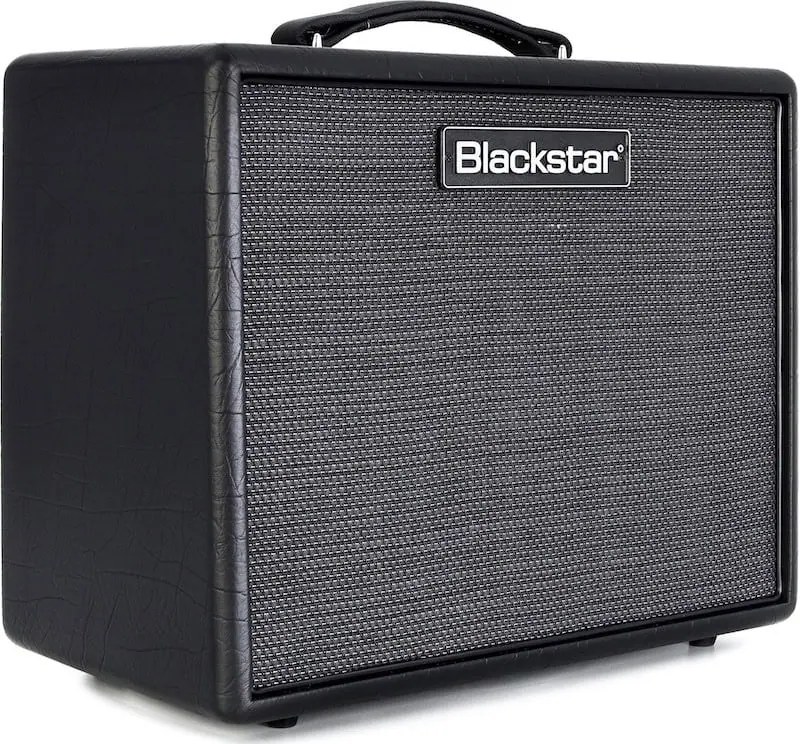
Blackstar consistently puts out excellent amps and the HT5R is no exception. This little 5 watt amp is a versatile machine that packs quite the punch.
Blackstar amps are, for all intents and purposes, Marshalls with troubleshooting. The volume taper tends to be more even, the EQ knobs actually shape your sound, and the channels are clearly labeled “Clean” and “Overdrive.”
Both channels also have a voicing switch. This lets you switch between a British and an American style sound, although the “American” sound is far more Mesa than Fender.
The cleans on the Blackstar are much better than you’d expect for a Marshall-style British amp. While it doesn’t have the glassy chime of a Fender amp, the clean tone is convincing enough for home use. It certainly isn’t the dull, lifeless clean tone older guitar players (like me) would remember from early 21st-century Marshall and Orange amps.
The overdrive channel is a different story. Voice 1 is a crunchy, bluesy style of overdrive. Turning down the gain brings through even more of that bluesy sound. It’s a very satisfying edge-of-breakup blues tone, perfect for a Chicago juke joint.
Voice 2 on the other hand is much thicker and heavier. Voice 2 is what you will be using to get that truly heavy metal sound. You couldn’t wipe the smile off my face as I ran through my favorite Metallica and Megadeth riffs.
These twin voicings come courtesy of Blackstar’s ISF control. I don’t know what ISF stands for, but as far as I’m concerned, it should be called the Transatlantic Control. In one position, it’s a honking, mid-forward British sound. In the other, it’s a more “scooped” American-style sound.
I did notice that I had to turn up the volume quite a bit, almost maxing it out, to get a good tone. This does mean that you lose out on tone at lower volumes, especially on the 0.5-watt power mode.
This does mean that the HT5R isn’t the best small tube amp for low volume practice. Luckily, it does have a headphone out for practicing without disturbing anyone around you.
The HT5R isn’t just a bedroom amp, though. Although its 5 watts isn’t quite enough to fill Wembley Stadium, with its 12-inch speaker, you’d easily compete with a drummer in most live situations. In addition to this, you can simply run the amp stage straight into a PA thanks to built-in cab-sim technology.
I’m not overly fussed about how the ultra-modern simulation side of things works. I’m much more concerned with if it works. I tried this at a gig with a full band, and it was an excellent experience. It takes some getting used to not to hear your own guitar pushing air from behind you, but the tone through the PA was pure, classic tube amp goodness.
You can also connect the amp to your PC via USB and use it as an audio interface. If you don’t want to spend extra on recording equipment, this amp is the perfect tool for simple bedroom recordings.
PROS
CONS
Tips for Choosing a Low Watt Tube Amp
Compared to more powerful amps, choosing a low watt tube amp is a bit more straightforward. Because you will likely be using it mostly on your own and no one else really has to hear it, you don’t have to be as picky to get a good amp.
In the process, you'll also save a considerable amount of money by picking a cheap tube amp instead of a higher-wattage powerhouse.
Here are the things that I consider when looking at smaller tube amps.
Combo or Amp Head?
Generally speaking, amps come in two varieties: amp heads and combo amps. An amp head is just the inner workings, the guts, of an amp, while a combo amp combines both the guts and a speaker into one unit.
Amp heads almost always produce a much higher quality of sound. They are also generally much more versatile. The downside, of course, is that you need an external speaker for the amp head to actually produce any sound.
Combo amps on the other hand don’t have this setback, but they are less versatile and don’t sound as good. They are, however, much affordable since you are only buying one unit.
In terms of a small amp that will likely only be used for practice, a cheaper combo amp makes much more sense. This brings me to my next point.
If you’re just playing at home, you want something that’s easy to set up. I’m a “plug and play” guy. I just want to turn the amp on, plug in my guitar, and get to practicing. For at-home use, you just can’t beat a quality combo amp.
Pricing
This is the biggest aspect for me of small amps. If I am not going to use it outside of my room and I don’t need it to sound perfect, then I don’t want something that costs as much as a 50 or 100-watt amp. Any of the best cheap tube amps should suffice.
The Fender ’57 Custom Champ is a great example of this. It is a fantastic amp, but I don’t think its price tag is entirely justified. Unless you plan on using it outside the home, most guitar players on a budget will want to look elsewhere.
I think the Bugera falls in that perfect price range when it comes to what I think a 5 watt amp should cost. It's not the cheapest tube amp around, but it's definitely budget-friendly and offers a lot for the money.
There are other cheaper alternatives that are still decent. If your budget is tight, I can't recommend the Monoprice 5 watt tube amp enough. It might just be the cheapest tube amp out there that still sounds quite good.
At the end of the day, if it sounds good to you, that means it is good. Cheaper amplifiers tend not to sound like more expensive ones, regardless of what they say in their advertising. It’s all about finding the best bang for buck for your use case.
Speaker Size
Size really does matter, at least when it comes to speakers. Smaller, cheaper tube amps will of course have smaller speakers, usually around 8 or 10 inches.
A smaller speaker means a smaller amp overall. But what I have also found is that smaller speakers also have a somewhat less defined sound. Think about great sound systems: they tend to have big speakers with more range.
If the overall size of the amp isn’t too much of a concern, I would suggest going for a 10 or even 12-inch speaker. While it isn’t the biggest difference, it will help to make your experience with the amp a bit more pleasant and you will likely keep the amp around for much longer.
Alternatively, you can get a combo amp with a small built-in speaker,and get an extension speaker later on if you want more volume and range.
Your Primary Jamming Location
This is an often overlooked factor. If you'll mostly play the amp in your bedroom, a 5W tube amp can still be too loud, if the room has poor soundproofing. This is especially a big issue with older buildings and thin walls.
So, if you're considering the new amp mainly as a practice amp, this is something you need to keep in mind, as not all 5 watt tube amps exhibit the same level of loudness.
If you don't have any loudness constraint, however, this should be a non-issue. On the other hand, if you'd like to take your tiny beast to small gigs and occasional performances in front of friends, you'll be better off choosing an amp that's relatively loud, like the Marshall DSL5CR that I've talked about above.
You might be thinking, but why is this even an issue since you can simply turn the volume knob down?
Well, it's not so simple, mainly because tube amps don't sound as good in low volume levels. In fact, you can't even identify the signature tone of each amp if you don't allow them enough headroom in terms of volume.
The basic rule of tube amps is that, for them to achieve the warm, slightly compressed, harmonically rich classic tube tone, they need to be running at higher volume. They tend to have a “sweet spot” where they sound best.
Attenuation
Some of these amps (like the Bugera V5) have built-in attenuation. This feature simply reduces the wattage of your amp, allowing you to achieve tones that would otherwise require more volume. The Bugera V5, for example, allows 1 watt and 0.1 watt operation.
It’s big tone at lower volume. That’s what we’re after with low-wattage tube amps, right?
Final Word
If you don’t want to wake up the neighborhood or you just want something small and portable to practice with, 5 watt tube amps are great choices for anyone looking for great performance in a small package.

I have a Gremlin and I use it about 90% of the time. It’s just superb. I prefer the Rhythm channel, it’s just a fatter, warmer tone.
Also have a Blackstar HT5 MKII head . Another cracking amp with a lot of versatility. It offers a lot of bang for buck. But you can spend so long adjusting all the setting searching for the perfect tone you end up playing less guitar.
Another small amp worth considering if you want some classic Fender clean tones is the Fender Vibro Champ Reverb. There’s no built in attenuation and it can get very loud if you’re looking for that on the edge of breakup tone. But if you just want sweet sounding clean tones and good reverb it’s a winner.
Thanks for your input, Kitt!
Blackstar fly 3 amp is very nice. I prefer fly 3 because little and perfect sound, warm and organic.
So many players want Marshall to bring back their 1 watt series of amps . Those things have AWESOME tone . I tried the DSL models and they don’t come close to those classic 1 watt amps.