
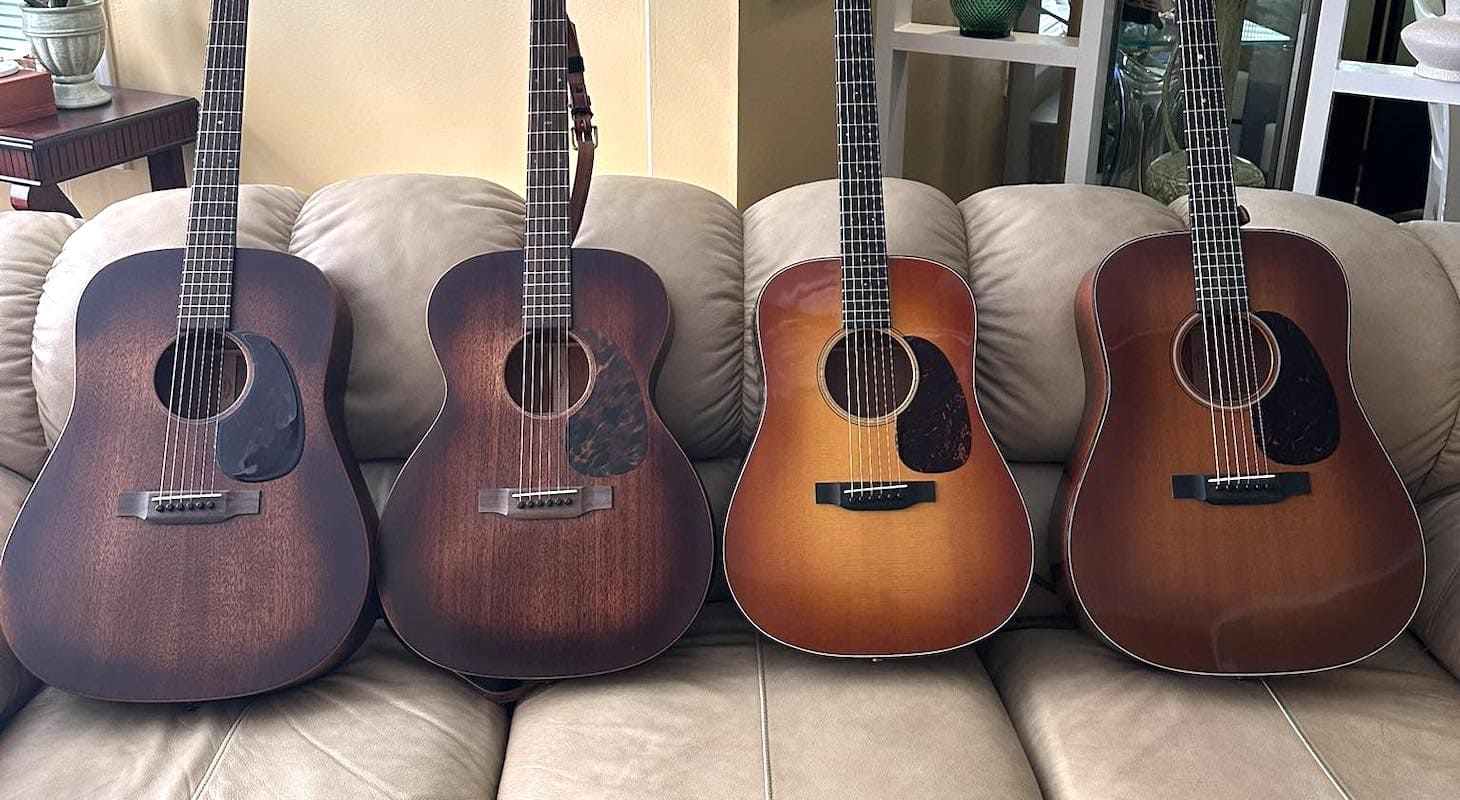
I remember it clearly: I’m nine years old and I’m asking my parents for my first guitar. I wanted to look just like the rock stars I saw on MTV (yes, I’m that old) but they wouldn’t buy me an electric.
I think I’m not the exception; for many aspiring guitarists, an acoustic is likely going to be their first instrument.
That’s when I got my first acoustic, a cheap-sounding Ibanez that gave me years of playing joy.
I kept on playing and, after a decade of rocking everything from indie to metal, I gravitated toward the acoustic world again. But this time, it was by choice. I had very bad memories fighting my cheap Ibanez to make it sound well. I knew I was done with that, so I went out hunting for the best acoustic for my budget to play professional gigs.
“Which acoustic guitar brand is the best?” Every guitarist is going to give you a different name.
Top 3 - Acoustic Guitar Brands
Preview | Brand | Browse |
|---|---|---|
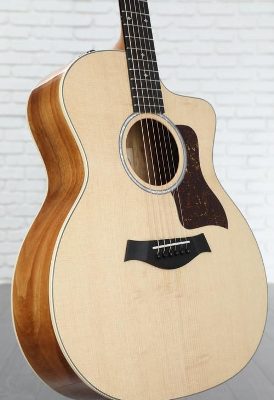 | Taylor | |
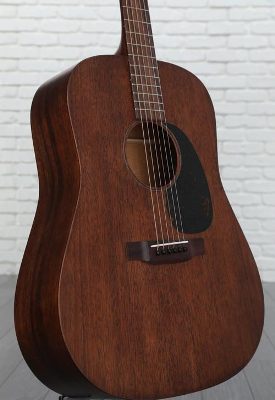 | Martin | |
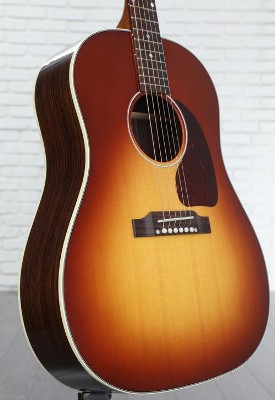 | Gibson |
Today, fifteen years (and a few guitars) later, this is me, paying it forward to the guitarist community by pouring years of wisdom into a single post.
Hopefully, it’ll be your one-stop solution for all-things acoustic.
Well, I don’t want to keep you waiting, why don’t we go over some of the best acoustic guitar brands in the market today, and see how they compare.
Shall we?
Table of Contents
- The Top of the Crop, The Big Three
- The New Players - Things Just Got More Interesting Lately!
- Timeless Classics for All Budgets - Low Budget? No Problem!
- Bonus Track - Affordable Acoustics & Innovative Instruments
- Honorary Mentions – You Were There for Us and We Appreciate It!
- A Quick Tip for Picking an Acoustic Brand
- Body Shape
- Closing Thoughts
The Top of the Crop, The Big Three
Taylor
Taylor guitars was founded in 1974 by Bob Taylor and Kurt Listug. Despite being relatively new in the acoustic guitar market, Taylor has become one of the top acoustic guitar brands in the world today.
Taylor guitars are highly sought-after for their exceptional construction and top-notch sound. I mean, they’re the guitar of choice for players as diverse and successful as Ben Harper and Taylor Swift. Yes, the modern acoustic guitar sound is definitely Taylor’s.
But what are the characteristics of The Taylor Sound? How did Taylor carve a spot in acoustic guitar history competing against companies that are 100 years older or more? Well, Taylor guitars are recognizable by their bright, modern tone. They offer a very rich and detailed sound that isn’t easily matched.
The way I see it (or hear it) Taylor guitars are great for modern music because their natural EQ positions them away from the center of the frequency spectrum. Yes, modern music mixes, increasingly crowded with instruments and sounds, require not big but crystal-clear and bright-sounding acoustic sounds, and Taylor delivers those perfectly.
Perhaps, the best way to say it is that they gravitate toward the 2000Hz and above leaving more room for those bigger-than-life lows coming from the humongous beats of nowadays tracks.
But that’s not all, the company is also known for being very innovative when it comes to designing and building their guitars. Indeed, Taylor was the first acoustic guitar company to use computer mills. These are usually referred to as CNC machines and are cutting-edge technology used by all the biggest guitar makers in the market.
Moreover, CNC machines ensure consistency. So, every guitar is precision-made down to the finest detail.
Taylor also pioneered a new type of bracing, V-class bracing. This new type of bracing sounds very different from anything else, and allows the soundboard to vibrate more freely. Ultimately, this improves the sound of the guitar and gives it a better sustain.
Taylor guitars, especially in the highest tiers might be some of the most visually striking guitars in the world. The exotic woods for the tops and the gold hardware in some cases have elegance.
This quality does come at a price. Taylor guitars are some of the most expensive on the market, with a high-end acoustic easily selling for thousands of dollars. While some guitars like the Taylor PS14ce can exceed the 10K mark, the Taylor 912c Builder’s Edition is a great example of what you can expect to pay for a high-end Taylor.
I especially recommend you to check out their travel-sized Baby Taylors, the GS-mini, and the Big Baby. Those are terrific guitars that you come across professional gigs all the time. Personally, I own a Baby Taylor that’s been with me to 15 countries and counting and is one of my most dependable and best-sounding acoustics.

Playing my Baby Taylor during a trip to India.
Also, the 210ce is an excellent intermediate acoustic. While the TSBTe Taylor Swift is a more budget-friendly offering.
Their 300 series is perhaps the best. They aren’t too expensive and feature both the V-class bracing and Taylor’s beautiful gemstone inlays.
But truthfully, you can pick up any Taylor guitar and know that it is going to play and sound amazing. They are truly great acoustic guitars.
Martin
In my opinion, it’s fair to say that the tone of the acoustic guitar we all know and love today is because of Martin Guitars. The company isn’t just one of the oldest guitar makers in the world (it was founded in 1833), it’s also still one of the finest and most revolutionary.
What’s The Martin Sound anyway? Well, it is big, loud, and proud, and can take the entirety of the mix. It’s got this huge lower-midrange and a snap on top of the growl that’s just musical and refined. This is especially true for mahogany-spruce or rosewood-spruce combinations. You can think of John Mayer’s acoustic tones on records like Born and Raised (2012) and Paradise Valley (2013).
The traditional tone for singer-songwriters and simple, not-so-crowded (or organically crowded) tracks usually comes from a guitar that’s rich in those frequencies. That’s the tone Martin has been delivering consistently for decades. It’s embedded deep in our musical DNA. And, believe me, nobody does the Martin thing better than Martin.
What is more, without a guitar so big, loud, and powerful as the dreadnought, our instrument couldn’t have taken the spotlight worldwide. It would have been pianos, or even mandolins! Can you picture John Mayer playing “Something Like Olivia” ripping it on a mandolin? I know, we have to thank Martin for that.
Martin guitars are known for their full, rich, and warm tone. This makes them great for blues, bluegrass, and fingerstyle playing. Their tone is a very nice blend of vintage and modern. This balance of old and new makes them very appealing to most guitarists. Especially those with mahogany bodies, like the D-15M. The D-15M is also one of Martin’s best rated guitars.
I personally own one (my in-depth take on it here) and I just love the warmth of the mahogany and the sweetness of the rosewood matched by the snap of the Sitka spruce carved bracing.

Playing my Martin D15M live.
When you use your fingers and play softly, it gives you back a soft murmur but it can also roar if you push it with the picking hand. I’m telling you, I’ve played solo shows with it and no PA and it feels like going fast in a big, heavy car racing down Tone Highway.
Speaking of which, the necks on most Martins are the perfect example of modern-meets classic. You’re driving a big Mustang with the ease of a Mini Cooper.
But just like Taylor guitars, Martins can come with a hefty price tag. The D-42 Modern Deluxe is one of their best, but sits at the high end of the price spectrum.
They do offer more affordable guitars, luckily. Their DX Johnny Cash is both affordable and a fantastic signature model.
Martin also makes a few guitars with some unique finishes. Guitars like the D-17 Squadron and completely outrageous Martin D-300.
Gibson
What makes Gibson acoustic guitars so special is that the moment you strum one, it sounds like a record. Yes, the best way to describe Gibson acoustic guitars is to say that they are perfectly balanced across the frequency range.
I remember perfectly the first time I strummed a real Gibson Hummingbird. Oh my God, my heart almost stopped. It’s a one-of-a-kind experience, I’m telling you that.
If you compare them to the other two brands in this imaginary podium of world-class acoustic guitar makers, I would say Taylors excel at clarity, definition, and punch; Martins ooze warmth from a generous low-end matched only by their musical highs; and Gibsons sound round, balanced, and organic. Like a record, right out of the box.
The first thing I did was to put the guitar to the “major chord test”. That means playing an E major while holding the guitar against your chest. Between the natural vibes of a major chord and how good it sounds, the smile on your face will grow a full inch. Guaranteed.
Well, contrary to what happens with Taylor and Martin, Gibson doesn’t make any “affordable” acoustic guitars for players. Each one is handmade, and all Gibson acoustics are made in their factory in Bozeman, Montana.
This means all of these guitars (the ones costing five figures included) enjoy the same quality assurance. That might be Gibson’s secret to make a line of acoustics that delivers top-notch instruments consistently to every corner of the globe.
I believe all of us saw that amazing SJ-200 in the hands of Noel Gallagher (and Elvis Presley), the J-45 driving The Beatles to stardom, and those heavily ornamented Dove and Hummingbird models making history.
Well, Gibson is truly a vintage guitar maker when it comes to acoustics and you can get all those models and sounds in their catalog.
I tried fingerpicking with the L-00 and it’s like putting on an old blues record. The same happened playing it with a slide tuned to open D or open G. The J-45 is the most chord-friendly of them.
If you have a bigger budget and need a bigger-sounding instrument, the Jumbo-sized SJ-200 and the dreadnought-sized Dove and Hummingbird are your best bets.
Yes, folks, that’s why “Wonderwall” needs nothing but a guitar and vocals; the guitar sounds huge, like a full orchestra.
Gibson Acoustics catalog starts at around $2,000; so there aren’t any affordable Gibson models. For those, we’ll look at Epiphone in a bit.
That said, their high end guitars can easily match both Taylor and Martin in terms of price. The beautiful 1960 Hummingbird Heavy Aged and 1957 SJ-200 both sell for thousands of dollars.
If you already play a Gibson electric, you will know what you are getting with one of their acoustics. Excellent build quality, and a sound unlike any other. If you don’t play Gibson electrics, just try an acoustic today and let the sound of countless records haunt you for good.
Be warned, though, they’re very easy to fall in love with.
The New Players - Things Just Got More Interesting Lately!
Alvarez
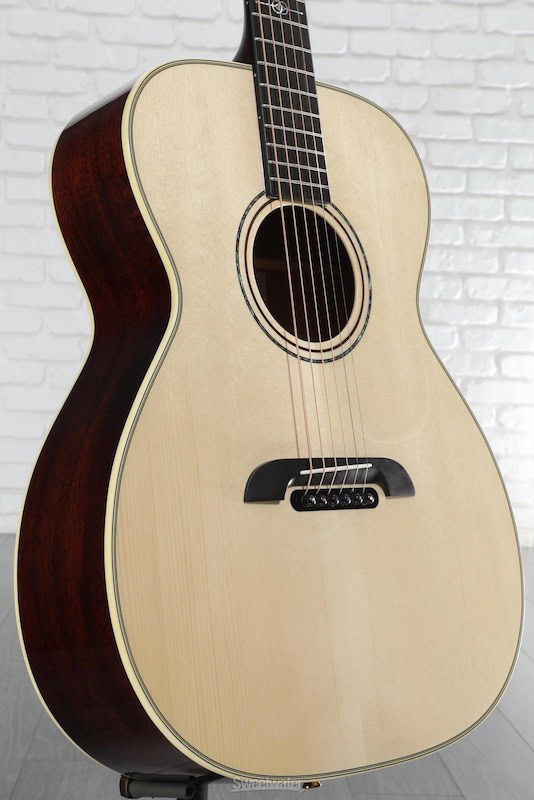
This is a brand that has been around for a short time but has managed to create quite a following. I remember the first time I came across one. It was on stage for an unplugged tribute show. I was playing my D15, but the other guitarist across the stage had an Alvarez. I went to nerd out with him, and the moment I did the E major test, I was blown away.
I mean, Martins have a big, boomy bottom end that’s world-class but Alvarez are ridiculously big. Again, I was playing an all-mahogany Martin guitar with a condenser microphone inside the body and his tone was just as big as mine.
Well, I came across many Alvarez guitars after that and the result is always the same, they’re huge, defined, and easy-to-play instruments. In my opinion, they’re one of the best-sounding hidden gems in the acoustic guitar world.
Every Alvarez guitar offers one of the company’s three variants of bracing:
FST2 – Moving the X toward the soundhole, the soundboard of the guitar becomes bigger and vibrates more freely augmenting the low-end response.
MST1 – This bracing mixes pre-war and modern bracings to create a voice that sounds vintage but with a healthy dose of volume. Perfect for smaller bodies and fingerpicking.
FS6 – Alvarez’s latest invention, this bracing utilizes lightweight bars to allow the soundbox to sing more.
Yes, every acoustic guitar shape and series has a specifically designed bracing to make it sound better.
But that’s not all the good news, there’s more. The company offers a nice variety of price tags to choose from. You can buy their solid-top Alvarez AD30 at an entry-level price or their Alvarez AED66ce, a great-looking acoustic-electric from the company’s Artist Elite Series.
Now, for some truly piano-sounding masterpieces, the company’s all-solid Masterworks and Laureate Series are just perfect. Guitars like the MD70 and the LDR70e are great touring instruments that sound very balanced and powerful.
Finally, the top of the crop is the Alvarez Yairi line that’s just as good as Martins costing twice or thrice as much. The GYM72ce, DYM72, DYM60HD, and the FYM72 are true Japanese handmade masterpieces.
Larrivée
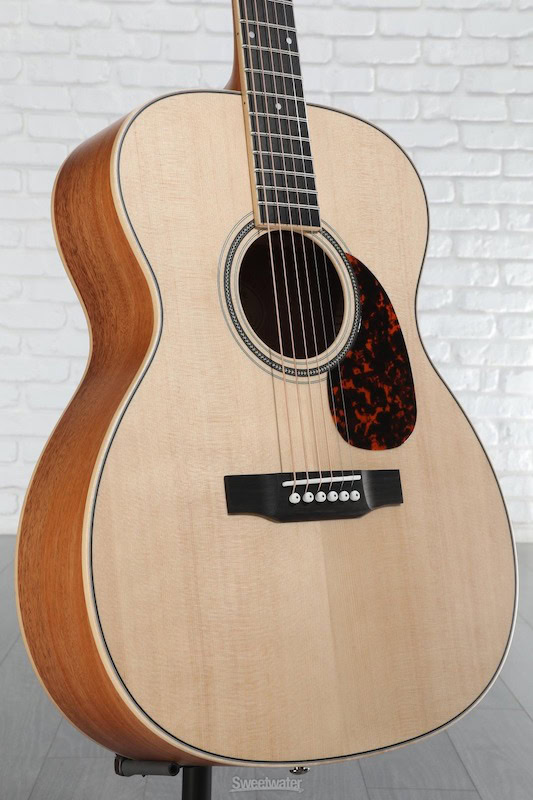
The number one thing to know about Larrivée Guitars is that they’re world-famous for being constructed with some of the best wood on the planet. Yes, the company, founded by Jane Larrivée in Canada in 1967, has always been after the best spruce for their tops.
Speaking of which, this company does not manufacture any laminated guitars. Everything they do is solid.
The Larrivée sound is as detailed and powerful as acoustic guitars ever get. Furthermore, you can get one of their guitars with a premium, solid Sitka spruce top, solid mahogany back and sides, and a bone nut for less than $2,000. That’s completely unthinkable for most of the competition if you throw a hardshell case into the mix.
But this is no coincidence, on the contrary, it’s the outcome of the company’s approach to guitar making. Yes, Larrivée started as Jean’s dream, and it’s still pushed forward by that same passion today. So, all the decisions they make go in the direction of giving better guitars to the public.
For example, the company’s Simple Series (like the Larrivee Simple-6 D) offers all-solid mahogany and spruce guitars with outstanding projection, a snappy ebony fingerboard, and absolutely no fancy appointments but with a price tag that beats most of the competition.
These guitars are closer to Taylor’s percussive midrange and musical high-end than to Martin’s boomy low-end and huge body.
Things get even more interesting down the price line with the Recording Series (like the OM-03), and the Legacy Series (like the D-44). For those with a bulkier budget, the absolutely astonishing D-10 Alpine Moon Spruce Deluxe Series and the C-10 Rosewood are the kind of instruments that can make any manufacturer a sought-after brand by some of the most discerning players in the world.
Oh, and they still cost less than an elite-level Taylor or Martin.
Breedlove
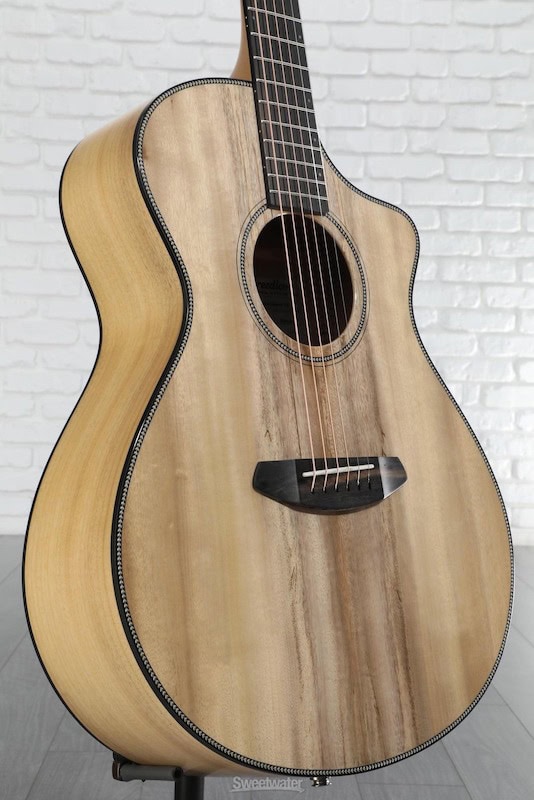
Let me begin by saying this about Breedlove: Their guitars are underpriced.
I know, just let that sink in for a minute.
Plus, they base their entire production line on organic, sustainable practices that utilize alternative woods in creative ways to make great instruments without damaging our ecosystem.
I’ve been in touch with Breedlove guitars for a while now. I’m a confessed Martin fan who also loves playing his Taylor, but Breedlove guitars don’t follow either of those tone structures, they have a sound of their own.
What is it? It’s moderate and it’s got perfect balance between strings. The ringing quality excels in the mid-high and high frequencies. These guitars deliver a nice tight bottom-end with sparkling, natural, musical overtones flooding the sound from every direction.
Also, among the innovations, their shapes are ultra comfortable, and their no-pin bridge, side-mounted soundhole, cascade bracing, and more-than-accessible cutaway make them as playable as they are modern.
I just love their definition and clarity; there’s no way you can make this guitar go into muddy territory. For example, their ECO Discovery S Concert is made of 3-piece laminated African mahogany and offers a solid mahogany top. It sounds and plays great and is far from being a bank-breaking instrument.
Likewise, the ECO Rainforest S Concert CE and ECO Pursuit Exotic S Concert CE made of Oregon’s own Myrtlewood offer outstanding sound at a moderate price.
Although these are great guitars, things get more interesting as you move toward the all-solid models. For example, the Organic Wildwood Pro Concert CE an Organic Performer Pro Concert CE are amazing guitars. And guess what? You’re not over the $1000 mark yet!
Finally, for those with the budget, you can indulge in that rich, lush mid-infused tone playing some of the best guitars by the brand like the made-in-USA Oregon Concert CE, Premier Dreadnought Concerto CE, and Legacy Concert CE with top-notch woods, elite-level electronics and state-of-the-art craftsmanship.
You’ll get all of that at the same price as a standard Gibson acoustic or a mid-priced Taylor or Martin.
Timeless Classics for All Budgets - Low Budget? No Problem!
Guild
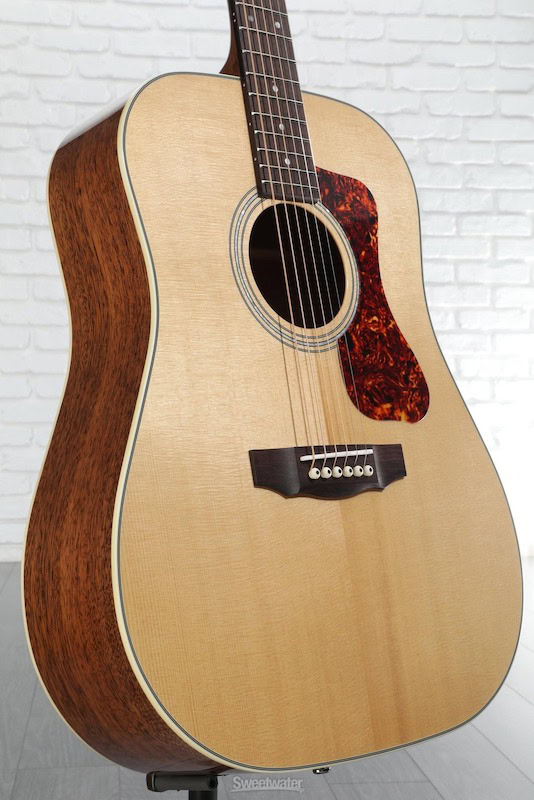
I have to say it; I’m a nineties kid. Back in my time, MTV played music and did Unplugged sessions with the hottest bands. The moment I saw Jerry Cantrell play his Guild acoustic in the Alice in Chains show, I was hooked. Then, I learned Kim Thayil from Soundgarden played Guild guitars too. So, I went all in and played a bunch of them.
What does Guild offer? Well, you can think of Guild as an affordable alternative to Martin. I mean, they do have their own thing and have been around since the early ‘50s, but they go down the same tone avenue.
Let me tell you this as a Martin lover, whenever I’m being heavy-handed with the picking hand on my D-15, I get that feeling that I’m driving a big muscle car at full speed on a deserted avenue. It’s this monster vibrating vessel with tight lows and a growling midrange ready to conquer the world.
Well, guitars like the Guild D-20 give me the same feeling, they’re huge dreadnought-sized tone machines.
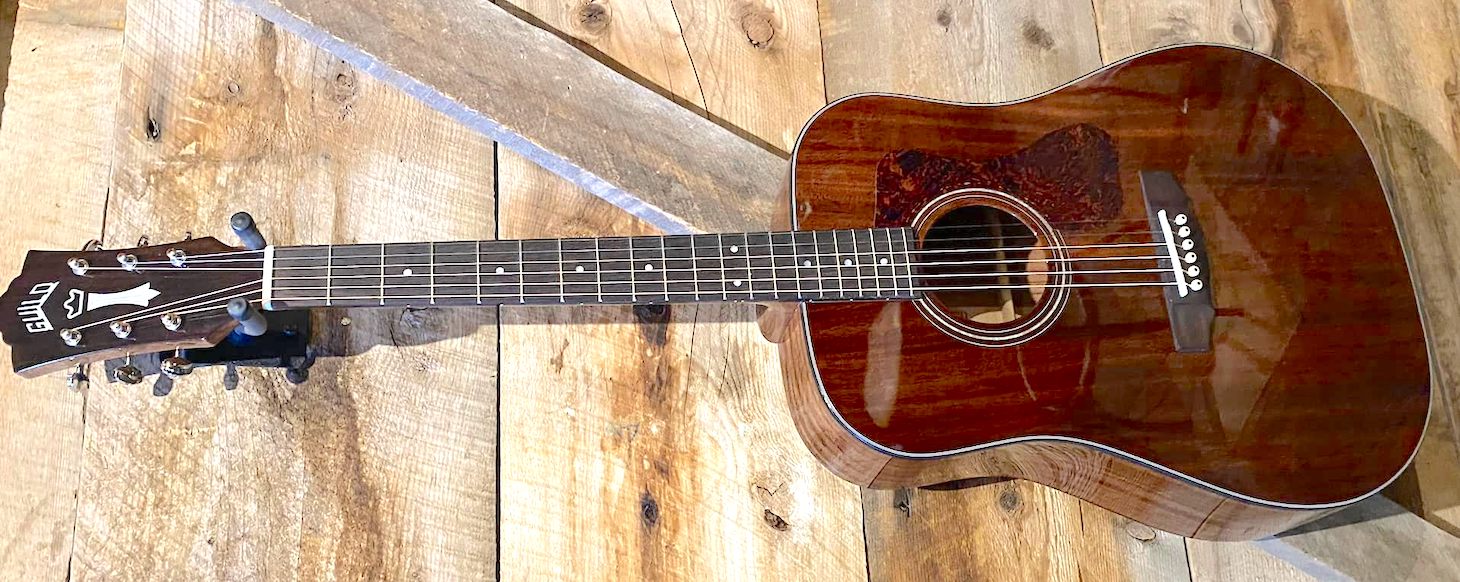
Guild D-120
That said, and although in the Made in USA lines prices do get close, Guild offers terrific beginner-oriented alternatives around the $300-$700 price range. Guitars like the solid-top OM-320, or the gorgeous F-2512E, a 12-string maple jumbo guitar with a solid Sitka top, are great instruments at a great price.
Likewise, their version of the Baby Taylor or Little Martin is the Guild Travel and it has nothing to envy the other brands costing less than half. Oh, and it comes with a gig bag.
But you might be wondering what happens if you have a big budget. Well, their USA collection is entirely made in California, and it has outstanding, all-solid, heavily ornamented guitars. The F-512E, for example, features a solid rosewood back and sides, a Sitka spruce top, an ebony fingerboard, a mahogany neck, 12 strings, and is jumbo-sized.
The 6-string D-55 is another great elite-level guitar.
So, if you’re in search of a great, classic, vintage acoustic guitar tone on a budget (or not), check Guild out. They’re made to last.
Epiphone
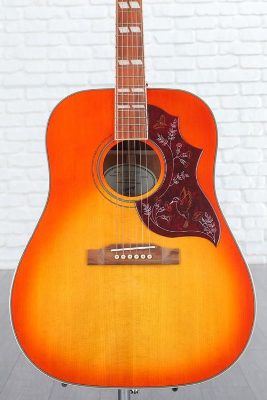
For a young me, a real Gibson Hummingbird, SJ-200 and J-45 were daydreams. I had never seen, held, or strummed one until way after I had my fair share of Epiphones.
Let me tell you this, the main appeal of Epiphones is that they are essentially Gibson guitars, without the high price tag. If you, like my old me, never play the real deal, you’ll believe this price difference doesn’t come at the expense of their quality.
Well, let me blow that scoop for you, there’s a huge difference between Epiphones and Gibsons. That said, an Epiphone Dove, Hummingbird (our review), or SJ-200 is a great-sounding, perfectly crafted, flawlessly finished instrument that will give you years of playing joy without asking for several thousand dollars in return.
Unless you’re planning on headlining the Madison Square Garden soon, they will also get the job done on any stage.
But since they don’t feature the all-solid construction and the elite-level wood to make them sound like a record out of the box, they sound great for a limited budget.
Epiphone guitars are very well made for their price. They are solid and can take the beating of the road and then some. Believe me, I’ve been in the back of the van with more than one performing on a nightly basis flawlessly. We didn’t even have a gig bag for the thing and it made it through for years!
If we take out of the equation the short sustain and not-so-musical high-end, tonally, Epiphones are quite comparable to Gibsons. They have a similarly warm and vintage tone.
While they are beloved for how well they sound for country and bluegrass, they sound equally great in almost any genre. I mean, letting your picking hand a little loose while playing a J-200EC Studio is bringing out a monster tone out of that solid spruce top even with the laminated sides and back.
Likewise, Epiphone has versions of Gibson’s classics like the timeless J-45, Dove, and Hummingbird.
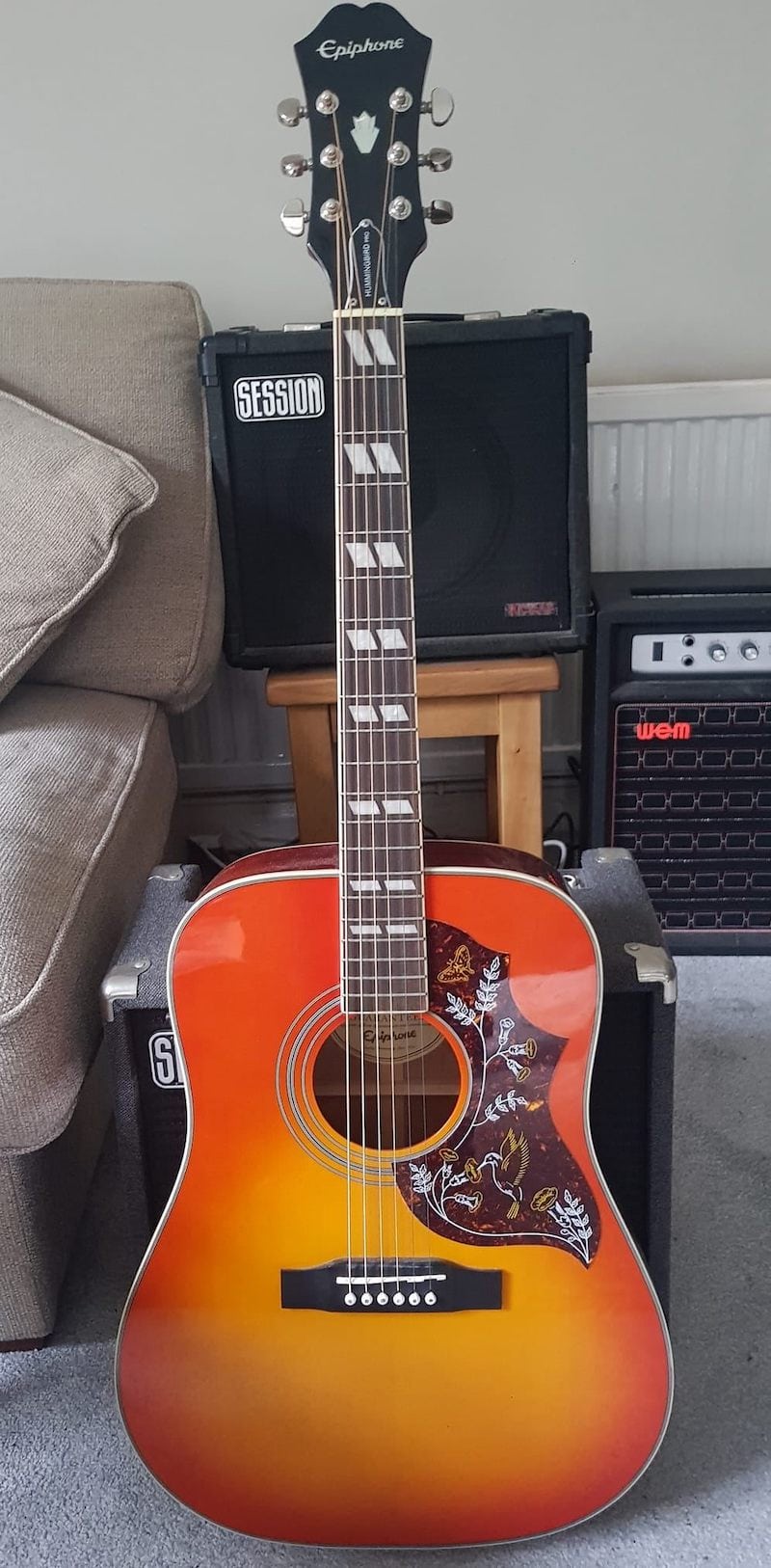
Epiphone Hummingbird
Don’t worry, these cost a fraction of the originals and deliver a nice, big, round, and balanced Gibson-like tone. The J-45 is especially good to go from finger to pick and back while the dreadnoughts are big, powerful, and ooze midrange.
Moreover, if you are looking for a more affordable guitar, the DR-100 is a great entry-level instrument.
But that’s not all, they also have guitar models that are uniquely theirs. For example, the USA Texan is a made-in-USA mid-level guitar, and the Frontier is their premium level instrument costing what a Standard Gibson would (and made in the Gibson factory too).
Epiphone might have been seen as just “cheap Gibsons” for a long time, and they might be in most models. That said, they have, in recent years, re-established themselves as a great brand in their own right.
Yamaha
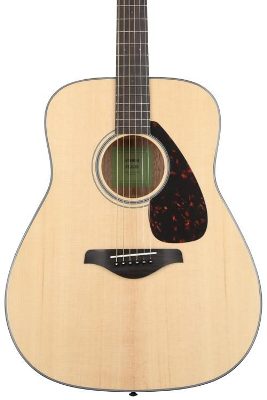
Yamaha has built up a reputation for their acoustic guitars. And not just beginner acoustics, but some of the best, most affordable in the market today.
The first encounter I had with a Yamaha acoustic was their amazing APX600.
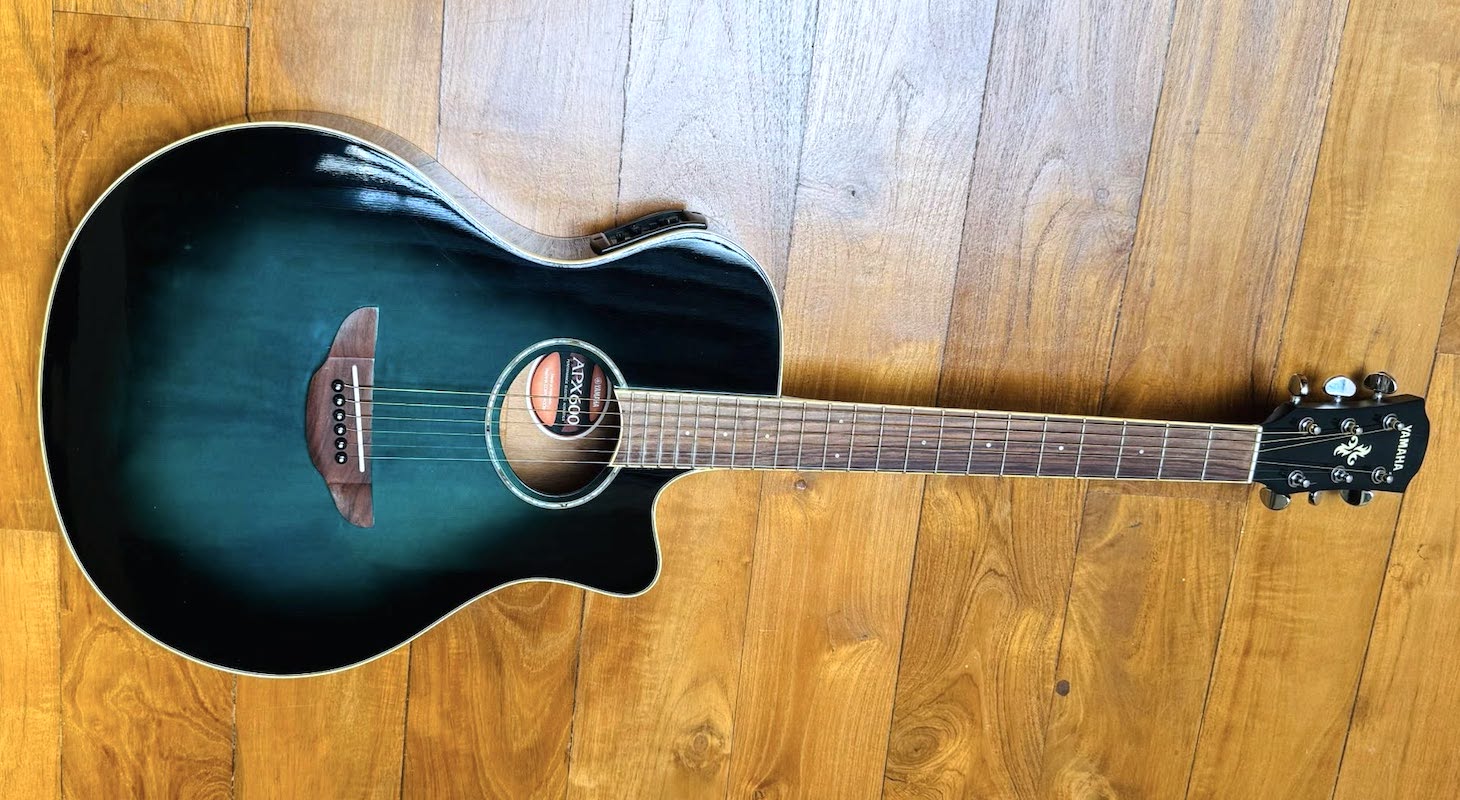
Yamaha APX600
It’s a small, comfortable acoustic with big sound projection and one of the most comfortable, small, and fast necks in the market. But that’s not all, it’s in the $300-$600 range too.
Speaking of which, the first time I played an F-Series Yamaha, I was blown away. A student brought one and I couldn’t believe it when he told me the price. No wonder they’re Yamaha’s best-selling acoustic line. The FG820, for example, offers a solid top and a laminated mahogany back and sides without leaving the $300-$400 range.
They are guitars made to make picking up a guitar for the first time as pleasant as possible. They are comfortable to play for new players, while still sounding fairly good.
The build quality is solid. You won’t really notice that these are mass-produced instruments. The cheaper hardware used is a bit noticeable compared to some other budget level guitars, though. Yes, Yamaha might have cut some corners in the hardware, but the overall craftsmanship is still flawless.
The tone of a Yamaha guitar isn’t going to be anywhere near that of a Taylor or Martin. In my opinion, Japanese guitar makers tend to gravitate toward a higher register. Yamahas excel at the upper mids but don’t have a big low end to offer. I mean, it might still be better than you would expect looking at the price tag.
That said, Yamahas are usually fairly balanced, with a nice mix of mids and highs.
While there are high end Yamaha acoustics, like their L Series, (LL16, LS26, and LS56 Custom), that isn’t really their speciality. Yamaha is much more focused on making quality beginner guitars.
For example, the FG800 and FG830 are two of their standout budget guitars along with the 820. The AC1M and AC1R are both great affordable midrange guitars. And for young players, Yamaha has ¾ scale guitars like the JR1 and APXT2.
Finally, a suggestion, if you have never played a Yamaha Silent, do yourself a favor and try one today. They might be the solution you were looking for.
As far as acoustic guitars for beginners go, Yamaha is hard to beat. The value on offer is quite remarkable.
Bonus Track - Affordable Acoustics & Innovative Instruments
Fender
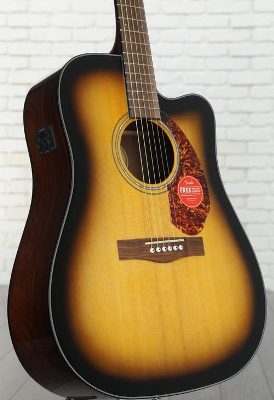
Perhaps the best way to describe Fender is as a legendary innovator. Yes, they offer timeless classics as well as groundbreaking innovative guitars.
Although electrics can go well into the 4 and 5 digit territories, Fender acoustics are more beginner-oriented.
That said, the build quality of Fender acoustics is fantastic, even on the lower end. They feel well made, finish and craftsmanship are flawless although the hardware can feel a little cheap sometimes.
Their tone is also familiar. This is especially true for their ultra-comfy California series. They have that bright, chimey tone that Fender guitars are known for.
That said, they also make guitars with a warmer tone, like the PD-220E. Furthermore, being a Martin lover, their all-mahogany version of the dreadnought, the very affordable CD-60S is a fantastic, inexpensive acoustic, ideal for beginners with a solid mahogany top priced below the $300 mark.
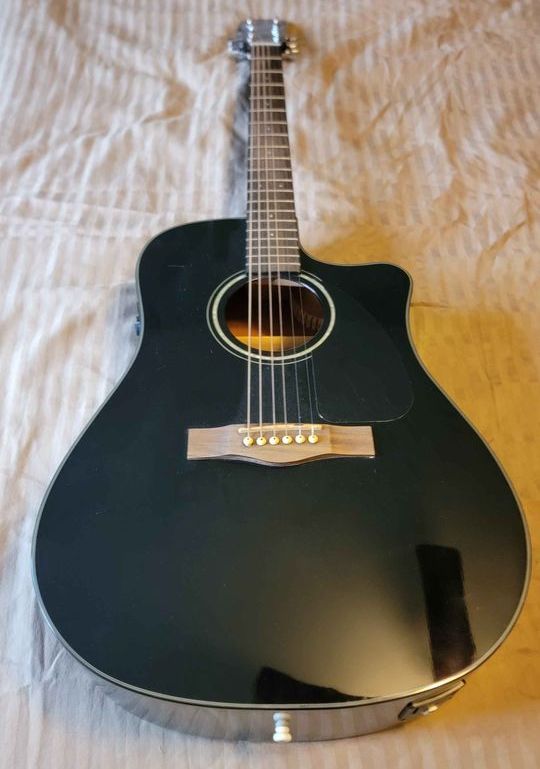
Fender CD-60SCE
While working as a guitar salesman, I sold more CD-60s than I can count. I confidently opened box after box of them knowing the customer would love it and I would get my commission.
Also, their Newporter series offers some of the best budget acoustics. The Newporter Classic is great for intermediate and experienced players. The Newporter Player is a more affordable version that is great for beginners and intermediate players.
But as a natural-born innovator, Fender caused a seismic effect when they released their Acoustasonic line. While the USA-made, top-of-the-line guitars are space-age ready, the more affordable versions can also simplify your life as a performer drastically.
They offer players an easy-to-play hybrid guitar that can get the job done as an electric, acoustic, and even unplugged.
They come in three tiers, American, Player (MIM), and Standard (Asian-made). With varying specs and simpler electronics these guitars unlock a new era of acoustic guitar making.
Also, with the three versions, they accommodate most budgets out there. For example, the Tele version goes from affordable to intermediate to professional.
If you are looking for a unique acoustic experience, the Acoustasonic series is the way to go. They are some of the best acoustic guitars to come out in recent years.
Honorary Mentions – You Were There for Us and We Appreciate It!
Seagull
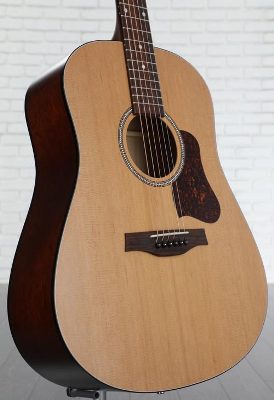
Seagull Guitars is a small company based in the small Canadian town of LaPatrie. A town of only 500 people. In fact, most of them are guitar builders.
The company specializes in making affordable guitars that play and sound great. Most Seagull guitars are less than $1,000.
Once you manage to get over one of the ugliest headstocks in the industry, Seagull guitars will blow your mind. They are affordable, sound great, and have a unique timbre thanks to an uncanny wood combination.
Seagulls are handmade using materials that are very abundant in the local area. Woods like wild cherry, cedar, and maple.
Cherry and maple are both fairly bright woods. That means fairly bright guitars, right? Well, since cedar is a warmer tonewood, it balances the tone.
Let me tell you that once you play a Seagull, you wonder why there aren't more builders using cedar to make guitars. These acoustics are the perfect singer-songwriter accompaniment.
The Seagull S6 is the company’s most popular guitar (read my full review). It represents the quality and tone on offer by Seagull.
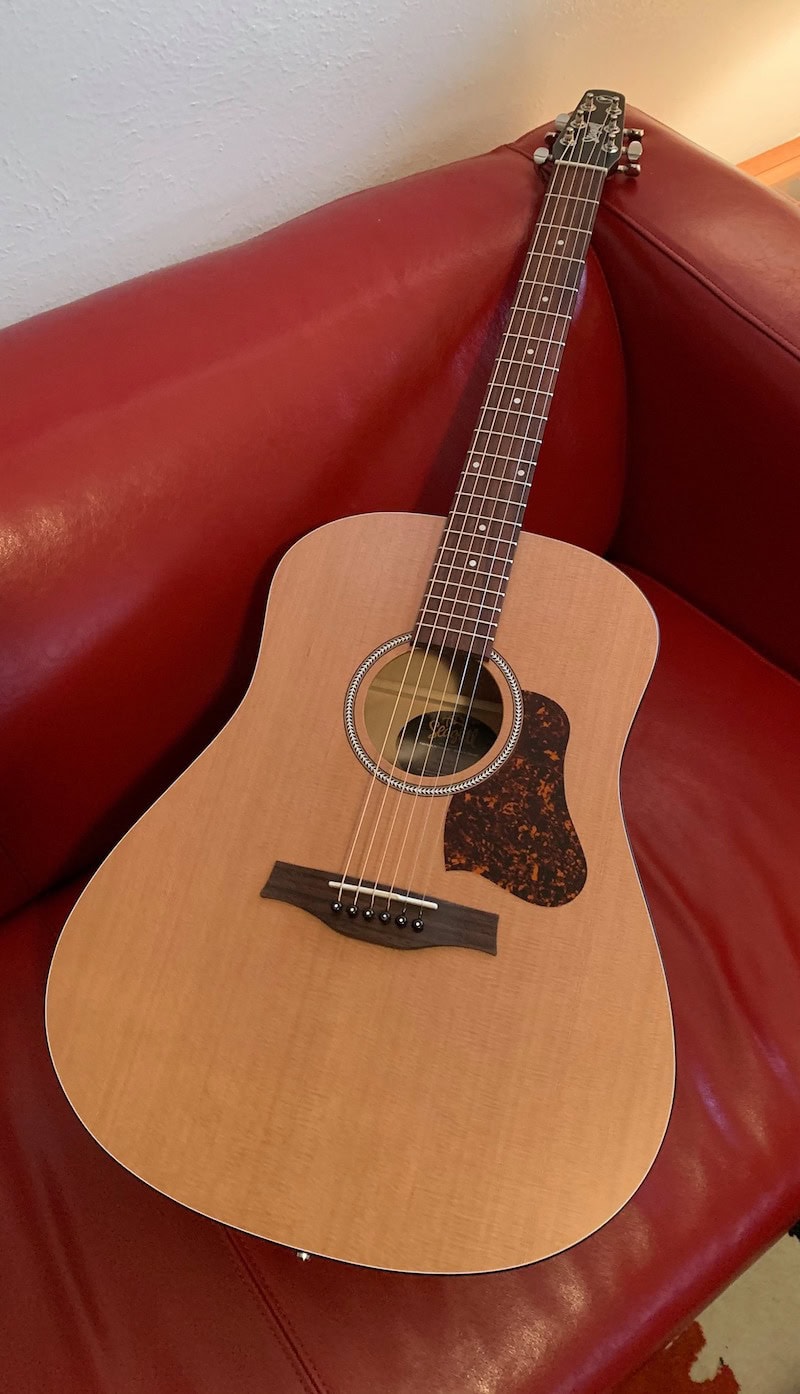
Seagull S6
At the higher end is their Maritime and Performer, while the Artist is their most expensive, yet still very affordable.
Seagull guitars show that high quality guitars don’t have to be expensive. And they show that there is a huge market for affordable acoustic guitars.
Takamine
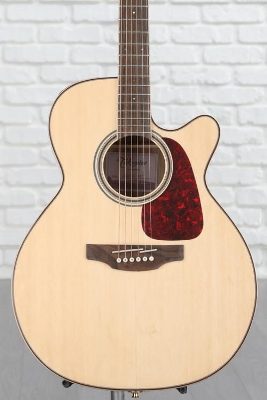
Takamine is known for their innovative spirit. They were one of the first companies to introduce electric-acoustic guitars. This made them extremely popular among musicians very quickly.
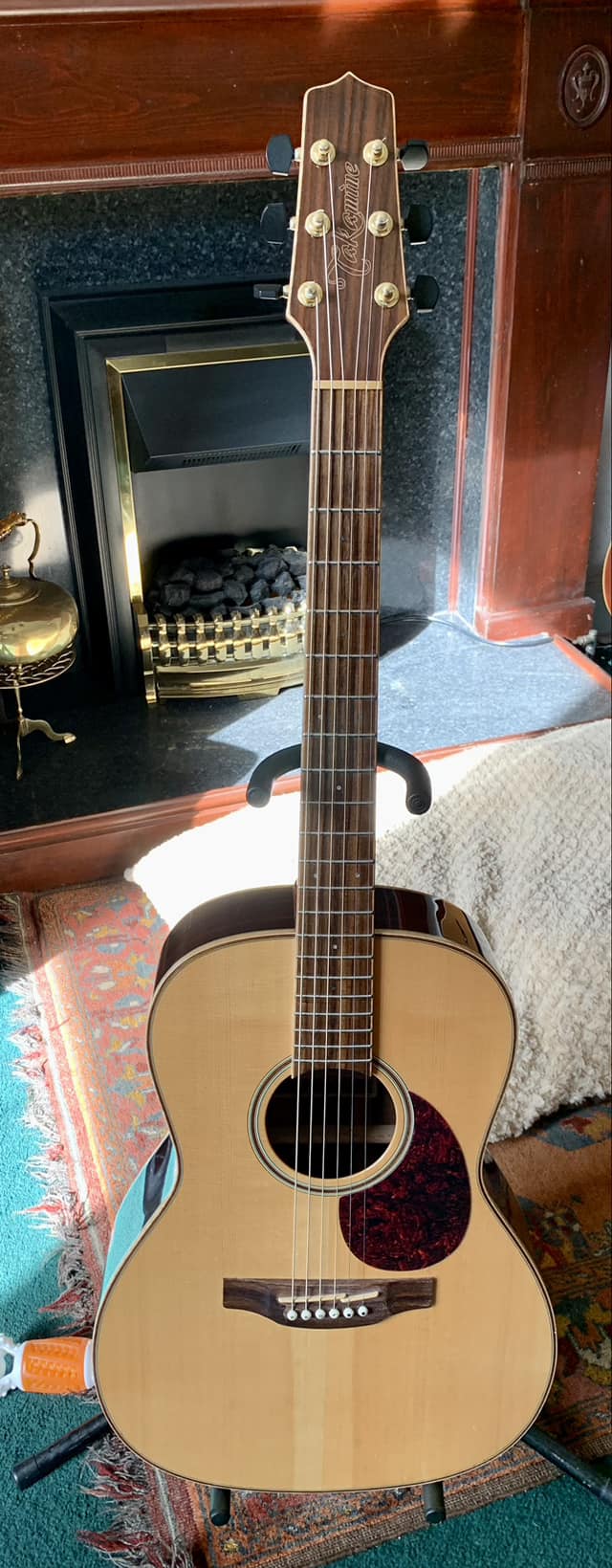
Takamine New Yorker
Takamine has continued to improve on the electric-acoustic design. With their Cool Tube preamp, found on guitars like the TSP138CTB, it helps to fatten up the sound of the guitar. This is especially handy when you’re running the piezo system straight to the PA. The Cool Tube adds that growling bottom-end you need. It works like an instant low-freq booster.
Takamine guitars are highly regarded as being some of the best acoustics for performers. They are rockstar-certified after having endured the hardships of the endless road rocking arenas in the hands of iconic players like Jon Bon Jovi.
They use what Takamine calls the NEX body design. The purpose is to make guitars feel closer to an electric than an acoustic.
As for tone, Takamines are quite balanced, leaning a bit more to the bright side. They also offer a moderate low-end that’s quite controlled and tight.
If you listen to country music, you might already know what they sound like. They are very popular among musicians like Blake Shelton, Kenney Chesney, and Garth Brooks.
Their guitars are also fairly affordable. The GD11MCE is a fantastic beginner guitar, while the GN77KCE features the NEX body shape and offers top-notch acoustic tones in a budget.
If you are looking for the perfect performer guitar, look no further than Takamine.
Washburn
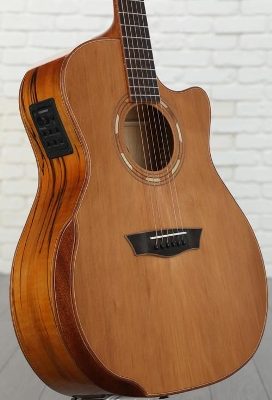
Washburn is a brand that doesn’t come up a lot in the conversation of acoustic guitars. Yet, including yours truly here, it’s not uncommon to walk on a stage and come across a Washburn acoustic. Especially in small venues.
Their guitars are aimed mostly at beginners. Many are under $500.
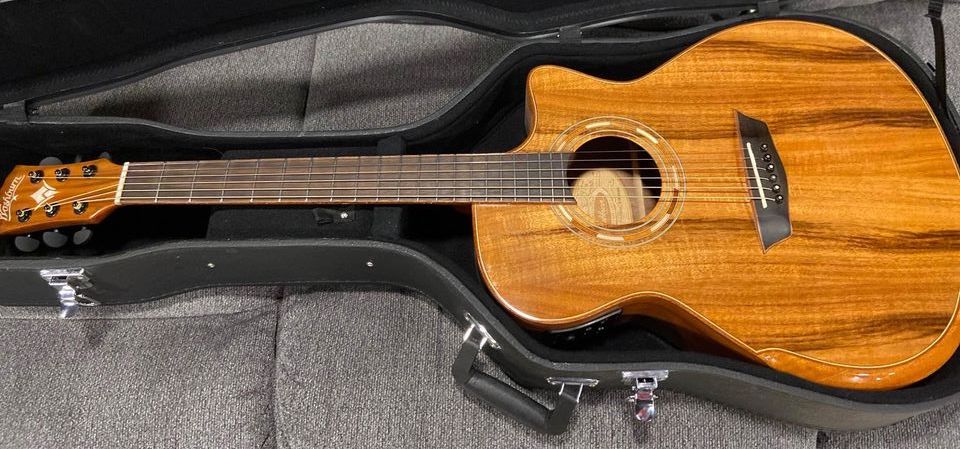
Washburn G55CE
But don’t let the price tag confuse you, they are budget guitars, not cheap ones. That’s a different level. Put any other guitar manufacturer next to a Washburn, and the Washburn will always be a worthy contender for the price.
These are well-made guitars with flawless finish and great attention to detail. Yes, they have somewhat of an undefined bottom end and harsh high end most of the time. Yet, they feel solid and are extremely comfortable to play.
The best way to describe the tone of a Washburn guitar is “folky”. Think Simon & Garfunkel and you have a fairly good idea of what these guitars sound like. They have this very lovely airiness to them. It isn’t nasal, compressed, or huge. On the contrary, they offer a very articulate, balanced tone with a good balance and plenty of sustain given their laminated construction..
The Bella Tono Allure, for example, has this wonderful tropical beach themed inlay. The Comfort series has some very sleek, modern-looking guitars.
Even their budget guitars look great. The Deep Forest Burl has a lovely black fade finish.
Washburn guitars look, play, and sound like guitars that are twice the price. Even their more expensive offerings can easily go toe-to-toe with some of the best out there.
Ovation
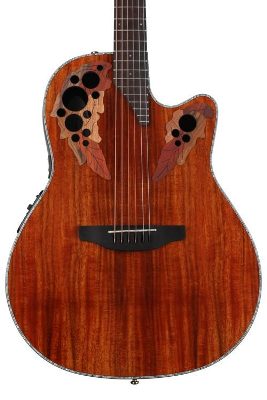
What do acoustic guitars and helicopters have in common? They have Charles Kaman. Ovation’s founder was a helicopter manufacturer before shifting to making acoustic guitars. That, and the outrageous nature of the ‘80s explain the back being made of a hard material close to plastic.
They are made of the same composite material used in the making of helicopters.
This gives Ovation guitars a durability that is unbeatable. These guitars won’t crack, warp, bend, you name it. They will stay in one piece no matter what.
One of my first episodes holding a guitar when I was around 10 was my friend’s hippie dad who played out-of-tune reggae songs on a beat up Ovation that he kept inside a closet. One of the most beaten up instruments I’ve seen in my life.
Ten years later, we found it in the same closet and it was still playable. If the end of the world comes it is going to be just Keith Richards, roaches, and Ovation guitars left.
This also gives them a unique sound.
The traditional soundhole guitars, like the Applause have quite a light, shiny tone. Well, a very ‘80s sound.
Their Timeless Elite is just one of the many guitars that features Ovation’s unique soundhole design. These are multiple, smaller soundholes close to the neck, on both sides of the strings.
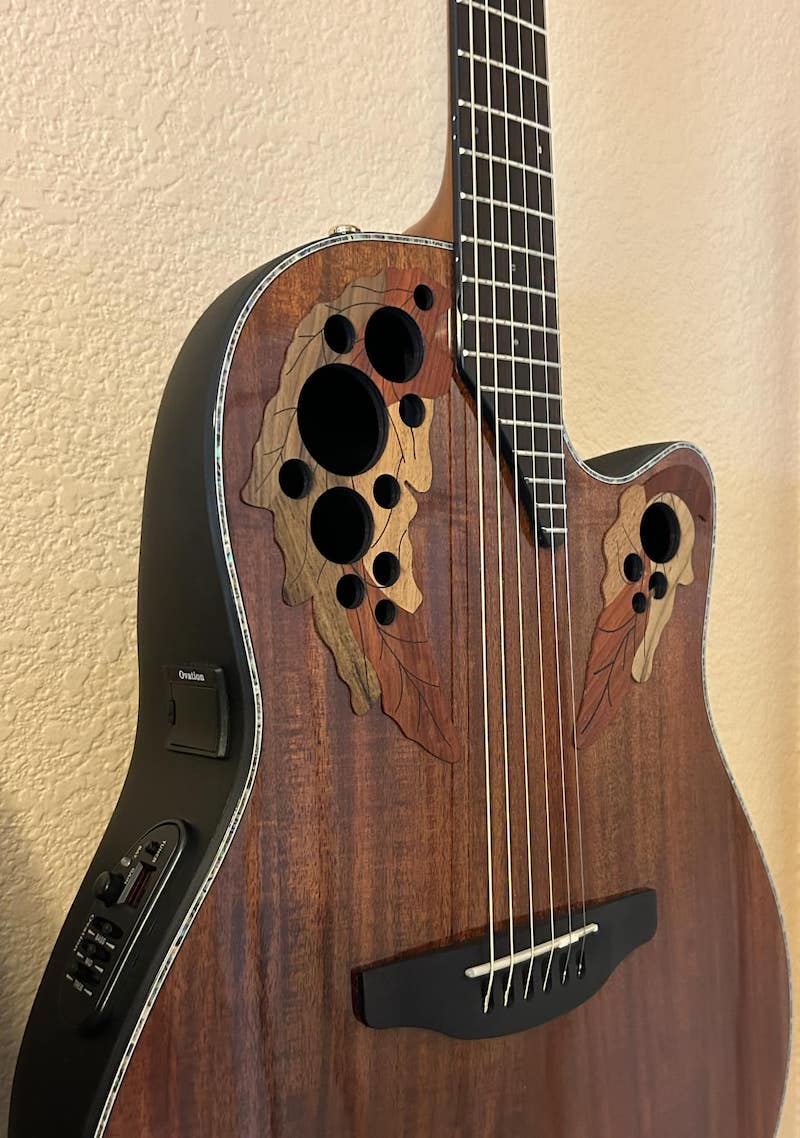
Ovation Celebrity Elite Plus CE44P
These guitars have a much tighter, bassier, and jazzier tone. They sound a bit similar to nylon-string classical guitars.
Ovation guitars are truly unique. You won’t find any quite like them.
The incredible Al DeMiola plays Ovation guitars. What better endorsement is there?
A Quick Tip for Picking an Acoustic Brand
I originally heard this from my guitar teacher when I was a teenager. Apart from learning new licks and guitar tricks from him (it was the eighties!), I used to bug him about different guitar models and various technical features. We’d call it nerd out about gear today.
One day, I asked him what brand should my next guitar be. He offered me advice that I still remember. He said: “Think about your favorite guitar players, what brands do they play?”
Thinking about why they chose the brand and guitar that they were playing really gave me a lot of ideas about what I needed in my own guitar.
Body Shape
The body shape is the most important thing to consider. This is going to affect not just how comfortable the guitar is to play, but the overall sound.
Believe me, handling a jumbo isn’t at all the same as playing a parlor. Parlors are great for fingerpicking, arpeggios and slide while jumbos scream to be played with a heavy picking hand.
Does this sound like mumbo jumbo? Don’t worry, the explanation is right below. Let’s go!
Parlor
These are the smallest acoustic guitars. They date back to the 1800s and are meant to be played in the parlor rooms of wealthy people. Their small size means that they don’t project as much, and are comparatively soft when compared to other body shapes. They also have a more delicate and punchy sound.
A good thing is that you can drive the top with little effort so you get this singing, midrange-infused tone from parlors even fingerpicking or arpeggiating.
They are gaining popularity again lately. Many brands offer parlor guitars. Their size and sound makes them ideal for fingerstyle and playing quietly at home, especially for those who live in an apartment.
Dreadnought
This is the most common body shape for acoustic guitars.
Their large body produces a loud, booming sound. Many acoustic guitarists choose dreadnoughts for their ability to project in a band setting. They have quite a low end, with a very pronounced midrange. They can be prone to some muddiness, however, causing chords to lose a bit of articulation.
One of the best things about buying a quality (all-solid) acoustic guitar is getting rid of the mud often found in beginner-oriented instruments. This is especially true for dreadnoughts, when that low-end swamp is no longer there it feels like making it.
Concert
Concert guitars are quite similar to parlor guitars. They are also quite small, with the same pinched waist.
Just like parlor guitars, their tone is quite focused and punchy. This makes them ideal for fingerstyle. If you’re looking, for example, for a guitar to play lead over the strumming of the singer, or want a modern, small, treble-oriented acoustic sound, make sure you try a concert guitar.
Grand Concert
These are larger versions of the concert/parlor body shape.
The larger body allows them to project much better than concert guitars while retaining a fairly punchy sound. They strike a nice balance to allow both fingerstyle and light strumming.
For example, if you go back and forth between your fingers and the pick, grand concert guitars can follow your dynamics easily. They grow a lot when pushed but sound bright and alive with the fingers too.
These guitars are often preferred by solo artists. Their louder volume allows the playing to stand out more, while not being too loud, overwhelming any singing that is being done at the same time.
Grand Auditorium
The largest of the concert shapes, the grand auditorium is similar to the dreadnaught. It is loud and booming. These guitars also feature a pinched waist, however. This gives them a more focused sound than a dreadnought.
Their body is also not as boxy as dreadnoughts, making them more comfortable to play.
The versatility and comfort of grand auditorium guitars make them ideal for a modern sound and playing experience.
Jumbo
Jumbo guitars are dreadnoughts’ big brothers. They are not only physically larger, they also produce much more volume. These guitars are perfect for heavy strumming. Believe me, playing a guitar that big with all you have is a one-of-a-kind experience. Jumbo guitars can fill an entire room easily.
Moreover, if you play in a rock band, you will want a jumbo body to be able to compete with the electric instruments.
This mammoth tone requires a strong strumming hand, though. Yes, to make the soundboard of the guitar (AKA the top) vibrate strong enough to get the guitar to sound at its best, you need to really dig in. They don’t sound so good for fingerpicking or nuanced playing styles.
Also, they’re bulky. This makes them less than ideal for beginners or players with small hands.
Thinline
This is a relatively new body shape for acoustic guitars. They are designed to be more like electric guitars in terms of comfort and playability. This also gives them a tighter sound, sacrificing quite a bit in terms of volume.
These guitars are mostly electric-acoustic to allow them to be played through an amp. Perfect for crowded stages and long tours. We have a roundup of thinline acoustics on our blog, if you're interested.
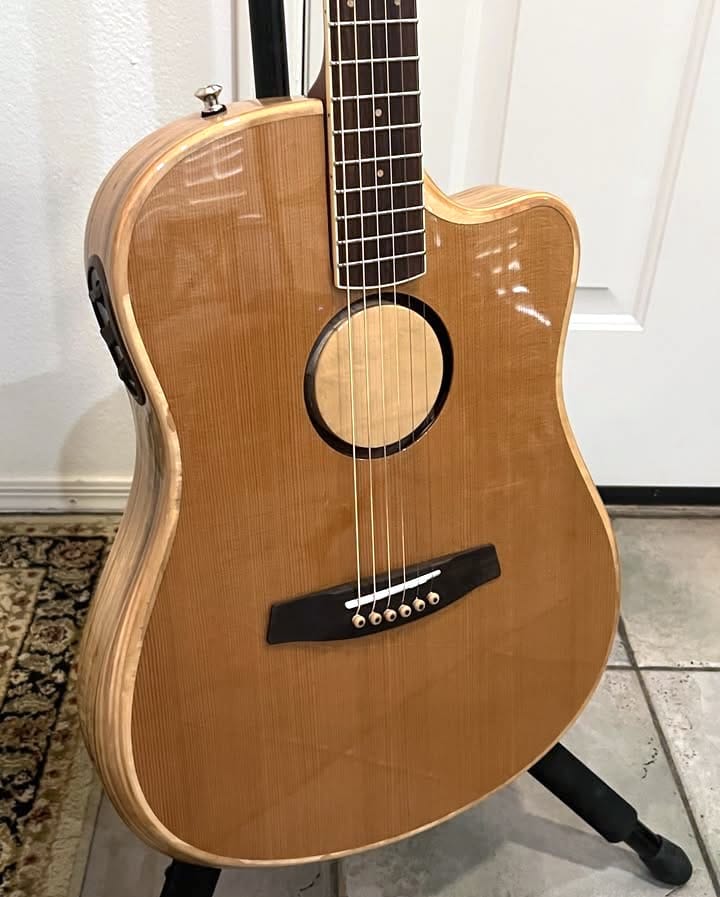
LR Baggs AEG-1, a thin-bodied acoustic-electric guitar.
Closing Thoughts
After two decades of playing, I met most members of the acoustic family. From the mass-produced, laminated beginner-oriented axes to the most ornamented and powerful handmade guitars. They all serve a purpose and will help you in a stage of your journey.
The brands above deserve your attention for being a great bang for the buck, or a timeless classic, or an outstanding new player in the market. Regardless of your taste and budget, I’m sure your next guitar is already waiting for you in a box somewhere after being made by one of the companies above.
I know that there are still many more acoustic guitar brands out there. This is just a selection of some of the best and most popular ones. Plus, I’m confident new and amazing guitars full of futuristic specs are waiting for us in the following years made by brands we haven’t even heard about yet.
It’s a great time to be a guitar player.
So, although there is no real definitive answer as to which brand is the best because each one is unique and different, and will appeal to different people in different moments of their journey, you now have a map.
So, if choosing becomes overwhelming, don’t wander at sea, feel free to come back here. You’ll find a compass to navigate the crowded acoustic guitar market.
The treasure is there, sailor, just keep going!
Happy (acoustic guitar) playing!
