
The bass is the perfect crossover between a rhythmic and a melodic instrument. But it takes time to discover that. We all begin cutting our teeth with walking lines sounding perfect, then slapping, then all of it together, until we just need more.
Well, a fuzz pedal can open the door to a whole new sonic universe of huge tones, grit, and mayhem. I mean, you can hear fuzz on bass from The Beatles to Royal Blood, and it all sounds amazing.
Top 3 - Bass Fuzz Pedals
So, congratulations! You’ve made the decision; you want a fuzz pedal. However, when you go online, a zillion different options await, and they all claim they’re the best for you.
It’s OK, don’t panic. I went through all that hassle trying a bunch of these, and I’m back with six absolute winners. I mean, they’re all different, but you can’t go wrong with any of these.
That’s not all, I also left you some juicy tips at the end about how to use it, where it goes in the signal chain, and why it’s different from a bass distortion.
So, go on, indulge yourself, put it all to eleven, and riff the world away!
Best Bass Fuzz Pedals - My 6 Favorites!
1. Electro-Harmonix Bass Big Muff Pi
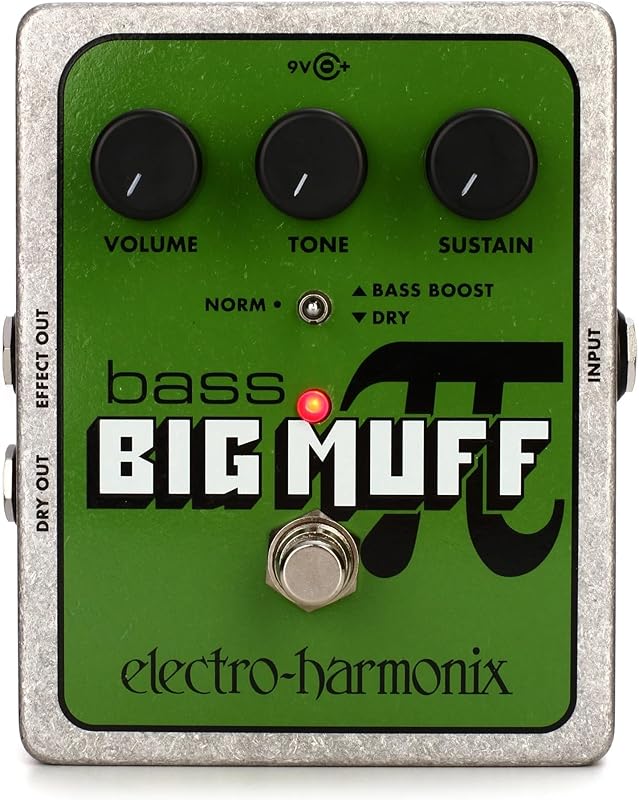
Let me start it this way, I love the Big Muff Pi so much I used to carry the chicken-knob, black version of it taking up half my pedalboard. What’s more, input and output are inverted! But the sound, the sound is worth all the hassle and then some.
Lucky for us, EHX heard us and created pedalboard-friendly versions of this classic to take on the road. I’ve tried several in my quest to replace the mammoth Soviet tank from the Cold War I had at my feet. This is one of the best of the pack.
To begin with, I just love the bulletproof housing and simple layout. Yes, it’s bulky, but nothing compared to its predecessors. I love the fact that it has a dry out, because one of my favorite tricks is playing a two-amp setup and driving my 2x10 clean while the 1x15 handles… well… the fun.
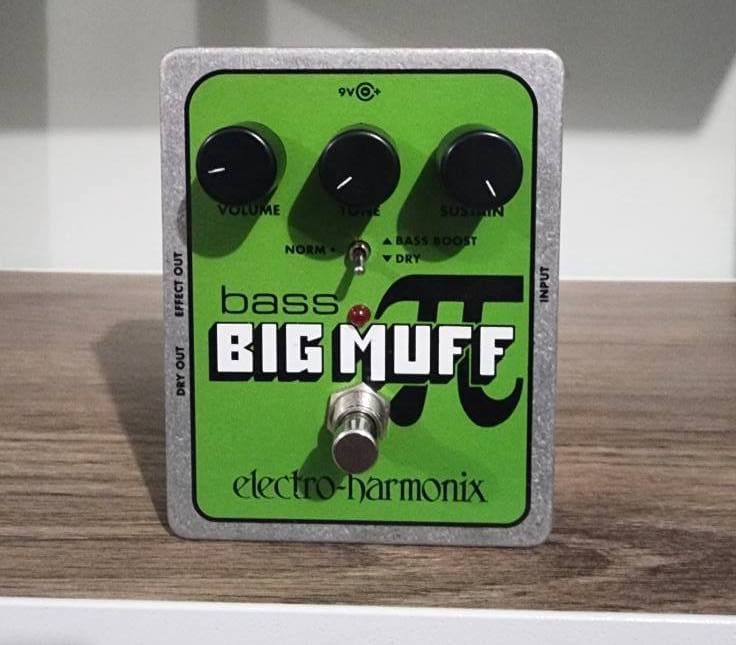
Electro-Harmonix Bass Big Muff Pi
This pedal allows me to keep the 2x10 clean and cause the earth to quake with the fuzzed-out 1x15. That’s especially cool for playing tunes like RHCP’s “Around the World”. It keeps mids and highs clean and cutting while the low-end sounds huge.
Speaking of which, one improvement EHX has made sonically is that this pedal sounds tighter than the original. Perhaps not as boomy and huge, even with the bass boost on, but definitely tight, mean, and percussive.
The gain at hand is just too much, and I have to tell you there’s muddiness when you move past two o’clock. Another thing to bear in mind is that this is a very reactive pedal, so the volume knob also matters. It made my P-Bass turn into this galloping force while my Jazz put me in slapping heaven.
If you want a straightforward fuzz pedal with no bells and whistles, for the price, it doesn’t get much better than this. For something more complex or versatile, you’ll be better off looking elsewhere.
2. MXR M84 Bass Fuzz Deluxe
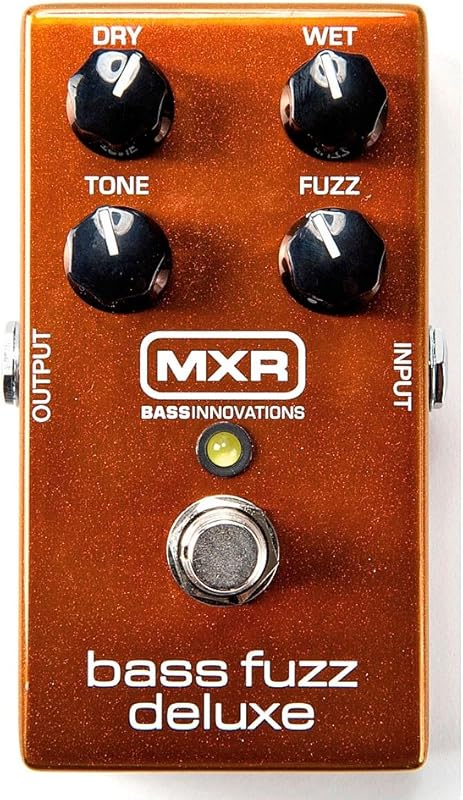
MXR has a reputation for making great-sounding, road-ready, interesting effects that aim at the working musician as well as the casual player and the hobbyist. I’ve had my share of them throughout the years, and they just keep getting better. This M84 is just another proof of it.
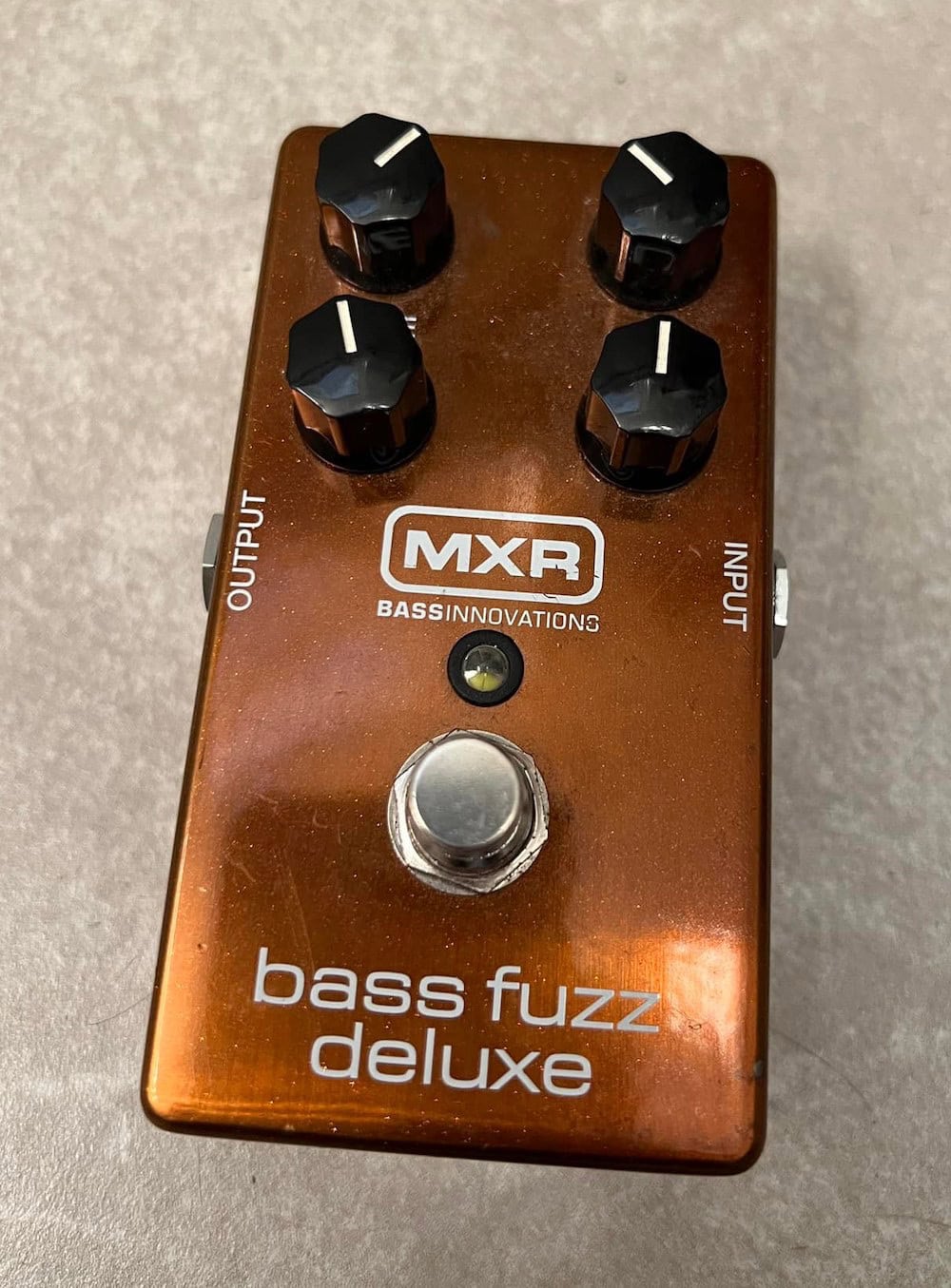
MXR M84 Bass Fuzz Deluxe
For a man used to doing the wet/dry trick with two amps, having the separate knobs for fuzz and dry was a welcome surprise. It’s very handy for wild animals like my humbucker-equipped Music Man. It helps unleash hell while keeping that razor maple-neck midrange we all love so much tight and punchy.
That said, if you want to play leads, crank the wet. You’ll reach hyperspace in a matter of seconds. This pedal is powerful enough to push you through a dense mix and land on that open string like a boss.
One thing you do have to bear in mind is that both knobs act as volume dials too. You don’t have a master volume (‘cause you’re the boss, lol). Therefore, if you bring the dry to zero, you’ll notice a big drop in volume.
For studio applications, I used my Jazz Bass straight to this pedal and into the interface, cranking the tone, the fuzz, and the wet knobs. What I got was the nastiest, grittiest, most menacing fizzy bass tone ever. With it, I made a few slapping overdubs here and there, and the tone was right in your face.
Slowly, I brought in the real bass sound with the dry and left mayhem in the background by just rolling off the tone knob to noon. I guess that was my favorite: dry from noon to three, wet and fuzz maxed out, and tone at noon.
My bass sounded nasty and powerful, but tight and defined. Playing the 1x15, I was in rumbling heaven.
If you’re after versatility that can withstand the hardships of the road, this is a great choice.
3. Way Huge Smalls Pork and Pickle Bass Overdrive
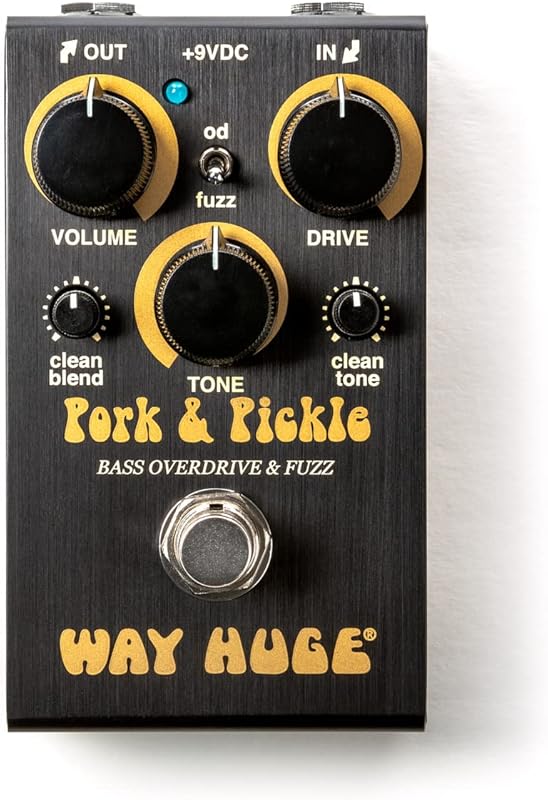
When big companies set sail to the unknown, they usually take the best they have. This is the case with Way Huge and the Pork and Pickle. I mean, the Pork Loin and the Swollen Pickle are best-sellers. The company joined two of their best products, tuned them for bass, and got this monstrous pedal capable of many, many sounds.
To begin with, the tone control for the clean side is great. Sometimes, when you blend in some of the clean to retain the bottom end, it starts poking its head through the fuzz. You can dial it counterclockwise and let the fuzz work the higher frequencies. I had so much fun with that and my P-Bass with its big, round, bottom end.
The overdrive side is menacing, dark, and full of grit. My Jazz Bass began to bark at the lower-mids, and it felt like a detour from the highway to the dirt road. It’s perfect for fast punk, heavy riffing, and fast slapping. It sounds gritty, but tight.
The fuzz side, on the other hand, is creamier; it doesn’t have so much grain but does offer an explosive sound that’s big with lots of sustain. I played some leads and could hold notes forever with just this pedal into a clean amp. The clean blend and clean tone knobs work wonders to clean up the tone and dial in just the right amount of dark side.
The one thing I have to say is that I would love to see a dual-footswitch version of this pedal so you can use them at the same time. Apart from that, I doubt there’s a more versatile bass fuzz and overdrive pedal for bass out there right now.

4. Darkglass Duality Dual Fuzz Engine Mini
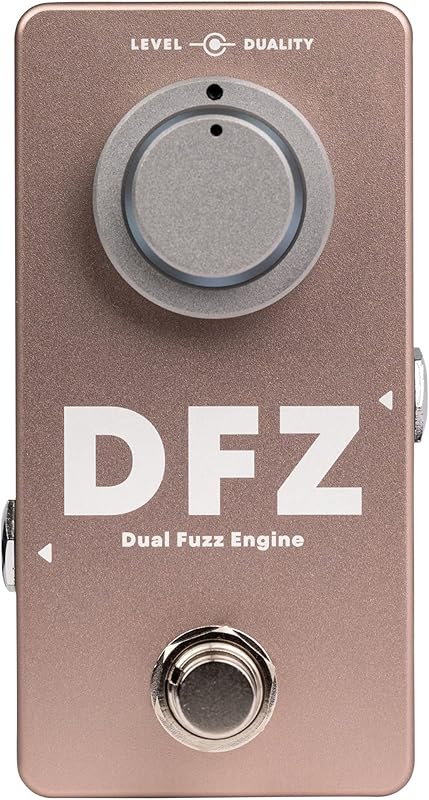
This pedal has become a myth. I’m not talking about Klon-like levels but generating buzz among players. I mean, we all know there’s no meaner, bigger, more savage bass fuzz out there than the Darkglass Duality.
It had been discontinued for some time, but it’s back in a smaller, slick, soft, and beautiful shape. It’s so cute it feels like the volume control of your avant-garde sound system rather than something you’re stomping on. Nevertheless, the enclosure is thick and ready to face the road anytime.
The thing I love the most about this pedal is the ability to blend the two fuzzes rather than select between them. You can just move from one side to another and also have the best of both worlds. The master volume is also very handy because it acts a bit like a blend knob with your instrument.
I just plugged it in as it was out of the box, and with everything at noon, I felt the kick, the raspy nastiness, and the mammoth punch of the Duality Fuzz. Plus, it’s got enough volume to push you forward when you need it. It worked wonders with my maple-neck Music Man. The open strings hit like thunder while the lead lines cut through.
I loved the initial sound, but flipped it and opened the hidden compartment behind, where I could adjust the high frequencies on the fuzz side with the Filter control. The harshness you might get with a bright bass can be tamed. I used it to brighten my dark P-Bass. Those open strings take on a whole new dimension. Especially with a pick.
Next to it, the blend knob allows you to dial in how much of the signal will be dry. It’s extremely handy to tighten the low-end. Going back to the P-Bass, it helped me enhance the instrument’s natural tendencies. Nothing sounds bigger than a P-Bass.
Here comes the only thing I don’t like about this pedal. If you play shows, the most important knob on the pedal is the filter. Every room sounds different. If you’re going to adjust something, that’s the high-end to prevent harshness. In my opinion, it should be outside. I get it, the design is beautiful, but maybe on the side?
This is a great-sounding pedal that’s perfect for live use, but also a cool studio trick to go from a gated fuzz sound to a tighter, more high-gain fuzz with the twist of a knob.
5. EarthQuaker Devices Chelsea Low-end Fuzz Driver
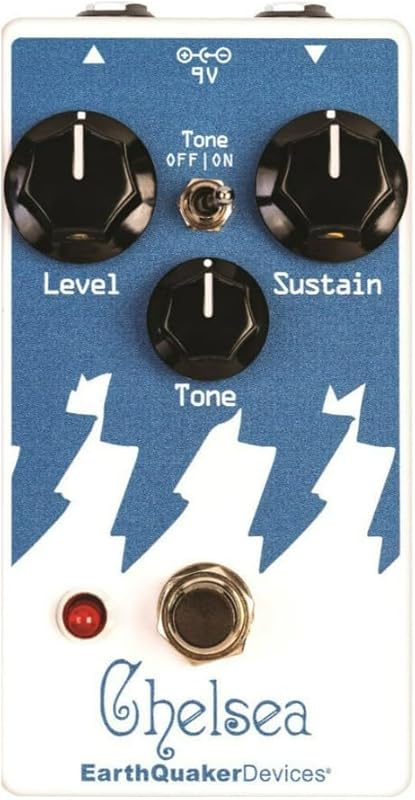
Regardless of whether you are a fan of LCD Soundsystem like yours truly here, you’ll love this pedal’s simple layout and mammoth-like dirt. Earthquaker Devices designed the Chelsea fuzz with James Murphy to capture his bigger-than-life fuzz sound in records and live performances.
This pedal is as easy to maneuver as fuzz pedals get. You get your usual Big-Muff-like controls of Level, Sustain, and Tone.
One thing you have to bear in mind as you work this pedal’s tone is the Volume knob. This is a very reactive pedal that grows as you push the volume, just like an amp would. Speaking of which, I set it all at noon and began my test with my trusty old Jazz Bass going into the fuzz and my 1x15 amp.
The result was a dirty, powerful, grainy, fuzzed-out tone that worked great with slapping and with a pick. There’s a switch between the knobs to use the tone or remove it from the circuit. When you do that, your mids suddenly jump at you. With the Jazz, I found the tone knob great to darken the tone, moving it counterclockwise and getting a more menacing thump. As I dialed in more tone, the fizziness and high-end got sharp like a knife and took away some of the thump.
In my opinion, this pedal’s true trick comes from bypassing the tone knob entirely. When you take it out of the circuit, the midrange pops in to say hello. Yes, this tone is pure gold to play with a P-bass and a pick. You can get some instant stoner rock, but also instant Ramones effortlessly. I just wish it could be accessed via an external footswitch. It would be the perfect verse/chorus push, going from maxed tone to no tone.
My favorite setting was with volume at 3 o’clock, sustain at 2 o'clock, and tone at 10 o'clock. That setting made my maple-neck Music Man roar and conquer. It unleashed the lower-mids while keeping it tight and punchy.
Before I knew it, I was playing a dirty version of Sledgehammer’s theme, and it sounded awesome.
If you want a somewhat versatile, very user-friendly fuzz that won’t take much pedalboard real estate or break the bank and is ready for the road, this is a great candidate. For something more complex, you might be better off looking somewhere else.
6. Fender Bassman Fuzz
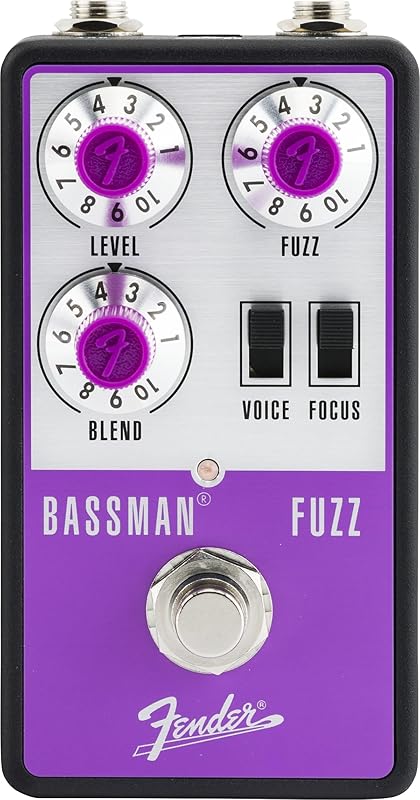
Let me tell you that the Bassman line of Fender pedals looks incredibly retro and beautiful. The fuzz is the purple one, and it has a very straightforward layout with just three knobs and two sliding switches.
These are enough to cover a lot of sonic ground, believe me.
The knobs control the master volume, the fuzz, and the blend. Adding to that, you have three tone scenarios: Full frequency, mid-high frequencies, and only high frequencies. Finally, the voices slider switches between vintage and modern.
To begin with, I went to the modern side of things, set the fuzz to about 8, the blend at about 6, and the level at about 7, and I was off to the races! The main riff to Muse’s “Hysteria” sounded tight and powerful. Moreover, adding more blend, I was able to tighten up the sound even more, rescuing my P-Bass’s natural low-end.
Speaking of which, the tone switch set to high frequencies only is perfect to play leads up there or a fast riff.
Staying on the modern side, I set the blend to 3 and the fuzz to 10 and played “Cochise” by Audioslave, and the result was gigantic (not the Pixies song, but huge). The bottom-end coming through the fuzzed-out tone and reaching the speaker makes a 15” amp growl. Believe me, the open fourth string became a jackhammer in this setting.
I changed basses for my Jazz Bass and brought the blend back to 6 and the fuzz to 7, and slapping was mean and powerful. I played “Take the Power Back” by Rage Against the Machine, and it felt like playing for an arena full of screaming fans.
Finally, besides the cool knobs, color, and housing, the design of these pedals is just great. You have a single screw in the back to open the thing, and you can even do it with a pick!
These are road-ready workhorses, faithful heirs of Fender’s fine lineage of tools for the working musician. So, for road-ready fuzzy madness with great tones and versatility, this is a must-try-before-you-buy specimen.
Why Do You Need a Fuzz Pedal for Your Bass?
I know what you’re thinking, and I was there once too; “Fuzz pedals are just to play heavy”. Well, you’d be surprised to learn how many bass players from Bootsy Collins to Larry Graham to Joe Dart use fuzz when they play. There’s always room for a little fuzz spicing things up here and there.
In my opinion, a good bass fuzz pedal can open doors in your head. You don’t know it yet, but you’ll want to use it for much more than you can imagine. Once you have one, roads leading to new sonic highways will just open.
A good pedal can be the inspiration to play more, to play differently, or to try other things.
I use my fuzz pedals mostly in these three scenarios:
To bring mayhem – It’s well-known to those who come from a rock background that creating a bigger sound for the chorus or the solo can be a game-changer. Well, my fuzz pedal does that for me every time I need it.
To go into solo mode: I love to get rid of most of the blend and use those high frequencies for soaring lead tones. I know this isn’t something we all do, but in my case, I take a step forward and grab the spotlight, stomping on a single pedal.
For fast, heavy riffing – What if you double a riff with a rattling top, tight-bottom bass? The result is far bigger than you can imagine. Believe me, I tested this generously.
Beyond these three uses, which are mostly live, I use my fuzz for some studio tricks, too. For example, to make a slapping section pop out, or to bring dirt to a fast line played with a pick. I could just double the track and apply a plug-in later, but it doesn’t feel or sound organic unless you cut two takes.
I do one clean and the second with the blend in zero. I can bring the dirt up in the mix later as much as I want while keeping it all clear and understandable.
Where Does it Go in the Chain?
This is a very common question, especially when you’re starting to design your pedalboard. Well, in my opinion, the closer to the instrument, the better. I would say after any filters (like a Wah or Q-Tron) and compressors, but before all the rest.
Bear in mind, fuzzes are loud pieces of gear and generate a loud buzz sound whenever you engage them. This is often lost in the mix when you start playing, but if you want to get rid of it and play high-gain tones, you might consider getting a noise suppressor, like the Boss NS-2.
Fuzz or Distortion?
To fuzz or not to fuzz? THAT is the question!
Leaving Shakespeare rest in peace, let’s talk about the differences between fuzz and distortion.
Distortion is a type of alteration to the signal that goes from a little more than a subtle overdrive to a total harsh, grainy, high-gain saturation. For this, it clips the signal increasingly.
Fuzz, on the other hand, isn’t born from something that overdrives or saturates; it just clips the signal so hard that the amount of gain and grit is virtually infinite.
In practice, distortion affects your natural tone way less than fuzz (that’s what the blend knob is for). You can also find mild tones with a distortion pedal. On the other hand, you’ll always have more dirt and grit with a fuzz. It also makes the instrument grow much bigger.
After saying all of that, let me give you the good news: You can have both. Indeed, many of us do. If you need to unleash hell, you go for the fuzz, and for milder uses, you go for the distortion.
You can even have them set with different EQs and use the fuzz to go into solo mode and the distortion for the heavy riff in the chorus.
Crossover to Guitar: Is It Possible?
The answer is yes. Perhaps the most famous case is David Gilmour using an old, green Russian Big Muff Pi. A bass fuzz he uses to get the creamy lead tones fueling timeless solos like “Comfortably Numb” and so many others.
The one thing I have to warn you about is doing it the other way around. Most guitar-oriented fuzz pedals tend to have a filter to get rid of the muddy frequencies. Therefore, they will cut off the much-needed low end of your instrument.
Plus, you won’t have the blend knob, the most important one for bass players.
The TS-9 Trick Always Works
Guitar pedals tend to have a slight bump in the mids to cut through. When you play in a band and turn on your Big Muff Pi, like the one I had when playing guitar. Your sound gets immediately engulfed by the band. It disappears like magic.
To stop this, I borrowed a TS-9 to put before the fuzz, and the problem was solved. The overdrive pedal provided enough mids to fill the hole in the frequency spectrum.
Conclusion
A fuzz pedal can be a fountain of inspiration to play more and take more risks.
After reading this article, you have enough info to buy the best in the market. Getting any of the six above is a safe bet. Give your imagination distorted wings and let time fly while playing your bass with a fuzz pedal. Who knows, you might discover a shredding demon inside that was waiting for the right amount of gain to make it out.
Finally, before saying goodbye, let me give you a piece of advice. I guess we can all learn from the man himself, Flea. Watching him apply fuzz to ballads, rock anthems, funk hymns, and generation-defining tunes is something I’ve done for decades, and I’m still learning from him to this day.
Happy (fuzzed-out) bass playing!
