
I personally hold Royal Blood responsible for the uptake in bass octave effects, and I think it’s an awesome development. Why let guitarists have all the fun when it comes to pitch shifting?
Bass octave pedals are a great way to expand the tonal palette of the bass guitar. They’re awesome for filling out riffs and space in a small ensemble, or for adding a layer of harmonic complexity at key moments in a live set.
Sometimes I just want to get into dread-inducing amounts of low end: nothing, to me, is heavier than the frequency range occupied by leviathans of the deep.
Top 3 - Bass Octave Pedals
Preview | Product | Price |
|---|---|---|
 | ||
 | ||
 |
With that in mind, I’ve compiled a list of my favorite bass octave pedals, from the ultra-simple to more complex pedals aimed at advanced tone tinkerers.
Why Use an Octave Pedal?
Traditionally, the role of bass player in a conventional ensemble is to communicate between the melodic instruments like guitar, keys, or a horn section and the drums. The bass is spiritually closest to a percussive rhythmic instrument: audiences feel, rather than hear, most rhythm patterns.
It’s why when you set up a professional sound system in your house, you have to be careful about where you place the tweeter, but the subwoofer can go anywhere you like. Lower frequencies, outside of human vocal range but audible to our ears, is often felt more than heard.
Of course, for as long as there have been bass players, there have been those who want to branch out from this role. I think of the “lead bass” Billy Sheehan brought to the forefront in David Lee Roth’s band, or Lemmy’s midrange-heavy bass style. Likewise, there’s Royal Blood, a simple two-piece with bass and drums, or Bootsy Collins’ inimitable funk bass playing.
An octave pedal allows the player to add a sub-octave or an octave above the note they’re playing. In guitar terms, I always think of MXR’s Blue Box from Led Zeppelin’s “Fool in the Rain” solo.
Sometimes it’s all practicality, and other times it’s just cool to have. Effects are fun to play with and this often unlocks a new arena of creativity. What’s not to like about that?
Best Bass Octave Pedals If You're Looking for Thunder
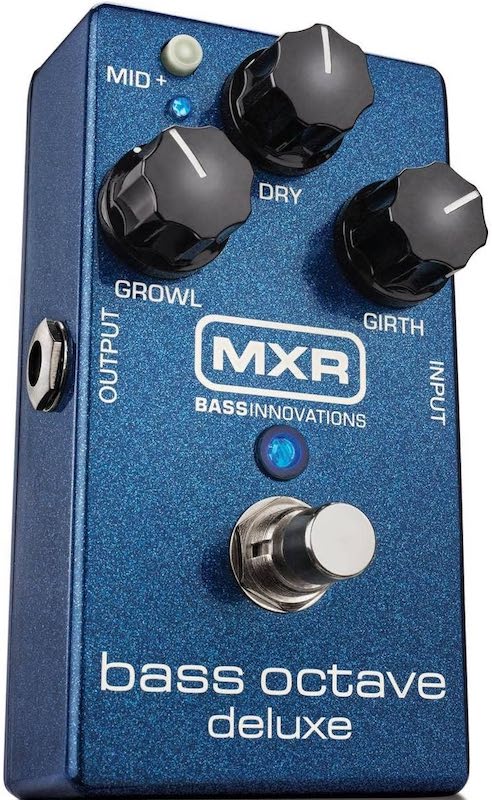
1. MXR M288 Bass Octave Deluxe
I’ve always said that when the world ends, the survivors will be cockroaches and MXR pedals. The durable M288 is no exception to this. It’s built like a tank, fits nicely on a pedalboard, and sounds cool. What else do you need?
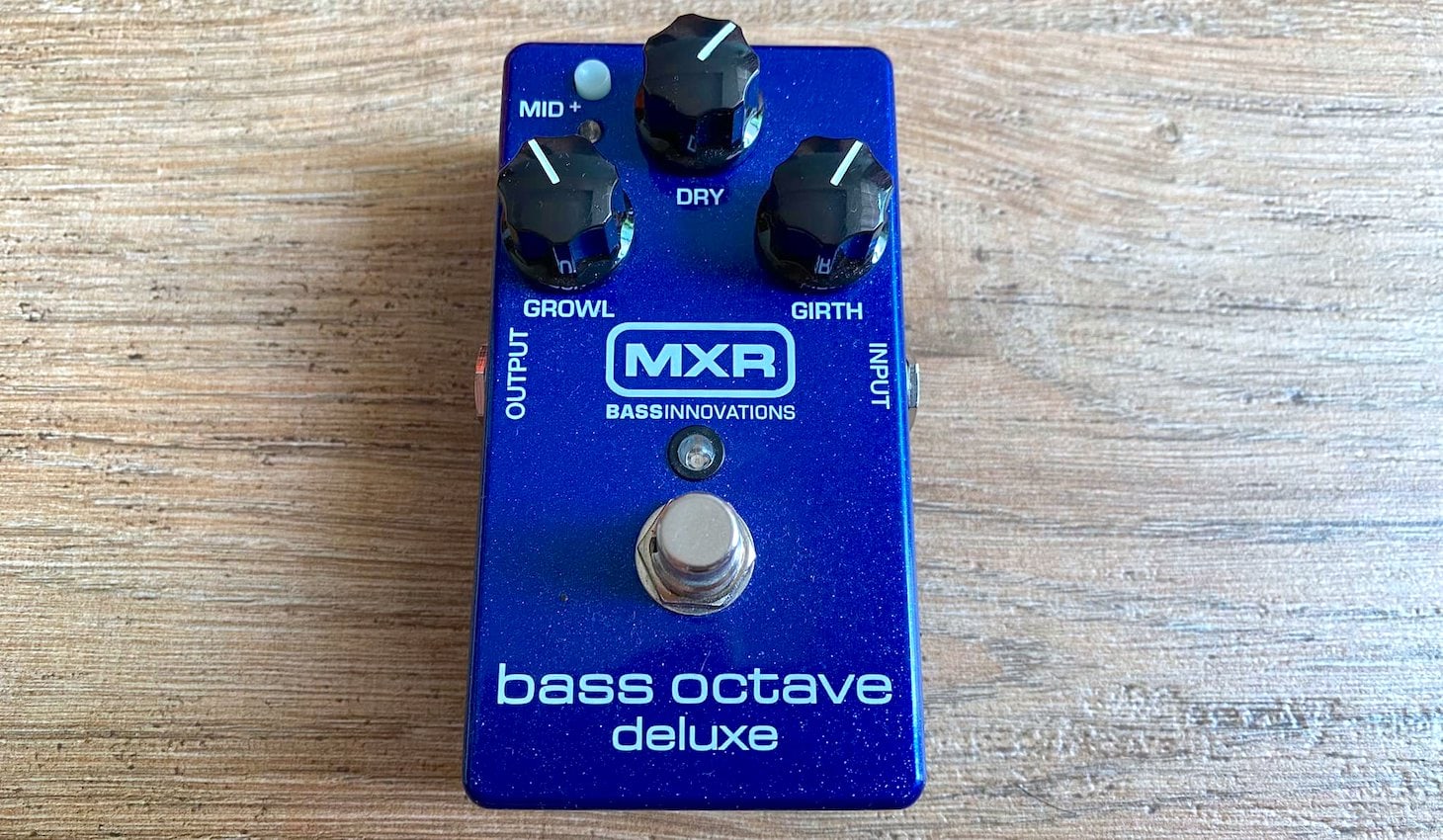
MXR M288 Bass Octave Deluxe
The layout is standard MXR: it’s about the size of a Phase 90, with a big footswitch, bright LEDs, and an optional switch in the corner for turning on the midrange boost. Side-mounted jacks and power port don’t exactly make for optimal pedalboard real estate, but that’s a minor complaint.
The M288 sounds best to my ears as a “bass boost”. Rather than kicking up the volume of the bass guitar, it’s possible to add a subtle sub-octave, shaping the tone of the sub-octave with the onboard knobs.
One, of course, is for the sub-bass frequencies, but the other is for midrange shape and definition. I was able to get a well-defined sub-octave with plenty of pick attack, but also a warm, feel-it-in-your-chest sub-octave.
I found it particularly useful for dance-ready pop bass lines that need an extra push. In particular, the pumping, synth-like Muse bass tone is here in spades: the “Growl” knob really emphasizes this. My usual bass-and-amp tone often isn’t enough to replicate the highly processed bass sounds in modern pop and hip-hop. With this little pedal, it was easy to access those powerful, propelling bass sounds.
It’s great for feeling like you’re a DJ pumping up the dance floor in an EDM nightclub, rather than a live bass player trying to capture the sheer intensity of electronic bass lines.

2. Boss OC-5
I’ve seen the Boss OC-5 on more pedalboards than I can count, from local bands to seasoned pros.
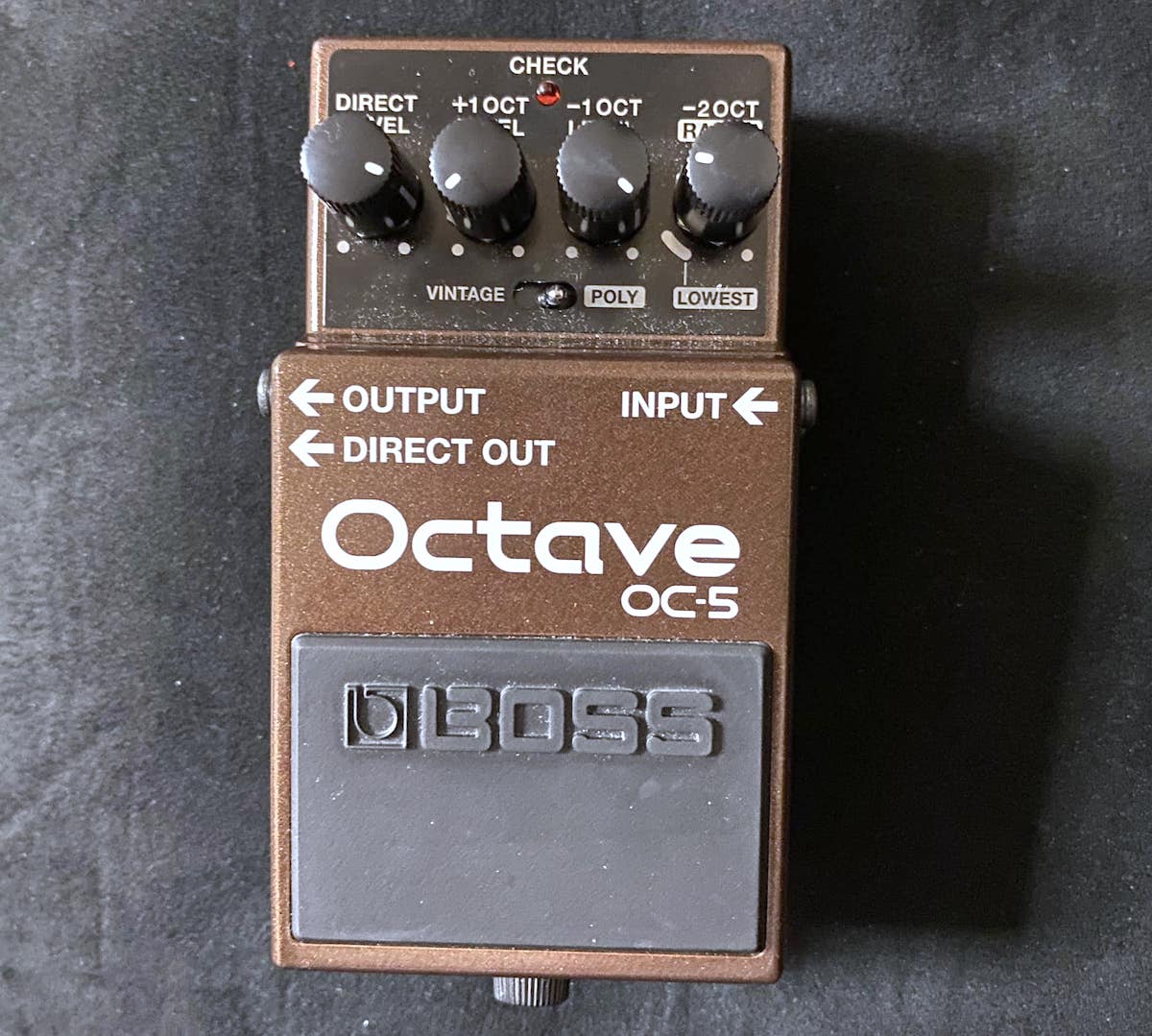
BOSS OC-5 Octave Pedal
Although the OC-5 has amassed a reputation of being a “bass player in a pedal,” it’s possibly more useful to an enterprising bassist than to a guitar player.
The ability to octave up or down, for a start, is a great option for playing bass. I actually had a lot of fun playing some old Motorhead lines through this pedal, adding aggression and depth of sound to Lemmy’s droning, walking bass parts.
There’s even a handy switch on the side to switch from guitar to bass and vice versa. This helps eliminate and unwanted overtones and sympathetic harmonic frequencies that I’ve noticed when using this pedal with a guitar.
Of course, the usual bass sub-octave features are there. I was able to run a subtle octave down at reduced volume compared to the dry signal, really beefing up the sound in a country band.
I actually tried using it to emulate the sound of an extended-range bass, and was very impressed. While I’m not quite articulate enough on a bass guitar to play thinner strings as if they’re thicker (and vice versa) the octave down or up certainly was able to offer a convincing impression of additional B and E strings, whether above or below the standard four-string offering.
Usability is classic Boss: shallow learning curve, and the pedal feels sturdy and reliable. Top-mounted power supply, and no screwdriver required to replace the battery for those of us who like using a 9 volt over wall power.
Overall, a great, reliable workhorse based on one of the earliest arrivals to the octave pedal game.
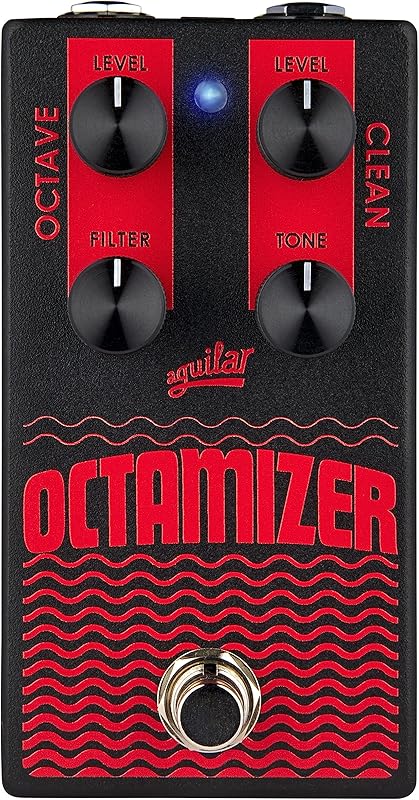
3. Aguilar Octamizer V2
Aguilar gear looks cool and sounds good. What’s not to like?
The Octamizer is a little more boutique in style and operation than most bass octave pedals, and that’s a good thing.
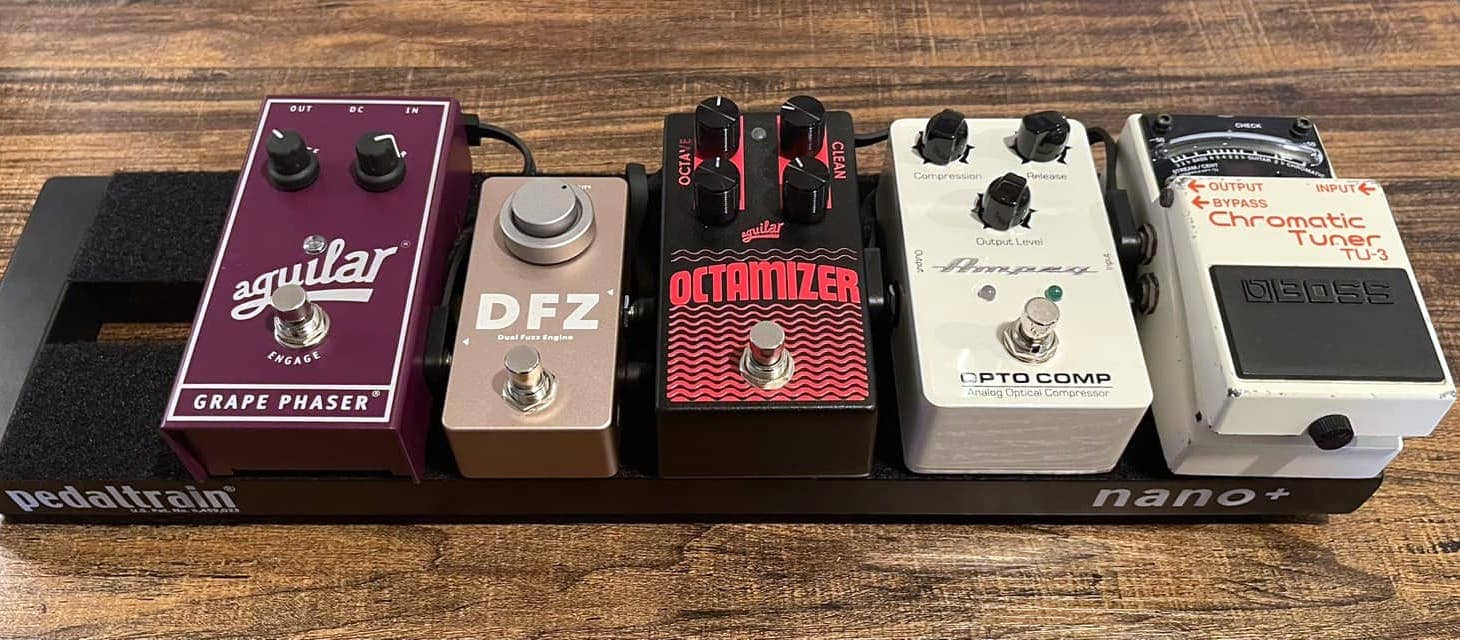
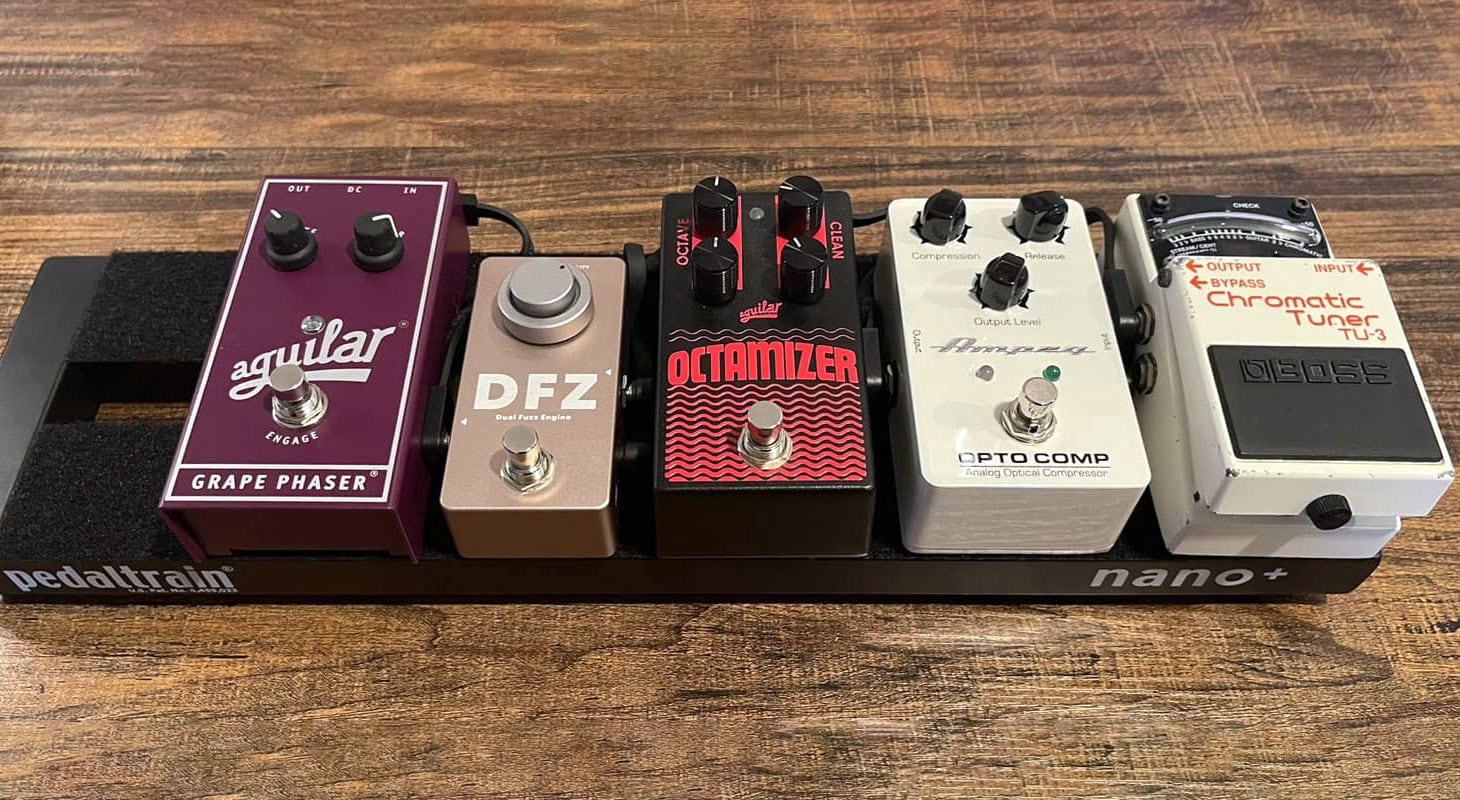
Aguilar Octamizer V2 on my pedalboard.
The first thing I noticed when playing through this pedal was the remarkable sensitivity of the knobs. It reminded me of learning to drive, when even the slightest push on the pedals made the car leap forward. After some time spent tweaking, however, I got used to this sensitivity, and was thrilled with the minute tone-shaping capability it afforded.
I did find that it doesn’t detect lighter-gauge G string playing quite as well as the lower ones. Perhaps being optimized for bass guitar has left this pedal with a better “ear” for lower pitches!
I found that the Octamizer also plays very well with a nice compressor like my four-knob Keeley. This helps even out the volume of my bass playing before it gets to the Octamizer, leveling out the dry signal and therefore the octave signal, too.
The octave tone can be sculpted into ultra-clean studio-ready sounds, or shaped by the Filter and Tone knobs into something far more interesting.
I quickly got to a warm, vintage-voiced synth-like sound with this pedal. Pushing the level did result, expectedly, in tonal mud, but otherwise the tonal character of my bass remained fully intact throughout my playing experience.
4. Laney Black Country Customs The 85 Bass Interval Pedal
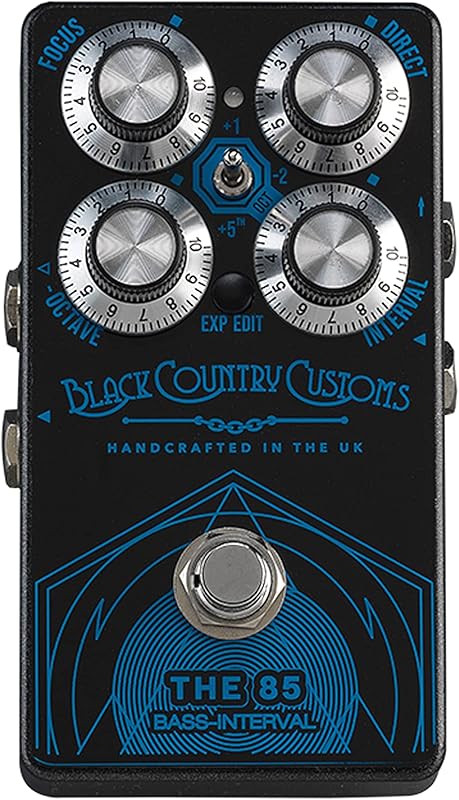
Metalheads rejoice: Laney’s Black Country Customs line heavily channels Birmingham’s proudest sons, Black Sabbath. The 85 Bass Interval is, more than other pedals in this family, built to shake rafters and terrorize neighbors.
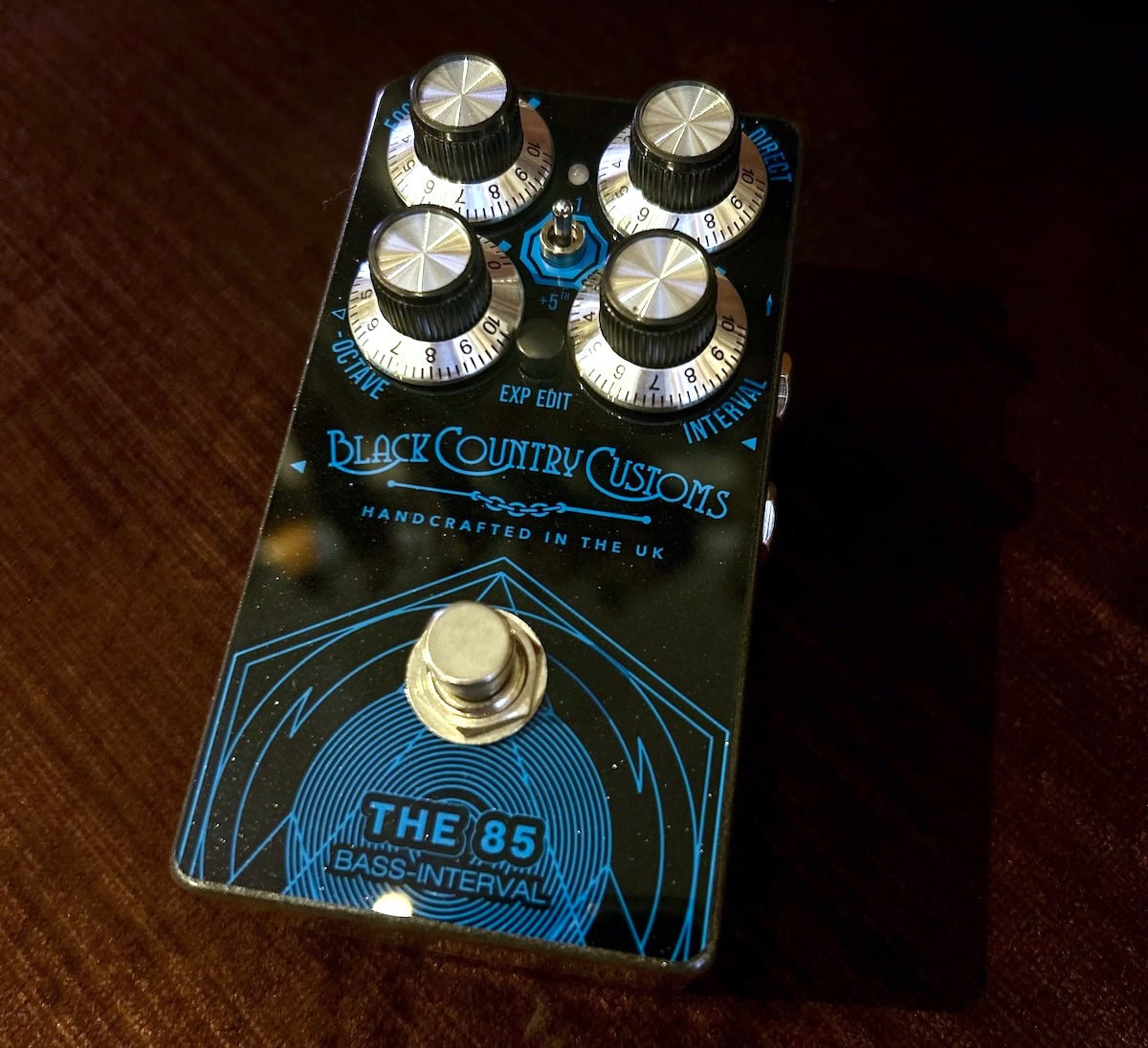
Laney Black Country Customs The 85 Bass Interval Pedal
With the brand’s indelible association with Black Sabbath firmly at front of mind, I was keen to experiment with some classic Geezer bass lines, or even dabble in Iommi riffage.
I was immediately frustrated with the pedal’s unintuitive layout: the design, while beautiful, isn’t exactly easy to read, and the knobs don’t work independently. Each is affected by the positioning of the others: it reminds me a lot of old-school tube amp EQing.
Some time spent twiddling later, however, and I was able to achieve the heavy, painfully psychedelic tones I wanted. Menacing, synth-esque sub-octaves and meaty octave up effects are firmly on offer here, perfect for relentless rock riffage.
This pedal also handles other genres very well, and I was able to dial in subtler tones, too. Warm, bass-plus sounds, and funk-ready tones are only a couple of knob turns away.
That’s not quite as much fun as blasting through “Heaven and Hell” or “Sabbath Bloody Sabbath,” though!
I found that this pedal responded best to the use of an expression pedal, which I found I could set to control any of the four onboard knobs. Dialing in the sweep, again, took some effort, but it was worth it in the end. No time spent chasing tone is ever wasted!
The multiple octave voicings all sound great, the pedal looks beautiful, and it reminds me of the first five Black Sabbath albums, so for me, there’s plenty to love about this UK-built pedal from Laney.
5. Digitech Bass Whammy
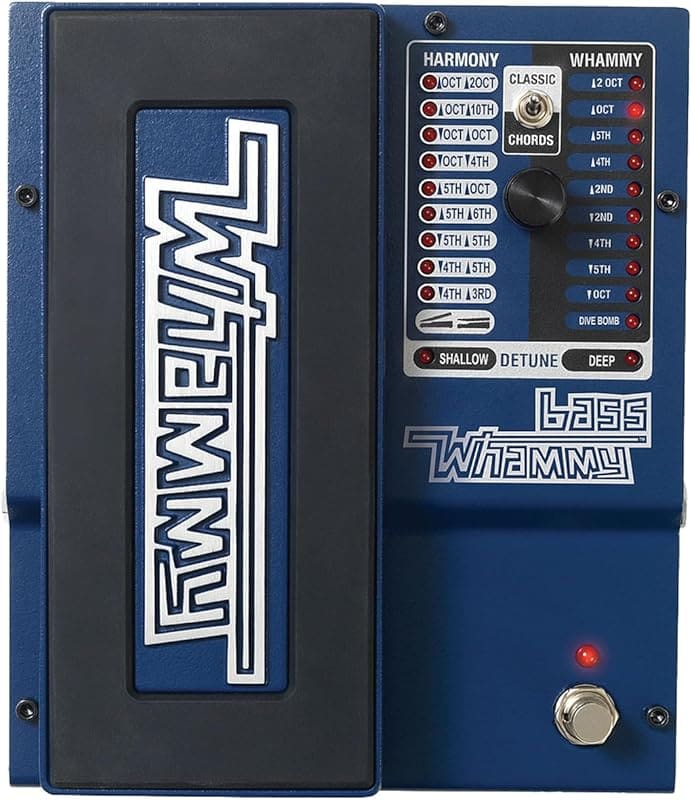
I’ve always thought of the Digitech Whammy as being the sole purview of Rage Against the Machine, but they’ve extended the radical pitch-shifting of that pedal to the bass.
The Bass Whammy has two main use cases, as far as I’m concerned. One is to send the bass sound way up or down for a particular part, say a lead line. The other is to layer harmonies for a dense, powerful sound. The former is much easier to do well than the latter: perhaps that’s why Tom Morello loves his guitar Whammy so much!
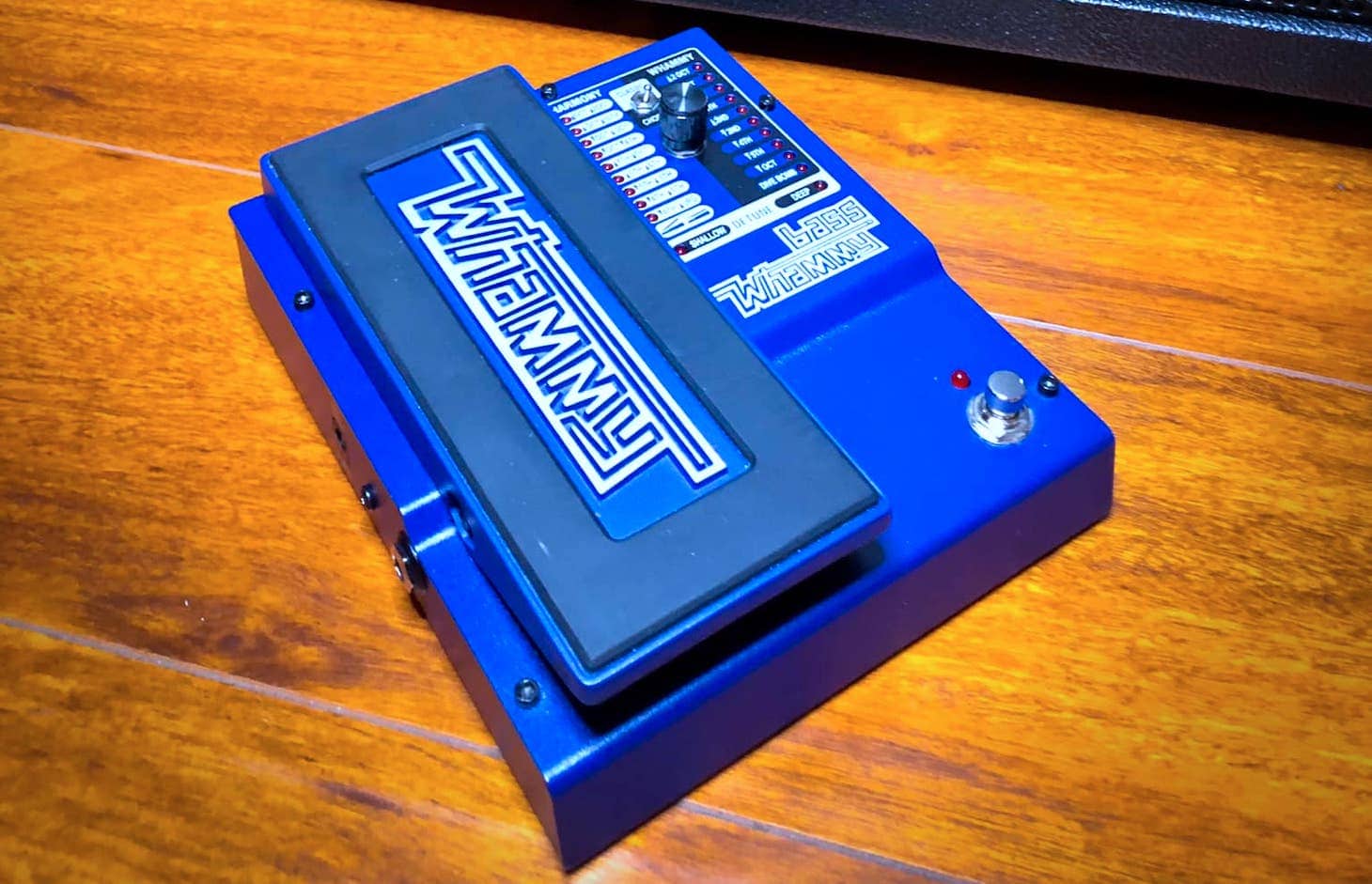
It’s relatively easy to run the bass Whammy as if it’s a tremolo arm on a guitar. Rather than straining my wrist bending bass strings, I was able to use the whammy to the same effect. Likewise, I could achieve aggressive dive bomb sounds that reminded me of air raid scenes from World War Two movies.
Layering harmonies and creating chords is another beast altogether. It’s trickier to do well, and takes some practice to sound musical rather than like a bass player tinkering with a toy.
I could easily see myself using this pedal as the cornerstone of a heavy two-piece band like Astrodeath. The ability to craft and layer complex chords and intervals without any noticeable latency or glitching is invaluable in this context. Perhaps more fun is making crazy, almost non-musical noises with the two-octave-up option mixed with fuzz and delay.
Most satisfying of all, it easily gets into the ballpark of the bass sound from Tool’s Disposition. What more can you ask for?
Closing Thoughts on Bass Octaves
Playing with effects can be great fun. Bass octave pedals are an awesome way to unlock new levels of creativity and otherwise unfathomable sounds. From simple bass thickening sub-octaves to wild, alien noises, there’s a bass octave for everyone.
