
I wouldn’t describe the amps of my younger years as portable. Powerful, yes. Great-sounding? Absolutely. But anyone who has ever dragged an Ampeg SVT up a flight of stairs will attest that portability isn’t exactly what amplifiers are known for.
Fortunately, modern audio technology has improved dramatically in recent years. Batteries in particular are more reliable and more powerful than ever before.
For modern bass players, that means battery amps are an increasingly viable option, not only for home practice, but for smaller gigs, too.
Top 3 - Battery Powered Bass Amps
Preview | Product | Price |
|---|---|---|
 | ||
 | ||
 |
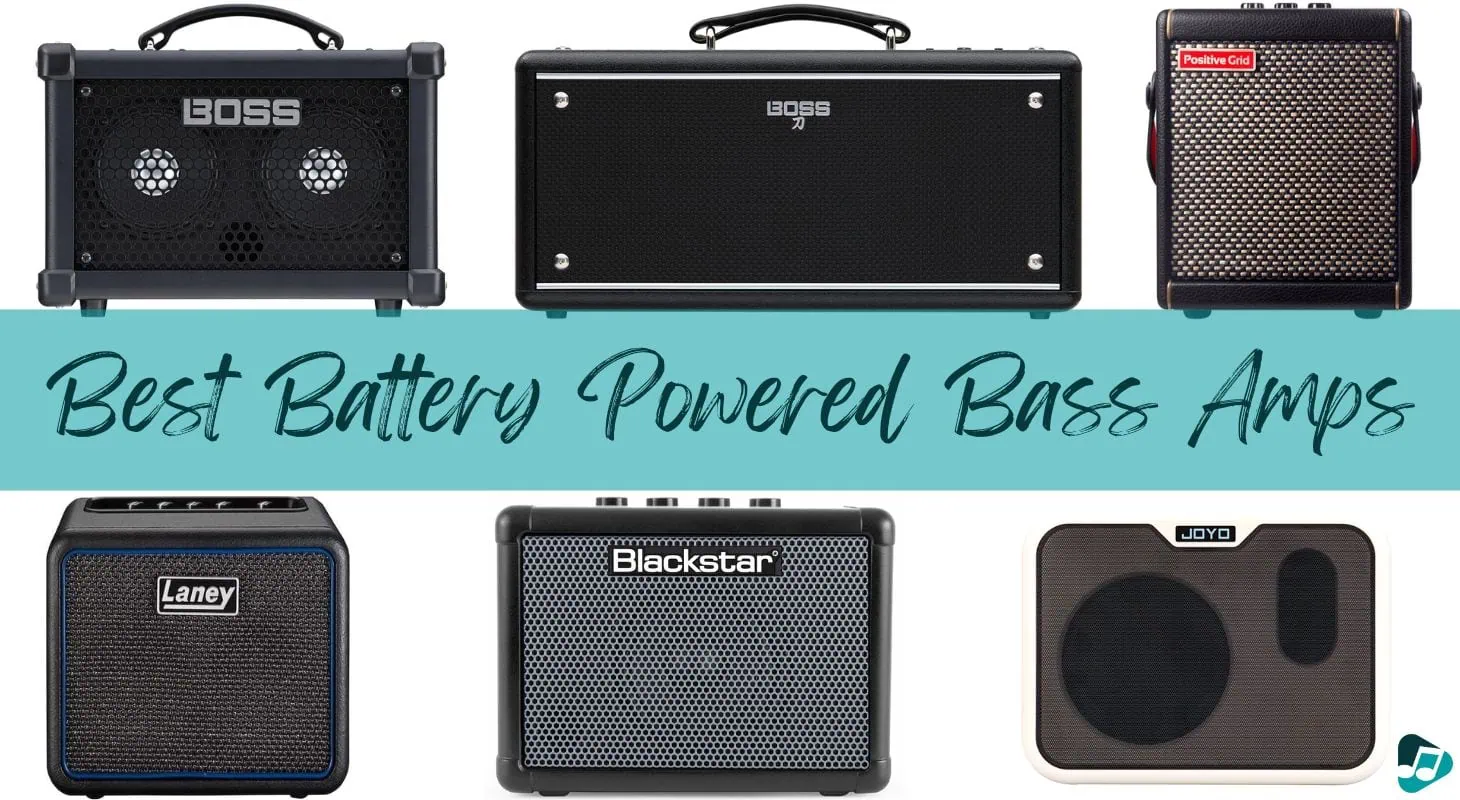
In this article, I’ve included some of my favorite battery powered bass amps. Some are best for home practice, while others give you the chance to plug in to a PA and play to your heart’s content.
6 Battery Powered Bass Amps for Ultimate Portability
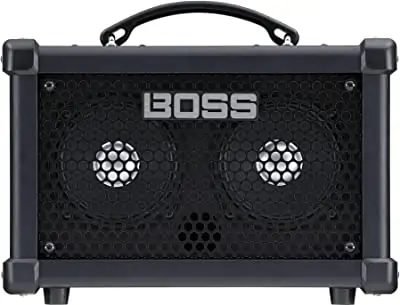
1. Boss Dual Cube Bass LX
The Boss Dual Cube Bass LX, like most Boss gear these days, offers plenty of power in a compact package. Boss tends to pack their amps with features, and this one is no exception.
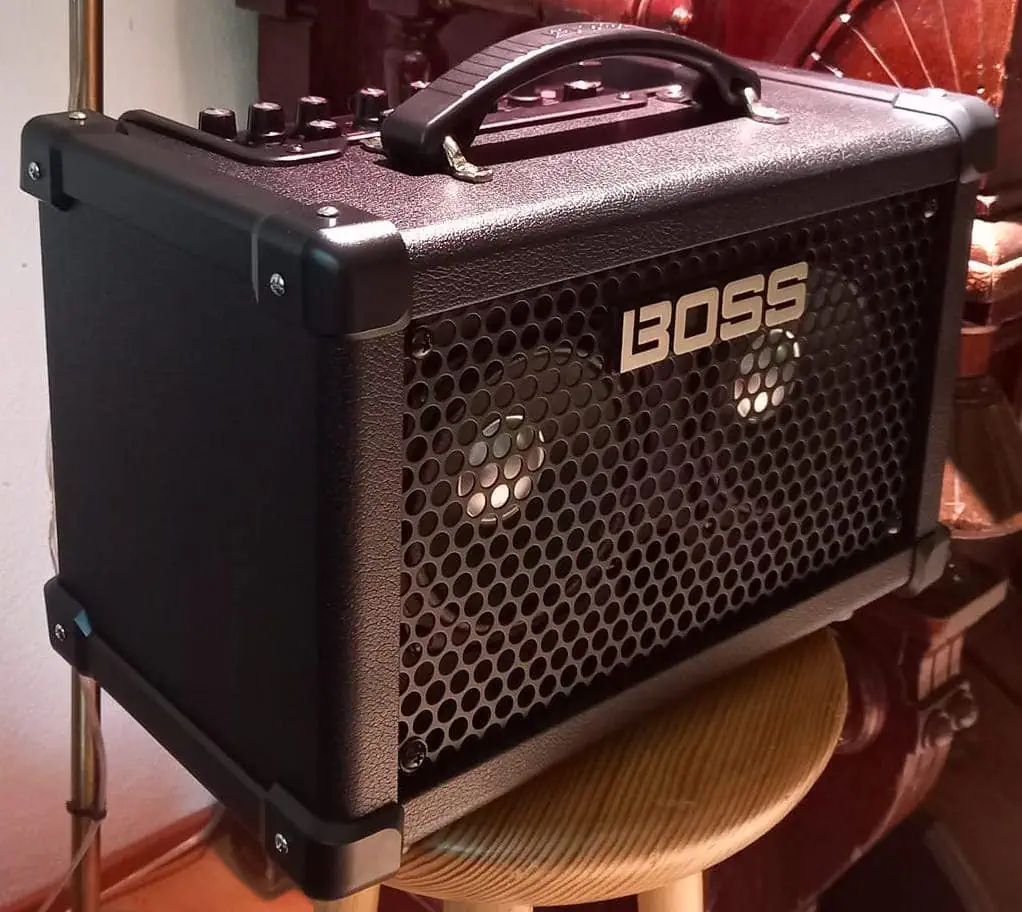
Boss Dual Cube LX Bass Amp
Upon plugging in, I was thrilled to find a full three-band EQ, various built-in effects, gain sages, and a looper. I doubt I’d use most of these features in a live setting, as I typically prefer pedals, but they’re very handy for quickly setting up and practicing.
The tone from the Dual Cube is fairly plain. It’s articulate and reliable, and I had some fun sculpting it to my exact specifications with the various effects, gain, and EQ options. It got a pretty close facsimile to Gene Simmons’ Rock and Roll Over era tone, which I saved to a built-in memory preset for the next time I felt like playing along to some KISS songs.
While this amp is clearly designed as a practice tool, it’s small enough to go in a duffel bag with you to your next gig. The XLR out allowed me to run the amp into the PA at a show I was playing. It wasn’t quite as satisfying a playing experience as running a head and cabinet, but it did the trick.
The two 5-inch speakers won’t keep up with a loud drummer in a live setting, but you could feasibly run this amp at a small, quiet gig with an acoustic guitarist.
The amp takes eight AA batteries, which you can buy at just about any convenience store or gas station. I didn’t manage to wear the batteries out, but I’d travel with a full complement of spares to any gig just in case.
I tend not to use looping effects on bass, but it’s there as a handy practice option.
Overall, a reliable, versatile amplifier as suitable for busking as it is for jamming at home.

2. Blackstar Fly 3 Bass
Blackstar builds outstanding amplifiers, and I’m a big fan of their work. They make Marshall-style amps, but with some minor user-friendly tweaks.
While many other manufacturers have focused on making their larger amps more practice-friendly, Blackstar has gone in the opposite direction to try and make their small practice amps more powerful.
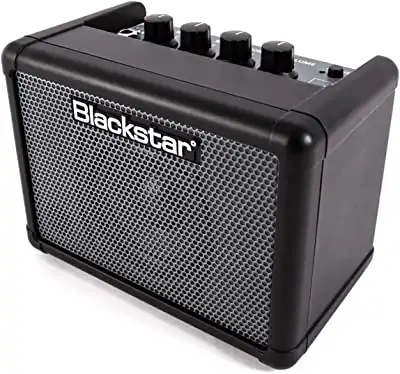
The Blackstar Fly 3 Bass shows that this endeavor has certainly worked. For a little 3-watt amp, the Fly 3 is loud.
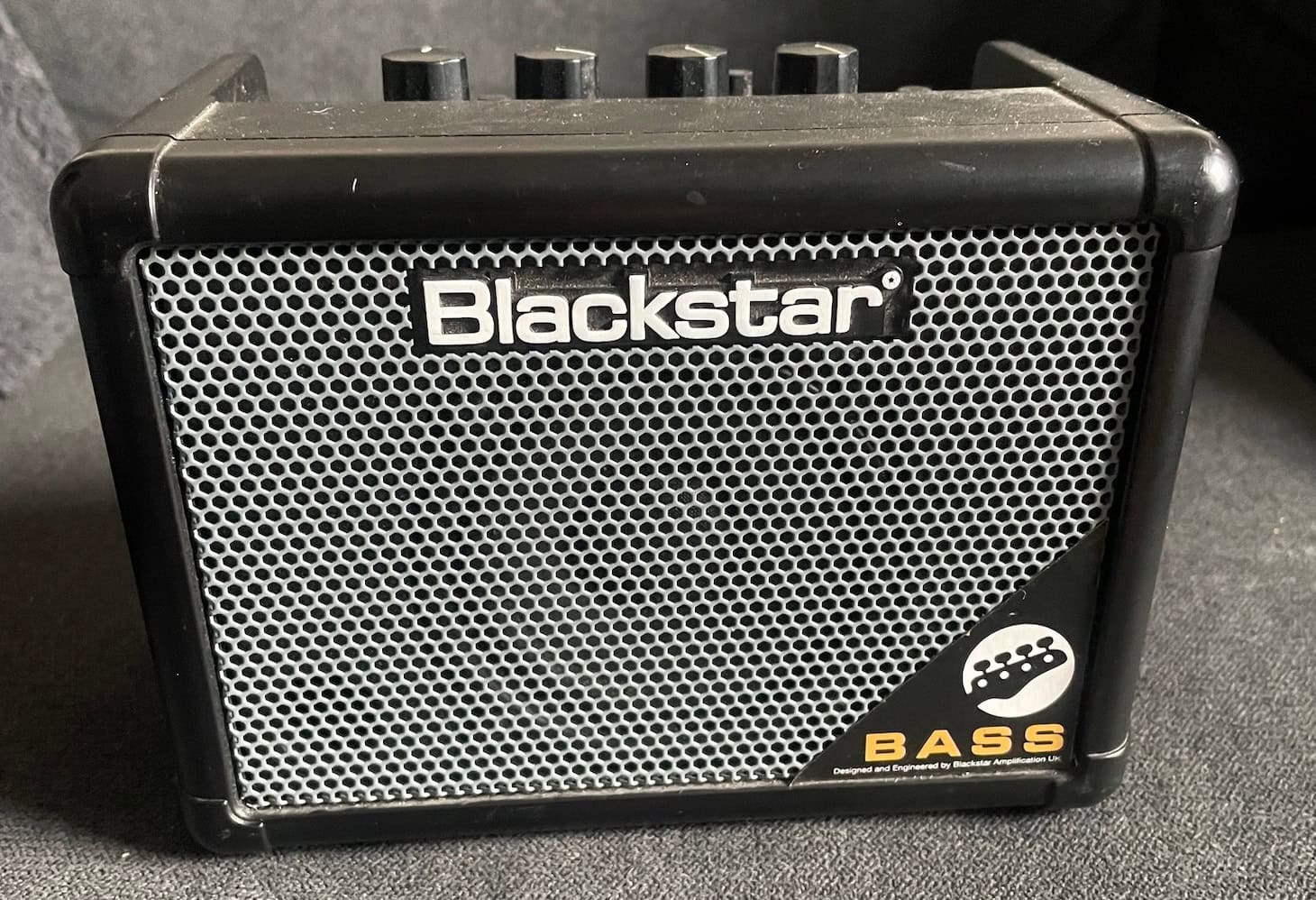
Blackstar Fly 3 Bass
It also sounds fantastic. But that isn’t too surprising. Blackstar amps are known for their incredible sound, but even for its small size, the Fly 3 stacks up quite well against its larger cousins. Upon plugging in and turning up the amp, there’s plenty of warm, welcoming tube amp saturation to enjoy. I couldn’t resist powering through some Motorhead bass lines.
In terms of features, the Fly 3 is fairly bare bones. You get volume, gain, EQ, and compression. I don’t need more than this for my practice time.
A really cool feature on this amp that I like is the SUB control. This adjusts the level of the octave below what you are playing. Basically, this control beefs up your bass sound, giving you more low end. You can add a swampy, overpowering sub-octave, remove it entirely, or offer up a touch of extra low end beneath your playing. It can be a subtle, effective tonal seasoning.
I tend to leave my Fly 3 on my desk for at-home practice, but occasionally I take it with me when I go away for the weekend. It’s about the size of a teapot, so it fits easily into my luggage, and takes AA batteries that you can buy anywhere in the world.
This little potent thing can even handle some lightweight busking (but don't expect anything beyond that), and I've seen it firsthand.
Not only is this one of the most portable, lightweight amplifiers you can buy, it’s very competitively priced. It’s worth buying at that price just to try it out.
3. Positive Grid Spark Mini
The Spark Mini has enjoyed massive success among guitar players thanks in no small part to their strong social media marketing presence.
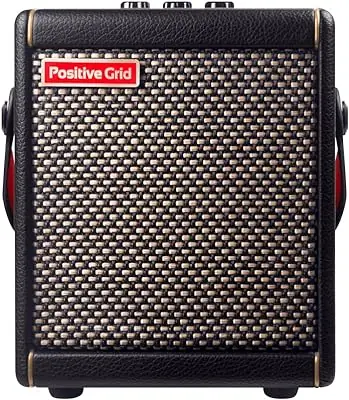
The miniscule amplifier offers only ten watts of power and two positively diminutive two-inch speakers. It’s safe to say that this petite battery amp isn’t designed to compete with a loud drummer, or even an operatic singer.
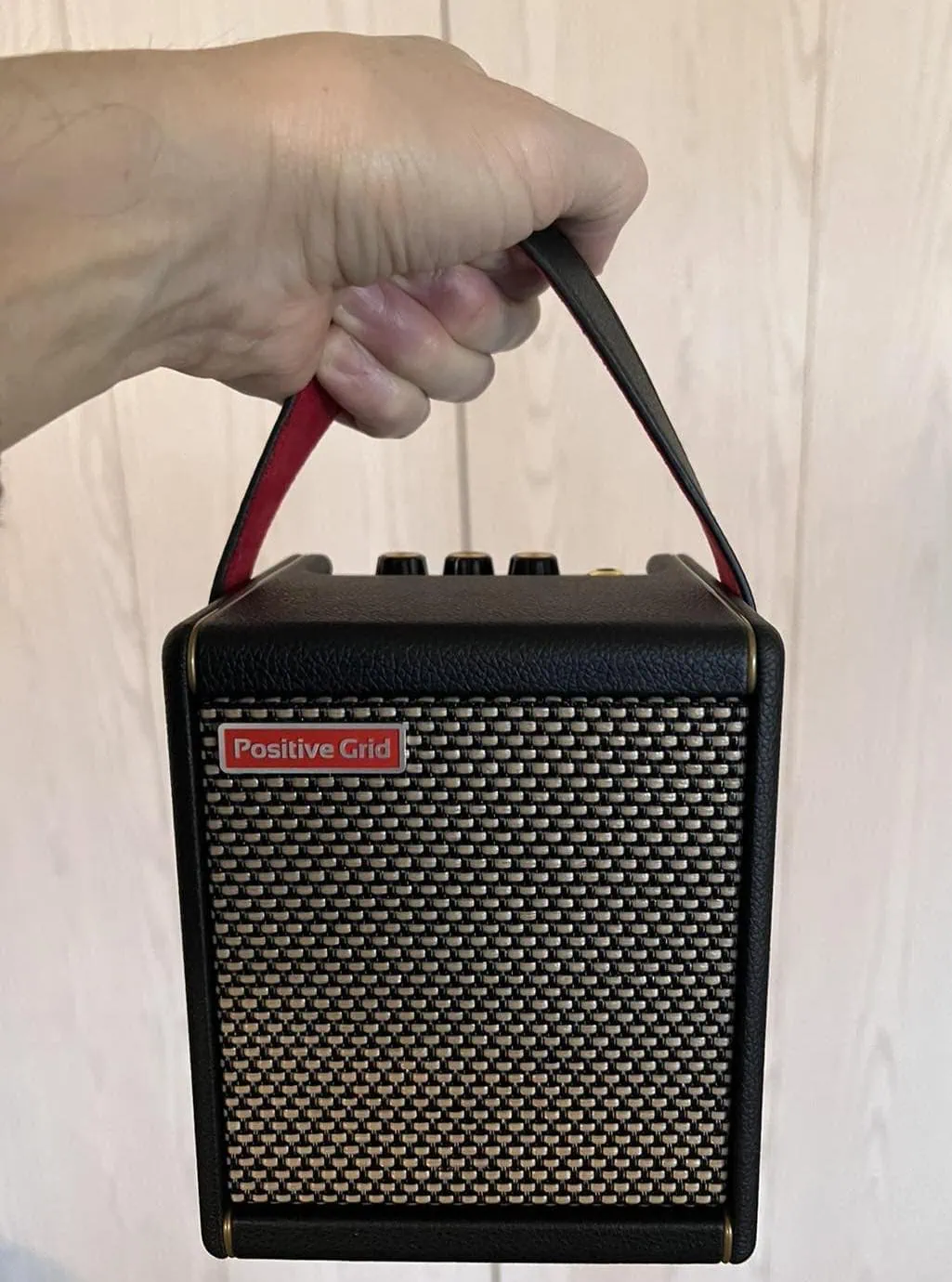
Positive Grid Spark Mini
However, for playing at home, on the go, or just for fun, it’s hard to beat the Spark’s astonishingly diverse array of tones. One of my favorite ways to jam at home is to play along to the albums I love. The Spark offers the chance to do this, with plenty of options to shape your tone according to the music you’re playing with.
I’m a simple guy. I like to plug in and play, without fiddling around. The UI for the Spark does require some getting used to, but once you’re over the hump of the learning curve, I find it pretty straightforward to play with.
Honestly, the Spark Mini might be the most fun battery amp for playing around at home. It includes a built-in band.
There’s an intelligent software backing band that might be smarter than your actual real-life bandmates. You can cue up the “smart band,” start playing, and the rest of the band will join in, creating automatic chord sequences in the background of your playing.
Who needs a jam buddy?
4. Boss Katana Air EX
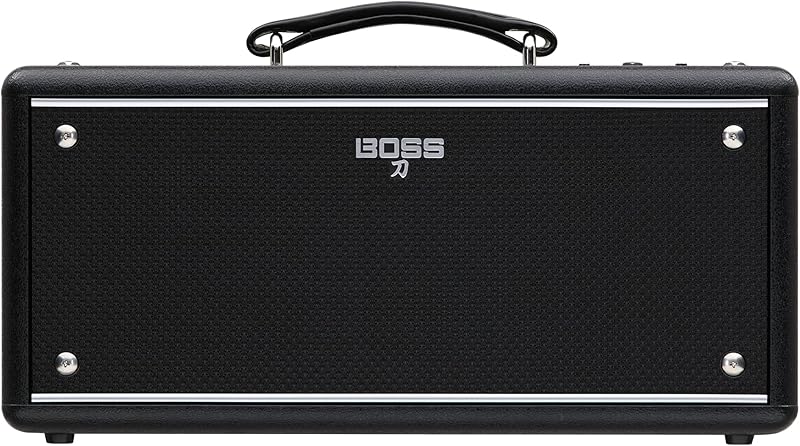
I know. Yet another recommendation for the Katana, the internet’s favorite amp.
The Katana now comes in a variety of sizes, the smallest of which is the Katana Air EX, powered by two five-inch speakers and eight AA batteries.
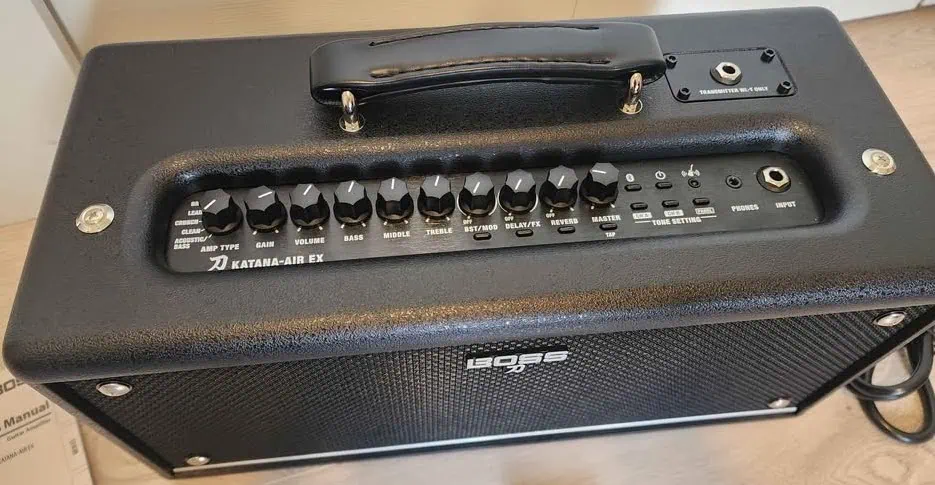
Boss Katana Air EX
Most bass players reading this will head straight to the comment section and point out that you can’t simply plug your bass into a guitar amp and expect it to sound good. I agree.
Fortunately, Boss thought of that. They included a dedicated option in the Katana software for bass players (and acoustic-electric players, but we’ll leave the Ed Sheeran stuff for another article).
Boss gear feels indestructible, even those with advanced software like the Katana. I noticed no discernible fluff or unwanted distortion when running the built-in bass amp model.
I had great fun plugging in and choosing from the various effects and amp voicings available. I found the sounds for Black Sabbath’s “NIB” and Metallica’s “For Whom The Bell Tolls” particularly satisfying, but there’s plenty more digging to do.
While this is clearly meant to be a desktop practice amp, you could run this Katana into a USB interface for home recording, or use the line out and take it to a PA at a gig. I’d bring this battery amp as a backup for a gig, rather than as my main rig, but it’s great to have the option.
5. Laney Mini Bass NX
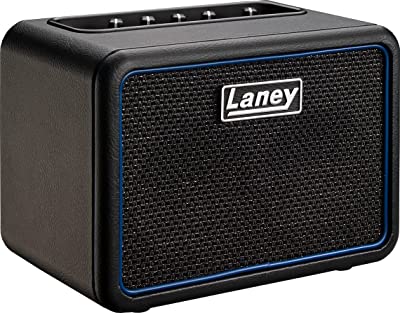
Laney is no stranger when it comes to making exceptional amps. We’ve all seen laney amps forming the backline of arena-playing bands over the years. While the Mini Bass NX isn’t about to rock Shea Stadium, it does offer plenty of power in a pint-sized package.
I mean pint-sized quite literally: this six-watt desktop amp is about the size of a teapot. It’s similar in spirit to most other big-amp-but-small style desktop amps like those from Blackstar and Marshall: it offers a workable facsimile of a full-sized amplifier in a smaller package.
You can have the Laney in any color you want, as long as you want black. Standard backline coloration, then. The navy blue inlays and piping does help the controls to stand out. The dark-on-dark color scheme isn’t the kind of thing I like for gigs in dark rooms, as it makes it hard to see your controls, but for an at-home practice amp it’s fine.
I did struggle to make out the controls when I took the Laney camping and wanted to play a little at night, but if you keep this little amp at home you’ll be happy enough.
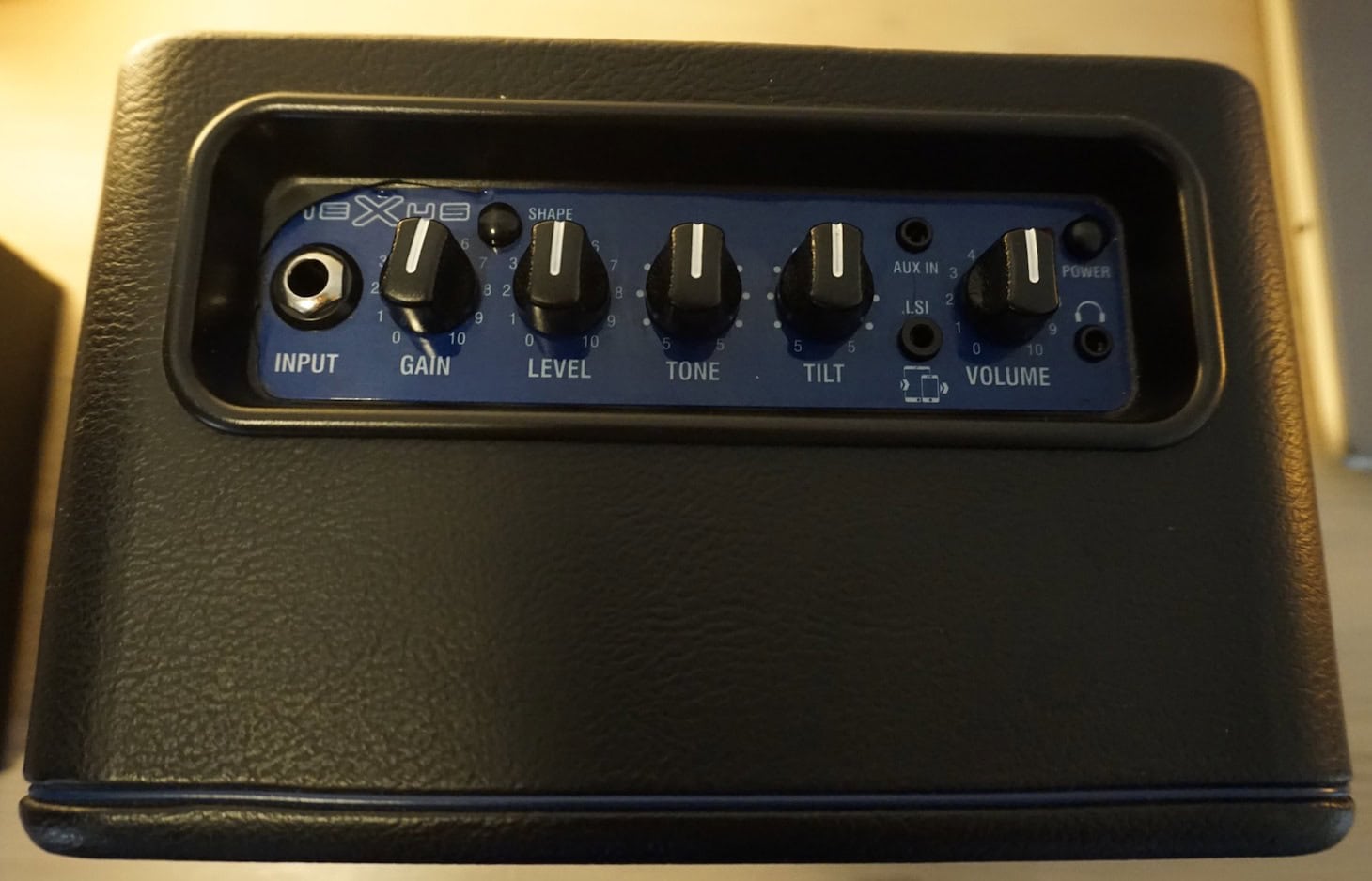
Laney Mini Bass NX - Controls
The amp has a fairly neutral character, as is typical of Laney amplification. Your best friend for tone shaping will be the Tilt control, which can clean up the tone and offer more warmth and depth to suit your palate.
Further control comes courtesy of the LSI (Laney Smartphone Interface) connection, which connects to your phone (or tablet) via Laney’s own cable. In this case, I used my phone and an app to choose from countless modeling tones via the Tonebridge app.
I had tremendous fun playing around with effects and preset tones. The included LSI cable is too short for my liking, as you can’t keep your phone in your pocket and move around while jamming, but it’s easily replaced.
The amp is best suited for practice. You couldn’t take it to a gig as it’s simply not loud enough, and increasing the volume sends the amp into full overdrive. However, for at-home practice where you won’t rattle the neighbors’ windows, it’s a great tool for the job.
6. JOYO 10 Watt Mini Bass
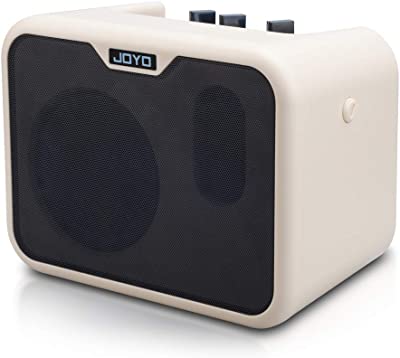
The JOYO Mini Bass is quite the interesting little amp. It doesn’t have all the bells and whistles of other battery powered amps, but what it does have is quite good.
The first thing that caught my eye with this amp is its design. It has a very sleek, ultra-modern look. The aesthetic of it is quite minimal, something that I am a bit of a fan of.
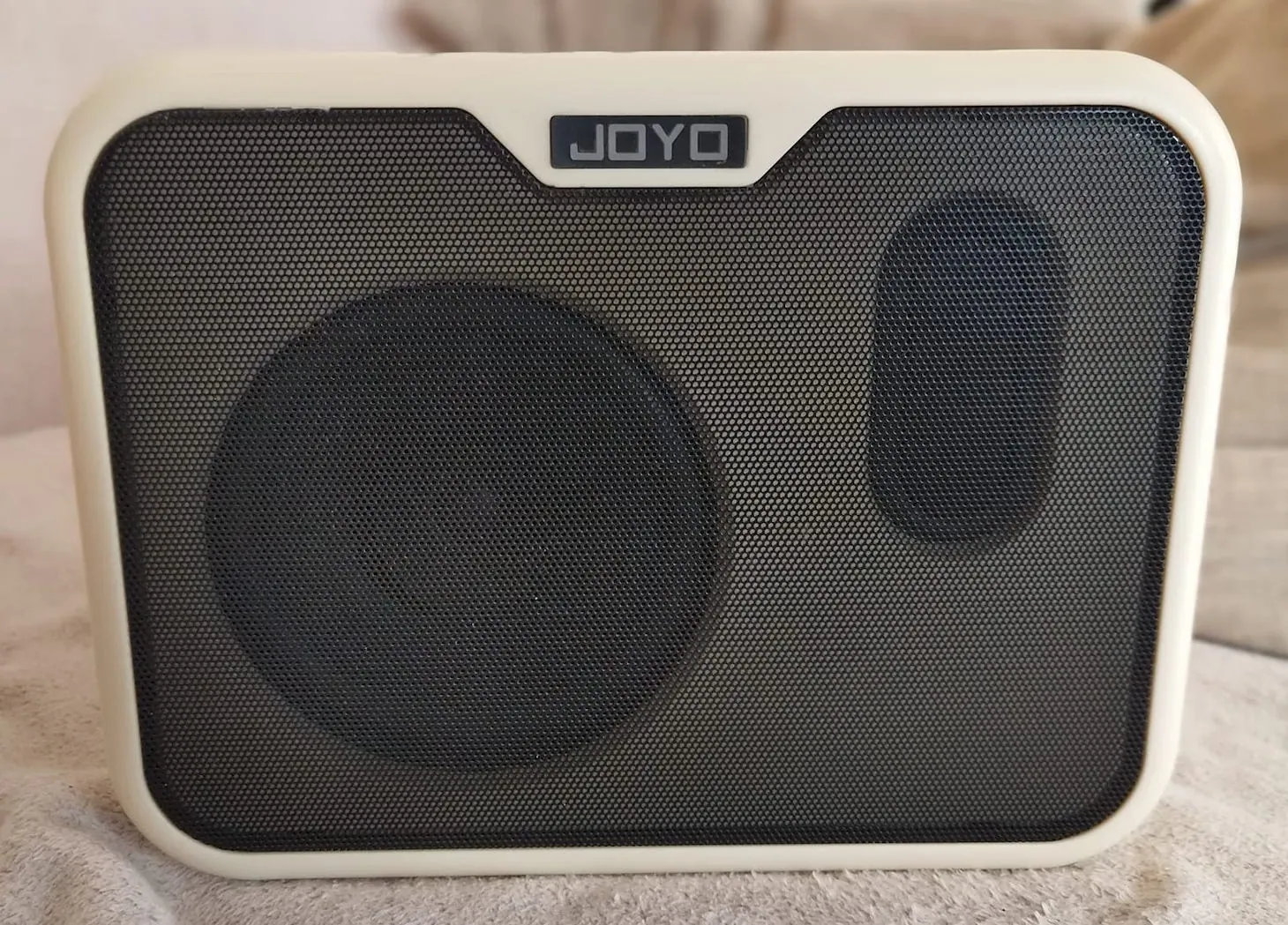
JOYO MA-10B 10 Watt Mini Bass Amp
That minimalist design carries over to its controls. You are only getting volume, tone, and gain. You also get a headphone and aux input, along with a normal/drive switch.
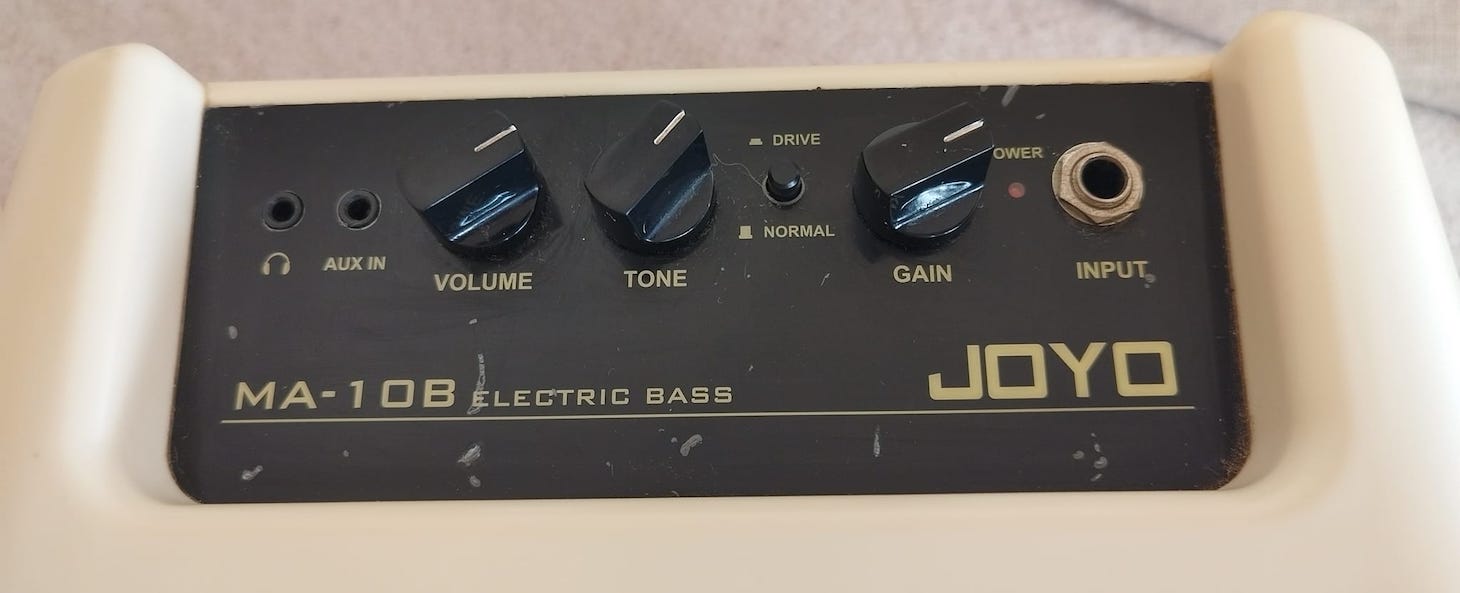
JOYO MA-10B - Controls
The amp sounds pretty good for its size and price. The tone is great both clean and overdriven. You aren’t getting an overly vibrant bass tone here, but it isn’t dull and flat either.
The tone control also doesn’t add too much variety. I ended up keeping it somewhere just over half way.
Volume is perhaps the biggest let down. This is a 10-watt amp, so it has a decent amount of volume. But there are 5- and even 3-watt amps out there that blow this amp out of the water.
I do like that you can attach a regular guitar strap onto this amp. This lets you walk around with the amp while playing.
It is fairly lightweight, so the added weight isn’t a problem. What I did find was a problem was the amp’s size. It tends to get in the way or slips to the back, making it harder to here. I was constantly adjusting the amp while carrying it. You also need a spare strap since the amp doesn’t come with one.
Choosing the Right Battery Powered Bass Amp for Your Needs
There’s a few key factors I always consider with new gear, of any size. Battery amps are no exception.
First off, the most important thing to me is the sound. Most modern amps, even battery amps, tend to be quite versatile, and are usable for a variety of genres.
The next thing I look at is how I plan to use the piece of equipment. In this case, for a battery amp, I want something to practice with. I’m a plug-and-play enthusiast, so I want something that I can leave on my desk, turn on, and jam away. I don’t want to bother the neighbors or spend valuable practice minutes choosing between different settings.
In addition to this, battery amps offer unparalleled portability. I want a battery amp to be lightweight, easy to carry, and easy to fit into my luggage or the passenger seat of my car.
I like taking battery amps camping or on vacation, so I seriously consider their usability in these environments.
What Will You Use It for?
You have to think of why you’re looking at a battery powered bass amp.
Is it primarily for practice at home? Is it to take on the road and play in hotel rooms? Do you need it for quieter rehearsals, perhaps with headphones and a drummer on an electronic kit? You might be a busker who needs plenty of volume and lengthy battery life.
When you understand what you need the amp for, making the choice becomes much easier. This brings me to the most important criteria: portability.
Portability
Of course, this is probably going to be your top priority. The point of a battery powered amp is to be as portable as possible, considering how large and unwieldy bass amps can be.
Luckily, most of these battery powered units are portable enough. Most are small and lightweight enough that you can put them in a backpack or case along with your cables.
Battery amps are specifically designed to be easy to carry. I’ve taken battery amps on road trips in my backpack. I often take one particularly small amp in the neck compartment of my guitar case as a perennial backup at gigs and rehearsals.
While some compact bass amps are going to be a bit more portable than others, they are all more portable than the affectionately nicknamed “bass fridges” of yesteryear. An amplifier that manages to be loud, is reasonably easy to carry, and relies on battery power, is the ideal amp to use for busking.
Tone
Tone chasing is an ongoing mission for all musicians, and while most of your tone comes from how you play, rather than what you play, it’s important to consider the unique tonal palette offered by your new gear purchase.
Many of the battery amps available these days offer a wide array of classic tones perfect for practicing along to your favorite songs. This is especially true of modeling gear like the Boss Katana.
Because playing along to the records I love is my favorite way to practice, this can be a great feature.
However, it’s worth noting that no two amps, no matter how advanced the modeling software, ever sound the same. There will be subtle tonal differences that may not suit players of all genres.
If you’re looking to exclusively play a particular niche genre, like extreme metal, reggae, or Gypsy jazz, you’re more likely to need the particular sounds associated with that genre.
Of course, most important is getting a sound you like from your gear so that you enjoy playing. This is arguably more important for practice gear like a battery amp than for gear you play live!
Most of us struggle to hear our live sound over the din of a busy venue and an enthusiastic drummer. We all spend (or we should) more time practicing than gigging. It’s important that you like your practice tone so that your practice time is pleasant and enjoyable.
It seems intuitive, but there’s nothing as discouraging for playing and practicing as feeling unhappy with your bedroom sound.
Volume and Versatility
This will be up to what you want to use the amp for. If you are just going to use it for practice, then you won’t need something too loud with a whole bunch of features.
The Laney Mini Bass NX and JOYO Mini Bass are both fantastic practice amps that you can keep on your desk or backstage. They aren’t very loud, but are perfect for warming up or practicing.
I personally keep a few different amp sizes at home. I’ve a desktop amp for easy quiet practice, a couple of lunchbox amps for rehearsal and louder home practice when the neighbors are out, and of course a gigging rig ready for the stage.
These all have different purposes. Understanding these purposes is key to getting the most out of your gear.
If you are planning on using the amp for busking as well, then you will need something with more volume and features. The Boss Dual Cube LX would certainly be my choice for this purpose. It is super loud for its size and packed with great features.
Batteries
The type and amount of batteries the amp uses doesn’t matter too much in my opinion, but can affect how convenient you think it is.
Most amps will need 6 AA batteries, but some can need more or less. This will determine how many batteries you need to carry with you. I always remind myself to carry spares when it comes to gear. As the astronauts say, two is one, and one is none.
Some amps, however, use rechargeable battery packs. While these are more convenient than carrying a full packet of spare AAs, they are often difficult to replace.
These days you can also find amps that run on USB battery banks, the same ones used to charge smartphones. These are probably the most convenient since most of us already have battery banks lying around, but they are also fairly cheap and easy to replace.
I like battery powered amps that have the option for an external power source or batteries. That way, you aren’t constantly buying new batteries for your amp, and you can easily take it on the road if need be.
While most battery amps prefer AA batteries, some like the pedal-ready 9-volt batteries that are more commonplace for guitar and bass players.
I’d recommend avoiding any amps that have non standard power requirements or batteries that are hard to find where you live.
Final Word
A battery-powered bass amp, for practice or for taking on the road, can be a fantastic investment. Perhaps best of all, they tend to be very affordable, so you can comfortably try out a few just to see what you like.
Investing in your practice time is the best thing any musician can do, so I sincerely hope this article helps you find your next practice, travel, busking, or all-in-one amp.
