
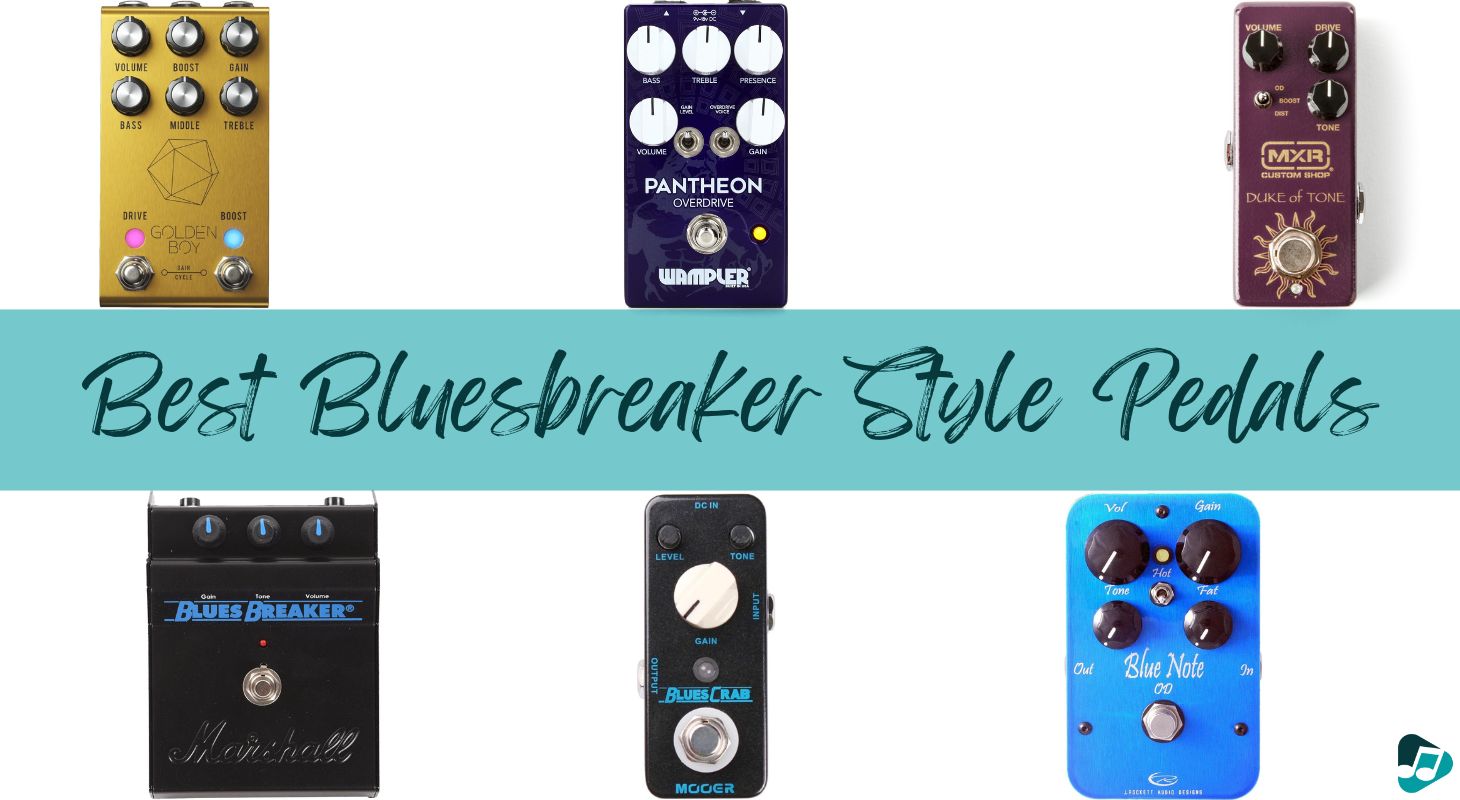
The Marshall Bluesbreaker is one of the most popular and sought-after amplifiers ever made, and for good reason.
The Bluesbreaker is the original Marshall tone. The thick, authoritative sound of British blues-rock as it took over the world first emanated from the Bluesbreaker.
In fact, it was such an era-defining sound that it’s named for a John Mayall album, featuring then-unknown guitar wunderkind Eric Clapton. Yes, that Eric Clapton.
The Bluesbreaker, originally named Model 1961 and Model 1962, is one of the most expensive amplifiers on the planet. This simple combo can command prices up to $10,000!
For that reason, pedal builders have been trying to capture the distinctive overdrive in a stompbox.
Top 3 - Bluesbreaker Style Pedals
Preview | Product | Price |
|---|---|---|
 | ||
 | ||
 |
To save you the hassle of trying them out, I’ve gone through the best Bluesbreaker-style pedals on the market today. I tested them with my Gibson Les Paul Standard and my Hughes & Kettner Stompman set as neutral as possible.
Best Bluesbreaker-inspired Pedals
1. Wampler Pantheon Overdrive Pedal
The Pantheon Overdrive Pedal is Wampler's most popular overdrive pedal.
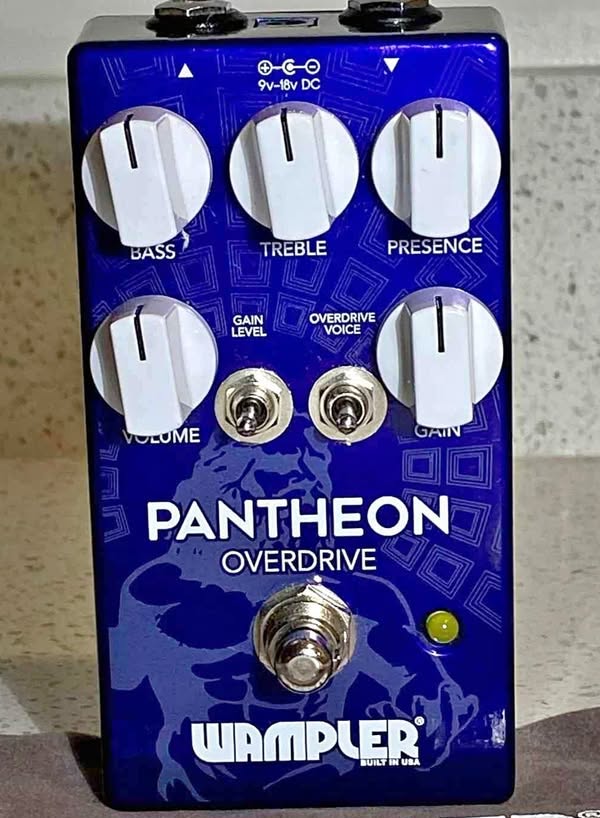
Wampler Pantheon
Upon plugging in to the Pantheon, I was a little intimidated by the number of controls on the pedal’s face. I prefer a simple plug-and-play approach.
With five knobs and two switches, it felt like overkill compared to the simple controls of the original Bluesbreaker amp.
However, this complexity offers serious tone shaping potential, with the capacity to shape a convincing Bluesbreaker sound.
I used the lowest tier of gain clipping to test this pedal, and was impressed by its responsiveness.
It has plenty of presence and twang without being overly fizzy. The Bluesbreaker sound to me is about poweramp grit, not preamp fizz. The Wampler is fully capable of both.
To be clear, this overdrive pedal also offers a lot more than just Bluesbreaker tones. Higher-gain sounds are very much on offer here if that’s your bag.
I tried out a few Clapton licks and riffs and was impressed with how sensitive the amp’s controls are. It took some doing to dial in the right tone, but once I found it, it was plenty of fun to simply play through classic blues-rock licks.
You can easily make this the core of your entire rig, effectively turning any clean amplifier into a bluesbreaker by using the Pantheon as the only source of gain.
There is a typical 3-band EQ and gain controls as you’d expect, but Wampler has gone a step further by adding 3 individual gain stages which can take the distortion from grit, to driven, to full-on lead distortion.
The pedal offers a pretty broad range of voicings and gain levels. With only one footswitch, however, you’re realistically limited to one voicing, unless you’re prepared to kneel down and fiddle with the knobs and switches mid-show.
Wampler addressed this with their 2-channel Dual Pantheon, but this comes at a significant cost increase just to gain access to a second channel and controls the single-channel version already has.
Overall, if you’re picky about your sound but you only need that 1 perfect tone, then this could be the perfect pedal for you.
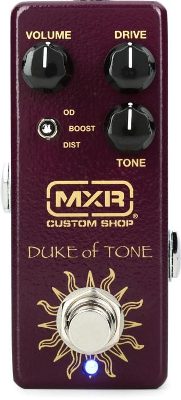
2. MXR Duke of Tone Overdrive Pedal
While this pedal was technically based on the very popular Prince of Tone pedal from Analog Man, the design premise and distortion voicing are still very much that of a bluesbreaker.
The MXR Duke of Tone is a mini pedal that offers a no-fuss approach to achieving your ideal overdriven tone.

MXR Duke of Tone
The Prince of Tone, much like the Bluesbreaker amp, isn’t exactly easy to get a hold of. The MXR-Analogman collaboration here offers access to the pedal without an extensive waiting list.
I love the simplicity of MXR pedals. I’ve said before that my all-time favorite pedal is the MXR Phase 90, with one knob and one footswitch.
The Duke of Tone is a little more complex, with three knobs and a little three-way switch to pick your gain voicing. Still, it’s simple enough for even boneheaded guitarists like me to figure out.
It has a simple volume and drive knob, and a single rotary tone knob which acts as more of an EQ sweep than a sculpting tool like how a 3-band EQ would.
The Duke doesn’t offer nearly enough gain for metal players, but that’s not what we’re here for. The “OD” setting feels closest to the Bluesbreaker in spirit.
After some fiddling with the three knobs on the Duke of Tone, I was able to dial in a Marshall-esque tone. My favorite feature was its ability to capture the edge-of-breakup sound of the classic Bluesbreaker.
With my Les Paul’s volume knob all the way up and an aggressive touch, the tone was more biting and saturated. With a lighter touch, and my volume knob set to about 6, there was a cleaner, spankier sound.
The Duke of Tone is decidedly Marshall-voiced, which is exactly what we’re going for here. I had best results setting the tone knob to neutral, but your experience may vary. I’d be inclined to use this pedal with an EQ pedal just to get more control over the tone.
Also worth noting is that you can’t fit a battery in this mini pedal. You’ll need to plug it in to an external power source. Luckily, it comes with an 18v power supply.
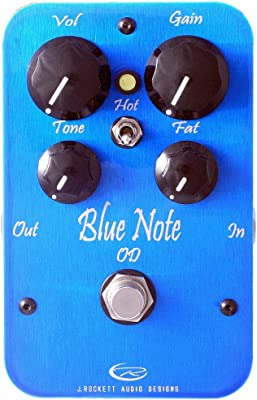
3. J. Rockett Audio Designs Blue Note OD
The Blue Note OD from J. Rockett Audio, despite its understated appearance, offers one of the best blues/overdrive tones around.

J. Rockett Audio Designs Blue Note OD
This is in large part due to the fat switch which I had a ton of fun really cranking up. It reminds me of the “sagging” knob on my H&K StompMan: it adds tube-amp sass and flavor.
It offers the experience of tubes running nice and hot, with additional compression and warm low end. It lacks the “wooly” quality of some pedals that attempt to emulate this experience, which I appreciate, especially at higher gain levels.
While this is marketed as a blues-style overdrive, the Blue Note OD has a hot switch that can be used to dirty the tone up a lot.
I wouldn’t use this switch for a Bluesbreaker-style tone, but it’s nice to have.
I appreciate the limited controls, but the EQ felt a little toothless for my liking. I’d use it with an EQ pedal just to give me the control I want.
Upon turning this pedal on, I appreciated the tone on offer. It doesn’t sound or feel like an overdrive pedal: it offers a fairly authentic amp-like response to my playing.
Power chords were loud and clear, and the gain staging added enough compression to allow for expressive bends, slides, and hammer-ons. Naturally, I went through my arsenal of Clapton licks, all of which sounded great through this amp.
I’d happily use this amp as a set-and-forget always-on tool, or as a virtual “amp switch” in a live show.
4. Jackson Audio Golden Boy Overdrive Pedal
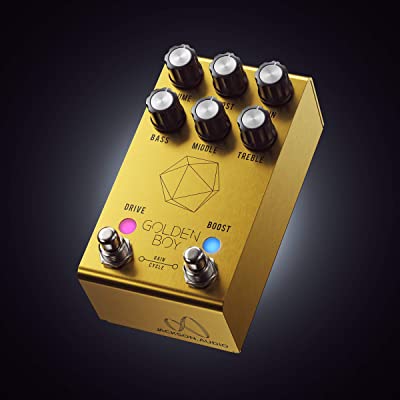
The Golden Boy Overdrive aims to offer a Marshall amplifier’s full tonal range in a pedal-sized format. More specifically, it’s modeled on the Bluesbreaker-style circuit.
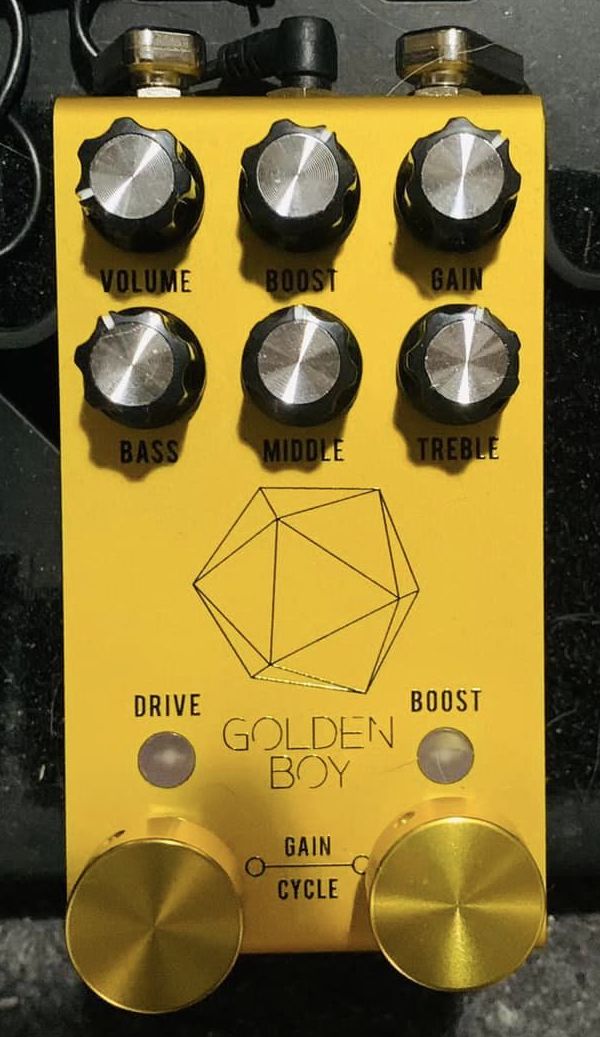
Jackson Audio Golden Boy
Unlike an actual Marshall amplifier, the 3-band EQ circuit works pretty well. You can actually use its EQ to shape your tone.
The middle band in particular was voiced in a very pleasant spot on the frequency spectrum and even when cranked it never felt particularly honky or boxy as many other mid-boosts often will.
Finally, there is a separate boost knob for an additional stage of gain. This can be toggled on or off by a footswitch giving you far more control on the fly than your average bluesbreaker style pedal.
If that wasn’t enough, these parameters are all midi-controllable!
So if you are running more of a complicated pedal setup this can seamlessly integrate with your pre-existing switching system.
Upon plugging in, I was impressed by the pedal’s levels of saturation. The Bluesbreaker sound is very specific, and at lower gain settings, this pedal offers a similar experience.
The Bluesbreaker is a naturally trebly amplifier, like all Marshalls. At lower volumes, it borders on country-clean treble. The Golden Boy actually provides a semblance of this sound as well as the familiar Marshall roar at higher volumes and gain levels.
Playing the bridge pickup with my tone knob slightly rolled off gleaned particularly enjoyable results. There’s plenty of power and authority, and the characteristic Bluesbreaker sweetness that Clapton made such good use of in his heyday.
The additional “boost” circuit is a welcome feature, too. It really just adds some extra sauce and volume to your sound so if you’re using this as an always-on source of drive, you have extra room for solos and lead lines.
This is a more complicated pedal than I would normally like to play. However, guitar players who love extra knobs and features will appreciate this pedal.
5. Mooer Blues Crab
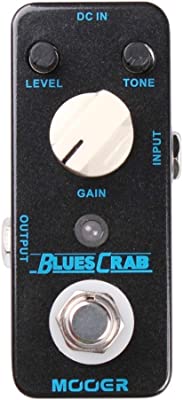
Many of the pedals I have covered are quite substantial in both their feature set and tonal range.
But for those on a budget, is there a way to get that classic Bluesbreaker tone without breaking the bank?
Absolutely, and there’s no better company to do this than Mooer.
Mooer has made a series of small, affordable micro pedals each of which emulate a particular model of popular amplifier.
The Blues Crab, while not able to utilize the exact Bluesbreaker circuit, does a very commendable job of emulating the iconic Bluesbreaker tone.
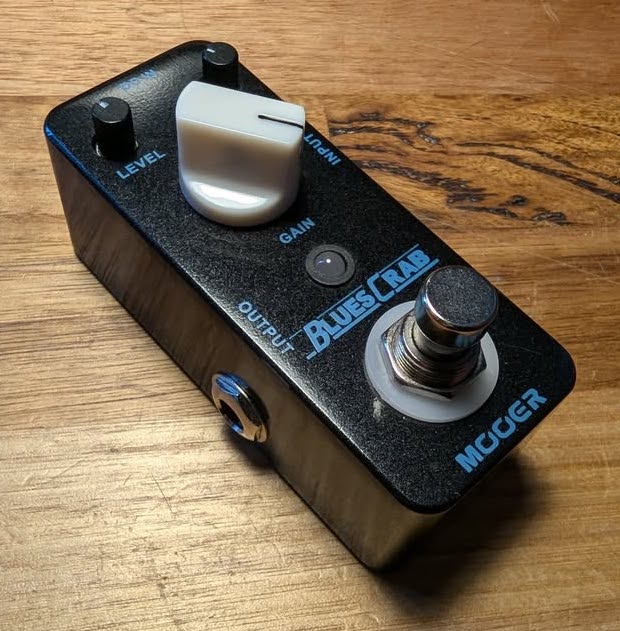
Mooer Blues Crab
As a side note, I don’t know how Mooer managed to design this pedal without incurring a lawsuit from Marshall: the color scheme and font look eerily similar to Marshall’s own Bluesbreaker pedal!
This is my kind of pedal. All it uses is a single gain knob, plus a simple level and tone control.
Tone shaping was a simple matter of turning the knobs until I found a sound I liked, and leaving it there. There’s no need to mess about with extra sculpting.
This pedal offers something that I’ve always appreciated about Marshall amps. It’s simple in its design, and offers a single trick that it does very well.
This informs how you play it. Chugging, palm muted Metallica riffs aren’t the move here. But 60s-style British blues-rock sounds just right through this pedal. To paraphrase Jason Isbell, most of what we think of as bad tone is simply playing inappropriate for the tone at hand.
Even though this is a budget pedal, there are a few things about it that make it a worthy addition to even a professional player's rig.
Firstly it has a full metal shell and feels very solidly built, you’re not going to damage it by stomping on the switch too hard.
Although because of its small size and lightweight, my connector cables did yank it around the pedalboard a bit. I was able to secure it with some Velcro, and it stayed put for the duration of my test drive.
It also has a true bypass switch which makes this fantastic as a boost to an already dirtied-up tone as it won't color the tone when it’s turned off.
6. Marshall Bluesbreaker
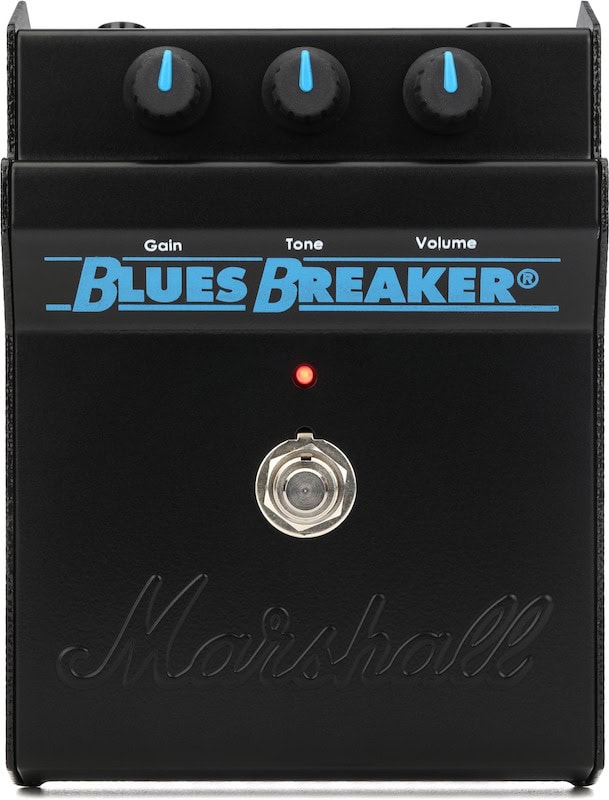
It would be remiss to write this article and not include Marshall’s own foray into the amp-in-a-box market.
The legendary Bluesbreaker pedal itself is a worthy entry to this list.
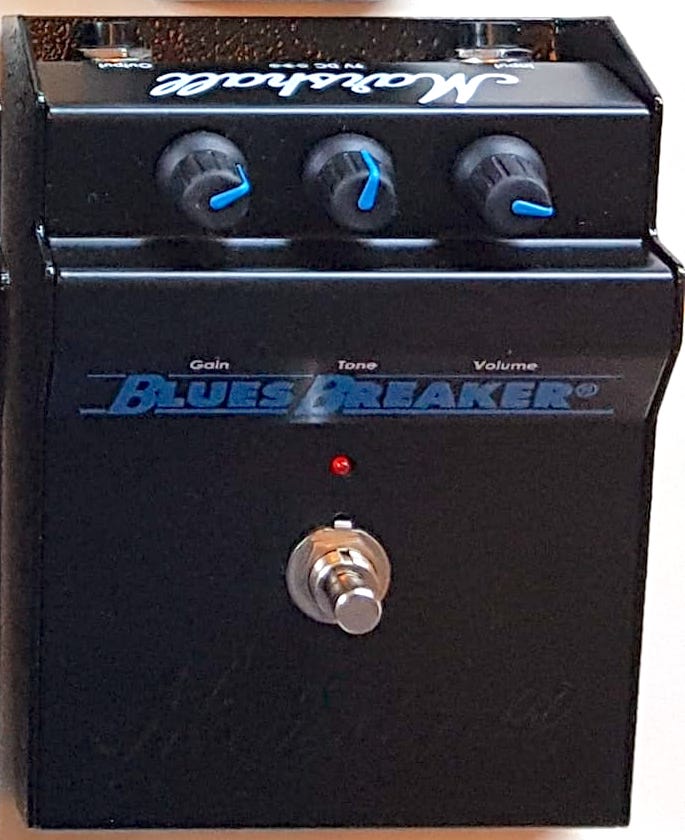
Marshall Bluesbreaker
Originally released in 1992, the Bluesbreaker pedal was somewhat embattled. It offered a full-range low-gain overdrive, which would have been great had it not coincided with the popularity of ultra-distorted grunge and metal tones.
To my ear, this is the pedal that sounds closest to a real Bluesbreaker. While it’s thinner and less commanding than Clapton’s own Bluesbreaker tone, I’m willing to forgive this. That’s mostly because Clapton played his Bluesbreaker combo as loud as humanly possible. You just can’t capture that amount of volume in a pedal alone!
Where this pedal really shines is in adding subtle grit to a clean amp. Upon plugging in, you couldn’t wipe the smile from my face. I tried classic Brit-blues riffs and licks, all of which sounded spot-on.
When I really dug into the strings and turned up the gain, I was even able to access some Page-esque dirt.
The gain knob does offer far more gain than is strictly useful for this tone. It gets fizzy and unpleasant when you turn it up too high.
However, in the sweet spot, I had tremendous fun playing my favorite classic rock riffs.
As a side note, John Mayer uses an original ‘92 Bluesbreaker pedal to great effect in his gain staging. If you’re into stacking overdrives and his bluesy brand of pop guitar, I’d highly recommend this pedal.
Choosing the Right Bluesbreaker Clone
It is incredible how many great drive pedals are on the market now, but it does make narrowing down the right one for your specific needs challenging.
While every pedal I’ve listed here today will fundamentally produce a great blues tone reminiscent of the Bluesbreaker, there are a few things worth considering when deciding which one will be right for you.
Distortion Types
The bluesbreaker is an extremely versatile amplifier that’s capable of achieving glassy cleans to gnarly and harmonically rich driven tones.
You should think about what your distortion needs are and whether you need a pedal that can accommodate multiple types of high-gain sound, or if you need something static that you can just flick on as a quick boost.
For most blues playing, you don’t need much gain. As much as I love Gary Moore, his saturated lead tone isn’t appropriate for most blues guitarists.
Subtle grit and warmth is the aim here. Lower gain levels and touch responsiveness are what matter most for seriously expressive blues playing.
If you need an all-encompassing bluesbreaker clone with multiple gain staged and switchable boosts, the Jackson Audio Golden Boy is going to serve you very well.
I like a simple set-and-forget pedal like the Marshall Bluesbreaker or J Rockett Blue Note.
Tonal Sculpting Options
Most bluesbreaker style pedals will have the ability to adjust the frequencies of your tone, but the way they do it is very different and should be an important consideration for anyone who likes their sound voiced a specific way.
On cheaper pedals, they will commonly utilize a tone sweep knob.
This acts as a broad EQ that will usually roll off the bass and accent the highs the more you turn it, but this may differ from pedal to pedal.
My preferred type of EQ is the 3-band style where you will have individual knobs for bass, middle, and treble.
That said, I often use an EQ pedal in my signal chain, so if you don’t like the EQ options on your pedal, you can always use a graphic EQ like the Boss GE-7.
This gives you far more control over your sound and also gives you a degree of adaptability if you find yourself in a situation where you’re forced to use a piece of equipment like a cabinet that contains far too much of a particular frequency.
Having the ability to cut that specific frequency band as needed can really save you some headaches down the road.
For built-in EQ, I highly recommend the Wampler Pantheon Overdrive as it uses a big fat 3-band EQ that’s easily visible under low light.
True Bypass
The final consideration is whether the pedal has a true bypass feature.
This is especially important if you will leave the pedal off most of the time and then kick it in just as a boost for leads.
Obviously, it’s less important for a pedal that you always leave on.
When a pedal doesn’t have true bypass it means that your signal is always passing through that pedal, even when it’s switched off.
As a result, your tone is ‘colored’ by the pedal no matter what you do, not ideal!
True bypass, as the name might suggest, completely bypasses the pedal when it’s turned off so your tone is kept pure until that pedal is kicked in.
I consider this a vital feature if I won't keep a pedal on all of the time.
Tools of the Trade
The Marshall Bluesbreaker is almost sixty years old now. Even so, modern players are still chasing its distinctive, powerful tone.
Fortunately, today’s market includes a range of pedals that offer Bluesbreaker-style sounds and more. Pedal technology is better than ever, and you can get a workable facsimile of that vintage-style Marshall grit in a portable package.
Gain-addicted metal players beware: Bluesbreaker-style drives won’t do much for white-hot legato runs and brutal chugs. However, when it comes to adding subtle warmth, grit, and blues power to your tone, it’s hard to beat the Bluesbreaker.
