
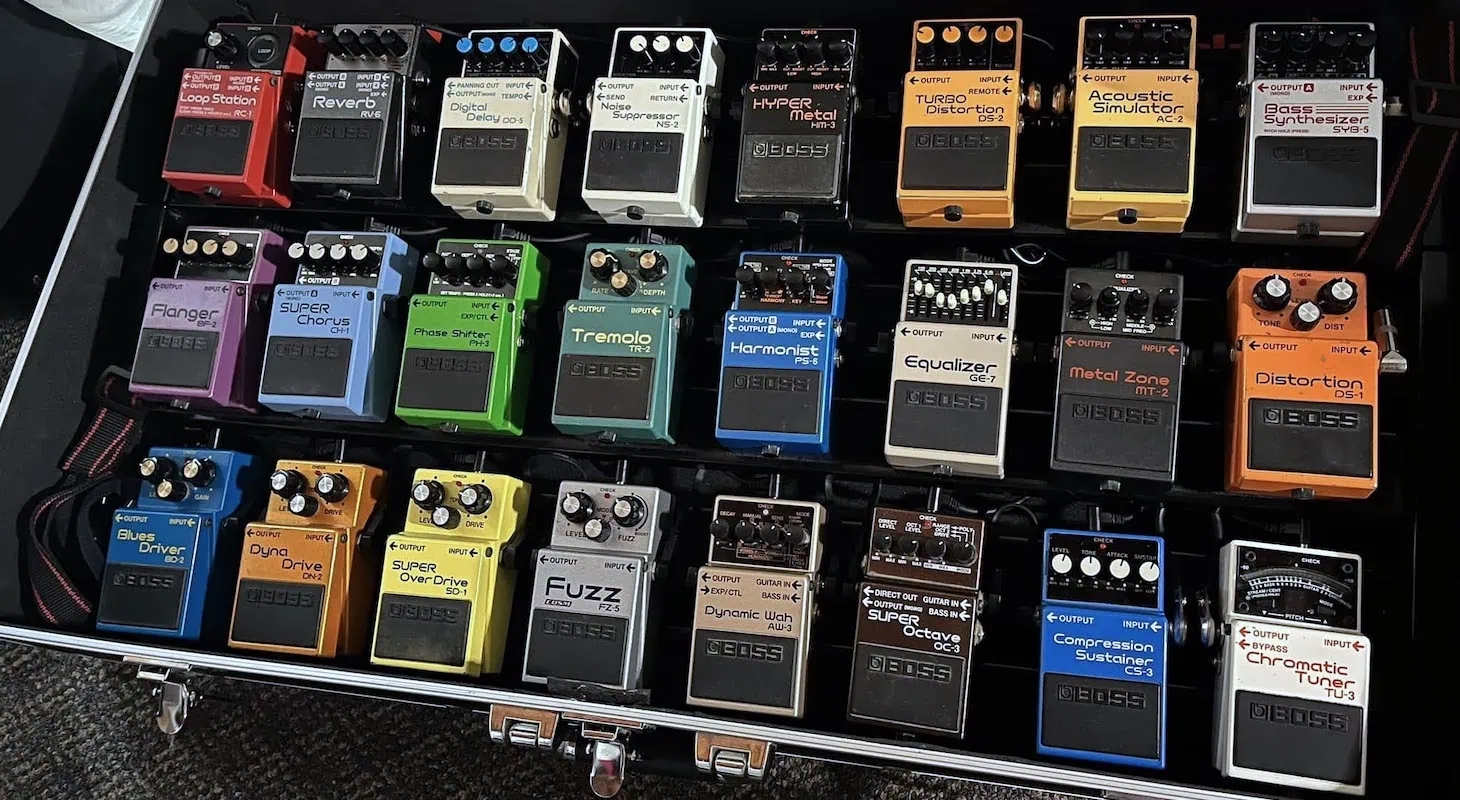
Boss pedals have a funny reputation. They hit a sweet spot for many musicians of being both very affordable and very durable. Because of this, they’re equally popular with beginner players and with seasoned touring pros!
The metal chassis feels bulletproof, and I’ve owned some of my favorite Boss pedals for well over a decade now. I know older players whose Boss pedals are older than I am, and still in fine working condition!
Over my twenty years of playing, I’ve played, bought, and sold an extremely wide variety of pedals from a whole range of builders. Sure, I’ve spent my hard-earned pay on limited-run boutique drives, numbered by hand and issued with a certificate of authenticity. I’ve also relied heavily on mass-produced pedals from Boss and MXR.
For this list, I wanted to talk about pedals that are affordable for the everyday working player. My rule is no Waza Craft, no limited edition Japanese-only models, and nothing that’s off the market. For me, the best pedals are available and affordable!
Today, I’ll run through my five absolute favorite Boss pedals, why I own them, how I use them, and why, if I did, I moved them on.
The BOSS for a Reason
Because of their affordability and durability, Boss pedals have earned something of a reputation as “beginner pedals.”
This is true, to an extent: their competitive price point makes most of the Boss range very appealing to younger players who might not have the budget for boutique pedals. However, a quick look at any professional’s pedalboard will invariably reveal a few Boss pedals!
Take, for example, the biggest tour of 2025, Oasis’ Live 25 tour. Noel Gallagher and Bonehead both played Boss pedals at every show on their record-breaking world tour, including guitar-store staples like the TU-3 tuner and DD-3 digital delay.
Few brands can boast that kind of market penetration: from bedroom floors and high school stages to the biggest stadiums in the world, you’re probably going to find a Boss pedal somewhere.
Here’s my favorites.
My Most Liked & Utilized BOSS Guitar Pedals
1. TU-3 Tuner
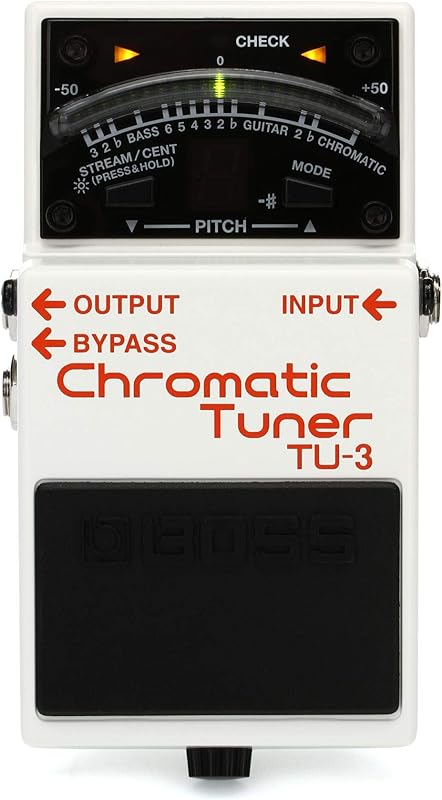
It’s no exaggeration to say that if every TU-3 on the planet stopped working right now, countless gigs would be cancelled.
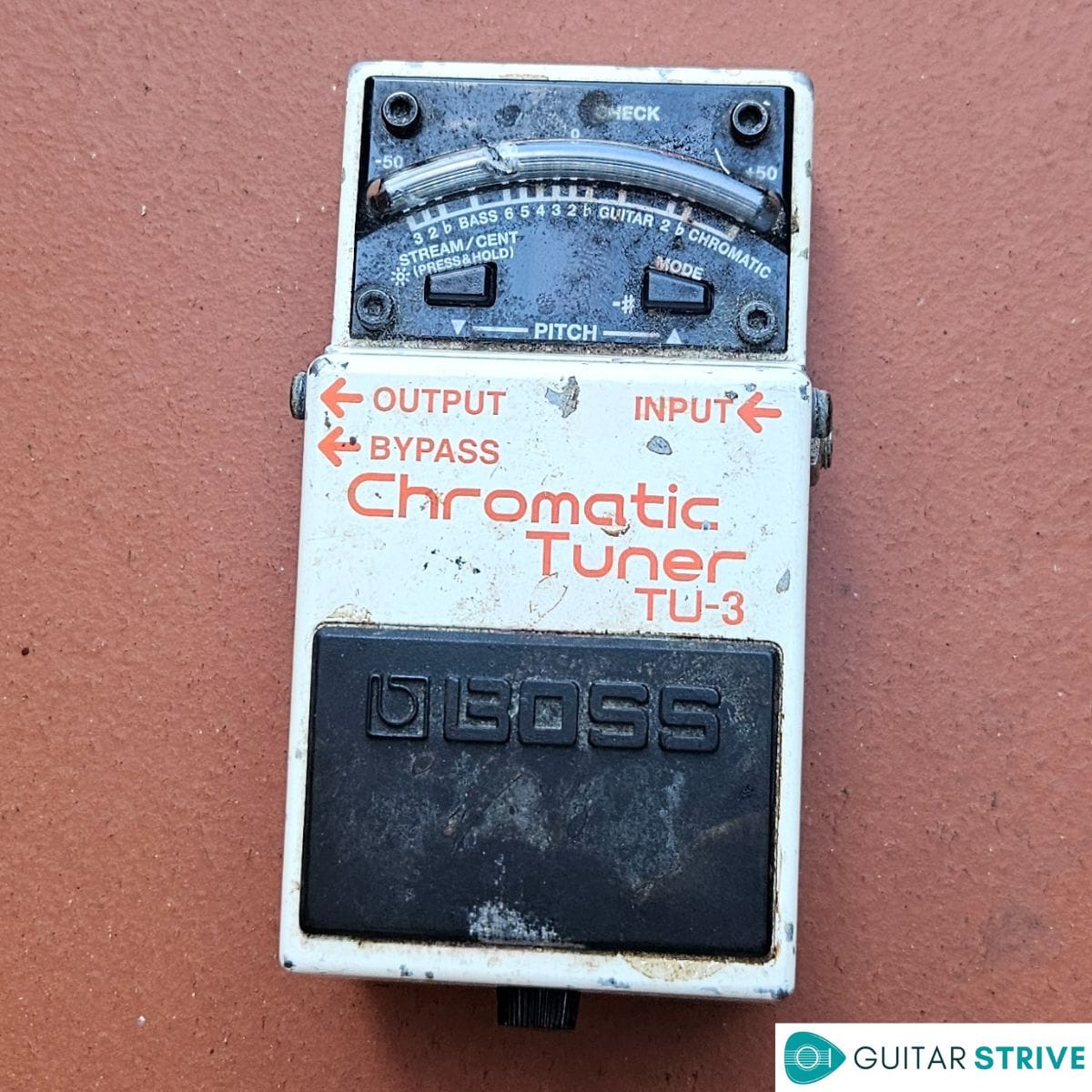
BOSS TU-3 Chromatic Tuner Pedal
I know. A tuner isn’t exactly the most exciting purchase a guitar player can make. It’s like going to the store, seeing all the gorgeous new guitars on the wall, and buying a strap and a cable.
That said, if there’s one thing me and all my guitar playing friends agree on, it’s that we won’t take anyone seriously if they don’t have a tuner.
Think about it: nobody cares how good you are or what your tone is like if your guitar isn’t even in tune.
It’s the most basic part of musicianship, and it’s the foundation of your rig! The tuner goes first in the pedal chain, and, for my money, the TU-3 is my favorite tuner on the market.
I’ve used the competitors, too: the Korg, the Ibanez mini tuner, the PolyTune. For me, it doesn’t get any better than the TU-3. I’ve played hundreds, possibly thousands, of gigs, with my TU-3.
The only reason I ever replaced the original one I bought back in 2011 is it was stolen from the back of our vehicle, along with my amp and my favorite guitar strap.
A replacement TU-3 was the first thing I bought when restocking our gear.
It’s built like a tank. I’d say the LED is bright as day, but technically that’s not true: it’s brighter than day, because I’ve used it in outdoors gigs under blazing Australian sunshine, and could see the LEDs just fine.
There’s a whole range of tuning options on offer, but I generally stick to old-school chromatic tuning.
The TU-3’s hidden feature, and something I’ve used many times, you can daisy chain the TU-3’s DC out and run it as an ersatz power supply for other pedals, whether from the TU-3’s battery power or from a power source.
Quite possibly the most useful pedal ever made, and it’s earned its spot at the top of my list and the first thing on my pedalboard at every gig and every rehearsal since I was a kid.

2. GE-7 Graphic Equalizer
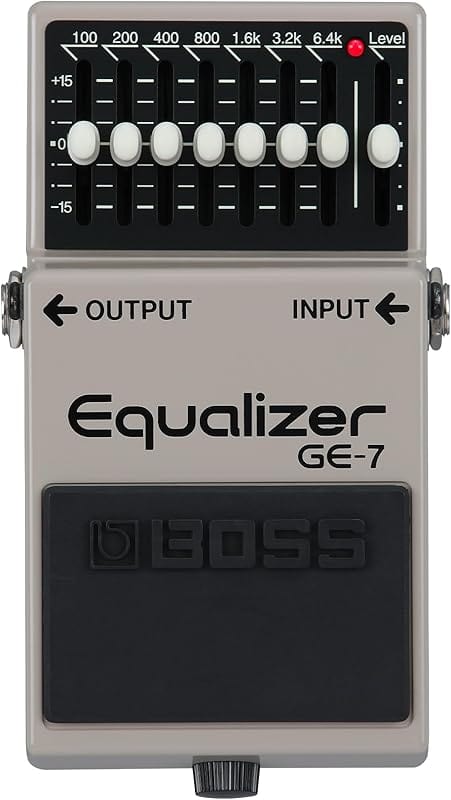
Another less-than-thrilling pedal that I find absolutely indispensable is the Boss GE-7 Graphic Equalizer.
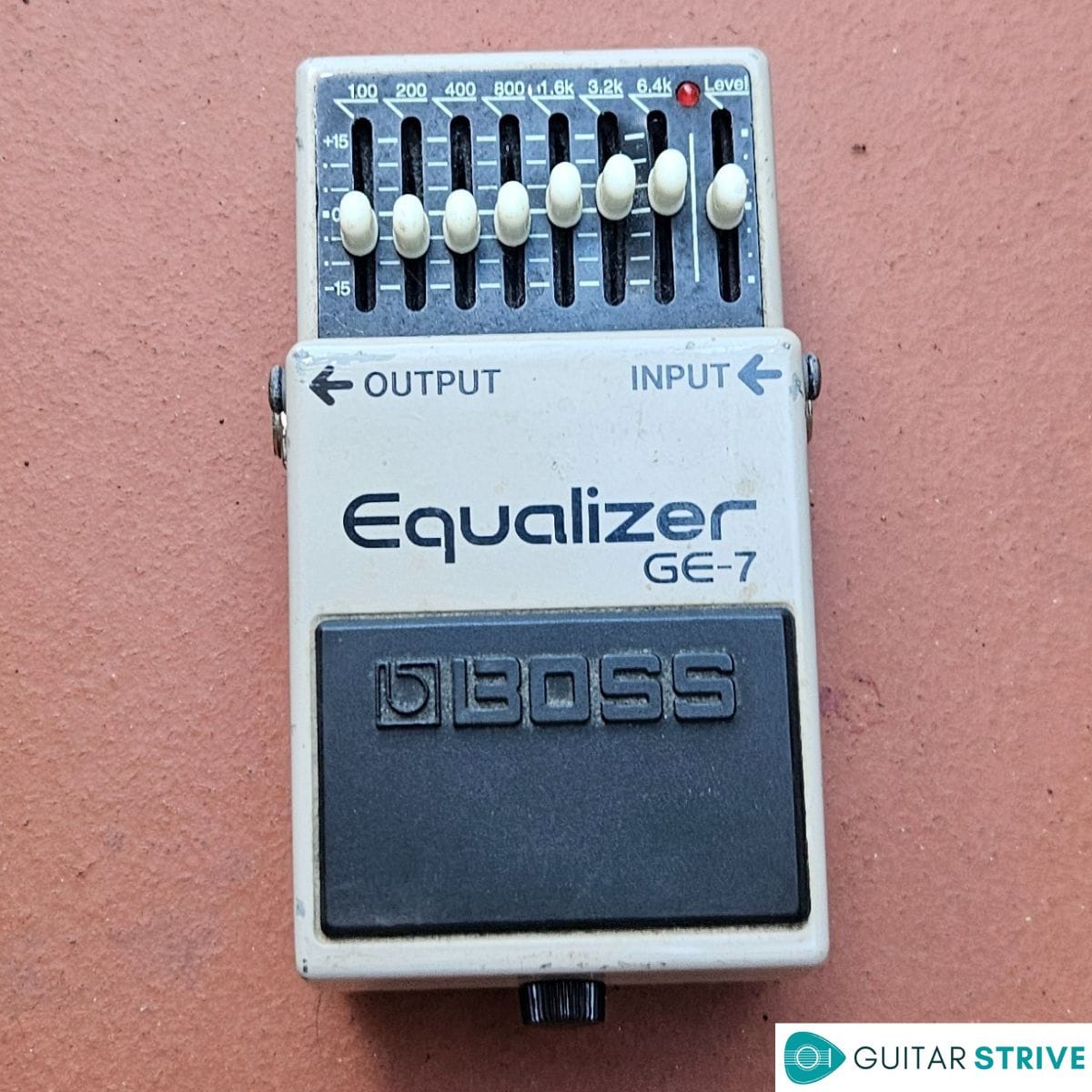
BOSS GE-7 Graphic Equalizer Pedal
I absolutely hate this pedal, because ever since I’ve been using it, I’ve refused to play an electric gig without it.
My main use case here is to carve out a nice little niche for my guitar sound in a full band ensemble. I generally leave mine as a set-and-forget always-on pedal, but I’ve also used it as a boost, or even a makeshift magical tone shifter.
When I was mostly playing in hard rock bands, I used it to differentiate my guitar sound from that of the other guitar player.
We were both running Les Pauls into Marshall (or Marshall-voiced) amplifiers. Being huge fans of the Darkness and Thin Lizzy, we played an awful lot of guitar harmonies, and heavily orchestrated two-guitar voicings.
To characterize my tone as separate from his, I scooped out a little of my lower midrange and added a little extra upper midrange and treble. For all intents and purposes, I was using my GE-7 like a Dallas Rangemaster treble boost.
I briefly moonlighted in heavier bands, where I’ve scooped the mids out to get a classic 80s thrash tone.
These days, I mostly play country music. When I’m playing with my country band, the GE-7 can coax the full-fat humbuckers in my Les Paul or 335 into a tone closer to a P-90.
Likewise, if I’m playing a gig where riding the volume knob on my guitar isn’t the right tonal choice, I can set the level fader on the GE-7 to act as a gain boost. I’ve even used it to cut a few dB and use it as a distortion-reducing clean-tone-ifier.
I can honestly say that the GE-7 is the second most useful pedal in my entire arsenal. It concedes the gold medal to the TU-3 only because I can’t play a gig without a tuner at all.
3. SD-1 Super Overdrive
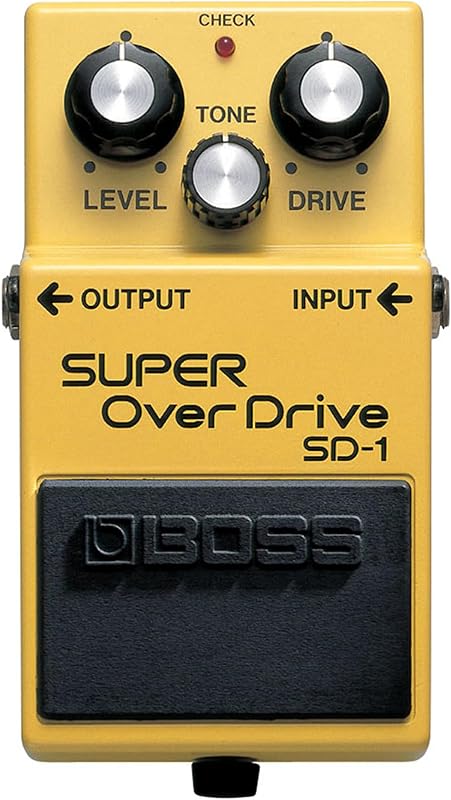
The Boss SD-1 is one of the most popular and enduring overdrives ever made. The garish yellow of the chassis really stands out on stage: it’s hard not to notice, even in the darkest, dingiest rock clubs!
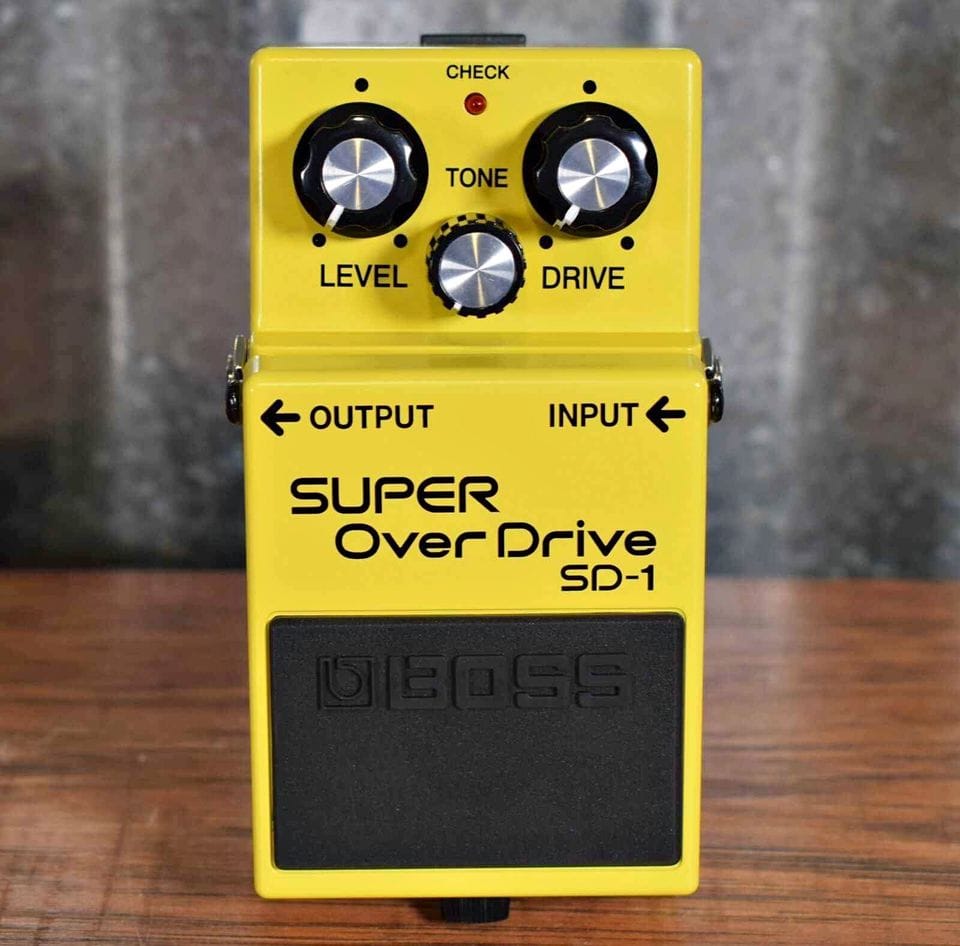
I generally prefer not to switch overdrives on and off while I’m playing a gig, so I actually sold my old SD-1 a long time ago. I don’t use nearly as much overdrive as I used to, so I don’t often need it these days, but I’d be lying if I said I don’t gaze longingly at this little yellow box every time I pass the Boss display at my local guitar store.
The main source of my love for the SD-1 is its uncanny ability to take an already overdriven amp and crank it even further. It’s Spinal Tap’s “go to eleven” dial in pedal form. I’ve often thought the term “super overdrive” encapsulates this use case perfectly. As Superman is to a regular man, the Super Overdrive is to regular overdrive.
Legendary Ozzy axeman Zakk Wylde has been using the SD-1 for this exact purpose for pretty much his entire career. That thick, uncompromising sound has as much to do with this pedal’s simple circuit as to do with his EMG pickups and hot-rodded Marshalls.
The other, extremely useful, way to play this pedal is through a clean amp. On tour in England, years ago, we had to hire amps, and the tour hire company was clean out of Marshall heads. I know: how could a British amp hire company be out of Marshalls?
The other player in my band wound up renting an ultra-clean Hiwatt that simply would not go into the punchy, powerful driven sound we needed, no matter how hard we cranked it.
Fortunately, my trusty SD-1 came to the rescue! We ran it straight into the front of the amp and, instantly, our pre-tour rehearsals burst into life. Pure, old-school amp saturation, with all the harmonic complexity and dynamic range you can ask for.
The SD-1 has many clones, many boutique tweaks, and many custom mods on the market. For me, it’s hard to argue with the classic mass-produced version, just to have as an everlasting, reliable backup to whatever fancy overdrive your heart desires.
4. RC-10R Looper/Rhythm Station
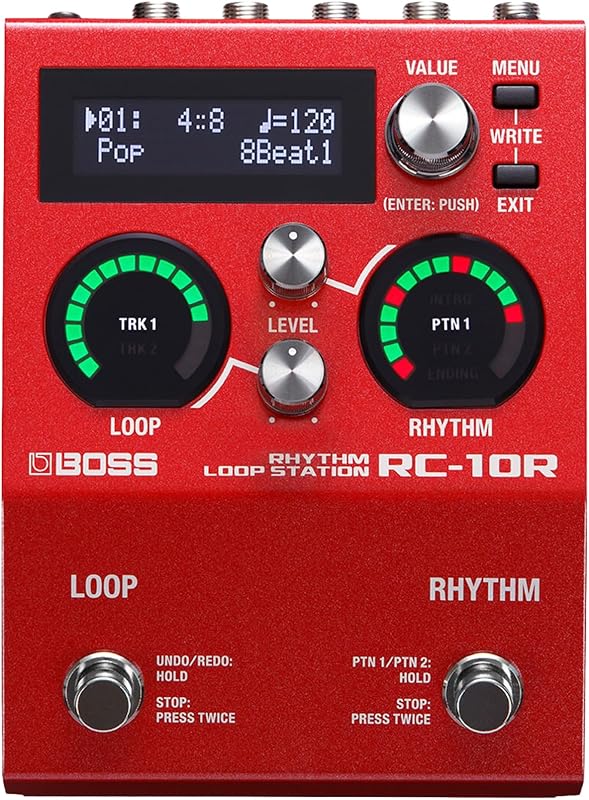
This is probably the weirdest, most complicated pedal in my arsenal, and I’d say it’s seen more live use than anything save my tuner.
I’ve been playing the RC-10R for a few years now, and it’s an extremely useful tool for live performance, practice, and simple jamming.
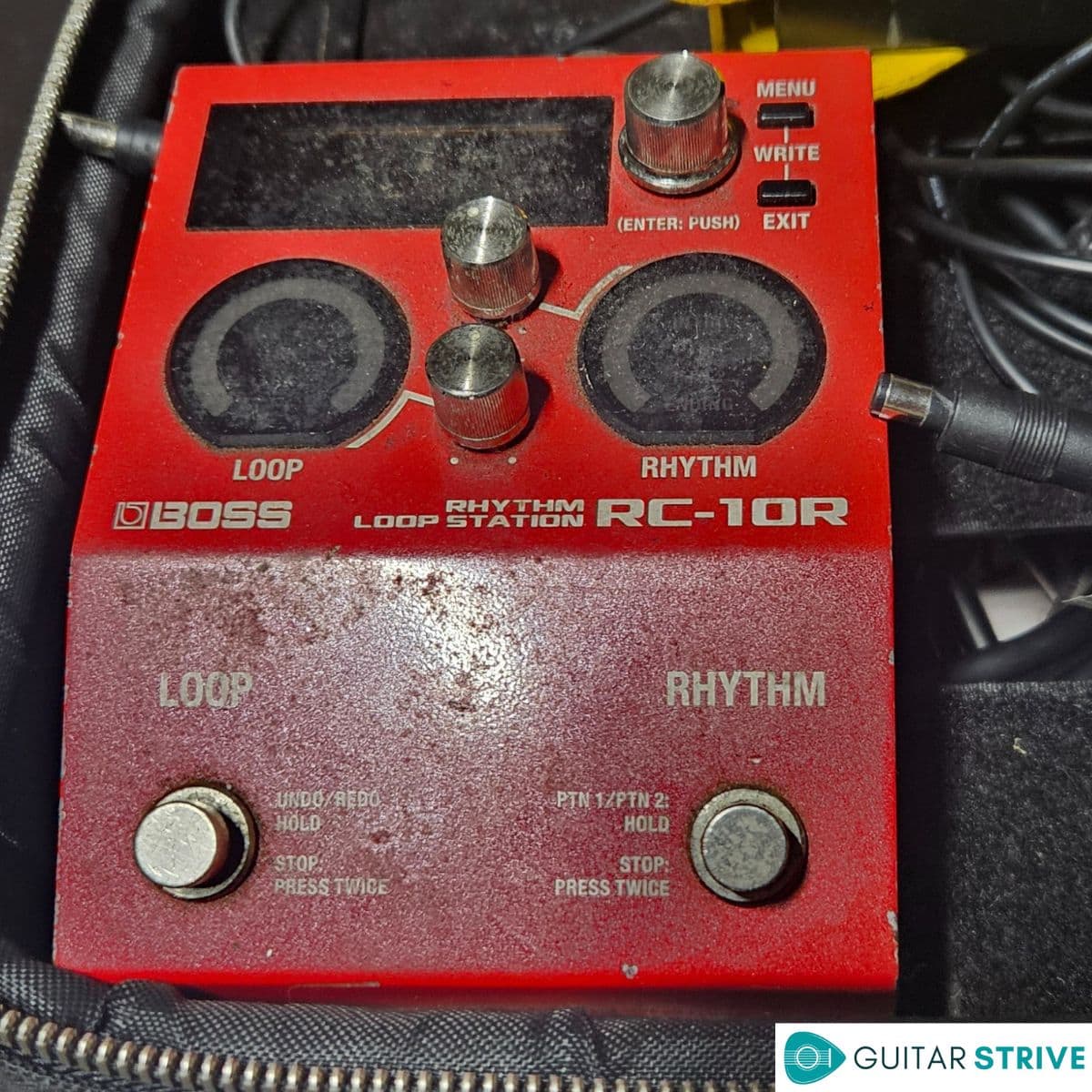
I initially bought myself this looper/drum machine combo as a birthday present to myself about five years ago. Gigs were few and far between, and I had an abundance of at-home playing time.
I was inspired by an old drummer I used to butt heads with. When I’d complain about tempos, he’d say “you might as well get a drum machine!”
With practice time to spare, I figured I’d give this thing a try.
For all intents and purposes, there are two ways to use this pedal. The first, which accounts for most of my usage, is as a simple loop/rhythm station. You set the tempo, you play along (hopefully) in time to one of the hundreds of drum beats programmed into the unit, and then you play over the top.
This is the main live functionality for me. While it’s clearly intended as a songwriting tool and a quick “idea recorder”, I find the setting of tempos and finding of beats to be a distraction from my flow state while writing songs. I still tend to use the voice recorder app on my phone to get ideas out quickly and easily.
The deeper functionality of this unit is as a practice tool, and requires you to plug in to a computer. I’ve used the software to program my own drum parts, which can be a tedious, if ultimately rewarding, task.
With limited controls on the unit itself, navigating through various menus and sub-menus takes more time than is available when I’m switching up parts between songs. However, for basic looping and drum machine parts, it’s extremely useful.
I also enjoy using it to write layered guitar parts, especially practicing solos. I tend to loop a rhythm part, ideally over an appropriate drum loop. Then I practice the solo or lead part, occasionally adding layers of loops in Thin Lizzy-style guitar harmony heaven!
This has become an indispensable part of my practice and gig prep routine.
The main use of this machine is to create your own backing tracks, either live in real time or at home. It’s a mainstay of my solo rig.
In fact, I’d only change two things about this pedal. One, I sorely wish it had battery power. Two, I’d love an extra switch to be able to navigate between presets and tempos without having to bend down and manipulate buttons by hand!
This month, I’m playing sixteen solo gigs, all of which will heavily feature the extensive use of my beloved Boss RC-10R.
5. CH-1 Chorus
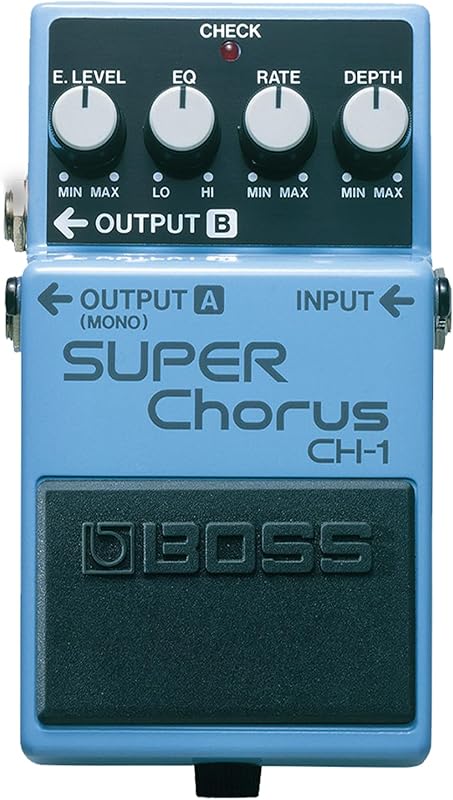
It’s pretty hard for me to choose between the various Boss chorus models I’ve played over the years. The various Chorus Ensemble pedals are all excellent, but vintage examples command prices far beyond those of a typical Boss pedal, and the modern iterations don’t always capture the “Mom’s Prom” 80s chorus sound the way I like.
Then, on the other hand, there’s the Boss CH-1, the classic clear, shimmering 80s chorus tone. I tend not to use much by way of chorus, especially these days, but it’s one of the most useful effects you can have in a cover band, especially when you’re the only guitar player!
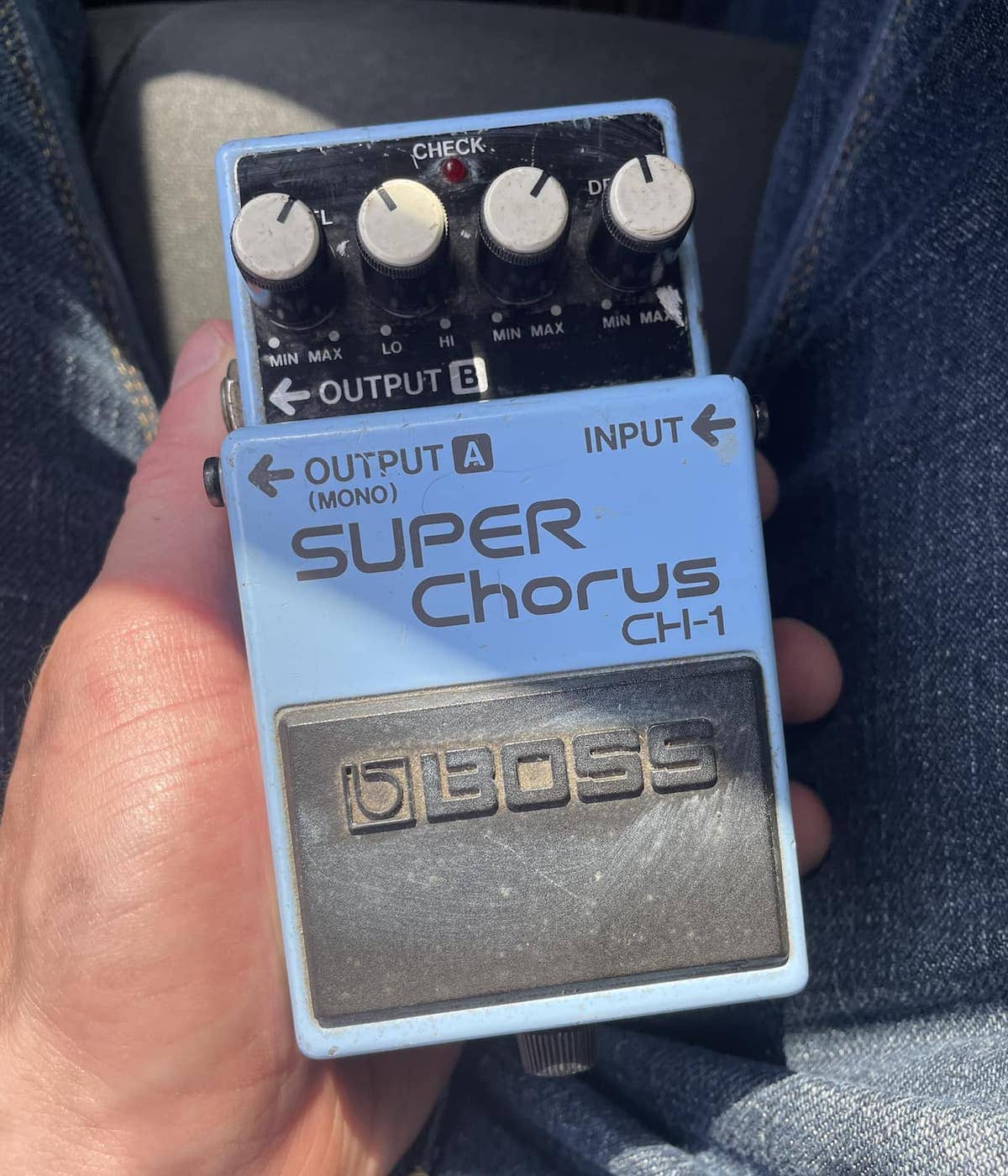
Most of my love for this pedal is for its basic layout. It’s fairly easy to dial in a musical, usable tone within minutes of plugging in. I like to set it for a shimmering 1980s pop guitar sound, to add some texture and movement to simpler guitar parts. It’s greatfor approximating the twelve-string tone from Tom Petty’s “Free Fallin’” or as a cure for dry signal when playing “Friday I’m in Love.”
Although I don’t often get the chance to channel my love of heavier music, this is a great effect, when through through the effects loop, for the thick, uncompromising tone from Zakk Wylde’s solo on “No More Tears,” or even for Alice in Chains style grungy chords.
If nothing else, it’s fun to play the riff from Nirvana’s “Come As You Are” on a pedal voiced for exactly that sound.
I go through phases with my guitar sounds, and in the end I realized that the novelty of having a chorus pedal had worn off for me. I wasn’t enjoying playing with chorus as much as I used to, so I moved this pedal on.
I also own the MXR analog chorus, which is a closer voicing to my ear to the chorus effect on classic Van Halen tracks. When I feel the need to scratch the chorus itch, it does the trick.
Sometimes, you just wind up downsizing. Regardless, I recommend this to any guitar player who needs an affordable, reliable chorus pedal that will consistently sound good no matter what.
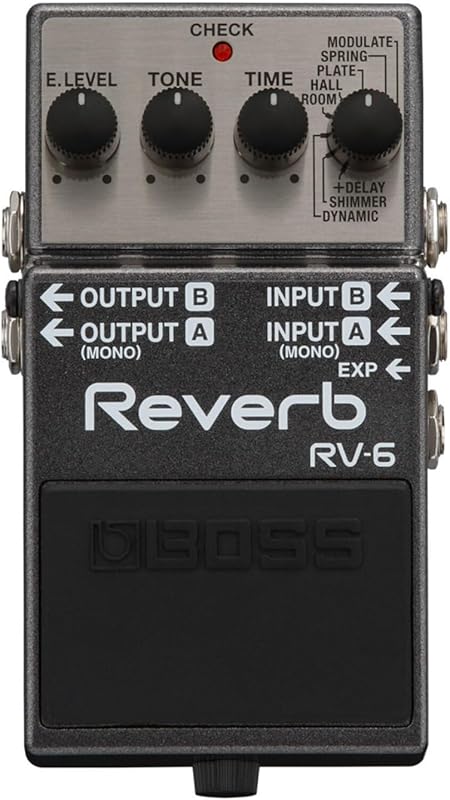
6. RV-6 Digital Reverb
I’ve long been of the opinion that most of us don’t need much additional echo in our signal. It often hides sloppy playing or, even worse, obscures great playing!
I tend to stick to simpler delay and reverb sounds. The washed-out, swirling ‘verbs of 2010s indie and emo could not have been less appealing to me. I like a ‘70s tape echo, or a short country-style slapback.
That is, I did, until I played a gig opening for Scottish folk legend Gary Og, whose simple setup featured the Boss Digital Reverb. I was so impressed with how much depth and life his subtle addition of reverb added to his acoustic performance. It was just one pedal, but it made his amplified acoustic guitar sound enormous and welcoming instead of tinny and compressed.
The newer Digital Reverb, the RV-6, offers a far broader range of sounds and textures than the early iteration I saw Gary Og using. I’ve had some fun trying out the various “rooms” it has on offer, but for my money, the best use case is as a simple “maker gooder” pedal for amplified acoustic playing.
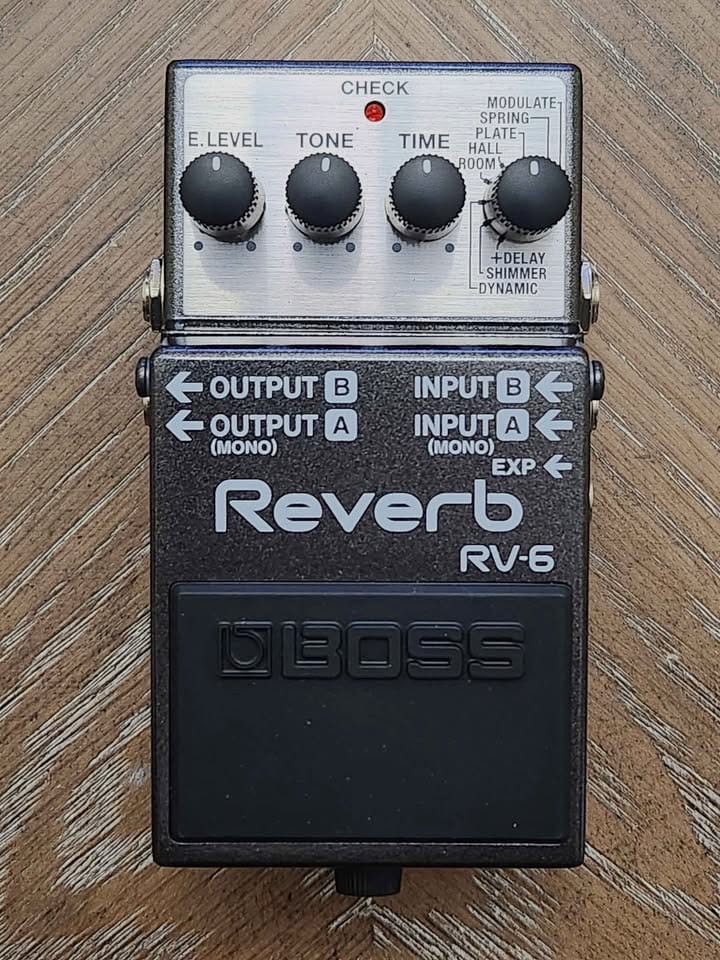
The other major benefit is as a soft, simple addition to an electric rig, especially for the more stripped-back country lead sounds I tend to go for now with my electric guitar playing. For me, it’s all about maximizing the value of every note, and a little extra reverb certainly helps in playing those clean, compressed single-string lines.
Of course, it’s also tremendous fun to crank the reverb, plug my Les Paul into my Marshall, and do my best Gary Moore impression!
These days, I play using my own PA more often than not, and I prefer a simpler guitar rig, so I no longer play with a separate reverb pedal, instead relying on the reverb effect built into my mixer. Likewise, my go-to amp for electric gigs has a built-in digital reverb that does what I need it to do.
Although I no longer use a Boss reverb pedal, it’s still a great device that I’d recommend to any player, acoustic or electric.
Seen on Every Stage
What I love about Boss pedals is their ubiquity. While “serious” guitar players tend to drool and wax lyrical about boutique overdrives with custom paintjobs, it’s hard to argue with the universally recognizable shape of a Boss pedal. I remember snootier players than me turning their noses up at Boss pedals back in the day.
I’ve also hung out with professional guitarists who play huge venues, all of whom rely heavily on their trust Boss pedals. These are a few of my favorites, but there’s no shortage of great pedals in the Boss catalog.
