
The Gibson SG’s instantly recognizable double-horned silhouette, powerful, clear tone, and easy playability have made it a phenomenal success for decades now.
Of course, a full-priced Gibson SG is out of the price range of many guitar players, but fortunately there are plenty of affordable alternatives to the iconic axe.
There are SG-style guitars across virtually every price point. From beginner guitars to stunning pro-quality instruments, there’s an SG-style guitar for every guitarist out there.
Top 3 - Cheap SG Style Guitars
Preview | Product | Price |
|---|---|---|
 | ||
 | ||
 |
Let’s take a look at a few of the best affordable Gibson SG style guitars on the market today. I've played most of these extensively myself, barring one.
7 Best Budget SG-Style Guitars - Gibson Alternatives
1. Epiphone SG Special
As you’d expect, the licensed SG from Gibson’s leading subsidiary is a great option. The SG Special, with its twin humbuckers and dual cutaways, is a classic guitar for beginners and intermediate players on a budget.
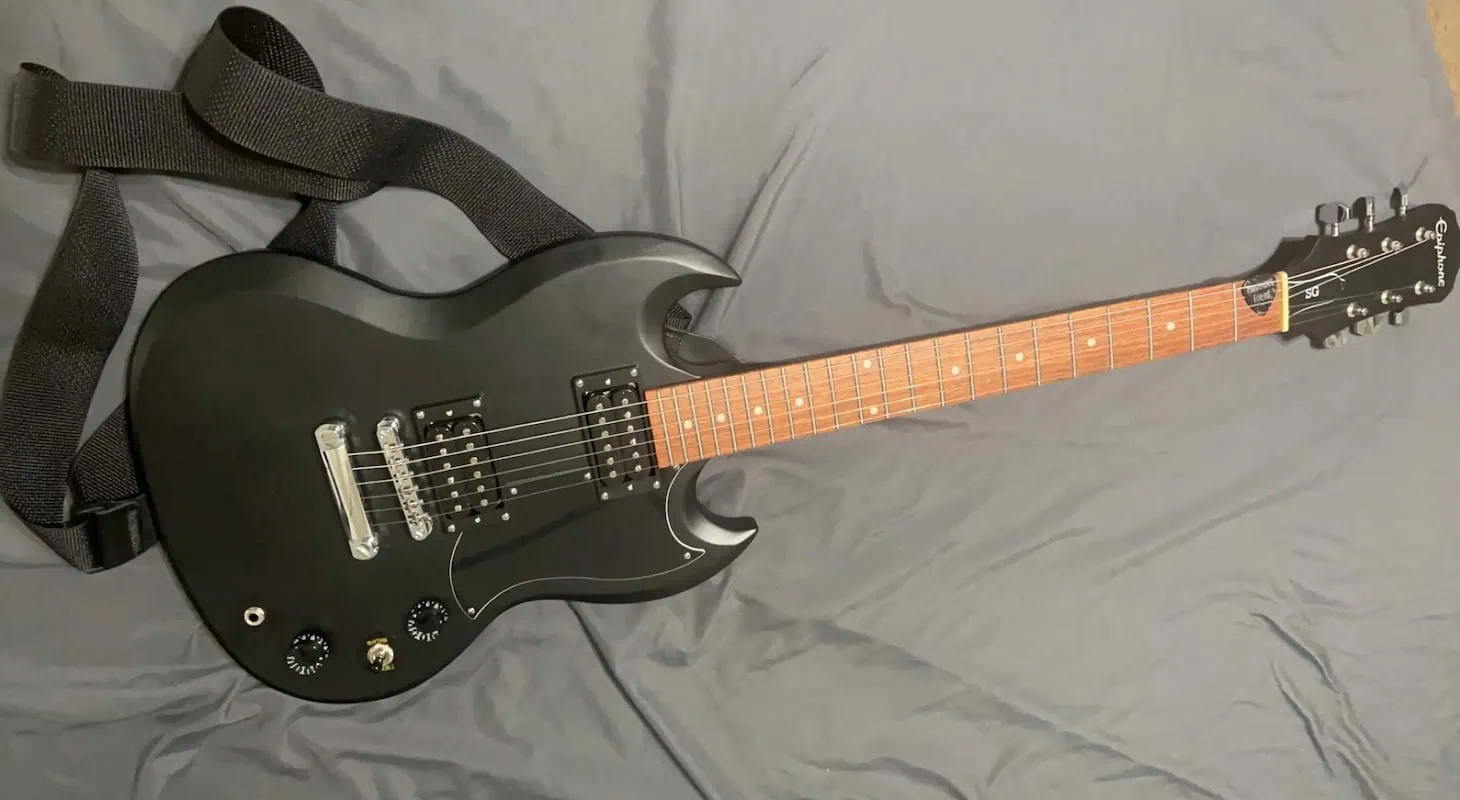
Epiphone SG Special (E1)
At its entry level price point, this is a no-bull guitar. The pickups are stock Epiphone humbuckers, and many guitar players swap these out for Seymour Duncans or DiMarzios.
The neck is a nicely slender ‘60s profile, perfect for smaller-framed individuals. It’s not exactly a super-slim shredder’s profile, but it’s very comfortable and won’t fight you too much as you build your playing speed.
The guitar’s bolt-on neck means that it lacks the sustain and depth of tone you’d associate with a genuine Gibson SG, which has a set neck. At the beginner or intermediate level, this is unlikely to matter much. You can always compensate this by using a thicker gauge of strings or upgrading the pickups or the most extreme of all, using a piano-style sustain pedal.
The SG special also stays in tune fairly happily thanks to Epiphone’s Tune-O-Matic bridge and stopbar setup.
The poplar body lacks the distinctive warmth of an all-mahogany SG, but I was pleasantly surprised to see that the fretboard is genuine rosewood. Rosewood has become increasingly rare in guitars in favor of cheaper woods like Pau Ferro and Laurel, so it’s nice to see it on an entry-level instrument.
The SG’s solid mahogany body is a key piece of its tonal puzzle, however. Poplar is a cheaper wood than mahogany, and accounts for this guitar’s welcoming price point.
The poplar body is also lighter than mahogany, and makes this guitar a little more comfortable to play while standing up. That’s saying a lot, considering that the SG is probably the most comfortable body shape in the Gibson arsenal.
All in all, this is a great beginner’s guitar, and offers a lot of value for money.
2. Epiphone SG Standard
The Epiphone SG Standard is the elder brother to the SG Special. It offers a far higher quality instrument at a price point very close to the Special.
The SG Standard has an all-mahogany body, mahogany neck, and Indian laurel fretboard. That, plus the stock Epiphone humbuckers, is enough to give this guitar plenty of grunt and grind.

Epiphone SG Standard
It’s hard to resist churning out a few Angus Young licks on a cherry red SG, and they all crackle and snarl like they’re supposed to.
This guitar also has lovely bell-like clarity when played through a clean amp. On the neck pickup, the guitar’s clean tone is warm and glassy. I could happily use this guitar for a smoother laid-back gig.
The stock pickups, as usual with Epiphone guitars, do lack some clarity and high-end, but replacing them with Seymour Ducan or other PAFs is a fairly straightforward task.
The SG Standard also stays in tune very happily thanks to Epiphone’s Kluson-style deluxe tuners. I love these tulip-shaped tuners, with a comfortable dimple to fit your thumb. The stamped steel casing helps lend a feeling of higher build quality to this guitar.
The mahogany neck is a slender ‘60s profile, and very comfortable to play. The guitar is nice and light, despite its all-mahogany construction, and I’ve played this guitar for 2 hour long gigs several times without any issues.
This is an excellent intermediate guitar, and a great step up from the Epiphone SG Special.
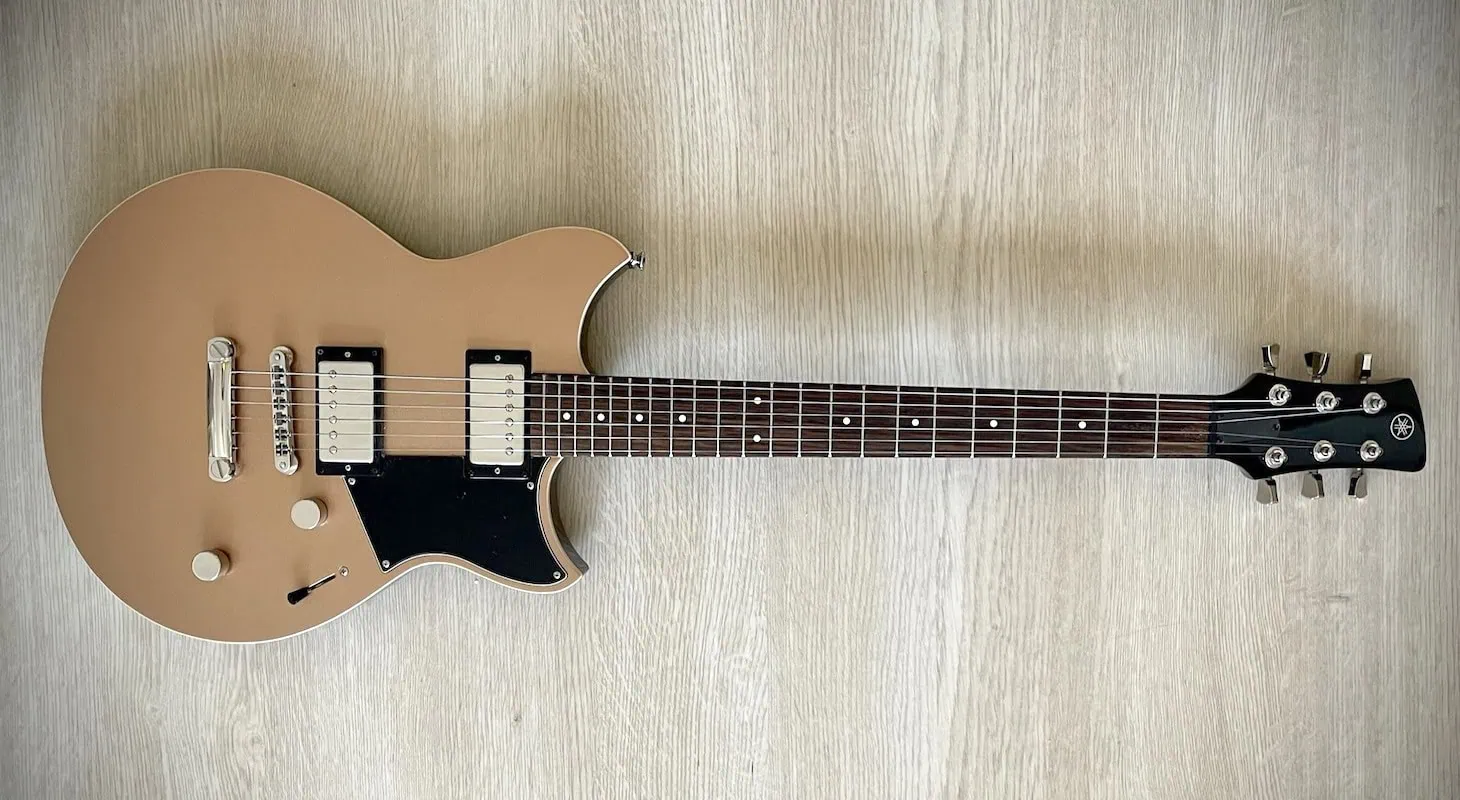
3. Yamaha Revstar RSE20
I usually believe that a manufacturer should make one thing and do that extremely well. Let guitar builders build guitars, piano builders build pianos, and so on.
Then I tried Yamaha’s guitars, and had to change my mind.
The Yamaha Revstar is a high-quality guitar from a very reputable manufacturer. Yamaha makes all kinds of musical equipment (and motorcycles). As far as I can tell, they’ve never met an instrument they can’t build to extremely high standards.

Yamaha Revstar RSE20
The Revstar is one of the best-looking guitars I’ve ever seen. It melds the design principles of Gibson and Fender guitars with great aplomb: there are those classic Gibson curves and Fender’s retro-car colors.
Likewise, the Revstar boasts a dual-humbucker Gibson-style pickup array, with a slot-switch that looks like it came off a Telecaster.
The Revstar is extremely comfortable to play thanks to its lightweight chambered mahogany construction and arm-ready volute. The dual cutaway design not only looks excellent owing to the symmetry, but it's actually super functional in reality.
The stock Alnico V humbuckers sound excellent. They’re hotter than you’d find on a Gibson SG, and well-suited to a range of classic and modern rock styles. It's good even for some Green Day, blink-182 style punk rock.
Perhaps this guitar’s coolest feature is the unique push/pull dry switch. It boasts two knobs, one master volume and one master tone. The tone knob, however, can be engaged in “dry” mode.
The dry knob is a bass cut, giving it a more treble-focused sound. This is mostly useful when playing with plenty of overdrive, preventing your guitar’s tone from getting muddy.
The dry switch feels like a coil-tap without losing the humbucker’s innate hum-canceling properties. It’s a pretty cool feature on an undeniably cool guitar.
I would happily recommend this guitar to any intermediate or pro player looking for a unique SG-flavored guitar.
4. ESP LTD Viper-256

Legendary Japanese builders ESP have been making high-quality instruments aimed at players in heavier genres since the ‘80s.
The LTD series is effectively ESP’s answer to Epiphone, an affordably priced alternative to their flagship models.
The ESP Viper feels, and looks, like a hot-rodded Gibson SG. Its offset body and exaggerated points definitely cater to guitarists who might find the SG a little too conservative.

ESP LTD Viper 256
The Viper has a solid mahogany body with a mahogany set neck. Its rosewood fingerboard feels comfortable, and the necks’ thin “U” profile just begs for ultra-fast metal riffing.
Both humbuckers in the Viper are EMG-designed, and are far hotter than typical passive pickups in a Gibson SG. These are definitely built for high-octane hard rock and metal playing, and offer searing, powerful tone in spades. I had a gala time playing Burzum, Opeth, Bolt Thrower kind of heavy music.
The guitar also offers coil-splitting. Splitting the coil turns the pickup into a Fender-style single coil. This immediately creates a significant buzz and hum if you’re not playing, but it does cut a lot of bass from the guitar’s tone.
This is mostly useful when playing with a band and you need to cut through the mix. It’s a nifty feature, and makes the guitar quite versatile, although it doesn’t actually sound like a Stratocaster or a Telecaster. The coil-split sound is much closer to that of a P90.
The guitar also stubbornly remains in tune despite even the most aggressive bending and picking. This is thanks to the Tonepros bridge, one of the nicest pieces of hardware on any guitar at this price point.
Intermediate and advanced hard rock and metal players alike should certainly try the ESP Viper.
5. IYV IVSV-300
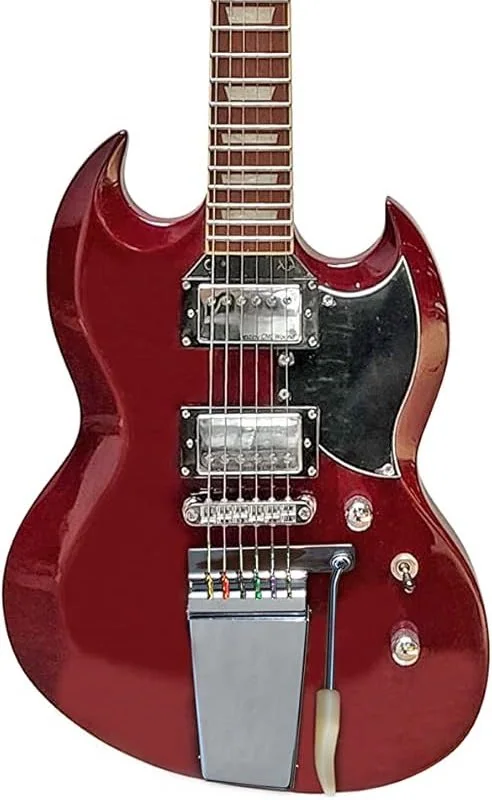
This machine-made all-mahogany guitar is surprisingly good given its price point. The IVSV-300 isn’t exactly built to compete with Gibsons crafted by master luthiers, but it’s a viable instrument for beginner to intermediate players.
Its thin mahogany body feels light around the shoulders. I did not find the stock humbuckers particularly inspiring: upon plugging in, even through my Plexi on a clean tone, they felt dull and brittle to my ears. I’d be very keen to swap them out for Seymour Duncans or Gibson PAFs.
However, the guitar played remarkably well for a budget instrument. The jatoba fretboard is a little drier-feeling than rosewood, but it’s nothing a little lemon oil can’t fix.
Despite the relatively lackluster clean sound, with some overdrive and EQing, The guitar sounds thick and full, and offers viable tones for modern rock and blues playing. I started with some AC/DC, G n R, and finished with Beatles and Dylan. I prefer the clarity of aftermarket pickups, but it’s definitely a usable classic rock sound.
This guitar has a slightly different control layout compared to a typical Gibson or Epiphone SG. Both humbuckers are controlled by one tone knob and one volume knob.
Its pickup selector is in between the two, rather than directly below the bridge. This was a fairly comfortable setup, and made switching between pickups and adjusting tone fairly easy.
I did miss the classic four-knob SG setup when I wanted to play with the staccato Randy Rhoads stuttering effect, or switching from one pickup to the other for a boost in volume.
The guitar’s body is very comfortable, but I was most impressed by its neck profile. The mahogany neck has a thin, comfortably curved feel that’s very close to that of old ‘60s Gibson SGs. It's hard to appreciate how good it is until you play it right after a guitar that doesn't have such a lovely neck.
This is a great budget guitar and I’d recommend it to beginner and intermediate guitarists alike.
6. Guild Polara

The Guild Polara’s slightly offset body aside, this might be one of the closest playing experiences to a real-deal SG I’ve ever experienced.
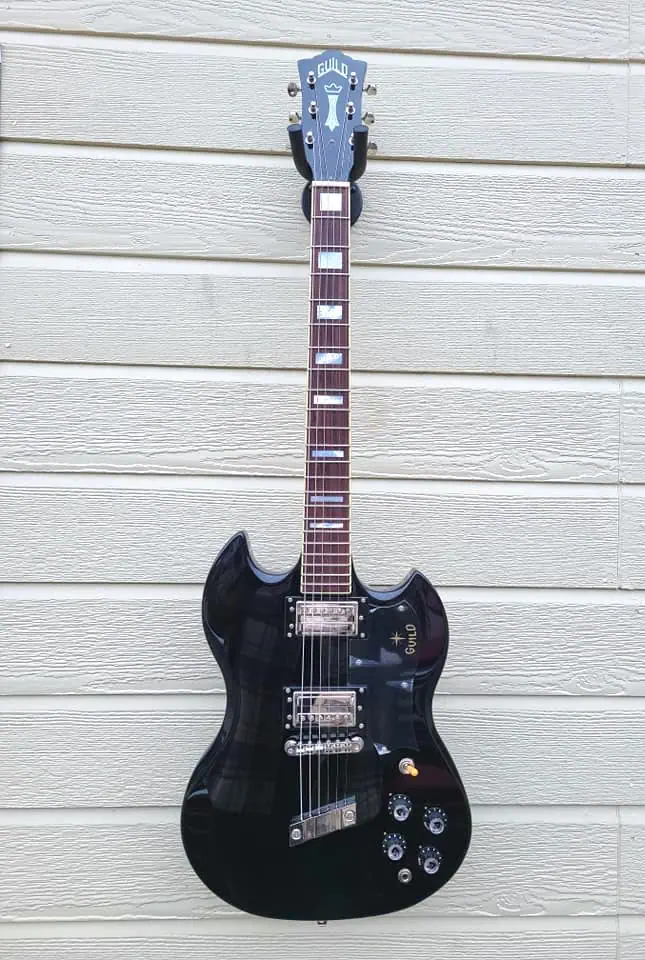
Guild Polara
The guitar’s mahogany neck, and body, give it classic warm SG tones. It’s the clear, welcoming sound I’ve always associated with this guitar.
In fact, the stock humbuckers are nicely vintage-voiced, although they provide plenty of snap and snarl when played through a distorted amp. I did find them getting mushy and undefined with too much distortion, but for those of us who avoid drop tuning and modern metal it’s plenty.
I’d definitely recommend this guitar’s tone for rock players. Apart from classic rock bands like Queen, The Who, etc. I also played some Nirvana numbers from their 'Nevermind' album, and was thoroughly impressed with this guitar.
The AX’s neck is a touch thicker than I’d expect for a Gibson SG-style guitar, more in line with that of a Les Paul. The “Soft U” profile is certainly fast enough to play AC/DC, and I prefer thicker necks, but smaller-framed players should be aware that this guitar’s neck is not quite as narrow as, say, the Epiphone SG.
One cool feature is the coil taps. It doesn’t exactly make the guitar sound like a Stratocaster, but I did find it useful for thinning out the neck pickup to play lighter country and blues licks.
The single-coil tone isn’t going to put Fender out of business, but it’s useful enough to have as an option.
This guitar looks great, sounds great, and boasts Guild’s usual high build quality. I’d recommend it to any intermediate player looking to upgrade their beginner guitar or anyone who wants to dabble in overdriven humbucker tones.
7. Westcreek Racer
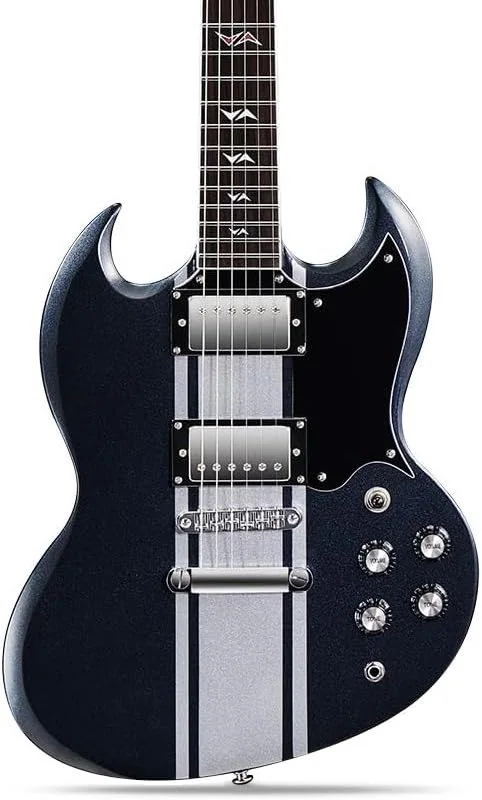
The Westcreek Racer looks more like the ESP Viper, with its offset double cutaway. However, with its set neck, rosewood fingerboard, and all-mahogany construction, this guitar screams Gibson SG.
The control layout is classic Gibson: three-way pickup switch, four control knobs. Easy enough.
The guitar plays very easily, but its tuners tended to “slip” during longer periods of playing. It doesn’t hold tune quite as easily as other guitars. I’d install Grover or Schaller tuners instead.
As the name implies, this is built for speed. The neck is pleasantly slender, certainly thin enough for high-speed shredding. Likewise, the comfortable dual cutaway encouraged me to try out upper-fretboard acrobatics.
The stock pickups had a thick sound, but they lack the clarity and sustain of higher-end humbuckers. I’d recommend swapping them out for something nicer.
I’d recommend this as a beginner guitar or to a player looking for a guitar to upgrade themselves.
Why Do Guitarists Like Gibson SGs?
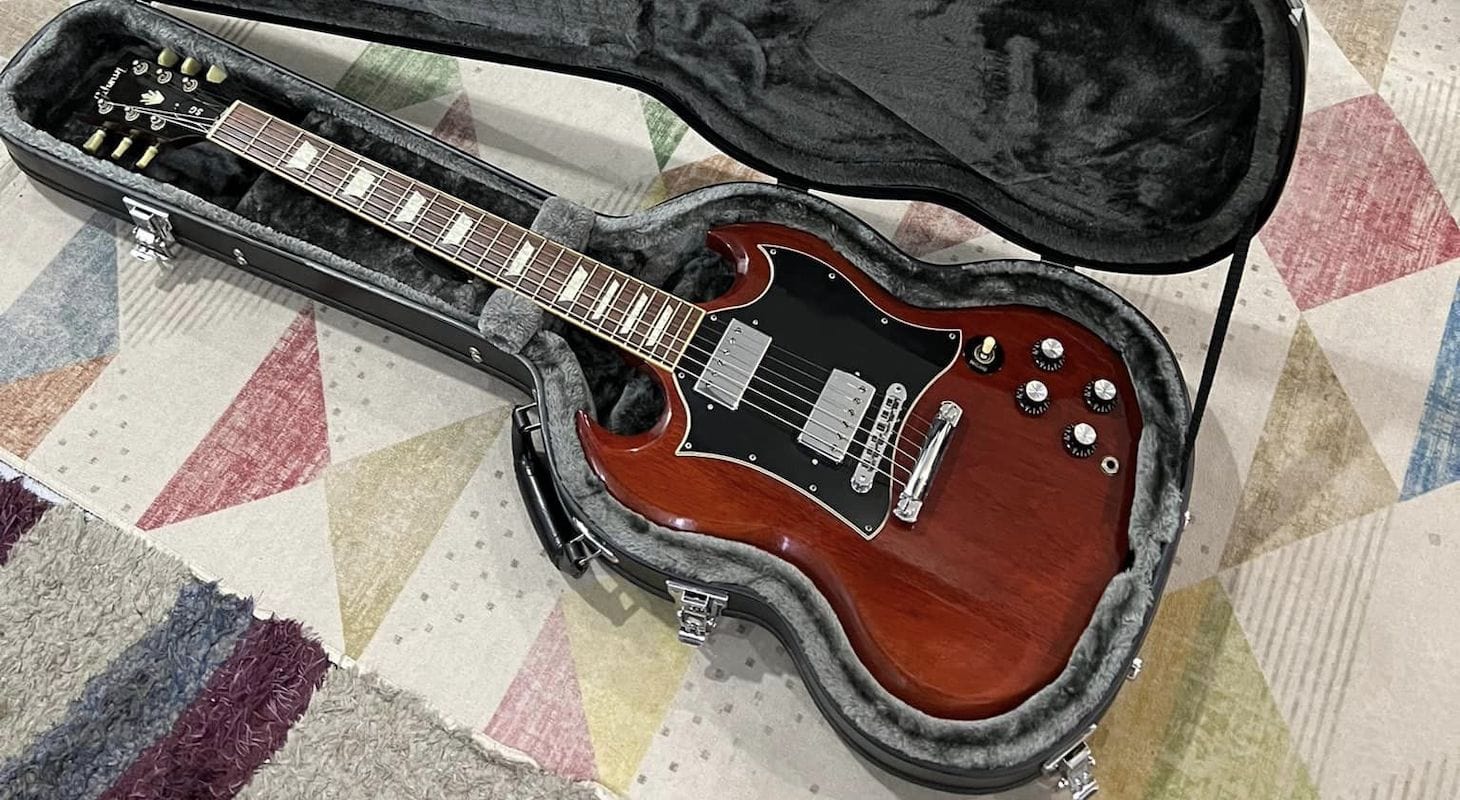
The Gibson SG isn’t just a popular guitar. It’s Gibson’s best-selling guitar of all time.
The SG was introduced in the early 1950s as a thinner, more playable variation on Gibson’s main solid-body instrument, the Les Paul.
The SG, upon introduction, was significantly cheaper than the Les Paul, thanks to lowered production costs, and offered greater playability.
In particular, its slimmer neck, lighter weight, and thinner body made it easier for those learning the instrument.
The SG really came to prominence, however, in the hands of the classic rock era’s most notable guitarists.
The likes of Eric Clapton, Tony Iommi, and Angus Young wielded SGs as they took rock and roll from clubs to stadiums, inspiring countless guitar players in their wake.
Guitar players love the SG because of its tone. The classic SG sound is simultaneously fat and clear. The SG is astonishingly versatile, equally capable of AC/DC’s uncompromising hard rock and Derek Trucks’ smooth, slide-driven blues.
What to Look for in Budget SG-Style Guitars
There are two main criteria that I consider when looking at a new guitar.
First is the sound.
Second is the playing experience.
Most other factors that one might consider, like build quality, looks, and versatility, come under one of these categories or the other.
When trying out a Gibson SG-style guitar, I want it to do SG-style things. For me, it means clarity of tone and easy playability.
I don’t typically want an SG for clean country picking or warm jazz. I want a neck that’s comfortably slender for fast, aggressive playing. I want humbucking pickups that break up and offer white-hot lead tone when subjected to overdrive or distortion.
Tone
Most of the classic SG tone comes from the combination of PAF-style humbucking pickups and the use of mahogany as the primary tonewood.
SG-shaped guitars without these pickups or with a different wood will sound very different.
That can be a great thing, creating a guitar with a unique sound all its own. However, if you want the classic SG sound, you need a block of solid mahogany.
For the SG tone, the guitar should have two humbucking pickups. Gibson’s original pickups from the 1950s offered a thick, powerful tone that was unparalleled at the time.
They were so proud of their new invention that they pushed their products out to market without patenting them: the pickup’s name, “PAF” stands for “Patent Applied For.”
Often, the pickups in more affordable Gibson SG alternatives are among the cheapest components in the guitar. Fortunately, it’s very easy to swap a guitar’s pickups out for something more suited to your tastes.
You just need a soldering iron and a screwdriver. Alternatively, most major guitar stores have in-house repair and modification services.
If you’re looking at improving your guitar’s tone, I’m very fond of Seymour Duncan’s PAF-style pickups. Their Alnico II, JB, and SH-4 pickups are all excellent for the kind of classic rock tone the Gibson SG is well known for.
Some SG-style guitars have additional features, such as coil tapping, to offer greater tonal versatility. This can be very useful for guitarists who play a broad range of music.
Playing Experience
The Gibson SG was designed to be easy to play. That’s why it has a light body, a slender neck, and twin cutaways to allow upper-fretboard access.
When trying out a new guitar, consider how comfortable it is on your fretting hand as well as your picking hand. Some SG alternatives have contoured bodies that are more comfortable on the arm of your picking hand.
Similarly, there are many different neck profiles that can affect how comfortable you will be when playing the guitar.
An SG-style guitar should also be quite light and easy to play while standing up.
Final Thoughts
The Gibson SG is one of the most iconic silhouettes in popular music.
Ever since its launch in 1952, players have coveted its undeniable good looks and great tone.
For those looking for a modern, affordable alternative to the full-priced Gibson SG, this article features some of the best options on the market today.
