

Despite the recent increase in popularity when it comes to digital modeling and VST plugins, there is a special kind of magic that only comes with using a tube amplifier.
The dynamic response, warm tones, and harmonically rich distortion still make them the amplifiers of choice for both guitar enthusiasts and recording professionals alike.
While traditionally tube amps carried with them a pretty hefty price tag, as technology has progressed and the competition with digital amps grew more fierce, companies have taken to producing more stripped-down tube amps designed to accommodate those on smaller budgets.
So if you’ve always wanted to own an authentic tube amp but couldn’t justify spending thousands of dollars and have it be unusably loud at home, you’re in the right place.
I’ve tested every affordable tube amp I could get my hands on and have put together a list of my very best picks. All of which offer fantastic and authentic tube tones, while still remaining affordable to those on a budget.
6 Affordable Valve Amps that are Ideal for Home Use
1. Bugera V22 Infinium
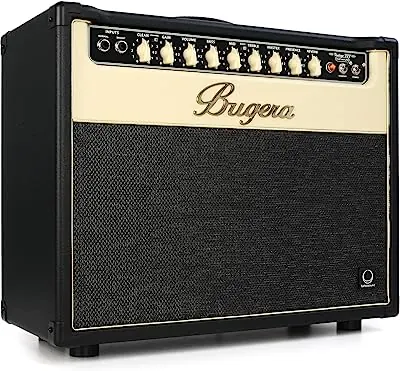
While Bugera has never quite been able to achieve the same levels of popularity that brands such as Peavey or Marshall have, they have stuck around with their own niche cult following. For the select few who take the time to delve into what Bugera amps have to offer, they’re always left with a positive impression.
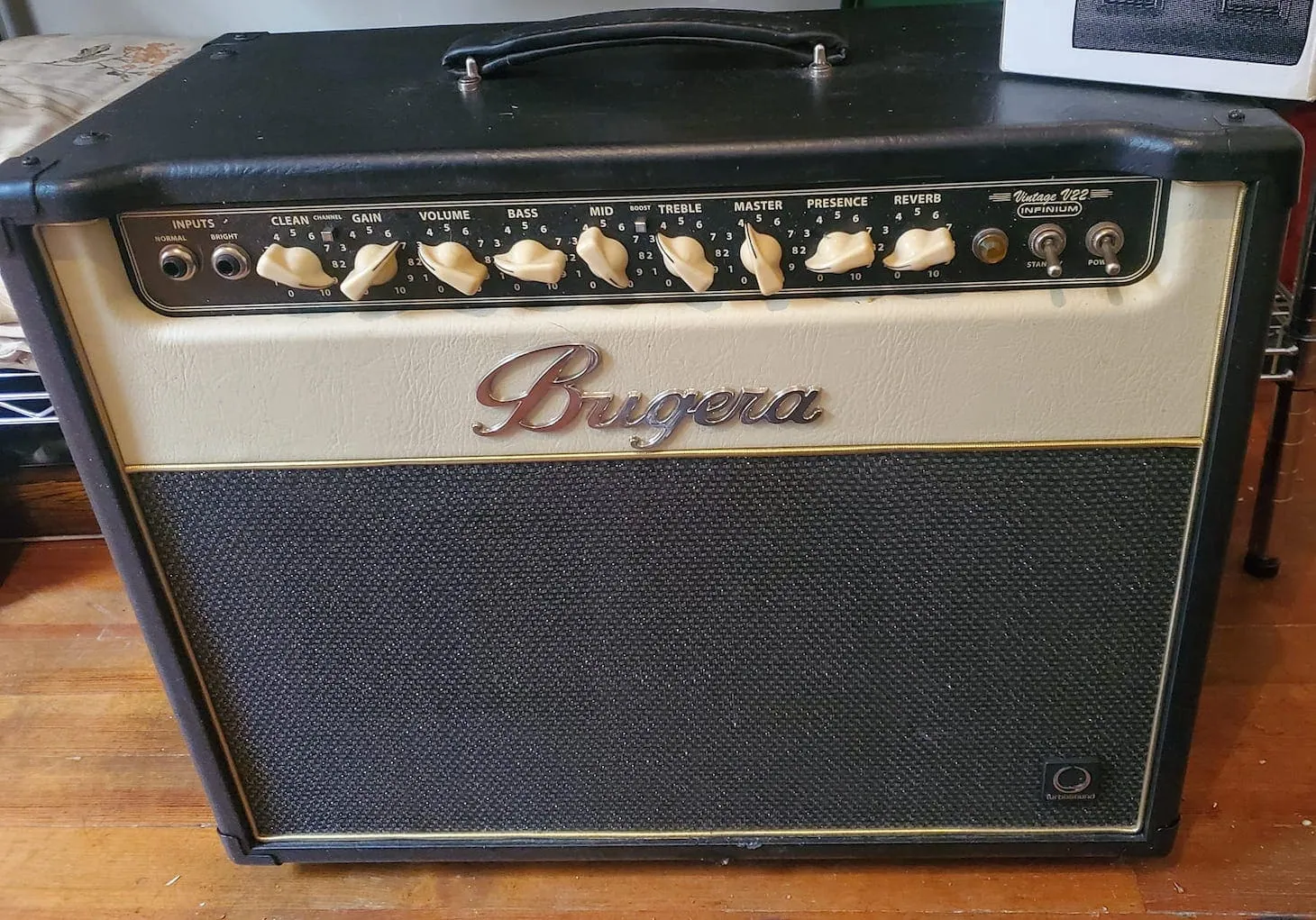
Bugera V22 Infinium
While Bugera does have a selection of dedicated high-gain heads, the Bugera V22 Infinium is geared toward those looking for more classic clean and crunch tones. It’s supremely warm and rich, dripping with pleasant-sounding harmonics as you’d expect from the 12AX7 preamp tubes. Tonally it’s extremely pleasant and serves as a great tonal base for you to run your favorite pedals into.
Upon plugging in, I felt like it was closer to a Vox tone than the hot-rodded Marshall sounds I expect from Bugera. The clean tone in particular reminded me of the classic bright, chiming Vox AC15 sound. Great for jangling indie or early rock and roll riffs.
Turning up the volume and introducing a compressor to the mix offered some awesome, ultra-clean 90s country style tones.
Switching to the dirty channel with low gain yielded a very satisfying classic rock crunch. There’s enough heft to this tone that I was able to deliver Malcolm Young-style rhythms.
Despite Bugera’s reputation as a high-gain brand, increasing the gain past the halfway mark on the dirty channel wasn’t as satisfying as I hoped. It’s buzzier and undefined than I want.
The stock speaker leaves a little to be desired, but for the price, it’s not too bad. In fact, the somewhat honky-sounding speaker might be the culprit for this amp’s lack of response at high gain levels.
For higher-gain applications, I’d be tempted to try and install another speaker, or run it into another speaker cabinet.
This classic design and tone are very much reflected in its aesthetic. It has a cloth grill and cream front panel that uses those awesome old-school chicken head knobs. This thing looks like it was plucked straight from the ’50s.
But with that being said, there are a few more modern features here that make it more than just a plain combo tube amp.
The Bugera v22 Infinium has a unique technology that Bugera call their “Infinium Tube Life Multiplier Technology”. This is basically a fancy way of saying it will automatically optimize current levels based on whatever tubes you stick in it.
Usually, when replacing tubes you need to think about matching and optimizing them. But with this, you can just stick whatever you want in there and it’s going to handle it for you, you can even mix different tube types!
They say it will extend the life of the tubes by up to 20 times! While I can’t confirm this during my limited time with the amp, the theory is that it will save you money in the long run as you’ll need to replace the tubes less frequently.
It also has a dual input with a regular and bright mode to give you a little more top end should you need it, and there’s even an included footswitch to control the in-built reverb effect and channel.
Oh, and it’s also available in 5W and 55W versions. And the 55W version is only slightly more expensive compared to the 22W, so if the bigger size isn’t an issue, you might as well go for the largest version! For a compact, apartment-friendly option, consider the V5 (our full review).

2. Vox AC10C1
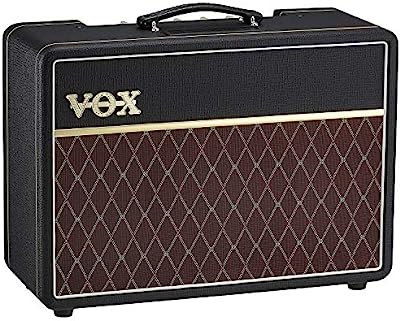
Vox has long been the king of that boosted clean British-style sound. With the original AC30 still being every bit as relevant as it was back when it was first released in 1958.
So with this amp, Vox has taken the fundamental spirit of the AC30 and shrunk it down into a no-nonsense, small-format monster that’s ideally suited for home practice or recording.
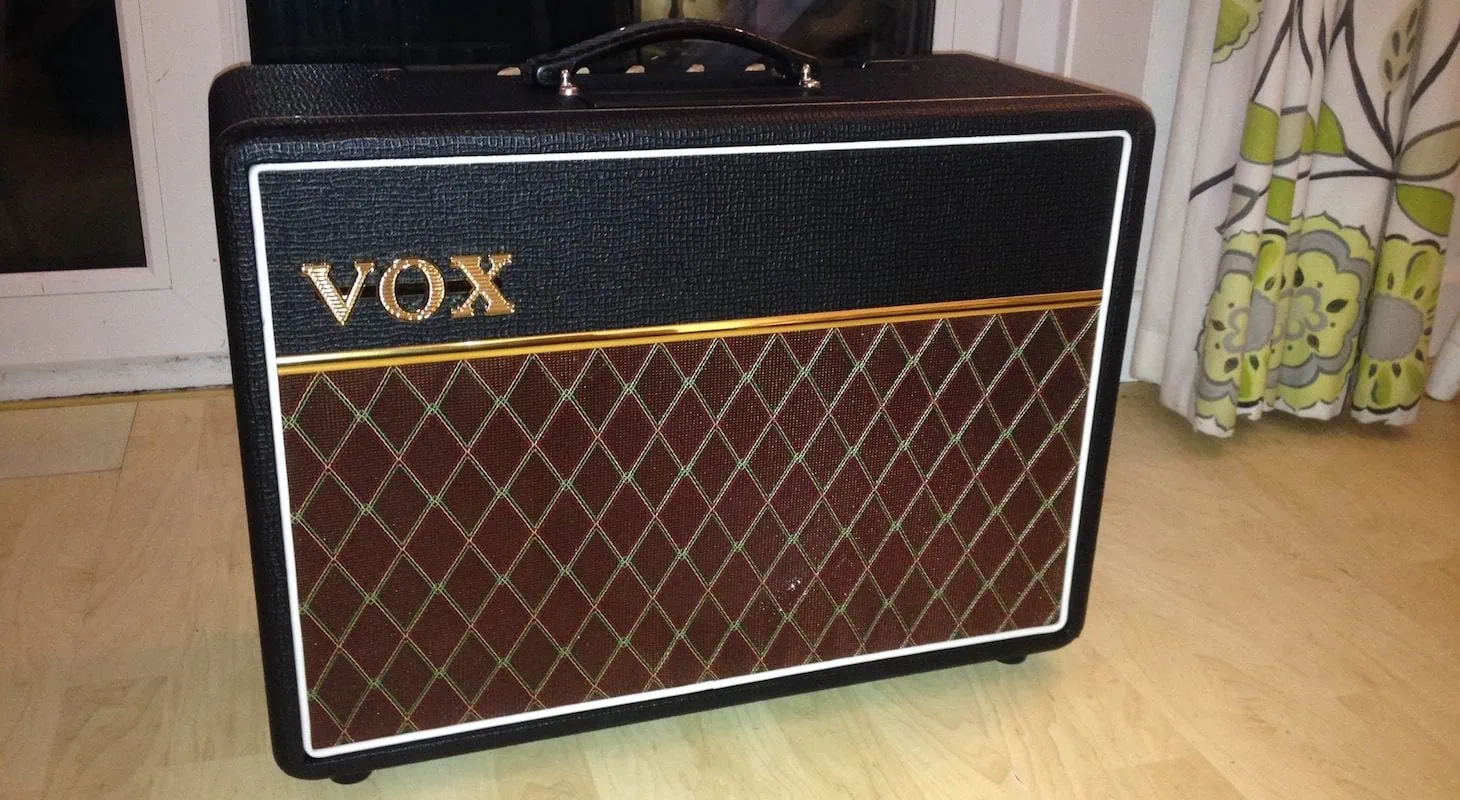
Vox AC10C1
But don’t let its diminutive stature fool you, the British crunch this thing delivers is every bit as moorish as its bigger brothers. From my testing, I believe this would be perfectly adequate for small bar gigs too!
The main thing to note about the Vox AC10C1 is that what you are purchasing is the fundamental tube tone it offers. Modulation effects and other bells and whistles need to come from external gear.
It’s a single-channel amp with a gain, 3-band EQ, volume control, and a little digital reverb that tries to emulate a spring reverb. The reverb didn’t sound that great and ended up harming the analog sound, I recommend ignoring it and using your favorite reverb pedal with it instead.
Something I noticed about the 3 band EQ controls is that the treble and bass knobs were very responsive. While you might think tonal variation on a single-channel amp with a universal drive knob might be limited, I had zero issues going from a completely glassy clean tone with no noticeable breakup to a really gritted-up rock tone.
There’s plenty of classic Vox jangle on offer here, although I would have appreciated the inclusion of the AC30’s famous second channel. I was able to conjure old-school Beatles and Stones tones from this amp with little to no issues.
This little powerhouse also breaks up at much lower volumes than you might expect. It’s entirely possible to get a nice edge-of-breakup blues tone without pushing into window-rattling volume.
You will not run into issues achieving the sound you want from this amp, but because it’s single channel and all the controls are linked, you have to get there in a very manual way which may become tiring if you use a lot of different tones as you’ll need to set the knobs by hand each time you want a different tone.
The other option is, of course, to use it as a pedal platform. I’d caution against this for many players, as the Vox has a distinctive character and breakup that won’t play very well with all pedals. This is an amp where you want most of your tone defined by the amplifier rather than your pedalboard.
3. Fender Pro Junior IV 1x10”
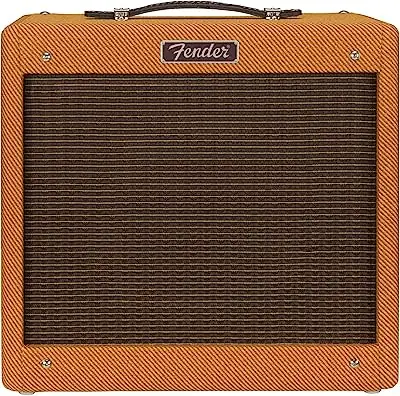
As nice as it is having a bunch of features and toys to play with, certain players just don’t want to deal with it. All they want is to plug in, turn the amp on and have it sound good with minimal fuss.
This is where the Fender Pro Junior IV comes in. It’s a tiny thing weighing just under 23 lbs with a smaller 10” speaker. It’s not exactly a Marshall stack, but the Pro Junior has more than enough volume courtesy of this speaker to keep up with a full live band, including drummer.
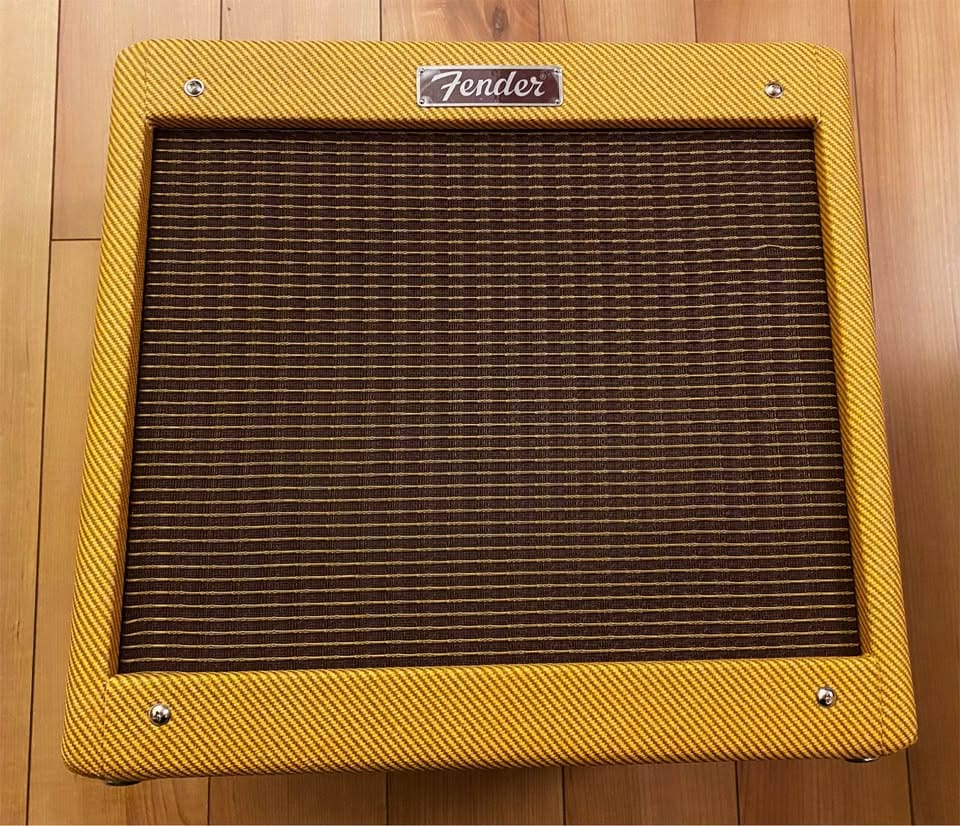
Fender Pro Junior IV
I can say the raw tone that’s output from the 2 x 12AX7 preamp tubes and the 2 x EL84 power amp tubes is fantastic.
It’s also as simple as an amp can come when it comes to controls. It only has two knobs, a volume control, and a broad tone sweep allowing you to just plug in and get going in a matter of seconds.
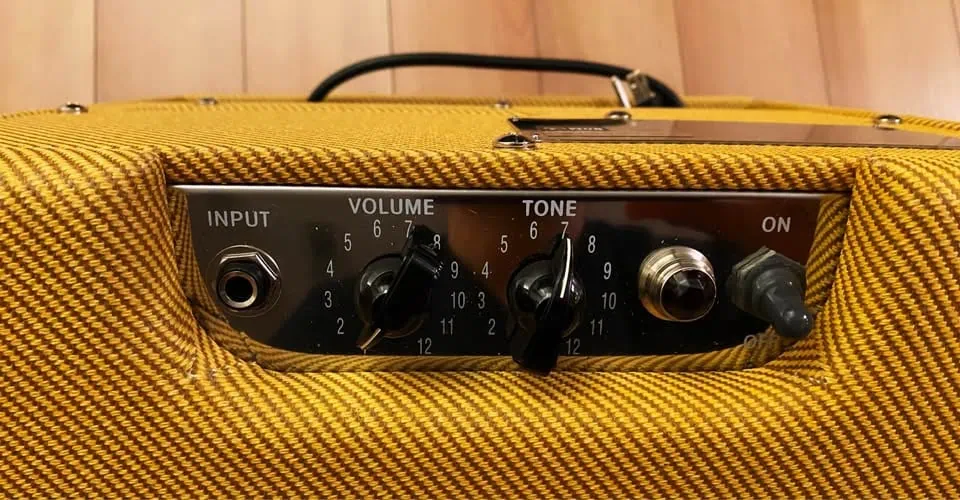
Fender Pro Junior IV - Controls
With only two control knobs - volume and tone - it’s very simple to plug in and get going.
It offers one sound and one sound only: all-American Fender tube tone. Fortunately, the palate of this amp is nice and clean, so it handles pedals extremely well.
For example, rather than messing about with a three-band EQ, I simply adjusted my playing technique or plugged in my Boss graphic EQ pedal.
Likewise, for extra dirt and push, I put my Echoplex preamp in the signal chain.
The Junior is much louder than I anticipated. Running the volume even at 2 is almost too loud for my apartment.
At rehearsal, it had no issues being heard over the drummer and the rest of the band. For classic rock, blues, and country tones, it’s unbeatable.
Aesthetically it has a very classy traditional '60s tweed look which includes the cloth finish and grille. It’s pretty and blends in with the decor well enough that you should be able to leave this in your living room with minimal backlash from your significant other.
While tonally it’s very simple, like many other single channel amps it does take pedals very well, but it’s worth noting that there is no effects loop so drive and modulation effects can only be run in front of the amp.
Modern players who demand endless features and controls on their amplifiers might be turned off by the bare-bones simplicity of the Fender Junior. It’s competitively priced, but there are more affordable tube amps out there.
My argument is that this is a real, vintage-voiced Fender amp, with lacquered cabinet, Jensen speaker, and the EL84/12AX7 tube combo. It sounds good when you plug in a guitar. It sounds better the longer you play it. If you want extra bells and whistles, it’s clean enough to operate as a pedal platform.
It weighs about twenty pounds, so it’s easy to carry into a gig, and loud enough to play with a full band.
I’d definitely recommend this to any gigging guitarist.
4. Marshall DSL20CR
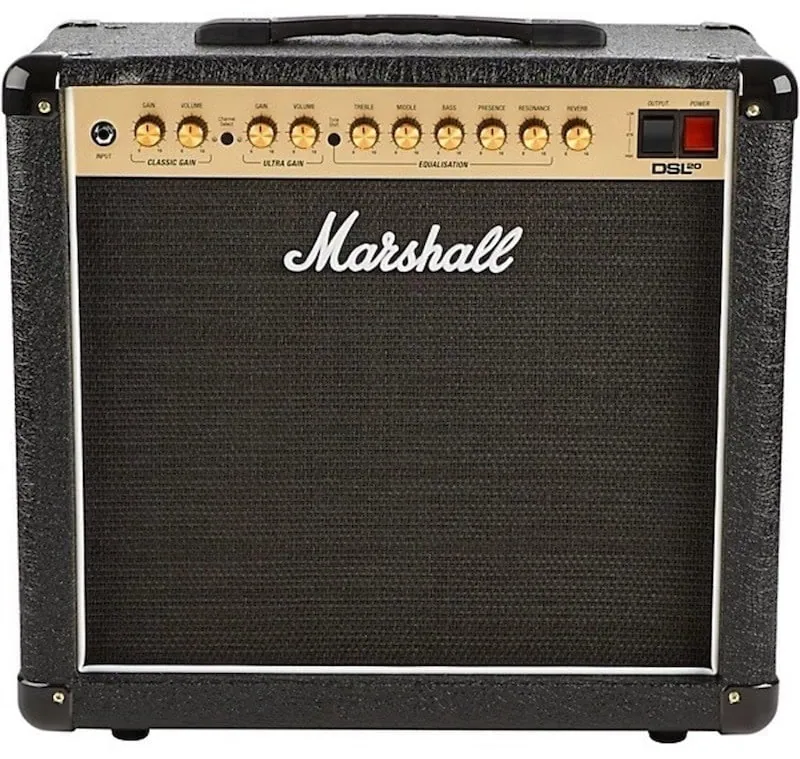
One of the best band-ready tube amps on the market is Marshall’s classic DSL20CR.
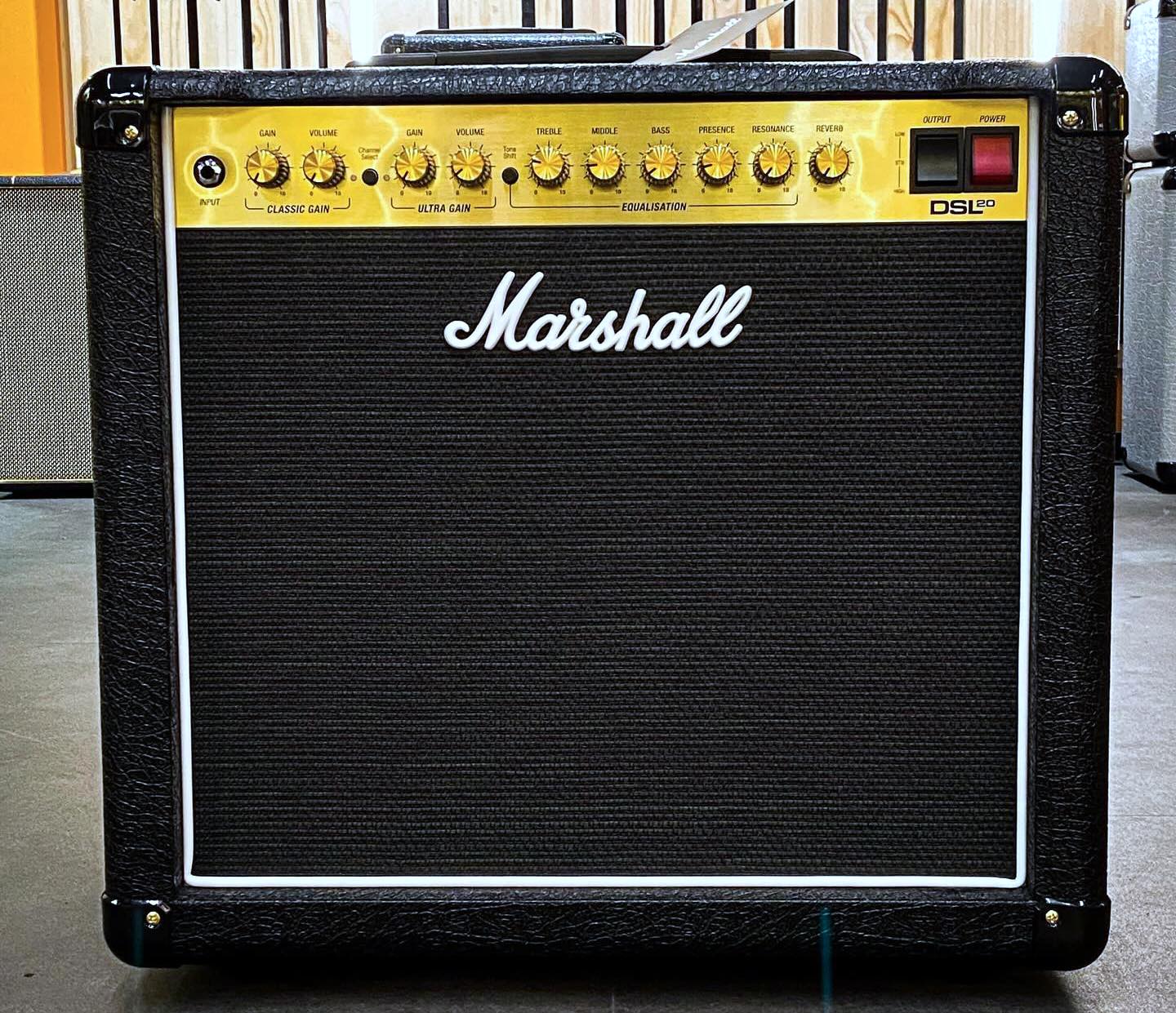
Marshall DSL20CR
Unlike Marshall’s much-maligned entry-level combos from my youth, the DSL20 actually sounds like a Marshall amp. Specifically, it sounds like a Super Lead, but it has independent volume and gain controls.
Out of the box, it’s reassuringly heavy, as you’d expect for a full-powered tube amp. The black-and-gold color scheme is classic Marshall.
Upon plugging in my Les Paul, I selected the “Classic Gain” channel and was thrilled to unleash tones that wouldn’t be out of place on “Back in Black” or The Darkness’ debut album.
Increasing the gain yields more fizz, so you have to turn up the volume to get the poweramp working as well. This amp sounds best with the volume turned up a little higher than the gain, at least on the first channel.
The clean sound is really only worthwhile at lower volumes, and isn’t quite as glassy and clear as Marshall claims. In my opinion, however, nobody is buying this amp to play squeaky-clean folk or country. This is a rock and roll amplifier.
The “Ultra Gain” channel is a real firebreather. The amount of distortion here is pretty impressive, getting into 90s metal territory without bothering the neighbors.
About halfway up the gain knob on the “Ultra Gain” channel is enough distortion for most applications. Chunky low-end palm mutes sound appropriately aggressive. Screaming, white-hot metal leads leap from the speakers.
The sole speaker offers plenty of volume, certainly enough to keep up with even the most enthusiastic metal drummer. While it doesn’t sound exactly like a full Marshall stack, for most band applications, it’s one of the best combo-sized facsimiles out there.
I wouldn’t use this in a blues or country band where edge-of-breakup or clean sounds with plenty of headroom are the name of the game.
The clean sound is usable. It’s closer to Slash’s Use Your Illusion clean tone (think “Don’t Cry” or “Knockin’ On Heaven’s Door”) than to Alan Jackson. This amp is simply built for much more aggressive, powerful distorted sounds.
If you’re in a band that plays hard rock or heavy metal, and you’re sick of loading a full 4x12 stack to gigs and rehearsal, consider the DSL20CR, if only to save yourself the heavy lifting.
5. Supro Delta King 12
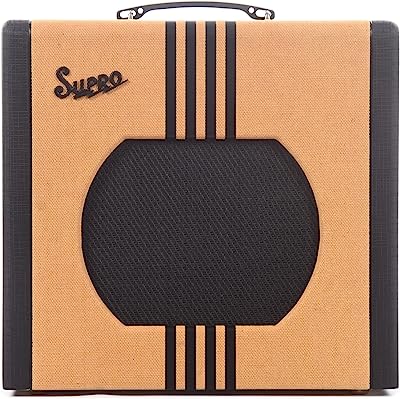
The vintage Supro amplifiers from the 1960s provided a classic British driven sound and were used by a plethora of guitar legends including the likes of Jimi Hendrix, David Bowie, and Jimmy Page.
These amplifiers are still highly sought after today, but you’re in for a fierce battle on the used market if you want an original.
The good news is Supro has developed an all-tube 15-watt miniature version that can give you all the grunt and attitude of the original, without the high volume thanks to its small 1x12 Supro speaker.
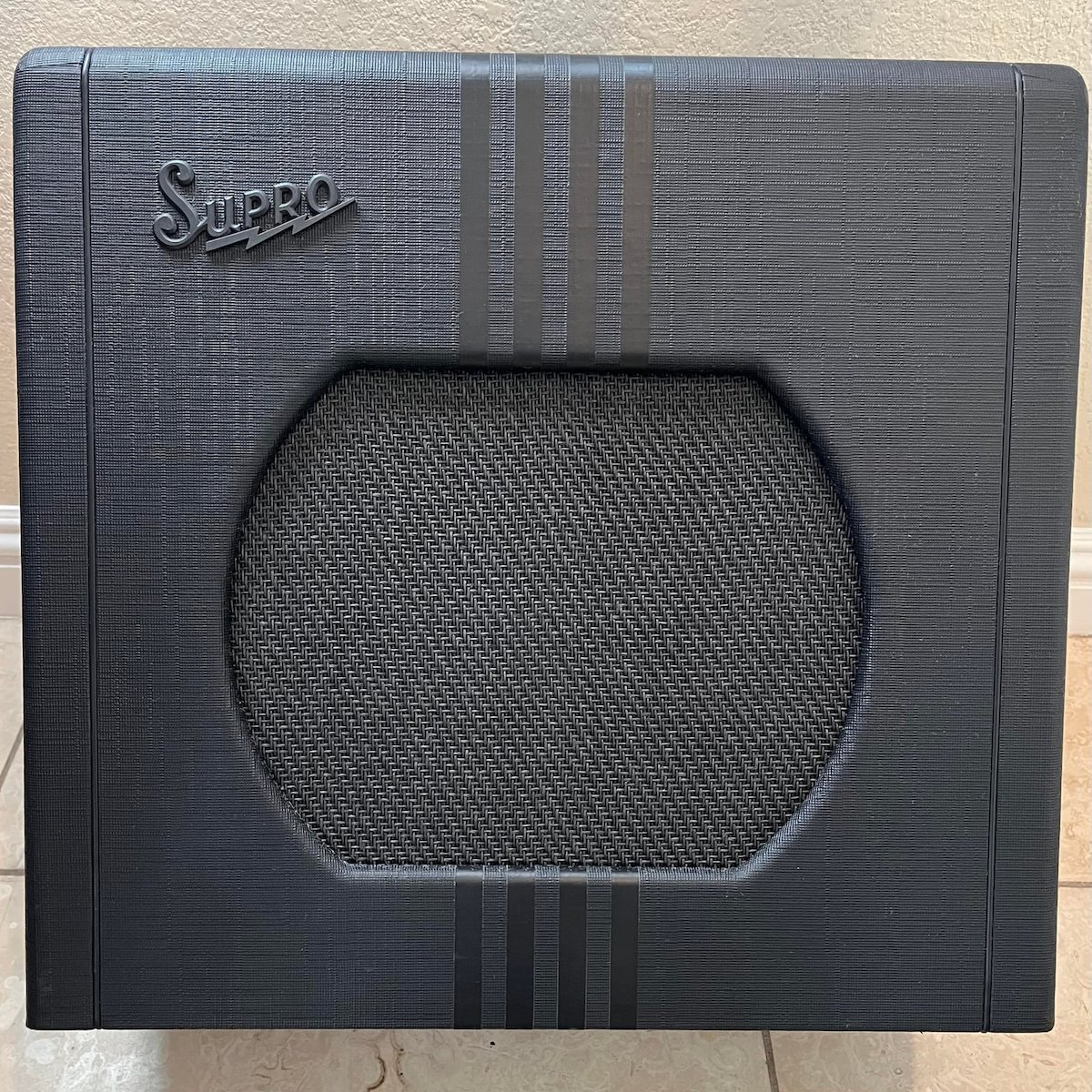
Supro Delta King 12 - All Black
That’s not to say that the 12-inch speaker here can’t handle volume. It was loud enough to play at rehearsal with my band as well as at a live gig. It’s not as if you’re going to mistake it for someone else’s amp, either. Nobody is picking up your bumblebee-toned amplifier and mistaking it for their own.
The core philosophy behind the Supro Delta King 12 is to provide an uncompromising true analog sound. With its authentic real analog spring reverb and additional FET-driven boost and Pigtronix FAT distortions, every tone you get from this thing is going to be as real and authentic as they come.
While the distortions definitely lean towards more of a fuzzy sound that someone looking for a cutting-edge modern distortion might have trouble contending with, if you know and understand the character of the distortion from that era you can rest assured this will leave you satisfied.
It’s hard not to break out in a huge smile playing classic Stones and Led Zeppelin riffs on this amp. That nasal, slightly fuzzed-out early hard rock tone simply leaps out of the Delta King.
If you like the vintage-voiced sound of the Black Keys, this is the amp for you.
But one aspect that surely deserves mentioning is the aesthetics. It has that classic Supro cabinet that looks like it could have come straight from a '60s live house, the thing looks amazing.
I was surprised when picking the amp up to feel how hefty it is. The handle clearly implies that you’ll be carrying it one-handed, but there’s appreciable weight to the Delta King.
At just under thirty pounds, it’s not exactly light in your hand. I’m used to bigger, heavier amplifiers, and I’m a fairly large-framed individual, so it doesn’t bother me much.
However, smaller-framed players envisioning walking into a gig with a guitar in one hand and the amp in the other might struggle.
There are lighter combo amps out there, but this is an old-school tube amplifier. The weight, like with a Les Paul, is part of the deal.
Despite this being an all-analog machine, they’ve still been able to squeeze in a few modern conveniences and quality of life improvements that make it integrate just fine into a modern setup.
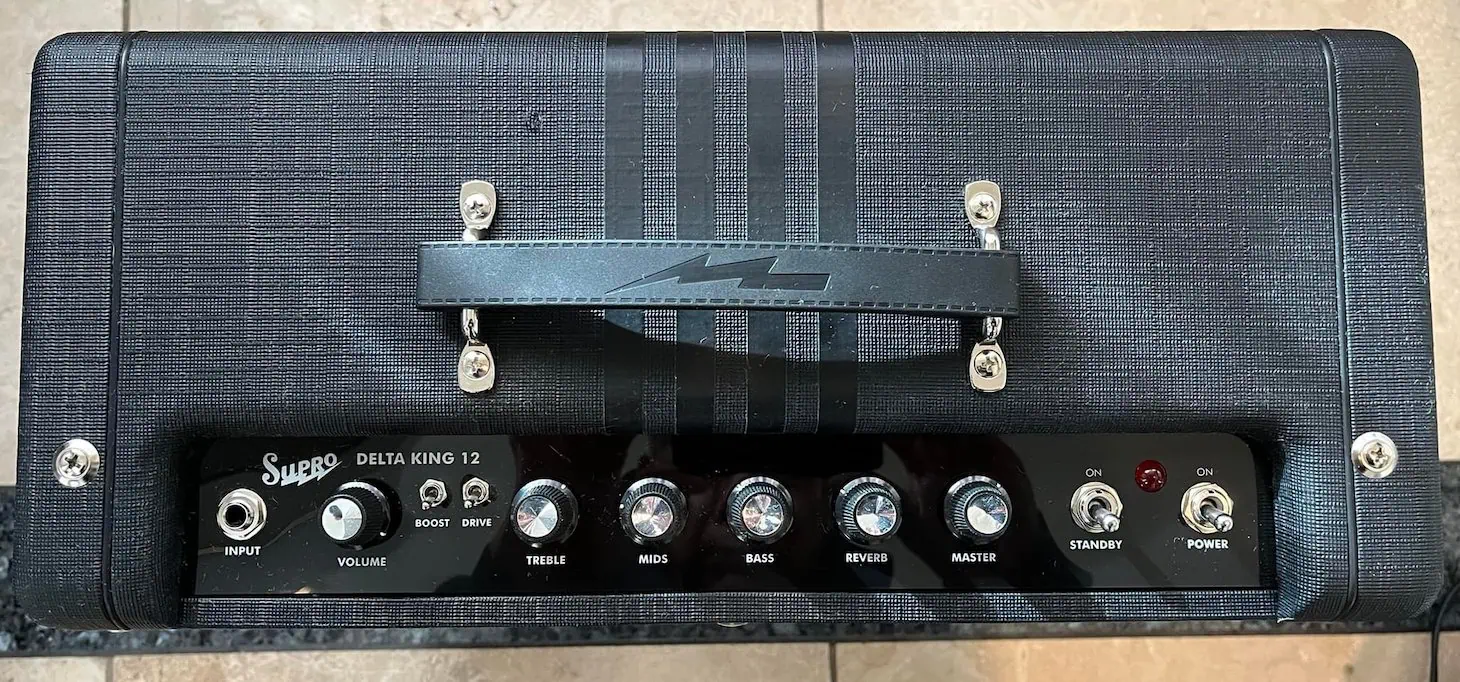
Supro Delta King 12 - Controls
They have a line out that allows you to record without needing to mic the speaker up, this is a very welcome addition as the amp is so quiet you will struggle to record the speaker with a microphone without introducing a lot of outside noise.
Of course, in a professional studio, that doesn’t matter quite as much. The Supro amp has a distinctive tone, and that’s what made it on to all those classic recordings.
This amp sounds great for classic, groovy rock riffage. If you’re in a band that wears bell bottoms and takes pictures of Ronnie Wood to the hairdresser, it’s hard to look past the old-school cool of a Supro Delta King.
6. Blackstar Studio 10 6L6
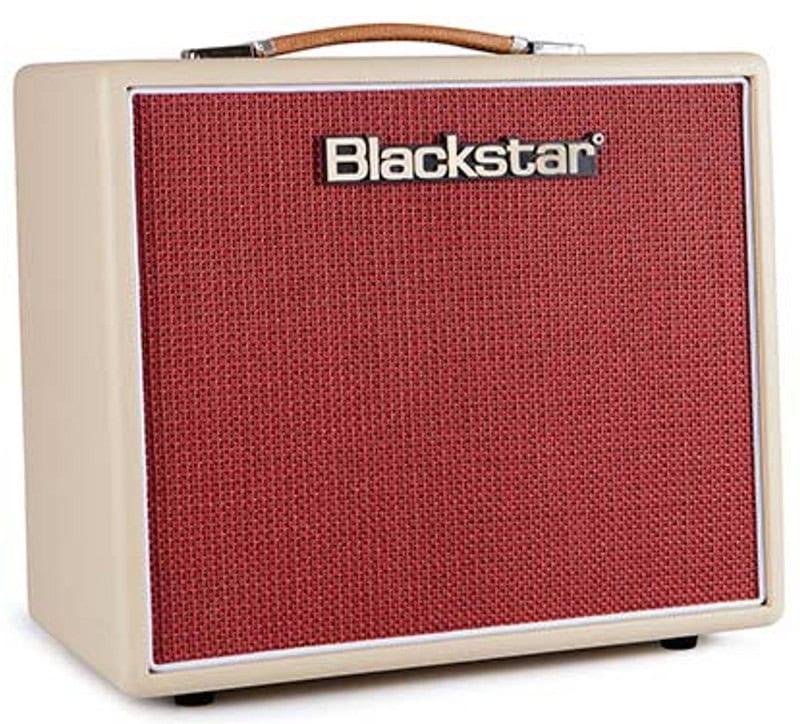
In a market already pretty well stocked with Marshall-esque amplifiers, how does a brand like Blackstar - staffed with ex-Marshall employees - stand out?
With extremely simple British-voiced amps that are easy to use.
Marshall amps, despite their reputation, aren’t always best for plug-and-play enthusiasts. For every Malcolm Young acolyte, there’s a thousand players demanding multiple gain stages and channels from their JCM2000.
Blackstar clearly decided to deliver a simple, great-sounding amplifier to appeal to players who don’t want to mess around with extra controls. That’s the Studio 10 6L6.
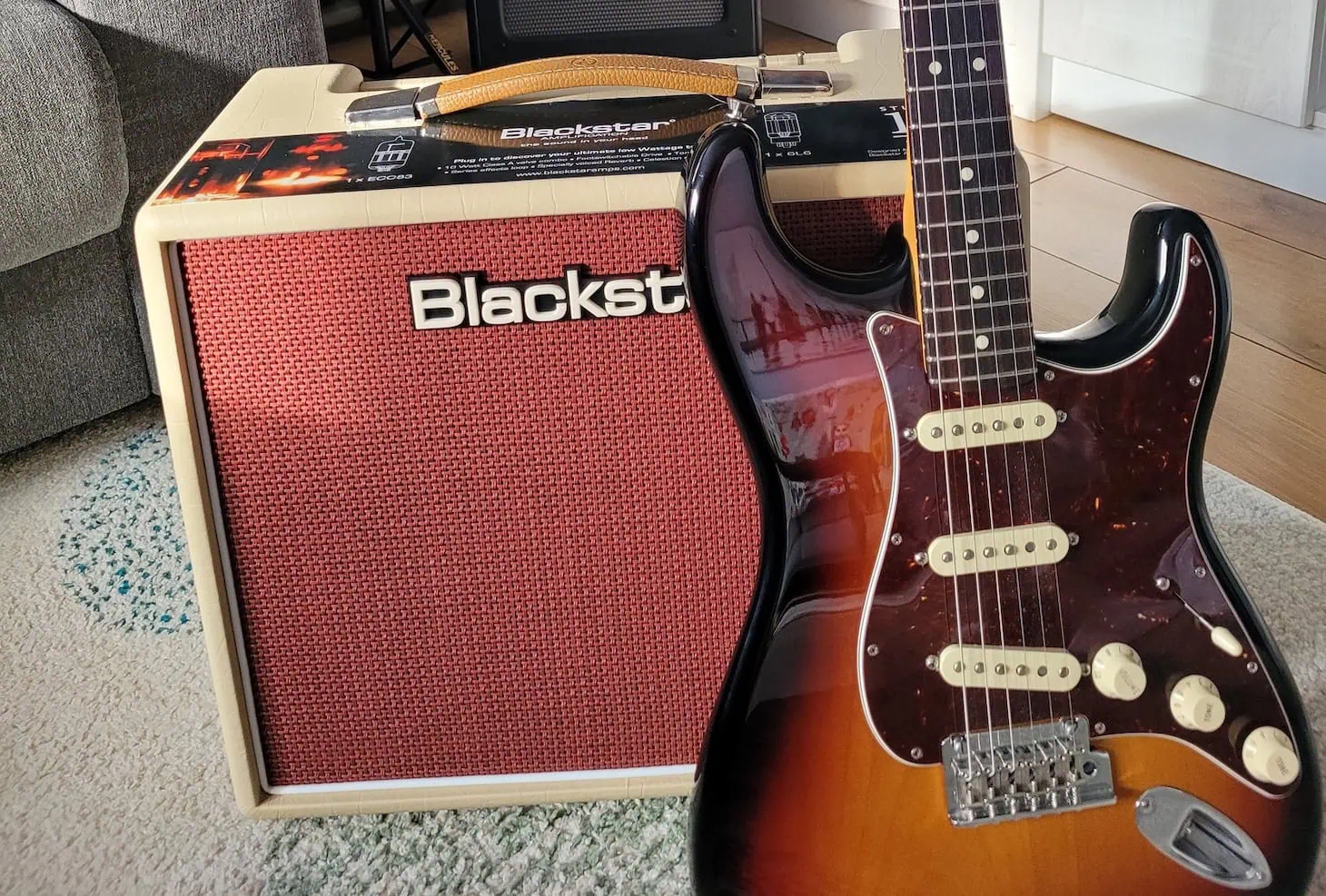
Blackstar Studio 10 6L6 next to a Strat.
Out of the box, this amplifier looks very cool. I’m a big fan of the Randy Rhoads-esque cream color scheme and the simple array of controls. Instead of a three-band EQ, for example, there’s one knob marked “Tone.”
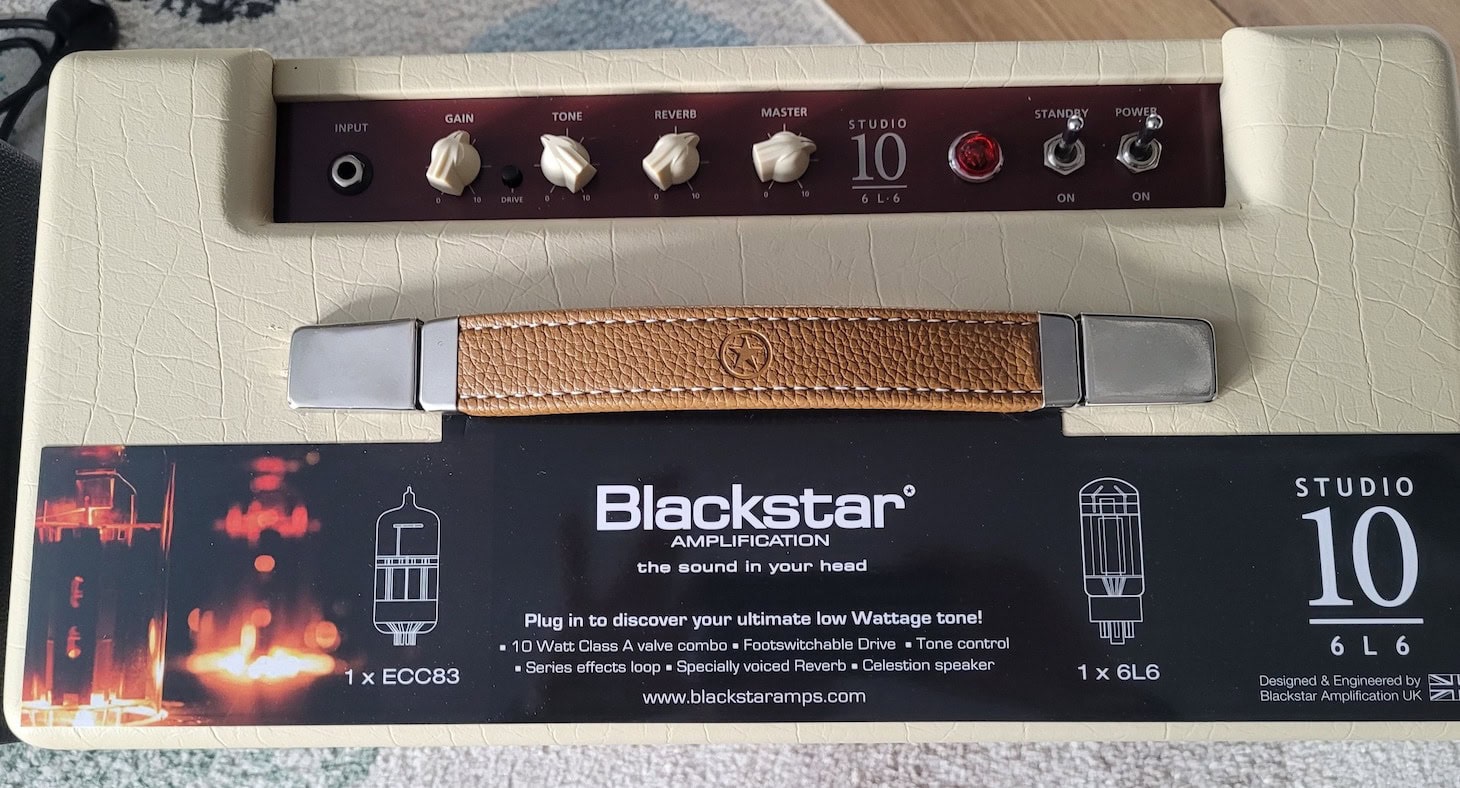
Blackstar Studio 10 6L6 - Controls
The “Tone” knob could more accurately be named a midrange sweep. I found the amp sounded best with the “Tone” knob set just below halfway.
The 6L6 tube in this amplifier gives it a definitively more “American” character than its sister amps, which include a British-voiced EL34 tube. It doesn’t sound exactly like a Fender amp, but it certainly works for precisely the same applications.
The clean sound is really impressive, with the mild midrange recess I expect from a 6L6 tube. It’s warm, pleasant, and with a touch of reverb, I was able to coax some really sweet John Mayer-style blues tones from this amp.
With only ten watts of power, it doesn’t take much to push the amp into breakup. Doing so yielded a satisfying low-mid thump and, upon activating the gain boost (Drive) function, I was able to access some seriously hot lead guitar sounds.
In fact, when I pushed the gain all the way up and activated the Drive, I was able to get in the ballpark of Neil Young’s ultra-hot distorted tone from “Rockin’ in the Free World.”
With my Les Paul, I did have to push the Tone knob further up to brighten the sound, but it was a truly excellent tube tone.
The headphone output lacks the grunt and power of the speaker stage, as expected. It’s a usable sound for home practice, however.
The included footswitch was a welcome addition. At band practice, I was able to use the footswitch to activate the Drive channel for lead playing.
This diminutive amp weighs a little over thirty pounds, and delivers plenty of volume and tone in doing so.
It sounded best playing high-headroom country lead guitar playing with a touch of drive, but I wouldn’t be averse to playing this amp in a harder rock band, either.
At such a competitive price (thanks largely to the help of Chinese manufacturing), I’d recommend this to any gigging guitarist in the market for a Fender-style amp on a budget.
Fleshing Out Your Sound with Pedals
A commonality you will notice among budget-friendly tube amps is a lack of bells and whistles. Tube amps aren’t expensive for the sake of it, if you want 4 channels, effects loops, and independent EQs, it all requires extra components and manufacturing processes to integrate.
So, by stripping off all of that extra fat, they can produce an amp that has a fantastic raw tube tone but is perhaps less versatile as the lack of extra channels means you can’t have dedicated rhythm and lead tones.
So how can we get around this limitation and turn your great-sounding, but limited little tube amp into a full-blown guitar rig?
The answer lies in outboard gear, whether it be pedals, rack hardware, or even live post processing thanks to the abundance of line-outs that are available on these amps.
Distortions, Boosts, and Overdrives, Oh My!
When thinking about common applications of multi-channel amps, seldom are people looking to have 2 clean tones or two rhythm tones. Generally, they’re split up into clean, crunch, and distortion.
One of the easiest ways to simulate a multi-channel setup is by using a distortion or boost pedal to increase the gain of the tone. Now this method is purely additive, you can only add additional distortion to the pre-existing amp tone, you can’t take it away.
This means if you have your raw amp tone set as a light rock crunch, you can kick in an extra distortion pedal to make it a high-gain rhythm, or a lead tone. But what you can’t do is bring it back from a distorted tone to a clean one.
My personal top recommendations for distortion pedals are the legendary MXR Duke of Tone Overdrive will really compliment that analog sound of your tube amp, and it’s both tiny and inexpensive to boot!
If you want something to just add a little extra hair and spice to your sound you cannot go wrong with the iconic Ibanez TS9 Tubescreamer. A tube screamer is, as the name might suggest, designed to make your tubes saturate a little bit more and add some new harmonic qualities to them.
Modulation Effects
Adding distortion effects to a tube amp is a very easy process as you just stick them in front of the amp and press a button when you want to engage them.
Modulation effects such as reverbs, delays, phasers, and such become a little more complicated as depending on whether they are put in front of the amplifier or through the effects loop will produce radically different sounds.
The problem is that the majority of budget tube amps do not have dedicated effects loop. So you may struggle to get the sound you want by putting your favorite reverb into the front input.
As a general rule, time based effects such as delays, chorus, flangers, and reverbs sound less desirable when placed in front of the amp. This is because even if you put them as the very last effect in the chain, they will still pass through your amplifier's preamp and be subject to all the distortion that it would normally add to the tone.
This does have some application for very specific sounds such as post-rock ambient effects, but for general guitar playing it can sound very nasty. So, if you’re a big fan of your juicy ambient sounds, it’s best to ensure your amplifier has an effects loop!
EQ Pedals
I’m a huge advocate for using an EQ pedal in your signal chain. They’re useful for a lot of things: you can use it as a boost, a cut, or as an always-on tone conditioner.
Their main use, of course, is to boost or reduce frequencies from your guitar signal before it gets to the amp. Doing so can compensate for your amplifier’s natural character. For example, if your amp tends to run with too much harsh treble, a slight boost to the low end with an EQ pedal can warm it up nicely.
When you’re running a bare-bones tube amp like the Blackstar Studio 10, an EQ pedal can really help you get the most out of your setup.
Do I REALLY Need Tubes?
An often hotly debated topic is how tubes sound against digital modeling technology. For the longest time, there was no question about it, tubes sounded significantly better than digital emulations which often lacked dynamic response and had a harsh digital top-end fizziness that sounded very unpleasant.
However, over the last decade or so with things like Kemper’s modeling technology or more recently Neural DPS’s top-level software engineering being able to so accurately replicate the sound of a tube amplifier, this debate no longer has a clear answer.
From a pure tonal perspective, the answer is no, at this point high-end modeling technology can accurately replicate the sound of a tube amplifier and you will see them commonly used by professional musicians these days.
What tube amps do bring to the table is a different user experience. Digital modelers utilize computer software, which means you’re dealing with menus, screens, and computer code to generate your sound.
Tube amplifiers are much simpler in nature, you’re dealing with real analog equipment that will feel different to use when compared to a digital modeler. This experience of using real analog equipment, plugging in your pedals by hand instead of choosing them through a computer screen can mean a lot to some players.
Ultimately there is no right or wrong choice, it comes down to your preferences as a player and what’s getting you excited about the prospect of picking up your instrument.
Tube Tone without the Price Tag
As companies clamber to stay competitive against the rising tide of VST plugins, we’ve seen more and more budget-friendly pure-tube amplifiers hit the market.
Each one has its own unique quirks and features sp no matter your preference there’s sure to be something out there for you.
I hope you have found the information shared today helpful and best of luck in finding your next amplifier purchase!
