
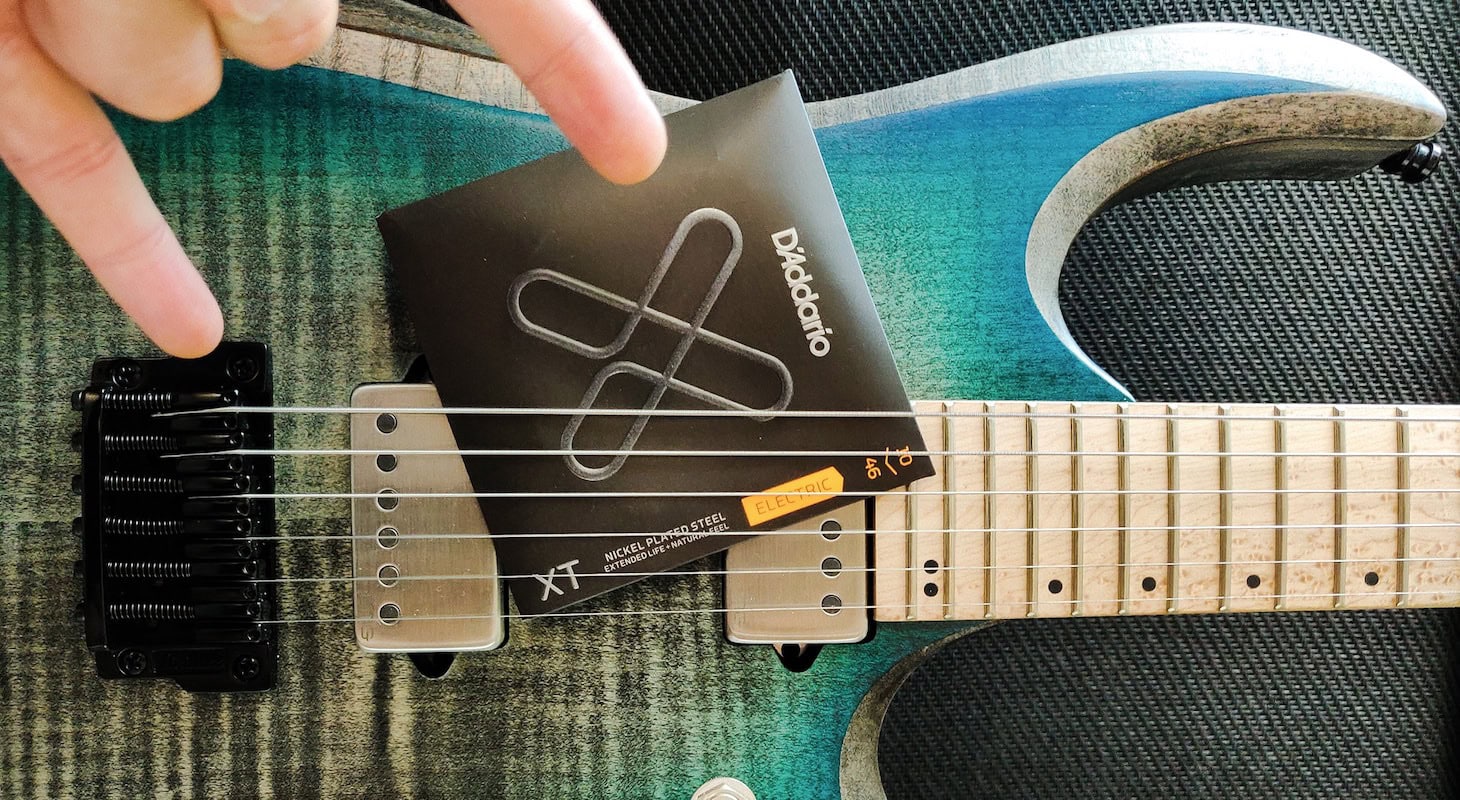
Replacing guitar strings is something that every guitarist has to live with. But if you have to replace your strings every few weeks, the costs can quickly add up.
That’s where coated strings come into the picture. They offer much more longevity than regular uncoated strings, and generally come with a higher price tag.
Top 3 - Coated Electric Guitar Strings
Preview | Product | Price |
|---|---|---|
 | ||
 | ||
 |
In this guide on coated guitar strings, I’ll list and discuss some of my favorite options among the highly-rated coated electric guitar strings available today.
Not everyone prefers them, but if you can live with slight tonal differences, any of these sets can definitely last much longer than your usual strings and reduce the frequency at which you need to restring your electric guitar.
4 Best Coated Electric Guitar Strings
1. Elixir NANOWEB
Elixir strings are my favorite when it comes to electric guitars. They’re often my immediate recommendation whenever anyone asks me what strings they should buy. I’ll quickly explain why I like them so much.
Elixir Nanowebs are very smooth sounding and soft to the touch. For me, they have a nice bright sound without being sparkly or jangly. I do feel like the strings are a bit tinny when they’re still fresh, but once they’re broken in, they sound fantastic. Check out my full review.
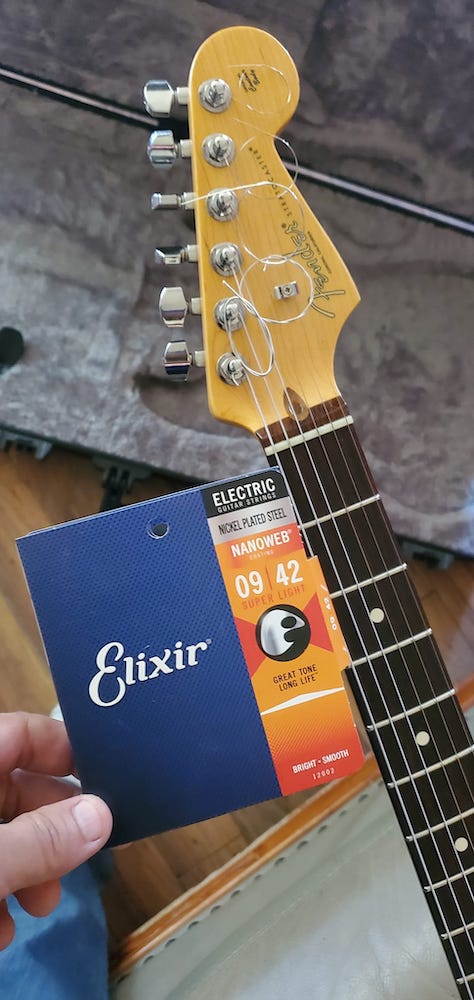
Elixir Nanoweb 9-42 gauge strings...
Even though the strings are coated, I find that they still feel natural and they don’t have that slight plastic feeling that other coated strings sometimes have. They also don’t cut into my fingers as much, even on heavier gauges.
They’re also incredibly durable since I’ve never had an Elixir snap on me. I recently restrung a guitar that had Elixirs on it that were probably about three years old.
I played on the guitar for about 20 minutes before restringing it, and not a single string even showed signs of wanting to snap. Of course, I can’t say much for the grime and dull sound, but it’s still impressive.
This brings me to how long these strings last. From my experience, I usually have to change Elixirs every two or three months, depending on how much they’ve been played. This is also usually because they’re not as bright as I want them to be, and not because of any wear or corrosion.
They aren’t perfect, however, and I do have a few gripes with these strings. The biggest issue I have is with the high E string.
I feel like the high E is a bit slippery at the saddle and it can easily pop out. This is especially a problem on a Floyd Rose-style bridge that requires the ball-end to be cut. It usually takes me two or three tries to get the string to stay in place.
PROS
CONS
2. D’Addario XT
I’m a bit more familiar with D’Addario’s regular, uncoated strings. Naturally, I was quite curious to see how their coated XT strings perform. I can happily report that I wasn’t disappointed.
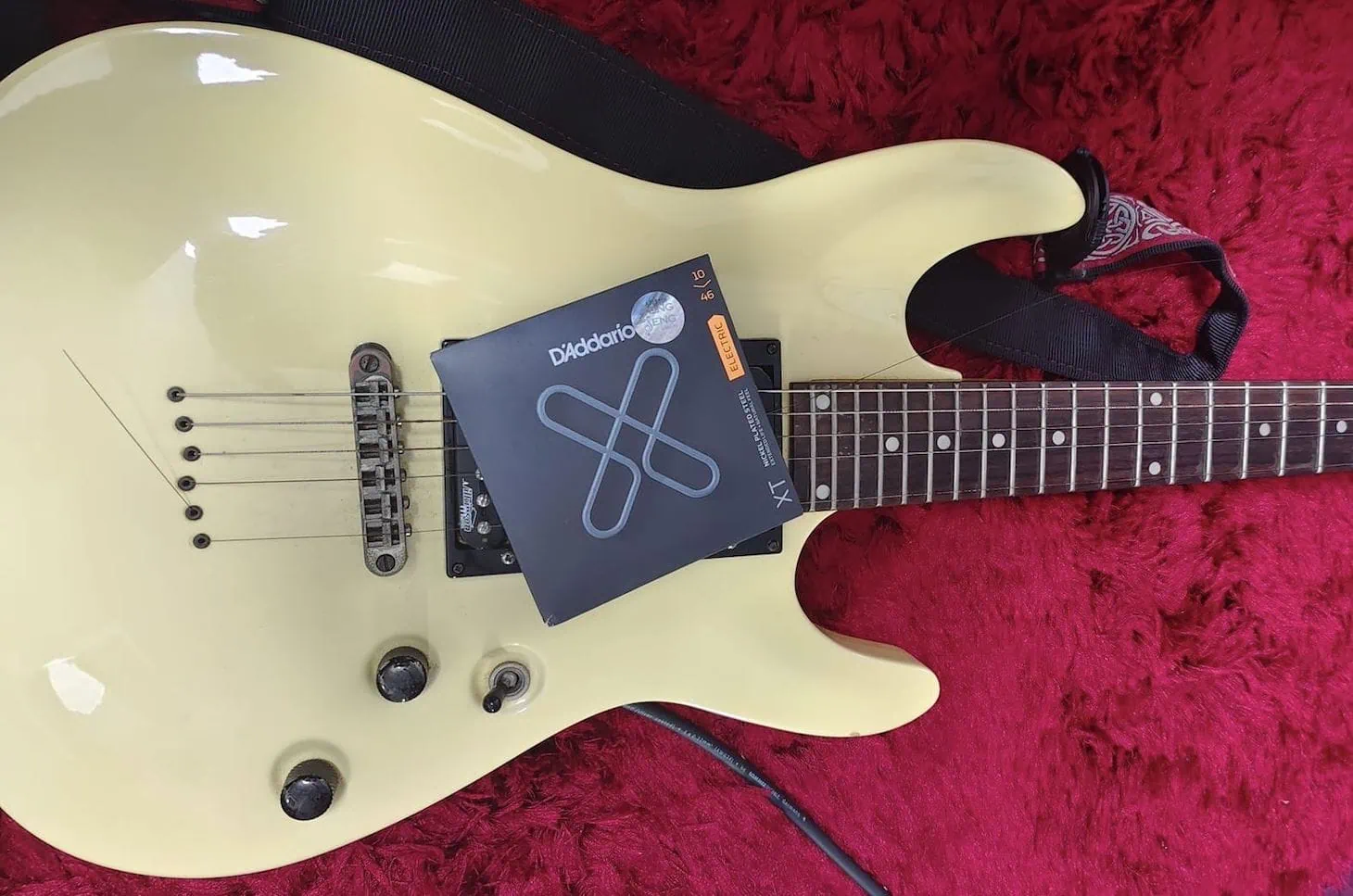
D’Addario XT
The coating does affect more than just the lifespan of the strings, however. The first thing I noticed was just how different the tone was. To me, they sound less bright, especially when I pair them with single coils.
The strings seemed to lose quite a bit of twang on single coils, but I found that the opposite was true on humbuckers. On humbuckers, the strings had a much meatier and fatter sound.
I think this is because the strings emphasize lower harmonics a bit more, which sound much better through a high-output humbucker than a single coil. Rolling back the volume, I noticed the strings would become very dull, which I think, is due to them not being very bright to begin with.
The strings felt a bit different than what I was expecting. D’Addario claims that they offer a ‘natural feel’, but they felt a bit smoother than what I would call ‘natural’.
They don’t feel bad though, and it’s a very soft, almost pleasant smoothness. I didn’t experience that plastic feel some other coated strings have, and it didn’t take long to forget that they even were coated.
What impressed me the most about these strings was how well they stayed in tune, almost like they refused to lose their intonation. No matter how hard I picked, how far I pushed my bends, these strings just wouldn’t budge.
As for their lifespan, after about a month I didn’t notice the strings lose any of their tone or their ability to stay in tune, or any noticeable wear and tear.
Everyone I know who plays these strings also swears by their longevity, with a few even saying they only replace their strings every three months or so.
PROS
CONS
3. Ernie Ball Paradigm
The regular Ernie Ball Slinkys are also one of my favorites. They feel nice, sound great, and they’re probably also the easiest to replace and break in.
So logically, the Paradigms should offer the same, and then some, considering how much more expensive they are. In my experience, that’s exactly the case.
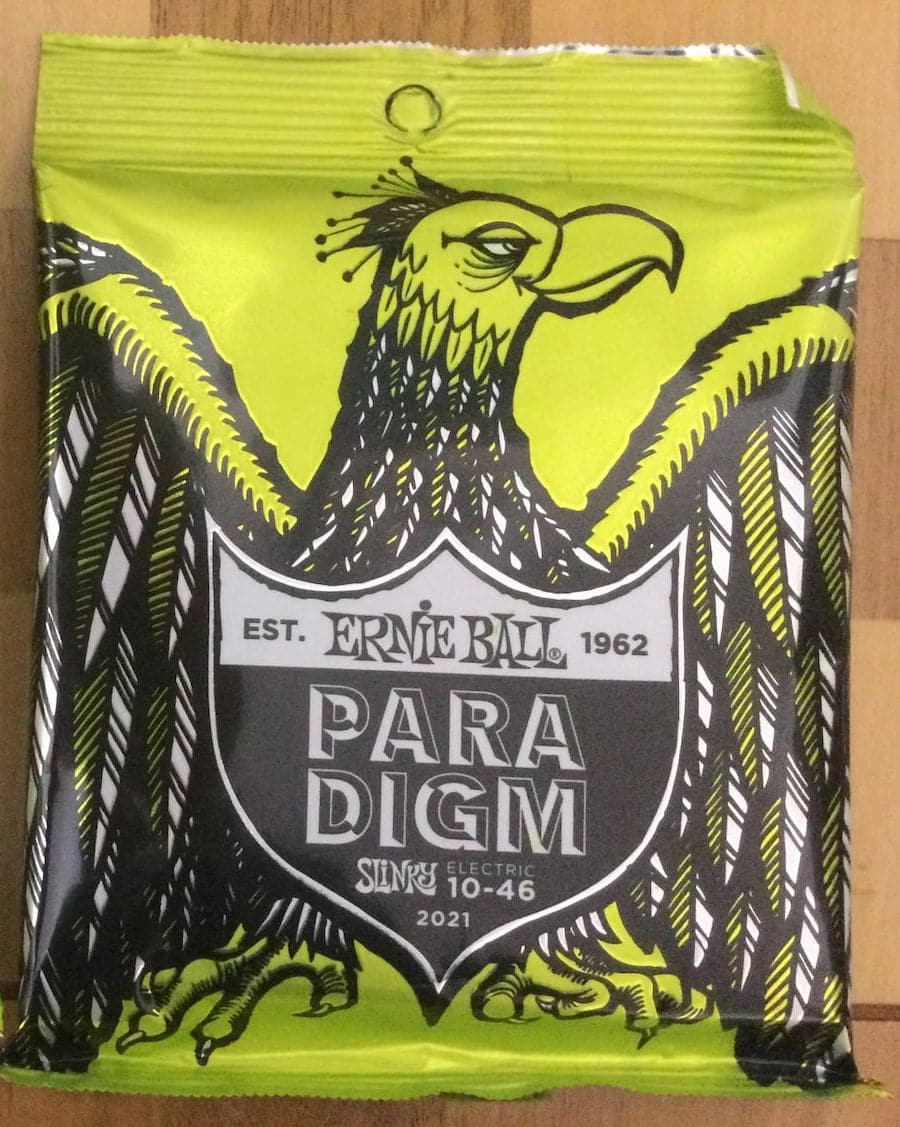
The best way I can describe Paradigms, and it seems to be the case for most people, is that in many ways, they’re more Slinky than your regular Slinkys.
Tonally, I feel like Paradigms might be the most well-rounded strings out there. They have a lot of brightness while still having a nice bottom end and emphasizing the mids.
They also work well with both single coils and humbuckers, in my experience. On a single coil, you’ll get all the twang you need from them while being able to growl with the best of them on a set of humbuckers.
Even when I switch from playing jazz to funk, and then crank up the gain to play some metal, I never feel like the strings are lacking for any style.
These strings are also a joy to play since they’re so smooth, and even though they stay in tune incredibly well, they aren’t stiff. I can easily switch between techniques and my bends are super fluid.
I do think they might be a bit too smooth, though, since I do have the occasional finger slip. I’ve only noticed this happen during a particularly extended bend or heavy vibrato, but as long as you dig into the string a bit more, slipping can be avoided.
I would also put the Paradigms up there in terms of tuning retention and durability. I can easily pick up my guitar after two days of not playing it, and the strings will still be perfectly in tune.
They’re also, along with Elixirs, the only strings I feel comfortable keeping on my guitar for three months before needing to replace them.
PROS
CONS
4. Stringjoy Orbiters
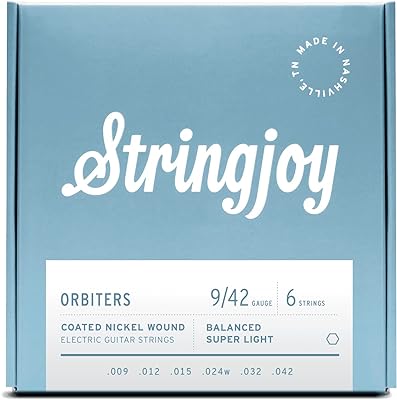
Stringjoy is a relatively new player in the string game. Yeah, I know that line sounds like the title of an ‘80s ballad, but it’s not. It’s absolutely true. Stringjoy was founded by Scott Marquart in 2014 with only high hopes and $500.
A decade later, Stringjoy is one of the best-kept secrets in stringland. But what does this company do differently than the rest to enjoy this meteoric rise to fame?
Well, they took a different approach from everyone else; they focused on quality rather than quantity. Yes, most companies, and especially the big ones, optimize until there’s no more room for cutting one penny. Scott’s company set out to create the best guitar strings on the planet. Arguably, that’s what they’re doing.
But back to what concerns us, what are the Orbiters?
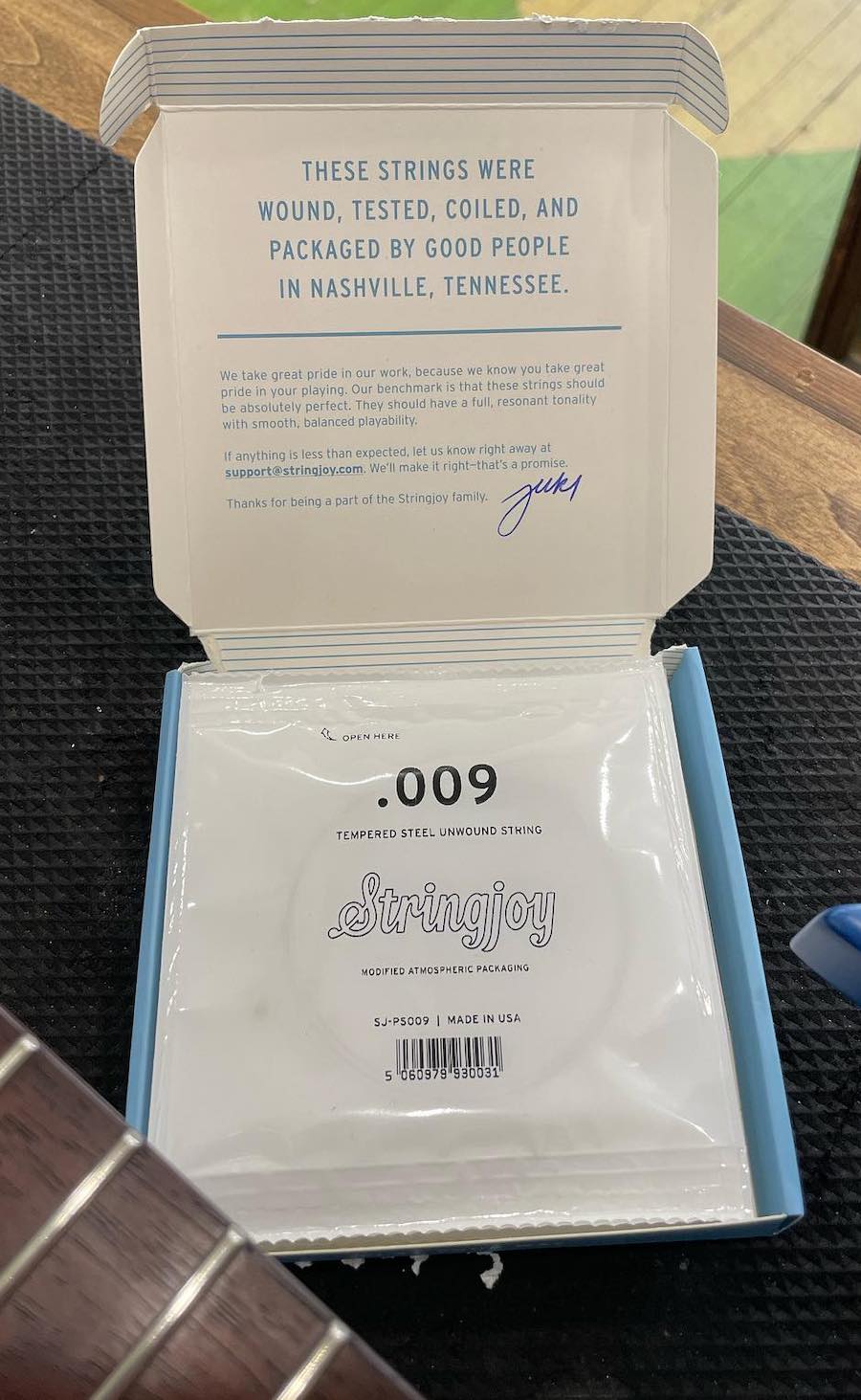
Stringjoy Orbiters
Well, these coated strings are made differently from all the rest because instead of coating the entire string, what they do is coat the wrap wire individually. This leaves the core of the string uncoated.
But what’s the outcome of this tone and feel experiment? Let me tell you that the annoying plasticky feel you get from some brands of coated strings is gone from the Orbiters. Moreover, the feeling is that of playing just regular strings with no coating on them. Yes, the best about the Orbiters is that you don’t feel (or hear) the coating but benefit from it.
So, once installed (Stringjoy products come in very cool cardboard boxes), these guitars sounded really bright and added some nice twang and spank to my Custom Shop Telecaster. I tried them on my SG Jr. to see how they handle the old alder vs. mahogany difference and they shone bright and played loud.
Feel-wise, these are smooth strings that don’t feel sticky or unnatural to the hand. According to the company, since the wrapping around the core is so tight, although the core is not coated, corrosion and sweat don’t affect it.
If you want a great pack of strings, you should check out Stringjoy today. Let me warn you, though, it might be a one-way ticket and they’re not exactly the cheapest brand out there.
Strings, the Cheapest Tone Experiment
You, me, and every other guitar player on this planet know that, eventually, we’re going to get tired of our current tone. Yes, I might be giving you the bad news here, but believe me, even your favorite guitar will grow old to your ears.
That is because our taste, skills, and proficiency with the instrument tend to change with time.
In that sense, strings are the cheapest tone experiment in the world (well, maybe after picks). How so? Well, very simply because they affect tone and playability and are inexpensive to replace.
Let’s see some examples:
Longevity
Longevity, when we talk about guitar strings, plays a major role. Yes, breaking a string during a live show is close to a nightmare (more so with a floating tremolo system and no backup guitar).
But, how can you extend your strings’ longevity? Well, buying coated strings is the first and most important step. Secondly, you can take your guitar to a technician to make sure no sharp edge is butchering your strings.
More Brightness
Some guitars require more brightness than others. For example, I’m the lucky owner of an all-mahogany ’81 Ibanez Studio and it sounds big and menacing, but not so bright.
For this guitar, I use nickel-plated strings to get the most out of the treble side. I know it will never twang like my Tele, but the almighty humbuckers sure rock and roll bright and loud.
Fighting Brightness
On the other hand of the spectrum you have shrill or too-bright guitars. Well, for those you can buy pure nickel strings. The difference between pure nickel and nickel-plated is the wrapping around the core (it’s either pure nickel or nickel-plated steel).
Pure nickel strings sound warmer, kind of vintage, and will help you tame the brightness of shrill guitars.
Coated or Uncoated? that is the Question
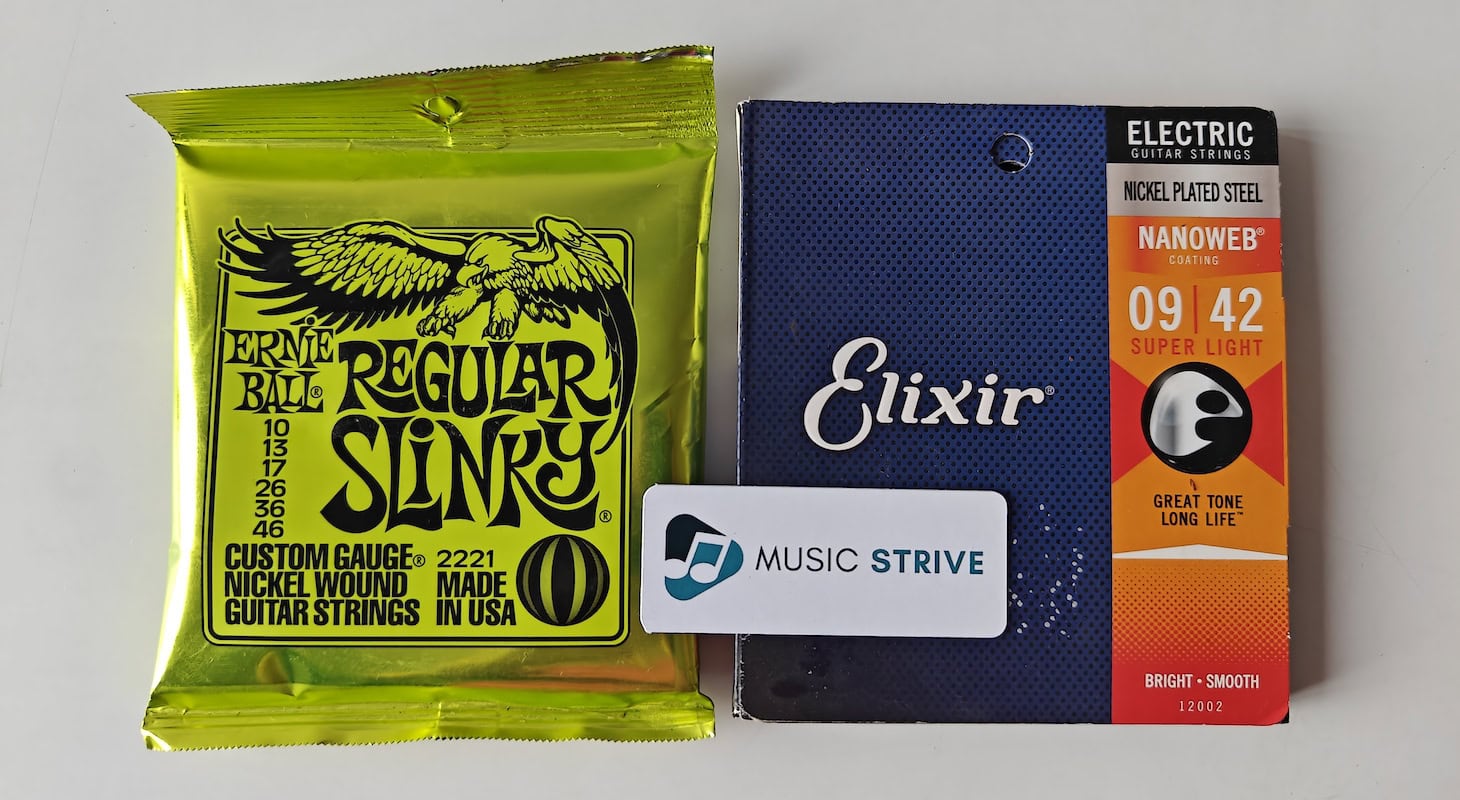
Ernie Ball's ever-so-popular Regular Slinkies up against Elixir's coated strings (Nanoweb)... Coated strings or not, what do you personally prefer?
I’m not trying to do a very bad Hamlet parody here, but the question to be asked is the following: are you willing to pay extra for some more longevity?
Furthermore, it’s no secret that the coating on the strings will make them last beyond the point at which they’ve lost their brightness.
So, I would like to divide this into two player-centered scenarios:
Studio Use
Playing guitar to be recorded means you have to capture your instrument at its absolute best. In this scenario, longevity is irrelevant.
Furthermore, many brands offer coated strings that kind of dampen their natural brightness and tone. I would say that, for studio use, you should install a fresh set of uncoated strings (on every guitar).
Live Performances
Live performances are a different animal. With all the noise, the excessive drum fills of your drummer, the bass player who won’t stop playing between songs, and the singer’s bad jokes, your strings’ brightness will go unnoticed.
Moreover, with all the noise of the roaring crowd, that extra percentage of brightness your strings give you will get lost in translation. Comparing that to breaking a string live makes coated strings the perfect choice for live playing.
Finally, let me say that, if you have a single instrument, and your budget doesn’t allow you to have extra packs of fresh strings, I strongly recommend coated strings so you can play the entire show without worrying about string breakage.
Just pick a string brand that will give your instrument the tone you have in your head and gig confidently bending that B string like you were possessed by SRV’s spirit.
Final Word
If you find yourself replacing strings more often than you feel you should, or your strings just aren’t lasting as long as you want them to, consider setting your guitar up with some coated guitar strings.
I hope this guide helps you find the perfect set of coated electric guitar strings that will help to keep you rocking for as long as possible.
