
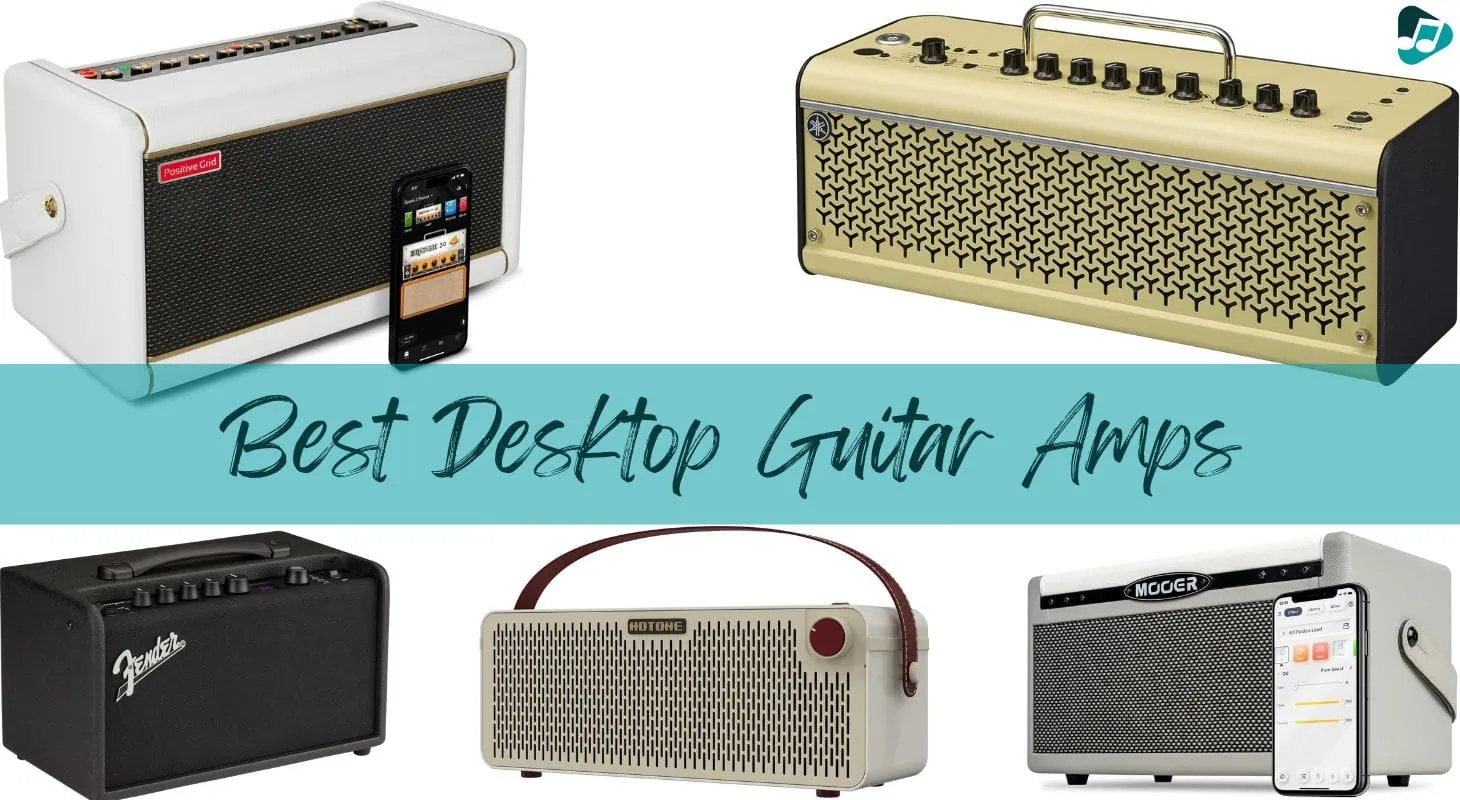
Desktop amps have long won the fight. Nowadays, the question isn’t about buying one or not, but about finding the best one for you. Yes, the times of cranked Marshall stacks (or even half-stacks) and dimed Twin Reverbs are long gone but the tone remains.
Those uncanny, legendary tones can be recreated digitally, and at living-room levels without disturbing the neighbors or your significant other.
I’m here to tell you everything about the commonalities and differences between the heavyweight champions of the category, the Yamaha THR, and the Positive Grid Spark. But that’s not all, after that, we’ll look at some other mighty contenders, like the Fender Mustang LT40S, the Boss Katana Air EX, and the new ones by Hotone, and Mooer.
Are you ready to make a final decision and embark on this one-way ride to a land where size doesn’t matter and what seems small sounds monstrous?
Well, ready or not, here we go.
Table of Contents
- Yamaha THR, A Desktop Amp with Legendary Status?
- Positive Grid Spark, The Go-to Choice for Many
- Fender Mustang LT40S, A New Contender
- Other Desktop Amps Worth Considering
- Why Buy a Desktop Amp?
- Regular vs Desktop Amp - Key Difference
- Don’t Want to Get Rid of Your Pedalboard? Here’s a Solution
- Do You Want to Go Even Smaller?
- The Bottom End
Yamaha THR, A Desktop Amp with Legendary Status?
Let me put it this way, before the Yamaha THR, desktop amps weren’t a thing. Much less an amp category in anybody’s mind. They carved their own niche and created the path others would follow.
Let me share with you how Yamaha came up with the idea, and we’ll talk about this amazing amp in a second.
The Beginnings, Solving a Common Problem
The Yamaha Corporation was born in Japan. Japan is one of the most densely populated countries on Earth. This means a lot of frustrated guitar players who can’t play, or they’ll disturb their “very close” neighbors.
According to Takashi Yamashiro, who is the Manager of the Guitar Development Group at the Yamaha Corporation, they thought it was a domestic issue and developed an amp to solve that problem for the Japanese market alone.
As you already know by now, they touched home on a global issue.
But the THR is an amp line that only a company like Yamaha could have developed. The Hi-Fi division worked closely with the electric guitar division to come up with an amplifier that works very much like a soundbar. It has that kind of audio quality, something unthinkable for a regular guitar amp.
The THR line of amps can reproduce a tube amp or Phil Collin’s “Sussudio” perfectly. Believe me, it’s one of my favorite morning songs.
Also, Yamaha’s software development was crucial to recreate sounds but was also the entry door for modified classics and new tones. The company also owns Steinberg, which is exactly the one providing the technology for the USB port that allows you to use it as an audio interface (Steinberg created Cubase among many other things).
I’ll touch on this in a bit, but it was a completely revolutionary approach over a decade ago.
Finally, the name comes from the THR being your third amp. You’d have a valve stack for live use, a smaller tube combo for small venues, and the THR to play at home and relax on the couch as you try to mimic Hendrix’s moves (there are things you can try your whole life).
The first Yamaha THR came out in 2011, and it wasn’t a massive hit at the moment. Yet, with time, it grew to become a benchmark for a completely new category (created by Yamaha in the first place).
The Yamaha THR30II, The New Benchmark
The iteration we’re talking about today is the second version, the THR-II series released in 2019. These have everything that made the THR line amazing and some extra perks. In specific, we’re talking about the Yamaha THR30II, my favorite of the new lineup.
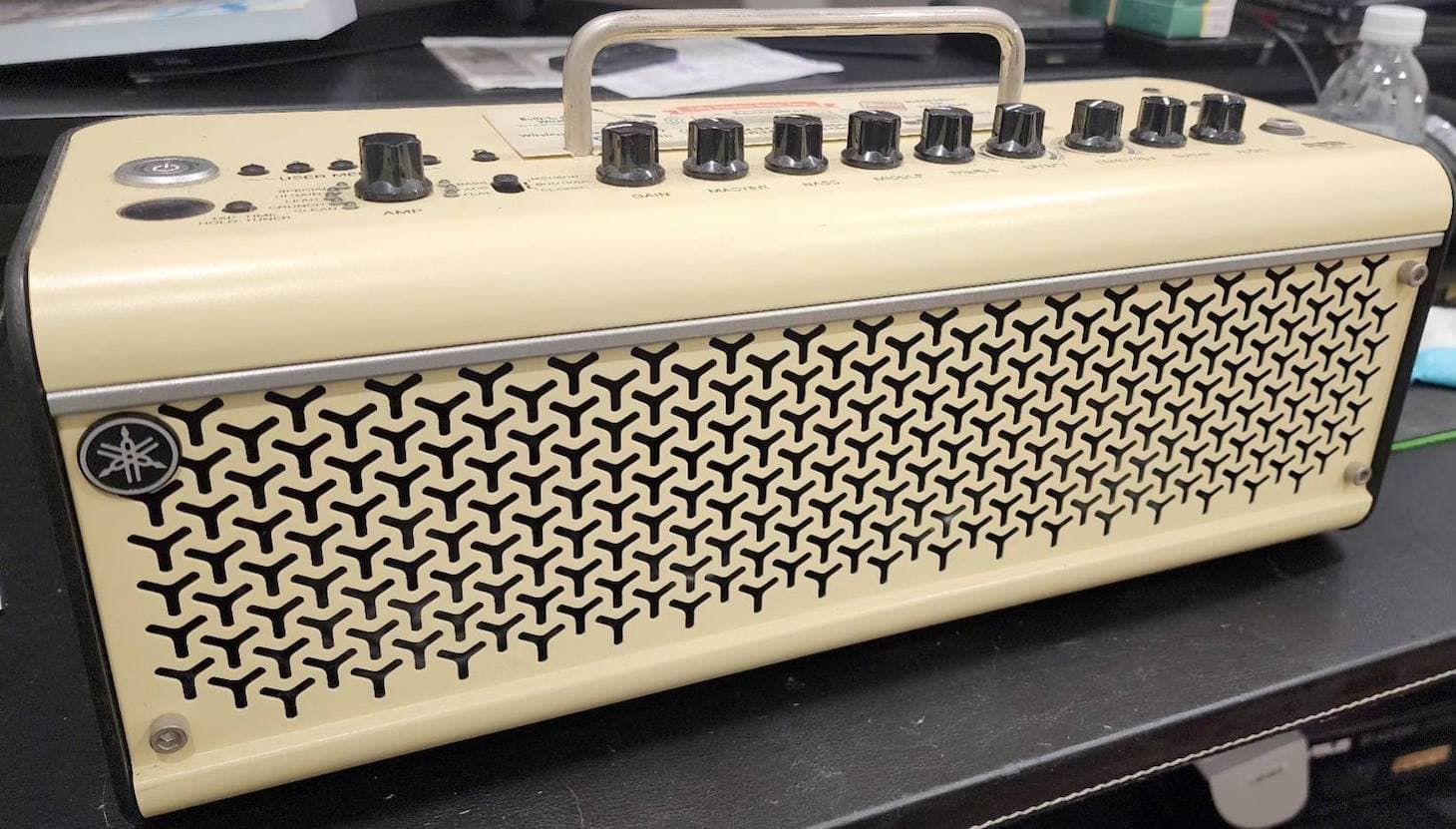
Yamaha THR30 II - Closer Look
I’ve played it at home and in a live situation, and it was always a great experience. Be warned, though, although it sounds great, the playing experience is different from a tube amp. It’s not as responsive or warm. It’s closer to hearing the processed guitar tone of a record than to playing a real tube amplifier.
Also, on its own, it’s not loud enough to play with a drummer, and it doesn’t cut the mix at all because of its hi-fi tones (more about live use in a bit).
That said, it sounds really good, especially in the living room of my house.
To begin with, I just love the fact that you can get a plethora of sounds by just turning the knobs.
If you’re like me, an anxious player who doesn’t need (or prefer) apps or tactile screens, you’ll love turning the THR30II slow-moving, high-quality knobs. You can even store your five favorite sounds and recall them with the press of a button.
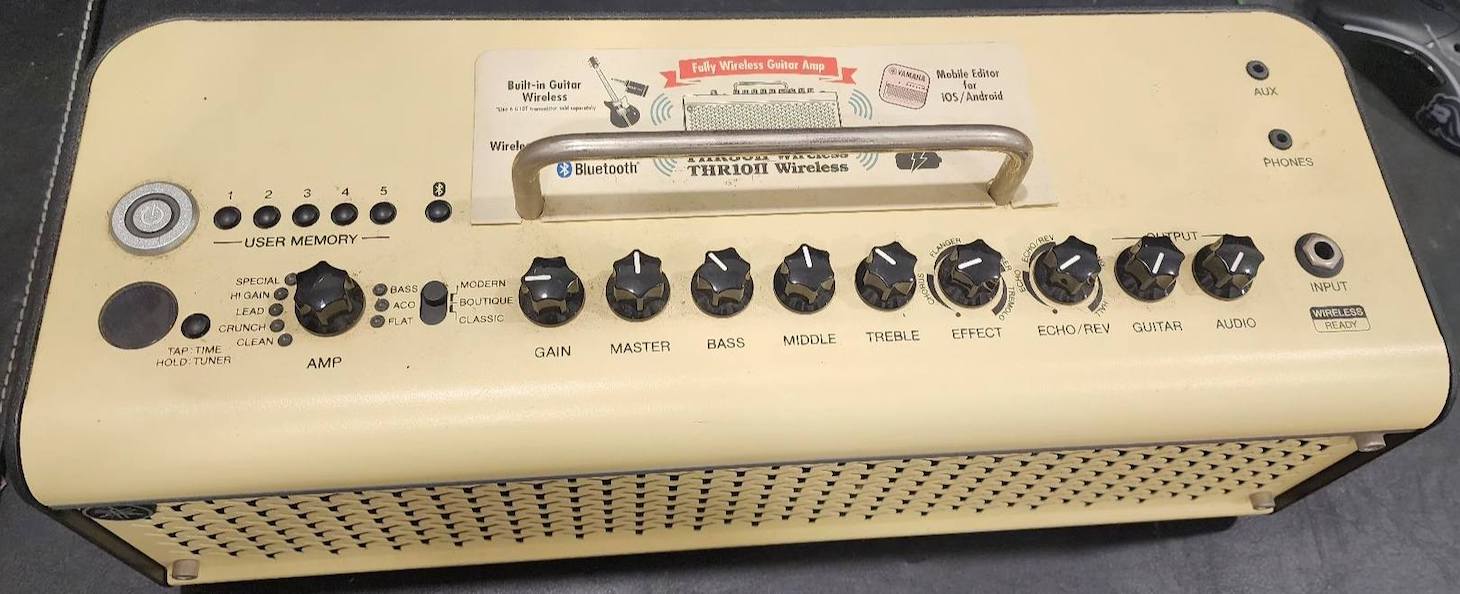
Yamaha THR30 II - Controls
Moving from left to right, you choose the amp model between five options, and then fine-tune it with a 3-position slider switch to toggle between modern, classic, and boutique. These are three very different voicings, so they multiply the options giving you a total of 15 amp sounds to play with.
You must also add bass, acoustic, and flat modes so you can plug your favorite piano or synth to it too.
Next comes the line of knobs that includes everything you would expect from a regular amp, like a master and a gain knob, and three-band EQ. Immediately after come the knobs for the effects, the reverb, and a separate knob for your volume and the backing music volume.
This means you can dime the volume of the amp to get that beautiful compression of a pushed power section and simply dial the volume you need with the knob at the far right. This is great for the crunch, lead, hi gain, and special amp models.
On the rear panel of the amp, you have dual, stereo line outs so you can go straight to the PA with a truly stereo signal. This was the way I used it live, because, even in a small venue, the volume isn’t enough. But if you have a decent monitoring system, you’ll be in amp heaven.
Moreover, it also means you can take your sounds from the bedroom to the studio, and to the stage. I’ve done it and I can say, especially in crowded stages, that extra space is worth a lot. Plus, the wireless technology the amp comes with means you don’t even need a guitar cable.
In 2014, Yamaha bought Line6, so, the II-series amps incorporate the company’s wireless technology (sold separately).
And here comes what I think is the distinctive advantage of the THR30II, it’s battery-operated.
Yes, it gives you up to five hours of use, so you can do everything wirelessly. For example, I jammed with a couple of guitar friends, and I was able to play my electric guitar with good-sounding effects in the backyard while they strummed acoustics. No electrical outlet was needed.
The Yamaha THR30II reacts perfectly to humbuckers and single coils. Works as a wireless unit, an audio interface, a practice amp, and a live sound source of true stereo sounds for the PA. Not to mention a great Bluetooth speaker to dance to eighties pop in your living room in your pajamas!
But that’s not all, it also comes with a built-in tuner, effects, and 15 amplifier models. Moreover, it can also be run on battery and won’t break the bank or the shoulder while carrying it around.
Yes, the Yamaha THR30II is, perhaps, the most complete and best-sounding iteration of this revolutionary amp yet.
Go out there and try one, it’ll surprise you.
Positive Grid Spark, The Go-to Choice for Many
Released in 2019, the Positive Grid Spark quickly became everybody’s favorite and has been selling consistently since it came out.
Moreover, in 2024 the company released an overhauled version known as the Spark 2. Yes, they make terrific amplifiers and have zero imagination to come up with sequel names.
Jokes apart, the latest iteration of the Positive Grid Spark is its most powerful and versatile yet.

Positive Grid Spark 2 - Closer Look
The one thing they added that I love is the looping function. You can choose between a regular looper and a groove looper.
This last one adds pro drums to your playing so you can jam with an obedient, well-equipped drummer who follows your commands and doesn’t complain. Oh, and you have a ton (hundreds) of rhythm patterns you can divide by the musical genre.
Also, as part of the overhauling for the second version is the repositioning of the speakers to generate a surround effect that makes you believe the delay and reverb embrace you. These are called FRFR (full-range flat response) and boast 50 watts, 10 watts more than Spark 1.
But that’s not all, it also features USB-C and Wi-Fi connectivity.
Perhaps, the thing that I don’t like so much about this amp is the need for the app at all times. You don’t get a rotary switch to choose from the amp models like you do in the Yamaha THR, you just get to choose between presets. All the dialing of the right amp and such is done through the (very powerful, I must admit) app.
Also, the styles of drumming for the groove looper can only be selected through the app.
Although I have to say it’s one of the most powerful apps in the market, the fact that you need to use it so much distracted me from playing. I would end up browsing Instagram without even realizing it. I prefer to have some me time when I play guitar and tend to leave my phone in the next room.
This is something you can’t do with Spark 2, or you’ll lose many of the app benefits. These include an exclusive database with hundreds of songs to play, and a shared space to exchange tones with like-minded guitarists.
Perhaps, what drew my attention the most was the AI-powered tone seeker. Let me explain with an example. Let’s say you want a sound that’s chunky, fat, and with lots of low end to chug your way through life, or maybe you need an ultra-clean, compressed tone to play your favorite neo-soul licks.
Well, just open the app and ask for it with those exact words. It might not give you the exact tone right away, but it will give you something very decent to fine-tune and play with. You can overcome the Netflix effect of opening the app and not knowing where to start or what to choose.
Finally, it comes with a detachable, optional battery so you don’t even need an electrical socket when you go out to play. Weighing only 12 pounds approximately (close to 5kg.), it’s as easy to carry as guitar amps get.
Oh, and with the same line-out capabilities as the THR, it makes a terrific gigging amp too.
Fender Mustang LT40S, A New Contender
Fender is a cool company, and it excels in most endeavors. I don’t want to blow any scoops, but I think the Mustang LT40S is cool but not au pair with the amps above. In my opinion, Fender invested heavily into competing with the likes of Kemper and Neural with the Tone Master PRO but not so heavily on this little amp that lacks some crucial features to be a great amp.
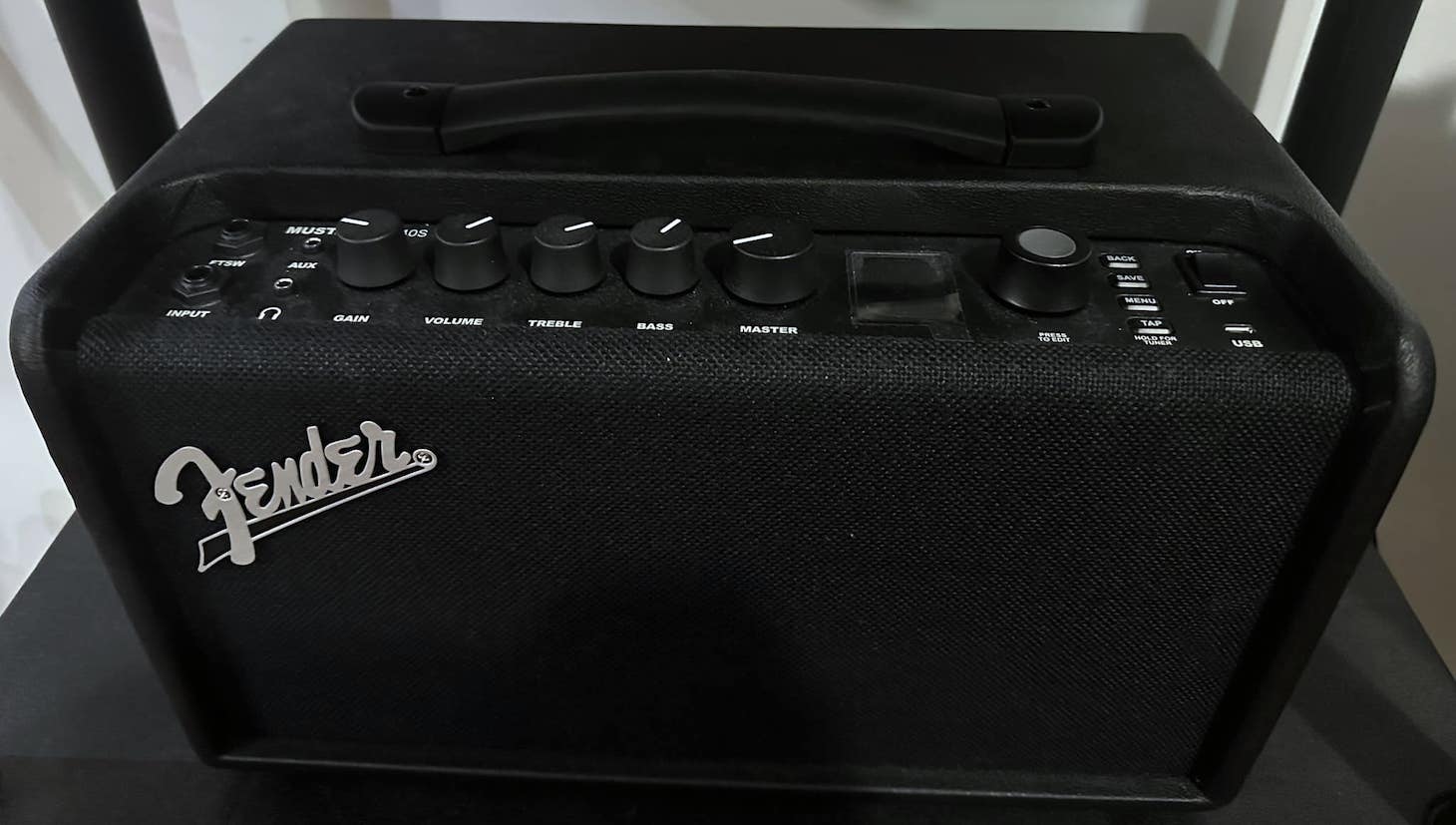
Fender Mustang LT40S
To begin with, all the processing power, amazing Fender amp models, and cool effects are there. You get 60 presets to play with; 30 are factory-designed and 30 are empty. Editing is a breeze and is the only amp this size featuring a full-color display on top.
Although Fender is well-known for its clean tones, inside this amp you’ll find everything from Vox and Marshall-like tones to the Fender-owned EVH tones, and everything in between.
Also, weighing only 5 kilograms (12.5 lbs), you can have fun for days without breaking the bank (it’s cheaper than both models above) or your shoulder carrying it around.
Now, speaking of carrying it around, this amp doesn’t feature an internal battery and doesn’t have any line-out jacks. This means you need to either mic it up or use an adapter to come out of your headphones jack to play live. In the same vein, it doesn’t have either a looper or Bluetooth connectivity. Furthermore, it doesn’t come with a mobile app but a desktop app.
Can you imagine pulling out your laptop to change sounds this far into the 21st century? I know, it’s crazy.
So, in my opinion, and after trying one for a while, I’d say that Fender started walking in the right direction with the right foot but isn’t close to its competition yet.
That said, if they manage to integrate the outstanding technology from the flagship Tone Master Pro into a package that’s portable, powerful, and feature-packed, they could be a serious contestant in this category in a matter of years, or even months. This is because, sound-wise, they’re right up there with the best of the best, but feature-wise, they’re quite far.
We’ll just have to wait and see what the brand with the big F has to offer in this category soon. For now, it’s a great-sounding option with a few missing important features at a great price.
Other Desktop Amps Worth Considering
We’ve seen three of the most important desktop amps in the market today, but are these the only ones? Where else could you find your next desktop amp? Let’s see.
Boss Katana Air EX
The Katana series by Boss has been groundbreaking since it was first introduced to the public a few years ago. They most recently released the Gen 3 of their Katana lineup to a (mostly) super positive user & critic response.
Well, just like Fender has the Mustang line and came up with the LT40s, the Katana Air EX is Boss’s attempt at the world of desktop amps.
BOSS' Bet in the Desktop Game
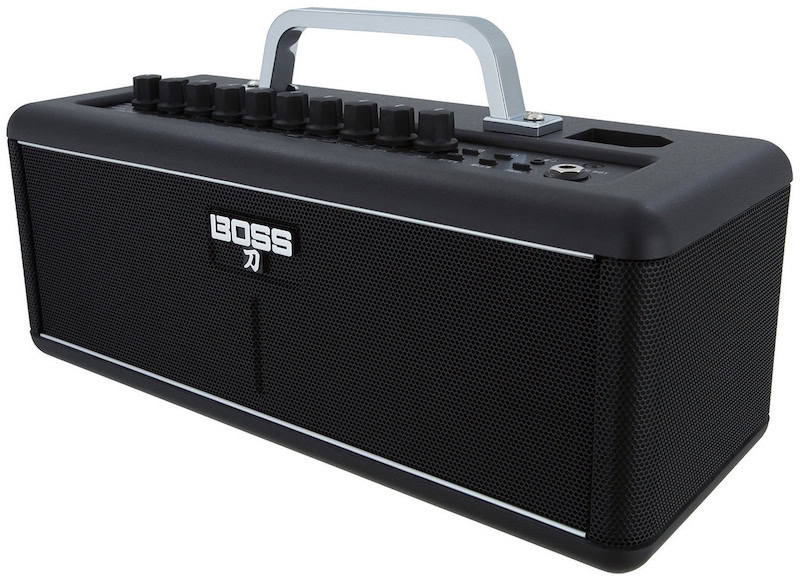
This is a dual 5” speaker amp inside a wooden cabinet offering 35 watts of wireless power.
Yes, the wireless rechargeable transmitter comes with the amp and lets you play the 60 world-class effects and the amp models available in the Boss Katana series.
Although this model doesn’t come with a rechargeable battery, the Katana Air does in a smaller, 20-watt package. I suggest you try one for yourself, it has everything that makes the Katana series great in a very small package.
Hotone Pulze
Hotone is somewhat of a new player in the world of musical instruments, amps, and effect pedals. They came up with some amazing products that shook the modeler world like the Ampero line.
It was expected that their disembark in the desktop amp niche was going to be worth noting. Scoop blown; they didn’t disappoint us, not one bit.
The Hotone Pulze looks great and sounds amazing.
New But Supremely Capable!
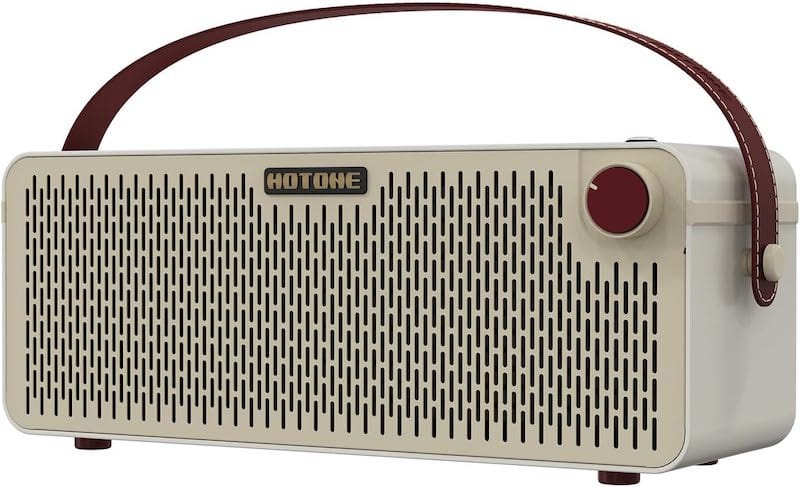
It is a Bluetooth modeler with 46 amp models and 48 cab models. In addition to the minimalistic exterior, it's got an all-touchscreen control panel that's as modern as it gets.
They even teamed up with Celestion to bring you 5 classic Celestion speaker IRs. But that’s not all, if you’re into the impulse response world or have profiled your own amps in the past, you can upload up to 20 of them to this unit.
The unit also comes with a built-in drum machine and can be used as an audio interface giving you two tracks and allowing loopback and reamp. You can manage all these features in the Hotone dedicated app.
Weighing less than 8.5 pounds (a little under 4kg.), and with absolutely no knobs (just a big, customizable screen), it’s worth checking. Oh, and it comes with an optional bag that looks cool and is very handy.
Mooer SD30i
Mooer is another big new contender in the musical instrument world. They shook the market with their line of mini, super affordable pedals and haven’t stopped moving since.
Their take on desktop amps is quite spectacular. They’re offering what most of the big names offer in a simple, easy-to-use amp that sounds and looks great.
A Promising New Contender
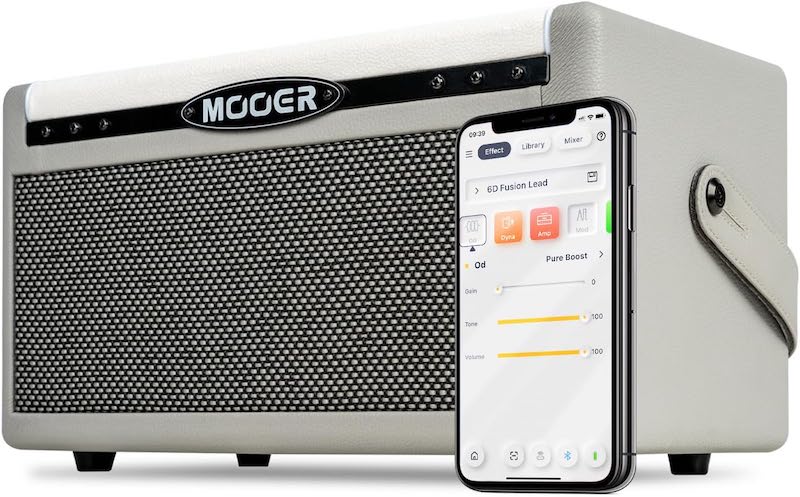
The Mooer SD30i is another knob-driven desktop amp with two 4” full-range speakers blowing 30 watts of power.
The SD30i covers most sonic ground you’ll need with 52 amp models and 49 effects. But that’s not all, you’ll also get an 80-second looper, 10 metronome types, and a built-in drum machine (that syncs with the looper perfectly).
The features list goes on with the USB capabilities to use it as an audio interface and update it. The rechargeable battery is also really cool as is the strap to carry it and the iAMP app that Mooer developed just for this amp.
Finally, it’s fully Bluetooth compatible, and, in my opinion, the only thing it lacks is a couple of line-out sockets to go straight into the PA. Other than that, it sounds and looks great for home use and practice.
Why Buy a Desktop Amp?
Now that you’ve seen the most relevant desktop amps in the market today, it’s time to address another question: Why would you want to buy one? Well, there are several reasons for it. In my experience, I can say I discovered some of them before owning one, and some came after.
They make great Bluetooth Speakers – Because most desktop amps have Bluetooth connectivity and full-range speakers, they’re great for playing your favorite tunes. Mine is in my living room and it helps me cheer up every morning with some Kula Shaker or Dope Lemon tune.
They’re an all-in-one approach to guitar tone – Getting a desktop amp opens a great world of possibilities because they come with a plethora of amps and effects to sculpt your tone. You don’t need any pedals other than maybe a wah-wah to play the afternoon away.
They make you play more – Speaking of playing the afternoon away, having an amp that sounds great and is always ready to go in a place you spend time in is a recipe for playing more. Imagine just getting home after work, kicking off your shoes, making a cup of joe, and playing along with your favorite songs with a great tone effortlessly. Yes, they’re handy and cool.
Regular vs Desktop Amp - Key Difference
There’s a fundamental difference between a desktop and a regular guitar amp. This is even if the amp we’re talking about is a small practice amp for home use. This difference is in the configuration and the speakers themselves.
Most guitar amps come with either 8”, 10”, or 12” speakers focused on producing the best midrange and guitar tone. Desktop amps come with full-range speakers like the ones you’d find in hi-fi equipment. This difference is very meaningful because it changes the equation completely.
To say it clearly and in one sentence, desktop amps are soundbars with guitar-oriented tone-shaping tools. This is why they are terrific practice amps and let you play over your favorite music as if you were doing some kind of guitar karaoke.
Yet, one thing you also must know is that the playing experience is different. They feel different when you play. I’m not talking about latency, but reaction and tone. Don’t expect to have the same experience as with your Deluxe Reverb. On the other hand, they offer enough features to make up for any lack of tone or response.
Don’t Want to Get Rid of Your Pedalboard? Here’s a Solution
A friend of mine, someone who spent half his life tone-chasing, has one of the most incredible pedalboards in this universe and neighboring ones. He tried my desktop amp and said something like “Yeah man, sounds good, but what do I do with my pedals?”
He’s the kind of guy who would spend a guitar’s worth of money on a pedal and use it until he can get the absolute best sound out of it. So, I thought, “he’s got a point”.
Although he’s a unique chap, it seems he’s not the only one with the same need because Headrush came up with the FRFR-GO 30-watt desktop amplifier to answer that specific need.
Yes, I know FRFR stands for full-range flat response and it’s such an obvious name for an amp with FRFR speakers that I can’t believe that’s the limit of their imagination. It’s a great amp, nonetheless.
A Unique Proposition
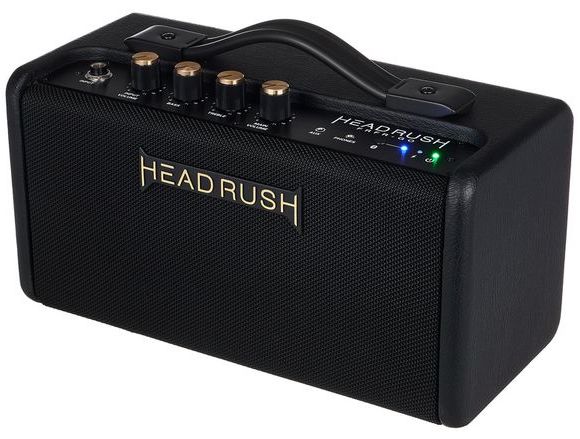
It is designed with only four knobs, an input volume, a master volume, and a two-band EQ so you can use your Headrush products or your pedalboard and have the perfect desktop amp tone with your existing rig.
Do You Want to Go Even Smaller?
Let’s say you love desktop amps, but you have a baby in the house, you live with your parents, or have no physical room even for an amp that small or can’t make more noise than the unplugged guitar.
Well, you can always go smaller if you want. Bear in mind these don’t have any speakers, so you’ll have to use headphones.
Here are some cool options:
The Bottom End
Desktop amps are here to stay. Since the Yamaha THR first came out early in the last decade, brands have been investing heavily in creating the best new iteration of the concept. Along came the Positive Grid Spark, and a plethora of other amps that followed the same path and enlarged the concept.
Today, desktop amps are a new category of guitar amps on the rise, and we can expect to see all the big brands coming up with a feature-filled model that can outdo the competition at a great price.
We, guitar players of the world, are lucky witnesses to this race. Rest assured we’re yet to see where these brands can take the concept.
As Sinatra said, the best is yet to come.
Happy playing (with your desktop amp)!
