
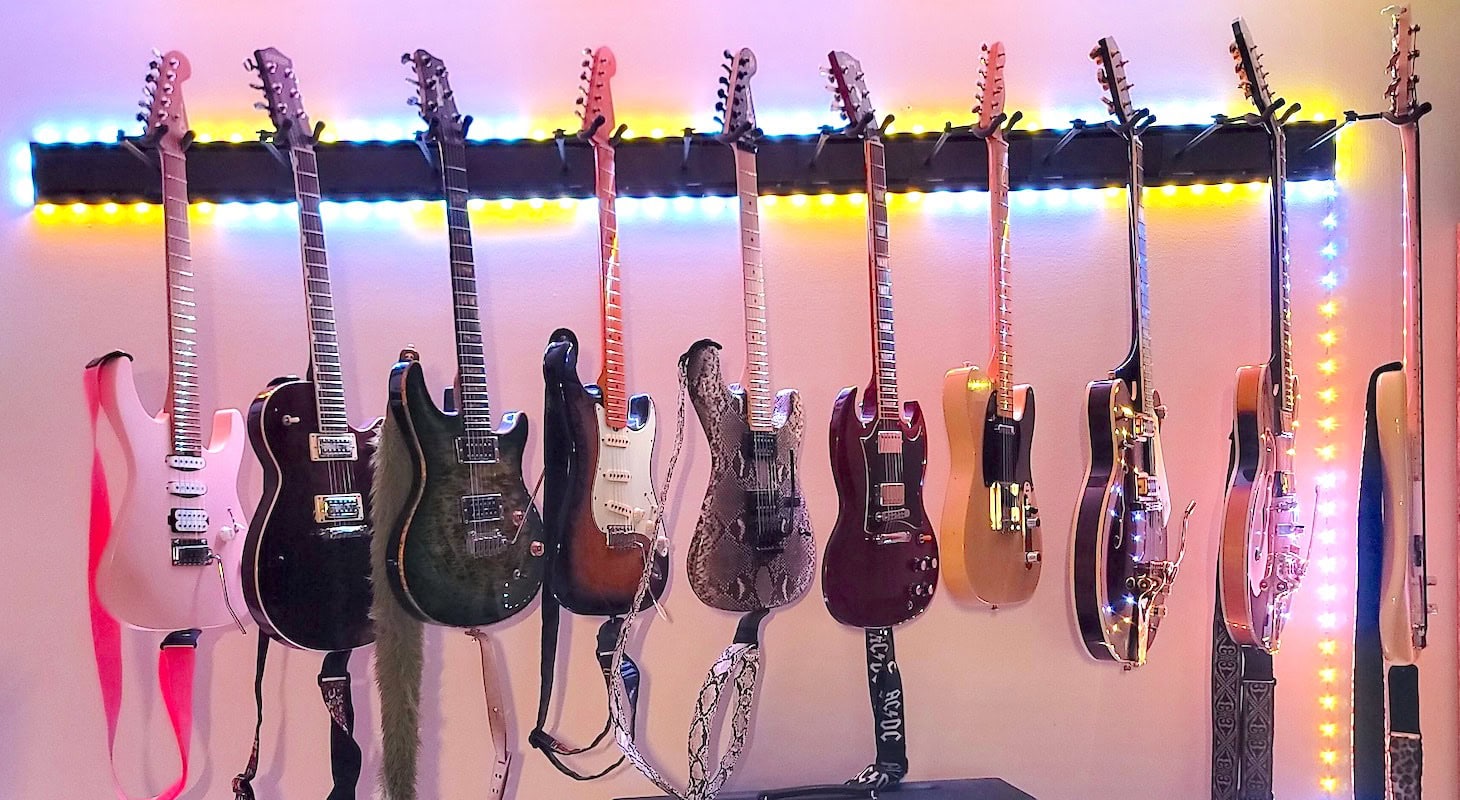
Whether you’re looking to buy your very first guitar or make the next addition to your ever-growing axe collection, you no doubt want to buy the very best instrument you can get your hands on.
But there are so many guitars out there on the market, and each offer their own unique take on guitar design which can make finding your perfect instrument a daunting and time-consuming task.
Fortunately for you, I’ve been playing guitar for almost twenty years now, and I’ve tried just about every major brand there is in that time.
You can call this an opinion piece in a way, because I’ve put together an unbiased 'best' list consisting of the most impactful electric guitar brands of today, based on my personal assessment over my long playing career.
I’ll also go into more detail about the styles, tones, and styles each brand is best suited to. This will allow you to get a clear understanding of which brands align best with your specific style and tonal preferences.
10 Best Electric Guitar Brands Who Make Epic Axes!
1. Fender
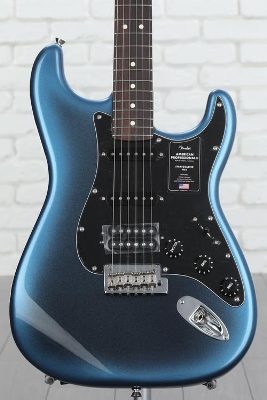
I’ll never forget the first time I played a real Fender guitar. I was still a teenager, but a friend’s dad owned a vintage mid-80s American-made Stratocaster. He knew I played guitar, and at the time I was obsessed with the Red Hot Chili Peppers.
He pulled out his old Strat, in vivid red, and let me play with it one Saturday afternoon. I was stunned: somehow, it sounded so much more like John Frusciante than the imitation Strats I was used to!
Fender is one of the most well-known guitar brands around and for good reason. They were responsible for revolutionizing both the design and manufacturing processes of the guitar, setting a new standard for how things should be done which has had a knock-on effect on the overall trajectory of the instrument in the decades that followed.
Before Fender, guitars were somewhat limited in their tonal capabilities and often featured either a hollow body or semi-hollowbody design, which carries with it certain specific tonal qualities as well as limitations.
Fender is credited with being the first company to popularize the solid body guitar design with the Telecaster (originally called the Broadcaster). This was a pivotal evolution in the guitar space because it was both easy to manufacture and was affordable and accessible to the average consumer in ways guitars had not previously been up to this point.
The Telecaster (also called the Tele) had a distinct, bright, and twangy tone which became a staple of several genres around that time period including country, blues, and even rock music.
Telecaster guitars such as the Fender American Ultra are still massively popular today, and you’ll often see them used on stage just as frequently now as when they were originally released. Few guitars can boast that degree of longevity in the guitar space!
I like using a Telecaster, or Tele-style guitar, for country music. As they say in Nashville, if it don’t twang, it don’t mean a thing. I prefer the bright, throaty single-coil twang of a Strat for that kind of clean playing to just about anything else.
Likewise, I’ve often dabbled in Rolling Stones-style bluesy rock, playing the Tele in open G tuning, and letting my Keith Richards fantasies play out across the fretboard.
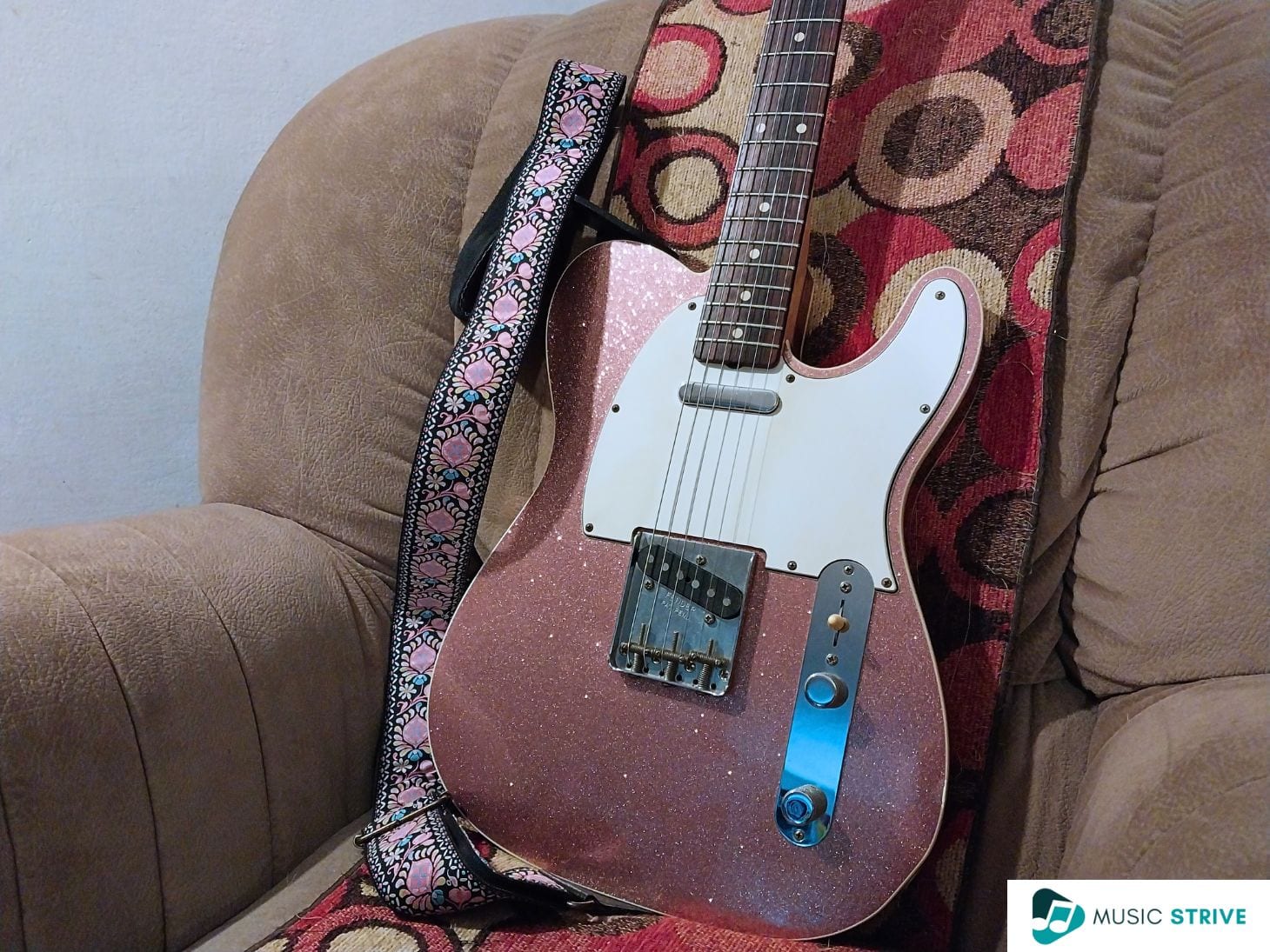
A Fender Custom Shop Telecaster (owned by fellow Music Strive author, Santiago).
Fender followed this up again in 1954 with the Stratocaster, which took things to a whole new level. It introduced a sleeker and more curved design, as well as a brand new approach to versatility with its three-pickup configuration and 5-way selector switch. This guitar has acted as the basis for the majority of modern guitar designs during the last 70 years.
The Stratocaster is to date one of the most popular guitar models of all time, having been used by the best of the best including Jimi Hendrix, Eric Clapton, and Stevie Ray Vaughan. Models like the Fender American Vintage 1961 still capture all the heart of the original Strats and keep the model completely relevant even now.
I, like many guitar players my age, associate the Stratocaster with the two Johns of mid-2000s guitar heroism: Frusciante and Mayer. When I play a Strat, I can’t resist plugging in a compressor or a Tube Screamer and letting every pentatonic blues lick I know do the rest of the work.
Now these Fender guitars have always been crafted with the highest quality level possible. This, unfortunately, carries with it a fairly hefty price tag. So in an effort to make their instruments more widely available and affordable to those on a tighter budget, Fender introduced a smaller subsidiary company called Squier.
Squier aims to create what are essentially the exact same guitars as Fender in shape, dimensions, and electronic configuration, but they do so using cheaper materials and are often manufactured overseas in order to get that retail price as low as possible.
Now don’t let that deter you, Squier makes some fantastic instruments that offer an incredible amount of bang for your buck. Particularly the Squier Affinity Series Stratocasters are considered great instruments, so much so that many pro players use them.
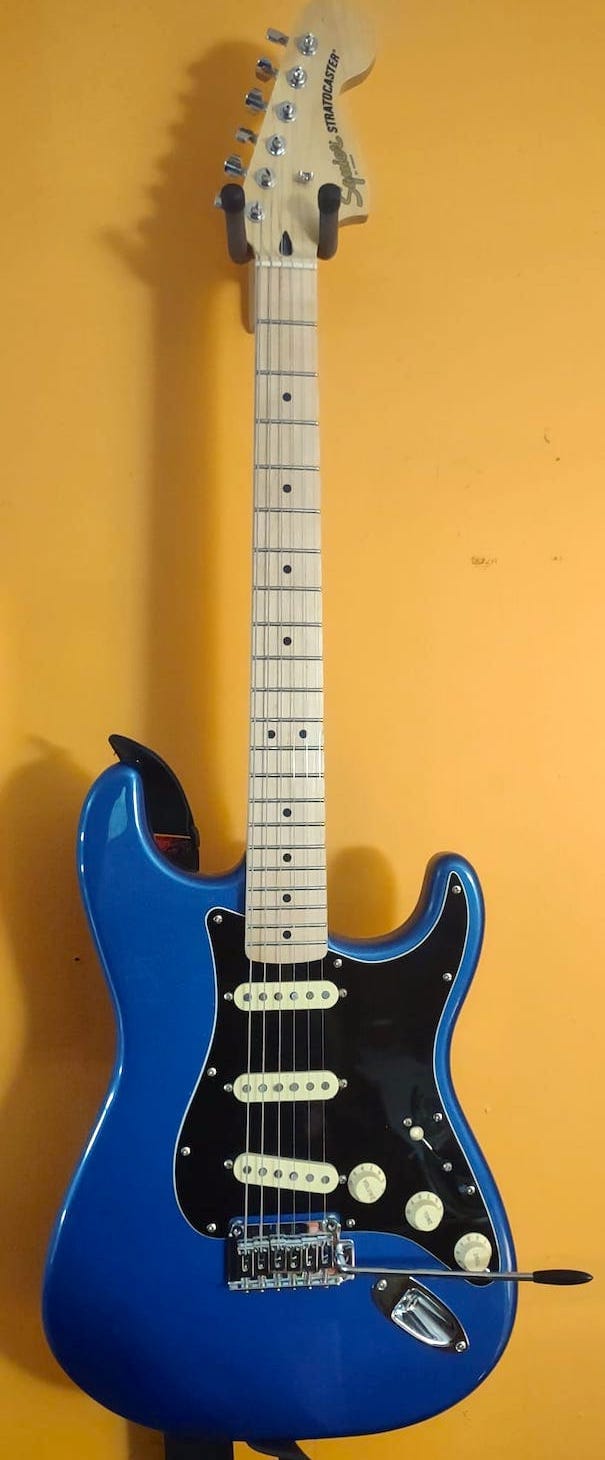
Squier Affinity Stratocaster SSS
Likewise, my favorite Squier guitar of all time is the J Mascis Jazzmaster, perfect for indie or grunge.
Squier copies of Fender guitars tend to have worse pickups, however. Remember my vintage Strat story from the beginning? Comparing that to the Squier guitars of my youth was like comparing McDonald’s to a Michelin star meal.
2. Gibson
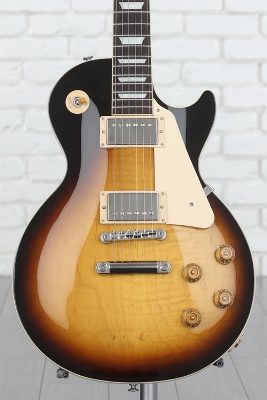
I’m an avowed fan of Gibson guitars. In particular, I’ve always been drawn to the Gibson Les Paul. My dream guitar as a kid was a Les Paul Standard: I bought a 1990 Standard with the first paycheck at my first grown-up job right out of college. The dense, powerful tone and hefty weight make it my favorite instrument to this day.
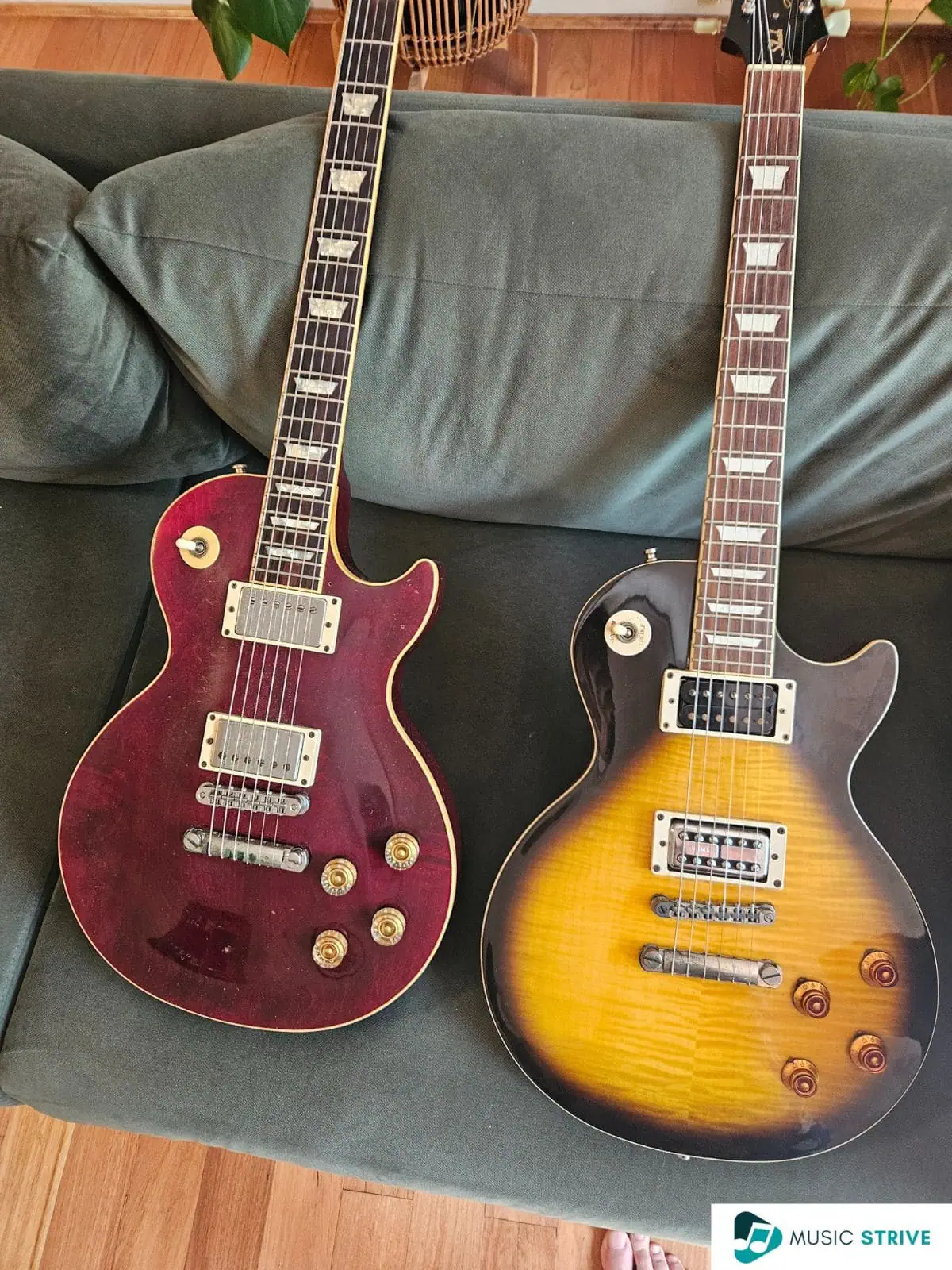
Gibson (left) and Epiphone (right) Les Paul guitars (my prized possessions!) - side by side.
Gibson sits right alongside Fender as a household name in the guitar space, with their flagship model, the Les Paul being every bit as iconic and easily recognizable as the Fender Stratocaster.
As a company Gibson has a tremendous heritage, they started making instruments as far back as 1894, and over the years their quality and consistency have allowed them to stay as front runners when it comes to being one of the very best electric guitar brands.
While Fender is really responsible for popularizing the solid body guitar with the advent of the Telecaster, Gibson was actually the first to manufacture the solid body guitar with the Les Paul.
Gibson prides themselves on high-level craftsmanship and manufacturing techniques, they’re primarily manufactured in the US and every single instrument is subject to a rigorous QA process to ensure you’re getting an absolute top-quality instrument.
They also put a substantial emphasis on tone, many people gravitate towards Gibson instruments because they produce such a rich and warm sound. This is largely thanks to the kind of tonewoods they use, they’ll often combine things like a mahogany body and a maple top to produce something that’s not only visually beautiful but also has a rich and balanced tonal output.
My favorite thing about Gibson is their other major innovation was the humbucking pickup, which has a warmer, more authoritative tone than the single-coil pickups favored by Fender guitars.
This innovation led to Gibson guitars being the default instrument for rock and roll players as music got louder and heavier.
You’ll see Gibsons being used by artists such as Jimmy Page, Eric Clapton, and Slash. I actually own a Slash signature guitar that I bought in 2008 with money saved up from working at McDonald’s!
Gibson has a number of popular models which include the SG, which you’ve no doubt seen Angus from AC/DC using, and there is also the very popular Flying V model.
But by far the most popular and iconic model in their lineup is the Les Paul. This is a single-cut instrument that introduced a number of new innovations into the guitar world, such as their unique Tune-o-Matic bridge systems which were incredibly easy to set up and maintain, as well as a more elaborate control system that gives you individual control over each pickups volume and tone parameters, allowing you to dial your tone to a microscopic level.
The Gibson Les Paul Custom is one of their most premium models and fully encompasses everything that makes Gibson great.
But much like how Fender has Squier, Gibson has a subsidiary company called Epiphone which makes instruments that are remarkably similar to their bigger brothers but are manufactured overseas and using cheaper components so they can be offered at a cheaper price. My Slash signature Les Paul, for example, is an Epiphone. If interested, you can check out my detailed piece on Gibson vs Epiphone Les Paul, based on my ownership experience.
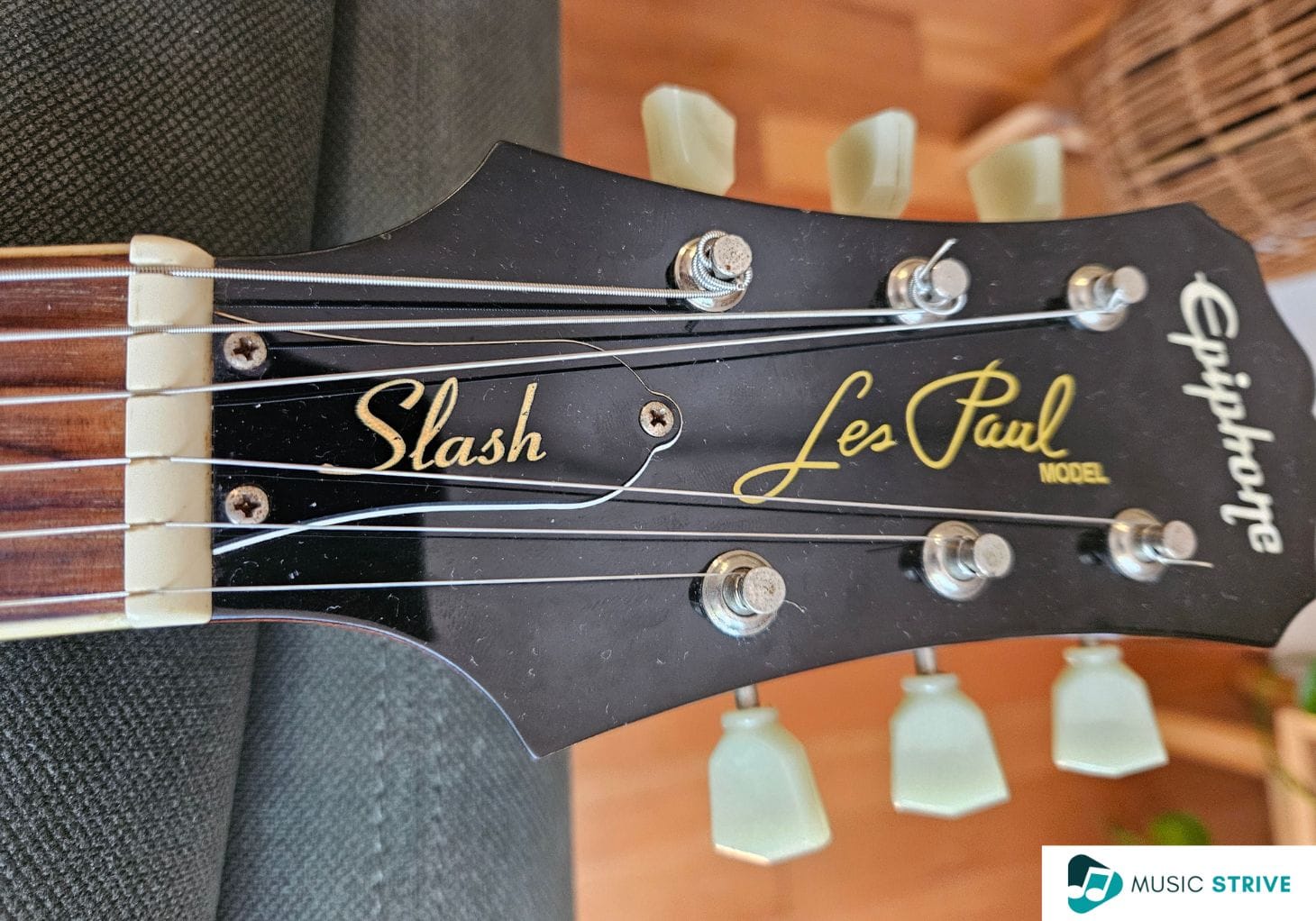
Headstock of my Epiphone Slash Les Paul - it features Grover tuners.
I like the big, warm sound of Gibson humbuckers in any guitar. While I prefer Les Pauls, I’m also quite partial to Gibson hollowbodies, such as the Gibson 335. I tend to think of the Les Paul as a out-and-out rock and roll machine, but I’ve used mine for pop and country gigs and it’s worked out fine. For anything that my Les Paul can’t handle, my 335 is more than subtle enough to take care of.
A good example of this is the Epipphone Limited Edition 1959 Les Paul which you’ll notice has the same fundamental framework as a Gibson Les Paul, but the flamed maple isn’t as vibrant and the pickups aren’t quite as high-quality which allows it to be sold at a fraction of the cost of a real Gibson. It’s also made in China, rather than the USA.
You can even get an Epi Les Paul for almost a fifth of the cost of a Gibson model.
3. ESP
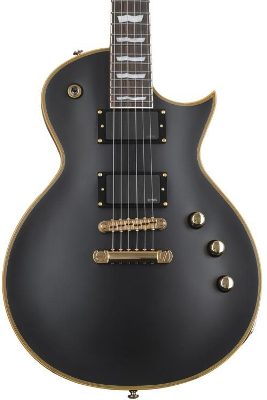
I’ve had a soft spot for ESP guitars ever since I saw Bruce Kulick playing one at a guitar clinic in 2008. These Japanese guitars may have started out as Gibson copies, but these days they offer so much more.
One of the things that sets ESP apart from the likes of Gibson and Fender is the fact they cater to heavier styles of music. While the diversity of something like the Gibson Les Paul is wonderful, sometimes I just want a rock machine designed to do one thing and one thing only: to shred your face off (or chug your face off, sorry rhythm players!). This is where ESP really shines.
Originally formed in Japan back in 1975 as a humble parts and components company, as the company grew over time it branched out into other areas which included producing their own line of guitars, which ended up becoming very successful.
Just 5 years after forming they already have a stellar reputation for producing rock machines. If you’re like me, you probably associate ESP guitars with 80s metal heroes, like James Hetfield of Metallica and his Snakebyte Signature Model.
I’ve also seen Stephen Carpenter of Deftones, an early adopter of extended-range instruments, wielding ESP guitars, and pushed ESP into being one of the first companies to make both 7 and 8 string production models with his own signature ESP SC-608 ERG guitar.
I also remember seeing posters with Alexi Laiho of Children of Bodom playing ESP's own sleek variation of the Randy Rhoads style flying V guitar with his own Alexi-200 signature model.
Although the big American brands like Gibson and Fender dominate the guitar market, in my opinion, ESP crafts top of the line instruments. This is reflected in their materials. They like to only use the best wood choices and construction methods around, which unfortunately gives them a bit of a price tag.
So very similarly to the Fender and Gibson approaches they also have a smaller company called LTD which produces more affordable variations of ESP guitars for those on a tighter budget.
When I feel like a high-gain rock machine that’s going to have low action, a fast-feeling neck, and high-output pickups, I look no further than ESP.
4. PRS
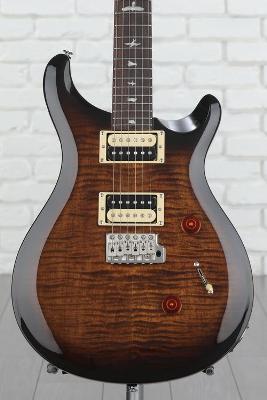
For years, I associated PRS guitars with turn-of-the century radio rock and nothing else. How times have changed! Paul Reed Smith certainly shook things up: I’ve always considered the flagship PRS doublecut to be a sort of Les Paul on steroids.
One of the best things about each guitar company is they all have their own unique approach or twist on what a guitar should be. Some companies aim to be as diverse as possible, while others focus on a specific genre or price point and try their best to cater to that.
The philosophy behind PRS is that every guitar should be treated as a piece of art. Meticulously crafted to perfection using only the best materials and construction methods available to create an instrument that’s not only supremely reliable and functional, but also looks stunning.
The company was formed back in 1985 by legendary luthier (and genuinely nice guy) Paul Reed Smith. I found out recently that he learned the art of luthiery under Gibson maestro Ted McCarty!
Their quality, craftsmanship, and commitment to creating only the very best instruments possible quickly garnered them a lot of attention and respect from the guitar community.
My favorite PRS, and their most popular model is the Custom 24. I love it for big, chunky drop D riffage, or for quoting Santana’s solo from “Smooth.”
It’s their flagship instrument and really encompasses all that PRS has to offer, from its beautiful aesthetic to impeccable playability. The tremolo system is very stable and the selection of tonewoods gives it supreme harmonic richness. It’s about as good as a guitar can physically get. It’s all I can do to resist hammering out Creed riffs whenever I pick one up!
Now for many (myself included) the Custom 24 is out of their budget, so after much demand from users they introduced the PRS SE 24 (with SE standing for Student Edition). It’s the same shape and general design, but instead of being manufactured in the United States, it’s instead made in Korea to keep costs down. It also uses slightly lower quality materials and the finish options aren’t quite as eye-catching.
But don’t underestimate it, there are still plenty of pro-level musicians who have opted for using the PRS SE 24, they’re really that good!
I’m a pretty big fan of PRS’ approach to other types of guitar, too. The Silver Sky, designed in conjunction with John Mayer, is to the Stratocaster as the Custom 24 is to the Les Paul. It’s a Strat on steroids!
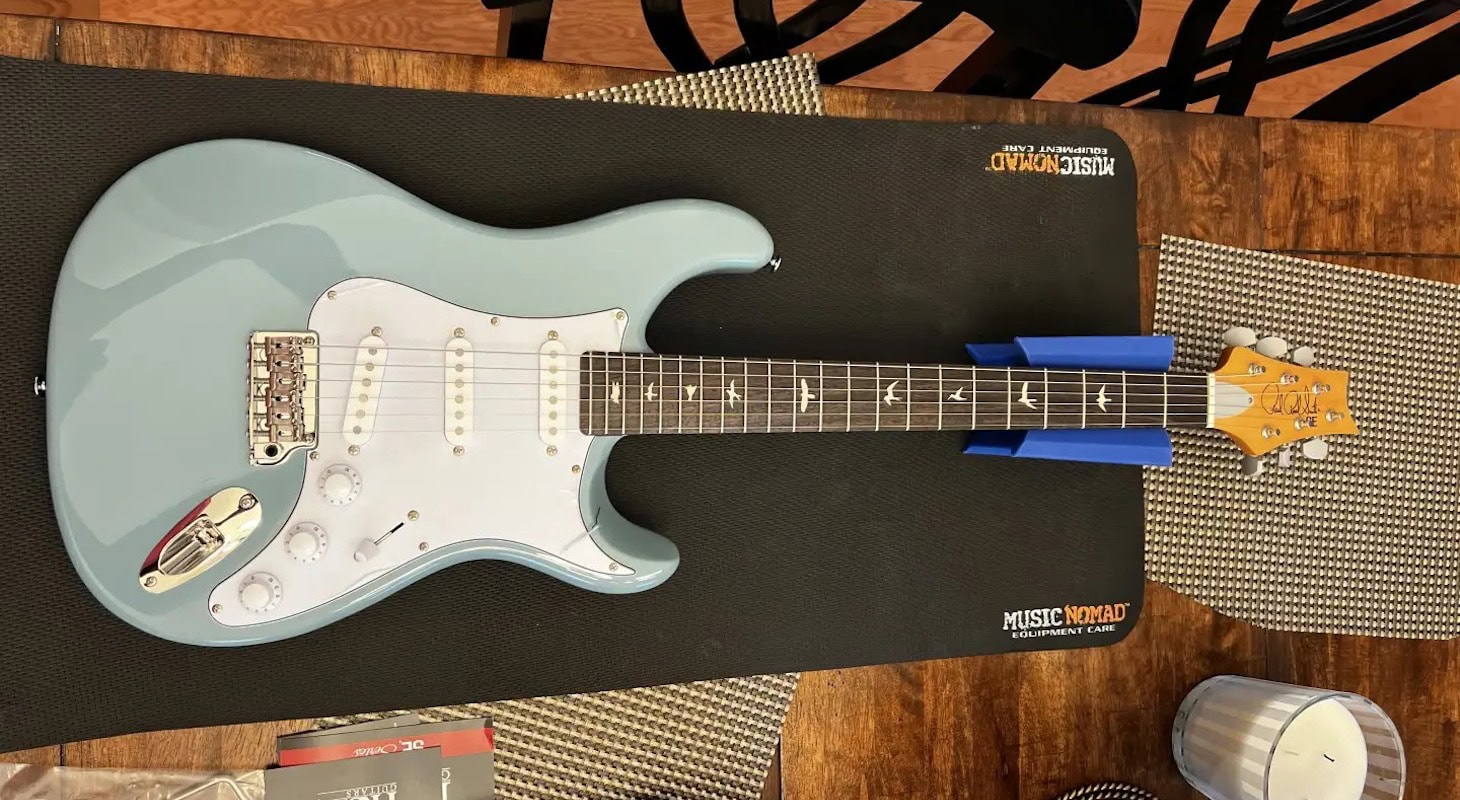
PRS Silver Sky
Likewise, for classic rock or modern country, the Myles Kennedy signature is a definitive PRS take on the Telecaster-style guitar. I love it for playing Brent Mason licks or some Jason Aldean style dropped-tuning riffing.
PRS is the ideal company for those who see the guitar as more than a tool and want to hold a piece of art in their hands that’s been lovingly crafted by one of the most passionate guitar companies on the planet.
5. Ibanez
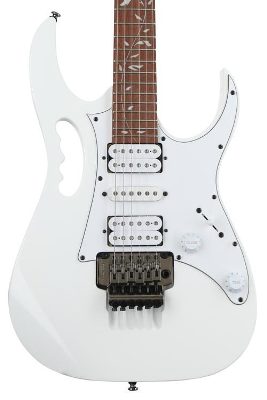
Japanese giant Ibanez is one of the biggest innovators in the guitar space. Many of the technologies created by the company have gone on to become industry standard and they have consistently set the bar on how a functional, modern guitar should perform.
I like Ibanez guitars for shredding. That’s what they’re built for, and that’s what they’re great at.
If I could summarize their philosophy as a company I’d describe them as forward thinkers. They’ve always tried to stay on the bleeding edge, not being shy about introducing new features and approaches long before other companies have built up the courage to do so themselves. This includes more recent things such as ERGs, multiscale necks, Evertune bridges, non-magnetic pickups, and true temperament frets.
One of the main selling points of Ibanez guitars is just how vast and diverse their range is, while there is certainly an emphasis on modern instruments that can shred, they introduce new models every single year. No matter what guitar you can envision, there’s a good chance Ibanez has made it at some point.
It’s something of a dividing line for generations of guitar players when they associate a certain guitar player with Ibanez guitars. I’ll always think of the cardboard cutout of Steve Vai from my local guitar store: younger guitarists likely think of Polyphia’s axeman Tim Henson.
I’ve long been partial to their Paul Stanley signature line of guitars, too. Ibanez axes aren’t just for shredheads: sometimes, you just want to rock out and play some great-sounding power chords.
Ibanez covers a range of prices, and I don’t think their lower-tier offerings have the same prestigious feel around them that something like PRS might have.
However, I’ve found their higher-tier instruments to be excellent in fit and finish. I love letting loose on an Ibanez instrument built to shred.
What Ibanez does with absolute conviction is create impeccable workhorse guitars that are priced perfectly to be accessible for both serious hobby players and professionals alike.
Ibanez’s most popular line of instruments is the Ibanez RG, otherwise known as the roadster guitar. Originally introduced in 1987, this was designed to take the fundamental idea of a Stratocaster and essentially supercharge it.
You’ll see nods to the Strat, but everything is thinner, refined, more precise, sleeker, and faster. Because of this, fans took to calling it the Superstrat which is a term we still commonly use today for most modern double cutaway guitars.
I’ve probably seen more Roadsters than any other kind of Superstrat. They’re a lot of fun to play, and I’ve used them with particular joy for heavy music. There’s something really satisfying about unleashing ultra-heavy thrash riffs on a Roadster.
Ibanez are also big believers in working with artists and collaboratively developing signature models with them, which has garnered them one of the largest artist rosters of any guitar company around.
Iconic signature models include Steve Vai’s legendary JEM series and one of the earliest production 8 string guitars around the M80M Marten Hagstrom of Meshuggah signature model.
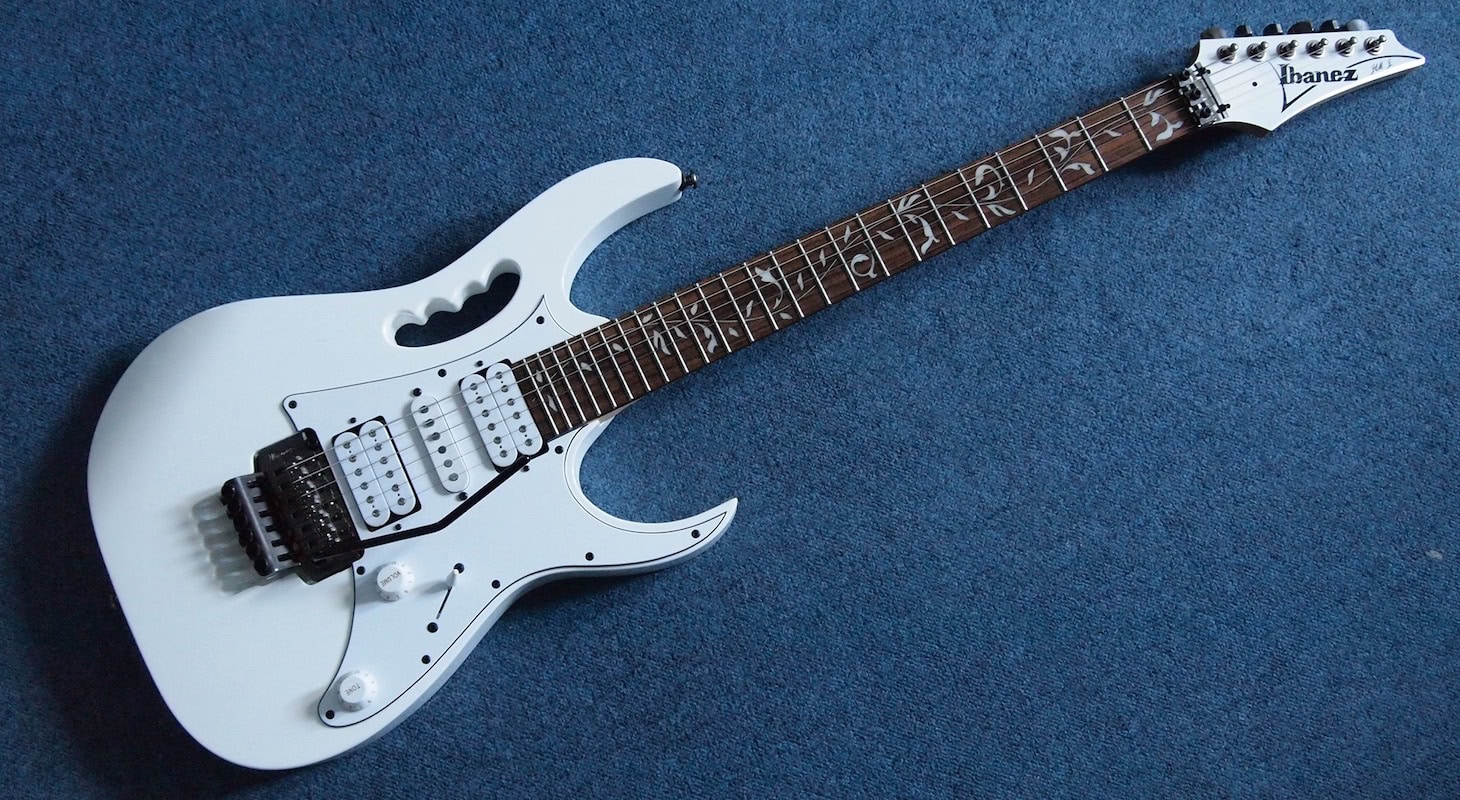
Ibanez Steve Vai Signature JEM JR
Then more recently the TOD10N Tim Henson signature electro-acoustic which was a surprise hit for the company thanks to Polyphia's explosion in popularity combined with its very affordable price.
Unlike the majority of the other companies listed, Ibanez does not have their own subsidiary company to manufacture cheap guitars. Everything is offered within the Ibanez line, from top-tier to budget-friendly.
6. Schecter
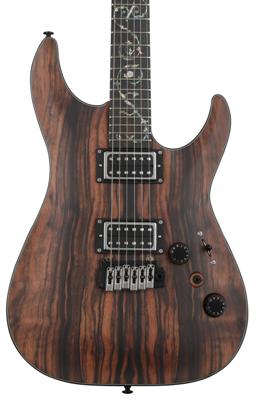
Over the years, I’ve nurtured a certain fondness for Schecter guitars. They remind me of the asymmetrical haircuts and guyliner of my youth. Maybe that’s Avenged Sevenfold’s responsibility.
While perhaps not having the same level of notoriety that the likes of Fender and Gibson have, Schecter has nevertheless been a huge force in the guitar space and played a pivotal role in accommodating specific genres and styles of music.
Like many other companies, Schecter started out life as a parts and accessories company that then branched out into instrument manufacturing.
One of the primary reasons why Schecter did so well as a company was because they put a huge focus on value for money, a very different approach to someone like PRS.
Maybe this is why, when I was a kid, every Synyster Gates-inspired player in the scene was playing a pointy Schecter guitar that looked straight out of a Tim Burton movie.
For a very affordable price, you can get an instrument that punches way above its weight. This created a unique scenario where many teens and upcoming musicians without huge amounts of money to spend would purchase Schecters and then go on to become successful in the music world.
It’s because of this they have some of the best players on the planet in their artist roster, despite not being considered the highest-quality guitars.
One of the most important instruments for them was the Schecter Hellraiser, which was a decidedly metal instrument that came with a fixed bridge, heavy mahogany body, and EMG pickups straight off the shelf making it the go-to instrument for younger metal musicians.

Schecter Hellraiser C-1 FR-S
Artists such as the legendary Jeff Loomis formerly of Nevermore and now Arch Enemy used this model for a long time before developing his own signature model with them (which was still fundamentally a Hellraiser).
This particular model also became synonymous with the metalcore genre of music, providing a distinct tone that ended up defining the style. We've reviewed the Floyd Rose (w/ Sustainac pickup) version of this guitar here.
Schecter guitars always remind me of Synyster Gates of Avenged Sevenfold, as one of the biggest rock/metal acts of all time he’s also helped to introduce the brand to many younger musicians and has a long-running signature series Custom-S line of guitars.
I was surprised to learn that, in more recent years, Schecter has gone to great lengths to update their catalog, with revised versions of many of their older models. They’ve also introduced some instruments that can cater more to different musical styles such as the Nick Johnston signature model, which is more akin to a vintage Stratocaster.
Schecter is a fantastic brand that’s really carved out its own niche in the guitar space. I’ll always appreciate an affordable, high quality guitar doing its own thing.
7. Jackson
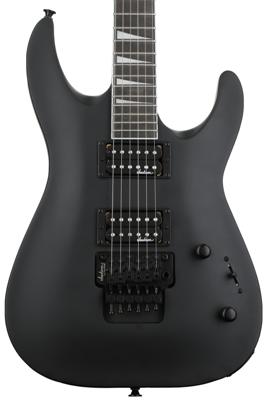
If you’re anything like me, when you think Jackson, you think '80s metal shred. They sound like big hair, top speed, and they sound great through Marshall JCM800.
Jackson guitars have an intrinsic link to the shred-guitar era of the '80s. They put a huge focus on high-output and extreme-playability which made them the instrument of choice for anyone looking to play fast shred guitar.
Jackson really knows their place and dominates it. I love how their guitars often feature sharp edges, super-stable hardware so their instruments can stand up to some abuse without going out of tune, and an aggressive tone that’s designed to be distorted and saturated to a high level.
By far one of the most iconic Jackson players is the legendary Randy Rhoads whose signature Jackson guitar put a unique modern spin on that traditional Gibson V style by using asymmetrical horns and adopting an overall sharper and sleeker aesthetic. You’ll see this style reflected in ESP with the Alexi Laiho signature models. Ironically, Rhoads barely played Jackson guitars during his lifetime!
Their most popular production model is the Jackson Dinky, which serves as an affordable ‘meat and potatoes’ kind of shred guitar. For many new players, it’s an affordable way to get a high-quality instrument they can shred on.
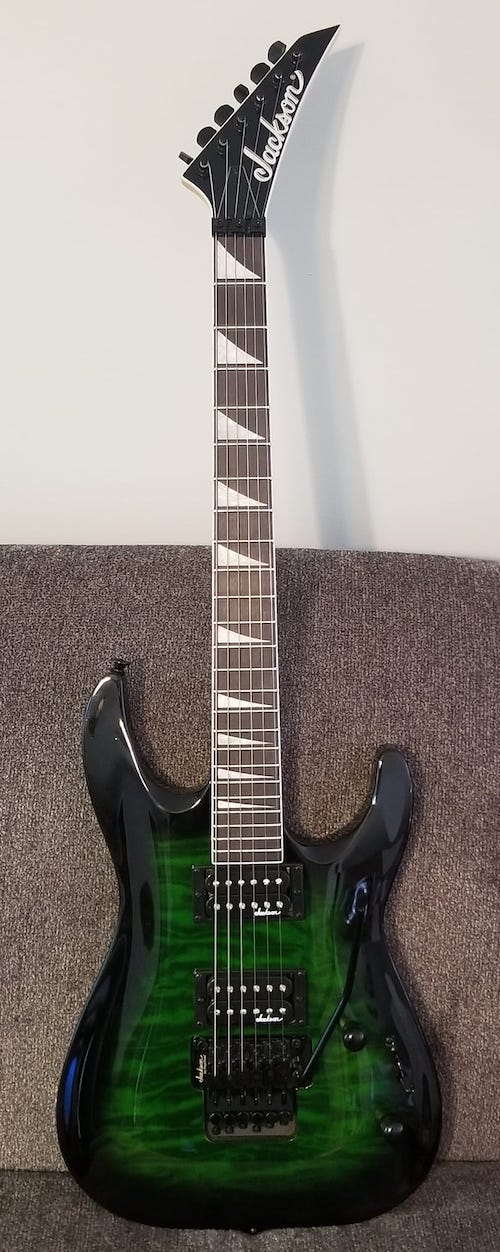
Jackson Dinky JS32Q DKA
I’ve been seeing, and playing, various Dinkys since I was a teenager, and they’ve barely changed in that time. I’ll always appreciate a classic Superstrat built for speed!
Despite their rise to popularity through the '80s, Jackson has very much kept their finger on the pulse as musical styles changed and updated through the 2000s and 2010s.
They’ve had a long-standing relationship and production signature model with Misha Mansoor of the modern progressive metal band Periphery. This instrument is offered in two versions, a premium USA-made model called the Jackson Juggernaught, but after a few years, due to its steep price tag and a bit of pressure from players, they also introduced a more affordable version which they called the Misha Signature Pro Series.
Although I don’t play nearly as much hard rock as I used to, I’ll always have a soft spot for Jackson guitars. I appreciate a trusted company that offers a wide range of body shapes and colors. Virtually all of their guitars are of the metal/rock persuasion, so I couldn’t recommend Jackson enough to fans of that genre.
8. Charvel
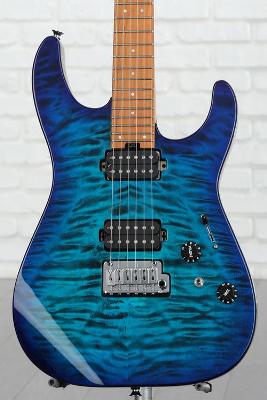
If guitars were cars, Charvels would be Lambhorginis.
Charvel makes the supercars of the guitar world. They took the fundamental idea of the Superstrat, a double-cutaway dual humbucking guitar designed for lightning-fast shredding and chunky rock riffs, and have judiciously stuck to that formula to great success.
Originally formed in the 1970s by Wayne Charvel, who started off focusing primarily on guitar repairs and modification before moving into guitar manufacturing.
They garnered a bit of a reputation during the decade that followed up until 1980 when the brand Grover Jackson, which was already a well-established figure in the guitar space, brought Charvel on to be a part of their company and was later renamed Jackson/Charvel.
I definitely found determining between these two giants of Superstrat production pretty confusing for a while.
Rather than just absorbing the company into Jackson, they recognized that the Charvel name meant something to its customers and decided to just continue the brand.
Today, Charvel is a subsidiary of Fender guitars. That means their Superstrats really are, according to intellectual property law, Superstrats, complete with licensed Stratocaster headstock!
They have stayed within this niche until today and have a very dedicated player base who really appreciate what Charvel offers. It’s a great demonstration of how a company can really hone in on one idea and, if it’s done well enough, can completely sustain a company.
Popular models include the So-Cal Style 1 HH and the DK34 HH which are both super-refined modern superstrats.
Perhaps my favorite Charvel guitar is the Satchel signature model. Charvel’s ethos is that more is more, and this guitar epitomizes this like no other. When I played one, the low action and very hot pickups immediately stood out to me.
I messed around with George Lynch licks and, of course, some Steel Panther, and had tremendous fun doing so.
Really, I’ve always felt like Charvel guitars inject hair-metal fun into guitar design. That’s something I’ll always love about them.
I’m clearly not alone: they also have some of the best guitarists in the world on the signature roster including the legendary Guthrie Govan who has his own San Dimas style signature model with them. They boast other notable artists including Satchel of Steel Panther and guitar virtuoso Marco Sfogli.
9. Kramer
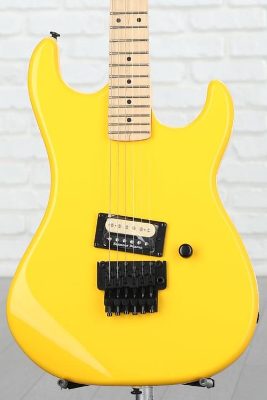
I’ve always thought of Kramer as the other shred-ready Superstrat. They remind me more than anything else of Edward Van Halen circa 1982.
While some consider Kramer to be a bit of a legacy brand at this point, their role in guitar history is important, and seeing as many of the artists associated with the brand are still incredibly popular today there’s still a good bit of demand for their instruments.
Kramer formed in the late '70s and really rose to prominence throughout the 80s. They were used by a number of popular artists during that time, most notably the legendary Eddie Van Halen who used them before moving on to Peavey and, eventually, his own brand.
If you ask me, the rock and shred guitar heritage is one of the most important things about Kramer, they’re known for their reliability and tuning stability which was great for players during that period as so many loved to do some pretty extreme tricks with the whammy bar. They also produced aggressive tones and had high-output pickups, really lending themselves well to that super-fast shred style.
Coming out of the ‘80s, Kramer went through a period of relative quietness through the ‘90s and early 2000s. They were still around, but as music had moved on from the ‘80s shred Kramer was considered more of a niche brand.
They have since been purchased by Gibson who have done a great job at introducing some new models to their lineup and keeping them relevant in the modern era.
I’m a big fan of the super-affordable Kramer Baretta Special, which has a unique single bridge pickup that has been angled to make it more aggressive on the higher strings. Read my full review.
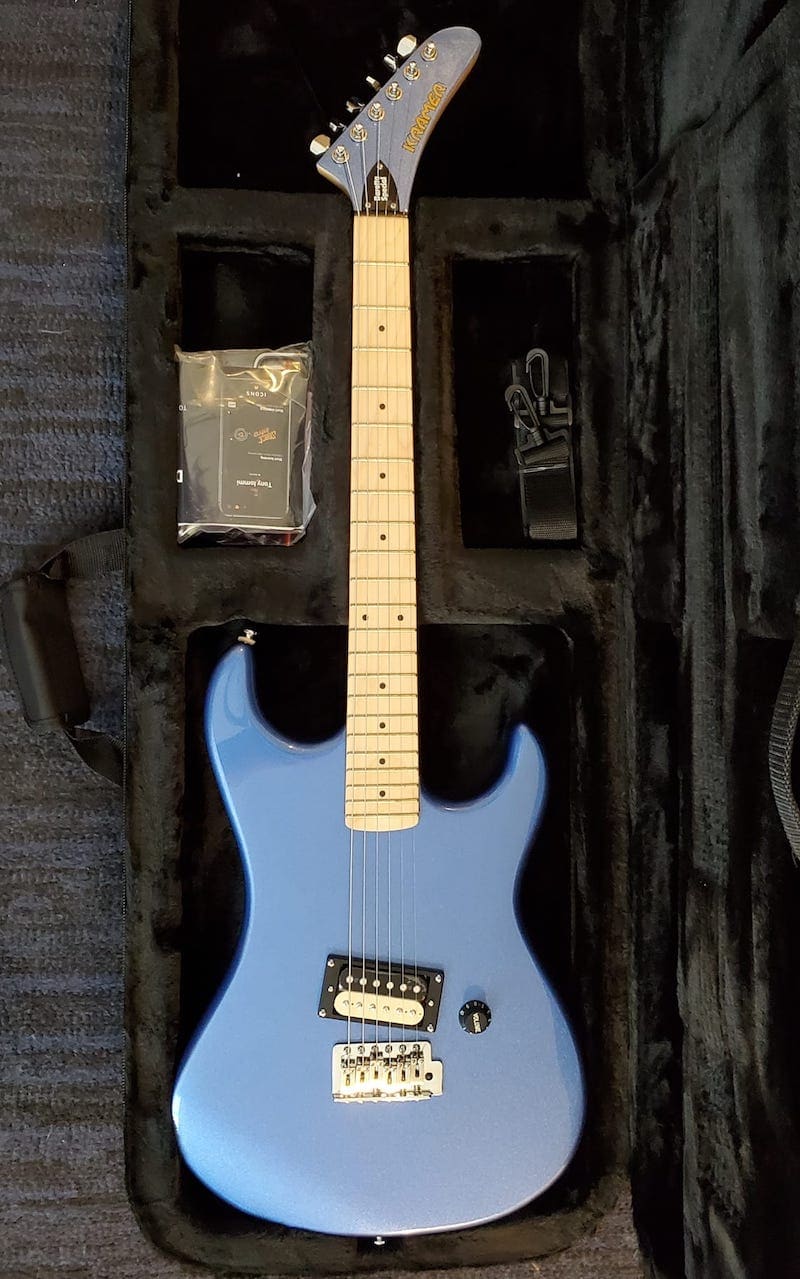
Kramer Baretta Special
The SM-1 which is more of a full-featured super strat that has a HSS pickup configuration and an array of tonal options.
When I play a Kramer Baretta, I always play through my favorite Van Halen licks. They handle those sizzling, high-speed runs like few other guitars. Palm mutes and high distortion sound great.
More recently Kramer has been working with Megadeth guitarist and singer Dave Mustaine who has recently released a Mustaine signature Flying V model with them.
10. Gretsch
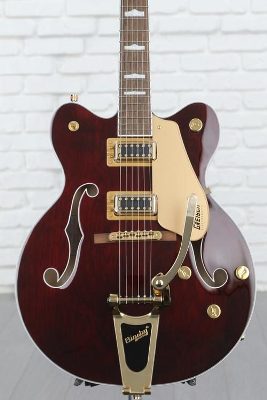
When I think of a guitar that bleeds old-school cool, I think Gretsch.
Many of the guitars we use these days are evolutions of the Stratocaster, otherwise known as a Superstrat. However, Gretsch guitars harken back to an older era and a different style of guitar, which is the hollow-body electric guitar.
Although Gretsch originally formed in 1883, it would be during the 1950s and 60s (otherwise known as the Golden Era for Gretsch guitars) when a number of very prolific artists including George Harrison and Chet Atkins helped to popularize the instrument.
Gretsch are best known for their hollow-bodied electric guitars, typically armed with their distinctive FilterTron humbuckers. Even their solid-bodied answer to the Les Paul, the Duo Jet, features these humbuckers. Where Gibson humbuckers are warm and fat, Gretsch’s humbuckers are twangy and throaty. This made them popular picks for certain music styles such as jazz, rockabilly, or even country.
One of their top-of-the-line offerings (and one of the nicest guitars I’ve ever played) is called the Country Gentleman, and with good reason. It’s a polite, luxurious instrument that’s a joy to play.
With such a long history and heritage, Gretsch has spent a long time refining its manufacturing processes, and its quality and craftsmanship are very well respected in the guitar space. They only use the best quality woods and pickups, and have a rigorous quality control department so you can be sure the instrument you receive is the very best it can be.
Popular models include their Classic Hollowbody design such as the Gretsch G5422TG which encompasses that traditional Gibson E55 hollowbody design with a gorgeous Bigsby Bridge.
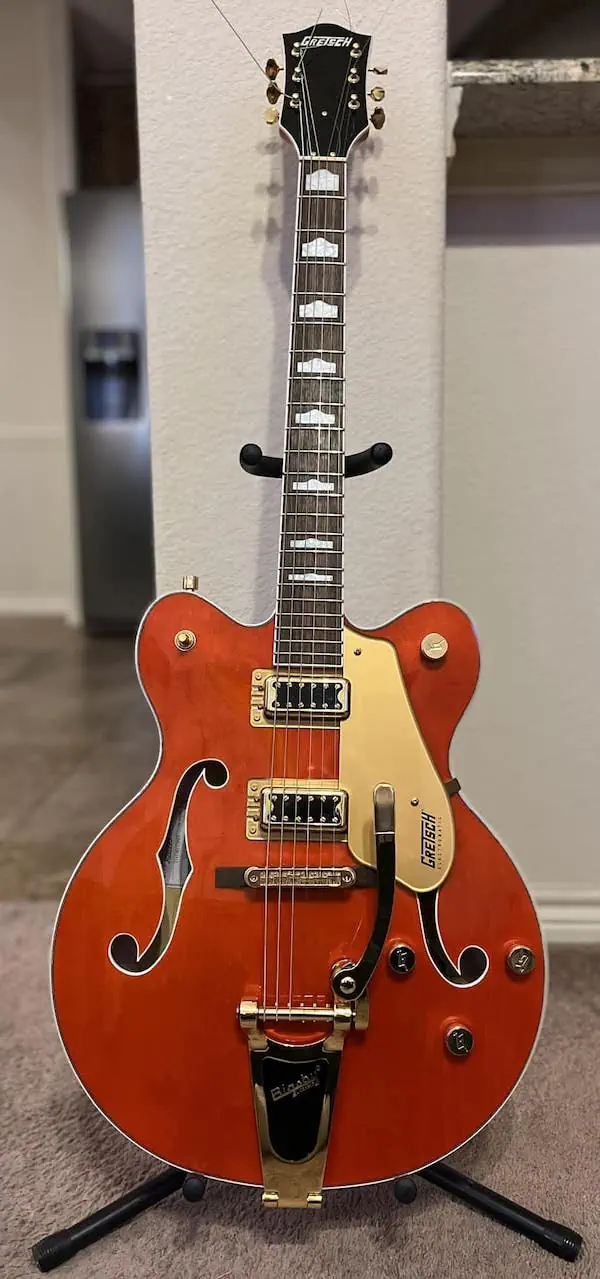
Gretsch G5422TG
Gretsch also has a line of single-cut instruments which bear resemblance to the Gibson Les Paul such as the Gretsch G5230T.
Of course, Gretsch guitars aren’t limited to country and rockabilly. My favorite Gretsch player is AC/DC rhythm man Malcolm Young, who boasts a bare-bones signature model.
The Malcolm Young signature model is muscular, lean, and simply unstoppable as a tone machine. I’ve borrowed a friend’s, and it sounds great for full-powered open chords through a cranked Marshall amp.
Overall, Gretsch makes supremely reliable instruments that really scratch the itch for those who still enjoy those classic instruments of the 50s and 60s. We’re supremely thankful they are still around to offer us these wonderful instruments!
6 Honorable Mentions
Strandberg
Strandberg has been steadily increasing in popularity over the years for their forward-thinking guitar designs which focus on very modern and ergonomic headless guitars.
I appreciate the retrofuturistic cool factor of their instruments. Strandberg guitars play very well, and accommodate the high-fidelity playing styles most commonly associated with progressive styles. While my tastes lean more towards basic, classic guitars, I don’t mind picking up a Strandberg when the gig calls for it.
Their Boden Prog NX 6 is particularly loved by many for being a supremely capable yet insanely lightweight guitar!
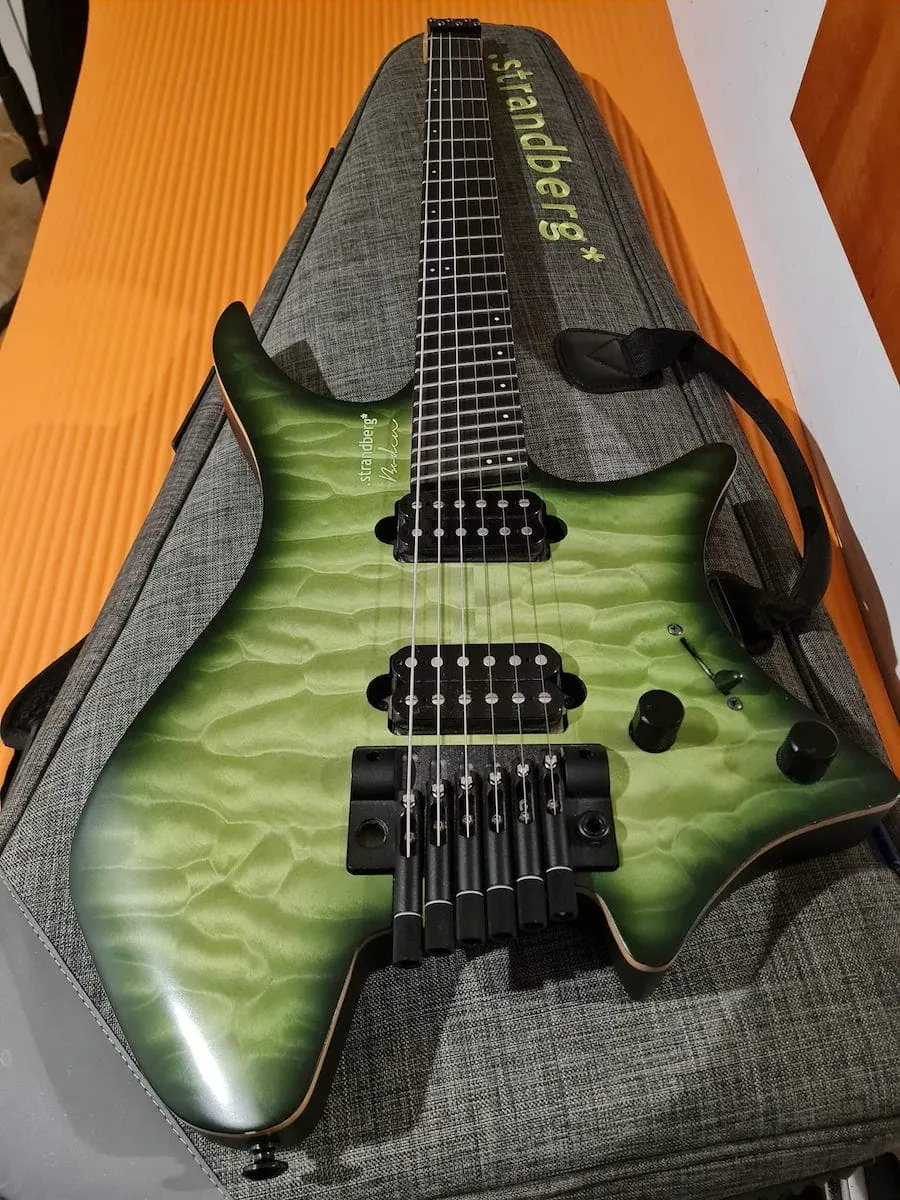
Strandberg Boden Prog NX 6
Working with pioneering guitarists such as Per Nilsson of Scar Symmetry and Sarah Longfield, Strandberg has been a favorable choice amongst younger players who are interested in progressive guitar playing.
G&L
After the founder of Fender Guitars, Leo Fender, sold the company he went on to form a new one with George Fuller in 1980 that they named G&L Guitars. Here he’d take the fundamental Strat formula established by Fender guitars and continue to refine and push the instrument further.
While I personally prefer classic Fender models to G&L, they’re an awesome alternative for guitar players in the know. They’re like a cool underground band compared to a stadium rock act. I’ve enjoyed the G&L Teles that I’ve tried over the years, especially for the demands of ultra-precise country playing.
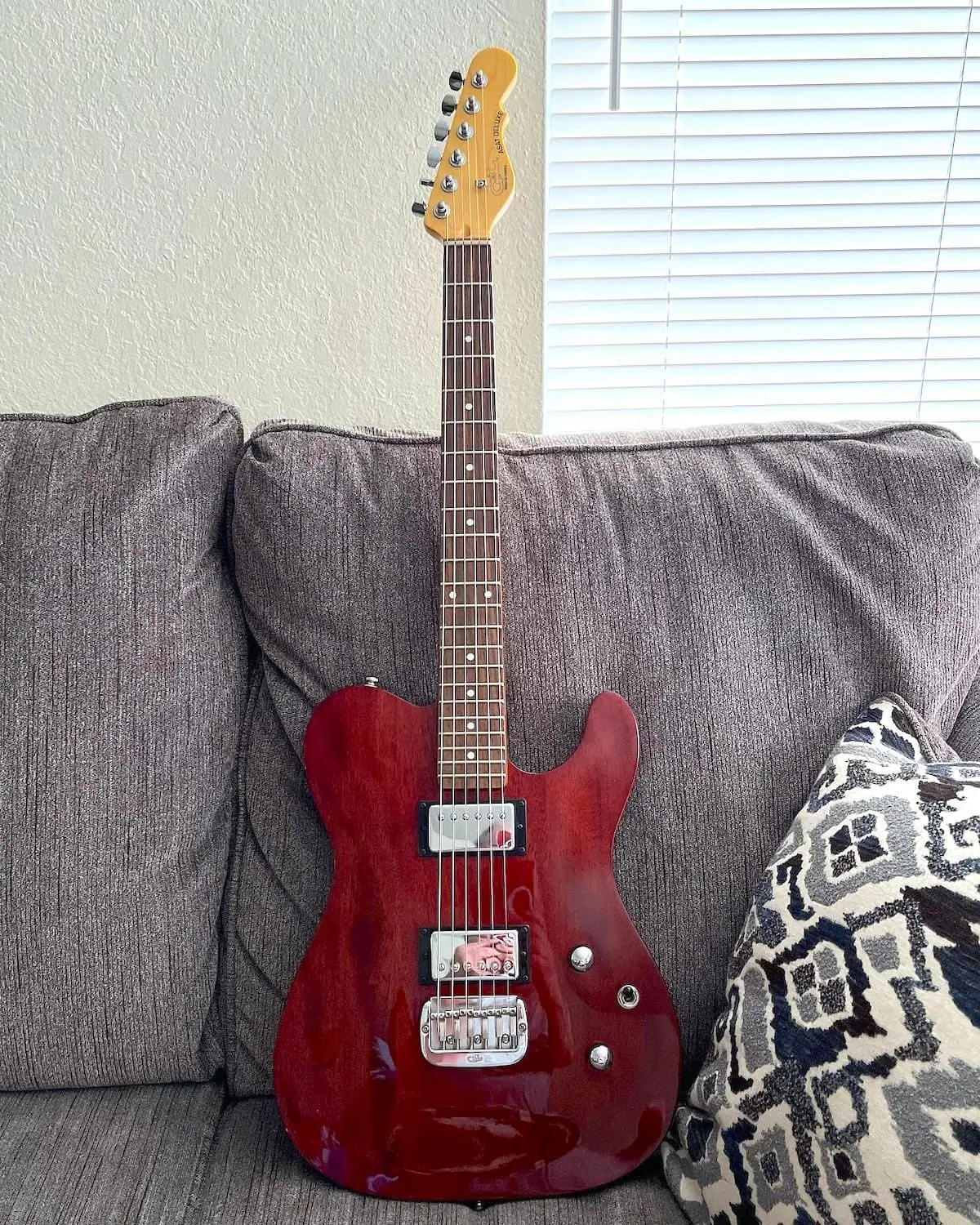
G&L Tribute ASAT Deluxe - an ultra-capable dual-humbucker equipped Tele-style guitar.
G&L has a special kind of prestige because of Leo Fender's prolific impact in the guitar space. These days, they've entered and are gaining prominence even in the mid-range electric guitar space with their more affordable models.
EVH
Although Eddie had a longstanding relationship with Peavey, due to creative differences and an inability to keep up with demand, Eddie would go on to form his own brand called EVH. Here they’d continue to produce the equipment Eddie wanted to make, but this time with absolute creative freedom.
Nowadays, EVH equipment is manufactured under Fender Musical Instruments, so you know they’re of the best quality and are able to keep up with production demands!
I’m a huge fan of EVH guitars. I tend to use the Wolfgang model for hard rock and high-gain applications, but it’s astonishingly versatile. It handles country just fine, for example.

EVH Wolfgang Standard
I was amazed to see Taylor Swift’s lead guitar player Paul Sidoti wielding an EVH guitar at the Eras tour! Don’t let the initials fool you, this isn’t just for shredding and hard rock. I’ve used EVH gear for all kinds of gigs: the playability and tone of these guitars can cover everything from Katy Perry to Killswitch Engage.
This is a more serious guitar aimed at more serious players, so EVH is mostly present in the upper-mid to high-end electric guitar space. These are some of their most popular axes currently.
Suhr
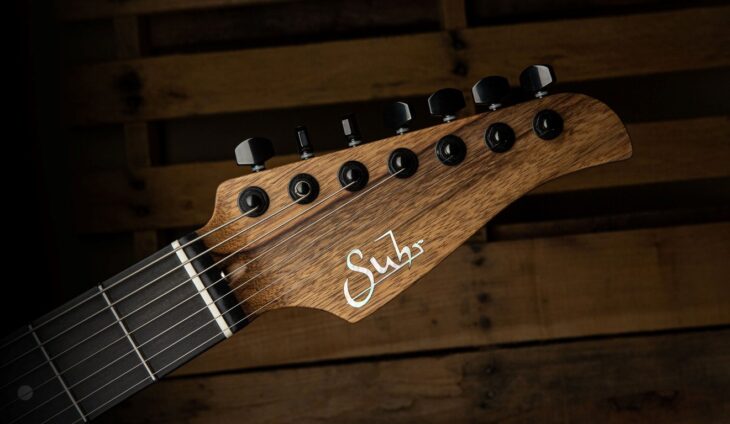
Suhr is a boutique guitar brand that gained a lot of attention for their Guthrie Govan signature model. Although Guthrie has since moved on to Charvel, Suhr has been slowly gathering a stellar roster of signature artists including the fantastic Mateus Asato and YouTube superhero Pete Thorn.
Suhr guitars are not for the faint of heart. The first time I tried one, I felt like I wasn’t nearly a good enough player to hold it, let alone play it! They feel really luxurious and play extremely easily.
Of course, the guitar is only as good as the player, but Suhr guitars are of the highest quality and attract some of the most skilled players around.
Reverend Guitars
Reverend is a lesser-known brand that has garnered a cult following thanks to its line of modern-vintage guitars. These axes pay homage to classic designs but are very much well-made instruments that any modern player can use.
Artists like Greg Koch helped to popularize the brand.
I tried a Reverend guitar recently. The offset body shape was cool, and surprisingly comfortable to play, although it was easier to play while standing than sitting. I loved the growl and snap of the P90 style pickups. While they definitely feel like classic rock guitars, I appreciated the concessions to modern demands and playability.
Yamaha
Yamaha doesn’t get a lot of credit for how good they are as they are not commonly seen being used by top-level professional guitarists.
The Yamaha Revstar might be the most versatile guitar I’ve ever tried. I’ve seen a lot of younger players at music schools pull up to class or to jams with a Revstar and a Boss Katana.

Yamaha Revstar RSE20
Having played through exactly that rig, I can testify to the quality of sounds available with this instrument. The Revstar handles pretty much everything from high-gain metal sounds to country twang without breaking a sweat, and it’s comfortable to play even after hours of jamming.
However, their beginner and mid-line of guitars offer tremendous value for money and should be a strong consideration for anyone needing an instrument that punches above its price range.
What Makes a Guitar Company Great?
There have been plenty of guitar companies over the years who may have garnered a bit of attention, but ultimately faded off into obscurity or even eventually went out of business.
So what is it that allows a guitar brand to stand the test of time and become known as one of the greats?
There are a few elements at play here which all culminate into creating a brand and image that people like to associate with. The first and most important thing is that they produce great instruments, particularly when it comes to their quality control and ensuring every product that makes its way to the customer is of the highest quality.
The guitar community isn’t shy about letting others know when they’ve received a bad product, so companies that are letting defective instruments go out the door don’t stick around for long.
The second factor is the artists they work with. Most well-known guitar brands will work alongside popular artists who help bring attention and validity to a company.
The third factor is their customer relations, how well they treat their buyers. Certain companies have a particular knack for going above and beyond for their customers which allows them to build a loyal customer base who, in turn, act as passive promotion for the company.
I’ve enjoyed a range of guitars over the years. I’m particularly fond of Les Pauls: when I pick up a Les Paul Standard, whether it’s a factory model or an artist signature, I know what I’m about to get. I’ve had the privilege of visiting the old Gibson custom shop in Memphis, and I can assure you that their customer service is beyond reproach.
Guitar players tend to be pretty loyal to brands that take care of them, and I’m no exception.
The Best Brand If You’re on a Budget
Most guitar brands try to diversify their lineup and offer both expensive and inexpensive instruments in order to cater to as wide an audience as possible.
However, many beginners and learners may be hoping to use the same guitars as their favorite artists. But if those guitars are a Les Paul or a Stratocaster you’re going to be faced with a price tag that’s considerably higher than most beginners are willing to pay.
So here what you can do is look towards these brands' smaller sister companies. Many of the largest guitar brands have smaller companies that manufacture more budget-friendly versions of their flagship instruments which still capture the essence of their big brothers.
For Fender guitars you have Squier, for Gibson you have Epiphone, for ESP you have LTD and for Music Man you have Sterling by Music Man. Even Gretsch has the Electromatic line.
It really does depend on your budget. When I was a younger player, I found that guitars made overseas tended to be more affordable than those made in the USA.
In my opinion, the best bang-for-buck budget brand is Fender, where you can get a fantastic Tele for under $1000. A close competitor would be the Epiphone Gold Glory. At below $500, it’s hard to beat the J Mascis Squier.
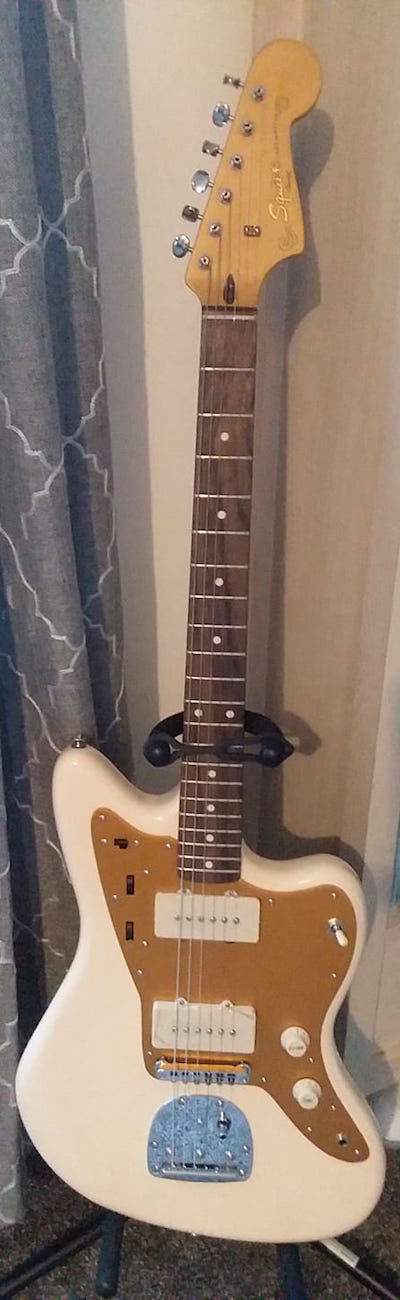
Squier J Mascis Jazzmaster
Check out these smaller side companies for comparable instruments that can fit a smaller budget!
Does the Brand of Guitar Really Matter?
These days manufacturing processes and quality assurance are pretty good across the board. Most guitars are produced to a reasonable quality and should stay in tune pretty well.
So while you’re not really at much risk of encountering a truly bad guitar anymore, the general rule is if you stick to the more popular brands as mentioned on this list, you can trust that the quality will be good.
Outside of functionality and playability, there is also the prestige factor. Many players just feel an attachment to a particular brand because it’s what their favorite players use. This ‘magic’ of using a particular brand you feel attached to should not be underestimated as feeling good and being excited about the instrument you play is important.
The way I see it, I’m paying for the guarantee that comes with a brand. If I buy a Gibson, I’m paying for the assurance that Gibson won’t let guitars unworthy of their brand leave the factory bearing their name.
What really matters is that you get a guitar you’ll love playing. Sometimes, the right name on the headstock makes you want to play more. I know that buying my dream Les Paul made me practice more, because I wanted to be a guitar player worthy of the guitar I played. In that way, my Gibson made me a better player!
At the End of the Day
Ultimately there is no right or wrong choice when it comes to picking the right guitar brand for you. But it’s also worth noting there is a reason why huge brands such as Fender or Gibson have been around for so long. It’s because their quality is trusted, they sound great, and feel amazing to play.
I highly encourage you to play as many different instruments from as many different brands so you can see which ones you develop a connection with and can ultimately discover what will work best for you.
If you've liked this read, you might also enjoy our article on the best acoustic guitar brands of today.

It was insane or incredibly ignorant to leave Suhr off of the best list and have lesser brands like Schecter or whatever on. Nuts!
Hi Billy, Suhr is actually in the ‘honorable mentions’ section. The main reason behind this is, they’re still a boutique brand with limited availability everywhere.