
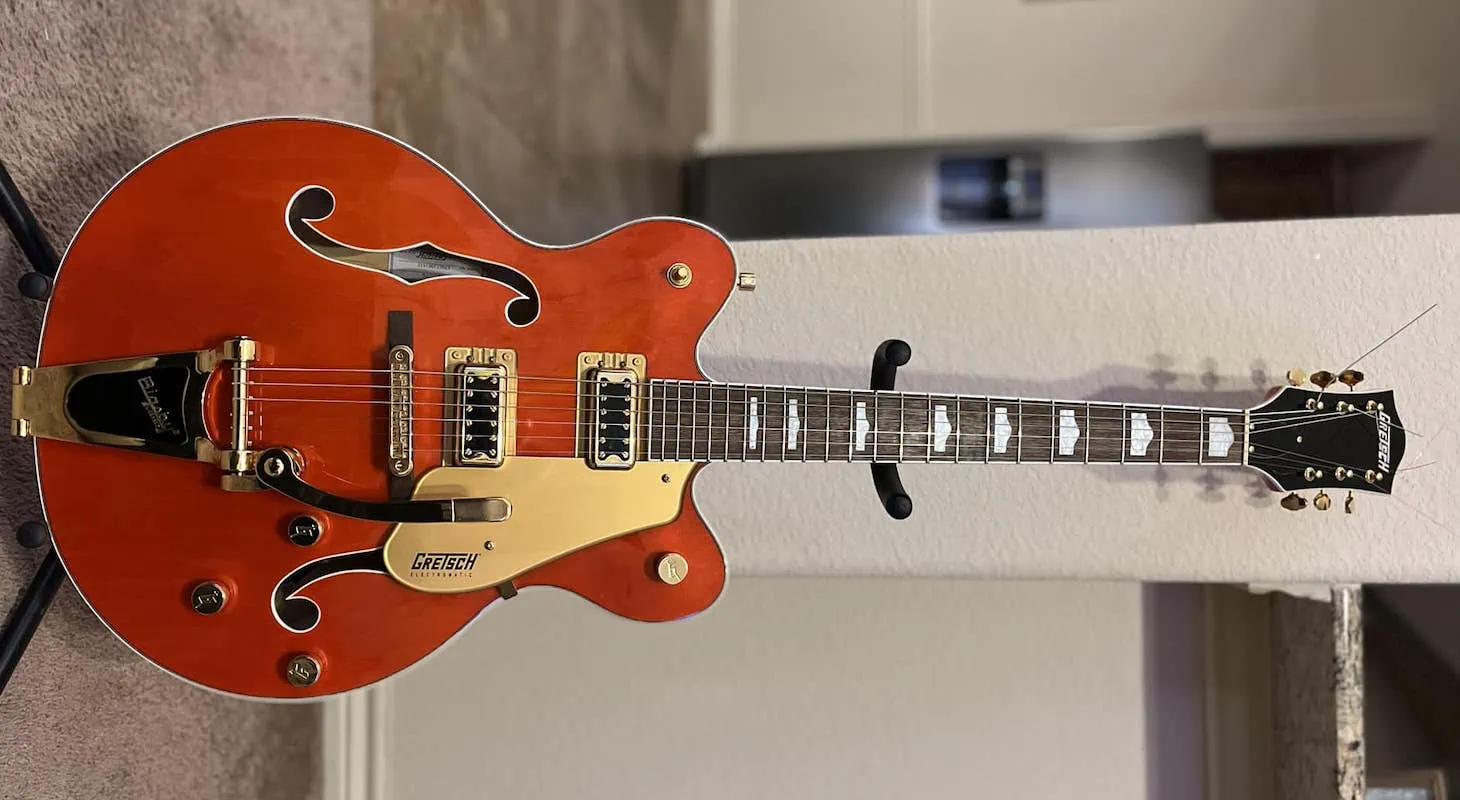
Playing worship guitar is the closest you’ll get, as a musician, to being a painter making a masterpiece. Indeed, it’s not about you or anyone else on stage but about the final result that reaches the audience.
But talking about great tone isn’t about making your guitar stand out from the rest?
Well, not exactly. In modern worship music you have to learn to work your dynamics and help the lyrics and singing voices reach the audience better, more profoundly.
I’ve been searching for that tone for decades and in that long and winding road I learned a thing or two about the perfect instrument to play that fundamental, yet invisible role, modern worship needs.
Top 3 - Electric Guitars for Worship Music
Preview | Product | Price |
|---|---|---|
 | ||
 | ||
 |
Here are decades of experience condensed into a single post. So, please, read on, choose your next favorite guitar, and help people feel closer to the message and have a better experience at every worship session you’re lucky to be involved in.
Best Electric Guitars for Worship / Church Settings
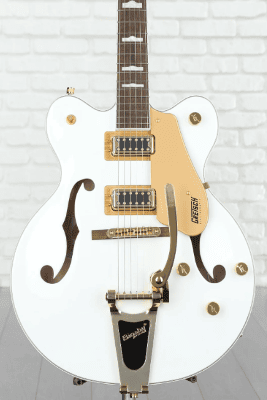
1. Gretsch G5422TG
Gretsch has been making quality instruments in Asia since the eighties. Their Electromatic series must be one of the best bang-for-the-buck guitars on the market today.
This guitar expands on that reputation delivering the quintessential Gretsch twang and snap in an affordable package that’s sure to be a head-turner the second you step on stage.
But let’s rewind because playing this guitar is a great experience that needs to be told.
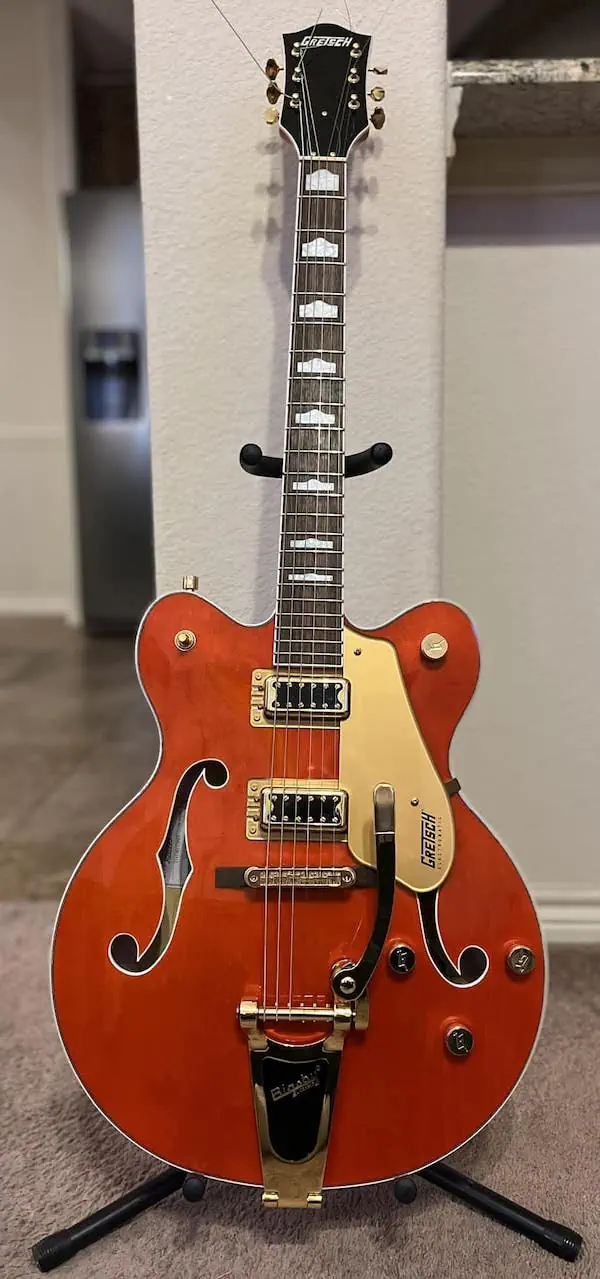
Gretsch G5422TG
To begin with, this is a laminated maple guitar, which translates into that traditional midrange and high-end that makes the guitar tone cut through the mix. That said, this is also a semi-hollow guitar which adds growl to the equation.
This allows this Gretsch G5422TG to have the best of both worlds and work great with those washy, ethereal, delay-driven worship intros and swells. Also, this guitar feels solid and works perfectly for playing chords and adding nuances using the original Bigsby B60.
In the same vein, the 12” radius makes this guitar a great instrument for lead work. Moreover, the Filter’Tron FT-5E humbucking pickups are silent but very powerful. They will allow you to alternate between super-clean and pushed-into-overdrive tones.
Perhaps, the only thing that might be a drawback about this guitar for worshiping purposes is the size. Yes, we’re talking about a big instrument that takes up a lot of stage real estate. Plus, if you’re not leading the worship, the white-meets-gold look of this guitar might be too much of an attention-grabber.
Nevertheless, if you’re in search of a guitar that can do it all from leads to ambient and add a broad frequency spectrum to your playing, this might be a perfect choice.
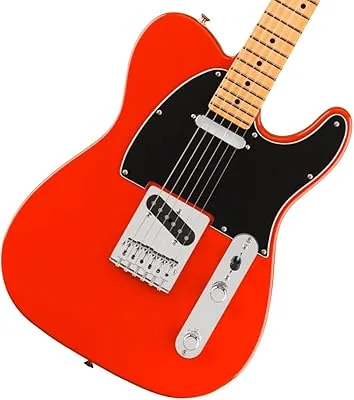
2. Fender Player II Telecaster
Looking at this guitar, you might be tempted to say that you already know what it does and how it sounds. Well, that’s not quite the case because Fender overhauled this design to come up with a traditional look for a modern instrument.
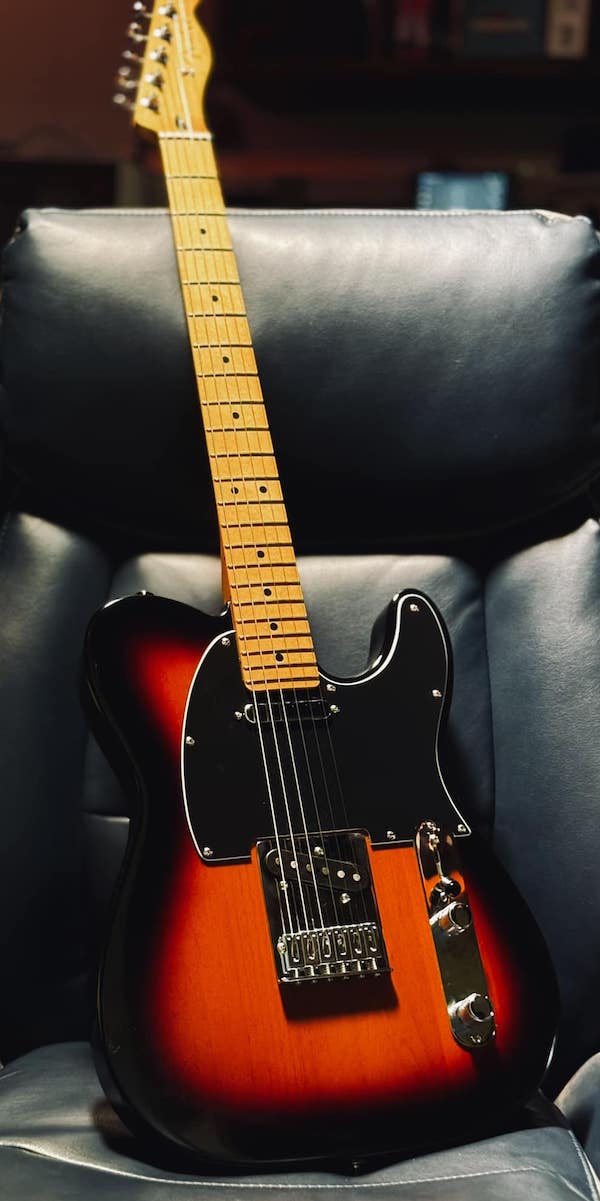
Fender Player II Telecaster - maple neck version.
Yes, this guitar’s looks take you straight to that golden era of twang made famous by players such as Keith Richards and Bruce Springsteen among countless others. Yet, the moment you start playing it, you realize that long gone are the thin, vintage frets and unplayable 7.25” radius.
The company gave this guitar a couple of modern touches here and there and one spot was definitely the neck. This modern C-shaped neck features a 9.5” radius, medium jumbo frets, and a great urethane satin finish that feels like butter.
Perhaps, the only thing I have to say about this guitar is that it came with a few sharp frets, which surprised me because most Fender MIM instruments are flawless out of the box in my experience.
Moving on to the sound department, the Alnico V pickups are as noisy as any single-coil pickup is, but carry that bell-like, crystal-clear clean sounds. The type you need for drenched-in-reverb tones during worship. Furthermore, this guitar is great with pedals, yes, including overdrive and distortion.
It’s in that scenario, with subtle overdrive, that you get the most out of the alder body and maple neck combo. Yet, let me warn you, this is not a guitar for the faint of heart. This telecaster can rip the fabric of reality with some of the cleanest mids you can have on a guitar.
Finally, the six-saddle bridge allows for a millimetric setup, which translates into flawlessly in-tune worship sounds.
Fender’s Player II Telecaster is a must-try-before-you-buy.
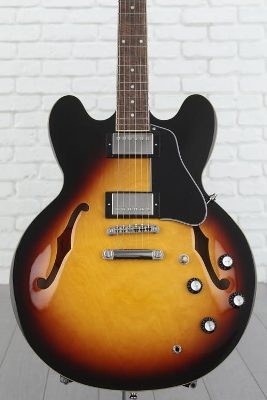
3. Epiphone ES-335
Semi-hollow guitars like this ES-335 have a distinct sound that can go from chords to leads easily. This is because they have a wood combination that gives you a broad tonal spectrum.
This Epiphone version is, by no means, an exception to that rule.
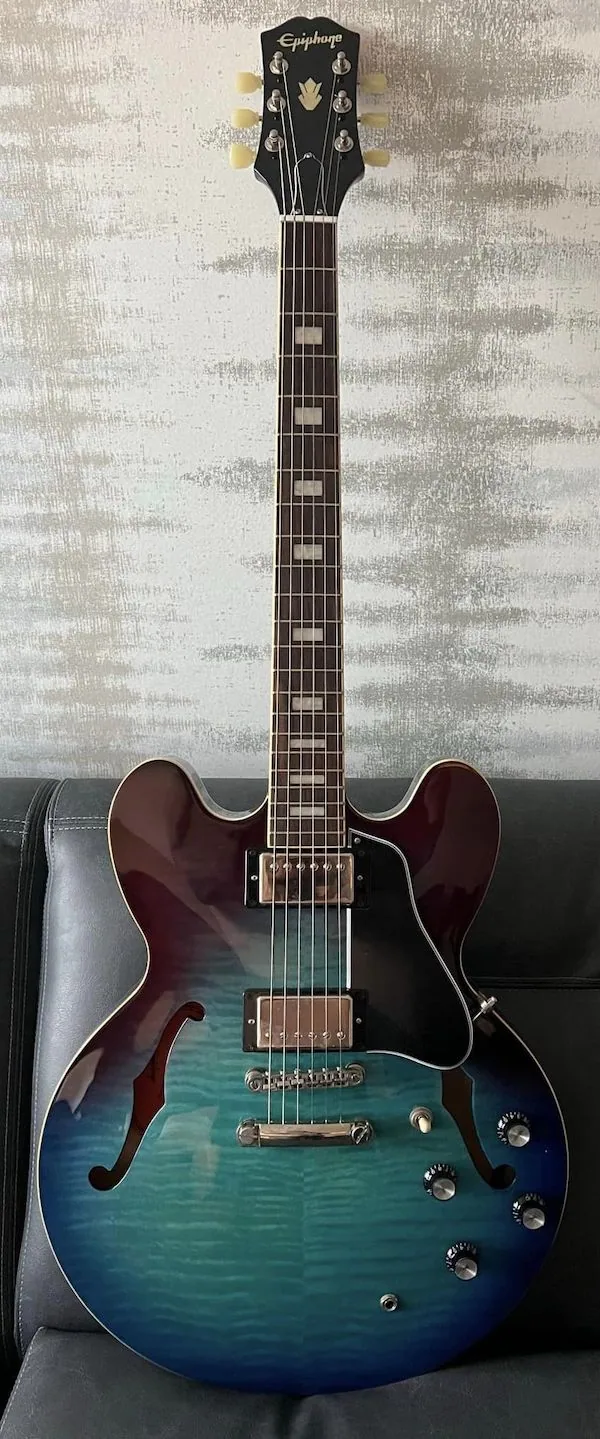
Epiphone ES-335
To begin with, the body is made of laminated maple and features a maple block inside that goes from the neck all the way to the bottom of the body. This block gives this guitar the sustain you can enjoy while playing leads or arpeggios.
Speaking of which, the 12” radius of the fretboard is perfect for chords but also leads all over the neck. This neck I’m talking about is not made of maple but of mahogany with an Indian laurel fingerboard, which gives it a sweet sound that’s perfect for intros and verses.
Furthermore, this mellow sound becomes a great asset when mixed with some delay and a subtle overdrive.
Speaking of sounds, this is the department that, to me, felt a little lacking in this guitar. Indeed, you don’t have that full, round sound you can expect from any ES guitar. Instead, the Epiphone company gave this guitar a couple of low-output pickups that tend to sound thin.
That said, if you have a nourished pedal board and know your way around boosters and overdrives, you can fix that. Moreover, swapping pickups is not an uncommon practice in the guitar world, you know?
Finally, this guitar feels, sounds, and plays like a much more expensive instrument. It will surely find a way to get into your worship sessions because it can do that modern worship sound perfectly well.
Full review: click here for our full Epiphone ES-335 review.
4. PRS SE Custom 24
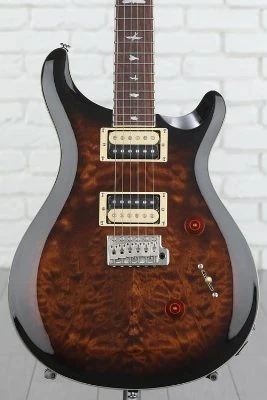
PRS is, when compared to other big names, a new player. Yes, Paul Reed Smith arrived in the guitar manufacturing world to turn it upside down and is doing a great job at it.
Although this guitar doesn’t belong to the upper-tier USA-made guitars by PRS, it’s a great demonstration of quality and performance by a great brand. Yes, all the elements we learned to love are present in this guitar for a fraction of the price.
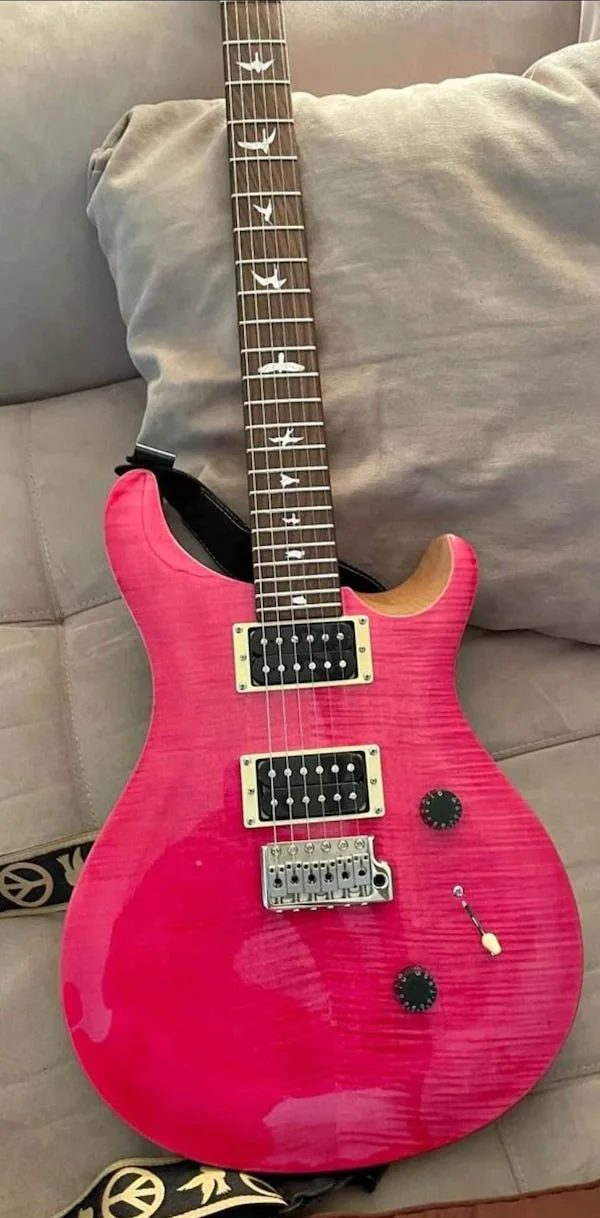
PRS SE Custom 24
OK, I’m not here to tell you this guitar sounds like a Custom 24 made in the USA. But I’m going to tell you this is a professional guitar you can walk on any stage with.
But let’s review it part by part so you can understand why I’m saying this.
To begin with, this guitar is made of mahogany with a maple veneer that looks just outstanding. Moreover, even knowing it’s a veneer, the three-dimensional quilted maple still takes your breath away.
The maple neck is a big difference from USA models and takes away some of that low-end PRS guitars are known for. Instead, it adds some midrange that’s great for solo moments and that works great with delays during those endless worship crescendos. The rosewood fingerboard adds to the overall sweetness of the sound.
Speaking of sound, the pickups PRS installed on this guitar sound great, and the push/pull split coil capabilities broaden the tonal palette a lot with very usable sounds. Indeed, as soon as you split the coils, the tremolo system and guitar shape make you look twice to see if you’re not playing a Strat.
Finally, perhaps the only drawback I see in this guitar is that the tuners won’t keep it together for even one entire song. That was kind of a bummer because this Custom 24 SE sounds great and is as comfortable as it gets.
5. Squier Classic Vibe '70s Telecaster Thinline
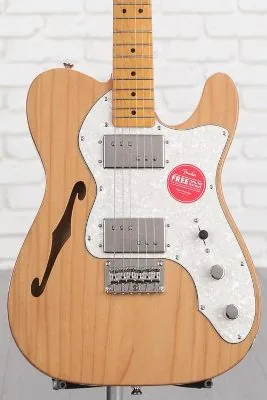
Have you ever heard the expression “the best of both worlds”? Well, this guitar embodies it. Yes, this thinline Telecaster is equipped with some of the best humbuckers in the market, called Wide Range.
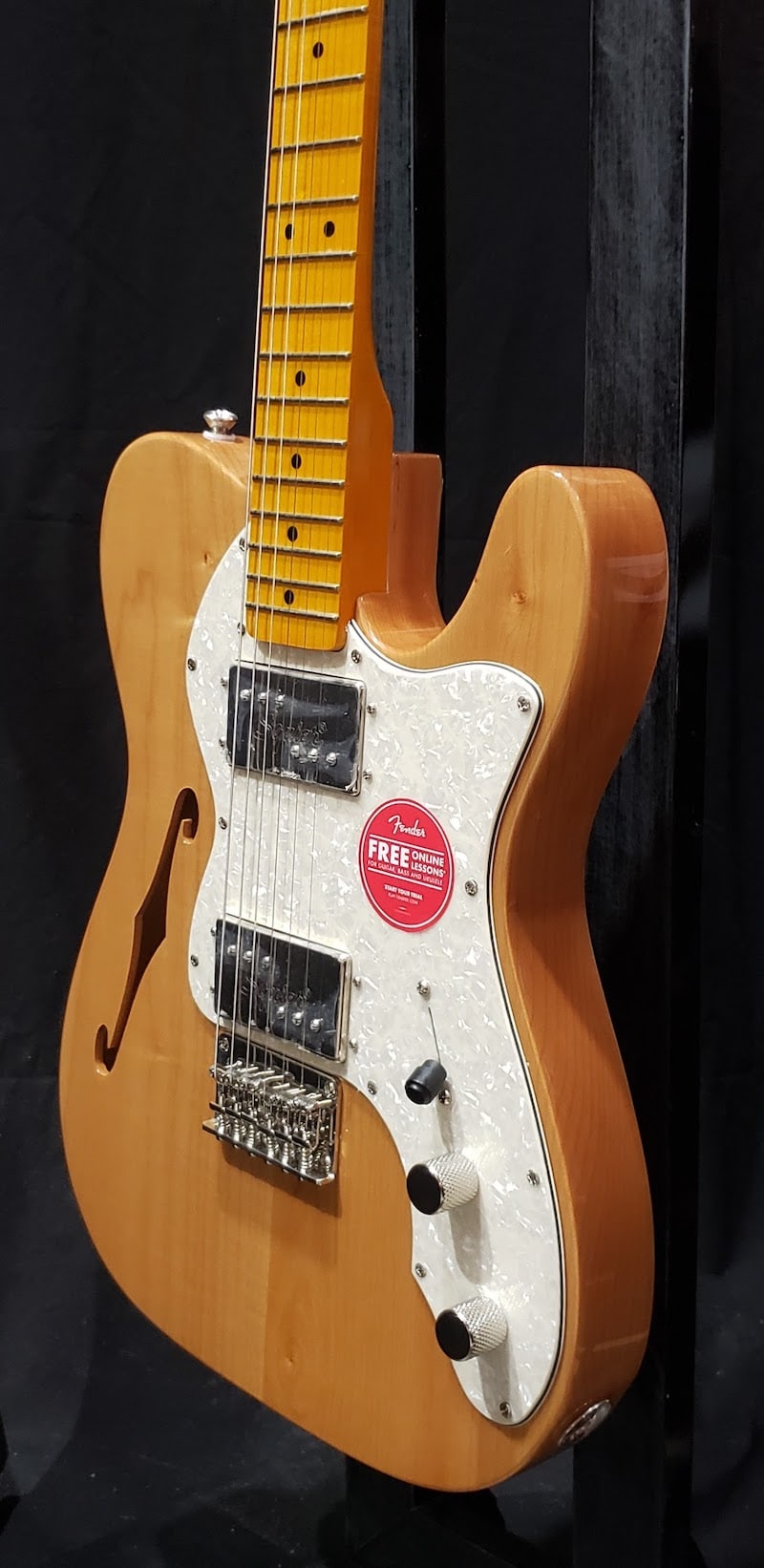
Squier Classic Vibe '70s Telecaster Thinline
The guitars that Fender debuted during the ‘70s were aimed to compete directly with Gibson. Therefore, we can find guitars like the Deluxe and Custom Telecasters with 4 knobs and humbucking pickups.
This Thinline carries on with that lineage but adds the semi-hollow character to the resulting sound. But here’s where it starts getting interesting because the guitar itself is made of soft maple with a maple neck. This translates into sharp mids and singing highs.
Coupling those frequencies with the lows coming from the semi-hollow body gives you a one-of-a-kind tone that can cover huge sonic ground. Plus, the Wide Range humbuckers are called that way because they’re supposed to amplify all the frequencies coming from the guitar (hence, wide-range; makes sense, right?).
I also loved the string-through-body design and the single-saddle-per-string bridge which makes intonation better. Speaking of which, the saddles on my guitar were completely off, which required a full setup before making it a playable guitar.
That said, the modern C-shaped neck with a 9.5” radius and tall vintage frets was a joy to play. I prefer the satin finish, especially for worship, since venues can be a little hot and the guitar can get a little too sticky to play.
Other than that, I played intros, verses, drenched-in-reverb, soaked-in-delay, distorted, clean, and overdriven tones, and my guitar was heard throughout every scenario.
This is a great do-it-all guitar for worship that can give you every tone you need.
6. Epiphone Les Paul Standard '60s
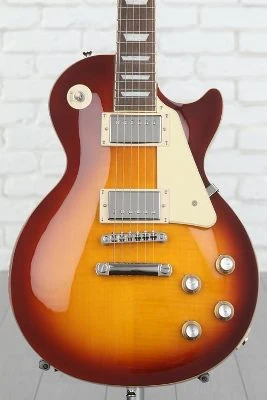
The Les Paul is a guitar that’s so iconic that it can’t go missing from this list. Yes, you have heard and seen Hillsong, Rend Collective, and Bethel Music playing them on stage many times.
But why is a Les Paul a great guitar for worship?
To begin with, this guitar offers a wide variety of tones because of its simple, yet resourceful control layout (here’s the man himself, Mr. Joe Bonamassa explaining how).
Moreover, the combination of woods, mahogany body with a maple top, mahogany neck, and Indian laurel fretboard, gives you a huge low-end with sparkling highs.
In the case of this Epiphone, it’s loaded with Alnico II pickups, which are close to old-school PAFs. This means that they don’t have an insane amount of gain, but just enough to drive the amp and stand out when you need that extra push in solos or choruses.
Also, the ‘60s slim-taper C-shaped neck gives the guitar a modern feel that’s great for playing chords, riffs, and solos. Speaking of which, with a 12” radius, you can bend to the sky and back with no problems.
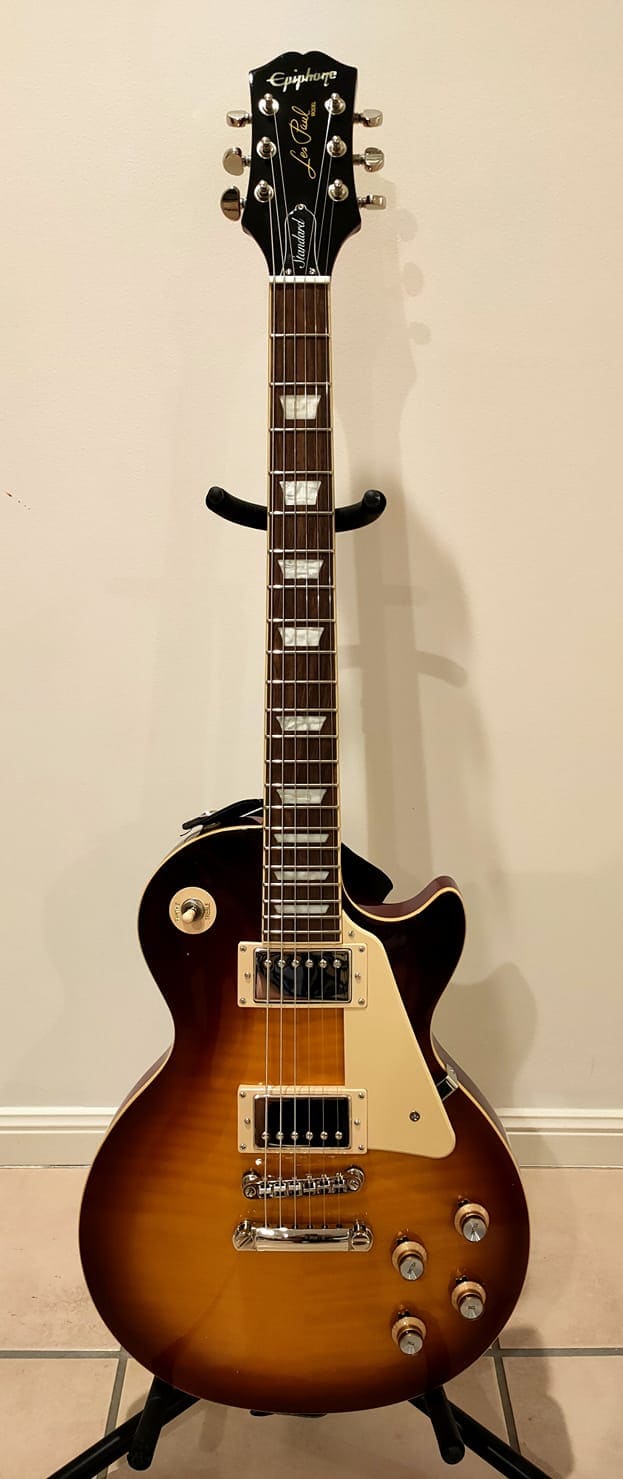
Epiphone Les Paul Standard '60s
Perhaps, the only drawback that this guitar has (and all Les Paul guitars, for that matter) is weight. Yes, the Les Paul is a heavy guitar weighing almost 9 lbs. So, if you’re going to be standing during long worship sessions, or you’re going to be leading it with this guitar, you have to be aware that you’re going to feel the guitar’s weight.
On the other hand, if you’ve been working out lately and feel fit to face the challenge, you can get a plethora of very usable worship sounds with this guitar. It’s a must-try-before-you-buy!
It’s All About Versatility
Choosing the best worship guitar is all about having a good variety of tones at your disposal. Yes, worship guitar playing is all about versatility. You have to be able to add your part to the overall feeling in the room rather than take the spotlight.
But how can you adapt to these changes during the worship session? Well, dynamics is the answer to that question.
To generate dynamics, you have to be able to go through different tones in the same instrument. These are some of the things to look for when shopping for a new guitar for worship.
- More than one pickup – To do those big swells and crescendos so common in modern worship music, you might have to go from a minimalistic to a bombastic sound within the same song. With two pickups and a tone knob, you can pull that transition off easily.
- Guitars with coil taps – Humbuckers are amazing, silent, powerful, and round pickups. That said, they don’t have the midrange and high-mid single-coil pickups have. So, having a guitar with a coil tap feature can give you two sounds in a single package.
- Comfortable control layout – To be able to pull off tonal changes on the fly, you need to have a comfortable set of controls to play with close to where your hands are. Make sure your new guitar allows for these on-the-fly adjustments (and clean up those pots and switches before every worship session!)
Building Your Core Clean Tone is a Must
We all know a worship session is all about the message. As a guitar player, you need to be the perfect accompaniment for that without getting in the way. You need to keep people focused on what’s happening without distracting them with your playing.
Therefore, you’ll be playing your guitar clean a lot. This means you have to be able to create a believable, crystal-clear, usable clean sound to be the foundation of your tone.
What does this mean when choosing your new guitar? Your guitar needs to have enough gain to sound clear and full and you need to be able to tame it before going into overdrive.
Once you have that clean tone dialed in, it’s time to have some fun adding some colors here and there.
PRO TIP: A tip I can give you after struggling with it live a lot is to stay away from P-90 pickups. They have enough bite in the midrange to bring any amp into the overdrive zone. Instead, go for single coils or humbuckers.
Delay, Your Best Ally
Are you an avid delay player? Have you got your favorite one on your board at all times? Well, delay is the one pedal that every worship guitar player needs. How so? Delay is what gives the epic frame to the playing and that allows the chords and notes to merge into crescendos.
That is exactly the kind of supporting tone the singing voices and their words need to reach further.
So, if you don’t have one, check our take on the best in the market right now and add one to your arsenal.
PRO TIP: Delays are great, but delays with a tap tempo are the ultimate onstage ally. Yes, you can just tap your tempo as the drummer is going and you’ll always be in sync with the band. Try a tap tempo delay and you’ll never look back.
Dipping Your Toes into Ambient Guitar
Having an amazing delay pedal is a must, but what about taking it further? Well, dipping your toes into ambient guitar means having some lush, washy, otherworldly effects that make your guitar tone ethereal and weightless.
Very close to the description of ambient guitar, right?
So, my suggestion is that you get a nice reverb to go with that delay. Moreover, if it has a shimmer setting, even better. Believe me, you’ll be grateful for it.
The Bottom End
Playing worship guitar isn’t about jumping on stage and showing off. On the contrary, it means a commitment to elevating the music and reaching people’s hearts without standing in the way.
For that, you need versatility, nuances, and a great tone. That’s exactly the combination you can get from all the guitars on the list.
Happy (worship) playing!
