
Grunge is a musical style born from the teenage angst that the ‘80s hair rock caused to a generation of young musicians, especially, up north in the United States.
Since its birth, Grunge has been a synonym for great songs, a rebellious attitude, and fierce live shows. All of this has always been powered by loud, distorted guitars, epic melodies, and resourceful songwriting.
If you want to join this amazing musical style with your own material, you need to get that Grunge sound going. You’re in the right place for that since this nineties-lover has tried some of the most Grunge-oriented guitars in the market to bring you the best choices available today.
Put on that flannel shirt and get on your boots because it’s Seattle time!
Top 3 - Grunge Guitars
Preview | Product | Price |
|---|---|---|
 | ||
 | ||
 |
6 Best Guitars for Grunge - My Top Picks
1. Fender Kurt Cobain Jaguar
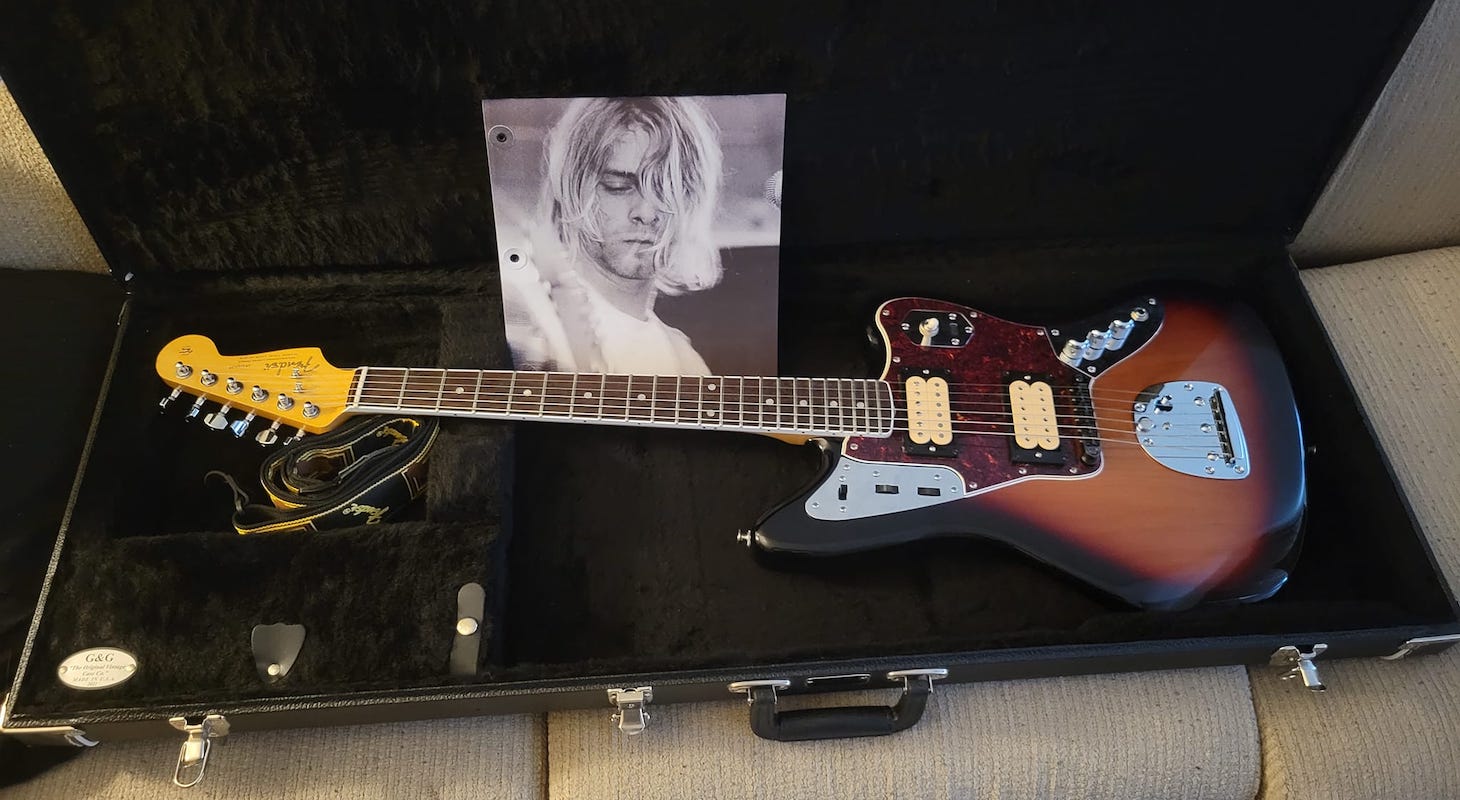
Let me tell you that I can still remember the day I opened the box containing this guitar. I was born in the early eighties; therefore, I am a massive Grunge fan and Nirvana changed my life forever.
The big Fender box had a case inside and when I opened that case, my heart stopped. That was the relic version of the Kurt Cobain Jaguar, a guitar that looks, feels, sounds, and plays like the original heavy-modified Jaguar Kurt bought in a pawn shop a long time ago.
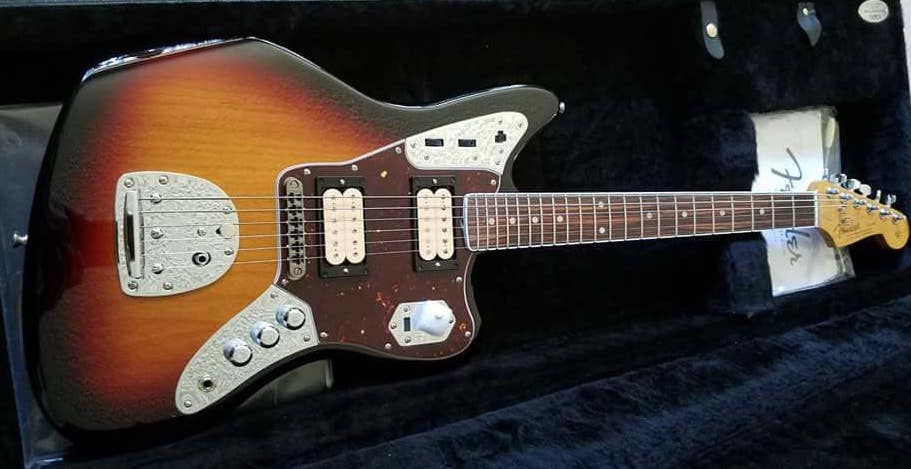
Fender Kurt Cobain Jaguar - a legendary guitar for all aspiring grunge guitarists.
Inside the case, there was also a book with pictures and the great story of this guitar. But the real surprise was when I plugged it in and played my favorite Nirvana riffs.
Believe me, the massive mid-range razor-like tones coming from the dual Dimarzio pickups mixed with the huge mass of the guitar’s body gives you the best Kurt-approved distorted tones that can fill up a stadium of screaming fans with simple, two-note chords.
In terms of playability, the Modern-C neck (with cool binding and a Stratocaster headstock) isn’t what I was expecting, though. By this, I’m referring to the 24” scale which brings the guitar closer to a traditional Jaguar or Mustang. This, for people used to Fender’s 25.5” scale seems a little odd. But, hey, Kurt liked them like that.
For fans and not fans, this guitar is the most awesome Grunge instrument made by Fender. In case you don’t have a budget for that guitar, the Squier Sonic Mustang HH (with dual humbuckers) is a great place to start too.
Further reading: my full review of the Fender Kurt Cobain Jaguar.
2. Squier Classic Vibe '60s Jazzmaster
Thanks to bands like Dinosaur Jr. or Sonic Youth (among countless others) the Grunge and Shoegaze movements found a common spot in the Jazzmaster, which grew in fame exponentially.
But that’s not all, the Jazzmaster’s rise in popularity in the past two decades was thanks to non-Grunge bands like Arctic Monkeys, Radiohead, or Coldplay.
This Squier version of this great guitar is a good way to step into the Jazzmaster world without breaking the bank. Let me tell you that, as soon as I picked up, having played the American Professional, American Ultra, and American Vintage versions of it, I was very impressed. This Squier Classic Vibe Jazzmaster looks, feels, and plays very close to its more expensive versions.
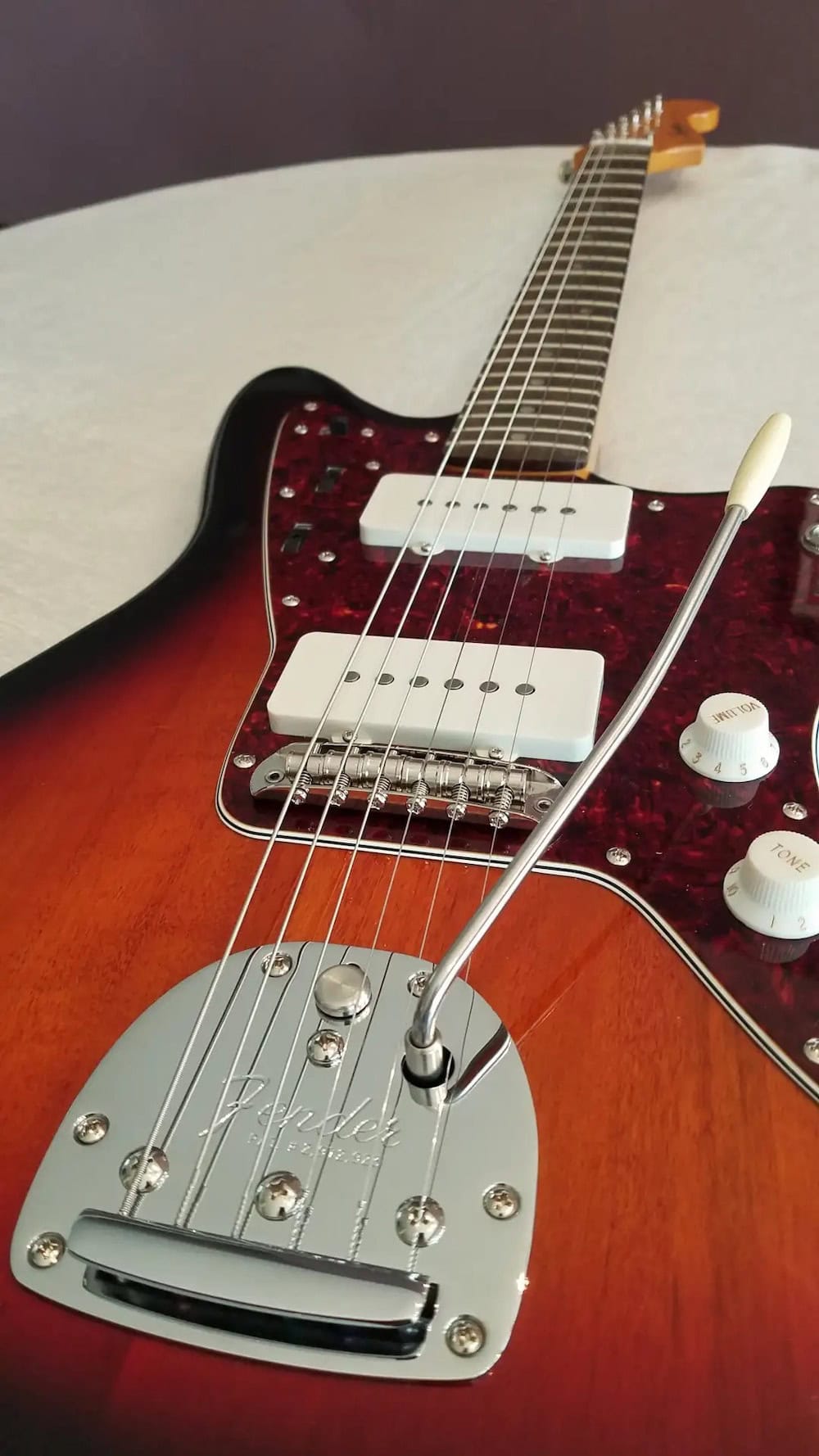
When it comes to overall quality and fit and finish, the Squier 'Classic Vibe' series definitely feels way different (in a good way) than their budget 'Sonic' and 'Affinity' lineup.
Although it has that kind of annoying high-frequency hiss you hear in most Asian-made guitars with generic pickups, they retain the bite and fierce, raw sound P-90s are famous for. Another big difference with Fender’s American models is that instead of being an alder body, it’s a poplar one burying the mids a little in the fang instead of projecting a singing tone.
Other than that, the C-shaped neck with the 25.5” scale, the Indian laurel fingerboard, and the floating tremolo feel just like the real deal and allow you to play the classic Kevin Shields pick attack as well as dig hard Sonic-Youth style.
I had quite a lot of fun playing this guitar and found it a great instrument to get into the Jazzmaster realm and explore the tones that have inspired generations. That being said, this Squier version has all the shortcomings most Squier guitars have in terms of sound and hardware.
3. Guild Surfliner
This Guild Surfliner was quite a pleasant surprise when I picked it up to test it. To begin with, if you’ve been following Guild as a brand, you’ll know that it’s been making guitars since 1953 and all models have always been closer to Gibson than Fender.
Well, this is the exception; it’s a guitar that plays, feels, and sounds very close to a Fender offset. Moreover, I tried the Standard model but also the Surfliner Deluxe which comes equipped with a tremolo system and a rosewood fingerboard with very elegant inlays. That difference between the maple fretboard and the rosewood one makes these guitar models very different sound-wise.
Although my ear and heart vibrate closer to rosewood, I have to say that the string-through-body construction and the maple neck give the Guild Surfliner a snap, twang, and round high-end that you would expect from a Telecaster. That feature combined with the LB-1 mini humbucker is a combination that can take you to fuzz territory easily while staying crisp, clear, and cutting through the mix.
Also, the resonance that the construction style brings to a poplar body is welcome to clean up the tone and bring some extra high-end to the mix.
Finally, the ability to turn on and off every pickup on its own gives you a broad palette of tones to play with including the tele-approved neck-and-bridge combination. My favorite was all three pickups on and a lot of distortion to play tunes from the Goo album, for example.
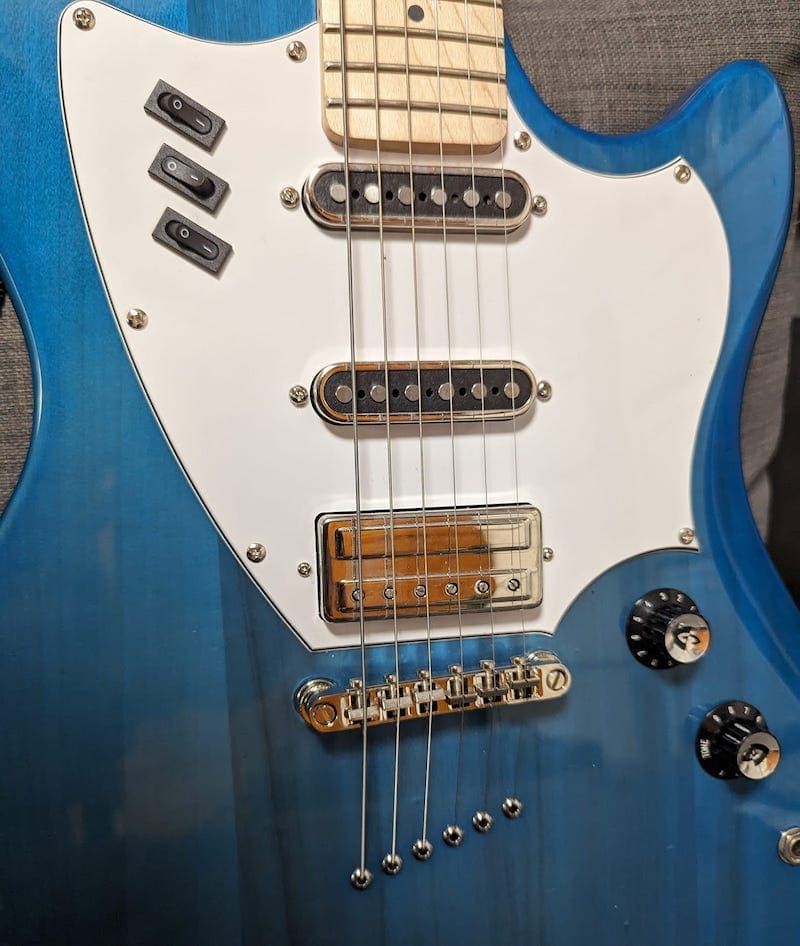
Pickups and Controls on the Guild Surfliner
4. Epiphone Les Paul Standard '60s
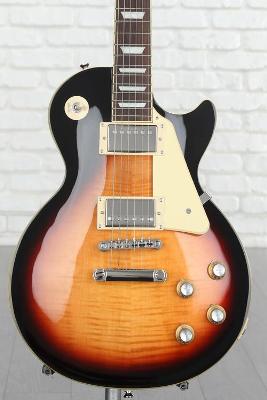
I hadn’t played an Epiphone Les Paul in quite some time being spoiled by its more expensive sibling, the Gibson ‘60s Les Paul. I have to say I was very pleasantly surprised by how much the brand has invested in closing the gap between this guitar and the real deal.
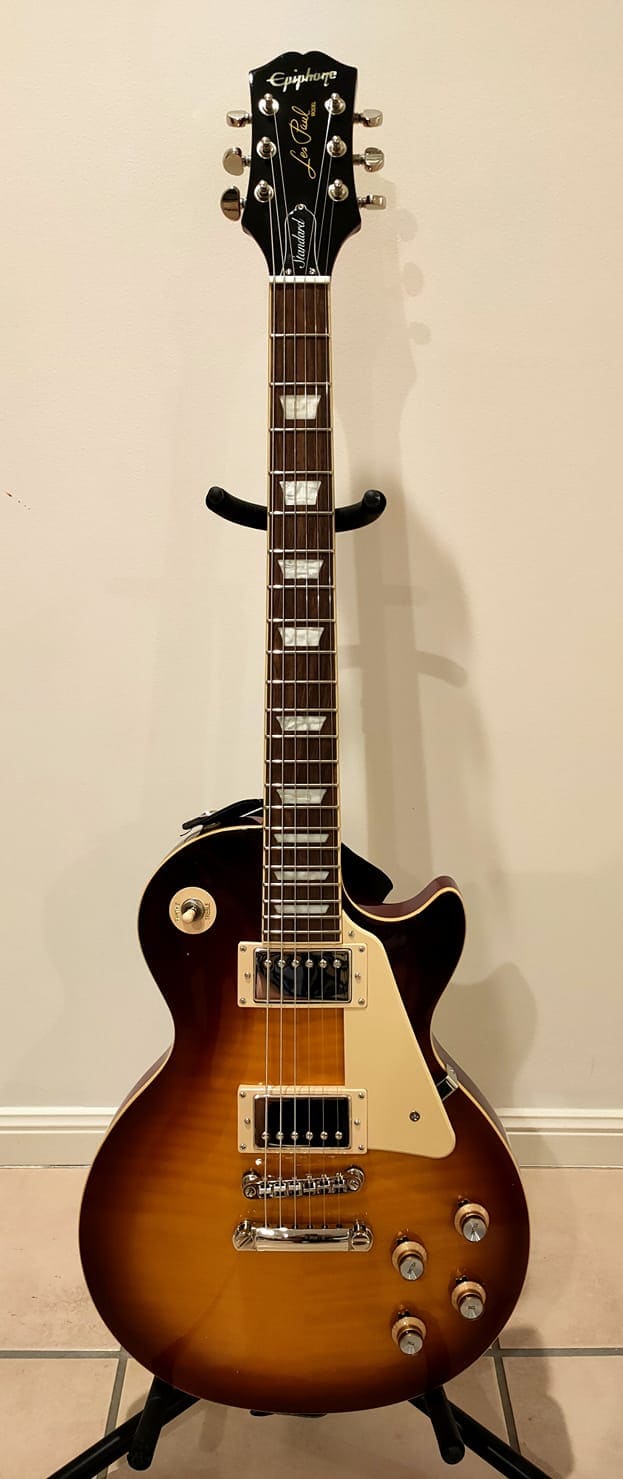
To begin with, the slim taper ‘60s neck is as comfortable as it gets. Although the thick polyurethane lacquer might be an issue if you live in a humid area, it plays and feels perfect.
Also, the mahogany body gives the guitar that low growl we all love, and the combination of the maple cap and the Indian laurel fretboard give you singing highs and sweet lead tones.
I tried mine playing songs like “Alive” by Pearl Jam and “Black Hole Sun” by Soundgarden and the guitar handled distortion and clean tones perfectly.
Moreover, the Alnico II ProBuckers the company installed in this guitar resemble that sought-after vintage PAF-style tone that can clean up nicely maintaining the notes you play clear regardless of the distortion level.
Although Epiphone cut some corners to achieve this price tag for a quality instrument, with a change of tuners and a professional setup service, you can walk on any stage with this guitar hanging from your shoulder.
Furthermore, changing pickups can make this a very, very mean power-chord machine with lead tone capabilities and timeless looks.
5. Fender Kurt Cobain Jag-Stang
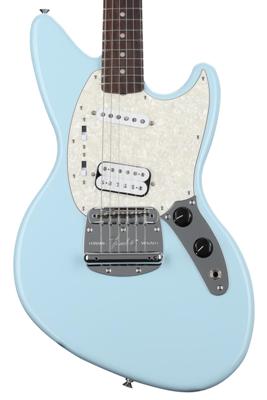
Kurt Cobain was Grunge’s number-one icon, beyond any discussion or doubt. His band, Nirvana, was the soundtrack for a generation. Cobain rose to fame playing the iconic heavy-modified Jaguar and a 1960s Fender Mustang with a Dimarzio humbucker in the bridge position.
When the company approached the artist to create his dream guitar, Kurt thought he could get the best of both worlds and came up with a unique design that he named Jag-Stang (half Jaguar, half Mustang).
Now, picking up this version of that iconic instrument feels just like home. Although I didn’t like the 24” Mustang neck, the guitar feels comfortable when you hang it from your shoulder. Yes, the pronounced “waist” looks quite odd but feels good to rest the good old beer belly on.
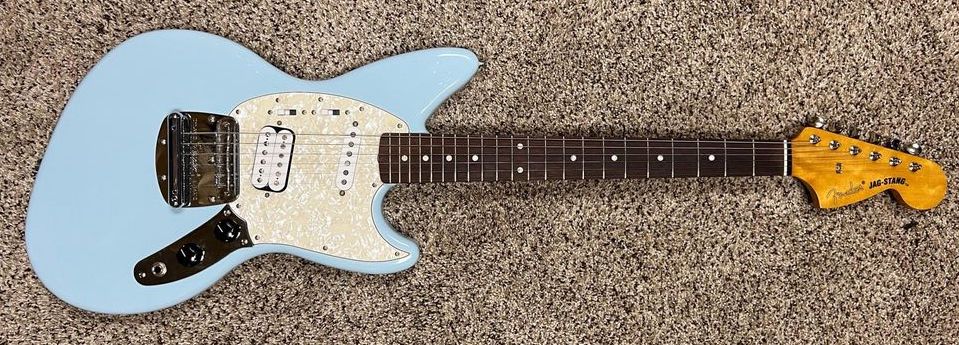
The Jag-Stang features a noteworthy waist which is ideal for big-bellied guitarists. 😛
Also, the fierce humbucker is perfect for playing some of Grunge’s most iconic songs like “Breed” or “Heart-Shaped Box”. Also, by moving the sliding switches (not suitable for changes on the fly, I’m afraid) I was able to play renditions of “Rape Me”, “Sliver” and other classics too.
Finally, let me tell you that I own a ’66 Mustang that I absolutely love, and the nuances you can get by using the tremolo system with the palm of your hand or the included whammy bar are awesome for some color here and there without taking the guitar out of tune.
For fans, this is a must-try-before-you-buy, but for the rest of the Grunge lovers in the room, don’t be afraid to give this guitar a chance, Fender did an amazing job recreating Kurt’s design and it sounds, well, very Nirvana.
6. Squier Classic Vibe '70s Stratocaster HSS
No list of the best guitars for Grunge would be complete without a Stratocaster. Yes, this guitar has accompanied players like Billy Corgan, Kurt Cobain, Mike McCready, and countless others in their Grunge adventures for decades.
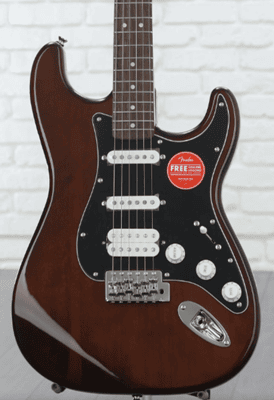
I picked this Squier Classic Vibe ‘70s Stratocaster with a humbucker in the bridge and was pleasantly surprised since the maple and Indian laurel neck plays and feels great with the C-profile.
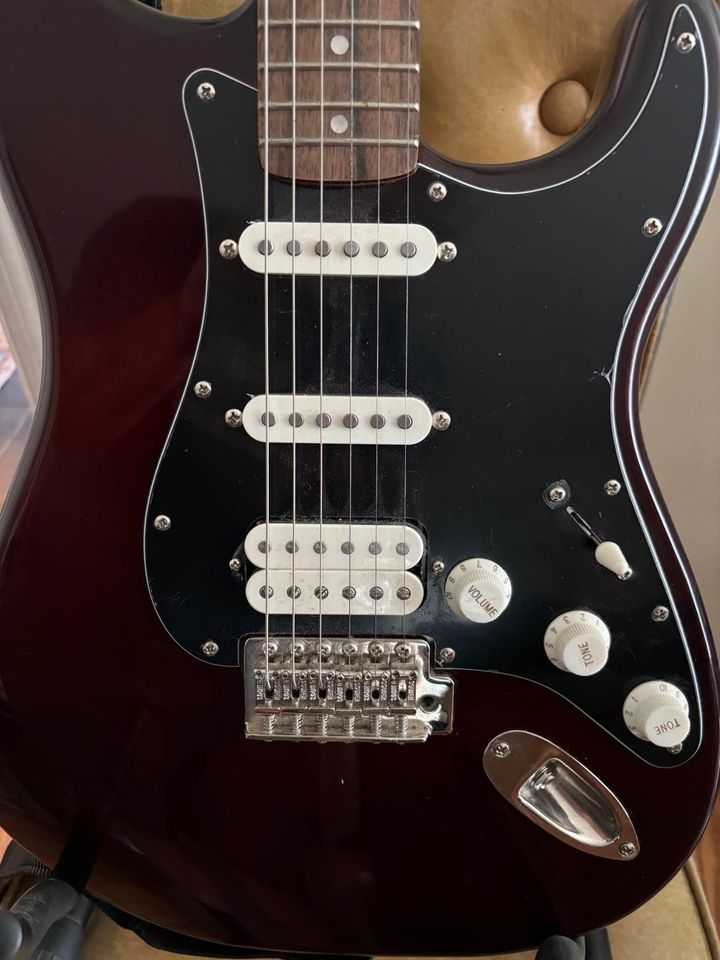
Squier Classic Vibe '70s Stratocaster - HSS Pickup Config
On the not-so-good side, the thick polyurethane lacquer of the neck might be a red card if you live in a very humid or hot area of the planet since it makes your fingers sticky.
Also, the poplar body takes away some of that high-end and beautiful chime Stratocasters are well-known for having. Yet, the poplar makes the humbucker sounds a little thicker, darker, and more menacing than if the guitar had an alder or ash body.
I played everything on it, from “1979” to “Bullet with Butterfly Wings” and it was all quite believable. It might not be as crystal-clear and musical as the American Professional or the American Ultra models, but for players on a budget, beginners, or hobbyists, it’s a great version of the Stratocaster to play power chords, barre chords, and all your favorite tunes on.
Plus, I have to say that the big headstock, the walnut color, and the white pickup covers make a great ‘70s vibe for this guitar.
Grunge Guitar Buying Guide
Let me give you an insight into the questions I made myself before choosing the right guitars for this list. This way, you will understand my choices better and be ready to make an informed decision.
Single Coils or Humbuckers?
This was the first question that came to mind because Grunge is a guitar-oriented musical style that needs heavy tones as well as clean, jangly sounds within the same tune. Therefore, here are the three best options for you:
- HSS configuration – Guitars that feature a humbucker in the bridge position and dual single-coil pickups give you the chance to clean up and darken the sound with the flick of a switch. If you’re playing in a band that requires clean and distorted tones, this is a great option.
- P-90 Love – Jazzmasters are P-90-equipped guitars (I call them soapbars, but that’s just because of the shape). These pickups sound gritty and fierce and lack the roundness of humbuckers which translates into exaggerated mid frequencies that sound rocker, dirty, and… grungy.
- Single Coils and Fuzz – When you’re playing through a fuzz pedal, you’re adding tons of gain to the signal. If you do that with a pickup that’s already very hot, the result could be losing your guitar’s voice in a muddy swamp. I made this mistake myself and remember the feeling of stepping on the fuzz for that distorted part and hearing my guitar go MIA completely. So, if you play with a fuzz, low-gain single-coil pickups could rock your world.
Bolt-on or Set Neck?
This is another important question to ask because these construction techniques are very different and divide the guitar-making world into two big groups.
In my opinion, for true Grunge-approved tones, you need to go for bolt-on necks. There’s just something about the transient and the lack of sustain that screams Grunge in all directions.
After saying that, let me tell you that, if you favor Grunge more on the rocking side (Pearl Jam, Soundgarden, Alice in Chains), set-neck guitars sound fabulous for those long, melodic solos.
Survival, a Must for a Grunge Guitar
Grunge is all about minimalism and attitude. Indeed, one of the main characteristics of Grunge is that it’s a physical musical style. If you’ve ever been to a Grunge show, you’ll know that the audience often takes the stage, there’s a lot of dancing involved, and instruments might be in the middle of that fun storm.
Therefore, another important aspect of a Grunge guitar is that it needs to withstand the hardships of those musical parties. For example, semi-hollow, hollow, and fragile guitars (Gibson-style headstocks) might not be the right choice for live Grunge shows.
Weight, Something to Bear in Mind
Since there’s so much dancing, partying, and jumping involved in playing Grunge, a lightweight guitar can be of great help. Furthermore, a guitar that can take a beating, hold its tuning, and be lightweight might just be the perfect Grunge instrument to go on tour with your friends.
The Bottom End
Grunge is all about attitude, huge guitar tones, clever hooks, and beautiful melodies. But beyond all that, Grunge is a guitar-driven musical style that proposes certain tone requirements on your instrument.
All guitars on the list above fulfill those requirements, but not all of them will win your heart. Try them, choose the one for you, and create a musical earthquake you can dance to with your friends.
Happy (Grunge) playing!

Jazzmaster pickups are not P90s. They sound nothing like P90s. You’d also have a tele or jaguar instead of a strat. The pickups are far more bitey and better for grunge. Yamaha Revstar with P90s has grunge written all over it.
Technically, you are right. Jazzmaster pickups aren’t P-90s and sound very different from them. Nevertheless, they are considered by most players as “Fender’s version” of P-90s. Furthermore, the idea behind putting them on the Jazzmaster was to be able to compete against Gibson (late 1959, early 1960). So, in a nutshell, Gibson invented them, they sound very different from the Jazzmaster pickups but, since they have the same “soapbar” shape, they’re considered to be Fender’s take on Gibson’s invention.
Both Gibson P-90 and Jazzmaster soapbars are single-coil pickups. Jazzmaster ones sound more Fender-ish with Strat-like highs and mids while traditional P-90s sound darker and with a bigger midrange oomph. Finally, you can buy a direct replacement by brands like Frahlin, for example, and swap the traditional soapbars with P-90 soapbars.
The difference is very fine but you are right. The proper way to address Jazzmaster pickups is “Jazzmaster single coils”. That being said, most of us call them P-90s because they’re very different from all other Fender single-coil pickups (both in shape and sound) which usually causes confusion. Even more when you think about the Jaguar having almost the same shape and circuit as the Jazzmaster with different pickups (traditional-looking single-coils).
Another big difference is that P-90s usually use Alnico II magnets while Jazzmasters use Alnico V magnets.
https://youtu.be/1OKKy68FFNQ?si=8hQtN08DjsjB-fwt&t=356 (this is a video talking about how Fender made the Soapbar pickups in the Jazzmaster warmer on purpose to compete against Gibson)
https://www.youtube.com/watch?v=1i-k265PDRY&ab_channel=AudiomoMusic (This is a comparison video so you can hear both pickups)
Thanks for the mansplaining. You taught me everything I already knew. Btw, as your description bore out, the distinction is not fine. Anyone who knows anything about Jazzmaster doesn’t call them P90s. Countless reviews are at pains to make that point. Ultimately, the point was that Jazzmaster and Strats were the least suitable for grunge. Jaguar, teles and P90s, like the ones found in Revstar are infinitely more suitable.