
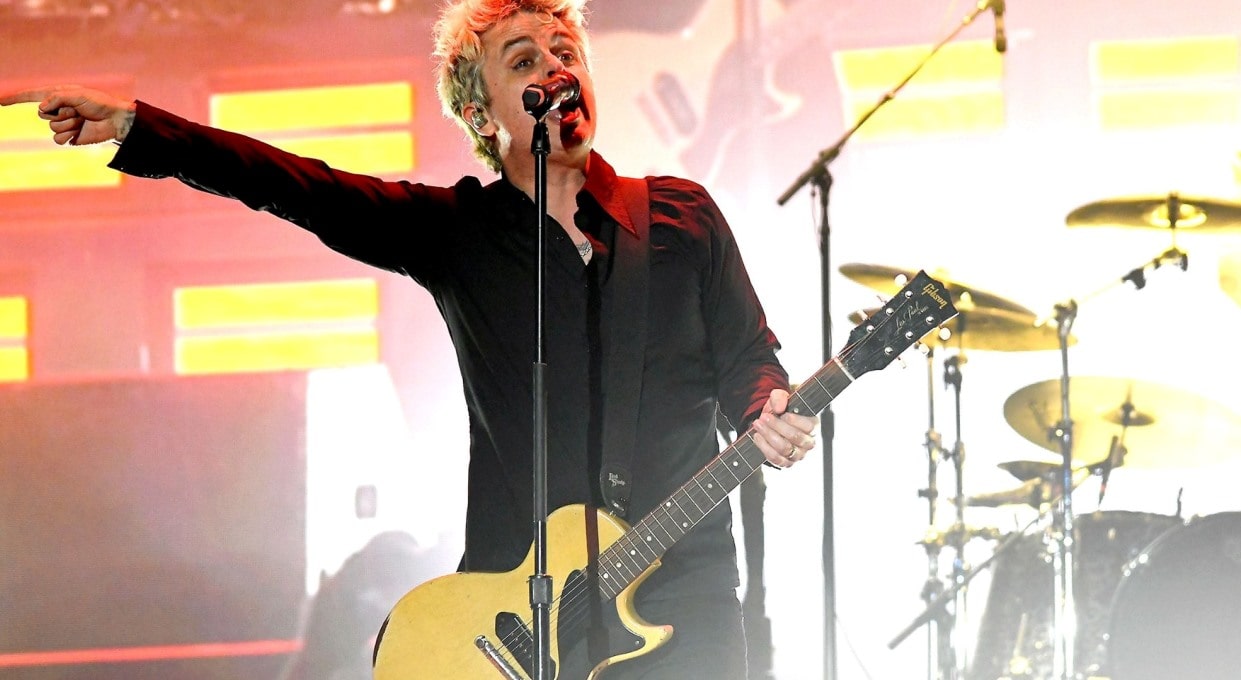
Let me begin this article by saying that you can play punk on anything. The core, quintessential philosophy of this musical style is absolute freedom. Yes, punks aren't supposed to care about what they should do but do what they want to do.
When it comes to choosing a guitar to let your spirit loose, though, you’ll find out there are a million choices that claim to be the “ultimate punk rock guitar”.
I’ve been playing the guitar for almost three decades and much of that time was well spent jumping on and off the stage in punk clubs. So, I know that the punk rock spirit you’re trying to let loose needs no obstacles to reach the sweaty, fun, jumping audience in front of you.
Top 3 - Punk Rock Guitars
Preview | Product | Price |
|---|---|---|
 | ||
 | ||
 |
This is my list of 6 guitars that can help you rebel with your friends and have endless fun playing punk and enjoying being alive.
6 Best Guitars for Punk Rock
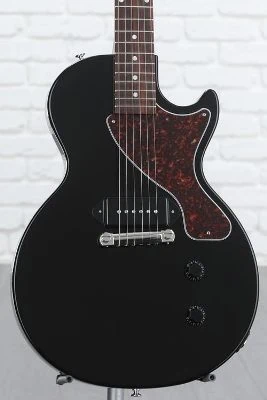
1. Gibson Les Paul Jr.
Update: the Billie Joe Armstrong signature version of this guitar is mostly out of stock these days, both the Gibson model and its Epiphone counterpart. The standard LP Jr. is readily available.
Chances are, if you’re here, you already know who Billie Joe Armstrong is. In case you don’t, he’s the singer, songwriter, guitar player, and frontman of one of punk rock’s most successful bands: Green Day.
Although Billie Joe broke into the mainstream playing a pastel light blue Fernandes Stratocaster (nicknamed ‘Blue’), he switched over to Les Paul Jrs. a while ago and has never looked back since (except he still mostly plays Strat-style guitars with a bridge humbucker while playing older stuff from Dookie etc.).
Now, this is a special guitar right out of the box. Yes, to begin with, it comes inside a furious pink Gibson chainsaw case with an animal print interior which is outrageous, to say the least.
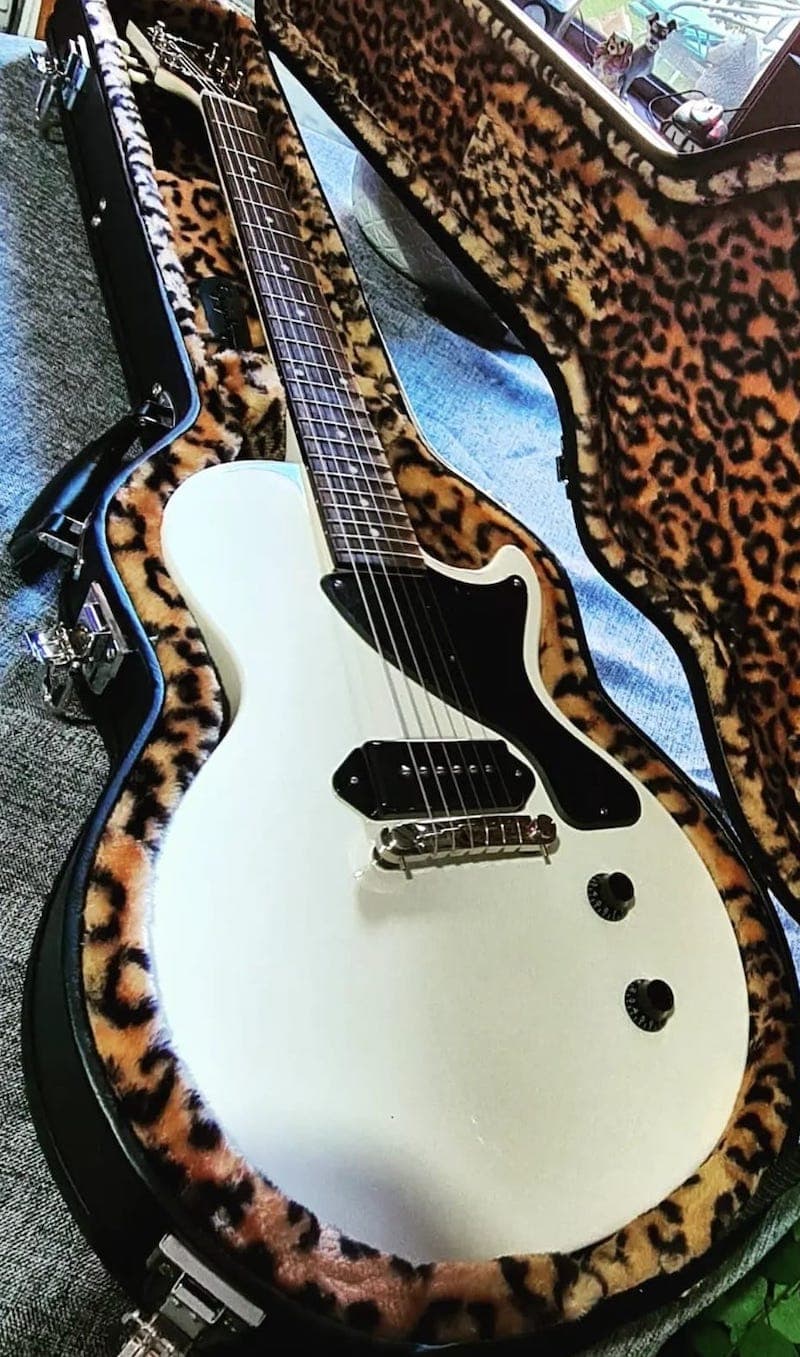
Gibson Les Paul Jr. Billie Joe Armstrong Signature Guitar
Beyond the case, the first thing that hits you when you pick up the guitar (mine was classic white) is that the neck isn’t what you would expect from a Les Paul Jr. Billie Joe’s model sports a thinner, faster neck than a classic ‘50s Les Paul Jr. does.
Another big difference is that the DC dogear P-90 is completely hum-free. This is not a minor detail when you’re applying obnoxious levels of distortion to your guitar on stage.
Speaking of which, perhaps the only thing I didn’t like about this guitar was the pickup. It doesn’t feel as ferocious and raw as a P-90 in a Gibson Jr. guitar should. I mean, comparing it to my ’68 SG Jr. it felt lacking in that pornographic midrange you get when striking an open chord.
On the other hand, the slab of mahogany Gibson used for this guitar retains a very generous low-end that can help you make power chords sound bigger than life.
If your budget isn’t big enough to fit this guitar, there’s a cheaper Epiphone version available too, and guess what, yes, it comes with a hardshell case with an animal print interior.
Check this Epiphone promo video for some inspiration.
The Best Amp & Pedals for this Guitar
Everything that has a P-90 in it screams for a Marshall amp to get a distorted, punk-friendly tone. So, depending on your budget and the size of the gigs you play, here are some options.
- MG30GFX - A great starting point.
- DSL40CR - A great, valve-driven option to go from bedroom to stage.
- DSL100HR - A great-sounding 100-watt head that won’t break the bank and is great to play mid-sized venues.
- JCM800 2203X - The best option for the pro or semi-pro musician and the backbone of punk for decades. Playing with a P-90, you should pair it with a MXR M75 Super Badass Distortion Pedal to get that chunky rhythm tone.
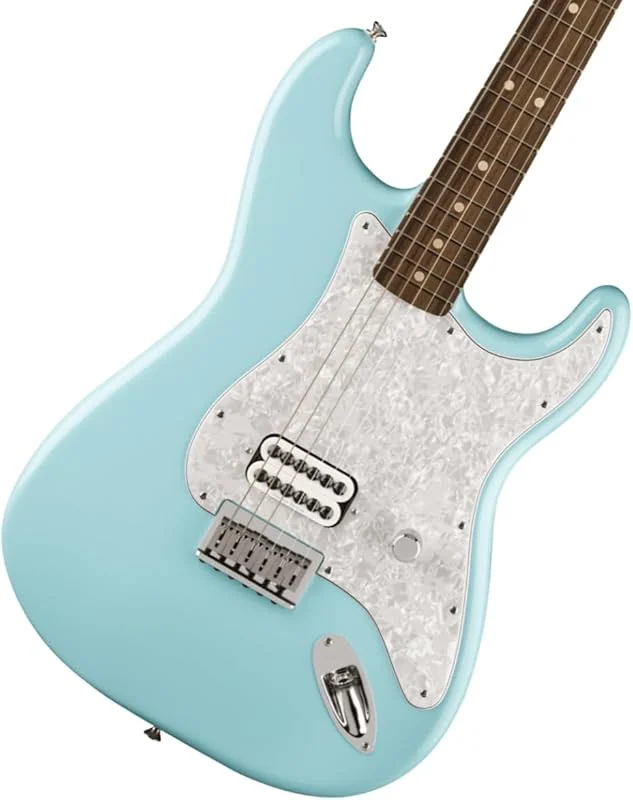
2. Fender Tom DeLonge Stratocaster
Tom DeLonge, Travis Scott, and Mark Hoppus made punk rock history. I don’t know if you’re old enough, but I was around when these three took over MTV and the airwaves for years. Well, after that came the breakup and now they’re back in full steam to bring their punk rock magic to the world again.
The Stratocaster Tom put out is made in Mexico and sports a super powerful Seymour Duncan Invader that takes no prisoners and can drive any amp into full-on distortion. That, coupled with the single volume knob (with treble bleed) makes this a very versatile guitar.
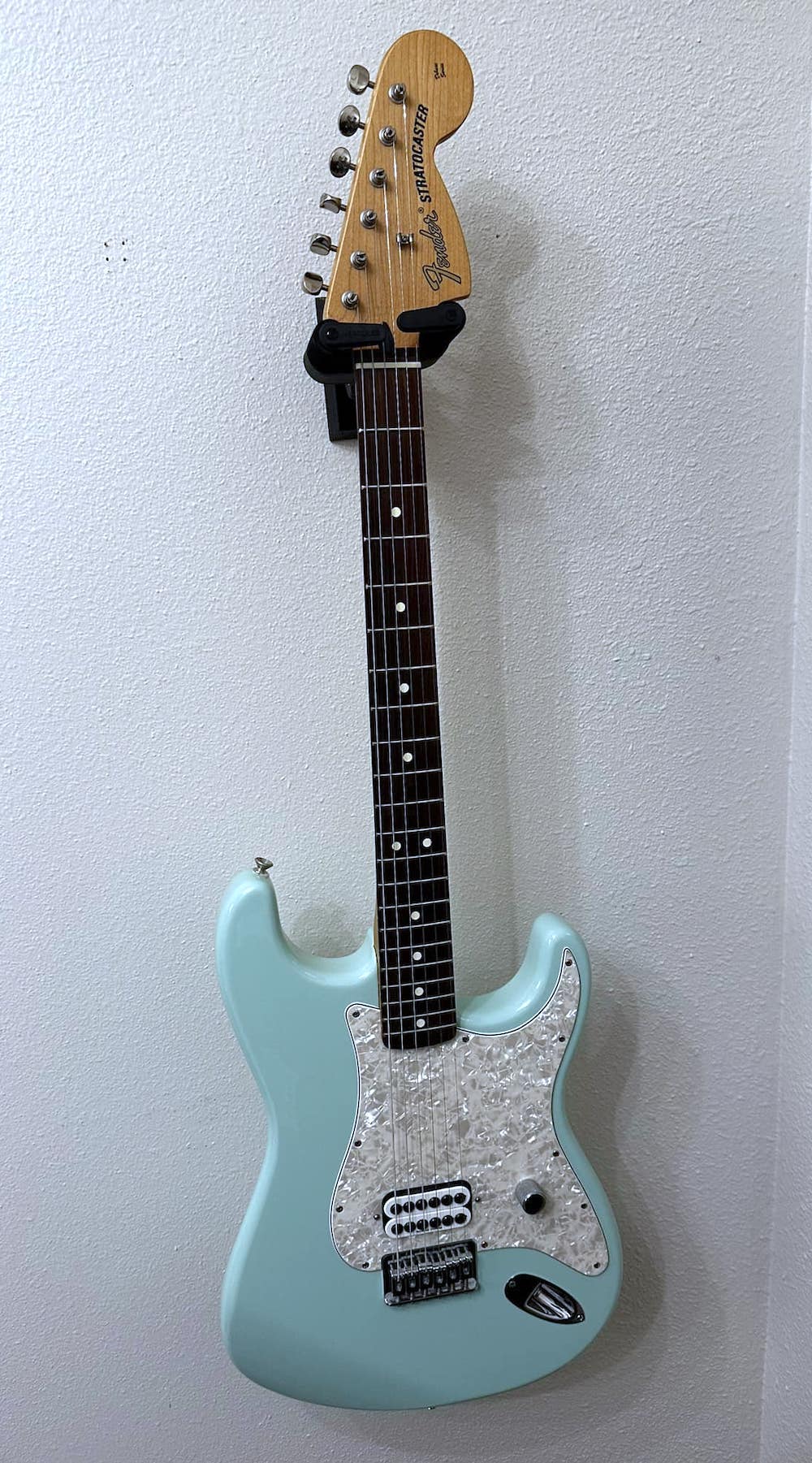
Fender Tom DeLonge Stratocaster
Yes, I played “What’s My Age Again” with this guitar and all I had to do was roll the volume knob to go from verse to chorus. The circuit maintains the treble of your tone so you’re just rolling off gain.
The C-shaped neck is made of maple (of course) and Fender, surprisingly, threw in a slab rosewood fretboard with a comfy but not extreme 9.5” radius and 21 medium-jumbo frets. Needless to say it’s enough to play your favorite punk tunes and then some.
Furthermore, the string-through-body hardtail design combined with the Alder body gives it a Tele vibe as you play it and the vibrations of the body add to the guitar’s powerful but treble-oriented sound.
Perhaps, the only thing I wish it had were the locking tuners that Fender put on the Indonesian-made Starcaster Tom DeLonge signature model. Other than that (which is in any case not an expensive aftermarket upgrade), this is the perfect instrument to play any song in Blink’s catalog and most modern punk with that California-made poppy flavor.
This guitar sounds round, powerful, and defined with edge and generous high-end. It’s nothing like the P-90 specimens on this list. So, if you’re after that sound, and this guitar fits your budget, go try one out.
The Best Amp & Pedals for this Guitar
Mesa-Boogie was the reigning guitar amp sound in the late ‘90s and early 00’s when bands like Blink, Offspring, and Sum 41 took over the scene. So, this guitar begs for that high-gain, punchy, round tone. Here are some ways to get it:
- Boss Katana-50 Gen 3 - The Boss KAtana in its high-gain setting does a great Rectifier tone.
- Bugera 333XL Infinium 120-watt - This budget version of the Rectifier even comes with the same knobs and some chrome-plated metal in the front grill. Oh, and it sounds great.
- Mesa/Boogie Rectifier Badlander 100 - This is the real deal, if you have the budget and the room, nothing will sound as big and accurate. For smaller venues and budgets, the combo Mesa/Boogie Rectifier Badlander 25-watt 1x12 and the head Mesa/Boogie Rectifier Badlander 25 are terrific options as well.
- Universal Audio Knuckles '92 - This pedal by Universal Audio in its CA30 speaker setting gets very close to the real deal. The only catch here is going straight to the PA.
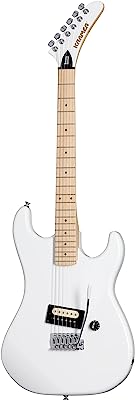
3. Kramer Baretta Special
The Baretta Special, I have to say, is the gem on this list. Truly, you must believe me in this; you won’t get this much guitar for the money in any other brand.
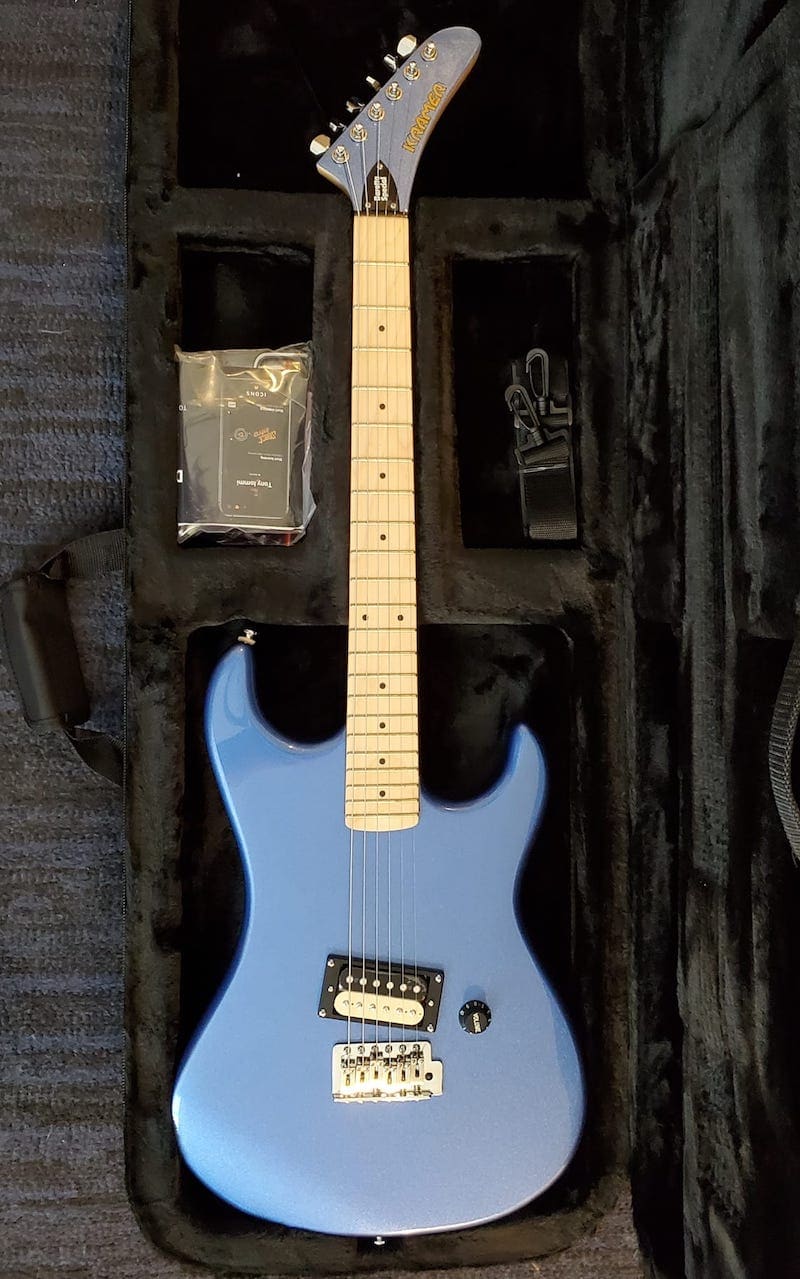
Kramer Baretta Special
Yes, I know what you’re thinking, and I thought the same thing before picking one up “Dude, doesn’t it look like an ‘80s hair metal guitar?”
Well, it surely does, but let me tell you that the no-frills approach to this guitar’s construction is rival to none when it’s time to play punk rock. Plus, since when does punk rock have any rules for instrument choosing? If you don’t like the plain color, just put a million stickers on it and make it your own.
I mean, I tried to make this guitar fail but couldn’t make it. I tried playing everything from Ramones to The Clash to Misfits, and it sounded great across the board. Moreover, the mahogany body and maple neck are a monster combination for low-end and midrange that can help you cut through any mix.
Perhaps, the only thing I should mention is that it really needs a tuner upgrade because it kept falling out of tune. Other than that, this is a serious, no-frills punk machine ready to take over the world with an almost ridiculous price tag attached.
Feel free to read my complete Baretta Special review for more details.
The Best Amp & Pedals for this Guitar
With a maple fingerboard, you need something that can help you tame those high-mids and give the guitar a little more growl. Here are some cool options:
- Orange O Tone 40 - A bass-oriented, rugged amp, best when coupled with a Fulltone OCD.
- EVH 5150 Iconic Series 15 - The 5150 is the most-common amp to find in a punk gig; this is a great affordable version.
- EVH 5150 Iconic Series EL34 40 - The same high-gain idea with a little more power for a club gig.
- EVH 5150 Iconic Series 80, EVH 5150III 50-watt, and EVH 5150III 1x12 - Any of these two heads and combo are great to have that chugging sound with the Baretta.
4. Squier Sonic Stratocaster
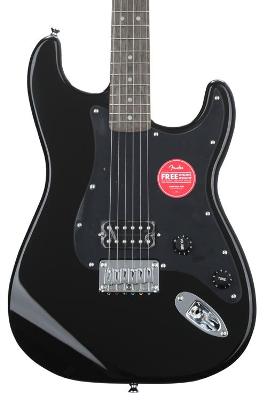
The Stratocaster is, for many guitar players, the ultimate guitar shape. Although it was created seven decades ago, it is still the go-to choice for many players.
Perhaps, the most recognizable punk rockers with Strats are Billie Joe Armstrong (with his classic heavily-modded light blue model) and Tom DeLonge (Blink 182) and his single-humbucker Strat (which I discussed above).
Following that long heritage of Punk demi-gods playing strats, this Squier guitar is the perfect low-budget punk rock machine sporting a single humbucker in the bridge position, a volume and a tone knob, and a hardtail Strat bridge. This translates into the kind of simplicity that punk rock demands.
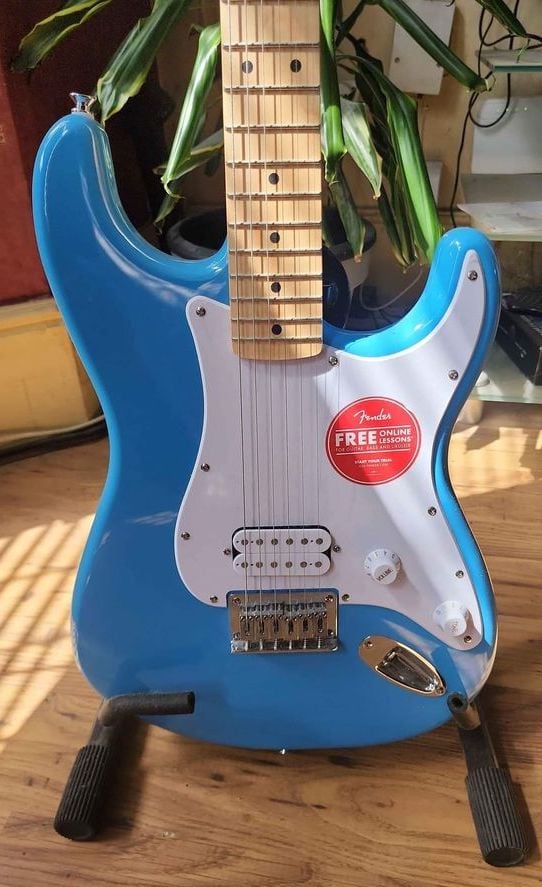
Right away, when you plug it in, you hear the laurel fingerboard pretending to be rosewood and adding mellowness to the sound and the maple from the neck adding some brightness and bite.
On the not-so-good side, the poplar body drowns that midrange into a muddiness that translates into the resulting sound. Yet, by adding a ceramic-magnet humbucker, the company gave this guitar enough gain and power to cut through the mix and make an entire audience scream, dance, shout, and jump into the mosh pit.
Finally, and this is my refined ears of playing high-end instruments for years, I could hear an annoying super-high top-end that tends to be infuriating when coupled with heavy distortion and a loud amp. The fact that the hardtail bridge is not string-through-body, but top-load doesn’t help either.
If your budget is higher, and you want to get rid of that top-end squeal, you can get Jim Root’s Stratocaster that’s more powerful, menacing, and always rock-ready.
The Best Amp & Pedals for this Guitar
I think the best brand to pair with an entry-level guitar like this is Blackstar. This brand offers a wide range of amps that help you go from digital to tubes and from bedroom to stadium. Here are some great examples:
- Blackstar Debut 50R 1x12 - This is a great amp to go from bedroom to stage, with 1x12 and 50 watts it can do it all. For more power, the Blackstar Debut 100R 2x12 is another great option.
- Blackstar HT Stage 60 112 MkII - This is another great option for an outstanding valve-driven sound that won’t break the bank.
- Blackstar HT Stage 100 MKIII - Do you want to play with a head and cab configuration? This is a great option.
- Blackstar Dept. 10 AMPED 3 - Floorboard amplifiers aren’t everyone’s cup of tea (or beer brand, talking about punk) but this is perfect for fly gigs, small venues, and crowded stages.
5. Epiphone Coronet
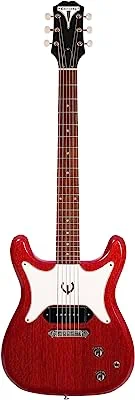
Although not many people know this, Epiphone was one of Gibson’s main competitors until it was purchased by the guitar-making giant. Later, as you know, Gibson started using the Epiphone name and logo to put out Asian-made, cheaper versions of their models.
Yet, some Epiphone models from the early days have survived and were reissued by Epiphone. Perhaps, the best-known is the Beatles-approved Casino, but also the Coronet. You can see it being played by bands like The Hives, The Libertines, and the Arctic Monkeys.
Well, the moment I picked up this guitar I felt I was holding a punk rock machine because it feels the way it should when you’re playing this musical style: you have to really dig in to get the raunchy, dirty sound you need from it.
Indeed, this is a no-frills all-mahogany guitar that’s the perfect cross between a Les Paul Jr. and an SG Jr. Yet, it sounds wilder, rawer than those guitars because the body is different, smaller.
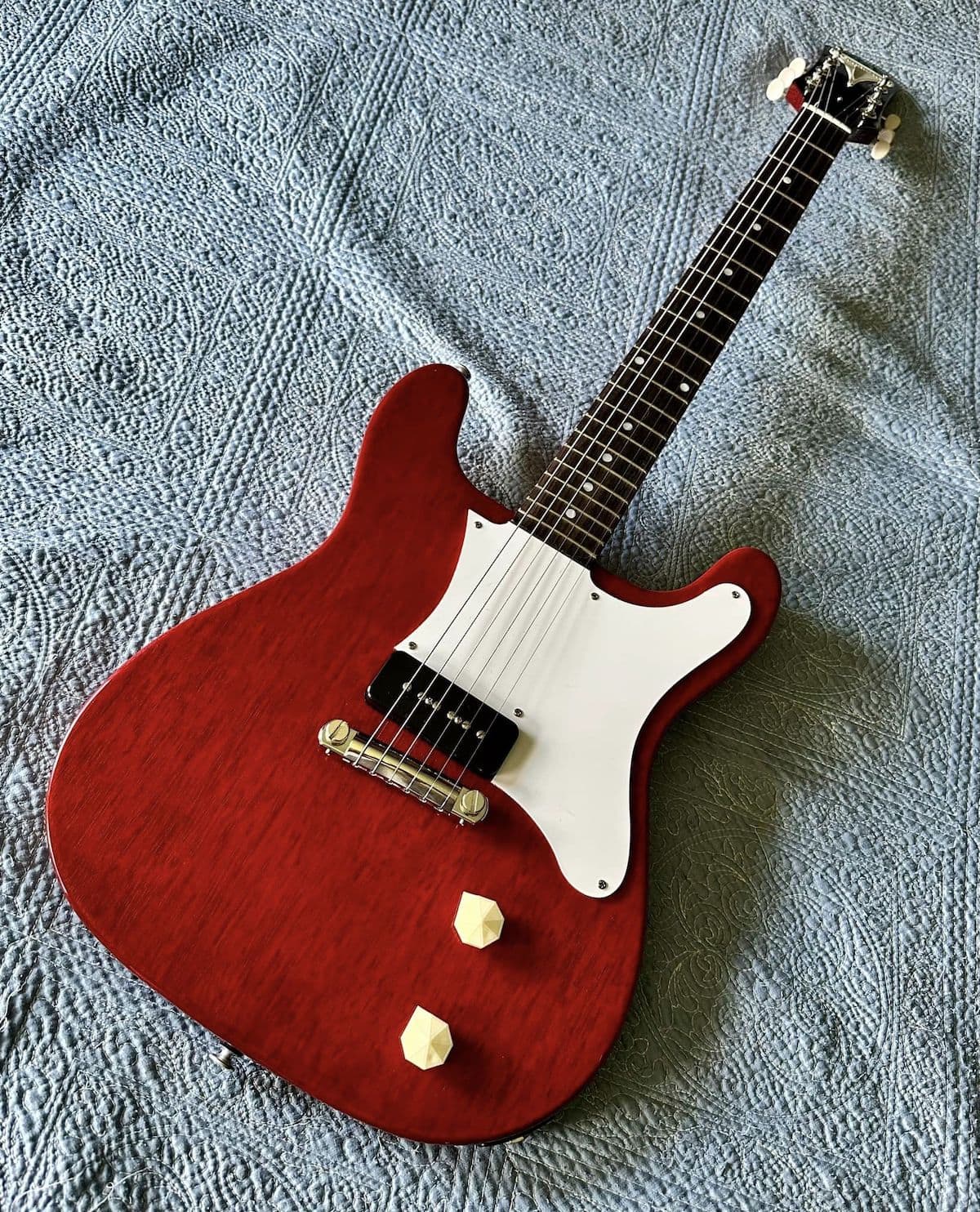
Epiphone Coronet - a truly no-frills guitar!
Moreover, this new version has some upgrades like the compensated wraparound bridge, the high-quality CTS pots, and the PRO P-90, a hotter version of the classic dogear.
Speaking of upgrades and welcome modifications, the 12” radius, modern “C” shaped neck is great for playing the night away effortlessly.
If you’re looking for an affordable punk rock machine that can put up night after night of heavy playing in sweaty rooms, this guitar is a must-try before you buy. If you need a guitar that can generate varied tones and nuances, you might need to look somewhere else.
The Best Amp & Pedals for this Guitar
Some people might be tempted to think that punk comes from the USA, but there’s a long heritage of UK punk bands that helped change the world for decades. This guitar goes perfectly well with this British amp brand.
- Laney LX35R - For the solid-state punk warriors out there, this 35-watter is perfect to get your punk chops going. If you want something more, the Laney LX65R and the Laney LX120RT are perfect upscaled versions of that tone.
- Laney Black Country Customs Ironheart IRT30-112 - With 30 watts of valve-driven power, this amp is perfect for small to medium-sized gigs. The Laney Black Country Customs Ironheart IRT60H is another perfect choice for medium to large-sized venues.
- Laney Ironheart Foundry Dualtop - This 60-watt head is perfect for those who want to play with a head and cab configuration and a solid-state sound.
- Laney Ironheart Martin Miller Loudpedal - Everything on your pedalboard? Well, sure, this amp-in-a-box can do it all with loud and mean punk tones.
6. Gretsch G5191 Tim Armstrong Signature (Rancid)
If you ever heard Rancid live, you’ll know they’re halfway between rockabilly and punk rock. I remember the first time I heard “Time Bomb” I thought I didn’t know what category to put this band in. Is Tim Armstrong closer to Brian Setzer or to Johnny Ramone?
With time and hearing all their records (plus seeing them live more than once) I understood Rancid is a great punk rock band.
This signature guitar is also a righteous punk rock machine capable of some very interesting tones.
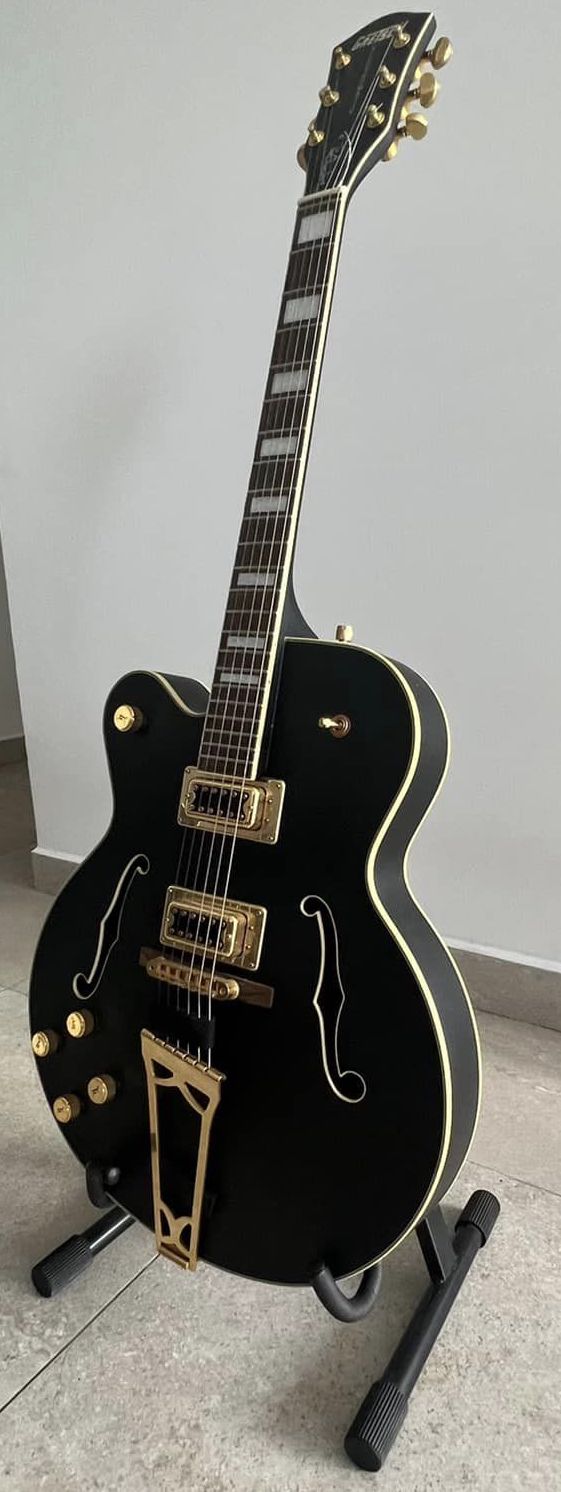
Gretsch G5191
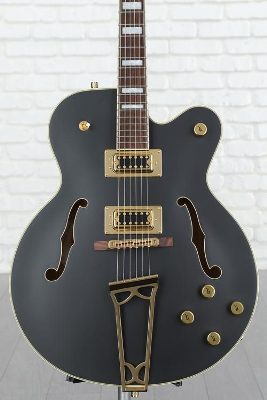
To begin with, the first thing that struck me was that Gretsch didn’t make any effort to stop feedback on such a huge hollow-body guitar. Yet, the Black Top Filter’trons can handle heavy distortion without howling in return. Believe me, I played my favorite punk rock classics from “Rockaway Beach'' to “Don’t Call Me White” and it all sounded great.
Perhaps, the only thing that was a setback for me is that it really is a big guitar that demands players to be big enough to play it and move around with it on stage.
Finally, the secret to the guitar’s impeccable high-end, great midrange and well-defined tones is the fact that it’s entirely made of laminated maple and sports a maple neck with a 12.5” radius rosewood fingerboard. No, I didn’t see that coming either, but the maple neck really does make a big difference.
The Best Amp & Pedals for this Guitar
The tones that fueled the backline of brands like Rancid and others using semi-hollow and hollow guitars is that of a souped-up Marshall. More specifically, the JCM900, Marshall’s iconic ‘90s amp. Here are some options to get that tone:
- Marshall Code 50 1x12 - This very capable digital amp by Marshall does a believable 900 that couples great with this guitar. For more power and options, the Boss Katana Artist Gen 3 also does it very well.
- Marshall JCM900 4100 - If you have the budget and the room, the real deal can’t be beat. For smaller gigs and budgets, the Marshall Studio 900 sounds very believable too.
- Strymon Iridium - For those willing to go with a floor amp, the Iridium sounds killer. You can add the Marshall JCM900 Overdrive/Distortion Pedal for more distorted pleasure.
In Punk Rock, Less is More
When playing punk rock, less is more. Believe me, I had this conversation with many of my guitar-playing friends who love Robert Fripp, progressive metal, and jazz. Punk Rock can’t be measured with the same standards you measure other musical styles. Plus, it’s hard to create simple, catchy melodies using only a handful of power chords.
Furthermore, when I challenged them to come up with something that would make crowds dance and scream with only a few power chords, they failed dramatically.
This same philosophy is applied to punk rock-oriented guitars that tend to have one pickup and a couple of knobs. This is not because punk rockers can’t play other stuff, but it’s because of a choice, a way of life, and a commitment to simplicity in all its forms.
In punk rock, less is more (except for hairspray on your mohawk, of course)
It’s Not Minimalism, It’s Rawness
If you haven’t already, I encourage you to do it. Playing a guitar with a single P-90 pickup requires more of your picking hand and creativity than any other kind of guitar. Yes, the P-90 is a pickup that sounds halfway between a humbucker and a single coil.
On one hand, it retains the single-coil definition and edge that has made guitars like the Telecaster, Stratocaster, and Melody Maker so famous.
On the other hand, the extra winding on the pickup brings some low-end to the equation making the tone of the guitar come alive and occupy a bigger sonic space in the mix.
This quality is what early rock and roll and punk rock feed on; the rawness, the wildness, the grit, the edge; it’s all part of the punk rock sound.
To achieve that tone, you need to let go of the fancy, round sounds a traditional Les Paul would give you, for example.
Punk Rock is not about minimalism (sorry Mary Kondo), but it’s about rawness and attitude.
Durability, a Major Concern
Another major aspect of guitars that have fewer electronics is that fewer things can go wrong. Indeed, bands that play packed clubs with sweaty fans climbing on stage, dancing, jumping, and creating that beautiful mayhem punk rock is all about, need instruments that can take the beating night after night.
Therefore, if your guitar only has one pickup and a couple of knobs, your sweat won’t rust any fancy electronics and nothing you don’t need will get in your way.
Durability is also a major concern among Punk Rock musicians and, very often, the guitar of choice represents that.
Here’s a great video example showing Punk Rock royalty, Stephen Egerton, the guitar player of The Descendents talking about why he took away all the knobs and switches from his guitar.
Let’s Talk Pickups
We already covered pickups a bit but it’s time we do it in-depth.
Single Coils and Punk Rock
Single-coil guitars aren’t usually found on punk rock stages because they aren’t as good at handling distortion as other pickups are.
Moreover, the glassy quality they’re best known for can be an obstacle to finding the punk rock tone. Finally, they tend to feed back a lot too.
P-90s and Punk Rock
P-90s and punk rock are a match made in heaven. Yes, these pickups can give you the nasty edge, raunchy tone, dirt, and grit you need while keeping the chords clear and concise.
There are countless examples, but, perhaps, Mike Ness from Social Distortion is the clearest one.
Humbuckers and Punk Rock
Humbuckers are the go-to pickups for many punk rock players going for a more modern sound than that of the raw, ‘70s-oriented punk rock.
This is because humbuckers can drive an amp easier, sound rounder, and tend to feedback less because of the hum-cancellation properties of their construction.
PRO TIP: If you don’t know what pickups to choose for your guitar, they are a rather cheap tone experiment. Pick the guitar you love and experiment with different pickups to find your tone. Oh, and a special mention to mini humbuckers, the lost link between the P-90 and the humbucker.
Let’s Talk Tonewoods
Tonewoods are the most defining element of any guitar and its tone. Let’s take a look at what they can do for you.
- Mahogany – Mahogany is a heavy type of wood capable of some serious low-end. It’s usually found in bodies and necks and will give your guitar a heavy growl.
- Maple – Maple is, to say it somehow, mahogany’s counterweight. Yes, the snap, high-end, chainsaw-like midrange, and edge come from maple even on Les Pauls. A personal piece of advice: don’t shy out of maple necks; they’re killer.
- Alder – Alder is a very common tonewood for Strat-like bodies because it’s balanced between lows and highs and provides musical mids.
- Rosewood – Rosewood is one of the scarcest, most expensive tonewoods in the world. It is mainly used for fretboards and adds sweetness to the sound of any instrument. You can find alternative-wood replacements in entry-level models such as laurel and pau ferro.
The Bottom End
Punk Rock is 100% attitude. The guitar of choice for your sonic adventures needs to withstand the beating of the party mood punk rock can generate in an audience. Be inspired by minimalism and engage the inner child in you; it’s time to have some power chord fun.
Happy (raw and audacious) playing!
