
Overdrive is a wonderful thing that has been around since way before the Stratocaster was invented by Leonidas Fender. That said, when it was released, it became the perfect companion for that raunchy, slightly dirty, and revolutionary guitar sound.
What happens when you put these two legends together? Well, you’re close to making history.
Top 3 - Strat-friendly Overdrives
Preview | Product | Price |
|---|---|---|
 | ||
 | ||
 |
I worked long hours to buy my Strat and went through many different overdrive pedals until I found the magic combo that makes my guitar sound exactly as I dreamed. Then I lost it and bought another pedal and became fulfilled again, until I lost it again.
That’s how I ended up with these four overdrive pedals that I just can’t live without.
If you’re a Strat guy or girl, these pedals will surely breathe new life into your instrument.
Let’s go!
4 Best Overdrive Pedals for Stratocasters
1. Tube Screamer
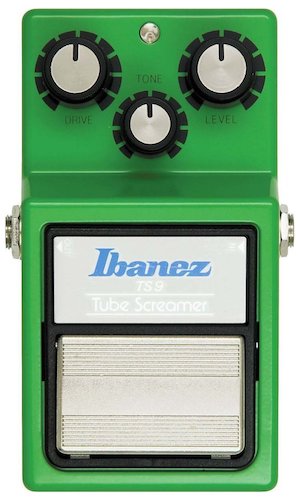
Talking about Stratocasters and Tube Screamers is like talking about peanut butter and jelly. They just get along perfectly well. I bought my first TS-9 close to 15 years ago at Manny’s, and the moment I dialed the gain to zero, the volume at noon, and the tone at eleven o’clock, the sound coming out of my Stratocaster just became a dream come true.
This is especially true if you’re a midrange lover like me. I mean, if you play a lot with positions 2, 3, and 4, the Tube Screamer will add just that little hair of dirt you need to make your guitar pierce through the mix, being clean and articulate but with a beautiful bump in the mids.
In my case, the TS-9 is my always-on overdrive pedal. This means I play through it the entire show instead of using it for boosts or distortion. However, here’s the trick: I have two Tube Screamers on my board, a TS-9 and a TS-808.
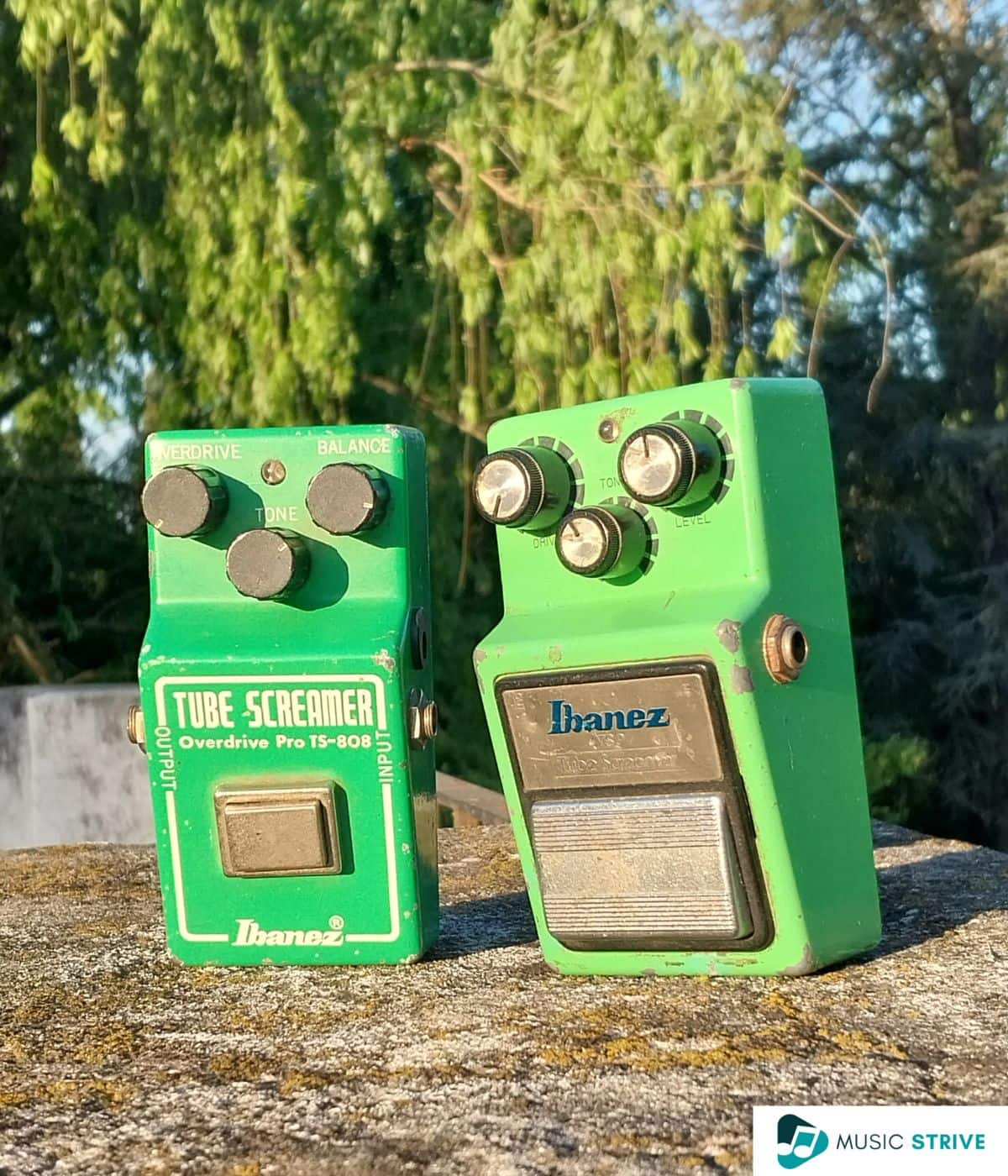
My Ibanez Tube Screamers - TS-9 and TS-808.
The 808 has a different flavor; it’s spicier, gainier, and works perfectly as a boost or a second layer of dirt that can help me propel the guitar forward without adding any distortion. You can think of something like Eric Johnson, but with rubber fingers (lol).
My settings for the 808 are volume at 3 o’clock, gain at 9 o’clock, and tone at 2 o'clock. Whenever I step on it, it’s like unleashing a clean hell that bolts my guitar to the front of the band. Plus, it works great on positions 1 and 5 for that bluesy, rocky, edgy tone.
If the midrange is your thing, this pedal will be your best friend.
2. Blues Driver
I was in love with my TS-9 and happily putting it in front of every amp I could find with great results. That was, of course, until I plugged it in front of a Vox AC-30. I mean, the AC line has a big mid honk that some of us call the spirit of rock and roll. Maybe you know a band by the name The Beatles, who played these all the way to stardom?
Well, the moment I heard an AC-30, I fell in love with it. Yet, the moment I put my pedalboard between the amp and the Stratocaster, everything became boxy, unimpressive, and lacking bottom end. Yes, the pedal that made everything better was just making everything worse!
On a friend’s advice, I went back to Manny’s (it’s four blocks away from my house; it’s a curse and a blessing) and came home with a Boss Blues Driver.
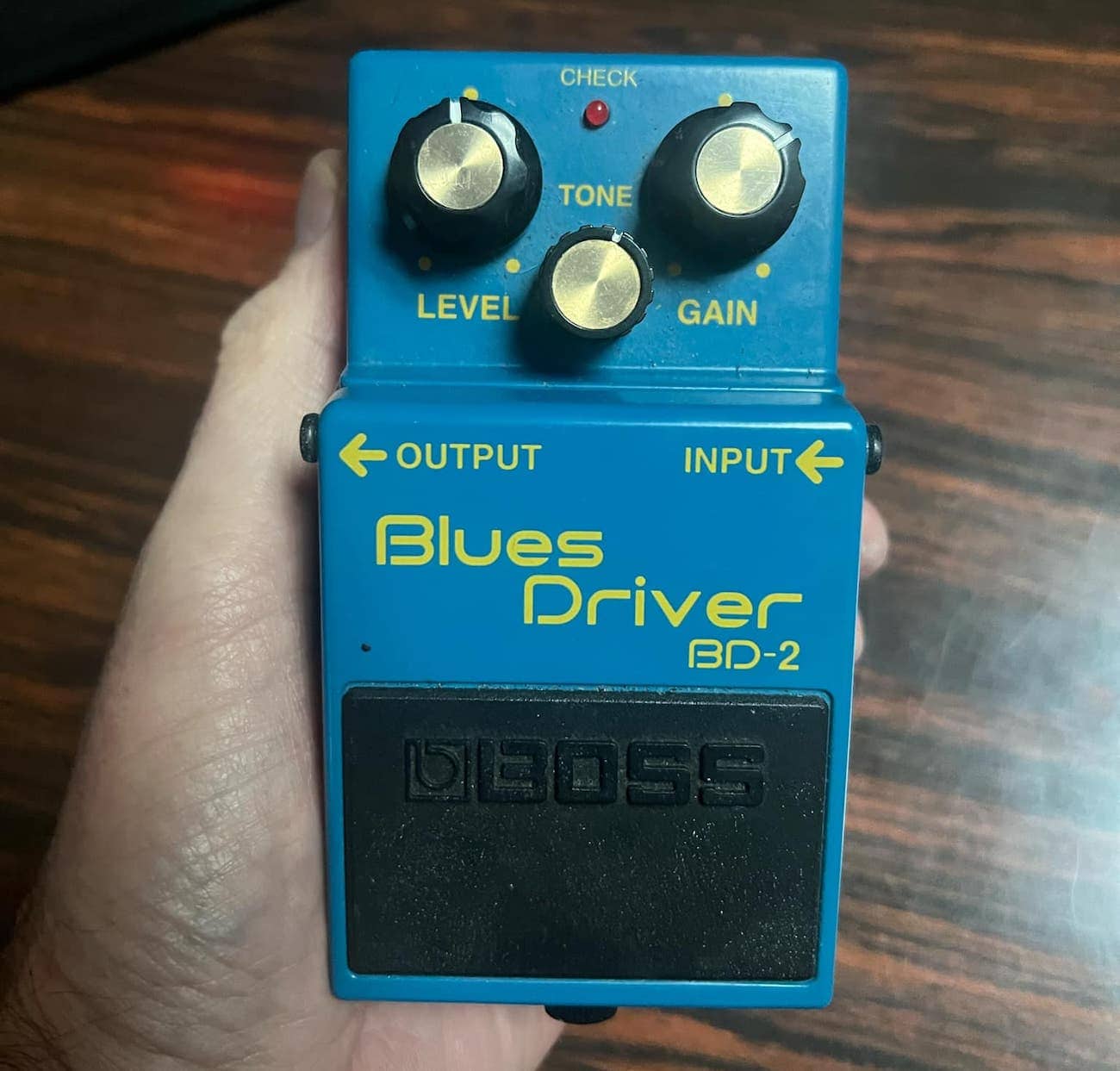
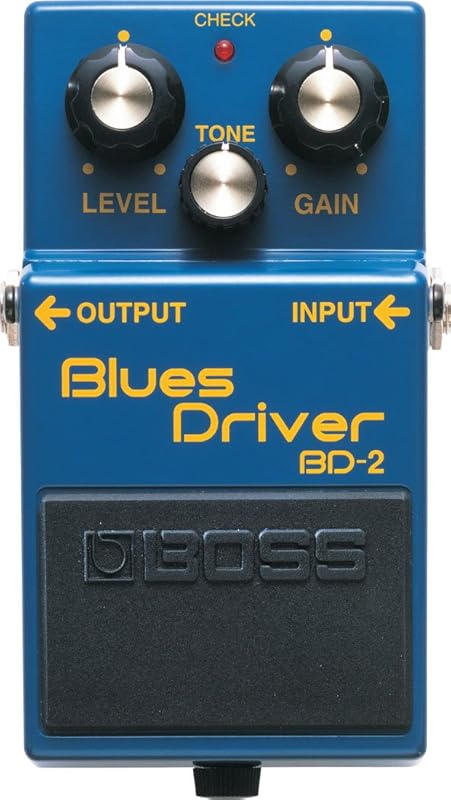
BOSS BD-2 Blues Driver
This pedal has more juice available in the gain knob, but also has a flatter EQ curve, retaining more of the lows and the highs. That’s exactly what I needed to complement my newfound love for British amps.
I use it for sessions mostly, so values change depending on the artist and the amp, but it’s mostly the tone back a bit from noon, volume at 9 o’clock, and gain at 8 o’clock. That, mixed with positions 2, 3, and 4, will get you in Blues heaven. If I want to push it harder, then the gain knob goes up, and I can rip it with positions 1 and 5.
If you want a hair of dirt (or a lot of it) and play British amps with powerful mids a lot, give the BD-2 a try.
3. Fulltone OCD
The Fulltone OCD (Obsessive Compulsive Drive) came into my life as I was looking for an all-in-one solution. I played in three cover bands and needed my pedalboard to be as small as it could possibly be. I’m talking before Neurals and Kempers took over the scene. Not even the Helix sounded decent back then.
Beyond the controversy between digital and analog, the OCD is a superb pedal that can do it all and then some.
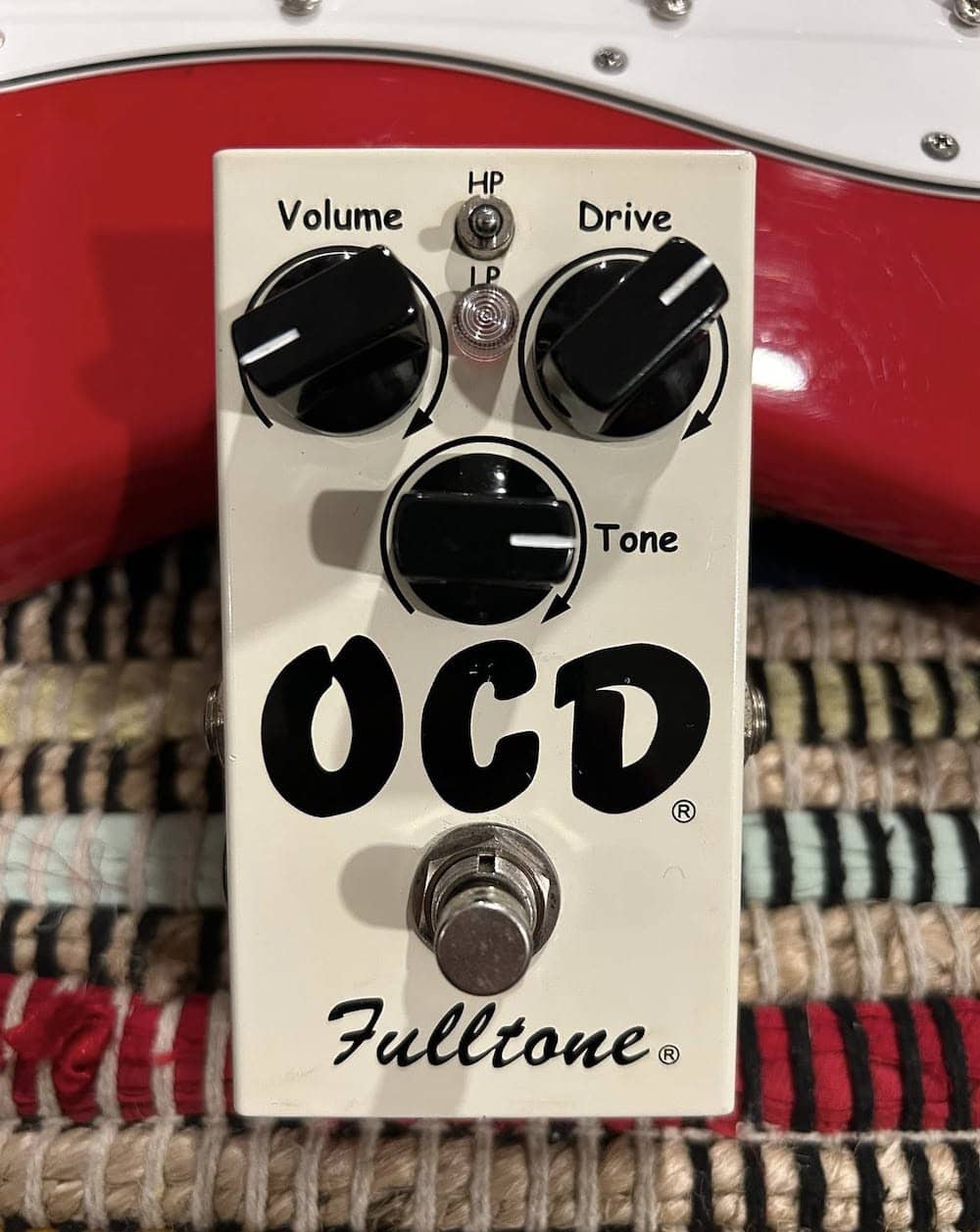
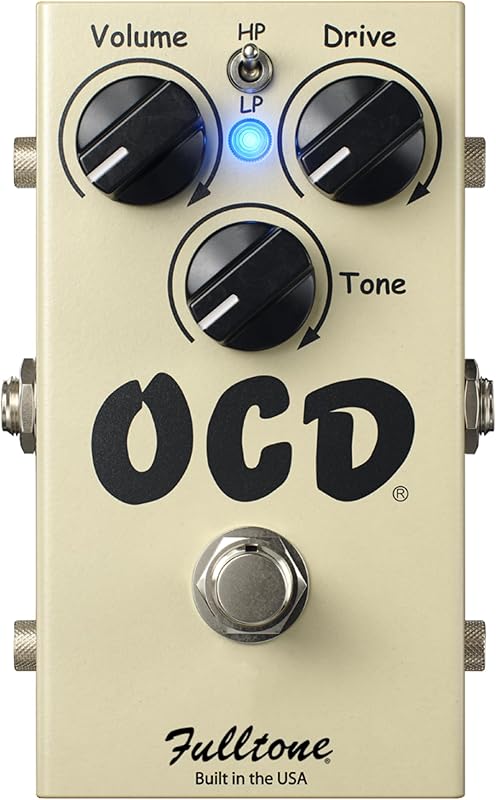
Fulltone OCD
To begin with, the LP and HP modes are very different and can do the Tube Screamer and Blues Screamer thing. The HP stands for high-peak and talks about the midrange peak. The LP is more transparent in the vein of the Blues Driver.
Did you think that was all? Well, no, it is not. Another great thing about the OCD is that it can do a very good, rocking, aggressive, distorted tone. Moreover, it gets along perfectly well with my Tube Screamer (in the LP mode, of course). Hence, I ended up having a pedalboard with just a tuner, a TS-9, the OCD, a Strymon FLINT, and a Carbon Copy delay.
With that, I played 5 shows a week, covering all the tones I needed, sporting just my Stratocaster. Believe me, the OCD can go from clean to distorted and everything in between with just the gain knob.
I have to thank my Manny’s salesman for this one because it was his suggestion. I never thought a single pedal could cover as much territory, but it does. If you’re going to have just one, this might (or should) be it.
4. J. Rockett Archer
Let me start this by saying that I had the urge to buy this pedal after I purchased my first Custom Shop Fender guitar (here's my experience with it). Have you ever felt that a guitar sounds so amazing that you don’t want anything to change that at all? Well, that’s what the Custom Shop is for me: Utter perfection.
I went back to Manny’s, my favorite music store in the world, and the salesman who knows my sonic adventures was also flabbergasted by my new Strat and how it sounded. It’s a ’62 reissue with a rosewood fingerboard and three FAT50 pickups. It sounds absolutely gorgeous. I told him I needed something that wouldn’t modify the sound but could add dirt to the signal. He went out and brought back a small pedal, the J. Rockett Archer.
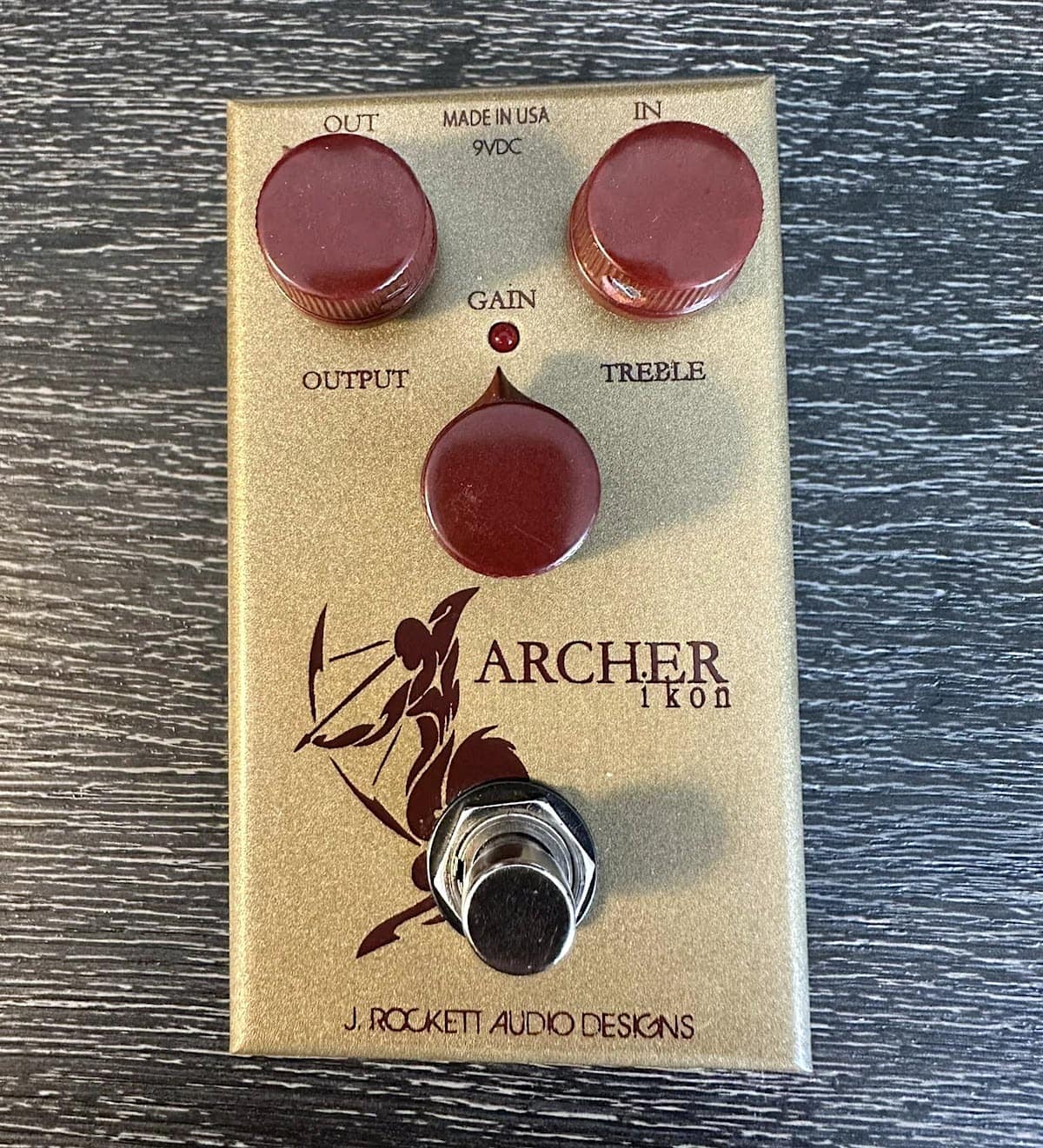
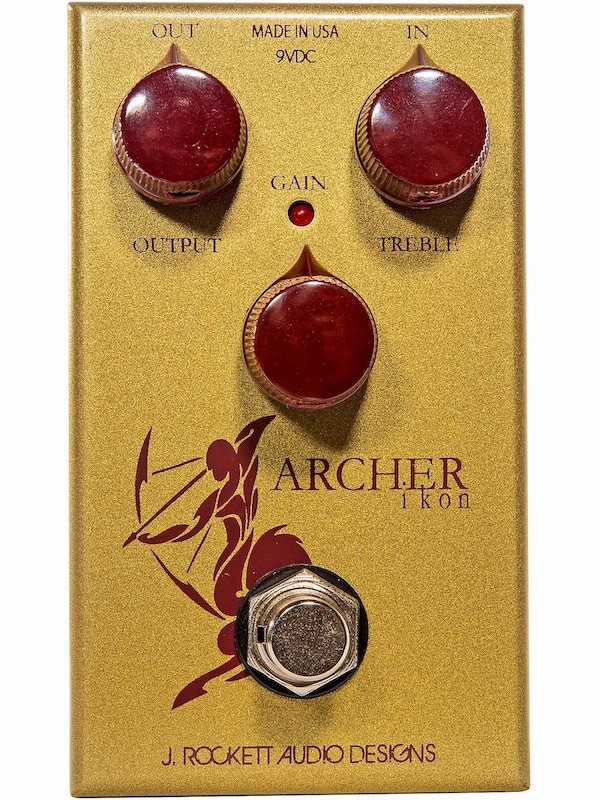
J. Rockett Archer Ikon
The moment I plugged it in, I just couldn’t believe it. This thing really is as dynamic, responsive, and transparent as they say. I played with the gain and volume knobs, and the interplay between them will give you all the flavors of overdrive, gain, and grit you need, but it won’t affect your guitar’s natural snap, midrange, or growl.
Positions 2, 3, and 4 became alive and jangly while 1 and 5 took no prisoners. My guitar’s bluesy soul shone through every note in every position. Needless to say, I walked out of the store with the box inside my guitar’s gig bag (cases are not my thing). I use it a lot when I need to get a more organic sound that still adds attitude and grit but remains faithful to the guitar.
Oh, and it pairs well with distortions; it loves my ProCo RAT, and I love them together.
Where to Put Them on Your Board?
My favorite placement for overdrives on my pedalboard is right at the beginning of the chain after the Wah pedal. That gives everything else the initial color and, to my ears, works much better than after modulations, time-based, or pitch effects.
That said, I also love them after a distortion pedal to focus and push the sound. It creates that violin-like tone with healthy sustain and a lot of punch.
In my opinion, the TS-9, BD-2, and Archer should go first on your chain. If you’re using any overdrive pedal, the OCD can be put after it for better results.
Cascading Gain Stages are IT!
I don’t know if you’ve heard the concept of gain staging. It means adding several stages of gain to make a cascade effect. For example, I love my TS-9 mixed with my Tech21 Double Drive. It adds that midrange bump that the other pedal lacks, and together they create a wall of sound. The same happens with the TS-9 and my Big Muff; it fills the tone holes.
I often stack overdrives too. It makes the guitar wilder without adding too much grit to the signal. So, if you already own a distortion pedal, add an overdrive before it and another after, and you have four sounds available at your feet at any time.
The Bottom End
Stratocasters are capable of a wide range of sounds. You can go from blues to funk to rock, and even country if you like; it’s all there. We guitar players reach for those tones with an overdrive pedal. Yes, we can have maybe one delay pedal or one phaser, but overdrives are like guitars; they all sound different and beautiful.
In my case, I accumulated overdrive pedals as my ears progressed. I ended up finding a sonic space for each, and I play them all regularly now. Each of these pedals highlights a side of my guitar’s personality.
So, grab your Strat and try all of them. You’ll very likely hear the differences and gravitate toward one or another initially. That will also change with time, so, in my opinion, when it comes to overdrive pedals, it’s always about where you start rather than your definitive tone.
Yours truly here swears by Tube Screamers before anything else, but trust me, each gives me something different when I need it.
I’m a little envious of you, going out trying a bunch of great-sounding overdrive pedals for the first time. It’s the beginning of an amazing journey.
Happy (overdriven) playing!
