
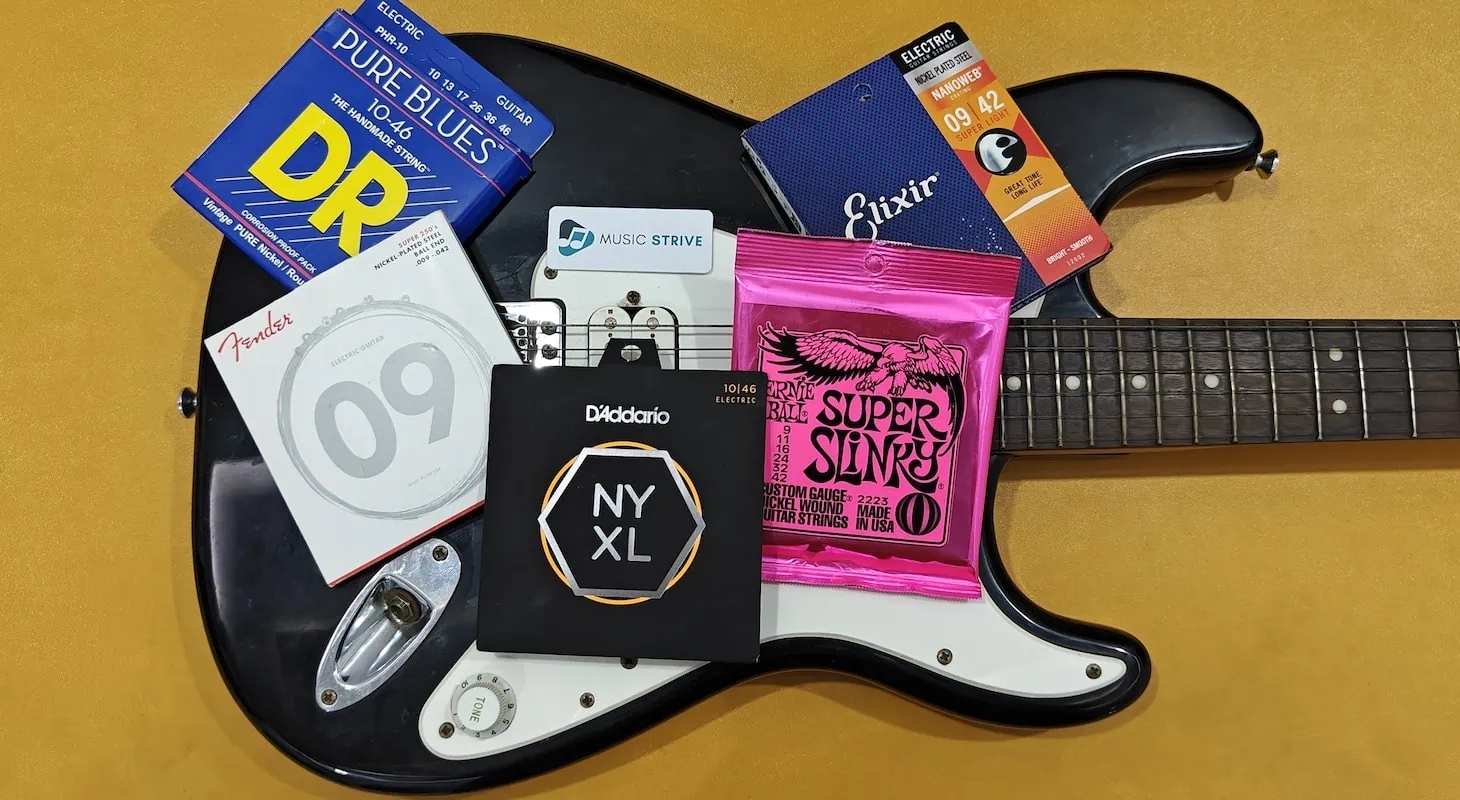
Perhaps, you just got your first Stratocaster and want the best strings to get the most out of your axe. Or maybe, you have been playing Strats for years and you are looking to change up your sound a bit.
Either way, you've landed up on the right article as I'm probably the only person who took the trouble of buying and extensively testing almost all popular strings that are usually suggested for a Strat across music stores, online forums & sub-reddits, and everywhere else.
Top 3 - Stratocaster Strings
Preview | Product | Price |
|---|---|---|
 | ||
 | ||
 |
Whether you have a classic Fender or a modern Squier, these strings will make your Strat sing like never before.
8 Best Strings for Stratocaster & Strat Style Guitars
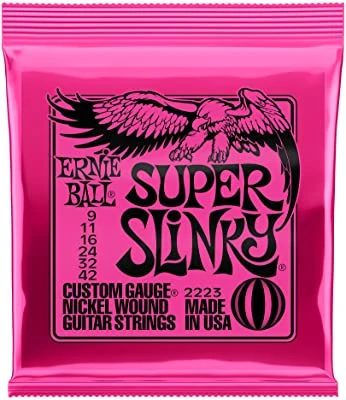
1. Ernie Ball Super Slinky
Ernie Ball is perhaps the most recognizable brand of strings, and for good reason. They are affordable, reliable, and sound quite good. I remember picking up a lime green packet of Regular Slinkies as a teenager and reading the list of my heroes who played these very strings on the back.
Of all the strings I have played over the years, Ernie Balls are probably the most well-rounded. You can easily go from playing hard rock to blues to jazz without feeling like you are losing out on tone. No wonder so many guitarists, professional and amateur alike, play with Ernie Balls.
I was devoted Ernie Ball player back in my hard rock band days, mostly because these strings could really take a beating.
This versatility complements Strat guitars quite well since they are also known for their ability to sound great in a wide variety of genres. Whenever I’m using the same Stratocaster for multiple different bands or a cover band that covers a wide range of genres, then Ernie Ball Super Slinkies are a perfect choice.
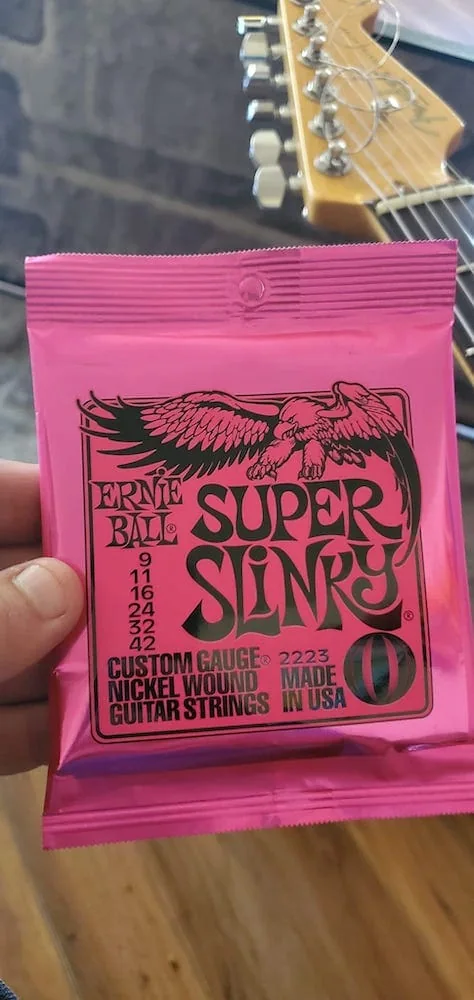
I mostly prefer the Super Slinkies for their looser feel when doing cover gigs. It makes marathon three- or four-hour gigs very easy on my fingers.
The bright and clear tone these strings provide helps to highlight the tone of my Strat guitars, Fender or Squier made. The mids also have a nice bit of punchiness to really help my guitar cut through the mix.
Even though they are well-rounded, I should note that Ernie Ball Super Slinkies do skew a bit more to a modern sound. If you are looking for a vintage sound, the Super Slinkies might not be what you are looking for.
As for durability and playability, the Super Slinkies are also a standout. They are easy to set up and settle quite quickly. They do have a slight tinniness to their sound at the start, like most fresh strings, but that fades quickly enough.
I like the feeling of a little string friction under my fingertips, and the Super Slinkies offer that plus some extra bending power.
I find this most useful when I’m doing country gigs. Sometimes those double-stop sixth or third bends need a little help, and these thinner strings really do make it easier.
Back in my hard rock band days, I used Ernie Balls to exclusion. They could take all the punishment of life on the road unlike any other string I could afford at the time. They rarely, if ever, broke on stage, and stayed in tune all night long.
Their lifespan is also quite respectable. Depending on how often and aggressively you play, these strings can easily last between one and several months on average. I generally get through one or two gigs per set.
The only real issue I have with Ernie Ball strings is that grime build-up is a bit more and their tone does feel to have a sharper drop-off than other brands. But you will likely replace them before this becomes too much of a problem.
You can also read my full review of the Super Slinkies.
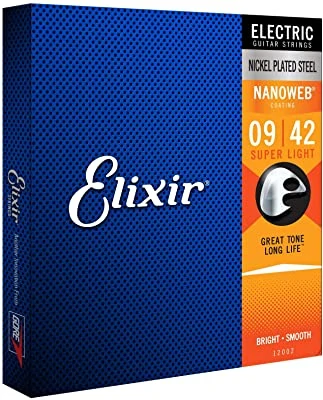
2. Elixir Nanoweb
Another well-known brand, Elixir strings are an excellent choice regardless of style or genre.
Elixir’s Nanoweb strings are another set that I would highly recommend to any guitarist that tends to jump between genres, like myself. They sound just as great with a lot of distortion as they do clean.
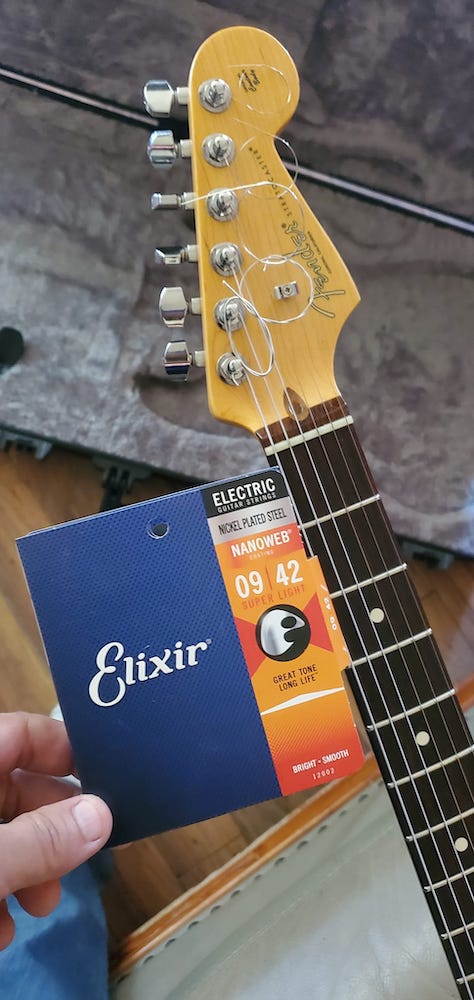
The Nanowebs were my first exposure to treated strings. To this day, among my guitar-playing compatriots, they’re something of a Marmite taste. Most players either love them or hate them.
I, personally, appreciate their durability.
The one thing that I will note is that they do tend to lose a noticeable amount of brightness quite quickly. This isn’t really an issue as the strings don’t become dull, but instead become a bit warmer. They don’t have the cutting, brittle brightness of other fresh-out-of-the-pack strings.
My taste in guitar tone has always leaned vintage anyway, so the warmer tone of the Elixirs is just fine by me.
I’ve also always found Strats to be naturally a bit brighter than other guitars. I find this especially true on the bridge and middle pickups. To this end, warmer strings are great for dialing back on the Strat’s natural brightness. This warmer tone also means that they are a bit better suited for a vintage sound than something like the Ernie Ball Super Slinkies.
While nobody would mistake the sound of Elixirs for the sound of pure nickel strings, they do a great job for warmer, vinyl-ready tones in my experience.
This extra warmth makes them some of the best strings for Fender Stratocaster, since just about everyone I know who owns older Fender Strats prefers a warmer, vintage tone. Even with this slightly warmer tone, I would still consider Elixirs more of a modern-sounding string, at least by comparison to pure nickel strings.
If we’ve ever spoken, you’ll know that I’m a fan of coated or treated strings. I gig multiple nights every week: I like my strings to last for at least a few shows.
That means the fact that they are coated also scores them some extra points from me. This gives them a much smoother, slicker feel compared to other strings.
It takes some getting used to. I’ll always remember the first time I did a big slide up on coated strings, and how great it felt under my fingers. The comparative lack of friction isn’t always welcome - I like a little friction for exaggerated bends, for example - but it’s a pleasant, easy-playing feel.
Their coating also of course helps keep them in good shape for much longer. I can typically get through a full schedule of gigs and rehearsals with these on a Stratocaster, about ten hours or more of playing per set.
At the more extreme end, I have had Elixir strings last for nearly three months before replacing them. Even better, it was only because they started sounding too flat and dull. These strings practically don’t rust or attract any grime. Of course, any string will eventually dull from use, but this was a really fun experiment.
Elixirs might sound a bit too good to be true, and there is a small catch to them. They are among the more expensive brands. The extra treatment and the coating increase the cost of production significantly compared to uncoated strings.
However, I think that their quality and the fact that you will replace them less often than other strings more than makes up for the higher price tag.
Further reading: my complete take on the Nanoweb.
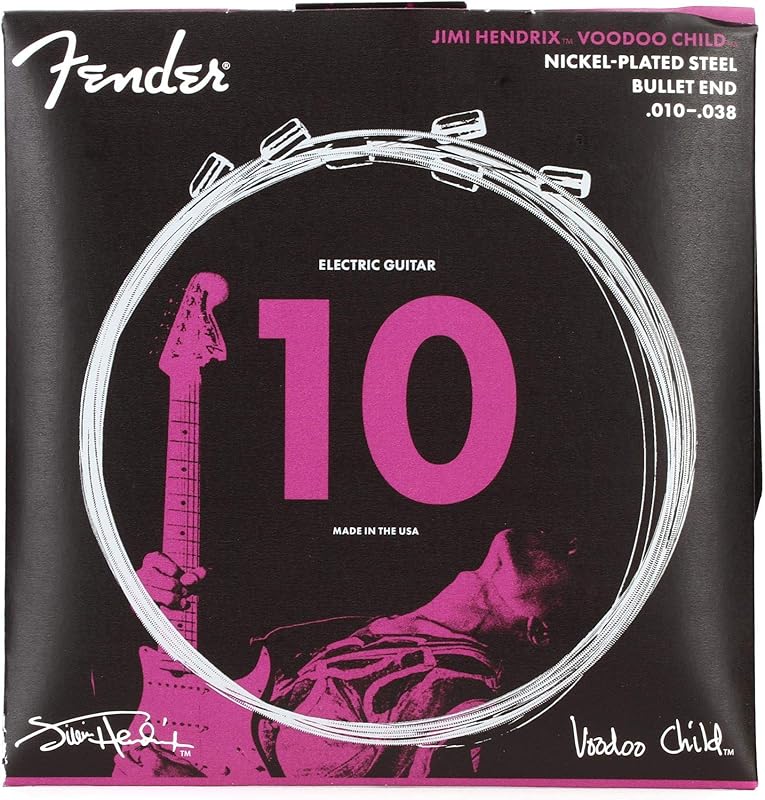
3. Fender Hendrix Voodoo Child
If there is one company that should know how to make great strings for Strats it’s Fender themselves.
Of course, if there’s one guitar player indelibly associated with the Stratocaster, it’s Jimi Hendrix. What if I told you there was a set of guitar strings to make you play, and sound, exactly like the Voodoo Child himself?
Unfortunately, there’s no such thing, but this custom gauge set will do plenty of the legwork. This particular set are pure nickel for vintage-accurate feel and tone, but there are more modern nickel wound steel strings, too.
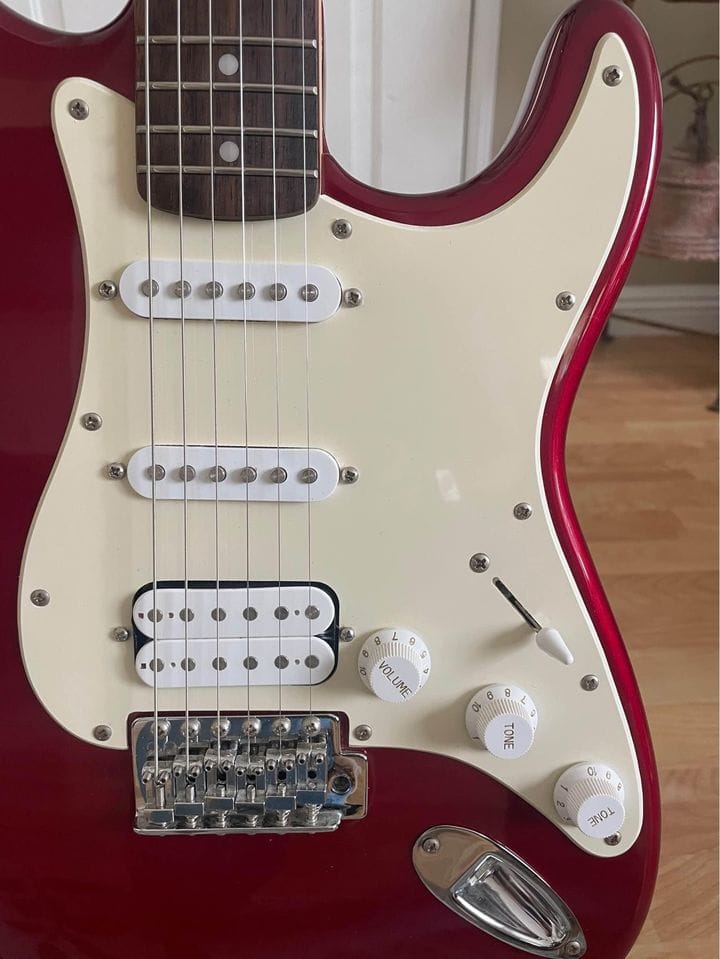
Fender Hendrix Voodoo Child Strings on my Squier Strat (the color's called Candy Apple Red)
The string gauge here defies convention: from thinnest to thickest, it’s .010, .013, .015, .026, .032, .038.
Under my fingers, I notice the lack of tension in the lower strings immediately. Heavy fretting of the E or A string can easily mess with the pitch of these strings, so I had to be much more precise with my fretting hand.
This also meant that I was able to play way faster on these strings than with other gauges. I really noticed the difference in switching between chords and when busting out rapidfire lead lines.
Playing lead parts and riffs with these will let every individual note ring out and be equally audible. Arpeggios are especially clean, so, if you play a lot of Malmsteen-style shreddy rock, these strings are pretty great. In fact, Malmsteen himself plays a variation of this string set, a custom .008-.046 gauge set.
I’ve often felt that Fender’s ball-end strings feel a bit less durable to me.
Likewise, ball-end strings on a Stratocaster tend not to have as much give under my fingers as strings designed for extreme bending. I’d be reluctant to execute whammy bar antics with them, too.
Fortunately, Fender’s R&D department identified this issue, and invented their bullet-ended strings, specifically designed for guitars with a tremolo bridge. The strings traveled through the small amount of slack around the ball end. The bullet end removes this slack, improving the playing experience.
For this reason, I strongly prefer the Fender Bullets for a Stratocaster.
These bullet-end strings solve many of these problems, and I can execute some pretty extreme Hendrixian bends of three semitones or more without any stress.
Although I know these are supposed to be played for Jimi Hendrix-style classic rock, I love these strings for shred playing. The nickel feels comfortable under my fingers, with just enough grip for economy picking or alternate picking licks up and down the neck.
Sweep picking feels nice and fluid, too: my pick just flows through the strings. This could be a little bit of Yngwie-inspired placebo effect, but it’s a lot of fun for me.
Initially, I found chordal playing to fall a little short with these. I was hoping for ringing, chiming, full-throated chord voicings, especially through my Marshall. In my mind, I wanted extended chords where every note was dripping with personality. This wasn’t the case at first. Power chords lacked the requisite punch for my taste, and 9th chords - let alone #9 chords - weren’t clanging in the right way.
I realized that this was mostly because Jimi Hendrix played his guitars left-handed. The custom string gauge here is to counteract the difference in tension: the longest string on a standard Strat is the high E, but on Hendrix’s upside-down Strats, it was the low E.
While I’m not left-handed, I am happy to report that the main source of this problem for me was technique. I was simply hitting the strings too hard, especially the E, A, and D strings.
An adjustment to my technique, where I consciously played more deliberately, and started playing towards the neck of my guitar, rather than toward the bridge like I usually do, helped tremendously.
For this reason alone I’d strongly recommend these strings to any Stratocaster player: they forced me to play more mindfully. It’s not often that a fresh set of strings makes you better guitar player, but these certainly did that for me.
I’d argue that these are some of the best strings for a Fender or Squier Stratocaster precisely for this reason.
4. Ernie Ball Cobalt Slinky
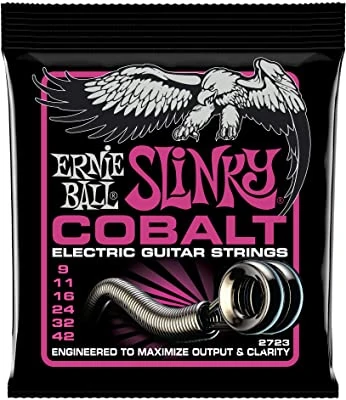
Another set of Ernie Ball strings, the Cobalt Slinkies are quite different from their regular counterparts.
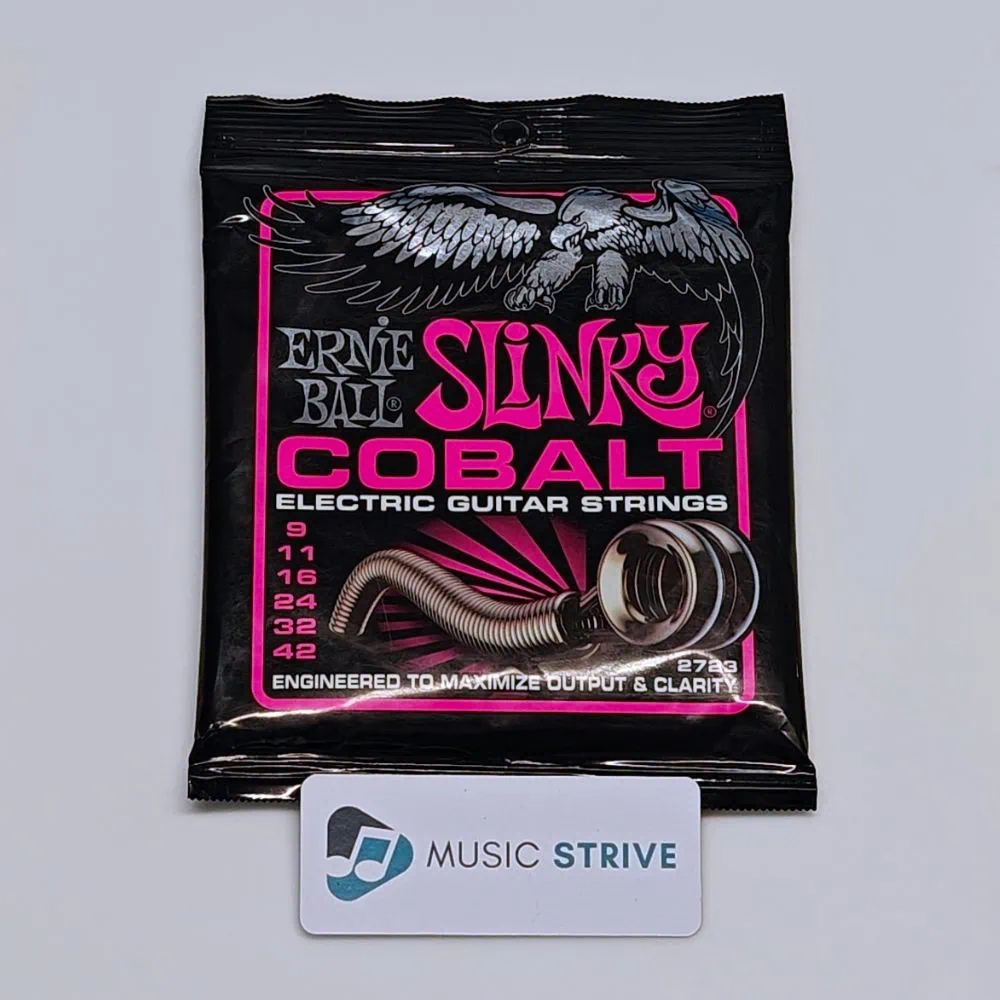
The Cobalt in the name refers to the fact that these strings are made with an iron/cobalt alloy. This has a few different benefits.
According to Ernie Ball, for durability and playability, this means that they last longer and stay in tune better. In my opinion, their lifespan is comparable to Elixirs and their tension lets them stay in tune even after some heavy playing and bending.
That last part is especially great in my opinion since, in my experience, Strats aren’t the best when it comes to staying in tune, especially Squier Strats. I usually have to adjust my tuning after every two or three songs on my Strat with regular strings. I was playing a gig in a boiling hot rock club the other night, and the Cobalts only needed minor adjustment a once or twice in the set.
To my ear, the cobalt tone is fuller and richer right out of the packet than standard nickel-steel. I actually think Squiers will benefit the most from this since they often have a thinner sound than a Fender Strat.
I found that these strings handle distortion and gain exceptionally well. I love to I play quite a bit of Iron Maiden on my Strat and these strings really add a great amount of punch when delving into a more metal sound. I plugged my Stratocaster into my Hughes & Kettner on its highest gain setting and loved ripping through “The Trooper” and “Hallowed Be Thy Name” with these strings.
Unfortunately, I didn’t feel that they worked quite as well for other, cleaner tones. The sound was usable - it’s a Strat, after all - but for softer country, pop, and blues sounds, I wasn’t quite as impressed. There’s less dynamic control available. The Cobalts feel like they have two speeds: go and stop. For country and blues playing, I need a little more dynamic variation on offer.
One thing that I noticed quite quickly is that these strings feel a bit rougher than other strings. This adds a nice bit of grip to the strings, making them a great option if your fingers tend to slip off of other strings. Compared to the slick, lubricated feeling of coated strings, it feels like the total opposite end of the spectrum!
This does make sliding a bit trickier, though. It took me maybe about 15 or 20 minutes to get used to the extra grip and sliding comfortably. On the other hand, bends and double stops flow effortlessly from my fingers to the fretboard. It makes for a markedly different playing experience, and one I enjoy a lot.
All these benefits do come at a cost. Cobalt Slinkies are almost twice the price of Regular Slinkies, but for what you are getting it is well worth it. If I was playing high-gain music more regularly, I’d definitely have these in high rotation on my Stratocaster.
Read my full review: Ernie Ball Cobalt Slinky
5. GHS Boomers
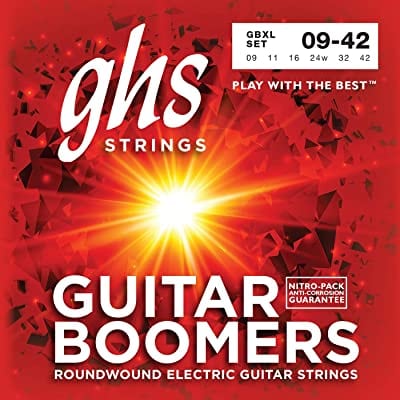
If you want to accentuate the more vintage characteristics of your Strat, strings like the GHS Boomers are an excellent choice.
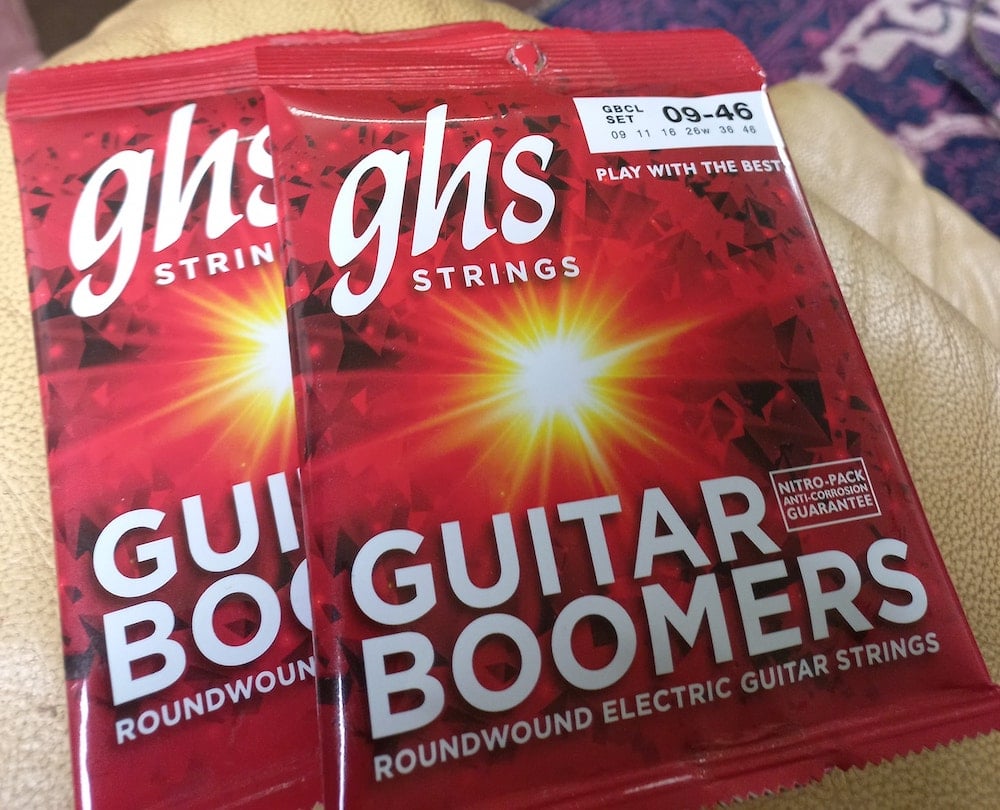
I always buy at least a pair of this sweet set of strings!
I first paid attention to these when I found out they were the string of choice for Pink Floyd’s David Gilmour. His Stratocaster tones are legendary. He is one of the great proponents of authentic, expressive Strat tone. If he uses GHS, they’re worth paying attention to. In fact, Gilmour has his own signature set for those who want to emulate his specific sound.
I find GHS strings to be nicely well-balanced and durable. I don’t find any notes or strings sticking out more than others in terms of tone or volume.
They also feel very sturdy and I can push them quite hard without feeling like they might snap. Even though they aren’t coated, they still feel smooth and natural.
I had great fun trying all manner of expressive bends on these strings. Of course, I couldn’t resist throwing in a few slow, vibrato-laden Gilmour bends a la “Wish You Were Here.” These strings felt great for playing similarly bluesy legato sounds like those of Eric Clapton, John Mayer, or Gary Moore, too.
I was very impressed by the longevity of these strings. They also last a rather long time for uncoated strings. They won’t last as long as something like Elixirs or Ernie Ball Cobalts, but I would compare their lifespan to something like the Ernie Ball Regular Slinkies.
I managed to get through a rehearsal and a gig (about six hours of playing, all up) without breaking a string. They did lose a bit of their new-string sheen and brightness towards the end of the gig, however.
As for their tone, they cover quite a wide spectrum of sounds and genres. Working great for both a clean and distorted sound, however, clean, expressive bluesy playing is where they truly shine.
In fact, I can’t think of a better example of their sound and endorsement than David Gilmour. He plays GHS strings and you just need to go listen to one of his songs to get a good idea of the warm sound you will be getting with these strings on your Strat.
While I wouldn’t normally use a Stratocaster for country playing, I was curious as to how well these warm, expressive strings would play for country twang.
As suspected, these were great for country playing. Playing close to the bridge on my Strat yielded an appreciable country twang, and their built-to-bend durability allowed for some really satisfying whole-step bends. This might seriously be the best my pedal steel bends have ever sounded.
I am really impressed with just how great these strings sound and play. Especially considering they sit at the cheaper end of the price scale. You are getting far more than you are paying for with a set of GHS strings.
The only downsides I can see with these are in their tension and tuning. Out of the packet, they are a bit stiff and you have to work a bit harder to bend them, especially with higher gauges. However, they break in after a few minutes of stretching. The stiffness dissipates pretty quickly, and turns into a responsive level of tension perfect for gauging the pitch of your bends by feel as well as sound.
I will concede that this tension doesn’t translate into how well they stay in tune. I was re-tuning after every three songs or so, which is about standard for a Strat. The G and B strings in particular were prone to going flat, but not by enough to scare off the audience at my gig.
These are minor complaints though and the GBXL’s are still more than worth it for any Strat player.
Further reading: our complete review of the GHS Boomers
6. D’Addario NYXL
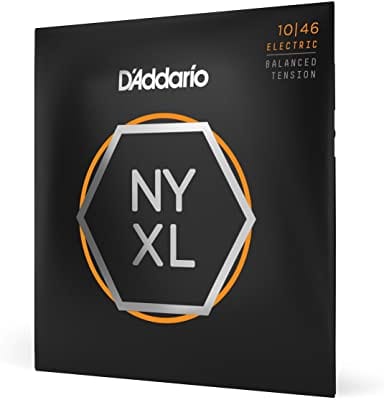
D’Addario’s NYXL line claims to be corrosion-resistant and borderline unbreakable, with groundbreaking new materials for improved tone.

Another favorite of mine for a variety of guitars and use cases.
As a frequent breaker of guitar strings, I was very excited to try these out. I avoided the coated strings making similar claims because of how different they felt under my fingers, and I’ve always appreciated D’Addario’s quality craftsmanship. I often use their Extra Lights on my acoustic guitar for fingerpicking.
Upon stringing up my Strat, I was pleased to note that the strings stayed in tune. Right away. I tuned the guitar, played a few licks, and expected to stretch them out. Instead, they stayed roughly in tune. My most aggressive Jeff Beck bends did manage to turn the B string a little flat, but overall I was pretty impressed.
Gigging with these strings was a similar success. You’d expect a fresh set of strings to last all the way through a three-hour gig, which they did. These did maintain their out-of-the-box brightness and freshness for longer than most guitar strings, but by the end of the third hour this had subsided.
These strings have a markedly different tone than the ones I’m used to. The different alloy has a more mid-heavy sound, which helped cut through the mix against the rest of the band, but felt a little too modern for the classic rock set we were playing.
They also feel different. It’s not the slick feeling of coated strings, but the feel under my fingertips was markedly different from my usual strings. This could just be the placebo effect, and I might get used to it.
Overall, the NYXL strings live up to the marketing hype, but I’d recommend them more to modern metal and neo-soul players than to my fellow vintage rock enthusiasts.
You can also read my full review of the NYXL strings.
7. DR Pure Blues
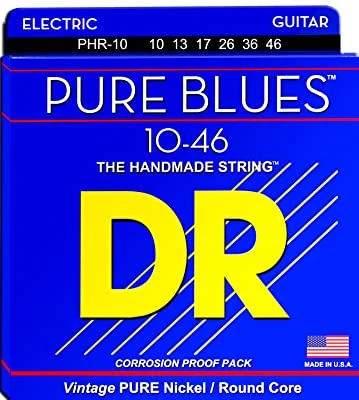
If we’ve ever hung out, you’ll know that I love pure nickel strings for vintage-correct tones. That’s what my heroes used on their records, and it’s often the missing piece of the puzzle for modern guitarists chasing vintage tone.
The DR Pure Blues tell you what they are all about right on the package. These are the perfect strings for guitarists who use their Strats as blues machines. Jimi Hendrix and Buddy Guy used nickel strings back in the day: if that’s not an endorsement, I don’t know what is.
For that truly vintage sound, look no further than their Pure Nickel Pure Blues. If a '50s and older sound is what you are going for, then there is no alternative.
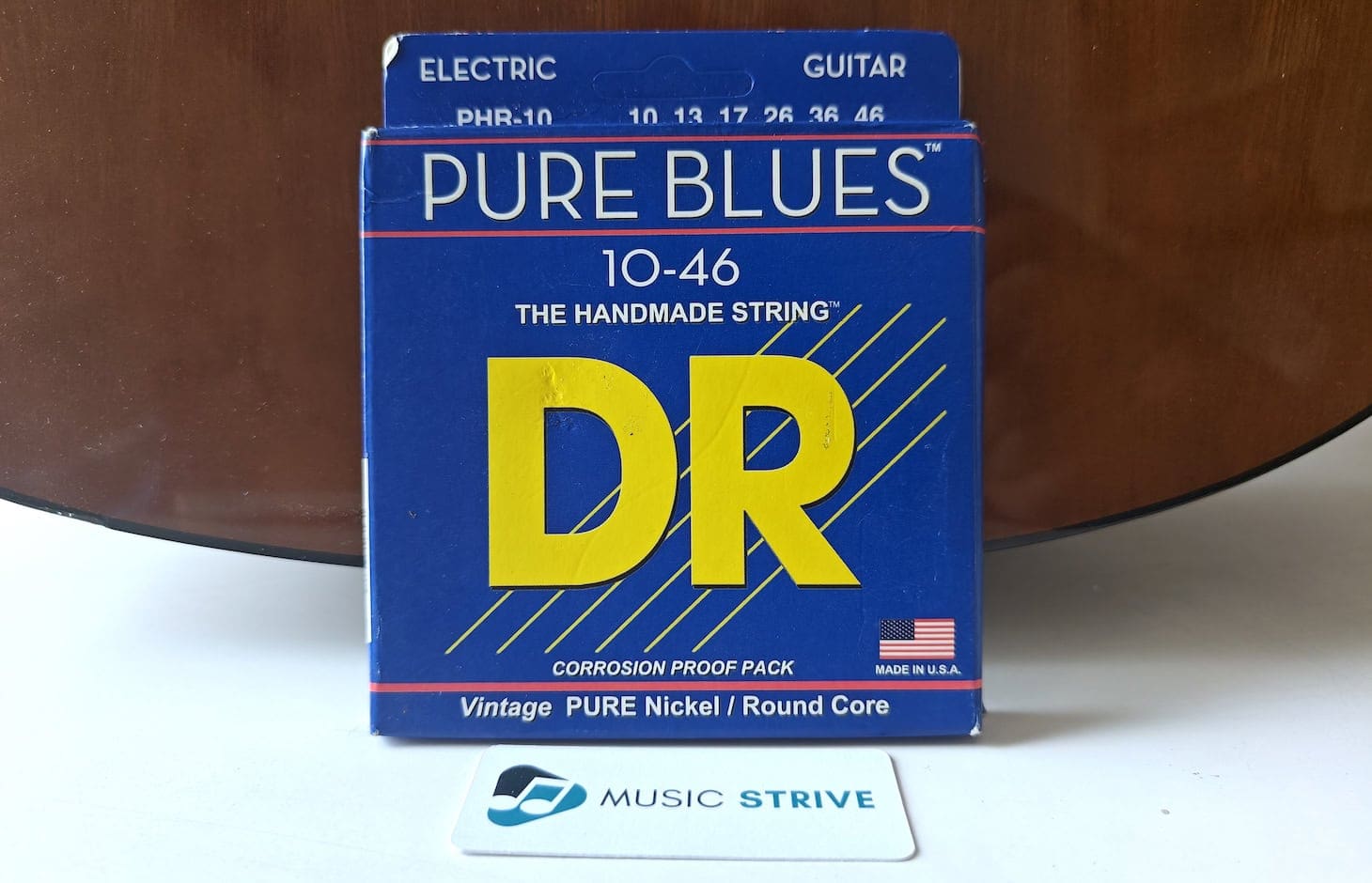
Of course, I had to plug my Strat into a nice warm tube amp to really get the most out of these vintage-voiced strings. I used my Marshall Plexi combo, and was thrilled with the results.
The warm and tender tone of the Pure Blues is really unmatched in my opinion. If you have a vintage Strat, I would especially recommend using a set of Pure Blues. It’s like making sure the parts match in a vintage car: sometimes, matching old-school with old-school is the best course of action.
They will bring out the vintage sound more than modern strings. They also have the added bonus of having less tension and being less harmful to a vintage Strat’s neck.
Because of their relatively low cost, the Pure Blues are also a great choice for beginners. I’ve always found nickel to be much softer on my fingers.
It doesn’t “bite” quite the same as steel strings, and I often recommend it to beginners who find other strings materials uncomfortable. The strings “biting” their fingers can easily put beginners off from learning to play, so nickel is a great alternative.
Apart from their warm and mellow tones, Pure Blues are also well-balanced and vibrant. Notes ring out evenly whether they are being played individually or in a chord. I do think that Hendrix-style double stops sound particularly good with these strings. There’s a very familiar sound to the double stop hammer-on that these strings provide.
In my opinion, the main benefit of pure nickel strings is in how they feel under my fingers, and therefore how they invite me to play a certain way. Their tone is subtly much warmer to my ear than the standard modern nickel/steel combo.
Much more inviting, however, is the way the string feel beneath my fingertips beckons certain techniques and phrases. For me, they feel right for my arsenal of blues-rock licks and tricks: bends, vibrato, hammer-ons, and double stops all feel great on these strings.
Chords especially are very full and even a bit boomy. They don’t sound muddled and each note can still be heard clearly. This blooming, natural warmth really nicely complements the sound of a Stratocaster.
One thing that also always impresses me when I play Pure Blues is the amount of sustain they have. Mellower strings usually fade quite quickly, but these can keep ringing for long enough to impress Spinal Tap’s Nigel Tufnel.
These strings are definitely much more focused than the others on this list. They do blues and bluesy classic rock really well, but that is pretty much the only thing they do. Don’t expect to be playing modern hits with these strings.
For Cream, Hendrix, and even Rory Gallagher-style uptempo blues these are fantastic strings.
But honestly, I would still rather choose strings that do one thing great than everything okay, and these strings are really great at what they do.
For a deeper coverage, check out our full review of these strings.
8. Dunlop Performance+
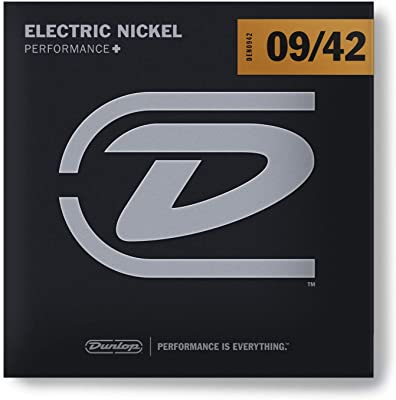
I’ve always had a soft spot for pure nickel strings. They were good enough for my hero Edward Van Halen, good enough for Jimi Hendrix, and were used on my favorite album, Thin Lizzy’s Live and Dangerous.
The problem with pure nickel was always that the tone could be too warm, and how easily nickel strings went out of tune under aggressive playing.
Enter Dunlop’s nickel-plated steel strings, aiming to balance out the overt warmth and lend some alloyed durability. These strings from Dunlop are lighter than I usually play, but at this price I’ll try anything out.
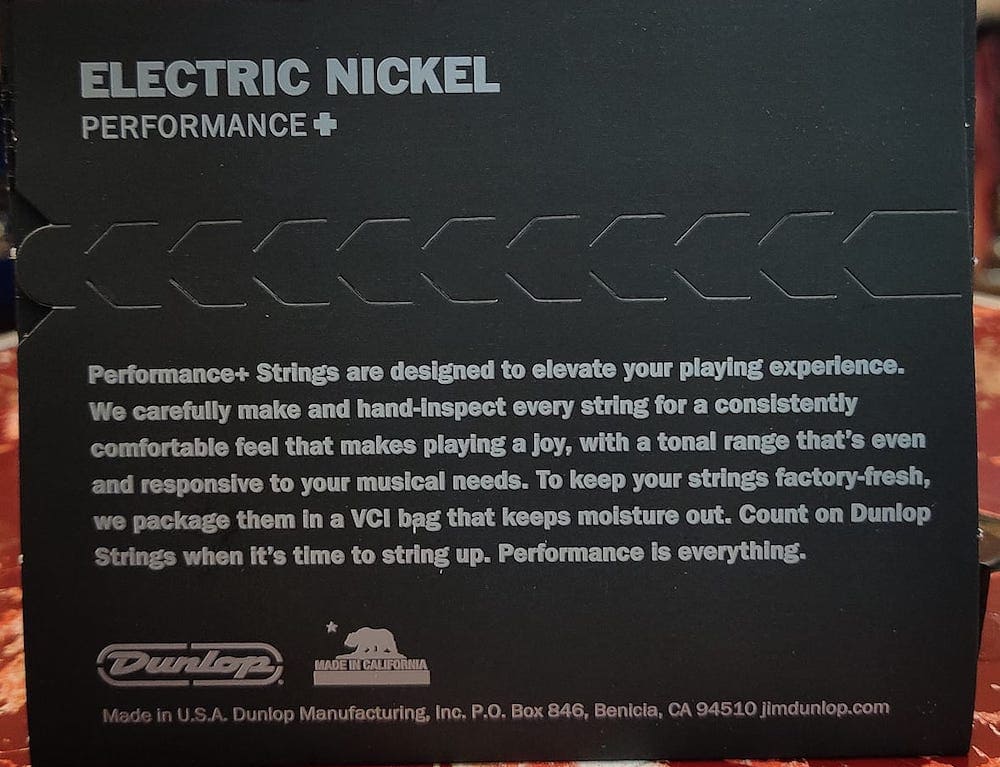
This is what they claim to deliver... (photo of the backside of the packet)
As usual with fresh strings on my Stratocaster, they needed stretching out and playing in, which is no surprise.
These strings have the pleasantly “soft” nickel feeling, but not quite as soft as pure nickel.
The sound is nicely balanced, with the crisp highs, punchy midrange, and warm lows promised on the packaging. I actually felt like the balanced sound let the Strat’s own tone take center stage, although I’ll admit that may just be wishful thinking. After all, we all want our Stratocaster to be the “Strattiest” Stratocaster.
These lighter strings did not appreciate detuning, but I’m sure that could be fixed with a heavier string gauge. I wouldn’t use them for extreme metal. While these don’t have the vintage warmth of pure nickel, these strings are much closer to those vinyl-ready tones than steel wound strings.
Choosing the Right Strings for Your Strat
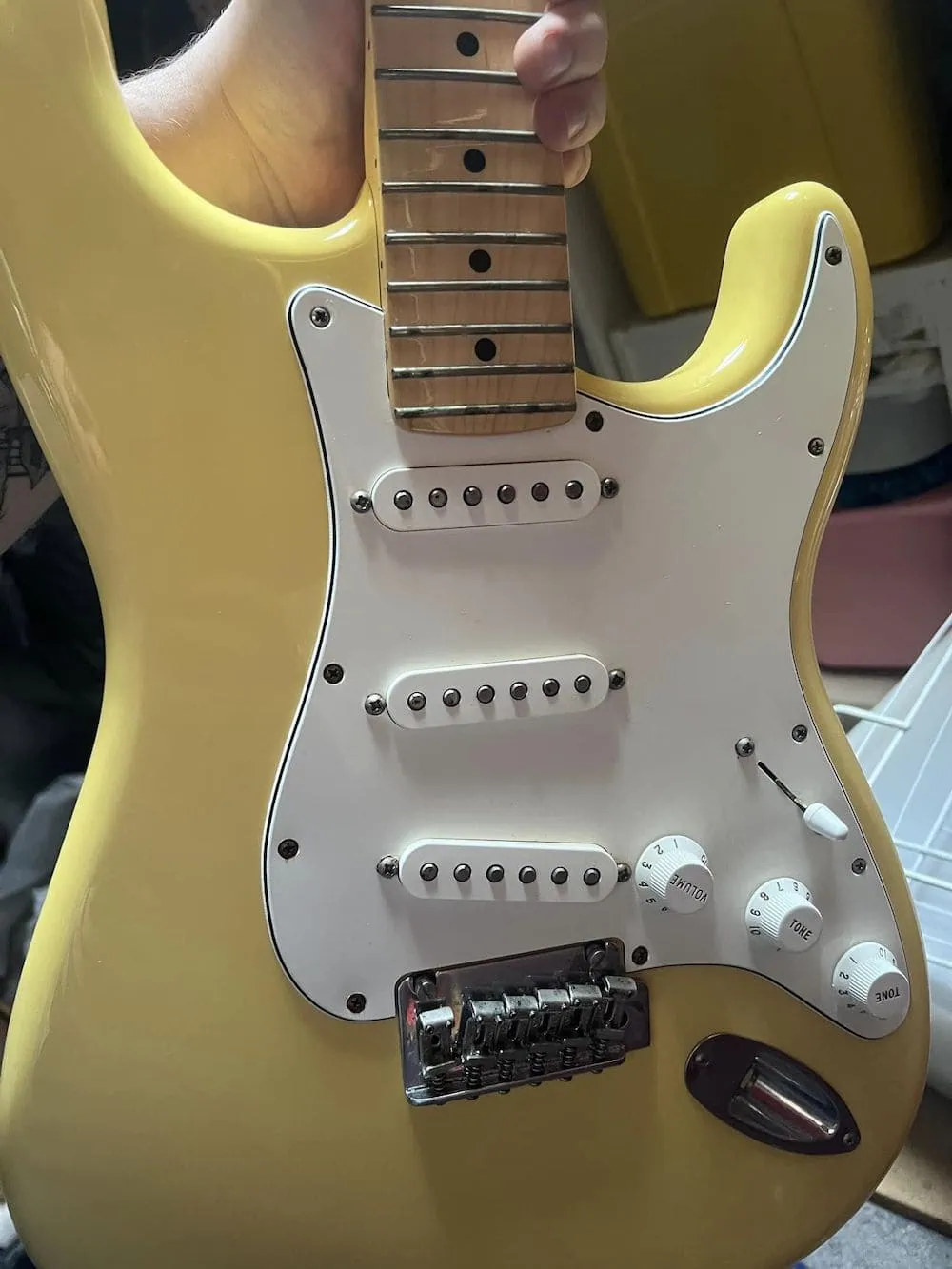
My Buttercream Fender Player Strat During Restringing
Strings are a very subjective thing and there isn’t a right or wrong answer. Even so, it is still something that you should take into consideration.
Emphasizing Parts of Your Sound
I think this might be the most important thing to consider when choosing your strings. Because the Stratocaster has such a unique and recognizable sound, you have to think about how your strings will affect it.
This will be determined by your own preferences, but also by the type of music you play. If you play with a lot of distortion, you’ll want strings that add some more low-end and mids.
If you want to cut back on some of the natural brightness of a Strat, you will also want to go with strings with a bit more low-end and warmth. Adding more brightness will of course mean going with brighter sounding strings.
It all comes down to what part of the Strats sound you want to highlight and accentuate.
Coated vs Uncoated
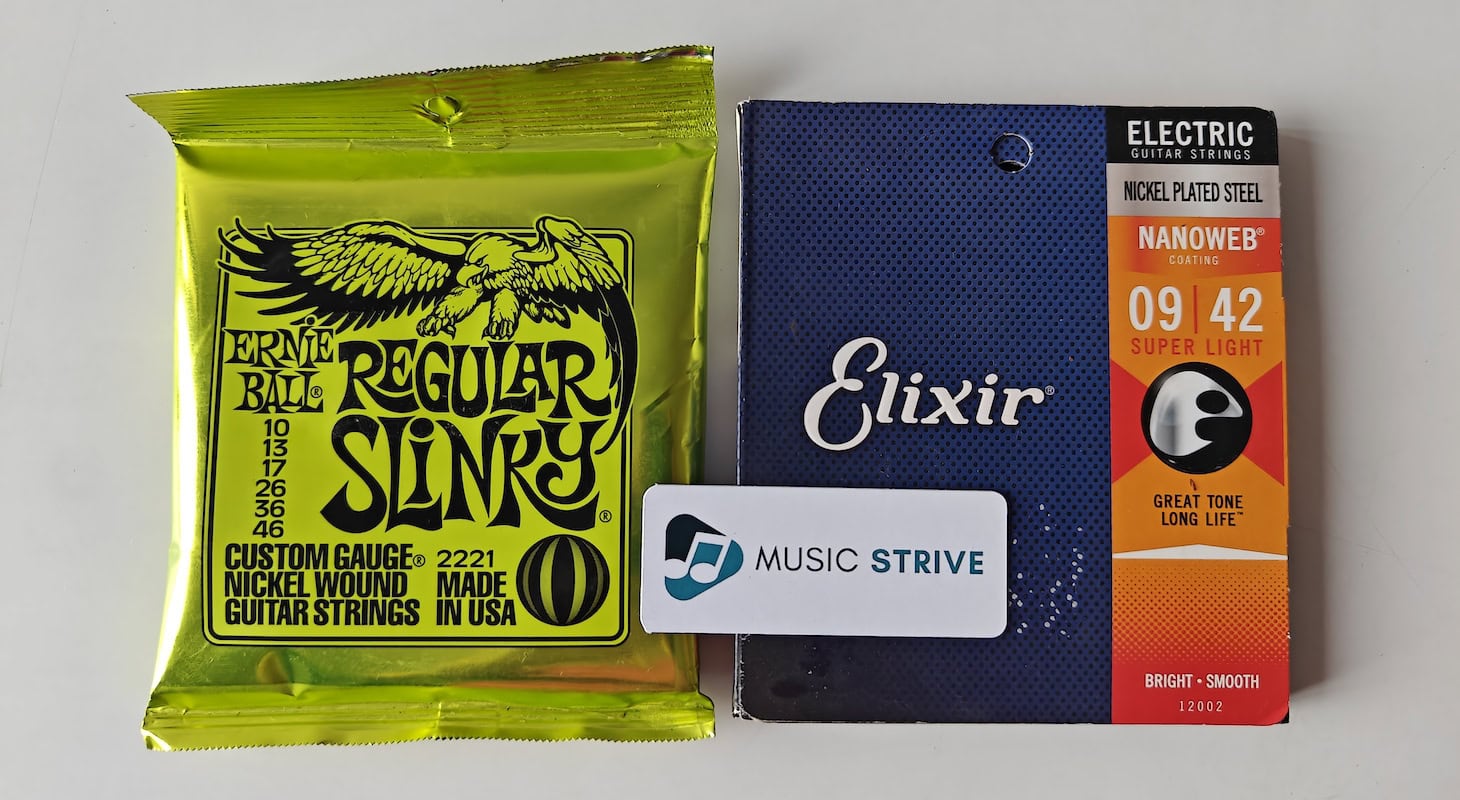
Ernie Ball's ever-so-popular Regular Slinkies up against Elixir's coated strings (Nanoweb)... Coated strings or not, what do you personally prefer?
A lot of people will argue that uncoated strings sound better than coated and you should only use those on a Strat. I personally don’t think the difference is significant enough.
For me, it is more a case of feel and lifespan. Coated strings are smoother than uncoated and just feel a bit nicer to play in my opinion.
More importantly, is how long they last. Coated strings have a much longer lifespan. Yes, they cost more, sometimes even double, but if that means only replacing your strings every few months rather than weeks I would say is worth the extra cost.
Gauges
This is also more of a preference thing, but it does tie into the sound a bit.
Lighter gauges will be easier to play and also add some more brightness while thinning the sound a bit. Thicker gauges will of course do the opposite.
The best is to experiment with gauges until you find what is the most comfortable for you. I would however suggest looking at hybrid gauges.
If you want thick and punchy riffs and power chords but brighter leads, try a hybrid of lighter tops and heavier bottoms. Or try heavy tops and lighter bottoms if you want a thicker overall sound but heavier gauge bottom strings are a bit hard to play.
In Summary
Ultimately, the strings you use are up to you and what you want from them. The most important thing is that they sound great and are great to play for you.

I don’t think Pure Blues are that limited. I play everything from Hank Williams Sr. to 60s Philadelphia Girls groups.
I myself on my stretch use DRs. I really enjoy the headlights, lights. Articulate great pitch. Stay in tune, and less quite a while. I play a combination of blues and classic rock
Should have been Stratocaster but I do use DR. Lights
For someone who’s just got the hang of holding a tune together, the advice in that post was er, Inspiring. You basically summed up in a few minutes what it took donkeys for me to get right. I spent a little money, & a lil time, what a fkn difference!?!
Thanks! New Fender Strat player, and I appreciate the info!