

Just because the ‘80s are over doesn’t mean the defining guitar of the era is out of fashion.
The super Strat was the guitar that defined 1980s metal, and has endured as a mainstay of guitar design ever since. The simple design of the super Strat is key to its ongoing appeal.
All you need is a Stratocaster style body, some scalding hot humbuckers, a comfortable, playable neck, and a reliable tremolo arm for those squealing dive bombs.
Over the years, I’ve played dozens of non-Fender Strat style guitars that had their distinct sonic properties, making them more suitable for various players and styles of music than a standard Fender or Squier Strat.
Top 3 - Super Strat Guitars
Preview | Product | Price |
|---|---|---|
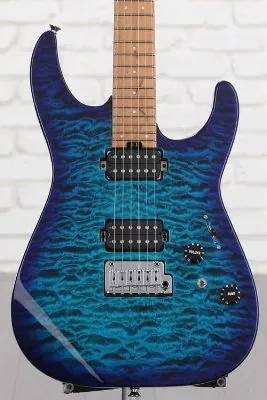 | ||
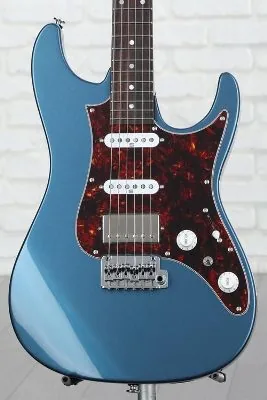 | ||
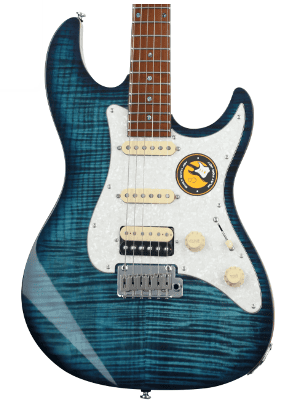 |
Whether you’re looking for a classic ‘80s-style super Strat with all the headbanger-ready appointments, or a modern instrument that reflects the major breakthroughs in guitar design from recent years, there’s a super strat for you on this list.
Best Super Strats - Non-Fender Monster Axes!
1. Charvel Pro-Mod DK24 HH
Charvel were among the first builders to lean into the sun-soaked California sound of the early super strats. They were favored particularly among ‘80s hair metal headbangers, and have been slowly but surely building on that reputation ever since.
Today, Charvel is owned by Fender, so their hot-rodded instruments are probably the closest to an actual Stratocaster that you can get. The Pro Mod DK24 is a shred-ready guitar with a comfy Fender-style Strat neck complete with patented Strat-shaped headstock.

I had a fun time with the Pro-Mod DK24 HH!
Upon strapping on the guitar, its lightweight body and ultra-comfortable compound radius neck were immediately apparent. I plugged the guitar in and dialed in a nice clean tone with the neck pickup.
The Seymour Duncan humbucker sparkles and shines beautifully on the clean setting. The series and parallel switching gives the humbucker a bit of coil-splitting texture, thinning it out.
It did not sound like a clean single-coil Strat, but the sound is more than usable in the live setting. It’s close enough that most guitar players in the audience will raise an eyebrow in appreciation.
However, it’s the Full Shred humbucker in the bridge position with some nice distortion that really makes this guitar a bona fide super strat. I couldn’t resist throwing out some legato Iron Maiden licks, reveling in the smooth, searing high-gain sound that simply jumped out of the guitar.
I strongly prefer the Gotoh tremolo system to the Floyd Rose. I love that it was nice and low profile so the risk of it digging into my picking hand or getting accidentally hit was much lower. The tremolo didn’t force the guitar out of tune despite some pretty heavy whammy playing.
2. Ibanez Prestige AZ2204N
This Prestige AZ2204N model is a little more Strat than super. Its reserved color scheme, rosewood fretboard (you can also buy its Maple variant - that's AZ2204 without the N), sensible body shape, and twin single coil pickups in the neck and middle position certainly don’t scream “headlining Wacken”.
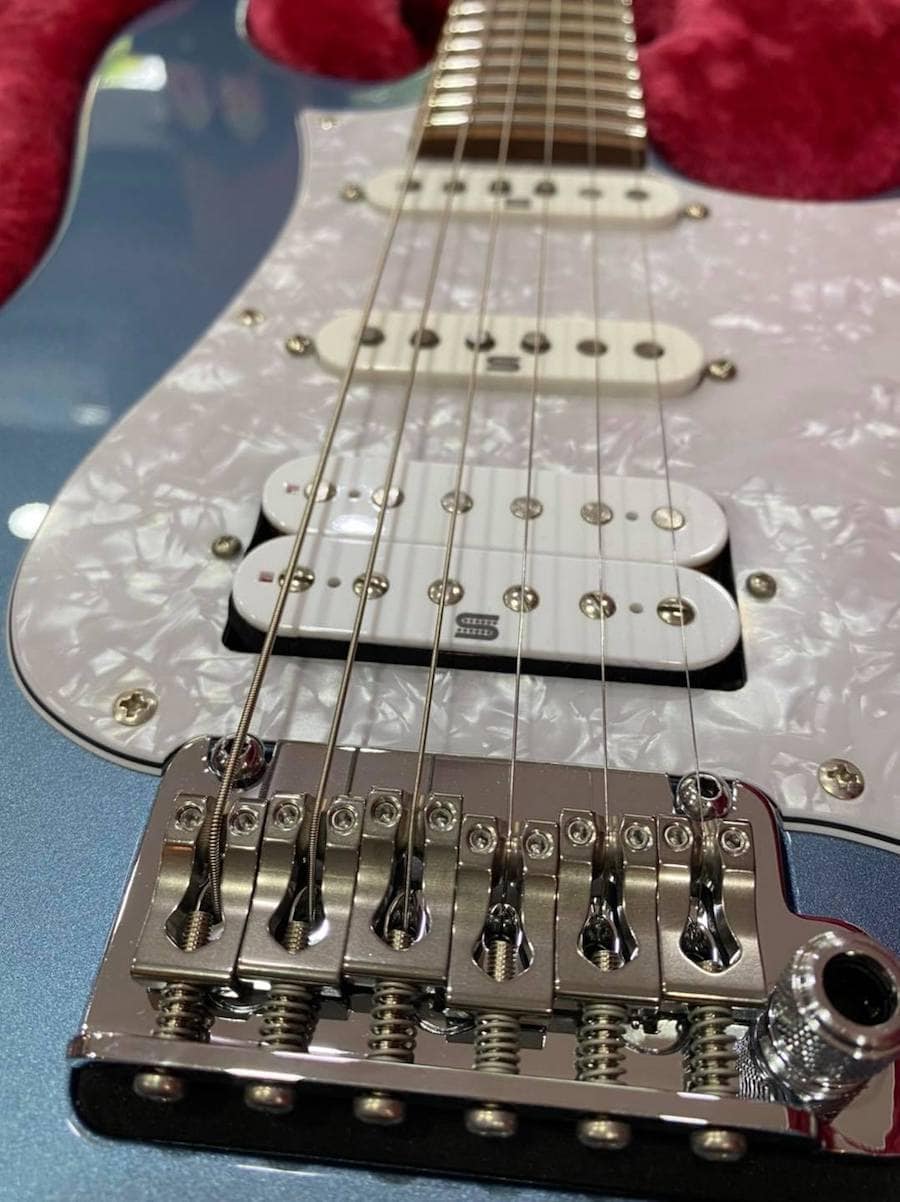
This Ibanez Prestige AZ2204 felt like a solid axe through and through!
Looks, however, can be deceiving. The Seymour Duncan bridge humbucker offers truly monstrous metal tones. I immediately plugged it into a powerful high-gain amplifier and was stunned by the tones on offer.
Everything from chunky thrash riffage to modern metal sounded spot on with just a few tweaks to technique and gain settings. The single-coil pickup in the neck position, with distortion on, was much less noisy than I feared, and offered a pretty solid Yngwie Malmsteen-style sweet distorted tone.
The middle pickup is nicely “quacky” and Stratty, but I can’t see myself using it too much in the live setting. However, it’s nice to have the tonal versatility offered by the nine-way switching system, allowing you to mix the middle pickup into the other two in varying amounts.
The neck feels great in your hand. It isn’t exactly supermodel-thin like some Ibanez shred guitar necks, and is closer to the classic C profile, if a little on the thinner side.
Just to see if the guitar was as versatile as advertised, I tried the neck pickup with the tone rolled down and was able to coax some very convincing jazz tones from this guitar. A switch to the bridge pickup, and a coil tap later, I conjured a slick, shiny Nile Rodgers-esque disco tone.
I’d recommend this guitar to players who like their super strats to closely resemble actual Stratocasters, and play a wide variety of genres.
3. Sire Larry Carlton S7 FM
If you haven’t heard Larry Carlton’s name, you’ve definitely heard his work. Carlton is most famous for his efforts as a studio musician through the '70s and '80s. You’ve heard his playing on countless hits by the likes of Joni Mitchell, Steely Dan, and the Four Tops.
Sire’s Larry Carlton signature model is clearly meant to be one of the most versatile guitars ever made, with studio work at the forefront of its design.
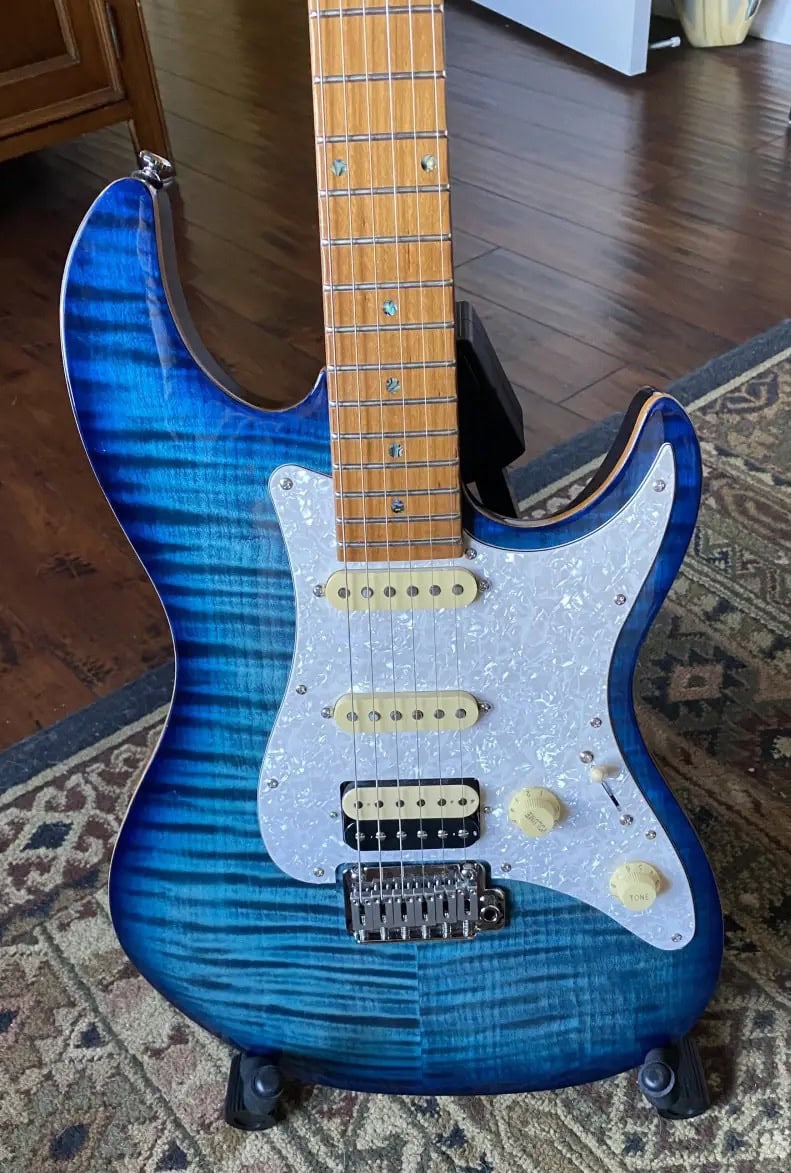
The Sire Larry Carlton S7 FM looks even more elegant in real life.
When you put on the guitar, it’s nice and light around your shoulders. The roasted maple neck feels good in your hand. I could easily see myself grinding away with this guitar in a studio, late at night, for hours on end. It’s just that comfortable.
The HSS pickup configuration definitely feels tremendously versatile. While I probably wouldn’t use this guitar for all-out metal - the bridge pickup doesn’t quite have the power I like for that genre - you could feasibly cover just about any other genre.
Of course, most people will be wondering if it captures that warm-yet-clear ‘70s studio guitar tone. The answer is yes!
To get the idea, put on Steely Dan’s “Kid Charlemagne.” That snappy, percussive, articulate tone is all Larry Carlton. This guitar, played through a tube amp, captures that sound straight away.
By far the most entertaining thing with this guitar is blending the middle pickup with the neck pickup or the bridge, adding a touch of drive and trying my best to impersonate Carlton’s jazzy, unique phrasing.
I’d strongly recommend this guitar, especially at its competitive price point, to any musician looking for a guitar to cover as many genres as possible, short of extreme high-gain styles.
4. Jackson Pro Plus Soloist SLA3Q
Jackson was another major California-based builder that crafted many of the early super strats of the ‘80s. One of their most notable endorsees was Iron Maiden axeman Adrian Smith, who wields a Jackson signature model to this day.
The Pro Plus Soloist is a decidedly more modern take on the super strat.
This is strikingly obvious when you first see the guitar. In direct sunlight, the quilted maple top adopts an almost three-dimensional depth, with stunning detail and color.

The Soloist SLA3Q looks absolutely stunning in person! The gold hardware (including tuning pegs) adds a unique touch and complements its glossy appearance all around.
Unlike many other guitars at this price point, this one boasts a neck-through-body design. As the neck and a major part of the body are one big piece of wood, this is supposed to give the guitar unparalleled sustain and superior resonance.

The Soloist has a rather unique neck-through-body design that gives it a different feel and amazing sustain!
The gold hardware is a nice touch on this guitar, adding to its luxurious, decadent feel.
Upon picking up the guitar, it’s not nearly as light as one might expect from a super strat. It isn’t heavy like a Les Paul, but it feels similar in weight to a decent sized 335.
The neck is, as expected, razor thin. It’s much easier to play lightning-fast legato runs on this neck than most other guitars I’ve ever played. While I prefer a bit of heft to my guitar necks, I can’t help but appreciate the supreme playability of this shred neck.
Of course, the real shred test is how the guitar sounds. Fortunately, the Seymour Duncan Distortion in the bridge position more than handles high-gain tones. Rolling back the volume knob on the guitar reveals a slightly cleaner sound well suited to rhythm playing.
This is a great shred guitar, a worthy successor to the legendary Jackson name.
5. Schecter Hellraiser C-1 FR-S
In case the name of this guitar doesn’t give it away, the looks do. The Schecter Hellraiser is clearly and powerfully built to rock.
The twin EMG pickups, flame maple top, jet-black hardware, and extreme shape of its body really encourage brutal riffage and screaming leads.
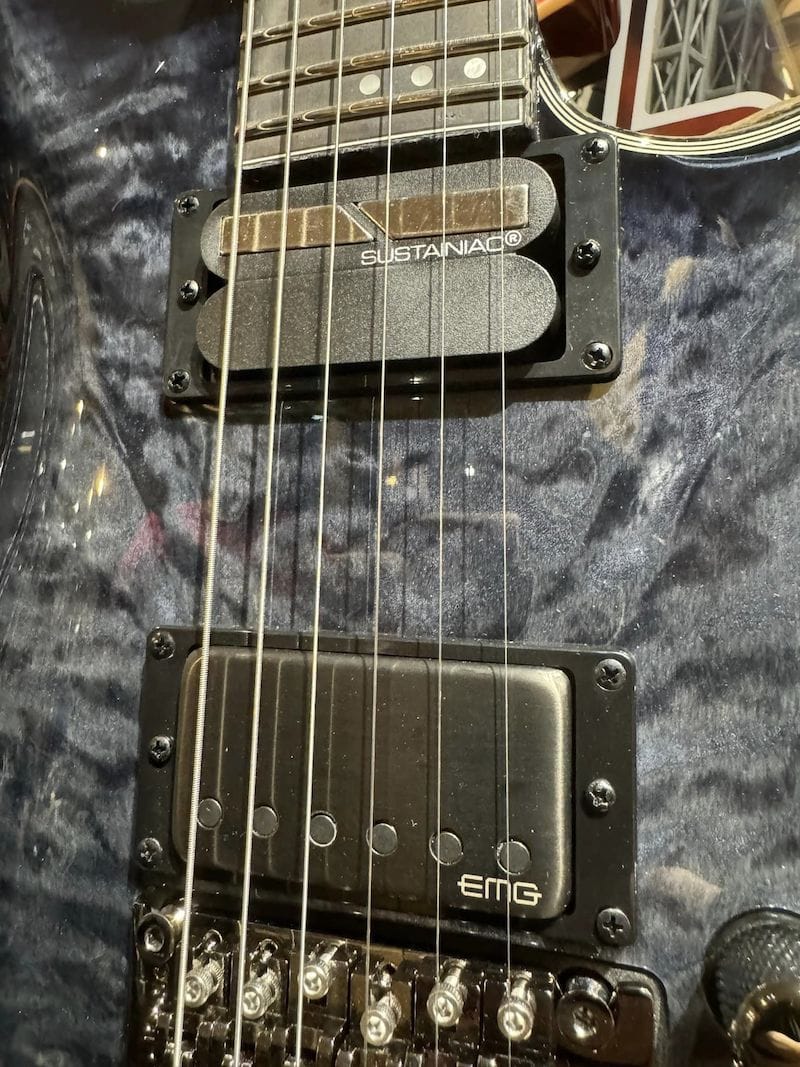
Schecter Hellraiser C-1 FR-S - comes with 1 sustainiac humbucking pickup (neck) & 1 EMG active humbucker (bridge)
Unlike many super strats, the Hellraiser has a mahogany body. You definitely notice the difference, as the Hellraiser is much heavier than a typical Stratocaster. The neck, too, is mahogany, with a rosewood fretboard.
The neck isn’t exactly Les Paul sized, but tone-wise, the Hellraiser sounds more like a Gibson than a Fender. The EMG pickups in particular give it some potent grit and roar. I've found EMG's sustainiac neck pickup to hold true to its name. It offers massive levels of sustain that's ideal for absolutely nailing those killer solos!
With the addition of overdrive and chorus through a cranked amp, I was able to conjure some thick, gnarly tones reminiscent of Zakk Wylde’s work with Ozzy Osbourne. Getting the upper-fretboard runs was far easier than on my Les Paul thanks to the carved neck heel.
Playing a few bars of the iconic riff from the Lemmy/Ozzy Osbourne collaboration that gives this guitar its name brought an immediate smile to my face.
The Hellraiser is probably the least Stratocaster-esque super strat I’ve ever played, and that’s not a bad thing. It has a unique character well suited to heavy metal playing, although the clean tone of this guitar leaves something to be desired.
The clean sound of its EMG pickups was a little thin and brittle. However, I can’t imagine anyone looking at this guitar and wanting to play classical or jazz. You don’t judge a fish by its ability to climb a tree: likewise, you don’t just the Hellraiser by its ability to play clean, sparkling pop guitar.
Further reading: our comprehensive review of this guitar.
6. Yamaha Pacifica PAC612VIIFM
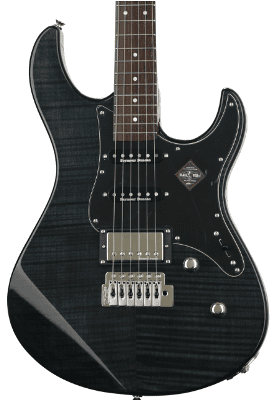
The Yamaha Pacifica is a thoroughly modern super strat with plenty of tonal variation on offer.
It’s light enough not to become uncomfortable, but hefty enough not to feel like a kid’s toy.
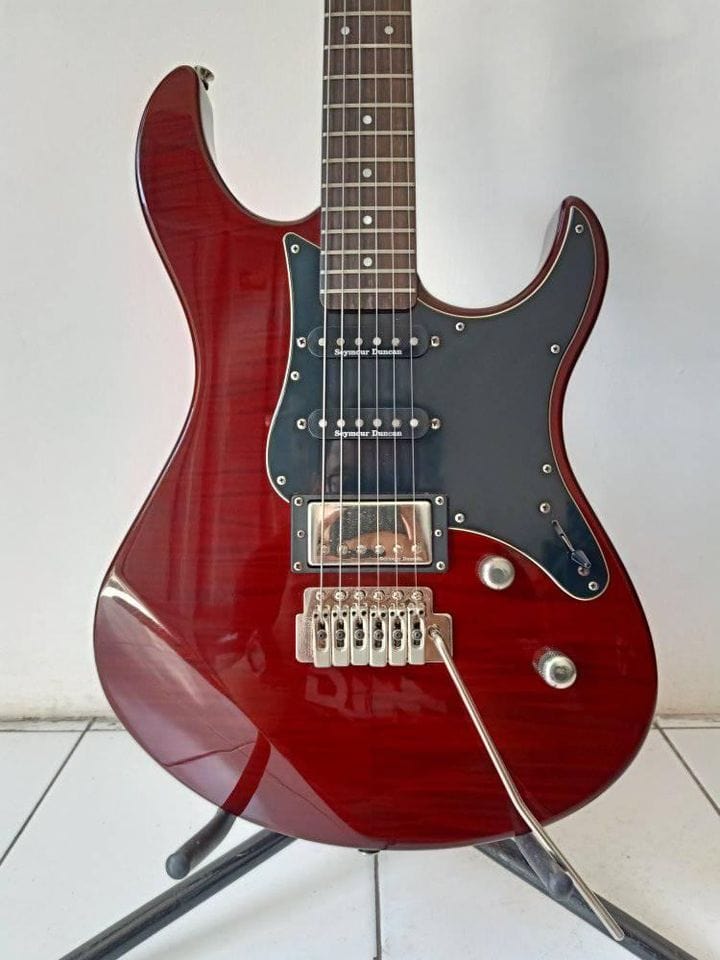
The Yamaha Pacifica PAC612VIIFM in 'root beer' finish. It's actually quite a capable guitar, not to be discounted by the reputation its cheaper $200 namesakes (Pacificas) share.
I particularly liked the neck, a similar profile to the classic Stratocaster. It was very comfortable to play and felt excellent in the palm of my hand.
The Seymour Duncan HSS pickup configuration with coil-tapping was also very welcome. My favorite position on this guitar was the neck pickup with the amp at the edge of breakup.
Surprisingly, the guitar captured the clean-but-threatening-overdrive sound remarkably well. It immediately put me in mind of the Stratocaster tone from John Mayer’s Where the Light is live album.
The rosewood fretboard needed some oiling, but that’s an easy fix to apply yourself.
The Seymour Duncan humbucker did exactly what I expect Seymour Duncan humbuckers to do. At full tilt, it offered searing lead tones and chunky, powerful riffage. Dialing back the volume knob on the guitar cleaned it up into AC/DC-style rhythm territory.
The clean sound from the humbucker was pleasantly twangy, particularly with the coil tap engaged. I added some compression and coaxed one Nashville-ready country tones from this guitar, a pleasant surprise.
This Pacifica model is priced at intermediate level, so you’d expect it to be a similar quality to the Mexican Stratocaster. However, for the price, it felt like a much better guitar, and I’d probably play it over most Mexican Strats I’ve tried.
I’d recommend this to an intermediate player looking for a quality upgrade to their beginner gear or a more advanced player who needs a versatile super strat with great bang for buck.
A Guide to Super Strat Guitars
Super strat guitars are, by and large, built for shredding.
I’ve seen them used in just about every genre of music, from metal to Motown, and above all they tend to prize playability and tonal versatility.
They’re great for cover and session players who need to play multiple genres of music.
When you’re looking to buy a super strat, it’s safe to assume you’re going to use the guitar for either a broad range of style, or for harder, heavier music.
The super strat was invented for hard rock and metal, and the instrument has not parted ways with its roots. Most super strats still feel like ‘80s metal guitars, even the ones with ultra-modern appointments like coil splitting and fancy self-lubricating nuts.
For this reason, I believe a super strat’s pickup selection is among the most important things to consider when buying one.
Pickups
One of the most common replacement parts for any guitar is its pickups. It’s an easy, and affordable, way to upgrade or change your guitar’s tone without damaging the guitar.
The original wave of super strats in the ‘80s - Eddie Van Halen’s “Frankenstrat” notwithstanding - were typically outfitted with high-output Seymour Duncan pickups.
You often see Seymour Duncan pickups in super strat guitars to this day.
Generally, any super strat with Seymour Duncans is going to be a good one. Often, but not always, a super strat that has saved money on pickups by installing their own homemade pickups won’t sound as good.
This isn’t always true, but I’ve encountered few exceptions.
Generally, a super strat equipped with pickups made by one of the major players like Seymour Duncan, EMG, or Fishman will sound better than one equipped with stock pickups made by the manufacturer.
Coil Splitting/Tapping
Related to the guitar’s pickups is its array of features. When tonal versatility is of paramount importance, the range of sounds you can get from the guitar becomes a chief consideration.
For example, many modern super strats feature coil splitting or series/parallel splitting for their humbuckers. This allows you to get single-coil Strat-like tones from your humbucker-equipped guitar.
Not all coil-tapping guitars are made equal, and the truth is that no coil-tapped humbucker will ever really sound exactly like a Stratocaster. However, for the live setting, a quality set of pickups and good coil tapping will get you most of the way. That’s more than enough for most gigs.
Whammy Bar
Other features to consider are the guitar’s tremolo system. Super strats tend to come with a quality tremolo arm. The original whammy bars for this type of guitar were made by Floyd Rose.
These have some drawbacks, as they increase the difficulty of changing your strings and make tuning your guitar more arduous.
Other, more modern whammy bars like those made by Wilkinson and Gotoh typically improve on these systems.
A quality bar is an absolute must for a super strat guitar, and should offer you the capacity for flutters, squalls, and dive bombs in upwards and downwards configuration.
What Kind of Music Do You Play?
The last, but certainly not least, question to ask is what music you’ll play with the super strat.
If you, like most super strat players, just want to rock, you probably don’t need a guitar built for jazz or blues.
If you need something tremendously versatile for cover and studio gigs, you don’t want a rock-ready guitar with a pointy body and active humbuckers.
Most modern super strats are built to be versatile enough to cover pretty much all styles of music. However, some are still built like those of the 1980s, and are only well suited to 80s style metal.
Final Word
Super strats might be the most fun a guitar player can have. By prioritizing playability and power, they might be the tool you need to unlock the next level of your guitar playing.
Whether you’re a die-hard shredder or a seasoned pro looking for a versatile backup guitar, opening the world of super strats is a great option.
