
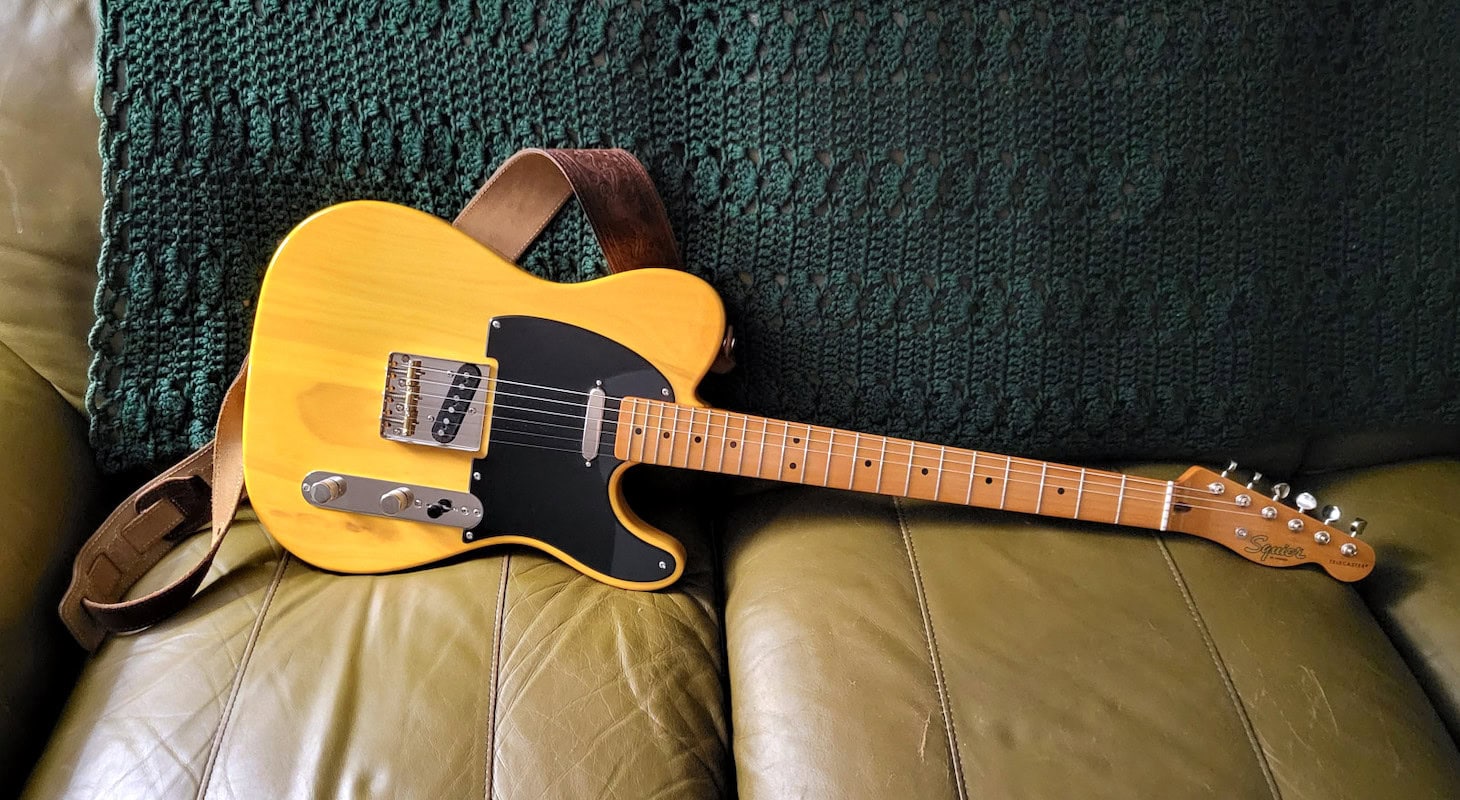
Since it was first developed by Leo Fender in 1952, the Telecaster has been the industry’s benchmark and the favorite songwriter tool for figures the size of Keith Richards or Bruce Springsteen. Regardless of the particular incarnation you own, choosing the best strings for your Telecaster is essential.
Top 3 - Telecaster Strings
Preview | Product | Price |
|---|---|---|
 | ||
 | ||
 |
Imagine if, because of a wrong string choice, you lose the twang, the snap, and the sharper-than-life tone of your beloved Tele? That would be denying your instrument of its very soul.
Telecasters are renowned for their warm, jangly tone. In this article, I’ll point you in the direction of the best guitar strings to enhance the performance of your Tele. What’s more, I’ll give you some options that can either tame those highs, tame the lows, push the mids, or just enhance your guitar’s overall sound.
Let that iconic guitar growl, sing, twang, and rumble at its best with these strings.
Best Strings for Tele-style Guitars – My Favorites!
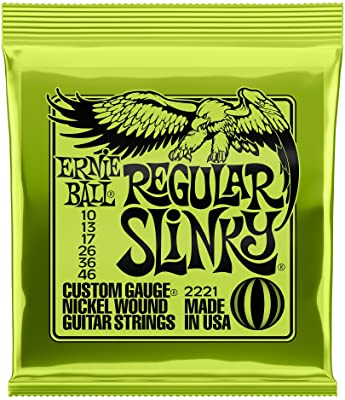
1. Ernie Ball Regular Slinky
Ernie Ball is one of the most recognizable string brands worldwide. Moreover, Ernie Ball strings are known for their high-quality construction and sound. The Regular Slinkies are a benchmark, the industry standard. Yes, regular Slinkies are intertwined with the history of rock and roll.
Rumor says that they were played by none other than Jimi Hendrix.
But that’s not all, some Ernie Ball artists are Steve Vai, Joe Bonamassa, John Mayer, John Petrucci, Joe Perry, Jimmy Page, Angus Young, Slash, Keith Richards, St. Vincent, and Sir Paul McCartney just to name a relevant few. In other words, these strings have some credentials.
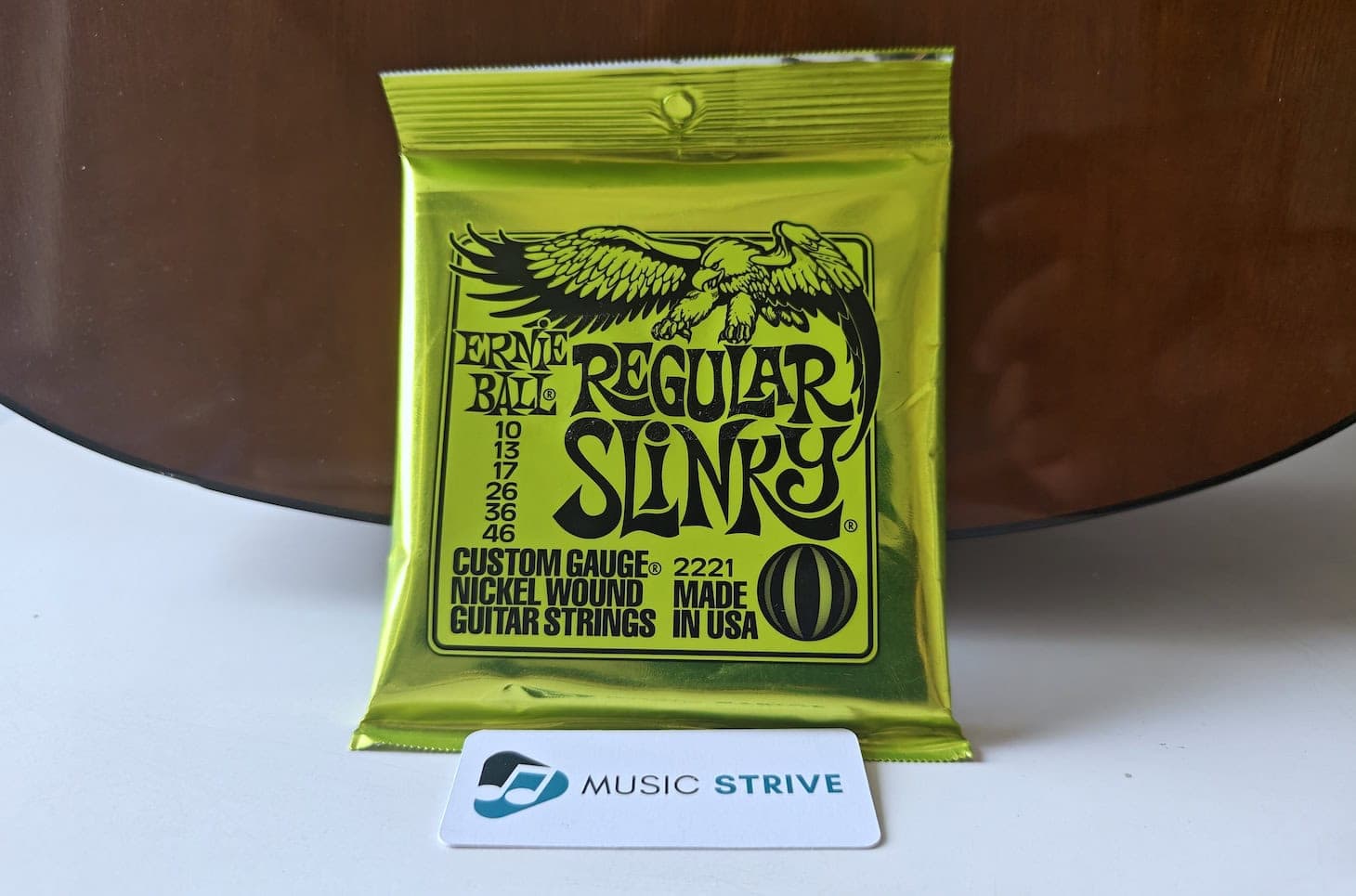
To add to that, the regular Slinkys are the best-selling guitar strings in the brand’s history.
But I’m a natural-born skeptic and I had to put a set of Regular Slinkys on my Telecaster. Let me tell you they are very well-balanced strings. You don’t notice any difference in volume moving up and down from plain to wound strings.
I test this by fingering a C major chord with the fretting hand and playing each string one at a time. When strings aren’t good quality, you tend to have a bass-heavy bottom sounding over the rest or a too-bright top.
Moreover, these strings are easy enough to bend while quickly snapping back into place perfectly in tune. Their tension is even across their length, which makes them stay in tune for much longer than other string brands.
That balance is also present in the tone of these strings. The Regular Slinkys don’t really emphasize a specific frequency range, but rather offer a more rounded, sweet-but-responsive tone. I was able to go from playing the Red Hot Chili Peppers in all its spanking, rhythmic glory and then some metal and the tone was there the whole time.
The mid-range is boosted a bit, but I wouldn’t say that it stands too far out above the highs or lows. The boosted mids are more there to give the strings some more attack and presence. Yes, I know what you’re thinking, “my Tele doesn’t need more mids”. Well, I would say these strings don’t emphasize the mids, but rather let them shine through.
This balance makes these strings an excellent choice for both rhythm and lead playing. They are punchy enough for riffs and power chords, while being smooth and silky for fast solos. That’s exactly what I tested the leads with, Santana’s scorching solo in “Smooth” and they stayed in tune and enhanced my guitar’s natural attack.
I think this is what makes these strings a fantastic match for Telecaster guitars. Teles are great as both rhythm and lead guitars, having strings to compliment that is the way to go.
These strings don’t really change a guitar’s tone, but rather enhance it. In other words, they don’t sound at all muddy or dead, on the contrary, they bring life to your guitar when they’re fresh and new. The Telecaster’s tone is iconic and I am sure a lot of players are going to want to preserve that sound. Me included.
We could say, “The twang is in the right hands”.
The Regular Slinkies are perfect for enhancing the guitar’s tone while rounding out the sound a bit and giving it a nice boost. Finally, the brightness with these guitar strings stays there for a long time and they break-in very fast; they’re ideal for playing gig after gig.
The only minor issue with most Ernie Ball strings, really, is that they have a somewhat tinny sound at first. But don’t worry, because it goes away quite quickly and the strings are usually fully set and broken in after about a day.

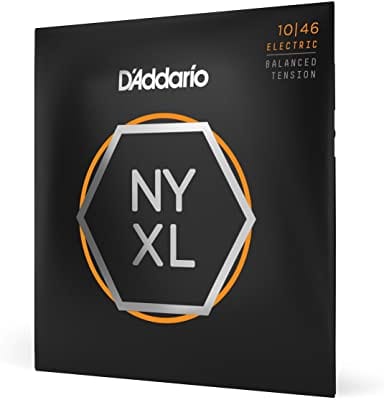
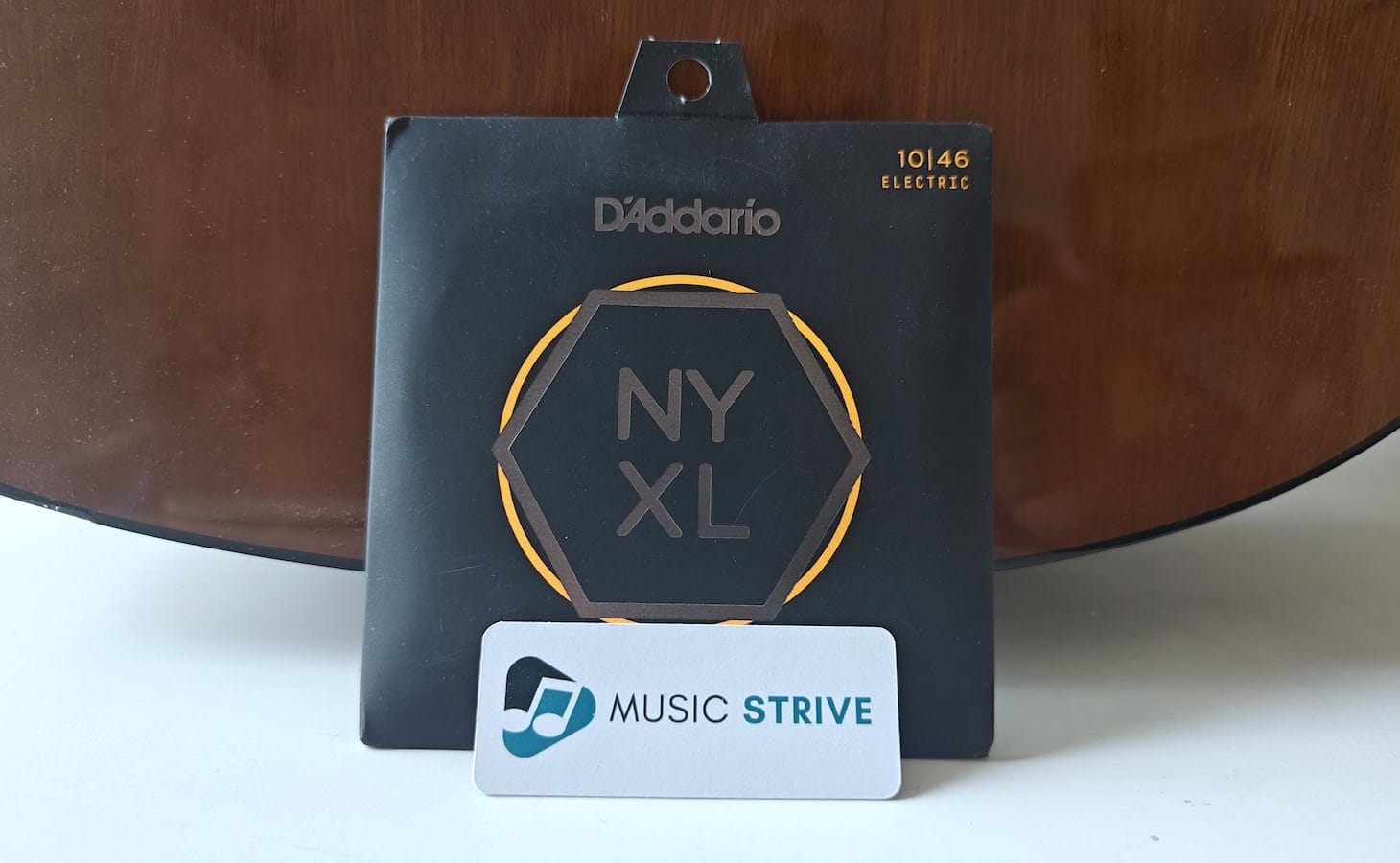
2. D’Addario NYXL
Before starting this review, let me say this: I have many guitars including a Fender Custom Shop Telecaster Custom, and if I can choose a stringset for that guitar, it’s always D’Addario NYXLs. These sound absolutely amazing in my Telecaster and they last forever without losing their brightness.
But let’s start from the beginning.
Another well-known brand of strings, D’Addario has been around for a long time. It is also one of the most favored brands out there for many different types of guitarists.
Again, for D’Addario the list of endorsed artists goes on forever. They supply players as different as Nita Strauss, Nile Rodgers, Joe Satriani, Sam Fender, Wolfgang Van Halen, Julian Lage, Guthrie Govan, and Frank Gambale among many others.
Their NYXL series of strings is, according to D’addario, their best. They offer a high-quality construction and tone suitable for practically any style of playing. Yes, their steel core wrapped with premium nickel-plated steel wire is done with D’Addario’s proprietary Fusion Twist technology. This gives the strings a longer usable life; they’re just as strong as they’re punchy and bright.
The NYXL 10-46s strike an excellent balance between tension and stretch. They are quite easy to set up and bend, while having enough tension to stay in tune for longer. I do some studio work in my home studio and I used these strings with my Tele plugged into my Deluxe Reverb and it was bell-like clean, just what I needed. These strings do push the guitar’s mids but not into overdrive but into a celestial kind of clean that’s well balanced and not crunchy.
Their nickel plating is top-notch, making them fairly soft to the touch. And they are also smooth enough to make sliding a breeze. Because of this I dared to play a cover of Pantera’s “Five Minutes Alone”. Pantera on a Tele? Yes, indeed, and with very good results. When your guitar plays fast and smooth you feel bold and take chances. Well, these strings feel just like that.
But what’s the secret with these strings, what’s the catch? D’Addario went with a high-carbon steel core in the 1046s. This means These strings won’t budge under heavy picking or extended bends and feel extra silky and smooth to the touch.
Tonally they are also very well-balanced. There isn’t any real emphasis on either the highs or lows, and instead, the mids are just boosted a bit. This translates into a magnifying glass put over your Tele’s edge, bite, and twang. Yes, far from crunchy, these strings emphasize the timeless characteristics of a Tele’s tone and bring your guitar’s soul to the forefront.
To say it one line, these are some of the punchiest strings I have ever played. They have a great attack and sustain, making power chords and riffs stand out.
They also have great clarity, perfect for soloing. These strings are ideal for both rhythm and lead playing and switching between the two is no problem.
I am actually quite impressed by just how heavy these strings sound. Not in the sense that they have a beefy or (God forbid) muddy low end, there is just a sense of weight to them. Again, testing strings with a Pantera riff might give you an idea of how heavy playing suits these NYXLs.
They add a new dimension to any guitar, especially something like a Telecaster. A Squier Telecaster will benefit the most from these strings. I found that Squier Teles can sometimes sound a bit flat and thin. The NYXLs really help to fill up and round out their sound quite a lot.
All of these benefits do come at a cost, though, quite literally. These strings are some of the most expensive around. But I do think that the price is worth the high-quality strings you are getting.
If they’re within your budget, I would say go for them. Be warned, though, it might be a one-way ticket and you’ll end up getting addicted to these strings as yours truly, the writer of this piece.
Further reading: our full review of the NYXL strings.
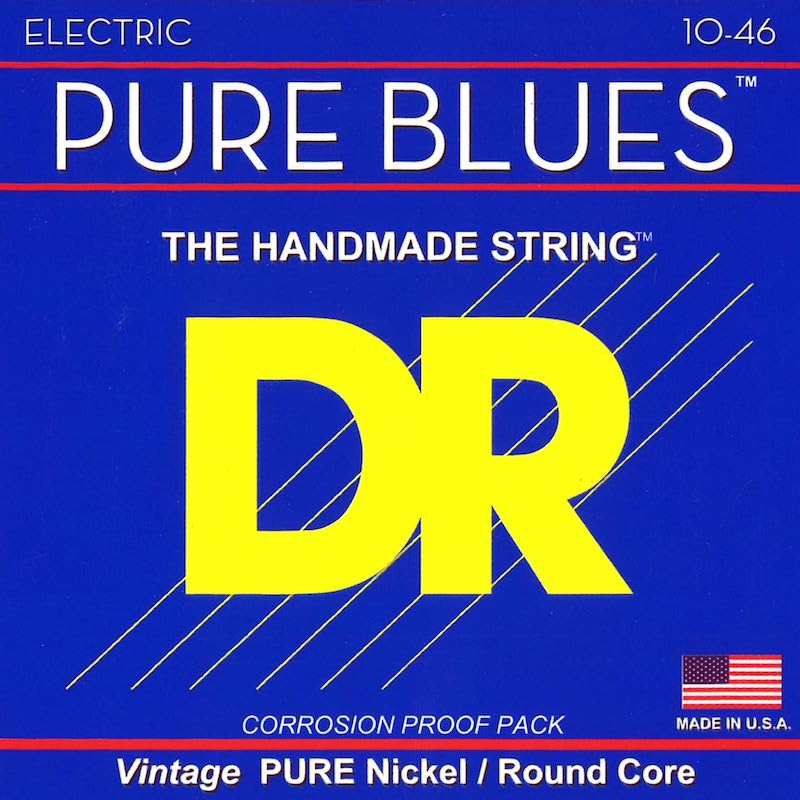
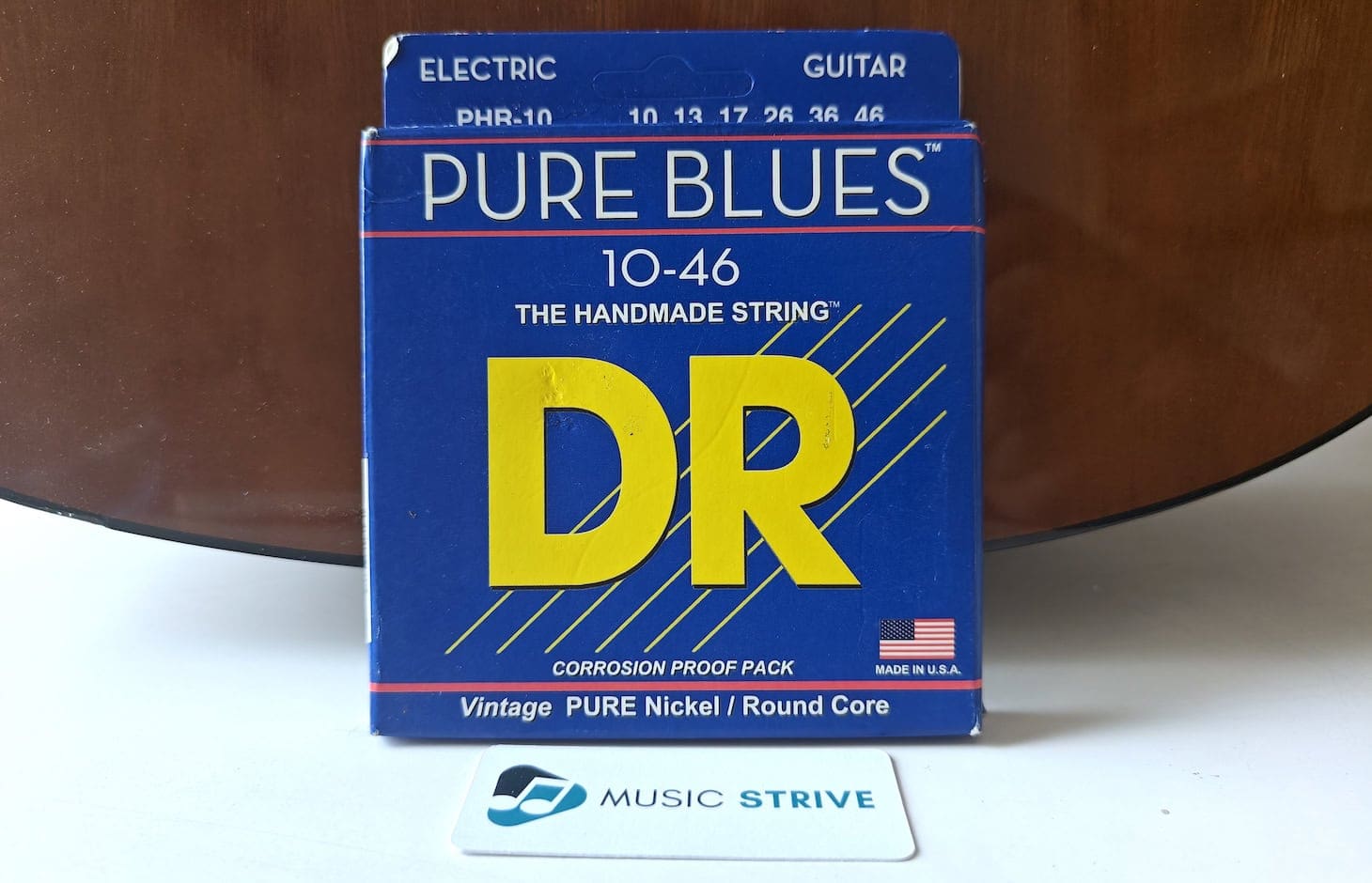
3. DR Strings Pure Blues
DR Strings have been around for a while and are renowned for their excellent quality and tone.
Their Pure Blues are probably their most popular strings and for good reason. The Pure Blues are a vintage player’s dream.
Why’s that? Well, because pure nickel was the element of choice for guitar players from ‘57 in the USA. The strings that made all the amazing records all the way to the grandiloquent ‘70s were wrapped in pure nickel.
The ‘70s brought along the nickel-plated strings which reduced costs drastically but also gave the strings more brightness than pure nickel and a little more output.
That is, of course while the plating lasts, because once that wears out by playing, the strings lose that liveliness. The pure nickel is, of course, a little more lasting in time because there’s no plating, it’s pure nickel. Therefore, you have the feeling that your strings sound more consistent in time.
So, these pure nickel strings have a nice warm and mellow tone, very vintage-oriented. They are ideal if you want a Tele with a warmer, fuller, and even more rounded tone. For example, those who play a maple-neck Telecaster can make the most out of that bridge pickup without fearing harshness.
I put on five strings on my maple-neck Telecaster and did my best Richards pose in front of the mirror and let me tell you that through a Fender valve amp, the riffs to “Brown Sugar”, “Start Me Up”, and “Jumpin’ Jack Flash” sounded very close. Not because of my playing of course, but because of the combination of the pure nickel string and the maple-neck Tele’s natural twang.
The Pure Blues are also quite boomy. They add some great bottom end to a Telecaster giving it quite a bit of extra punch.
Chords especially are full and boomy. These strings are ideal for playing clean rhythm parts. They are also still fairly clear when playing heavily-distorted chords and power chords. I didn’t notice any muddiness.
One famous endorser of these strings is Derek Trucks. The slide virtuoso has been playing DR Pure Blues strings for over two decades. They work wonders taming the trebly side of his SG and bring out the richness of the mahogany body and neck.
The pure nickel is one thing, but the construction of these strings also offers a few other advantages.
To begin with, they’re wound over a round core (opposite to many other hex-core strings). This allows nickel to be in touch with the core entirely and gives them more sustain.
Secondly, just like all DR, these are hand-wound strings with an extra human element that, to yours truly, is always a plus.
Finally, since nickel is much softer than steel, the Pure Blues aren’t as tough on your fingers. These strings feel great too.
If you have sensitive fingers or you’re a beginner, these strings are perfect for you. They also have less tension than other strings. This makes them much easier to bend as well as set up.
Perhaps, the idea of having a warmer, mellower set of strings taming your guitar’s high-end and mid-highs isn’t your cup of tea. For example, I wouldn’t want them on my rosewood-fretboard Telecaster but they’re fire on my maple-neck one.
The DR Strings Pure Blues are really the perfect strings for blues players or if you are just looking to give your Tele a fuller and warmer tone.
Further reading: our full review of the DR Pure Blues
4. Ernie Ball Cobalt Slinky
The second set of Ernie Ball strings on this list, the Slinky Cobalts are quite a bit different from the Regular Slinkies.
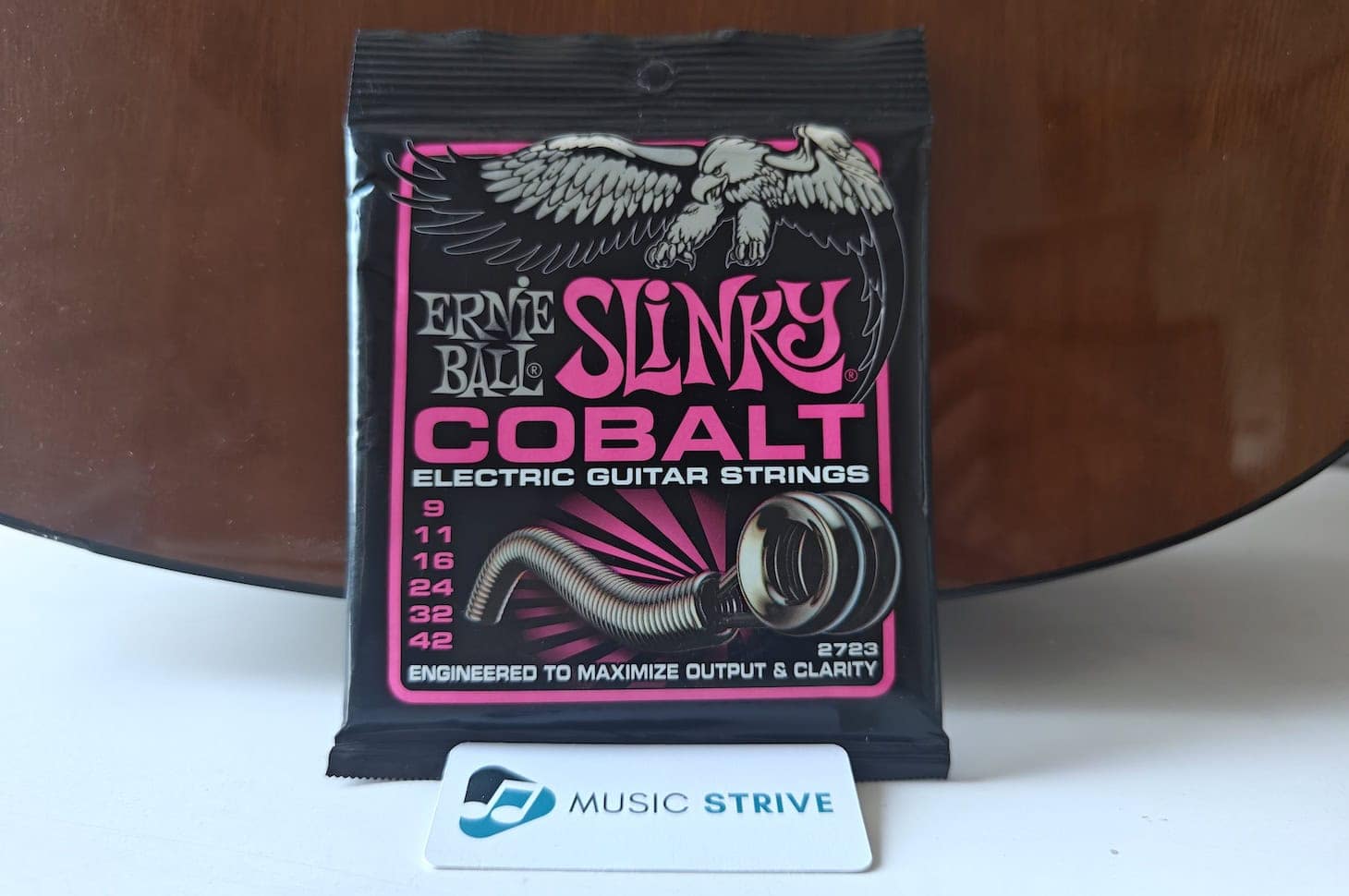
The obvious difference is right there in the name. Unlike Regular Slinkys that are nickel-plated steel, these are made from an iron/cobalt alloy. This is quite a unique approach to how strings are made and comes with a few advantages.
The first and most important advantage of these strings is that the iron and cobalt alloy used is more reactive to the magnetism of the guitar’s pickups. This extra magnetic response translates into a more lively sound from the guitar. Yes, these strings bring out the bottom end as well as the treble side of your Telecaster.
Secondly, the alloy also offers an extended dynamic range. This means you’ll be able to hear higher highs and lower lows than ever before. It also means that you can go from quiet and mellow to strong and crunchy in less.
Thirdly, and I think this is the biggest one, these strings maximize the output and clarity of your guitar. This was especially true with my rosewood-board Telecaster. I tried some weird jazz-friendly, near impossible chords (those that have multiple numbers and symbols) and the result was piano-like.
Also, cobalt is fairly strong and resistant to oxidation. That means that these strings last quite a while. I would compare their lifespan to Elixir strings, maybe even a little bit more.
They also have great tension while still having enough stretch. Their stretch makes them easy to set up and bends aren’t too hard to do. I did try to play some slow blues and bending a tone and a tone and a half, and these strings fell back down to the original tone in perfect pitch.
When not bending and playing slow blues, I tried shredding fast (yes, ask Ritchie Kotzen if Teles are not shredders, right?). Their tension meant that they stayed in tune for much longer than other strings. This is, for me, very important, especially when gigging.
Fender guitars, like the Telecaster, have a 25.5” scale, which gives them high tension on the neck. This is what makes them so percussive and responsive when played hard (for this we could ask my guitar hero, John Frusciante who made a career doing exactly that). These strings handle that high tension with ease, and are perfect for guitars like Teles and help to keep them in tune for much longer even when they’re taking a beating from your picking hand.
These strings also sound great with distortion. I worked this aspect of these strings by adding a ton of gain to the signal and, although my Telecaster has single coils, it remained clear, so there is no muddiness, and they do have excellent sustain. If you play a lot of heavier music or want to turn your Tele into a hard rock or metal guitar, then I would definitely go with a set of these.
Furthermore, the extra push of the cobalt and iron alloy really drives your guitar to the next level.
Perhaps, the one thing I could say is that the Cobalt Slinkys are a bit rougher than other strings on the fingers. This is when compared to silky strings like Blue Steels, for example. This isn’t necessarily a bad thing, them being tougher on your fingers, just gives them some extra grip.
That extra grip does make sliding a bit less smooth, but after a few minutes, you should be used to sliding again.
Read my full review: Ernie Ball Cobalt Slinky
5. Dean Markley Blue Steels
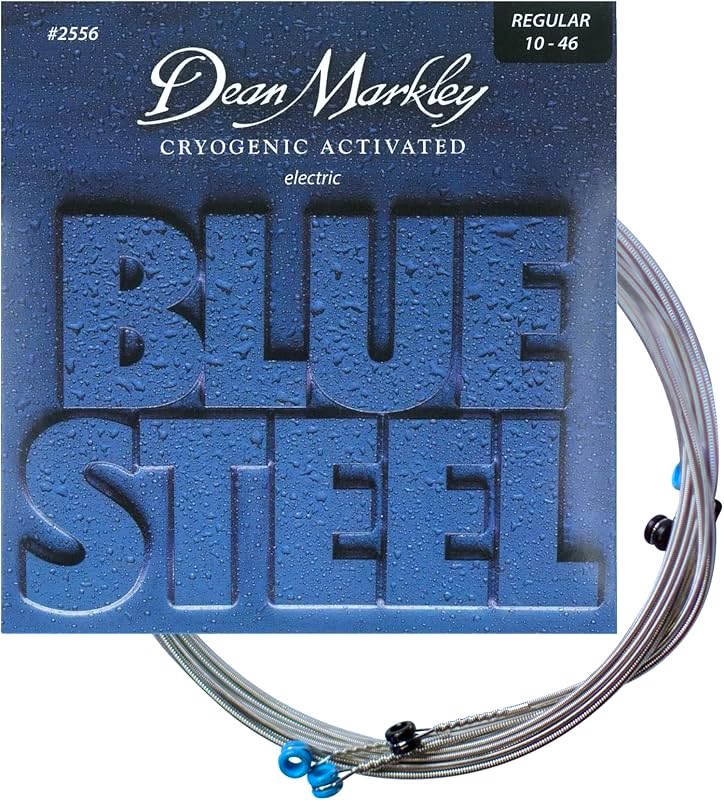
I remember perfectly the first time I saw the ad for Blue Steeels, saying “cryogenically activated strings”. It was like staring at the future. I bought a set, installed it on my first cheap Ibanez HSS Strat copy and immediately noticed the difference. I didn’t have a fine or trained ear back then but these strings were so much better than what I had on before that the difference was big enough for me to notice.
I know, “cryogenically activated” sounds like empty marketing. You expect a T-1000 to come running at you so you can say “Hasta la vista, baby” and blow him in a thousand pieces. Well, it’s kind of like that but with no killer robots involved.
The idea is that, by lowering the temperature of the string to -320°F (-195°C) using liquid nitrogen, the molecular structure of the string is altered. This alteration takes away the transient material that causes the harshness and brittle quality some strings have.
Also, it enhances the strings’ brightness and makes them last longer. That’s 3 times longer according to the company.
Well, that statement is confirmed by the adventures yours truly had with these strings throughout his musical life. Moreover, the claims of the company are completely true because these strings not only last longer, but also they keep their brightness for most of their usable life.
That’s not all because these strings carry some punch and can make full chords, power chords, riffs, and melodic rants (like we all have sometimes) shine through the mix. I tried them playing my favorite tunes by The Offspring and felt like a teenager again. Yes, my Tele sounded 10 times better than that cheap Ibanez copy, but the feel of the strings was a trip to the past.
Speaking of which, these strings sound and play as smooth and powerful as they’re advertised to.
I know what you might be thinking: “If these are so good, why did you change to NYXLs?” Well, the answer is not unique but is very simple: One, I got tired of Blue Steels as you can get tired of something great as a steak or ice cream if you eat it every day. Two, if these last 3x longer than the rest and preserve their brightness, NYXL can extend that to 5x.
That said, these are terrific strings for any stage in your career and they are a match made in heaven for the Tele twang and snap. Also, if you have a cheap Tele copy, these strings can help tame those harsh high frequencies those guitars usually have.
6. Elixir Strings Optiweb
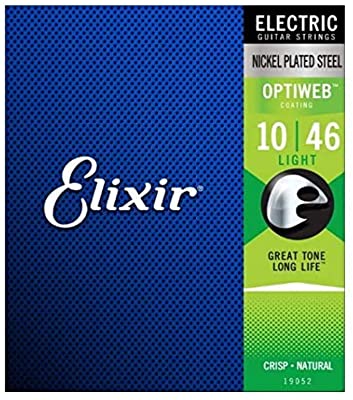
Elixir Strings offer some of the highest-quality strings available today. I remember very well when Elixir strings came out; they caused a revolution. Until then, coated strings weren’t something we loved or wanted. On the contrary, it was seen as something that would muffle or kill your guitar’s tone.
Optiwebs are revolutionary because they’re not only well-made, but Elixir also owns the award for pioneering coated strings over the last few years.
When they came out, I put a set of Elixirs on my Martin and on my Tele. The results were beyond anything I had experienced before. They’re crisp and clear, and that crispness lasts for longer than most strings.
Moreover, Optiwebs aren’t your only choice, Elixir actually offers a number of different types of coated strings. That said, their Optiweb strings are their most natural feeling and sounding ones.
As someone who regularly plays Elixirs (yes, life’s too short to play only one string brand), I think they have really nailed it with the Optiwebs. They don’t have that overly plastic thing that feels weird to your fingers. On the contrary, they offer a smooth feel and they sound like fresh new strings out of the pack, and after a dozen gigs.
I know that the idea of having strings on the guitar that feel plastic and won’t break even after losing their mojo is what puts most people off from playing coated strings. Most guitarists avoid coated strings at all costs because of an empty prejudice that says that most of them don’t feel or sound great.
Well, I have good news for you fellow players, Elixir has somehow managed to eliminate both of those issues. The Optiwebs don’t feel like coated strings at all. I doubt you would even be able to feel the difference between these and uncoated strings, even side by side. Believe me, I’ve done the test going back and forth from one type of string to the next with the same guitar.
If you judge them by their tone, it is the same situation. While some say that coated strings tend to sound a bit dull and flat compared to uncoated strings. The Optiwebs don’t have that at all. They have the same brightness you would expect from something like Ernie Ball Regular Slinkys.
In fact, I would say that Optiwebs tend to enhance the treble side of tone more than many brands. They can even sound a bit harsh if your guitar’s high-end isn’t musical and nice. This is something that also happens with Slinkys, they convey to the speaker your guitar’s tone, just a little enhanced and with a small midrange bump.
I’m a fan of The Clash and I played several of their tunes to try these strings. The reggae-infused songs, ska, and ballads sounded amazing. I just felt they were well-balanced but lacked a bit of low-end, especially with my maple-neck Tele.
That said, they actually share quite a bit of similarities with Ernie Ball strings. Their tension and stretch are very similar. The Optiwebs are easy to set up and they settle quite quickly. Their tension also means that they will stay in tune for much longer.
Their tone is also quite similar to Regular Slinkies. It is quite well-balanced with nice and punchy mids. In terms of durability, which is the brand’s flagship claim, I have to say that these strings remain bright and punchy most of their usable life. They just won’t break.
Also, a great addition to the Optiweb coating is the anti-rusting treatment they give to the first strings. Isn’t it super annoying when the top three strings are minty and the bottom three are rusty and heavy on the fingers? Well, Elixir took care of that here too.
Finally, their coating is what really sets them apart. The revolutionary approach Optiwebs take is using a unified coating that covers the string and every gap that might exist in the winding process. This way, grime, sweat, and corrosion won’t build up.
Optiwebs are much more resistant to temperature and moisture. And if the oils from your hands seem to wear your strings out more than they probably should, I would recommend getting a set of Elixir strings.
Plus, string choice is the cheapest tone experiment ever (after picks, of course).
7. GHS Boomers
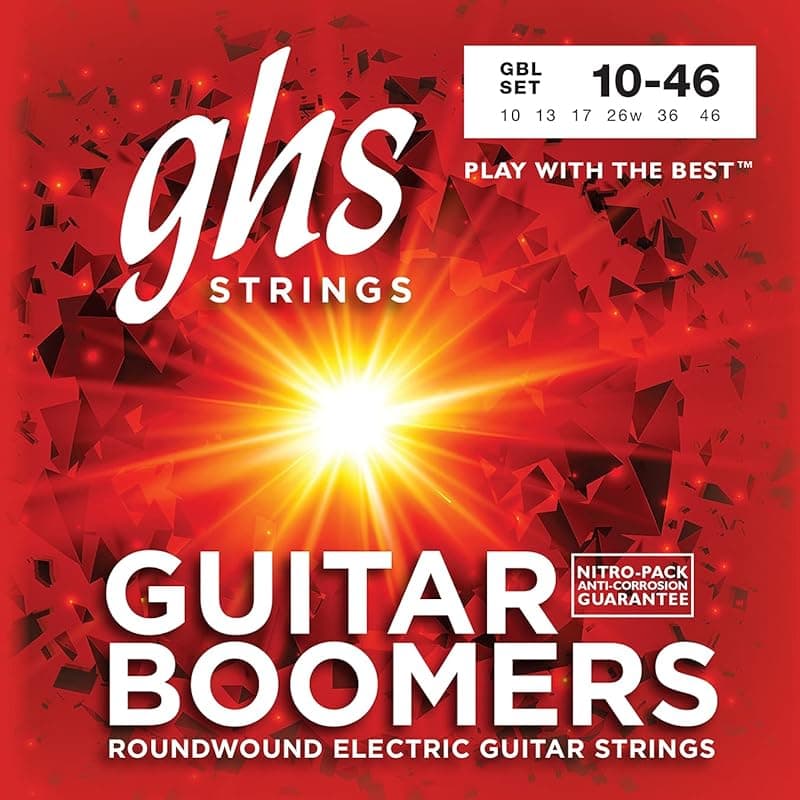
If there’s one string advertising poster I would drool for other than that of Blue Steels, it was GHS Boomers. I remember seeing the image of David Gilmour, a guitar hero of mine, advertising Boomers as the best strings on Earth.
The first time I tried them on I thought, “Hey, if they’re good enough for David, they’re good enough for me.” And I wasn’t mistaken, not one bit.
I would also say that, together with Ernie Ball Slinkys, the GHS Boomers are the most recognizable in the market. They still have that red packaging with the explosion in the back that has served them for generations.
I’m not here to tell you about my teenage years and string posters, though. I’m here to tell you why Boomers are great for Telecasters.
Firstly, I would say that the balance in tone they offer is perfect for an all-terrain guitar as the Telecaster is. They’re sitting at the center of the tonal spectrum for GHS. Their brightest strings are steel-made while their mellowest strings are flatwound.
In that sense, I would say that they feel similar to Slinkys and they help the natural twang of the Telecaster. Yes, I enjoyed these strings with both Teles. They emphasize the attack, the percussiveness, and bring some additional brightness to the mix. This is a good type of brightness, not harsh or brittle.
One thing that differentiates these strings from Slinkys is the core. While Ernie Ball uses tin-plated hex cores for their strings, GHS employs round cores. This adds to the strings’ power and response since the wound part is in contact with the core entirely.
With a fresh set of these strings on my guitar, I tried every musical genre I know. I went from Jazz and Bossa to Hard-Core, played some Rock and Roll, Punk, Heavy Metal, and even did my best Ska attempt. They remained clear and comfy throughout the test.
Furthermore, bending was very easy as well. I couldn’t play Gilmour’s strings without the double-bend trick David mastered. These strings feel great to the hand, stretch, bend, and bounce, and always come back to perfect pitch.
I’m not going to tell you they last as much as Elixirs or Cobalt strings do, nevertheless, they sound amazing while their mojo is at its best. After that, they go into a slow decay that screams for replacement.
I would say this: If you’re about to hit the studio, have an important gig, or don’t mind changing them often, these strings are absolutely killer, much like Slinkys but with an extra dose of power.
On the other hand, for extra-long-lasting strings, just look elsewhere.
Click here for our (even more) in-depth review of the GHS Boomers.
8. D’Addario Pro Steels
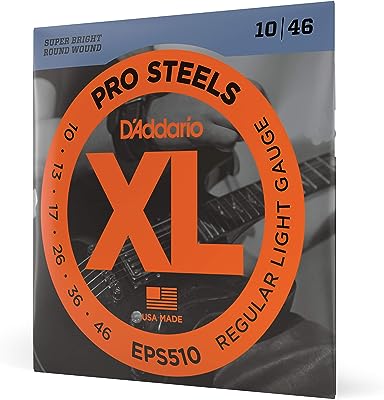
The Pro Steels .010-.046 set from D’Addario became a classic because they’re reliable, sound great with overdrive, and they’re made in the USA.
These are D’Addario’s brightest strings. They offer a superlative level of high-end for your guitar. This is especially useful if you have a dead-sounding, dull, or muffled guitar. Also, if you want to enhance the twang and treble-oriented spank and percussiveness of your Telecaster and cut through the mix like never before, these strings are perfect.
But let’s rewind a bit, let me tell you more about the strings themselves and we’ll get into the sound in a bit.
These strings are made of a high-carbon steel hex core and a wrapping made of stainless steel. This combination of materials is a highly-magnetic alloy that interacts with your guitar’s pickups generating an uberly bright, super punchy tone.
In this vein, the ease with which these strings drove my Tele into overdrive playing with my Deluxe Reverb was great. I was able to use the amp at a lower volume and have my guitar roar with crunchy, punchy, and powerful tones.
That said, the guitar’s tone was also too bright to mellow it down. This was especially true with my maple-neck tele. It went straight into Stones-like overdrive with enough edge to cut down the Eiffel Tower.
To test this I tried playing some chicken’ pickin’ with some of my favorite country licks and all I needed was a big hat and a pair of Texan boots because the tone was right there. I did my best Brad Paisley impression and he would have been proud of me, I know.
With the rosewood-board Tele and the Pure Steels, I tried some Rolling Stones riffs, some Chuck Berry, and some heavier stuff. Rock and Roll sounded amazing but these are maybe a little too bright to chug the way I like chugging. There was no big bottom end to talk about.
Also, when it comes to guitar strings, I’m of the opinion that reliability and stability are among the most valuable features. Fancy coatings and alloys are all good and well, but what matters to me is my guitar feeling and sounding good.
They stay in tune very well, but they do require a little stretching out when you put them on the guitar in order to keep tune. They also feel a little tight under your fingers, which I appreciate, but may not suit all players.
The stainless-steel alloy extends these strings' life span. Furthermore, since they’re so bright, when they start mellowing down, they sound like regular strings. This slow decay into that kind of tone was something I fancied but might not be your cup of tea.
To sum it up, everything D’Addario claims about these all-steel strings is true. They are made from a particular magnetic alloy which offers additional bite and treble and sound great with an overdriven amplifier. If you want that classic pushed-tube-amp, naturally overdriven Tele sound, with all your Tele twang intact, these strings do a great job.
Some guitarists want an extra light feeling with minimal fight from the instrument, which is not what you’ll get from these strings.
Overall, these are reliable, nice-sounding strings and I’d happily play all my gigs with them.
Which Strings Should You Pick for Your Tele?
When a guitarist wants to improve their tone, often the first thing they consider changing is the amplifier and guitar combination that they use. These are undeniably important aspects, but, hey, not all of us can afford multiple amps and guitars.
Furthermore, the right type of strings can take you to take more chances as you’re playing because you’ll feel more comfortable. Likewise, the right set of strings can breathe new life on a guitar you put aside because it wasn’t entirely of your liking for being too thin, too thick, or just not right.
The impact that strings have on both sound and playability shouldn’t be underestimated.
Plus, just think about it, after picks, I can’t think of a more affordable tone experiment.
Moreover, the standout quality of a Fender or Squier Telecaster is its ability to sound great across a wide variety of styles and genres. That might be why everyone from Bruce Springsteen to Jim Root (Slipknot) plays one live, right?
However, without choosing the right strings, this iconic guitar will fail to maximize its potential. Believe me, you can love a guitar you like and like a guitar you dislike by just restringing it with the right set.
In that vein, when it comes to strings, there isn’t really a right or wrong answer. Everyone will feel differently about different strings and have their own wants and needs.
Stevie Ray played 0.013 and Billy Gibbons plays 0.007. Which of these legends is right? Both or none?
This is what makes experimentation with different brands, gauges, and materials such an important aspect of tone searching. You might be surprised what new sonic territory you can visit with your Tele just restringing it. Moreover, you’ll play differently with the different gauges.
Yes, strings can have a big impact on not only your sound, but also your playing.
Here are a few things I believe to be the most important when choosing a set of strings:
String Gauge
Gauge essentially describes the thickness of the strings, and range from extra light to extra heavy.
There’s this myth about heavier strings bringing an extra dose of tone to the guitar. Well, that’s something players like Billy Gibbons have debunked. He got that from none other than BB King, someone whose tone is so big he can fill up a stadium with just a note.
According to Billy, BB King asked him to play his guitar, strummed and gave it back looking him in the eye. Then, the late and great blues legend said to him “Why you working so hard?”
Billy was going for the SRV-style utterly heavy gauge to get a bigger, fatter, heavier sound. BB said it was all just not true. Now, the Reverend is known for having his own set of ultra-light strings going from .007 to 0.038. If you’ve ever heard him play live or in the studio, you know he’s got a huge and thick tone regardless of string gauge.
So, what’s the best gauge for you? Let’s break it down a little further.
If you predominantly play chord patterns and melodies on your Telecaster, then you should probably opt for heavier-gauge strings. This will increase the tension on your fretting hand, and produce a brighter tone. This also helps tuning stability, since the extra tension makes the guitar more reliable in terms of tuning. For example, a 25.½”-scale guitar is harder to bend than a 24 ¾” but stays in tune better.
Likewise, for example, I put .010s on all my guitars except my Mustang, which uses .011s. Mustangs have a shorter 24” scale, so I get more tuning stability and don’t really feel the difference since the scale compensates for the extra thickness.
If, on the other hand, you like to crank up the gain and shred out riffs and solos, then thinner-gauged strings are likely to be your best option. They’re easier to bend and to play fast with. If you’ve ever gone from a guitar with 0.10s to a guitar with 0.09s or 0.08s, you’ll know what I’m talking about. It’s like you’ve been training with extra weight and suddenly get rid of it.
Also, if you tune your guitar down, you should put thicker strings on it. I went through that whole Nu Metal thing that was big in the early ‘00s and played my dual-humbucker Ibanez Talman in drop-C with 0.013s.
Believe it or not, it wasn’t at all a meat grinder, they just fell right.
If you fall somewhere in the middle of these two extremes and perhaps don’t strictly stick to one style of playing, medium or regular strings will provide you with a good balance. To be more precise, I would say, “If you don’t know what you like, get 10s.” That’s the benchmark gauge for most players.
To tell you more, when I worked at a music store some years ago, I would sell ten sets of 0.010s a week, maybe two sets of 0.009s, and might have sold one 0.008s set in my whole time there (three years).
This tends to have a huge impact on your playing, at least in my experience. Getting the string gauge that is the most comfortable for you is very important and will very likely make you play better.
Also, if you have more sensitive fingers or haven’t built up enough strength yet, then a lighter gauge is a much better option. I think a .009 or even .008 gauge should be perfect for you
Heavier gauges have higher tension, meaning they put more strain on the neck. For a Telecaster, a .013 gauge might be the limit. String gauge also has an effect on your guitar’s neck, and since most Teles have a maple neck, they can withstand more tension than mahogany-neck guitars.
This is in part what allowed SRV to have .013s on his Strat and play it in E standard.
So, to avoid bending, warping, or even breaking your Tele’s neck, stick to string gauges below that. That is, of course, if you’re tuning to E standard. The lower you tune to, the thicker the strings should be to make up with the looseness of the lesser tension.
String Material
The material the strings are made from can have a noticeable impact on the tone of your guitar. There are a few different materials and combinations out there and they will all affect your tone differently.
Some materials will highlight certain parts of the guitar’s range like the highs or the lows. Other materials won’t emphasize one part as much, but rather round out your tone more, adding depth and character.
Let’s break it down and see what does what, shall we?
Steel
While most guitar strings have a steel core, pure stainless steel strings are not the standard for electric guitar strings. They provide the highest level of brightness when compared to the rest of the materials. Plus, they provide great attack and sustain, while adding a ton of brightness to the tone.
Although Telecasters in general are known for being bright guitars with lots of twang and snap, these strings can be ideal for brightening up warmer or darker-sounding Teles.
Also, they’re the string of choice for many country and western guitarists who also prefer stainless steel strings to get a really twangy sound, especially on Telecasters.
Finally, if you want to make that tele scream & shout, these are perfect to bring the amp to naturally overdrive effortlessly.
Nickel-Plated
Nickel-plated strings are the most common type around today. These are made of steel with a thin layer of nickel on the outside.
This composition provides a few benefits. Firstly, you are still getting a fairly bright string, but the nickel helps to mellow out the sound a bit. This creates a more rounded and fuller tone than steel. This translates in a good-for-all, balanced tone that sits right in the middle of the spectrum. For example, we could think this is the recipe for success behind legendary strings like Ernie Ball Slinkys, D’Addario EXLs, and GHS Boomers.
Secondly, nickel is more resistant to rusting. This means that nickel-plated strings tend to last much longer than steel.
Lastly, nickel is softer than steel. This helps to make the strings less harsh on your fingers.
Pure Nickel
Pure nickel strings are the exact opposite of pure steels. They are quite warm, with much bottom end. If we were to make a ranking going from the warmest to the brightest, pure nickel and stainless steel would occupy each of the opposite extremes.
A good example of this is to think Derek Trucks plays only pure nickel strings and he embodies the traditional, vintage and warm guitar tone you need to play the blues like he does.
They are also much softer to the touch. This makes them easier to play for beginner Telecaster players. They are great to tame the extra tension of the 25 ½” scale.
Another good thing about them when compared to nickel-plated strings is that the nickel doesn’t wear out, and hence, they offer a uniform tone throughout their lifespan.
So, if you wish to tame the harsh or brittle high-end of your Telecaster, install a fresh set of pure nickel strings. On the other hand, if you want to add some brightness to your Tele, go for stainless steel.
Cobalt
This is a fairly new type of string compared to the others. For example, Nickel-plated strings were introduced to the USA in 1957 and Teles were already rocking since 1952. These strings are just as revolutionary as those were in the fifties. They are made with an iron/cobalt alloy.
But why are these strings a thing? Well, Cobalt strings have a few advantages over pure steel, pure nickel, and nickel-plated ones.
Firstly, they are much stronger than steel, have great tension and stretch to perfect tuning stability, while also increasing your guitar’s volume and dynamic range. This is related to the alloy being very reactive to the guitar pickups’ magnetism, and hence boosting volume and presence.
Secondly, their tone is also about as balanced as the tone of nickel-plated strings, but with more punch, sustain, and volume.
Finally, they also have a great added bonus. Some people have a nickel allergy. This means that even though they prefer nickel-plated strings, they can still be uncomfortable to play.
Cobalt strings don’t have that issue. So, if you have a nickel allergy, cobalt strings offer the same level of comfort and tone without the risk of irritating your fingers.
There are a bunch of other types of strings out there (the list grows everyday), but these are the most common ones. Plus, if you follow our tone map from warm to bright, you already know what you need to buy to get the most out of that Telecaster of yours.
Coated or Uncoated
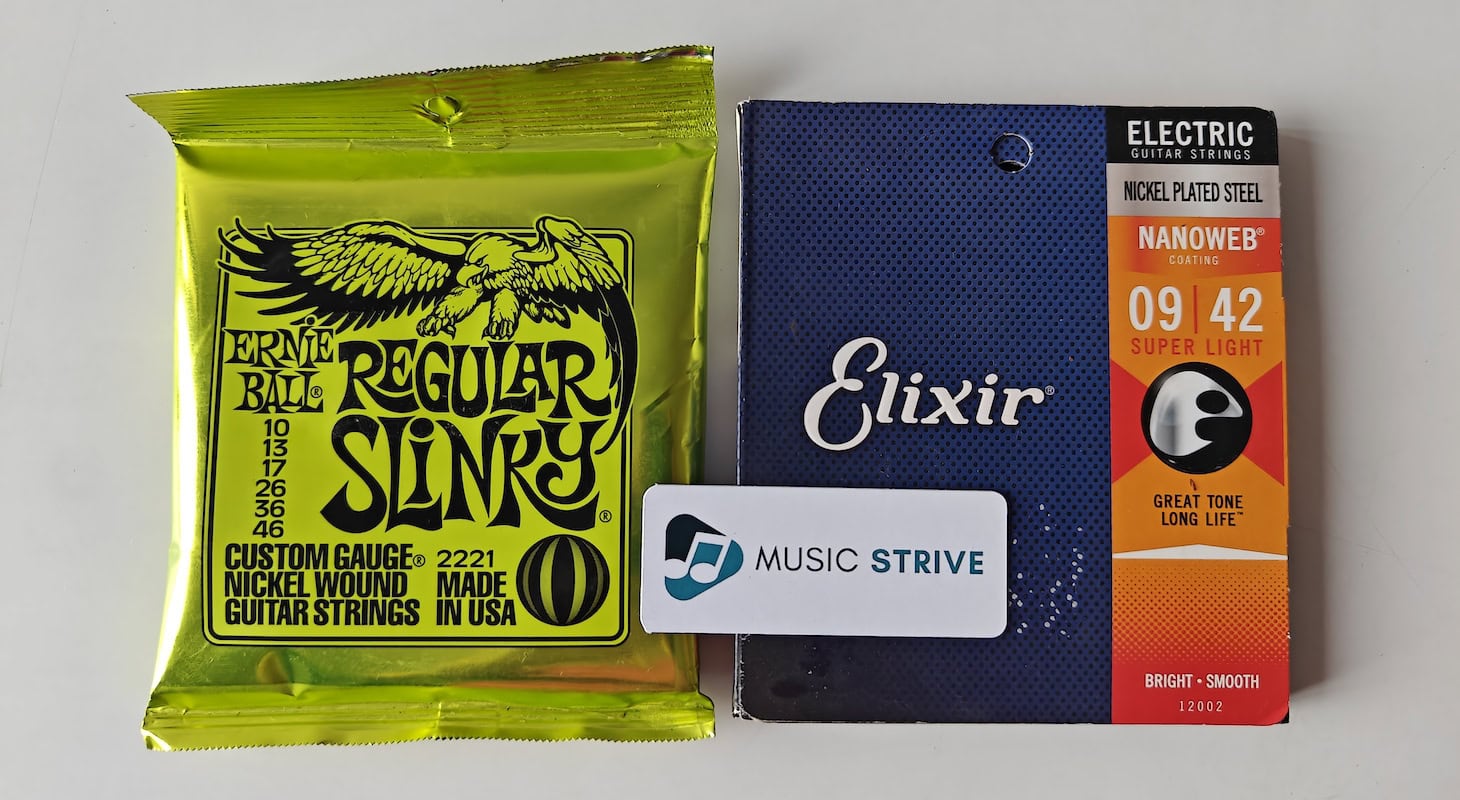
Ernie Ball's ever-so-popular Regular Slinkies up against Elixir's coated strings (Nanoweb)... Coated strings or not, what do you personally prefer?
This is something that causes debate amongst guitarists. Many swear that coated strings aren’t worth losing tone. Their main arguments are that coated strings feel unnatural and sound dull compared to uncoated ones.
Another big argument is that, although they last much longer, they lose their mojo during their lifespan and you’re left with strings that don’t sound good and won’t break. Also, having strings that last longer just isn’t worth it if they sound and feel worse.
While this was true in the early days of coating technology, and still is for a lot of coated strings, companies like Elixir have made great advancements. Yes, Elixir offers a few different types of coated strings and they all feel natural and sound great.
That said, Elixir is not the only brand making these strings, you have coated strings by every big brand in the market today. They all adjust to the same high standard Elixir set as an industry benchmark.
I feel like Elixir has put an end to the coated versus uncoated debate, but I know some will still argue. In any case, they are worth trying out for yourself, I don’t think you will be disappointed.
Brand
This might not actually seem like that big of a deal. What is the difference between D’Addario nickel-plated and Ernie Ball nickel-plated?
The truth is that even identical strings from two different companies can be worlds apart. They can feel and sound completely different. One brand might be brighter and another brand might feel smoother.
And it all comes down to the fact that each company has a different method for making their strings. They use metals from different parts of the world, and use different machines.
For example, D’Addario uses hex cores while GHS uses round cores. Does this affect the strings' sound? Well, according to GHS, they use it because it adds to the strings’ power.
Many companies also use different winding methods. For example, DR strings are hand-wound to this day.
Also, the packaging they use can make a difference in how long the strings last. While some choose individual packaging per string, brands like D’Addario use a single plastic packaging for the entire set.
The point is, even though they might be called the same thing on the pack and they look the same, that doesn’t mean they are the same. The best option is to test out strings from different companies until you find the one that is right for you.
Again, after picks, I can’t think of a cheaper tone experiment than trying different strings until you find the perfect ones for your Telecaster.
Closing Thoughts
Telecasters are beautiful instruments, so ensuring that you choose the best possible strings to install on the guitar is essential if you want to enjoy it at its best. All of the options in this article will enhance the tone and playability of your axe.
When you replace the strings on your Telecaster, it also provides a good opportunity to clean the fretboard using lemon oil or another product designed for that purpose.
We know that there’s nothing better than a polished guitar with a fresh new set of strings installed! So, pick wisely, string your guitar properly, and enjoy the haunting spell of the almighty Telecaster at its best.
Happy (well-strung, comfy Telecaster) playing!

Thanks, for great article! 🙂
This helped me a lot, deciding string purchase, after smaller original string break few days ago.. They lasted 7 years and I loved the sound of my Tele..
Best regards, Arturs.