
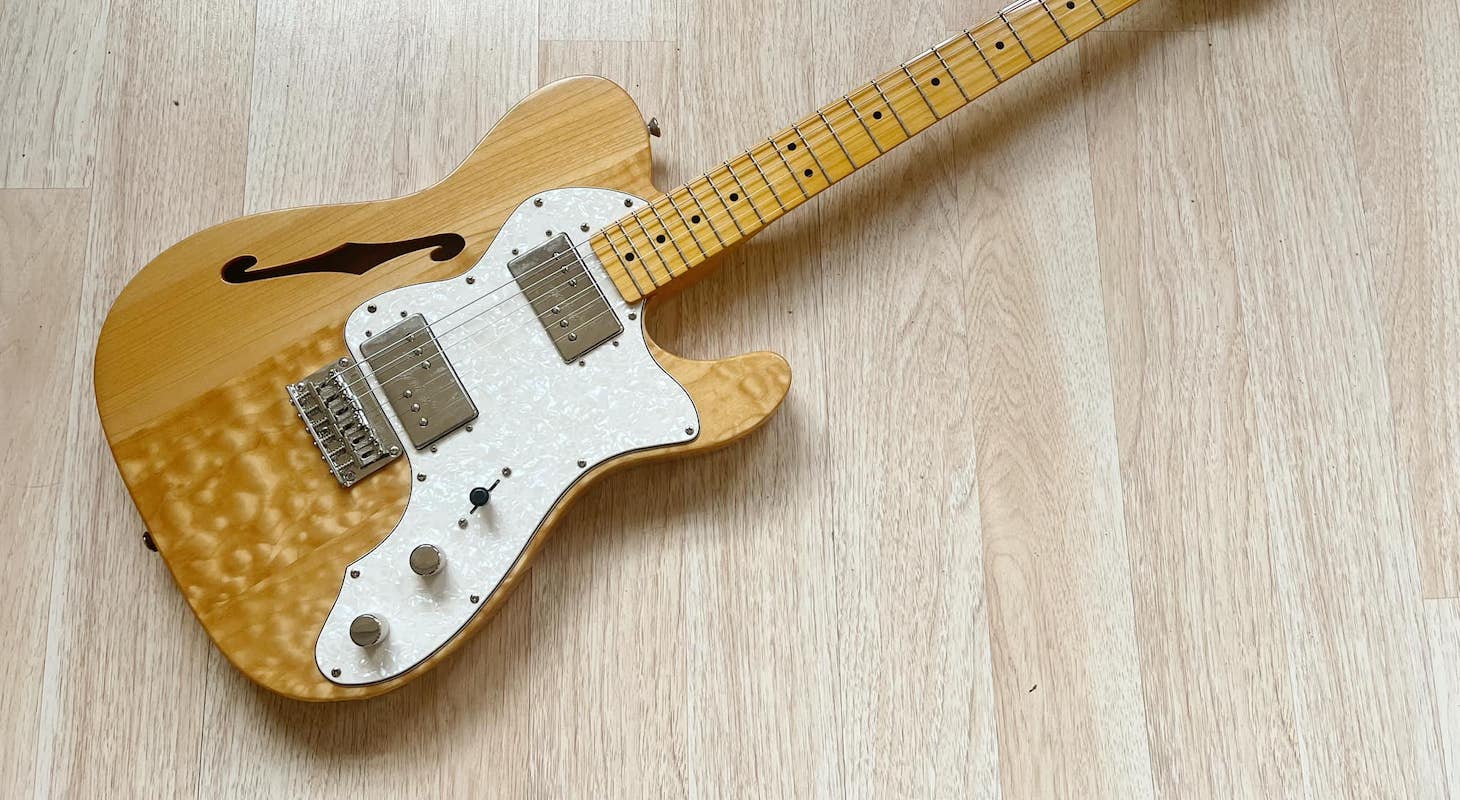
I know what you are thinking… weren’t telecasters the ultimate songwriting tool? Well, this design that has been vastly unmodified for the past 70+ years hides many jazz-friendly tones behind the snap, twang, and roll.
Yes, I’m a confessed telecaster lover (and nerd) and I have gone to the telecaster market to search for the five iterations of this timeless classic that can deliver that amazing “tele jazz tone”.
Yes, players like Mike Stern, Julian Lage, and Tim Lerch took a bold step toward telecaster land and the results have been mind-blowing, to say the least.
Top 3 - Telecasters for Jazz
Are you ready to discover your next telecaster jazz machine?
Well, ready or not, this ship to Telecaster Land departs right now. Are you in?
5 Best Telecaster Guitars for Jazz
1. Squier Classic Vibe '70s Telecaster Thinline
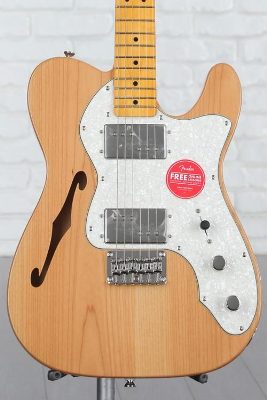
Well, it might come as a surprise to find a maple-board telecaster on this list. Don’t be scared to let some high-end into your tone, believe me, notes sound more defined.
The reason why I chose this guitar, though, is not the maple fretboard but the thinline construction and the dual humbuckers. Yes, the perfect way to counterweight that snap coming from the fretboard is by having a semi-hollow body with a pair of wide-range humbuckers.
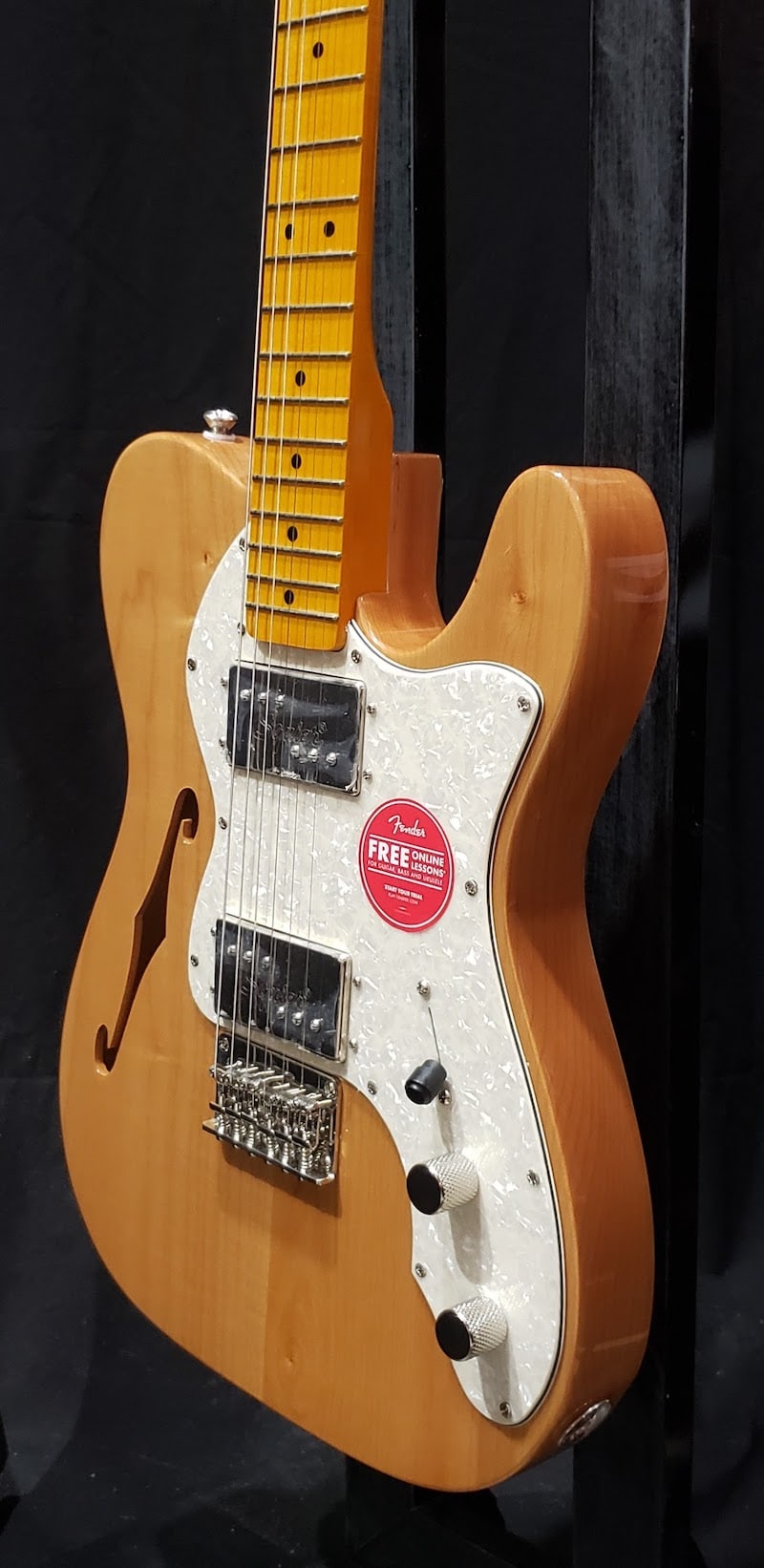
What’s the resulting sound of that clash? Well, you get defined highs while the body brings the warmth you need for chords and complex comping. Plus, if you roll off the volume just two or three points (set it to 7 or 8) and set the tone knob to the same position, you can enter jazz territory effortlessly.
Speaking of which, the telecaster construction (string-through-body) adds to the overall sustain and resonance, making this guitar vibrate evenly with every note. Furthermore, if you continue to roll the tone back, you’ll come across a growling sound that can be a great companion for some flatwound strings and a pick-less approach.
Finally, the neck is as comfortable as it gets with a C profile and a 9.5” radius. Perhaps, the only drawback is the heavy lacquer that Squier uses in its Classic Vibe series is thick and sticky and might be a drawback for those guitarists (like me) who live in humid places on the planet.
If your budget allows for it, also try the Fender American Vintage II version with the original CuNiFe pickups.
Here’s a cool no-talking-just-playing Squier video to hear this guitar in action.

2. Fender Player II Telecaster
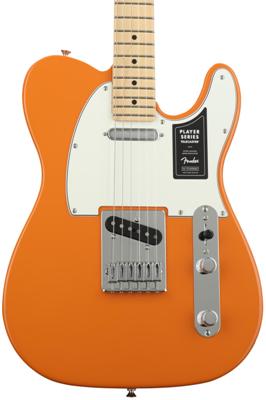
The quintessential telecaster shape and configuration can be your next jazz machine. Yes, even with a maple neck and fretboard (although rosewood is offered as well). How so? You might be asking. Well, the answer is very simple, just dial in the tone you need using the simple controls offered by this timeless classic.
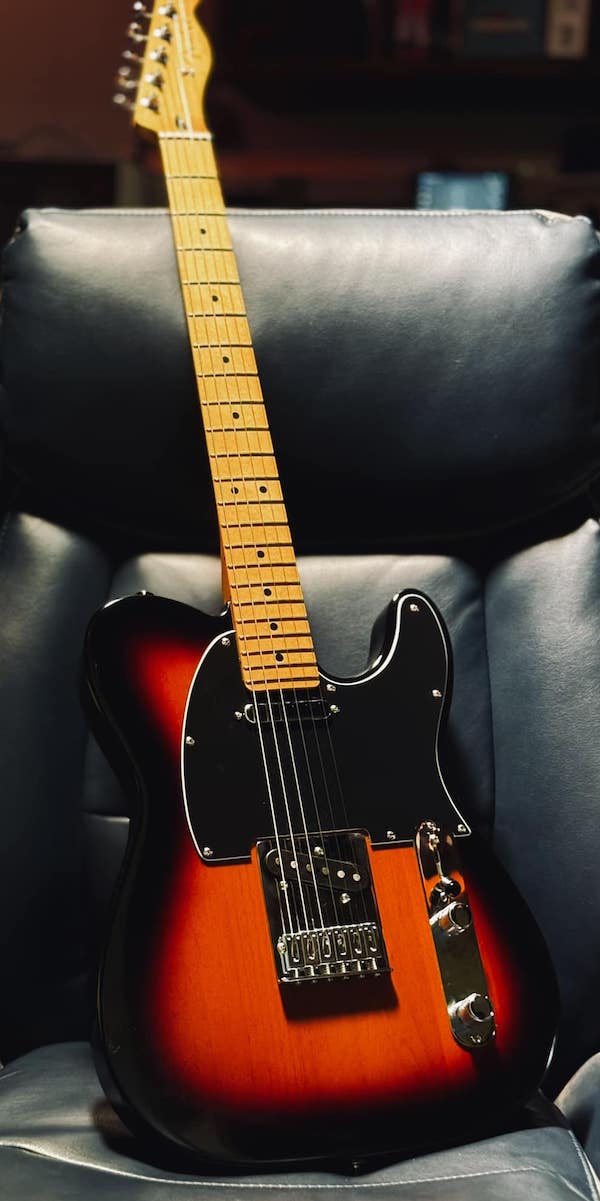
So, to begin with, the front positions of a telecaster (neck and neck + bridge) are perfect to work your way around difficult, complex chords. Yes, you’ll suddenly hear every note you play louder and clearer than you’ve ever heard it on an archtop guitar. This is because, even with the tone rolled off and the neck pickup, telecasters never stop biting.
Indeed, if you dig in with your picking hand, you’ll find out that the guitar responds by delivering crystal-clear, well-defined, warm, and balanced tones.
Speaking of which, this is a great guitar to play through a Fender clean amp and use your volume knob as a tone knob. Yes, if you keep it from 5/6 to 8, you’ll realize you can roll off some of that high-pitch character the guitar has. You’ll also lose some spark during the process.
Nevertheless, if you roll off the tone to, let’s say, 5 and crank the volume to 8, you’ll tame the high end while getting a balanced tone that oscillates between warmth and bite depending on your picking hand.
Speaking of warmth, perhaps my only caveat with this guitar is that I miss the brass saddles for that natural warmth. That being said, the six individual saddles help intonation a lot.
Finally, if your budget allows it, you can always go for the American Professional version with brass saddles, improved tone, and a hardshell case.
You can check this no-talk-just-play video or this explanatory one.
3. G&L Fullerton Deluxe ASAT Classic Semi-hollow
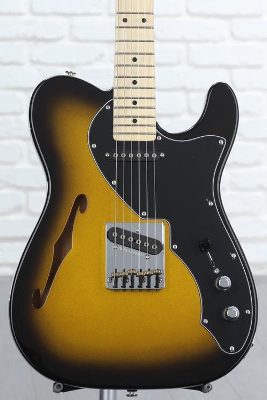
The Fender line offers the late ‘60s and early ‘70s telecasters in several versions. Perhaps, the least known of them is the ’69 reissue. This guitar has the F hole of the semi-hollow but respects the dual-single-coil configuration with master volume and tone knobs.
This G&L Fullerton Deluxe is a faithful reproduction of that classic instrument but with some modern twists and turns that make it unique. As you might know, Leo Fender founded G&L with George Fullerton to make the best guitars in the world.
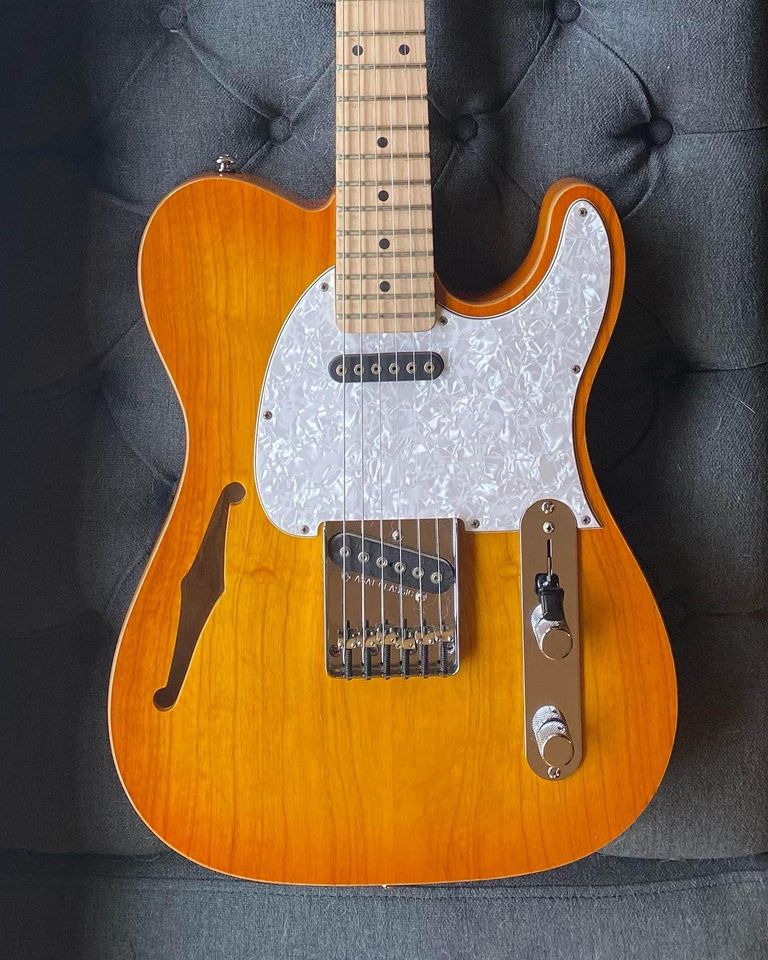
G&L Fullerton Deluxe ASAT Classic Semi-hollow
First off, what you get from this guitar is a balanced tone because the alder body and the semi-hollow construction deliver the same amount of low, mid, and high frequencies.
On the other hand, the modern no-lacquer (thanks for that, Leo) neck is smooth and offers outstanding playability. Moreover, the 22 tall and wide frets combined with the 9.5” radius make this a guitar you can play all day tirelessly.
But those weren’t all the surprises, because after I plugged in, I was blown away by the musicality, percussiveness, and muscular power of the pickups. Later, I read these are Leo’s creations called Magnetic Field Design pickups. They’re basically an overwound version of single coils capable of creating a more powerful magnetic field. This kept the bottom end tight and the highs ringing and musical.
Speaking of sounds, the tone and volume knob can work wonders going from biting and mid-rangey to scooped and warm. Plus, if you string this guitar with flatwounds, you’ll instantly find jazz-approved tones to play with.
Perhaps, the only caveat is that the quintessential tele tones are gone because of the warmer alder body. You can check the affordable “Tribute” version (with a humbucker in the neck) and the Fender version as well.
4. Squier Paranormal Cabronita Telecaster Thinline
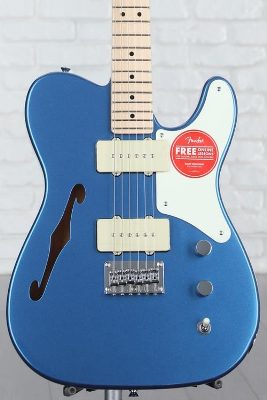
The “Paranormal” series by Squier resembles the “Parallel Universe” series by Fender. This means that the guitars in these categories are somewhat misfits or one-of-a-kind creations that could only happen in that alternative universe.
In this case, the cabronita, which is one of Fender’s newest inventions taking the telecaster body and neck to a different level, just got the addition of an F-hole and a semi-hollow construction. Because of these additions, the bite, growl, and roll this guitar is usually heard delivering on any stage are substituted by some mellow tones that are jazz-ready.
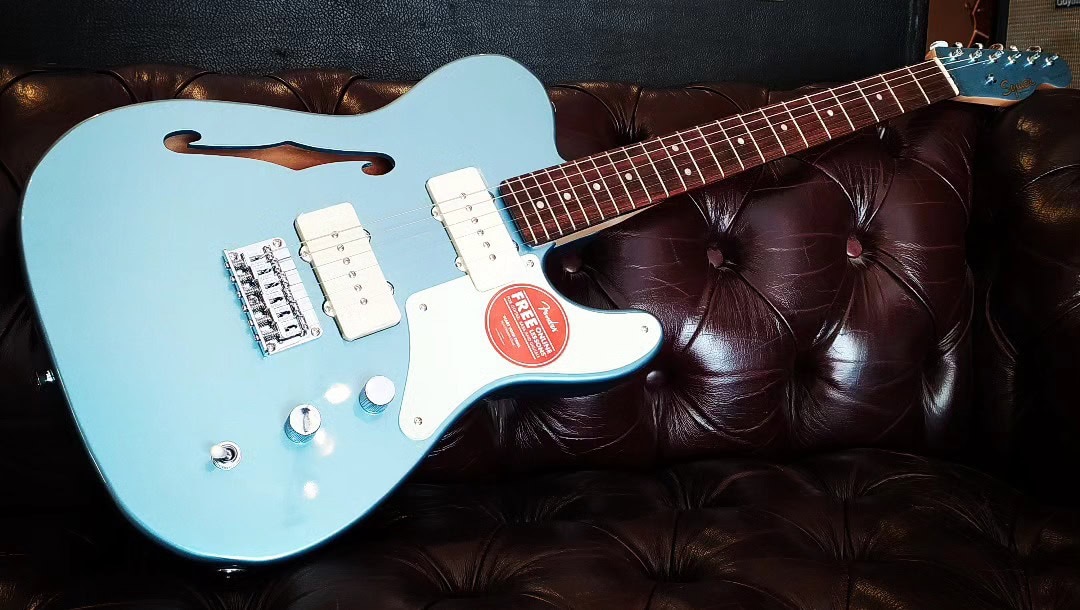
To begin with, the cabronita sports a maple neck with a maple fretboard that’s finished with thin, satin lacquer, which makes it playable right out of the box. Also, the 22 narrow and tall frets feel and play spotless throughout the neck.
Furthermore, the 25.5” typical Fender scale gives this guitar a great level of stability when playing. For you, who play diminished, ninth, seventh, and minor seven flat five chords, that’s great news.
More great news is that strings go through the body, giving the guitar a bonus of resonance and sustain that’s very welcome.
On the not-so-good side of things, the Fender-made P-90 pickups have a lot of bite but lack some of that growl and low-end you can find on most Gibsons. Also, and in the same line, the body is made of poplar, a tonewood that doesn’t deliver huge low-end or crisp highs.
All in all, this is a great guitar for those who love P-90 jazz.
5. Fender Special Edition Custom Telecaster FMT HH
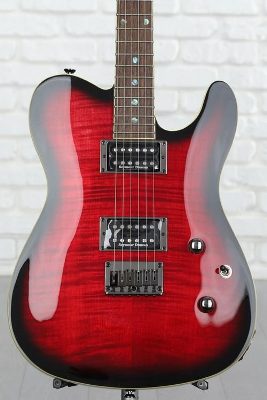
This version of the telecaster is Fender’s boldest attempt on this list to step into unknown territory with guitar design.
To begin with, the first thing that hits you as you pick this guitar up is that it is a set-neck construction. This sets the instrument apart from virtually the entire Fender catalog of bolt-on instruments. Tone-wise, this gives the guitar added sustain and warmth when compared to traditional tele.
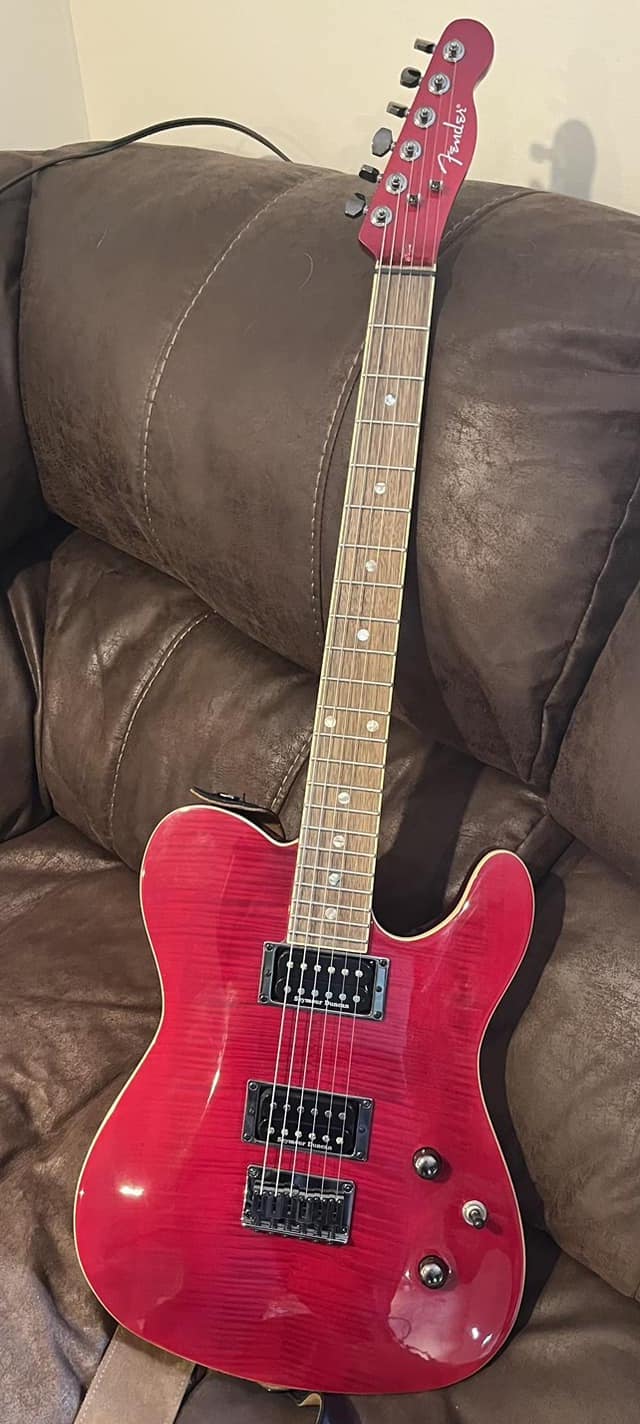
Fender Special Edition Custom Telecaster FMT HH
Speaking of sustain, the string-through-body construction is perfect to enhance that aspect of the guitar while the choice of wood (mahogany body with a maple top) borrows Gibson-approved low-end and growl. The maple top gives the guitar a singing top end that’s great for breaking through even the densest mix.
The neck on the guitar is also made of mahogany with a fretboard made of Indian laurel, which is an affordable replacement for rosewood. This combination of mahogany and rosewood was the recipe for Gibson’s rise to fame in the fifties, hence, you can expect sweet and round tones from this guitar.
On the not-so-good side of things, the thick lacquer you can find on the guitar’s body and neck can be sticky in humid weather and is also a turn-down for players like me who love to feel the wood with the thumb.
Finally, sound-wise, the Seymour Duncan humbuckers are menacing when coupled with distortion but can deliver full, round, warm tones when you roll off the volume and tone a couple of points each. Also, the coil-tap functionality is very welcome when you want to achieve the classic telecaster jazz tone with a little more bite.
Can You Play Jazz with an Archtop or Solid-body Guitar?
There’s a big thing in the jazz world about archtop guitars. It seems as if you can only get jazz-approved tones with a huge yacht of a guitar that is close to the price of a house. Well, while it’s true that most of the traditional, classic recordings were made with those guitars, jazz music has grown and evolved much since those days.
Nowadays, players like Julian Lage, Mike Stern, and Tim Lerch among others, have opened a new chapter in this musical style with solid-body guitars, particularly telecasters. While it’s true that the tone is different, it’s also true that the playing changed as well. According to these players, playing telecasters inspired them to play a different kind of jazz.
Here’s a cool video of the same progression in tele and archtop and another one of a tele and an ES-175.
Furthermore, you can watch Tim Lerch saying why he likes telecasters and Julian Lage doing the same.
Finally, this is Julian Lage performing “We’ll Meet Again” by Vera Lynn on his telecaster.
Blues & Jazz with a Single Instrument
Robben Ford has been a true gem in the guitar world ever since he started playing the guitar professionally. He’s well known for having a butter-like tone (sorry Eric Johnson, not so dirty) and impeccable, sweet phrasing.
Beyond his tone, Robben Ford is a player who can go back and forth between jazz and blues seamlessly. Recently, he discovered that all the tones he needed could come from what he thought was “the ugliest musical instrument”, AKA, a telecaster.
You can watch him talking about his love for telecasters here and how they play a role in his live setup here.
Let’s Talk Scales and Tuning Stability
Gibson guitars are known for having 24.75” scales. Fender guitars, on the other hand, have always had 25.5” scales.
This is not just a numeric difference, on the contrary, it affects playing drastically. To begin with, the scale is the distance between the nut and the bridge. Thus, the longer the distance, the higher the tension the strings will have.
Therefore, Fender guitars have better tuning stability, more of a percussive element to their sound (think Hendrix, Frusciante, Rodgers), and are more difficult to bend (except if you’re SRV, of course).
Gibson guitars, on the other hand, sound sweeter and bend much better because the tension is not so high. On the other hand, they don’t offer the same tuning stability and strings don’t feel as stable as Fenders do.
Why is this important? Well, simply because when you make the move from an archtop Gibson (or alike) to a solid-body Fender, you’ll also feel a difference in your hands. Embrace this difference and make sure you enjoy the added tuning stability and tension to play those complex chords more accurately.
The Bottom End
Guitars are instruments that can be the vessel to tell the world about your emotions. These instruments evoke certain feelings and make us play differently. Make use of this variety and let the telecaster inspire you to take your jazz chops to unknown territory.
Happy (telecaster) playing!

Ted Green famously pioneered chord melody on the Tele. Then there is Mike Stern. Ed Bickhart etc.