
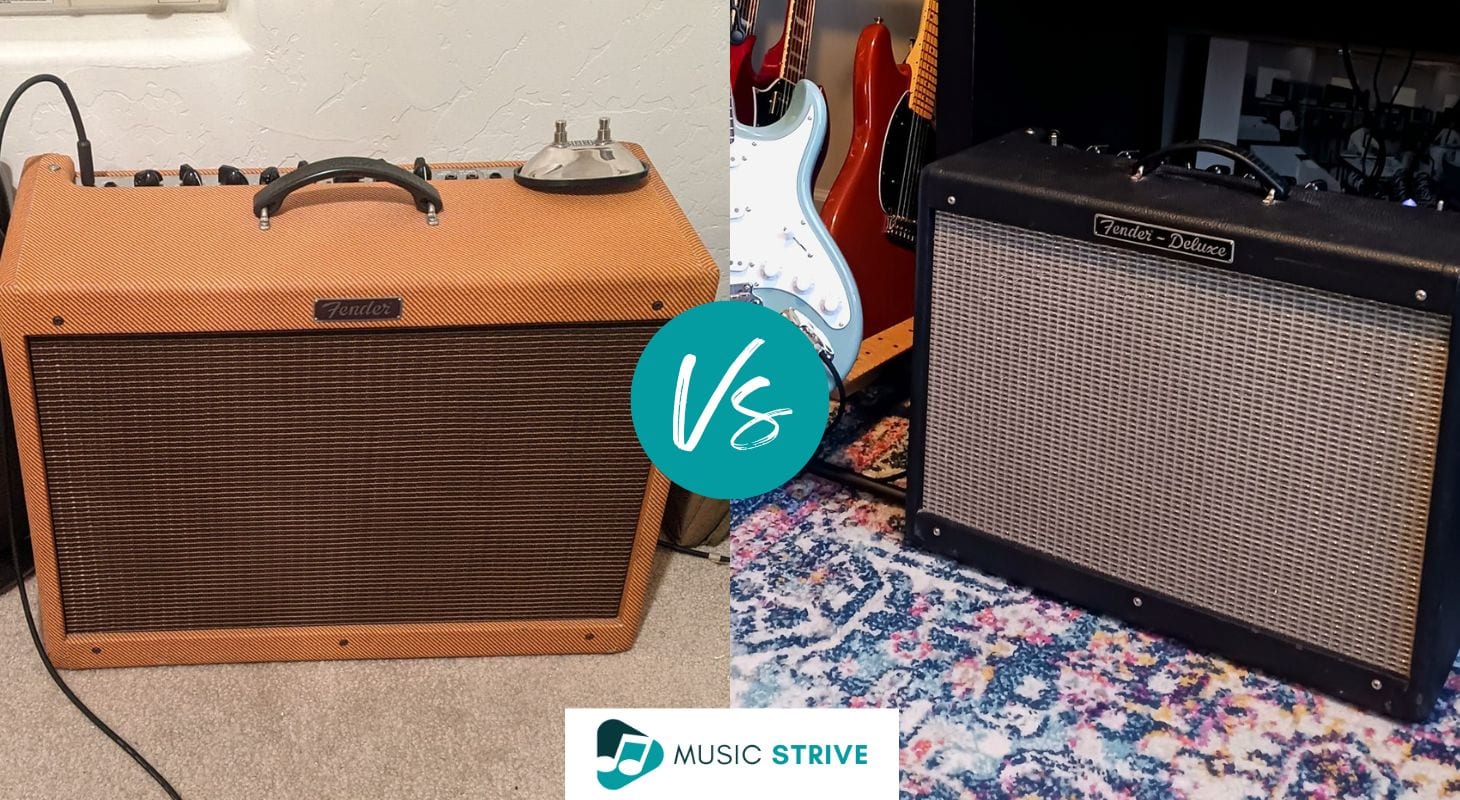
On paper, the Fender Blues Deluxe and Fender Hot Rod Deluxe seem almost like the same amp. They share almost the exact same specifications and controls.
I sat down with both and tried them out, side by side. Here’s what I learned.
Table of Contents
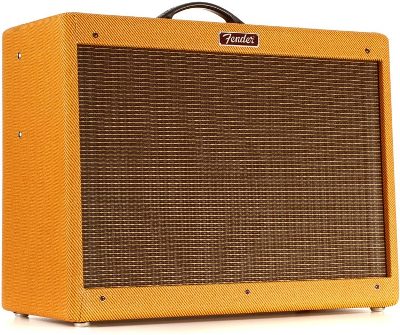
Fender Blues Deluxe
Fender Hot Rod Deluxe

Design and Controls
Fender Blues Deluxe, Tweed
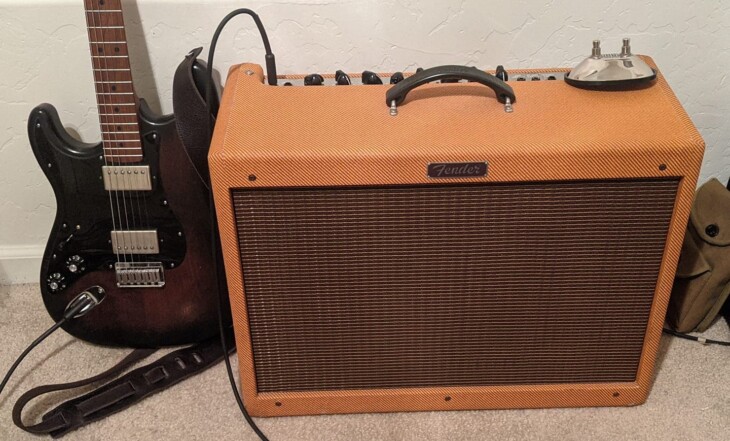
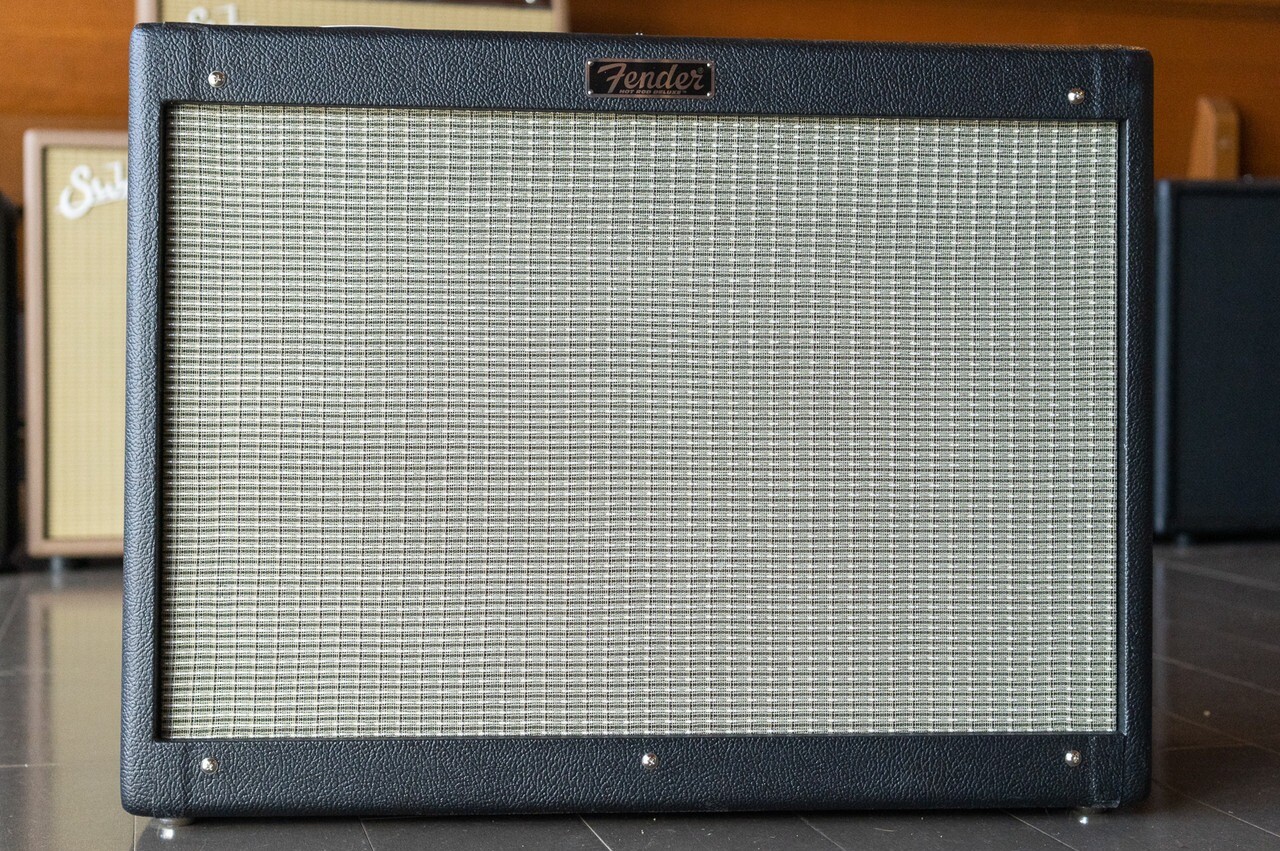
While these amps might be similar on the inside, they are very different on the outside. The Blues Deluxe has that very vintage tweed look, while the Hot Rod Deluxe looks like a modern amp with its black cabinet and silver grille.
Fender amp design leans very vintage anyway. It’s not as if their amps look like modelers with blinking lights and LED screens!
Both amps are the same size, though, and I mean the exact same. Height, width, and depth dimensions are exactly the same.
Having said that, upon picking each up, the Hot Rod is 4lbs lighter than the Blues. I spent most of my teens and twenties carrying Marshall stacks into venues, so four pounds on a combo amp isn’t a huge difference to me. However, guitar players without bandmates to help load in, or individuals with smaller frames might feel the impact of those four pounds.
I also found that the controls on both amps are also almost exactly the same. Both amps have full three-band EQ, Presence, Reverb, Master and Drive Volume, and Bright switches.
Where they do differ is in the number of channels they have. The Blues Deluxe has two channels, a normal and drive, while the Hot Rod Deluxe has three, normal, drive, and more drive.
It’s in the drive channel that these amps really start to differ in sound and application.
The Sound
Fender Hot Rod Deluxe
Where I expected to find the biggest difference between these two amps was certainly in their sound. I certainly did notice a difference.
In terms of their clean tones, the Blues and the Hot Rod are actually quite close. They both have that Fender twang and brightness. Neither amplifier offers the glassy shimmer of a classic Fender clean sound, however.
On the other hand, both have the high headroom and touch sensitivity on the clean channel that I’ve long associated with Fender amps.
It’s classic American clean tone: perfect for pedals, great for blues and country playing.
Both amps have a much more rounded sound than what I usually find on Fender amps. I would describe their sounds as being more on the bluesy side. Even turning on the bright switch on both amps doesn’t really push either into overly shiny territory.
The Hot Rod does, however, sound a bit thinner to me. It still has a very full sound and is very close to the Blues, but the Blues does sound like it has a bit more weight to its clean tone.
I was able to get into the twang and snap of classic country sounds by playing closer to the bridge of my guitar and running an EQ pedal, but I’d look elsewhere for that brighter Fender tone. “Chattahoochee” just doesn’t sound quite right without the extra high end.
The upside of this is that some ultra-clean amplifiers, including a few modern Fender models, can be quite brittle and icy when turned up on the clean channel.
To my ear, the Hot Rod, perhaps thanks to its additional gain staging, does have a little extra treble thinness, but none of the ear-bothering high end of, say, a cheap Vox amp.
Neither of these amps, however, features this unwanted frosty high end. It’s a warm, welcoming Fender sound ideal for pedal platforming.
Switching over to their gain channels, their differences in tone start to become more apparent. The Blues is still a bit fuller than the Hot Rod. The Blues also sounds a bit dirtier to me than the Hot Rod, at the very least in the first channel.
The Blues has a bit more bite, while the Hot Rod has a much cleaner distortion. The Hot Rod is also a lot twangier than the Blues.
I played through a few standard low-gain classic rock and country riffs. Led Zeppelin sounded fine. The Drop D riff from “Fat Bottomed Girls” also had a nice, fat overdriven tone to it.
Turning the gain up, both amps become much more aggressive. The Blues’ tone becomes thicker and muddier, while the Hot Rod now has a bit more bite to it.
I tried out Luke Combs’ “Beer Never Broke My Heart” through both amps, and it sounded much better on the Hot Rod.
For modern overdriven rock-infused country music, the Hot Rod is definitely my pick. It just has the extra push and power I like for that kind of playing.
The sound of the Fender Blues, when cranked, reminds me of the mid-to-late 90s grunge sound. I prefer a lot of definition in my chords, even when playing with plenty of distortion, so I preferred the sound of the Hot Rod.
With the gain at max, I would call the Hot Rod the more aggressive amp. It has a very hard rock sound to it, while the Blues has a swampy tone to it. I would call the Hot Rod as being more Led Zeppelin, and the Blues more Cream.
The Blues still has a bit more crunch to it than the Hot Rod. The Hot Rod, on the other hand, has more bite than the Blues. This additional bite helped lead lines and stand out, whereas the Blues felt a little more timid when I tested out some classic Stevie Ray licks.
This is when the biggest difference between the two amps comes in, the Hot Rod’s third channel “more drive”. This channel pushes the Hot Rod quite a bit further into overdrive, hence the name.
I would almost call this pure distortion territory. The “more drive” channel boosts the Hot Rod quite a bit, giving it an almost ‘80s hair metal sound.
The third channel on the Hot Rod actually reminded me quite a bit of a friend’s old Marshall JCM2000, much to my surprise. It’s a similarly hairy, fizzy distortion, with plenty of chunky bottom end for palm mutes.
In fact, while hanging out in Drop D, I got into a few classic Creed riffs! While it doesn’t exactly have the crushing distortion of a Mesa stack, the Hot Rod can definitely punch above its weight in distorted tone.
A more shred style of playing actually sounds quite nice on the third channel, and I found myself automatically playing faster licks and runs. Rapidfire alternate picking was particularly well rewarded by this amp, as I could hear variations in my pick attack loud and clear consistently throughout the playing experience.
With this in mind, I’d liken the third channel on the Hot Rod to Gary Moore’s guitar sound on Still Got The Blues. Obviously it doesn’t sound exactly like a cranked Marshall. No Fender amp ever will.
However, the tone would be appropriate for playing that style of turbocharged rock-infused blues.
Using with Effects Pedals
Both amps have built-in reverb that sounds great, but what about expanding their sound with effects pedals?
Fender amplifiers are famous for how well they interact with a broad range of guitar pedals. Fender’s notoriously high headroom and neutral tonal palette make their amps excellent pedal platforms for guitarists who are so inclined.
Fortunately, both amps hold up to Fender’s stellar reputation in this regard.
I ran my gamut of favorite effects: analog chorus, Phase 90, delay, and Marshall-in-a-box overdrive/distortion. With the addition of pedal distortion, there’s extra gain staging, effectively turning the Fender amp into two amplifiers.
Effects pedals sound great going through these amps. I didn’t notice any artifacts or noise with any of the pedals on either amp.
Overdrive, and especially distortion pedals, sound fantastic. Even on the Blues Deluxe, which I was a bit concerned about. A pedal like the Boss DS-1 can give the Blues Deluxe a very modern metal sound.
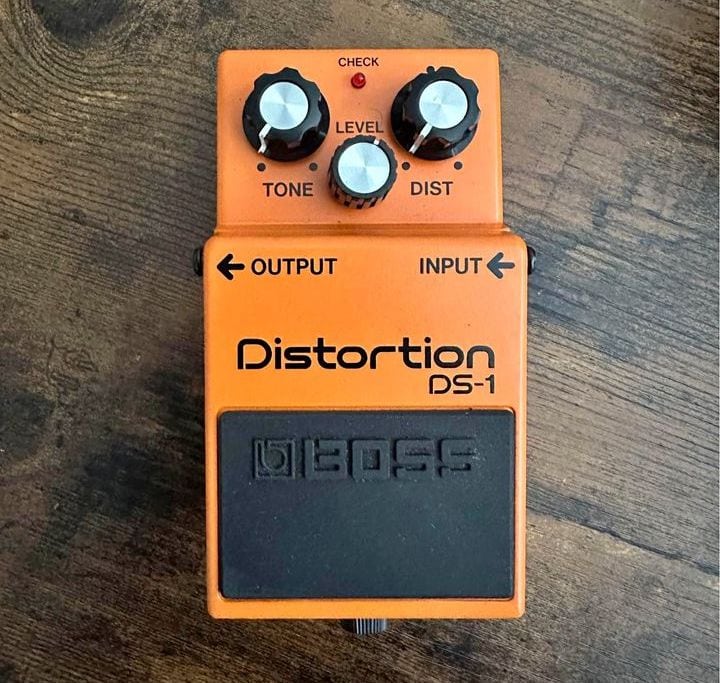
I would recommend, for those chasing a modern high-gain sound, using an overdrive or distortion in your signal chain into the amp’s overdriven channel.
This is an old trick, often deployed by the likes of Zakk Wylde and Kirk Hammett, to supercharge the amp’s tone and give its distortion some character.
Naturally, when doing so, I had to run through “No More Tears” and “Sad But True,” just to check if it worked properly. Predictably, both amps sounded better with a Tube Screamer-style overdrive for leads.
One thing I did notice was the difference in volume. I am not entirely sure why, but the Blues Deluxe gets a bit of a volume boost with pedals, even though the volume on the pedals and amps where the same.
This was more noticeable with the delay and chorus pedals than the overdrive and distortion. I was using the same pedals in both situations, so perhaps there’s something in the amp stage I’m unaware of.
I’ve noticed a similar effect when using a chorus pedal with my acoustic amp, so it could simply be a by-product of the signal boost in modulation pedals running into a naturally clean amp.
Either way, be wary of this, as it might irritate the sound engineer at your next gig. Or run a volume pedal to save both of you the headache!
Verdict
Choosing between the Blues Deluxe and the Hot Rod Deluxe is rather difficult. Not only because they seem to be the same in terms of specs, but because both amps sound so amazing.
I would recommend the Hot Rod to players who demand more high-gain tones built into the amp, but that’s about the only major difference in use between the two.
For those who love to rock, the Hot Rod is the obvious choice. However, if you don’t need extra gain, or the extra four pounds of weight, the Blues is a great choice.
Ultimately, I don’t think there is a right or wrong choice between these two amps. It will really come down to personal preference, but either way, you won’t be disappointed. I know I wouldn’t be!

I’ve owned and used both . My vote is for the BD. The hotrod is more versatile. It will get you quite close to almost any sound you want…a great gigging player’s allrounder…but it never QUITE nails that sound. The BD on the other hand doesn’t attempt as much…but it has natural top notch tone of its own and if roots music of any kind is your home turf, it punches hundreds of pounds above its weight and will not disappoint.
One of the clubs I play in regularly has a Blues Deluxe and another has a HR Deluxe.
I never use the extra gain channel on the Hot Rod, so based just on clean and 1st gain, I prefer the tone of the Blues Deluxe. It’s warmer in general, and in particular, double-stops sound much better on the BD, to my ears. They’re both very good workhorse amps. One tip: plugging into lower-input /input 2 rather than input 1 goes a long way to avoiding icepick territory.
Blues deluxe has an Eminence speaker, whereas the Hot Rod has a Celestion type A. I also like both but The Hot Rod deluxe is more to my liking.
Only the new hot rod iv’s have the celestion type a. I don’t know off the top of my head what the previous models had for the speaker.
Couldn’t decide in the end so got both!
The fender hot rod deluxe 4 without a doubt!!! It’s the most versatile amp anyone would be extremely lucky to get the chance to play through.