
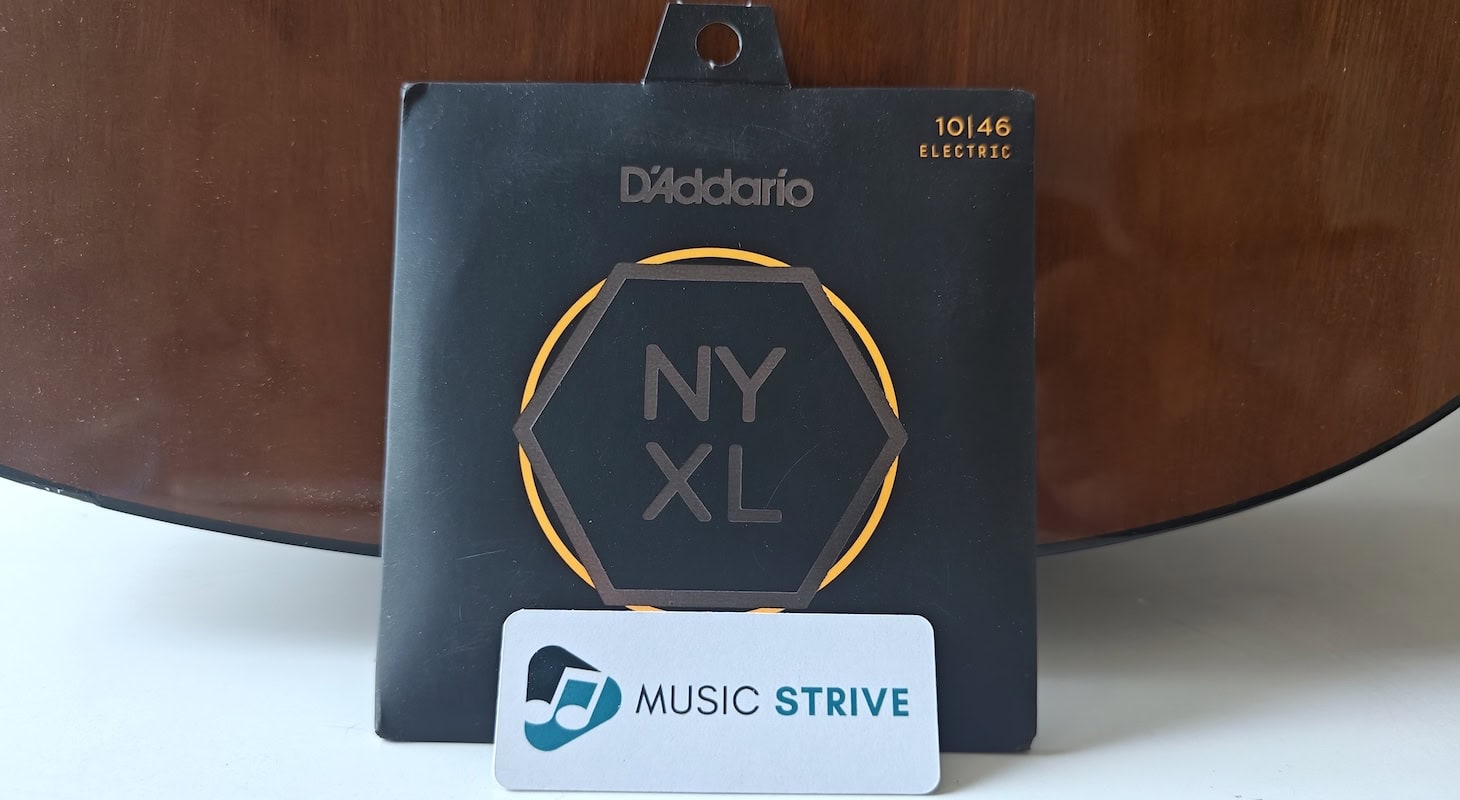
A couple of years ago, I saw Bumblefoot (perhaps better known as Ron Thal) spruiking new guitar strings on Instagram. Although initially I’d been turned on to his work due to his time in Guns N’ Roses, I was a pretty big fan of his avant-garde shred-forward playing at the time.
He was pitching D’Addario’s then-new NYXL line, which boasted the durability of coated strings with the normal grippy string feel of uncoated strings. Always on the lookout for ways to avoid changing my strings every week, I figured I’d try them out.
Tour-ready Strings
Tough to break, hard to knock out of tune, and they stay bright longer than most. If you’re a heavy hitter or just hate changing strings often, NYXLs make a solid case.
Ideal for Hard Hitters
When I’m playing live, especially on electric guitar, I tend to hit the strings much harder than I need to. I often write it off as showmanship: I’ve always enjoyed watching guitar players unleash windmills and other high-impact stage moves. This acquiescence to performance, however, comes with a downside: it often knocks my strings out of tune, and has a tendency to break them.
Worst of all, overzealous string striking can make the strings vibrate too much, and result in a thinner tone that frets out all too quickly.
While I’ll probably never be a jazz maestro with minute control over my picking or strumming strength, I’ve worked a lot on controlling my right-hand attack.
With my perennial problem in mind, I ordered these from Amazon, and waited patiently for my new strings to arrive.
Upon stringing my Les Paul with the NYXLs, the first thing I noticed was how well they handled the beating I was giving them. While they demanded a little less stretching than I normally do, I was impressed at how hard it was to knock these strings out of tune once they had settled.

My Gibson Les Paul Standard (yes, those are NYXLs).
Even unplugged, these strings are noticeably louder than others. It’s still the plinky unplugged-electric guitar, but I noticed a dramatic increase in volume compared to my usual strings.
Likewise, the string feel under my left hand was very familiar. I’ve played D’Addario strings on and off for years, and with the exception of their coated strings, they all feel pretty similar: not quite as “slinky” as Ernie Balls, but not overly tense, either. The NYXLs also have the roundwound under-finger friction that I like for really digging in on bends and pull-offs.
The main takeaway I had playing these strings was that the more I gave them, the more they gave back. These strings really responded well to adjustments to my guitar playing, and stubbornly stayed in tune despite my best attempts to beat them out of tune.
While, ordinarily, I would play heavier strings to get the Stevie Ray-via-Malcolm Young response I wanted from heavier playing, I found that these offered plenty of give and take. I feel like, with the NYXLs, their increased unplugged volume means they hit the pickups harder, which pushes the amp harder, and gives me the extra push I want for harder rock playing.
Even better, they’re thin enough that I could revert to the lead player’s end of the fretboard when necessary and not exhaust my hands trying to play faster.
Almost Unbreakable
I tend to break guitar strings. I’m not quite as bad for it as I used to be, but I was notorious in many bands I’ve been in for breaking guitar strings mid-show, especially the A or D string. For years, this was doubly true if I played a show with old strings: trying to get more than one gig out of a set was almost a guarantee that I’d snap one or two the next night.
Part of the problem, I later learned, was a small burr in the saddle of one of my guitars, but even with that fixed, I would rarely get more than a weekend’s worth of wear out of my strings.
Imagine my happiness, then, when I actively tried to break the NYXLs and found it near-impossible. These strings have some serious durability. In the end, the strings won: I couldn’t snap the NYXL on my Les Paul, and only wound up replacing the strings when consecutive gigs’ worth of sweat and humidity dulled their tone.
It took hours of rehearsal and performance to get to that point. While the NYXLs weren’t quite as bright right out of the box as other strings, they maintained their initial brightness for longer.
I’ve played some strings where they dull out mid-performance! I put these on, and in the first week they survived two three-hour rehearsals and four gigs over the weekend. It was close to the end of my gigging weekend that I found them beginning to go dull.
This was strictly a tone issue. They never felt worn out the way old strings usually do, getting tense and brittle after a few gigs’ worth of wear. I’m sure I would have got there eventually, especially if I was a bedroom player who never really gave my strings a beating.
Who Should Play NYXLs?
Curiously, I think there are two ends of the playing spectrum that these strings are ideal for.
Before I make the case either way, I’ll acknowledge the main drawback of these strings: they’re noticeably pricier than the usual D’Addario XLs. This rings true especially if I’m buying XLs in bulk, where I can get each pack for about $5.
If we’re looking at a price difference of two to three hundred per cent, I’d argue that you need to get two to three times as much use out of the set, at least. Then there’s the argument to have spares. When it comes to indispensable parts of a guitar, like strings, I tend to believe that two is one and one is none.
I need one or two sets of spare strings in my guitar case at every gig.
Price wise, that might mean having two sets of NYXL strings for the price of four to six XLs!
Is it worth it?
I’d say yes, depending on your use case.
The first player I’d recommend these to is a guitarist like me who makes most of their living gigging live. When you’re putting strings through a lot of stress at sweaty club shows and long rehearsals, I firmly believe there’s value in strings that don’t break, stay in tune, and last for two or three gigs. If I can get away with one string change per week instead of one per gig, and in a typical gigging week I play anywhere from two to four gigs, that’s good value for money, as far as I’m concerned.
At the other end of the spectrum is the bedroom guitar player who rarely, if ever, changes their strings. For those who don’t gig often, if at all, and just enjoys playing guitar at home, without putting their strings through the stress that I do, these are a great choice.
This is simply because the NYXLs sound good for longer than other strings. No matter what, most guitar strings, like the standard D’Addario XLs, take on a thinner, duller sound over time, regardless of how much you put them through. I find that my guitars, even when unplayed for a few weeks, will sound worse, no matter what.
My main at-home guitar is my Epiphone Les Paul. It tends not to accompany me to gigs, and it lives on a stand by my desk. I keep NYXLs on that guitar simply because they keep its tone bright and articulate for longer than standard strings. I’m unlikely to break strings on this guitar, nor to get the sweat and grime on them from a gig.
Bedroom players who tend not to change strings very often will get the most life out of these strings of anybody.
Finally, given the notably louder output of these guitar strings, I’d make the case that they’re ideal for players who prefer a hotter signal. Whether that’s for pushing a tube amp into gnarly breakup or playing heavier, high-gain riffs, it’s not a bad thing to get more push out of the strings.
On the other hand, for squeaky-clean classic country playing, I’d look elsewhere.
Similarly, guitar players gigging once or twice a month won’t get much of the benefit of the NYXL’s enhanced durability, although I would say they’re worth trying regardless.
Final Word
I love playing D’Addario strings. The NYXLs, in my experience, are harder to break, harder to knock out of tune, and stay bright and articulate for longer than pretty much any other uncoated string. I like how they feel under my fingers and I get a perverse amount of joy from bending them as high and hard as I can.
My Verdict
The NYXLs handle abuse without breaking through sweaty gigs, retain tuning and keep their tone longer than most uncoated strings. Overall, these are excellent strings, and well worth the (higher) price for those who will get the most benefit from them.
