
Taking things further has been Electro-Harmonix’s motto for decades. The company has grown a reputation for changing the history of music with pedals like the Big Muff, the Memory Man, and, more recently, the POG.
Well, the EHX’s R&D department works full steam to bring new products that can make a difference in a saturated market. Such is the case of the Lizard King, a pedal that works on guitar and bass and offers a revolutionary approach.
How so, you’re wondering? Well, read on and find out; don’t make the king wait.
Table of Contents
What is the Electro-Harmonix Lizard King?
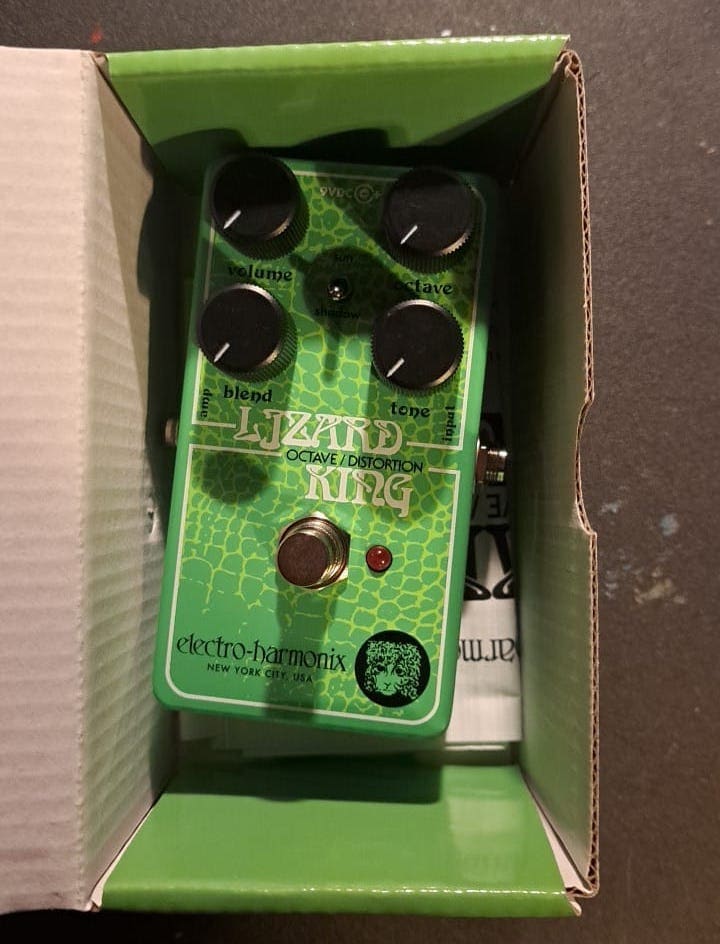
The Electro-Harmonix Lizard King is an octave fuzz pedal.
(check current price: Sweetwater | Amazon)
I know, I yawned too when I wrote that, but this is no regular octave fuzz pedal, it’s a modern take on a known concept.
Perhaps, the most important aspect of this pedal is that it doesn’t feature a sustain or gain knob. On the contrary, the gain level is set to a specific amount and what you can do is blend the fuzz in and out with the original clean signal.
This changes the equation drastically since you can maintain the original tone and character of your instrument while crushing fuzzed-out sounds coexist with it.
Likewise, you can dial the exact amount of octave you want making this one of the most versatile and particular-sounding fuzzes out there today.
The Lizard King Controls, The Queen’s Evolution
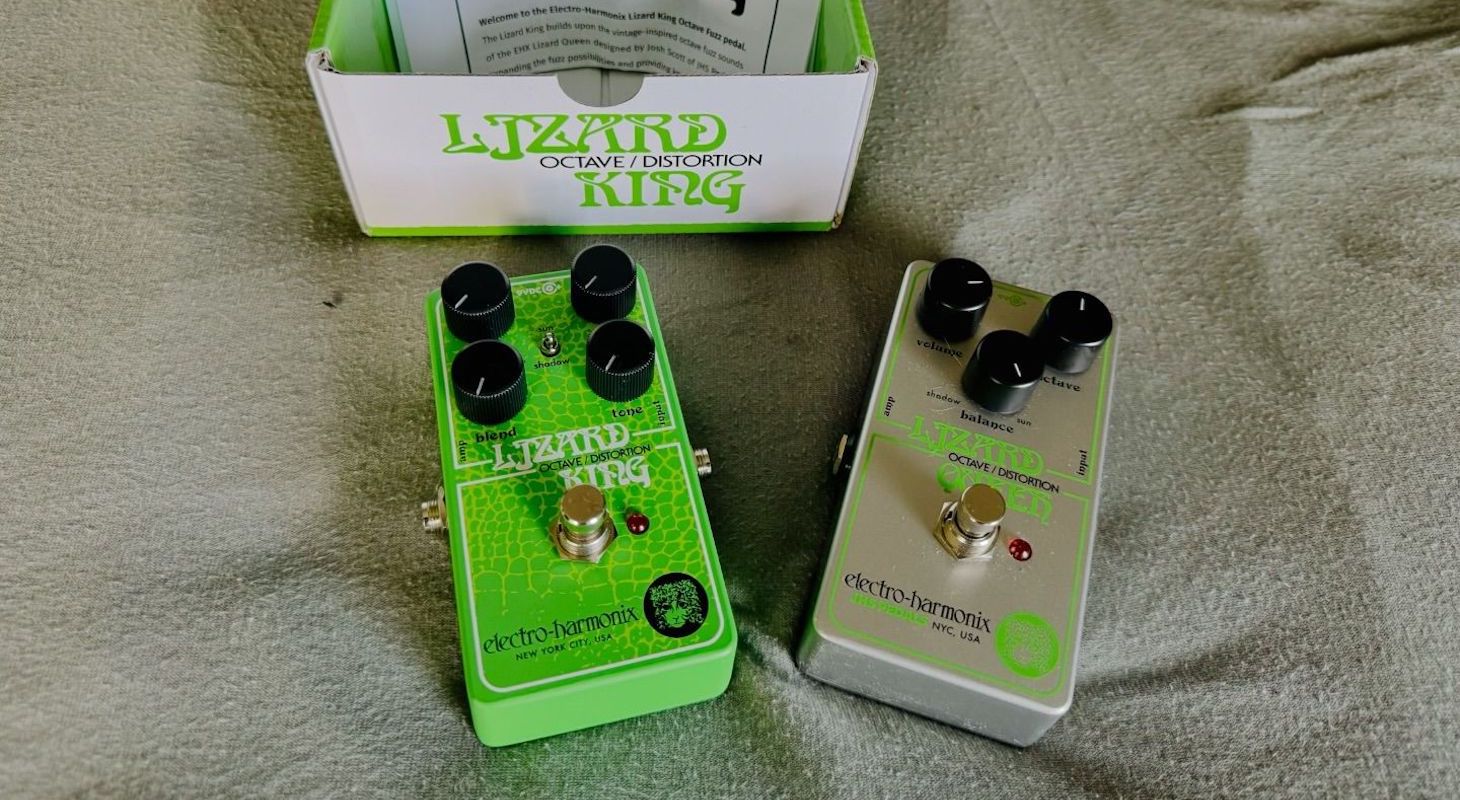
Before the Lizard King awoke from the ancient pyramids of Egypt, there was the Lizard Queen. This pedal, unveiled in 2023 as a collaboration between Electro Harmonix and JHS pedals, started the hype around the no-gain-knob move.
Yes, the Lizard Queen features the same fixed amount of gain and a blend knob for the octave, but it has far less versatility than the King. How so? Well, you can’t dial the fuzz level, the balance knob goes from a smooth to a piercing sound but doesn’t control the amount of fuzz.
It acts on the fuzz’s character or tone, not on the mix of it and the dry signal.
The King has a switch to go from smooth to piercing (shadow and sun respectively). Once you dial the kind of fuzz you want you can also dial how much of it you want to mix with the original signal.
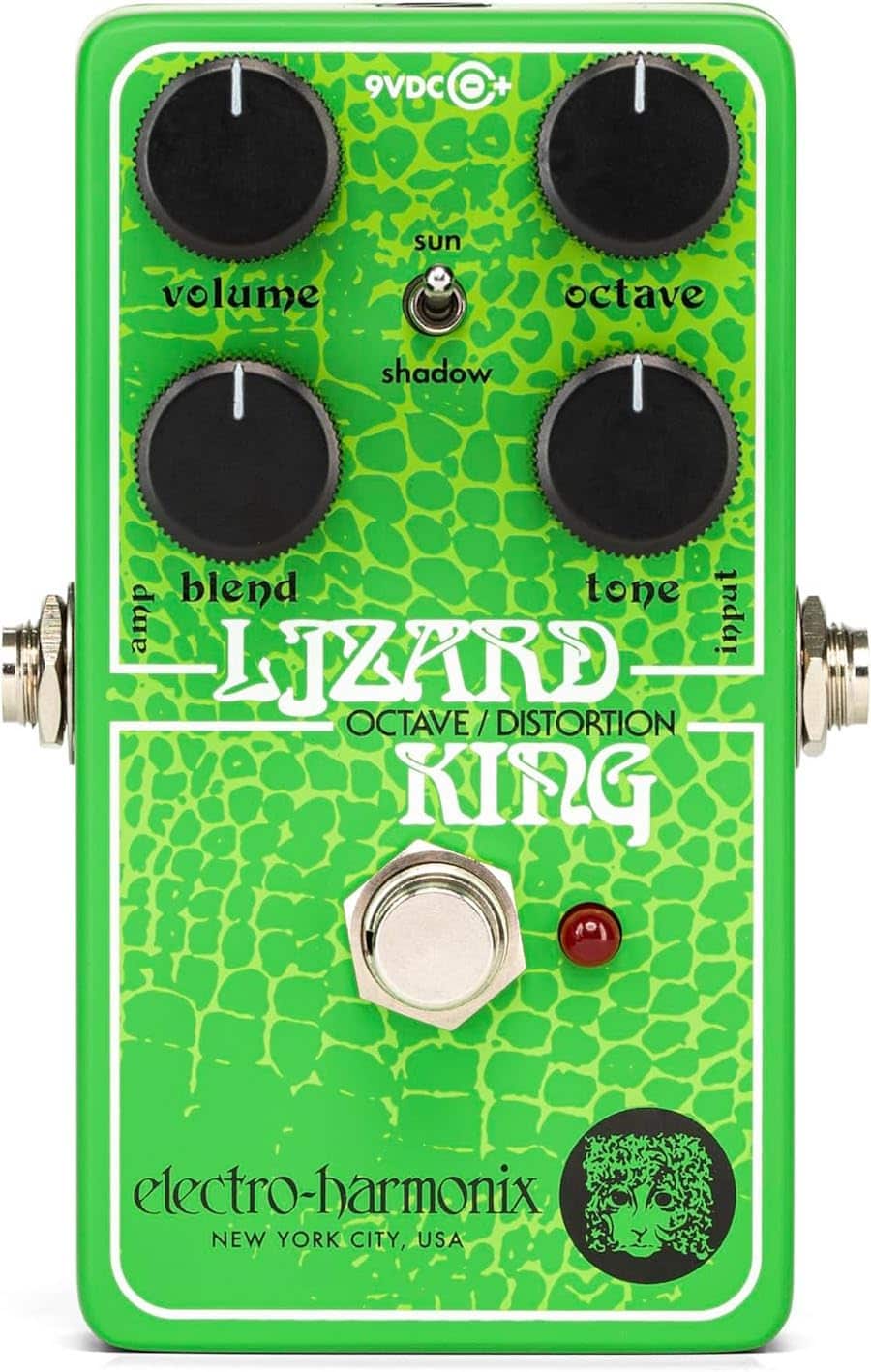
Also, the presence of a tone knob is great for fine-tuning the resulting sound. You can use this pedal as a lead-only machine, a crushing, fuzzed-out rhythm sound, or a very dynamic trail of dirt for your clean tones.
The tone knob does wonders adding the high end that the chiming highs of clean tones need. Also, if you’re a bass player, you can retain much of your instrument’s character and punch dialing the right levels of highs and lows.
With four knobs and a switch, this pedal can take you on a fuzzed-out trip and back to earth.
Some Guitar Sounds
The first thing I did was to plug in my SG Jr. because, as we all know, P-90s and fuzzes get along like peanut butter and jelly.
I started my test by plugging the Lizard King into my 50-watt valve head and playing it with the blend knob all the way down. The switch in the middle was in SUN position and the octave was off while the tone was at noon as well as the volume.
The result was a compressed, raunchy, biting sound as I always expect from my SG. As I increased the blend knob, a face-melting fuzz appeared behind my playing, and by maxing out the blend knob I managed to create a wall of sound. The fuzz sounds thick, powerful, and grainy.
The octave-up that the pedal offers is very usable and works wonders for soaring leads. That said, the way I loved it the most was when I left the blend knob cranked but lowered the volume on my guitar. That cleaned up the sound and gave me some ring-modulator-like tones with the tone knob of my guitar all the way down.
I moved over to humbuckers and, although I lost some of that rocking bite, the guitar sound got bigger, rounder, and more bass oriented. By dialing off some fuzz from the blend knob the result was a punchy sound ready for souped-up cleans.
It’s All in the Blend Knob
The secret to this pedal as a guitarist is in the blend knob. The ability to dial some mayhem to trail your clean arpeggios is something I haven’t come across in the market before.
Moreover, the pedal also reacts to your picking dynamics making this one of the most musical and flexible fuzz pedals out there.
Sun and Shadow Modes
The toggle switch in the middle is another very important aspect of this pedal. When playing with the guitar I left the switch in Sun mode all the time but at the end of my test, I decided to move it to Shadow. The result was a tighter, fiercer fuzz and a clean tone completely unchanged.
I did miss some of the compression the Sun mode adds to highs and lows but the fuzz became more aggressive and it was also a lot of fun.
Some Bass Sounds
Before wrapping up the test, and with the pedal in Shadow mode, I plugged in my Mikey Way Signature Mustang bass.
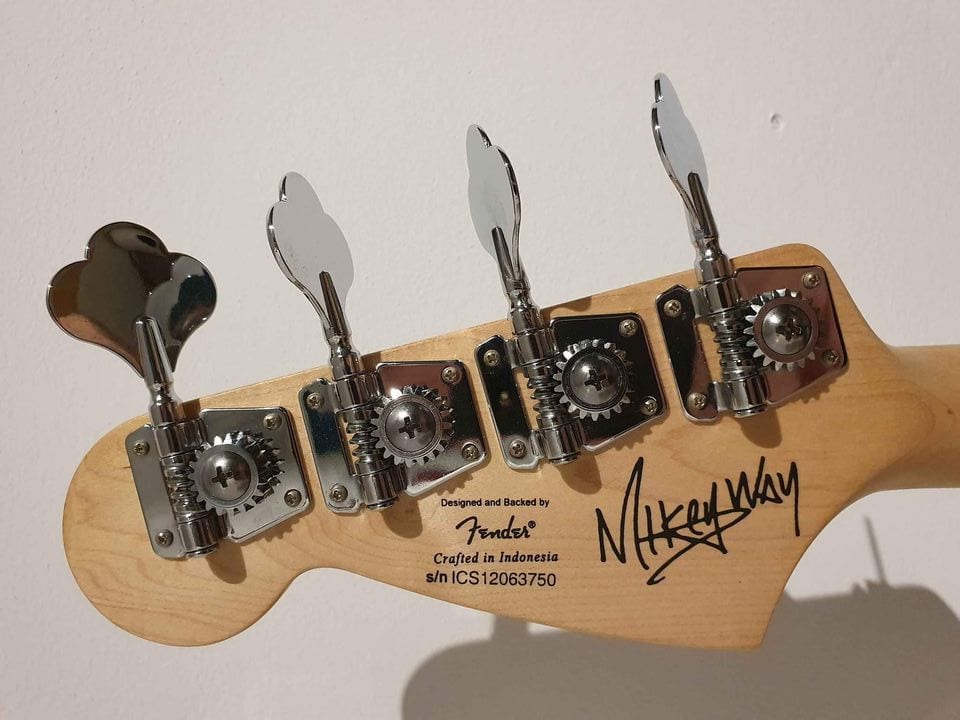
This is a humbucker-equipped machine and it totally roared through this pedal.
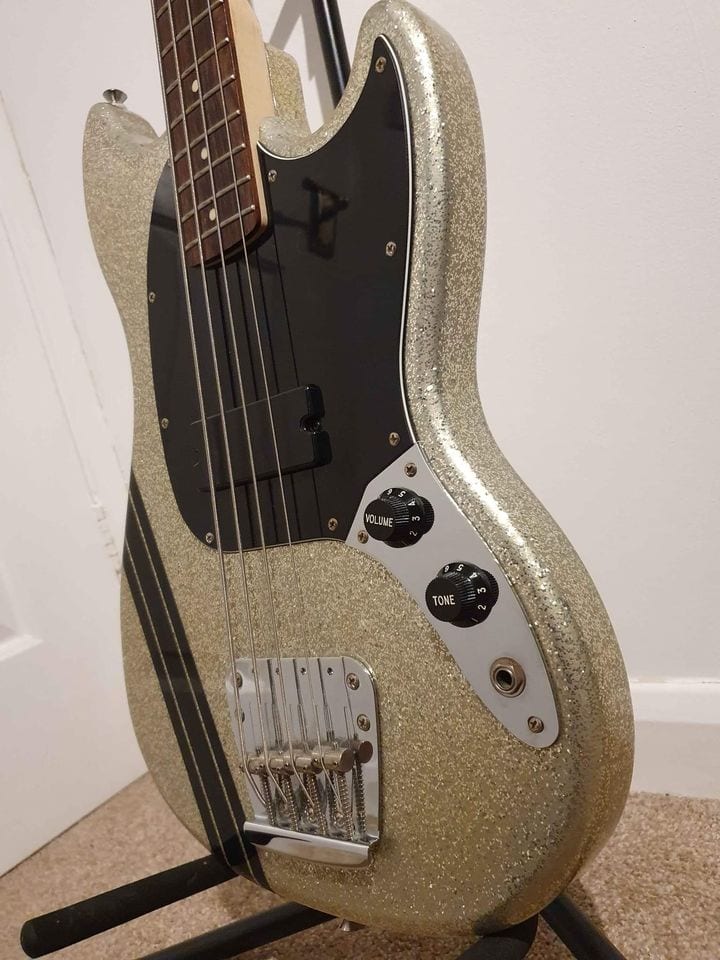
Perhaps, when playing with a bass the blend control requires even more attention. This is because the massive low end on your instrument can get a little lost if you play with the blend knob at maximum.
On the other hand, sounds with the blend knob at noon became punchy and dirty without being muddy or getting lost in the mix.
Finally, I enjoyed the octave a lot and, although the Shadow mode sounded more natural for bass playing, the Sun mode was also a very interesting option adding some mids and edge to my playing. This, if you play with a pick, can take you to instant punk territory.
Verdict
Electro-Harmonix has a reputation not only for building groundbreaking effects but also for listening to what their customers demand. The Lizard King is another home run by the company (check current price: Sweetwater | Amazon).
The versatility added by the new controls makes this a far more usable but equally great-sounding pedal as the Lizard Queen.
The Lizard King is an evolution of the concept and a great pedal I would add to my board and abuse happily.
Speaking of happy, happy playing y’all!
