
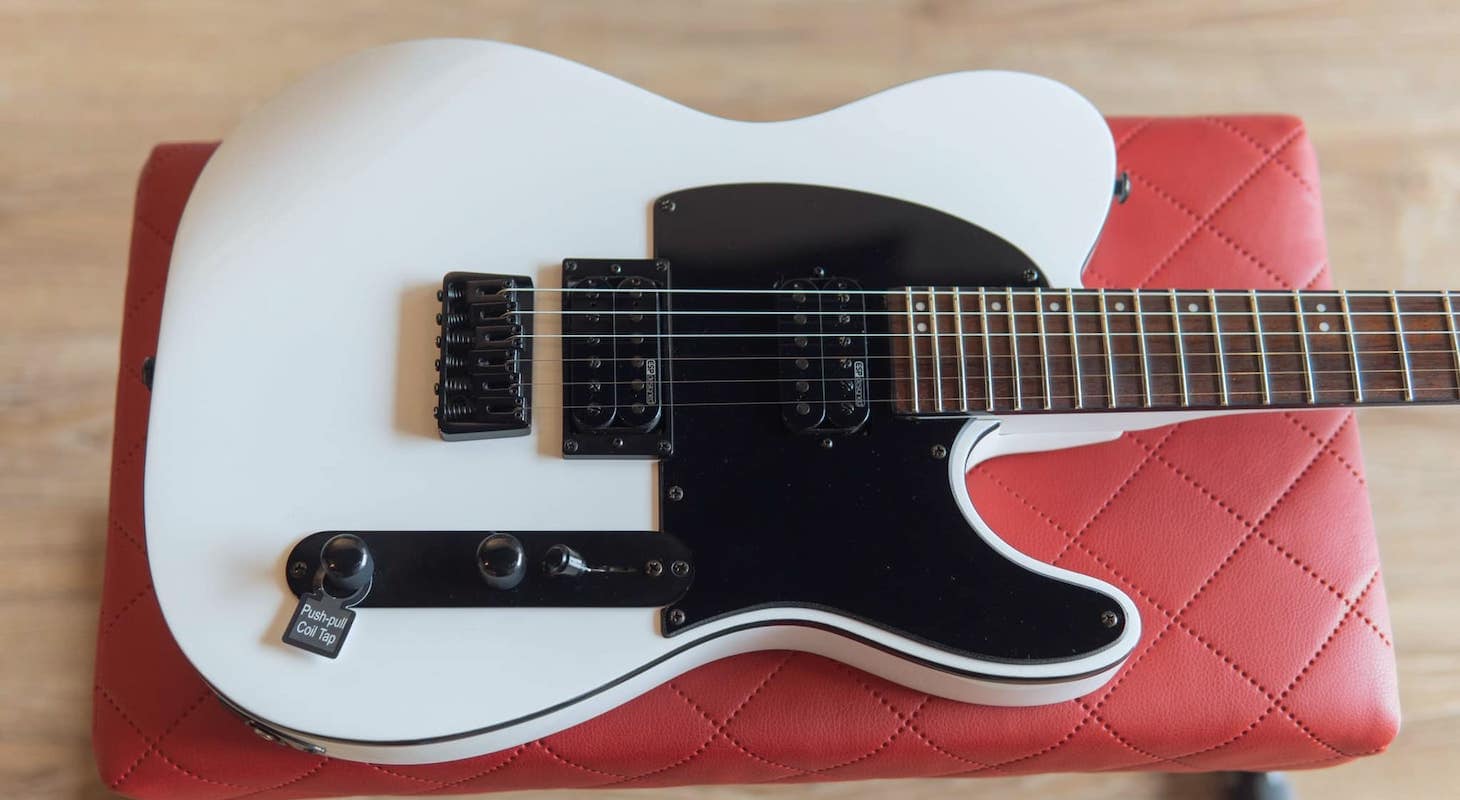
I know, when you think about metal, you don’t really think about Telecasters. Yes, since the wild ‘80s and beyond, metalheads have gravitated toward Super Strats and pointy, flashy shapes.
Thanks to players like Ritchie Kotzen, Jim Root, John 5, and Stephen Carpenter, the Telecaster is a rising force among metal musicians now, as well.
I’m a lucky guy because I love Telecasters and metal, so this trend suits me perfectly. I must tell you; this is one fun guitar to play and a great platform to build your tone. But what surprised me the most was its versatility.
Sneak Peek
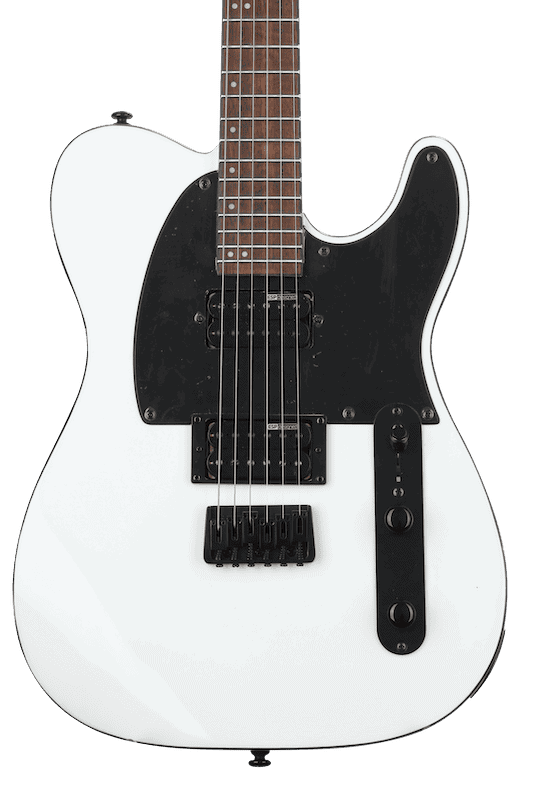
A mahogany-bodied T-style guitar built for metal, with a thin, fast neck, 24 jumbo frets, and coil-tap versatility. Heavy in weight and a bit neck-divey, but it rips when tuned down and pushed through distortion.
But I don’t want to get ahead of myself.
Let’s Be Quiet and Drive (Far Away).
A Metal Machine
Right off the box, this guitar strikes you for what it is: A metal machine. I mean, there’s something about the black and white combination that transported me in time to the tight black jeans and huge white sneakers we metalheads wore in the ‘80s and ‘90s.
Also, the dual-humbucker combination is as powerful and metal-oriented as it gets. Yet, you get versatility here because the tone knob doubles as a coil-tap. This allows single-coil-like sounds on both pickups, expanding your options from three to six.
Something I would like to highlight here is the volute. I know I’m being controversial by saying this, but everybody knows what happens to angled headstocks when you drop guitars on their face. A volute can be the only thing keeping your guitar from a snapped headstock when playing in crowded, dark stages.
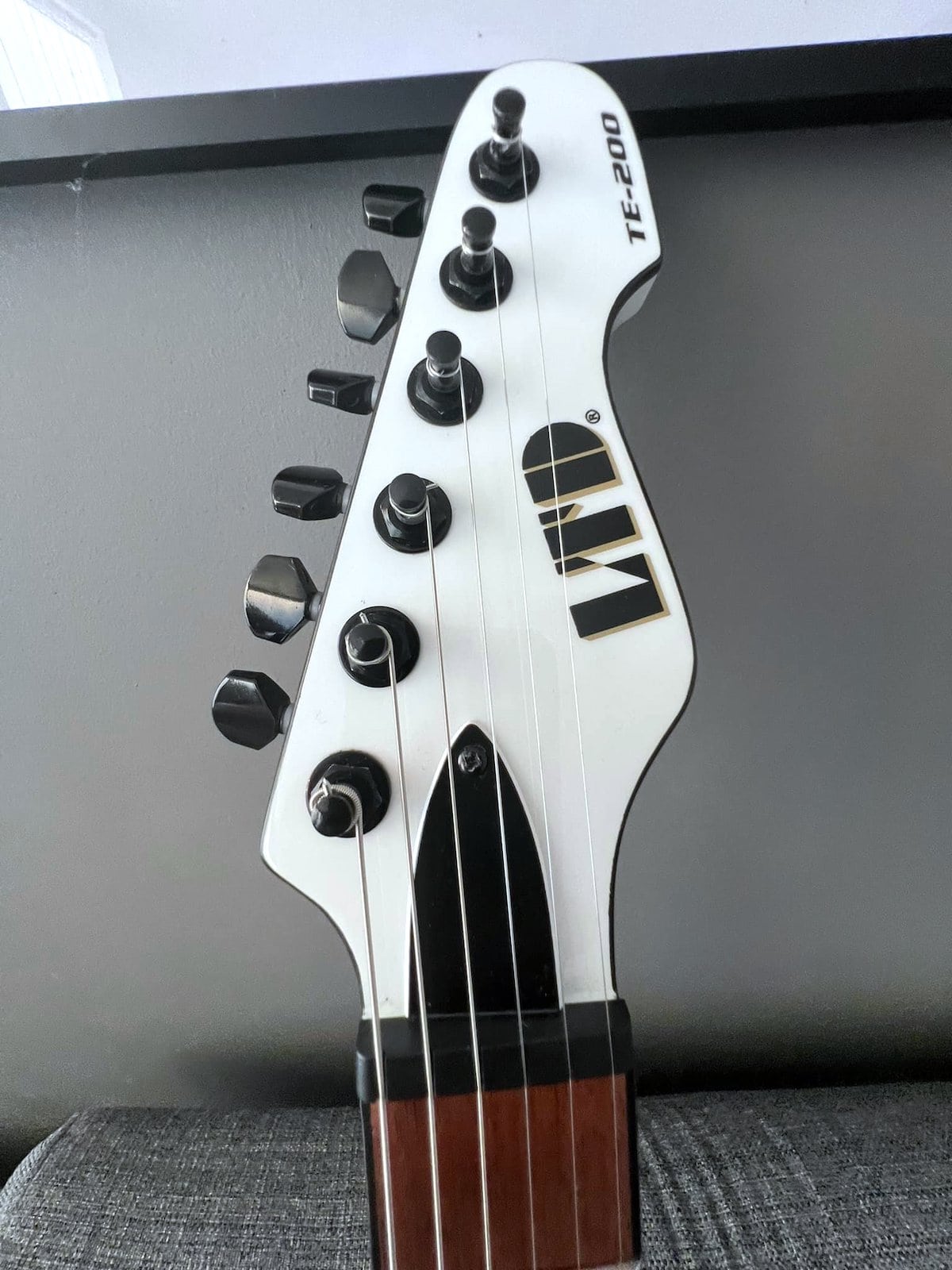
ESP LTD TE-200 - Headstock
Speaking of the neck, it’s thin and flat, making it 100% shredder-friendly. I spent a while playing with it and felt I could pull off any trick. It’s thin, comfortable, and fast with 24 extra-jumbo frets. A weird detail is that it’s a painted bolt-on neck, which is a rarity to see.
The body is equally friendly with the right contours, and the neck joint access is as deeply carved and friendly as it gets.
Let me break it all down in detail for you. Let’s go!
Modern Appointments & Comfort
The first Telecaster was designed a handful of years after WWII and saw the market for the first time in 1952. A long time has gone by, and music and technology have changed dramatically.
This is an updated version of that guitar with some modern, utterly comfortable features.
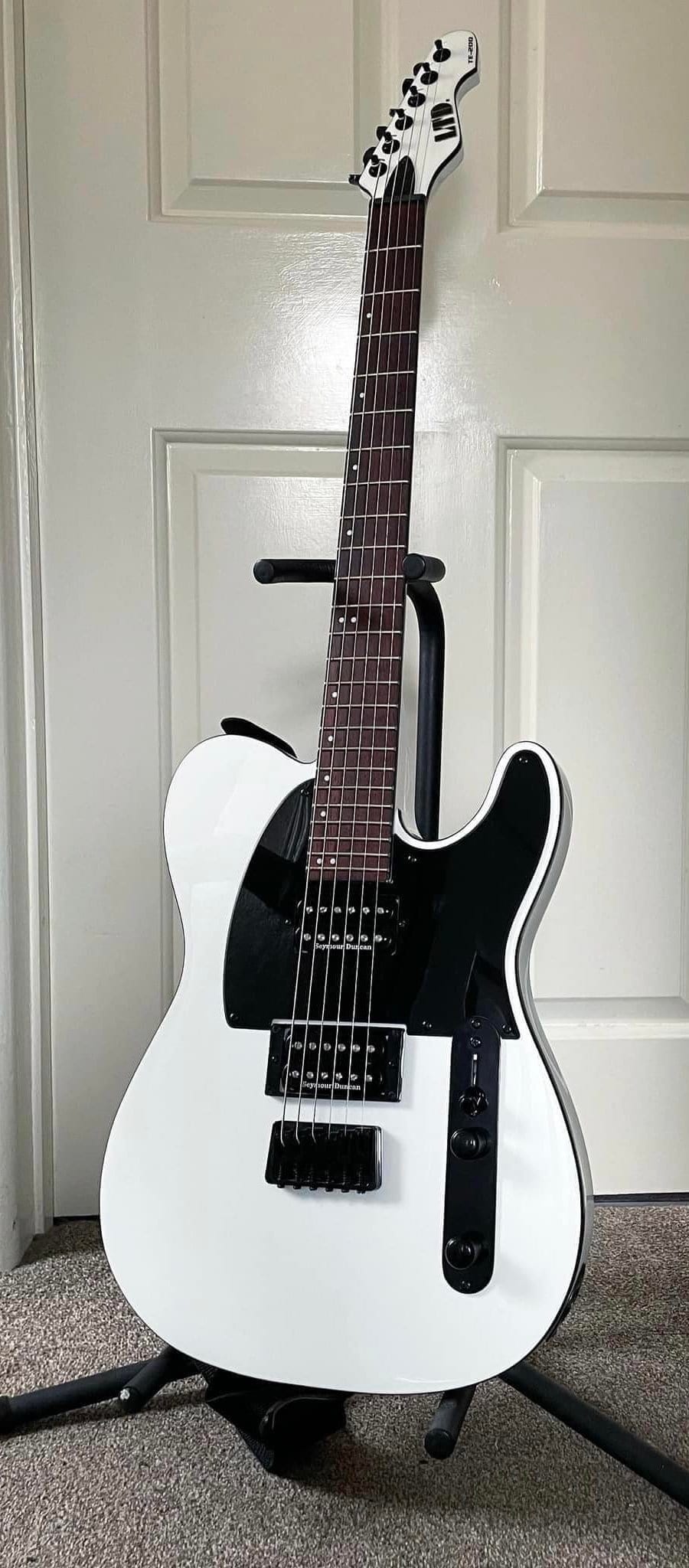
ESP LTD TE-200
To begin with, the contours of the body are perfect. You get the exact space you need to land that beer belly of yours and play through the night. Likewise, the armrest on top of the guitar is perfectly shaped for hours of continuous, effortless playing.
Although the body of the guitar is almost 2” wide, the contours make it very comfortable to play. That said, the body is made of mahogany, so it tends to be a little heavier than you would expect. The specimen I got was close to 9lbs (4kg), which is super heavy for a Telecaster (that’s what a Les Paul typically weighs).
When you start thinking about the components and realize this is one big mahogany slab, you immediately understand where the weight is coming from and make amends with it.
The one thing that annoyed me a lot was that, despite the heavy body, the headstock is so massive that this guitar has a serious nosediving issue. Yeah, it’s a pain to lift your guitar with the fretting hand while you’re playing. You end up with a very tired arm.
This can also be because of the 3-piece maple neck with a roasted jatoba fingerboard. Yes, I was expecting some rosewood or ebony too, but this wood gets the job done, contrasting its low frequencies to the neck’s snap and resonance.
Although it looks cheap and too light-colored, it sounds great. It’s a good replacement for rosewood’s sweetness, but it isn’t quite as snappy as ebony. Tragically, it doesn’t look like a polished black tile, as ebony does either.
Speaking of the fretboard, the 14” radius is just perfect to work your way to the 24th fret galloping full speed. Moreover, the thin-U shape makes it even faster. It’s like obliging you to unleash your inner speed demon; a musical highway straight to the heart of shred.
I’m telling you, it’s one of the fastest necks in the market today, especially for a Telecaster. In the same vein, the tall, extra-jumbo frets are tall enough to push you forward even faster.
I played “Duality”, “Bloody Cape”, and some ultra-fast Satriani stuff, and the neck was butter-like. Furthermore, the way the frets are finished is great; there are no sharp edges or anything like that.
I think this guitar shares modern appointments with a sound that’s ready to tear the walls of the place down with every chord. But please, read on to learn how this guitar behaves in other sonic scenarios I put it through.
Sound & Feel
I don’t know about you, but I try guitars completely clean to begin my tests. I try to keep the signal as pristine as possible so I can hear the little nuances here and there.
I was very pleasantly surprised by the stock pickups. These are generic, branded ESP. Although they sound a bit stale, there’s a natural growl coming from the mahogany body that adds overall thickness to the tone.
That’s crucial for any guitar that’s ready to chug. You know you need that mammoth low-end with a very fast transient to get that menacing sound.
Well, songs like “Bored” by Deftones were very close. You have that bright coming from the 3-piece maple neck with roasted jatoba fretboard, but with the big low end of the thick mahogany body.
This combination is great for soloing and also to play riffs because you feel the guitar cutting through the mix. It’s like playing one of those spiced-up ‘70s Gibsons with the maple neck. That snap, the nastiness in the sound, and the abrasive tone all come from the maple neck.
But I started the whole thing playing clean, and the sound was articulated, clear, and punchy. I went for some big chords, basic strumming and some arpeggios, and it was all an in-your-face experience.
In my opinion, this guitar does a great job at being a versatile studio pal. The coil-tapping feature helped me play songs like Deftones’ “Minerva”, for example, using single-coil sounds for the clean intro and bringing mayhem with the full humbucker sound.
Speaking of that, I loved the middle position to play some jangly, rhythm-driven riffs. I mean, don’t forget this guitar has a 25.5” scale and a maple neck. That combination is enough to make everything have the outstanding midrange that Fender is so well known for. Yes, in case you’re wondering, that’s Leo’s recipe for changing the world, still killing it today with this avant-garde non-Fender Telecaster.
As for sounds, the clean side of it is versatile, has some edge and punch, but it feels a little stale. You don’t get tele twang, but not a lot of warmth either. I would say that things get interesting with the coil tap, but, in the clean department, this guitar is nothing to write home about.
Now, when stepping on my distortion pedal, I felt like I was unleashing a beast that was ready to engulf the world one distorted chord at a time. The distortion just has that grain and chug that makes you want to tune it to drop C and riff life away.
Of course, I guess the pickups could use an upgrade to get rid of the harshness in the high end, but they sure do a fine job at keeping the low-end tight and punchy. I would say that this guitar is an outstanding platform to sound like four times the price tag with an upgrade as simple as a pickup change.
So, with that price tag, where did LTD cut corners? Follow me into the next section, and let’s find out.
So, Where Did They Cut the Corners?
ESP/LTD cut some serious corners to get to that retail price. I mean, a guitar sounding and playing like this shouldn’t cost what this guitar does. Well, that’s what you think before inspecting the guitar closely and playing it for a while.
As you might have expected, the first thing I have to say is about the typical nut and tuners. Yes, hardware is the department where most companies cut their budget.
So, tuners are, perhaps, the weakest link in the chain and scream for replacement. Some locking ones would be nice, so you can keep it all chugging and screaming, but in tune.
In the same vein, the plastic nut takes away some of your natural harmonics and sustain, and needs some graphite to work properly from time to time. A Tusq, bone, brass, or whatever’s your favorite would be great.
The pickups might be sub-par as well. While they keep it tight, they have that brittle quality that’s just unmistakable on most generic pickups. Believe me, a pickup swap can truly take this guitar to the next level.
Finally, beyond the roasted jatoba fretboard, which counts as another cut corner, this guitar has a big nosediving problem.
With or without cut corners, at this price point, this ESP LTD TE-200 is an outstanding instrument for the beginner or amateur musician and oozes growth potential with minimal upgrades for the pros out there.
My Verdict
Teles have arrived at the metal world to stay. We’ve seen them in the hands of virtuosos, shredders, and rockstars like Tom Morello, or Myles Kennedy and his PRS version.
Well, in my opinion, it was about time metal players got into Telecasters. I think they’re a match made in heaven. Teles have that great midrange to cut through any dense mix and can deliver that growling chug we need to make a song scary, headbanging friendly, and fun.
This Tele by LTD packs everything you need to play metal at its best but can also be versatile enough to play other styles like pop and funk with the coil-tap function activated.
Final Take
Although LTD cut some corners here (you can always get the TE-1000 if it fits your budget), this guitar is a great metal-oriented tele to join your arsenal, be your touring guitar, help you take your first steps, or work as a platform for overhauling.
For professional musicians, it might be a little harsh in the high-end, but amateur players, occasional giggers, enthusiasts, and hobbyists will find a great guitar here.
Happy (Telecaster) playing!
PS: Oh, and just as a present from yours truly, If you get the TE-200, here’s Steph telling you how to jam to the song above. Thanks for reading this far!
