
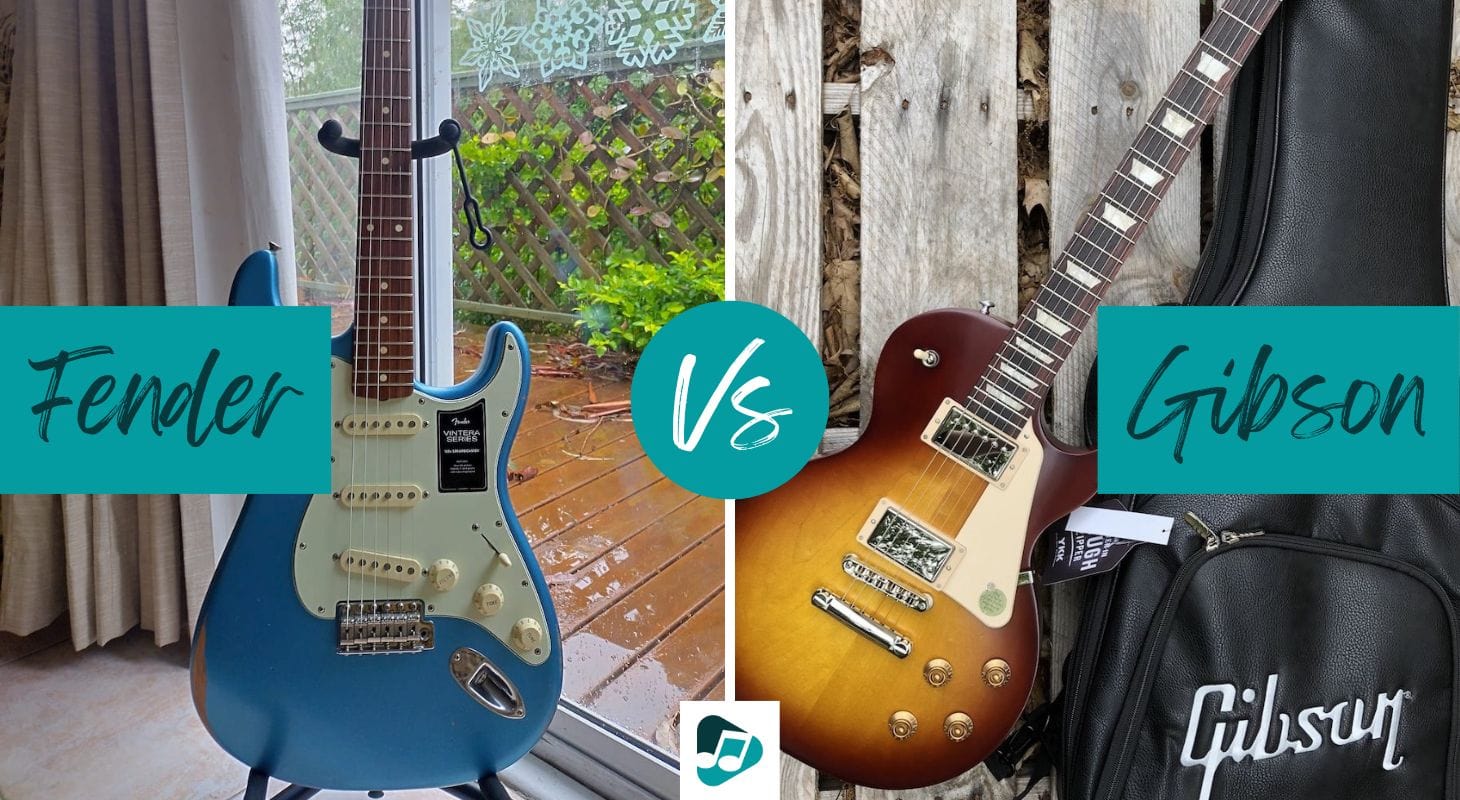
Adding up Fender and Gibson’s guitar sales, they make almost half the guitars sold worldwide. Yes, according to recent statistics, Fender has 30.75% of the total market share and Gibson 18.97%. The following two brands are PRS with 9.62% and Ibanez with 8.25%.
So, I’m talking about the best-selling guitar brands in the world. I am also talking about a brand that sells almost twice as much as its closest competitor.
But, what are the differences between Fender and Gibson? More importantly, which of these brands can offer you the guitar you need to shine on a stage?
Read on as I’m going deep into the topic to help you make an informed decision and buy the guitar of your dreams.
Historical Differences
Let me begin from the start talking about the differences these guitar brands had when they started making solid-body electric guitars. Bear in mind that the gap I’m talking about has been reduced drastically with models these brands put out in past decades.
But join me on this trip to the past.
On one hand, we have Gibson, founded by Orville Gibson in 1902. Orville founded the company to retail the mandolin-family instruments he had been manufacturing since 1894. He was the one to invent archtop guitars using mandolin techniques applied to a larger instrument.
Top 3 - Gibson Guitars
Preview | Product | Price |
|---|---|---|
 | ||
 | ||
 |
The company was also making flat-top acoustics and was a big name in ornamented instruments used for jazz, swing, and such. Good examples of this era are the jaw-dropping L-5 (1923) and Super-400 (1934) among others.
On the other hand, we have Clarence Leonidas Fender (AKA Leo Fender), an inventor, accountant, and repair aficionado who surfed depression times going from job to job as an accountant, bookkeeper, radio-repair man, and delivery man among others.
Top 3 - Fender Guitars
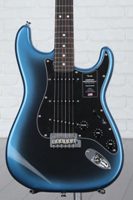
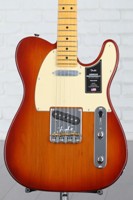
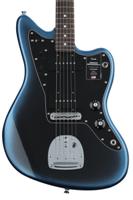
Leo wasn’t a guitar player, but by the 1940s he realized the need for smaller, reliable guitars for the new music groups. WWII had taken away the space big bands needed and a smaller, friendlier format of trio or quartet playing rhythm and blues, boogie-woogie, honky-tonk, and western swing took over.
Leo set out to create a low-cost, reliable, no-ornaments guitar he called the Esquire, which is a Telecaster with one pickup.
So, while Gibson was focused on creating beautiful instruments made with the best woods available and heavy ornaments, Fender was trying to mass-produce an effective instrument that could be sold on a large scale.
Gibson is a company created to make unique, amazing instruments for the discerning musician. Instruments made by musicians for musicians.
Fender, on the other hand, is a company based on the vision of a non-guitarist who set out to perfect the idea of the solid-body electric guitar and mass-produce it to flood the market.
The Truth Today
You must have read all over the internet that Gibsons have P-90 and humbucker pickups that sound much fatter and round. You must also have heard that Fenders are more treble-oriented with single coils that generate annoying 60-cycle hum.
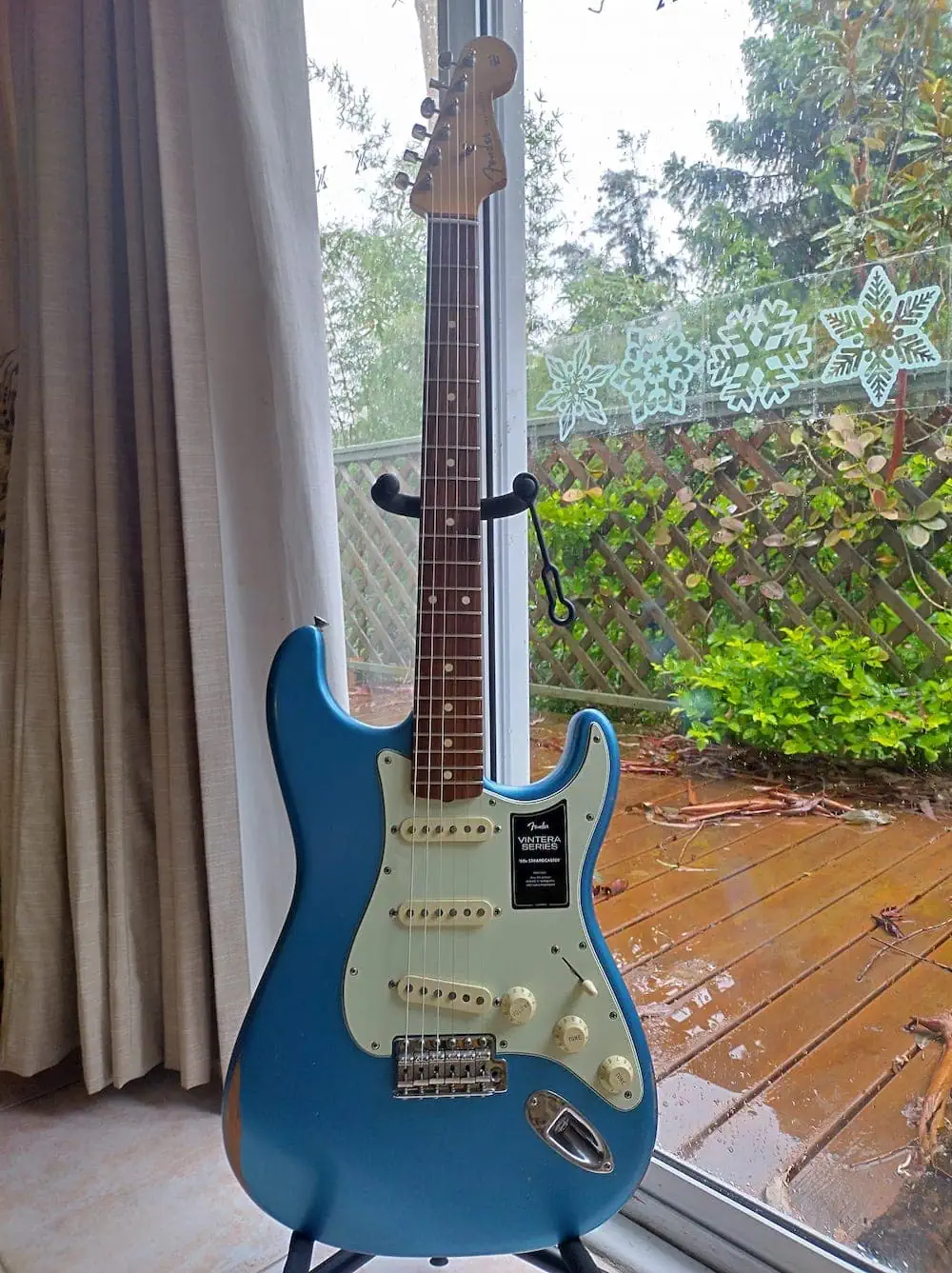
Fender guitars, like the Strat above, is more associated with an all-single-coil pickup setup like the SSS setup you see above.
Well, all of that is something from the past. While it’s true that both companies hold their historic lines that aim to satisfy purists, you can find all kinds of alterations that overlap companies. For example, you can easily find Fenders with humbuckers, noiseless pickups, and P-90s or Gibsons with maple necks or single-coil pickups nowadays.
That being said, I’m about to share with you what hasn’t changed between the companies. I’ll review the kind of difference that can help you make a decision, and I’ll base my analysis on what’s available today rather than the historic differences.
The Old Tale of the Neck Angle
This is the first difference between Fender and Gibson that hasn’t yet been addressed properly by Gibson (and probably never will). Most Gibson necks form an angle between the neck and the headstock. This angle makes Gibsons fragile instruments that won’t likely survive a fall from the guitar stand without cracking or even snapping the neck.
Fenders, on the other hand, feature a maple neck (in 90% of the cases) with either a rosewood or maple fretboard. This neck, designed by Leo, is completely flat with no angle at the headstock. This makes it virtually indestructible.
Ask Mr. Jimi Hendrix if you don’t believe me; in this video of the Monterrey Pop Festival in 1967, he takes the guitar by the neck and bangs it against everything making the body crack before the neck.
Why is this important for your decision? Well, very easily, if you’re going to be hitting many stages or playing in an adrenaline-filled band, then bear in mind the kind of rough life you’ll give your guitar. You’ll have to be way more careful with your Gibson than with your Fender.
Scale, Intonation & Bending
Another big difference between Gibsons and Fenders is the scale length. Yes, while Gibson historically used 24.75”, Fender used 25.5” for most models.
You might be wondering why this is important; I’ll break it into two sides:
- Intonation is more stable on Fender guitars because the scale is longer and strings have more tension. This tension is great to have a more percussive approach for the right hand. For example, players like John Frusciante use and abuse this feature a lot.
- The longer scale makes the guitar’s intonation more stable but makes it more difficult to bend the strings than when you play a 24.75” scale guitar. Therefore, if you’re planning on following the steps of great string-bending guitar Gods like Zakk Wylde, Slash, Jimmy Page, or Duane Allman, you’d be better off with a Gibson-style guitar.
Wood & Tone
As you might know, the sound of a guitar is made up of a combination of factors such as pickups, electronics, and, most importantly, tone woods.
Solid-body Gibsons are mostly made of a mahogany body (with or without a maple top depending on the model), a mahogany neck, and a rosewood or ebony fretboard. The tonal properties of mahogany are dark and rich and rosewood adds a tiny bit of sweetness to the combo.
Maple and ebony are famous for the snap and high-end they can generate; that’s why the heavy, thick body of a Les Paul is topped with a maple top to make it clearer and for it to cut the mix of a band better.
This particular combination of tonewoods gives Gibsons a tone that sits comfortably in the low-mid frequencies adding body, weight, and power to a composition.
Fenders, on the other hand, use easy-to-get woods like ash, basswood, and alder for bodies. Most Fender necks are made of maple with a maple, rosewood (1959 onward) and pau ferro fretboard.
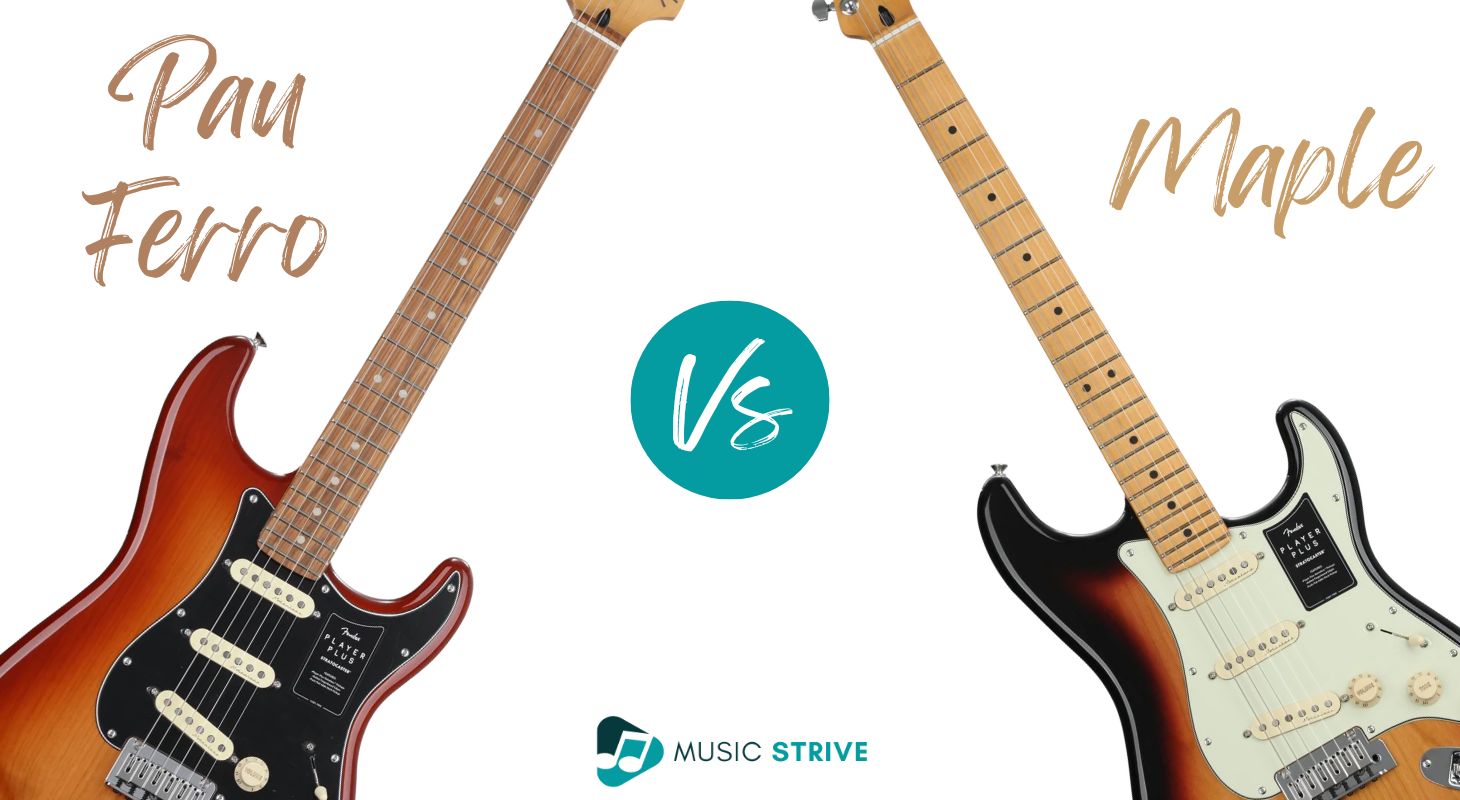
This combination of tonewoods gives Fender guitars a tone that works better with the middle and mid-high frequencies adding snap, glass-like definition, and attack to any composition or recording.
So, think of the tone you want out of your instrument and build from there.
Sounds
Hey, didn’t I just talk about tone a subheading ago? Well, I’m about to bring down a big myth and talk a little about the sounds you can get from either of these guitar brands.
To begin with, the division between Fender and Gibson doesn’t necessarily happen in the “gain” territory. Yes, you must have read a million times all over the internet that Gibsons have more gain than Fenders. Well, that’s something of the past because there are a million ways to install the most powerful pickups in the world on both brands.
So, what is it to talk about when it comes to sounds? Well, based on what the illustrious Joe Bonamassa said you can get almost any tone from a Les Paul just by tinkering with the electronics.
That being said, there are a couple of strat-only tones like the 4th and 2nd position of a 5-way switch that can take you to funk territory immediately.
In the same way, if you like the huge tone of hollow-body Gibson guitars, you can get close with Fenders sporting P-90s (like the Jazzmaster) or humbuckers with big offset bodies. Yet, the exact tone that made Oasis climb to the top of the charts can only be found in a hollow-body Gibson.
So, as a conclusion, unless you’re looking for a very specific sound, you can modify Gibsons and Fenders to be played in any and every scenario. Plus rules are made to be bent, perhaps in your attempt to find a classic tone, you end up finding something new and uniquely yours.
Construction
The final difference I am going to talk about is the construction technique used by each of the brands.
Gibson uses the traditional set-neck technique with most of the models in its line. This traditional technique means that the body and the neck are glued together. If the operation is successful, that joint will never separate. Thus, if something happens to the neck, it is very difficult to replace just that part.
Set-neck guitars are known for having long sustain and vibrating as a single piece making the guitar easier to take into the emotional solo territory and friendlier for bending.
Fenders, on the other hand, use Leo’s revolutionary bolt-on approach. This means that the neck and the body are joined together using four screws (three in the seventies) and a neckplate.
This means that if something goes wrong with the neck, then you can just replace it. For example, Clapton’s famous “Blackie” guitar is actually the body of a guitar with the neck of another, and the pickups of a third one.
While the bolt-on construction gives the guitar more resonance, attack, and snap, it takes away some sustain and low-end coming from the vibrations of the set-neck construction.
Ergonomics
Besides the differences in construction regarding the neck joint, Fender guitars tend to be lighter and more ergonomic. For example, Stratocasters offer the player a contoured body making room for the regulatory beer belly and the elbow.
Also, it is easier to make it to the highest frets of a Stratocaster than a Les Paul, for example, because of the dual cutaway. In that sense, a Gibson SG (the brand’s best-selling model in history) is as thin and light as it gets, offers perfect access to the last fret, but doesn’t have any contours in the body to accommodate players.
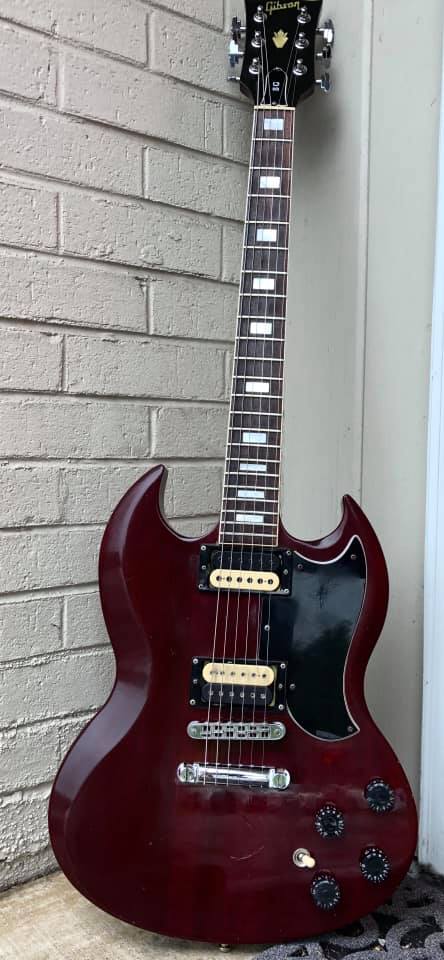
1985 Gibson SG Standard with DiMarzio Pickups
So, if you’re planning on standing up with the guitar hanging for hours, you should bear this in mind.
Price Range
Finally, the combination of all these factors we’ve just seen has an impact on the final price of Gibson and Fender instruments.
Let me clarify that I’m talking about new instruments, not vintage pieces. The vintage guitar market has its own set of rules.
So, Gibsons are traditionally more expensive than Fenders. This has a lot to do with construction techniques, woods being used, and the amount of manual work going into each guitar.
Does this difference have anything to do with the quality of the guitar? Well, the answer is no, it is just the result of adding up materials and construction techniques.
For example, a US-made Fender Stratocaster is usually half the price of Gibson’s Les Paul in the same tier.
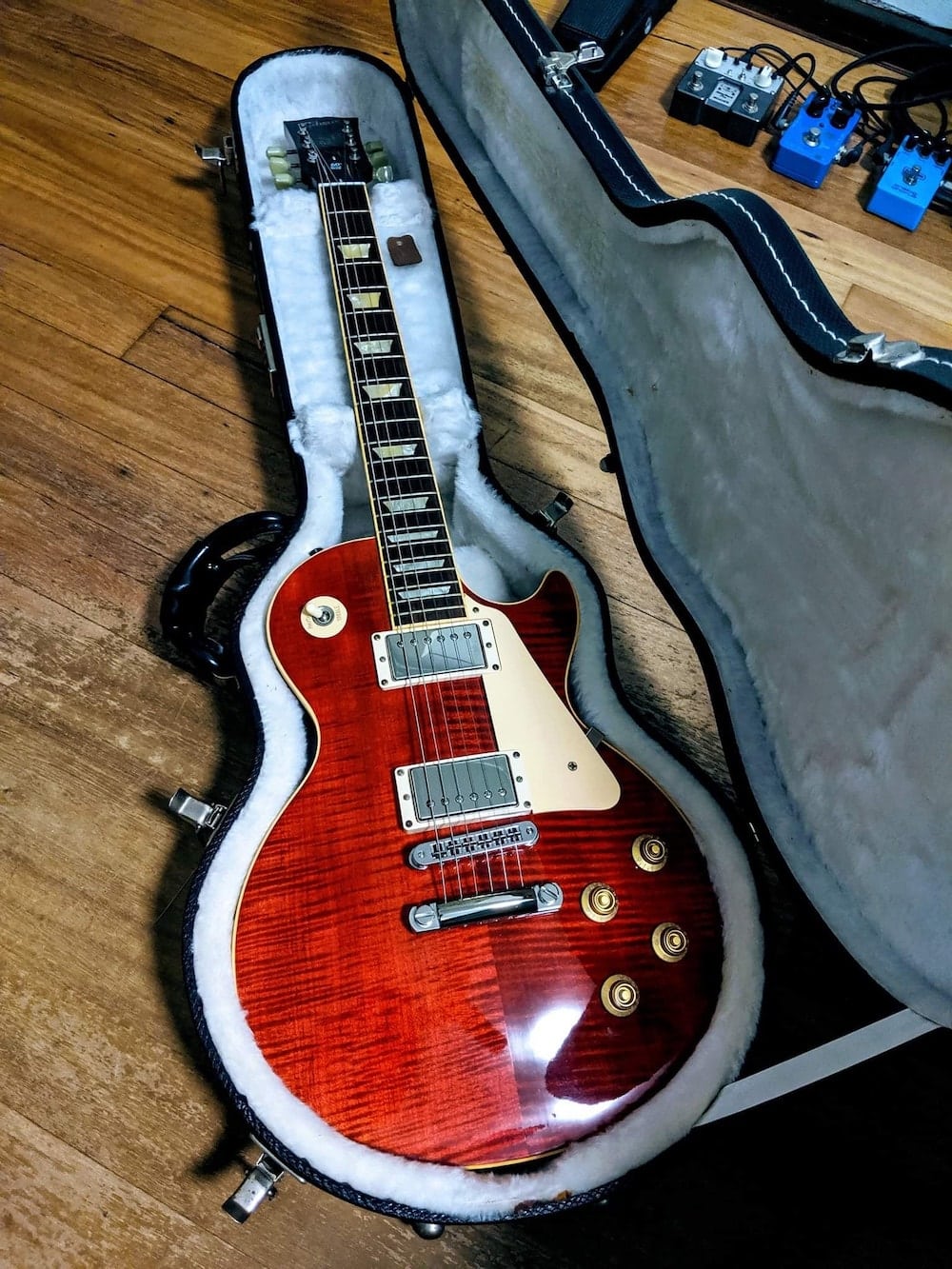
Gibson Les Paul Standard 2007
This might or might not be a defining item on your list, but it’s surely one you need to bear in mind before making the purchase. Gibsons are usually pricier than Fenders (depending on models, of course).
It’s All in Your Ears
Before we get to the bottom end, let me tell you that the guitar you choose between a Fender and a Gibson isn’t just based on build criteria, but mostly on your ears.
For example, we’re very used to hearing the nuances and noises of Fender Stratocasters when we listen to blues greats such as Stevie Ray, Jimi, or Eric. On the other hand, the creamy, butter-like tone with a ton of sustain by BB King or Albert King comes from a Gibson.
This means that the tones you want out of the guitar you’re about to buy are already in your head. You’re going to try and make your guitar sound like that of your heroes. In that quest, I suggest you check what equipment your favorite guitarists play.
It’s easier to make a Stratocaster sound like a Stratocaster than buying a rocking SG to make it sound like one.
Finally, I suggest you play the model you want to buy thoroughly before making the purchase because comfort and ease of play are just as paramount as sound.
The Bottom End
Beyond the rules lays the fertile ground for the magic to happen. Buy the brand that resonates the most with you (and fits your budget) and try to make it sound like you. Feel free to break the unwritten rules of what you should do with each of these brands and come up with something new.
Happy playing!

Gretsch White Falcon is the guitar sound I’m looking for.
I had a Gibson SG bass. Too short. Not the right tone. Then I got I believe a ’64 fender telecaster pink paisley print bass, good tone, hard to fret, slight bow in the neck. Now I have an American made ’84 P bass 4 string. Typical good fender tone and fret. However, once my band started traveling and playing 200+ gigs a year, I needed a 5 string with a p bass sizes neck. Enter Ibanez. They custom built a 5 string exactly to my reach, and very easy fretting. One of a kind. Still use both.