
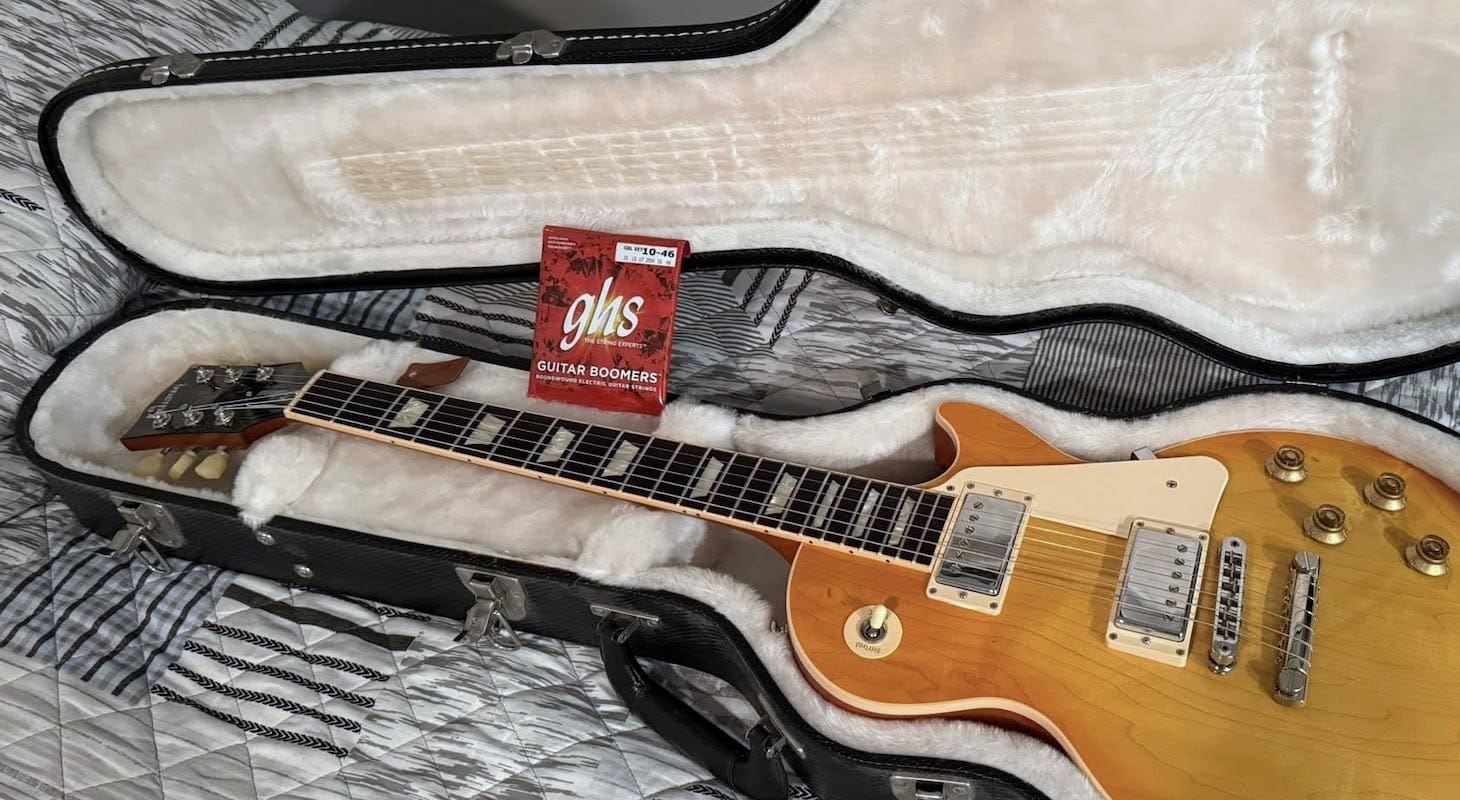
To paraphrase the Foo Fighters, I’ve got a confession to make: I spent an unreasonable number of my guitar playing years thinking GHS only made bass strings. I’d read interviews where Flea, Gene Simmons, and Dusty Hill declared their love of GHS strings, and I assumed they were bass-only.
Imagine my surprise when the other guitar player in my band at the time showed up to rehearsal with a fresh pack of these, and a full set already on his Les Paul!
I found out from him on the spot that the Boomer was the unsung (or perhaps unstrung) hero of, appropriately, many of our classic rock heroes. Curious, I strung up my own Les Paul Standard with a set of GHS Boomers.
Sneak Peek
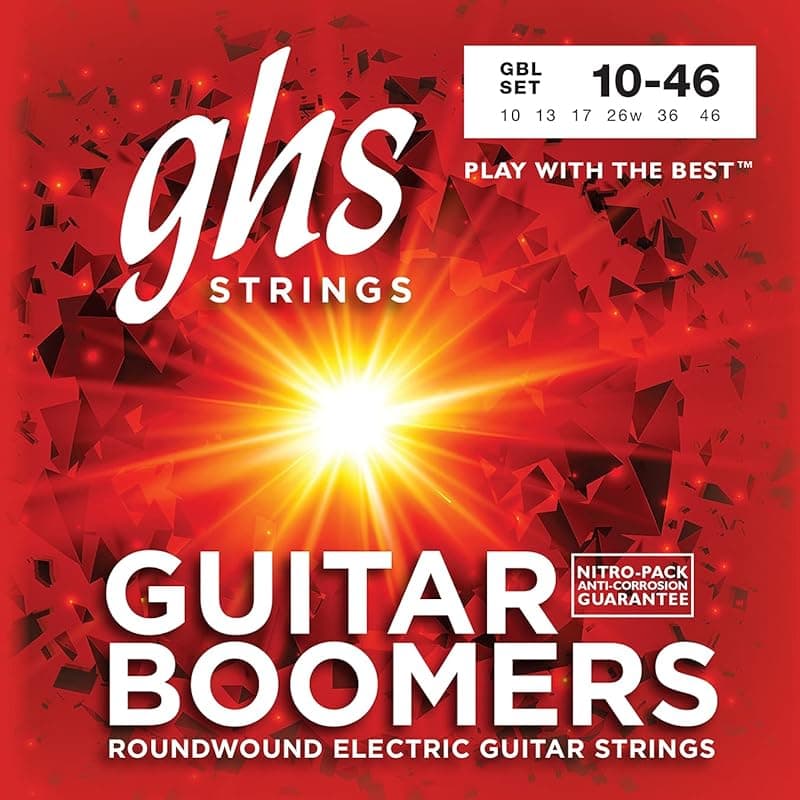
Round-core strings with a warm, vintage tone and easy bends — ideal for classic rock and country, among others, and less suited for high-gain metal.
Move Over Ernie Ball
The Boomer has been GHS’ flagship model since the company’s launch in the mid-sixties. When other string builders like D’Addario and Ernie Ball leaned into new hex-core technology, GHS decided to stay true to their own old-school manufacturing method, opting to stick to round-core strings.
When I first tried the Boomers, I noticed that these round core strings have a little less high end clarity and, appropriately, a little more low end boom than the hex core strings I was used to.
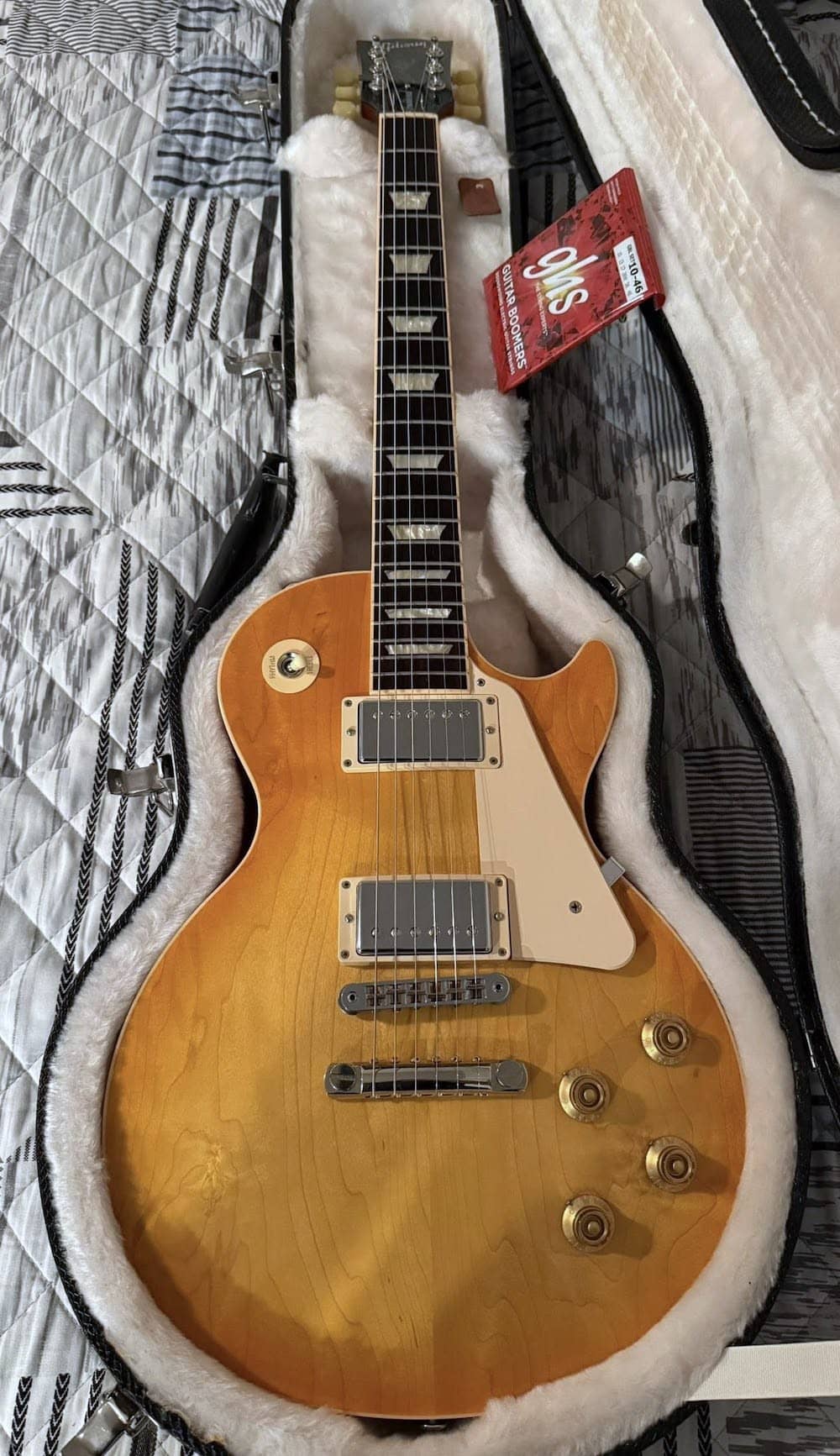
GHS Boomers on Gibson Les Paul
The other big difference I noticed was the slightly looser feel than even the Ernie Ball Slinkys I was used to at the time. The Boomers weren’t quite as stiff-feeling as the Ernie Balls, even at the same string gauge.
Both of these initial differences arise from the same source. The round core on the Boomer, when it comes to the wound strings, has more contact with the wrap wire than that of a hex core.
Just like with the rest of a guitar, say the body and the neck, better contact means better resonance.
I also found that the GHS Boomer bends very easily, especially on the wound strings. I was able to achieve some aggressive Gary Moore style vibrato even on the E and A strings!
I actually wonder if this is the source of the legendary vibrato that was so commonplace in many of my favorite 60s and early 70s records. Some of those British and American blues-rock legends seemed to have effortless, extremely wide vibrato and bending power.
Perhaps the widespread use of round core strings before the hex core was invented helped to facilitate this!
Old School Cool
The first time I played GHS Boomers, I was pretty much exclusively playing overdriven hard rock tones. On my Les Paul, which has a tendency to get very mid-forward, I found that they lent plenty of grunt and power to my tone.
This was particularly true as I drove my amp into tube saturation. The strings are louder, even unplugged, than the Ernie Balls I was used to. They pushed my tone into the old-school half-driven “sweet spot” with relative ease: think late 70s AC/DC tone, rather than mid-80s JCM800 distortion.
At the time, I wound up going back to Ernie Ball and D’Addario strings because I missed the high-end snap at higher gain levels. I found that, although the Boomers had plenty of grunt and power for my rhythm playing, my leads weren’t cutting through as much as I’d like in a twin-guitar band.
If, however, I was in a single-guitar band, then these would be perfect: my lead tone at home was thick and powerful. No wonder Randy Rhoads was such an avowed user of these strings. I think back to his take-no-prisoners approach to the guitar in the early 1980s and wonder if he could have achieved his massive distorted tone with any other string.
More recently, I tend to play cleaner sounds. In recent years I’ve taken to country music, especially country lead guitar.
I bought a set of Boomers from Sweetwater and put them on my Les Paul once more, wondering if they might be good for country guitar.
I found that these strings’ innate characteristics lent themselves extremely well to the style of country lead that I prefer: that is, the studio gunslinger stylings of Brent Mason.
In particular, the big, precise bends that characterize this style are much easier to achieve with the Boomers. I’ve often had to muscle through the double-stop bends on “As Good As I Once Was,” but with the Boomers, they flow out of my fingers with ease.
The same goes for the spaced-out string-skipping bends on tracks like “Sounds Like The Radio.” The ease of bending means I can be much more precise and achieve the pedal-steel soundalike tones I’ve been searching for on my country guitar journey.
Of course, my Les Paul will never twang like a Telecaster, but these strings really helped facilitate this foray into a new playing style.
Who Should Play GHS Boomers?
Of course, I also like to play my Les Paul for heavier stuff, even if it’s just at home. When I switched to the high-gain channel on my Tubemeister, I was reminded why I prefer hex-core strings for high gain playing. I couldn’t achieve the chunky, articulate palm muting for heavy metal.
Likewise, my pinch harmonics didn’t squeal and scream the way they’re supposed to.
I can’t use these strings for high-distortion drop tuning. That’s just the way they’re built: those tones come from more modern strings with hex cores.
However, for a vintage-voiced tone reminiscent of all those great records from the 60s and 70s, it’s hard to argue with these bold, authoritative old-school strings.
I wonder if the more rudimentary recording and amplification technology available back then helped encourage a more warts-and-all approach to tone. When listening to those old records, I find it relatively easy to tell what guitar I’m listening to just by their tone, even though there was less variety on the market.
Perhaps the round core of those strings had something to do with that!
I’d highly recommend GHS Boomers to any guitar player with a taste for warm, welcoming vintage tone. Lower gain levels up to early 70s style overdrive sound great. Big bends, double stops, and wide vibrato all benefit from these old-school construction methods.
Final Word
All in all, GHS Boomers are great guitar strings, with a distinctive tone all their own. While I wouldn’t play them if I was in Killswitch Engage or Slipknot, I appreciate the playing experience for lighter styles of rock and country.
My Verdict
If you love warm, authoritative tone and effortless bends, GHS Boomers are worth a try — especially for 60s/70s-inspired rock or Brent Mason–style country lead. They won’t deliver the chunk and bite of hex-core strings for heavy metal, but for old-school grit and dynamic playing, they’re hard to beat.
