
Let me begin this by telling you a story. As you might know, Fender and Gretsch Guitars are quite closely linked. Therefore, while I was working at a Fender dealer, we would receive all kinds of outstanding Gretsch guitars.
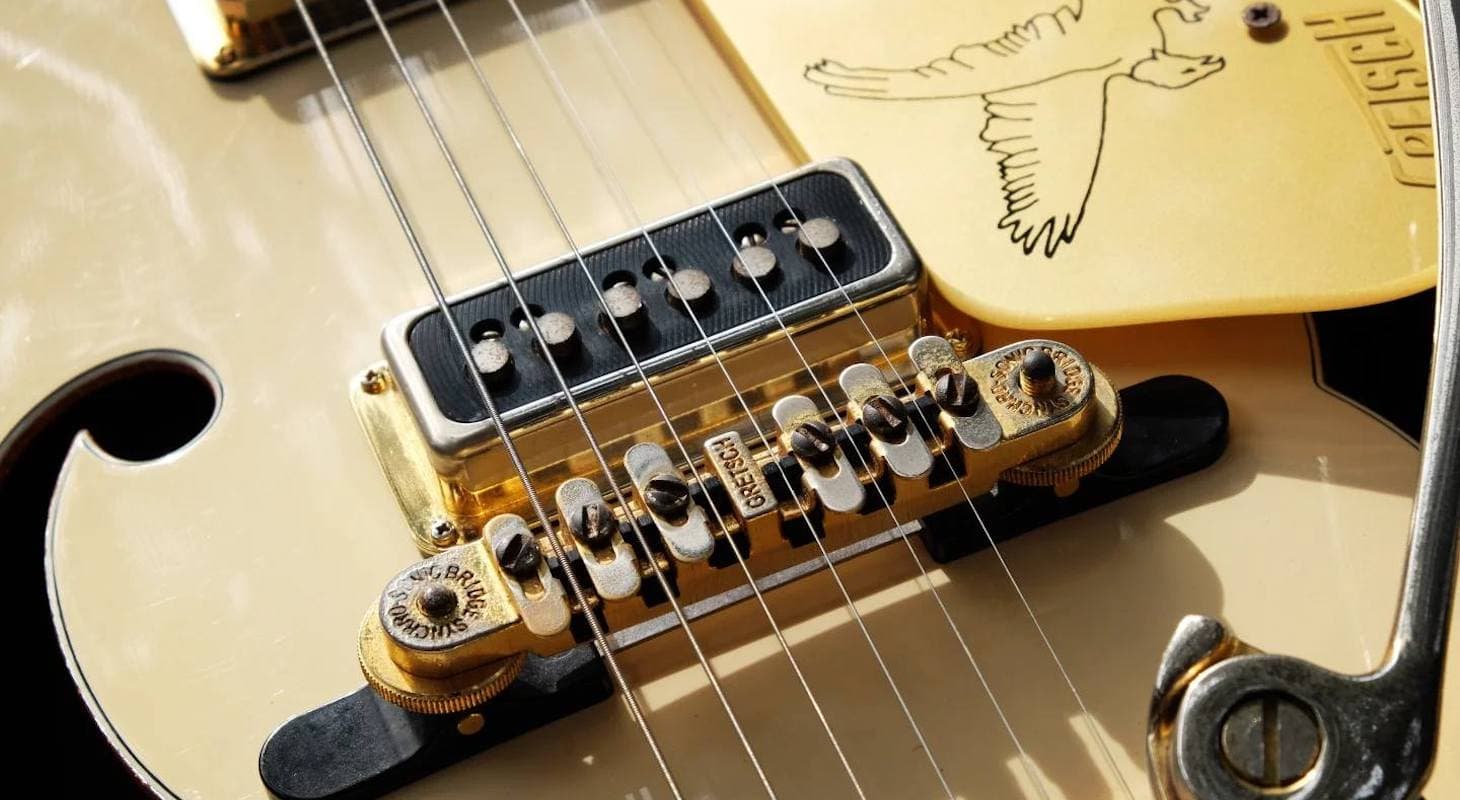
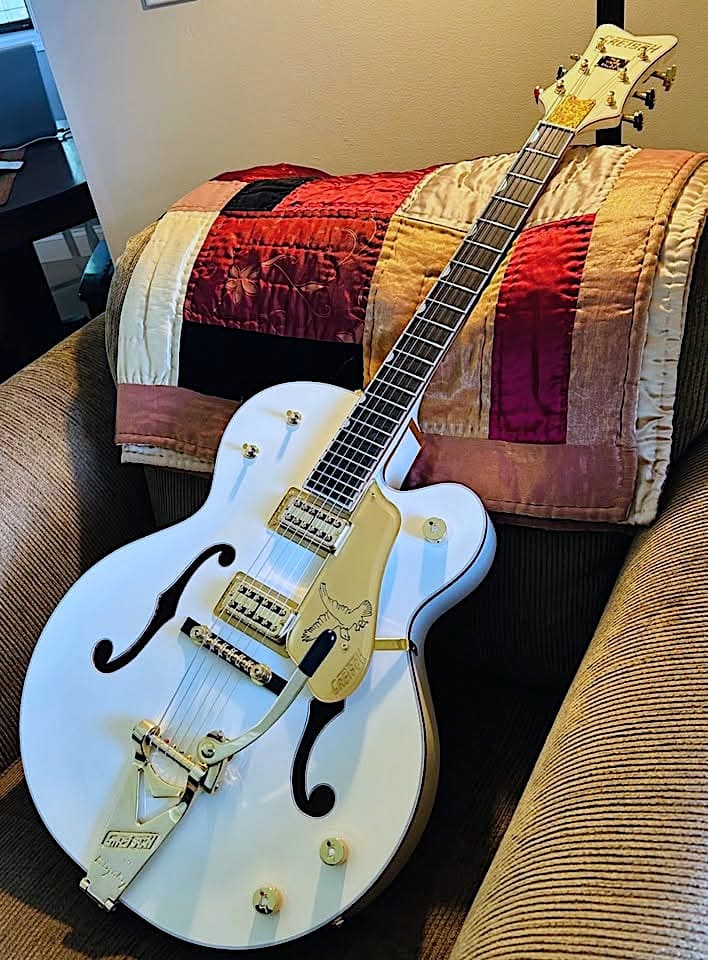
One fine day, I was going through a batch of newly received Gretsch guitars to exhibit and came across Excalibur: AKA, a White Falcon with Dyna-Sonic pickups. I had never played one before in my life, and taking it out of the case was nothing short of a dream.
Time went by, and none of us could sell it. Simply because we didn’t know how to make it sound amazing. I mean, I had seen Billy Duffy rip it with his so many times I kept on playing it for customers with distortion and wanting it to brawl, bark, and bite.
Boy, wasn’t I a wrong salesman.
To make a long story short, I had to learn my way around Dyna-Sonic pickups and sell that guitar (which I eventually did), and fell in love with every aspect of them.
Here’s my way of passing it forward. Come, let’s discover one of rock and roll’s best-kept secrets: The Dyna-Sonic pickups.
Table of Contents
Why Do I Love Dyna-Sonic Pickups So Much?
Dyna-Sonic pickups have many amazing appointments that make them truly unique, savage, and worth their price. We’re going to go into each category in-depth in a second. Yet, before we begin with that, let me tell you that these were the first pickups in history with user-adjustable pole pieces.
This isn’t, by any means, a detail. On the contrary, it means you can adjust the string balance in the overall sound to the very detail. You can compensate for lows or highs and adjust the midrange to your taste.
Believe me, it’s a true game-changer.
Let’s Talk Clarity & Definition
This is what Dyna-Sonic pickups do best: being glassy, big, and utterly defined. I’m talking about a level of high-definition sound that you could only find in a Stratocaster when played lightly with your fingers.
Moreover, the definition and the clarity aren’t just something you can achieve in a certain frequency range; these pickups are consistent across the board.
So, for example, I would plug it into a Twin Reverb (my review) with lots of headroom and ask the customers at the store to play big, major open chords. Then ask them to play bar chords. Then ask them to go for some jazz chords with the tone knob rolled all the way back. Finally, ask them to play some clean leads or licks up the fretboard.
The guitar could handle all of that in style and remain clean, glassy, and defined in every scenario.
Let’s Talk Punch & Bottom End
While the Dyna-Sonic pickups are glassy and transparent like Stratocaster single-coil pickups, they offer a different type of bottom end and an enormous punch. It’s as if you would take the best of the single-coil realm in terms of brightness and lively high-end and mix it with some Gibson-like growl and punch.
What’s the result of that uncanny mix? Well, simply a pickup that offers more information. That translates into a fuller, bigger, more hi-fi sound that’s pretty much what you always dreamed of if you’re a modern player. Believe me, delays, lush reverbs, and modulation on chords never sounded bigger and better.
At the shop, I would crank the reverb of the Twin and throw in a Carbon Copy for purists, or a Big Sky, and a Timeline for the modern players, and the results usually shocked every customer.
Let’s Talk Midrange
Now, every guitar player knows that the extremes of the frequency range are hardly our territory. We either dominate that midrange or we’re out of the game, especially in rock and roll.
So, what do these pickups do for us in the midrange? Well, the answer is very simple: They capture the glass-like high-end and keep it in kind of a twangy way, add generous low-end, and cut through with a punchy, rounded, musical midrange.
For those of us who love Telecasters for their unparalleled raw power and raunchy, hypnotic mid-infused tone, picture the middle position but with more edge. Yes, it’s like that combination but without losing any of the majestic clarity and twangness of the bridge in the way.
I would add a Tube Screamer to the combination of pedals (or a Klon clone; my take) and set the gain at 8 o’clock, the tone at noon, and the level at 1 o’clock. The result was a ferocious beast that wasn’t as dark as a P-90 but had enough punch and brightness to fill the room.
Yeah, I know, a very hard guitar to put down.
Why They’re Awesome for Rock Music
Rock music is a wild animal on the loose. That animal needs fire in its blood to stay alive. Well, while some pickups bring that to the equation, some others broaden the spectrum by adding more to the sound. That’s the case with the Dyna-Sonic pickups. They don’t excel at any particular frequency but add more frequencies to the resulting sound.
What you feel like as a player is that you have more in your hands. Let me break it down for you into the three dirt stages most of us use.
The Three Dirt Stages
Overdrive
Overdriven tones with such a big pickup make you think of something like Oasis. The tone is fuller in the bottom-end but still chimey and treble-infused, so you have all the notes you’re playing ringing clearly and powerfully in the resulting sound. I used to make customers play an open E, an open D, and an open G chord. Then, I remained silent and heard their jaws hit the floor.
Distortion
Distortion compresses the sound. I’m not saying anything new. The thing is that when you add so much sonic information to that scenario, what you get is the mother of all punches. If the overdrive scenario is Oasis-like tone, here things get much bigger but remain defined. I did the same thing with my customers; the same three chords gave them the same crispness in each note, as if distortion wouldn’t mess with clarity.
Fuzz & Lead
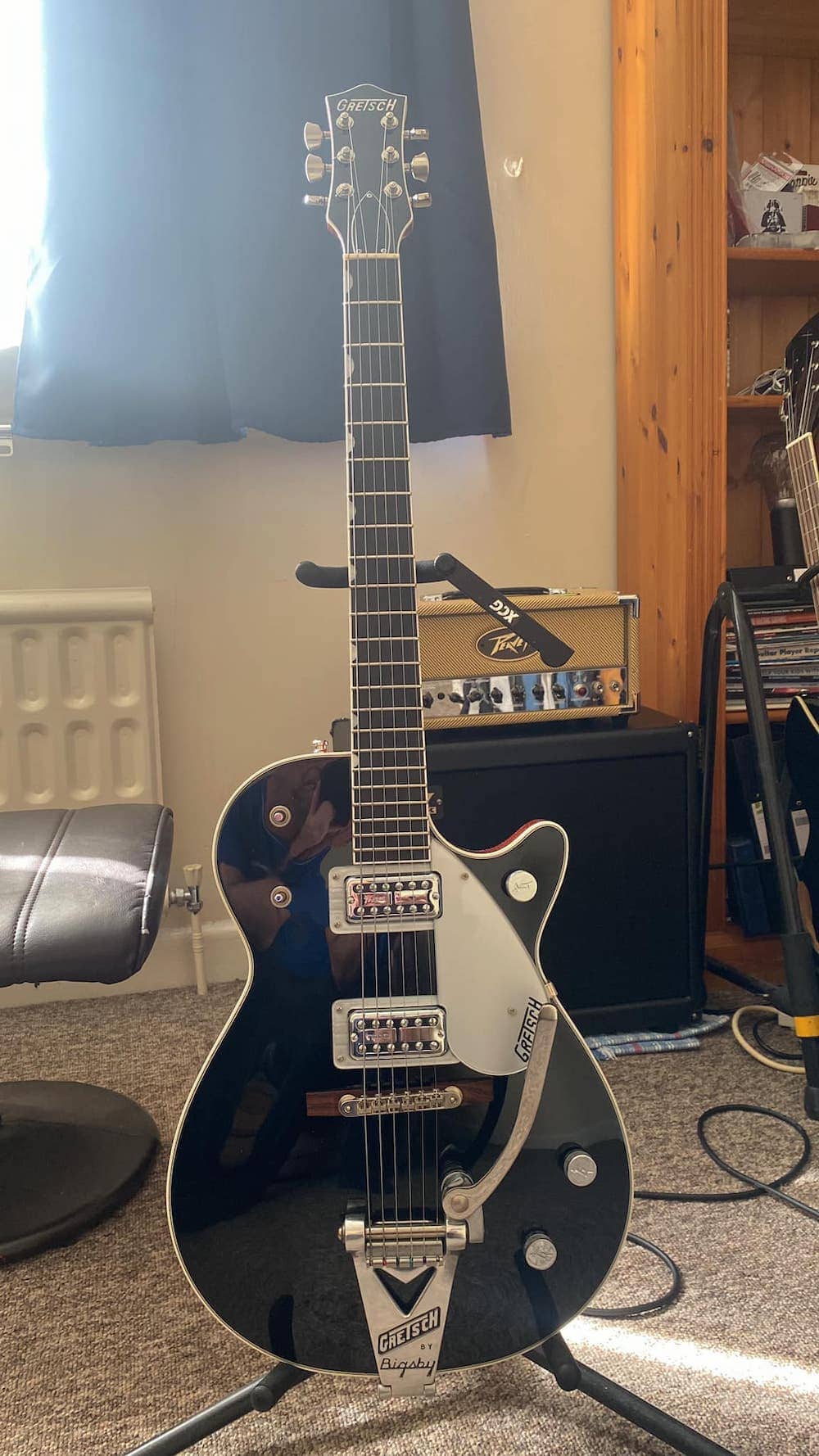
This is not a category I checked with the White Falcon. I mean, unless you’re Jack White, handling fuzz in such a big-bodied guitar is mission impossible. So, I tried this with a G6128T (another amazing Gretsch guitar), and the creamy, sustained, full sound was huge. It follows my rule of thumb: the quieter the pickup, the better it works with fuzz.
What are Dyna-Sonic Pickups Anyway?
The Dyna-Sonics date back to the late 1940s. Gretsch talked to Henry DeArmond to design and build one for them. He came up with a design called Fidelitron (which is perfect for the pickup’s high-fidelity tone) that would later become the Dyna-Sonic. It is a single-coil design that’s different from the ones Leo Fender and Gibson were making at the time.
First of all, they use chunky, big, Alnico V magnetic bars on the side of the pickup (thus, it looks bigger than most single-coil pickups). Secondly, the pole pieces, individually adjustable, touch the wiring below to create the magnetic field.
So, Dyna-Sonic pickups have that chime and twang of the Alnico V but add more low-end to the equation because of their uncanny design.
Comparison to P-90s & Soapbars
I have to say that I became addicted to P90 pickups ever since I started playing my ’68 Jr. on stage. They have a bite and a growl I could never find in the smaller-sounding single coils or the more compressed humbuckers. These pickups aren’t as close to P-90s in my opinion as they are to Fender soapbars, the kind of pickup you find in Jazzmasters.
I missed some of the bite and growl of the P-90s, but in exchange, I got a much more defined bottom-end and a much brighter tone.
When compared to soapbars, these are even glassier and more defined, but also have a bigger low-end and pack a harder punch.
Hum-canceling Aftermarket Option
Dyna-Sonic pickups are single coils. Therefore, they have a 60-cycle hum. That can be annoying for some players, but don’t worry, because there’s a noiseless aftermarket option for you to try. It’s made by Lindy Fralin and is called Dynasonic.
To try other, non-canceling options, you can check the Seymour Duncan Duncan Dyno, the DeArmond Dynasonic, and the Mojo Tone Dyna.
They come in all sizes, so you can replace single-coil, humbucker, or firebird pickups with them.
The Bottom End
Dyna-Sonic pickups often come in guitars you don’t see so often on stage these days. Nevertheless, they can be your secret weapon to turn any muddy or undefined instrument into an axe you want to play live and in the studio.
But that’s not all, because you can also find some unique tones absent from mainstream music today, combining these pickups and all the pedals you want; they’ll remain clear throughout the way.
Music is a journey and not a destination, and these pickups are like traveling in a high-speed Ferrari all the way to definition.
Happy (glassy and defined) playing!
