
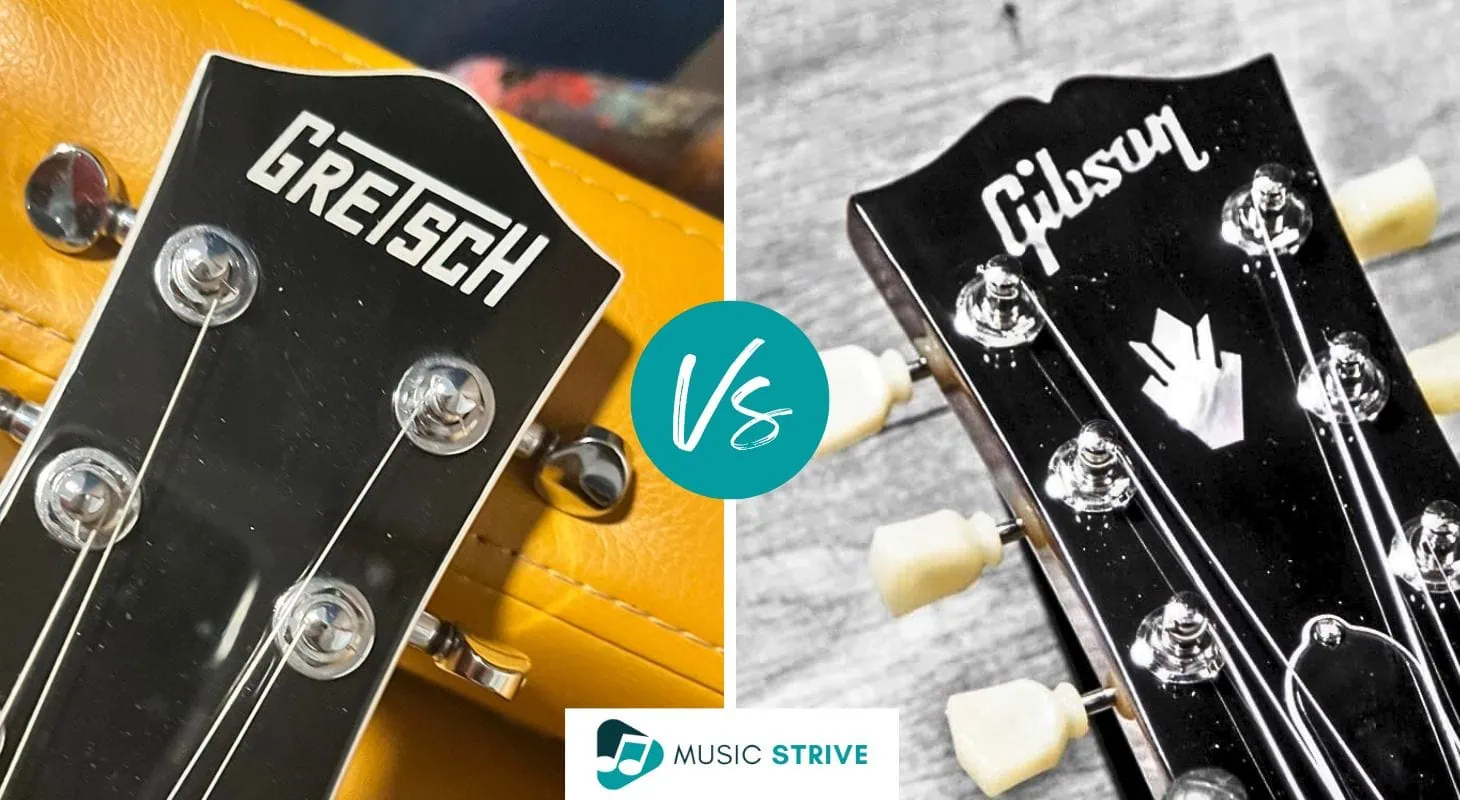
Both Gibson and Gretsch have produced some of the most iconic instruments in rock ‘n roll. They helped shape the genre and the careers of its biggest stars.
The distinctive sounds of Gretsch and Gibson are immediately recognizable to any guitar aficionado.
Both brands have a huge influence on music. Since they share as many similarities as they do differences, choosing between them can be quite tricky.
The heritage and ethos of the brands has long seen them in direct competition with one another. You’ll often see Gretsch and Gibson guitars side by side in the same band, or wielded by the same guitar player in one set!
In this guide, I’ll go over their differences and some of the guitars available to try and make that choice a little bit easier for you.
Gretsch vs Gibson: What’s the Difference Anyway?
These two titans of American guitar manufacturing were neck-and-neck rivals in the 1950s.
A massive part of this was their race to design a pickup devoid of the 60-cycle hum inherent to single-coil pickups on early electric guitars. Gretsch had their DynaSonic single-coil pickups, Gibson had their P90s, and Fender persisted with their classic single coils.
In the mid-50s, Gretsch and Gibson invented the humbucker at around the same time. Gibson beat Gretsch to the patent office with their legendary PAF (Patent Applied For) humbucker, which graced countless rock and roll records in the decades to come.
Gretsch’s own humbucker, the Filter’Tron, boasted a radically different sound.
The Gibson humbucker tone is the sound of classic rock. It’s the sound of Led Zeppelin’s “Heartbreaker,” AC/DC’s “Thunderstruck” and Cream’s “Sunshine of Your Love.”
By comparison, the Filter’Tron lead the charge in the rockabilly era, gracing the work of Chet Atkins and Duane Eddy. It persisted through the classic rock era, however: Pete Townshend’s legendary power chord playing on The Who’s “Won’t Get Fooled Again” is a Gretsch, and AC/DC’s Malcolm Young used Filter’Trons on all AC/DC’s rhythm tracks.
The Beatles’ George Harrison, too, popularized the distinctive Gretsch tone throughout their heyday.
To me, the sound is best summarized in the twin tones of AC/DC.
Angus’ menacing, slightly fizzy distorted tone is a Gibson humbucker. Malcolm’s cleaner, heftier, and twangier tone is the Gretsch humbucker. If you listen to “Thunderstruck,” the rapidfire descending lick in the intro is Gibson, while the relentless power-chord chugging is Gretsch.
For more a much more thorough look at Gretsch's Broad'Tron and Filter'Tron pickups, you can read this piece on our blog.
The Lineups
Both Gretsch and Gibson offer a wide variety of guitars. They also have a guitar for nearly every budget (through Epiphone, in case of Gibson).
Top 3 - Popular Gibson Guitars
Preview | Product | Price |
|---|---|---|
 | ||
 | ||
 |
Gibson’s subsidiary, Epiphone, offers low-budget alternatives to Gibson’s flagship models like the Les Paul and SG.
Gretsch’s equivalent, the Electromatic line, is similar.
Top 3 - Popular Gretsch Guitars
Preview | Product | Price |
|---|---|---|
 | ||
 | ||
 |
Each brand has its strong suit. Both are far more versatile than their reputations might otherwise suggest: I’ve seen Gretsches and Gibsons galore at blues, country, rock, and pop gigs.
However, for heavier styles, in my experience, Gibsons dominate, while Gretsches are far rarer.
Guitars Under $1,000
Neither Gibson nor Gretsch make true entry-level instruments.
I do, however, appreciate the Gretsch Electromatic range. I’ve always had a soft spot for the Electromatic Duo Jet, for example, which to me feels like Gretsch’s take on the Les Paul.
Gibson’s equivalent would be the Epiphone Les Paul Standard, not a true Gibson, but a close facsimile. Like the Electromatic range, they’re made overseas with cheaper parts.
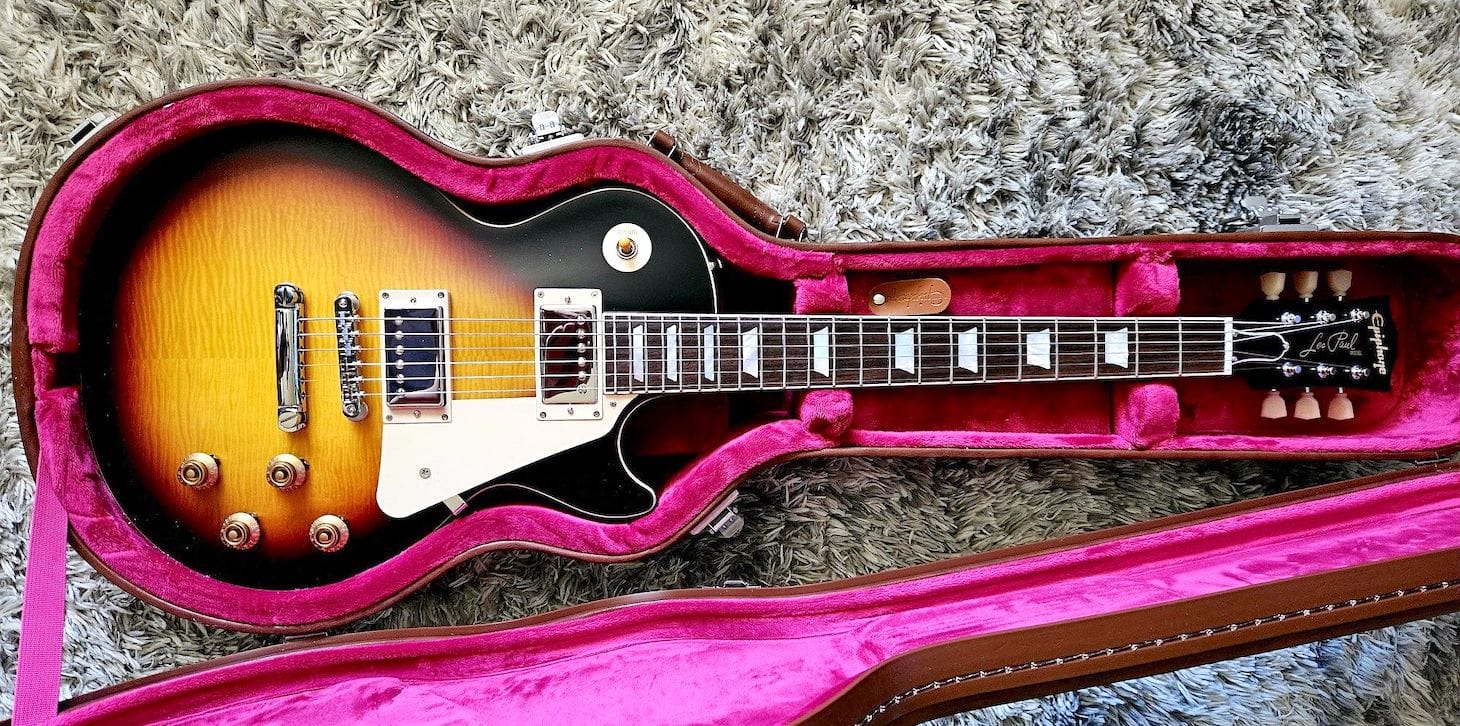
Epiphone Les Paul Standard
I’ve owned a few Epiphone Les Pauls over the years, and they play great, although I’d recommend swapping out the stock pickups for Seymour Duncans as I did. You can read more about this in this article of mine.
Epiphone and Electromatic guitars are made from less expensive materials and electronics, but with the same level of care and detail. They might be more affordable but aren’t any less impressive. We have a dedicated article on Epiphone vs Gretsch guitars, which covers this lower-priced segment in much more depth.
Moving up to intermediate-level guitars, the diversity in guitars on both Gretsch and Gibson’s sides starts to open up.
Epiphone’s line of hollowbodied guitars is truly excellent. I cannot recommend the ES-335 enough: its slim neck and big, resonant sound are perfect for blues, jazz, and even rock and roll. Think of how big and saturated the Oasis guitar tone is: that’s an Epiphone Riviera!
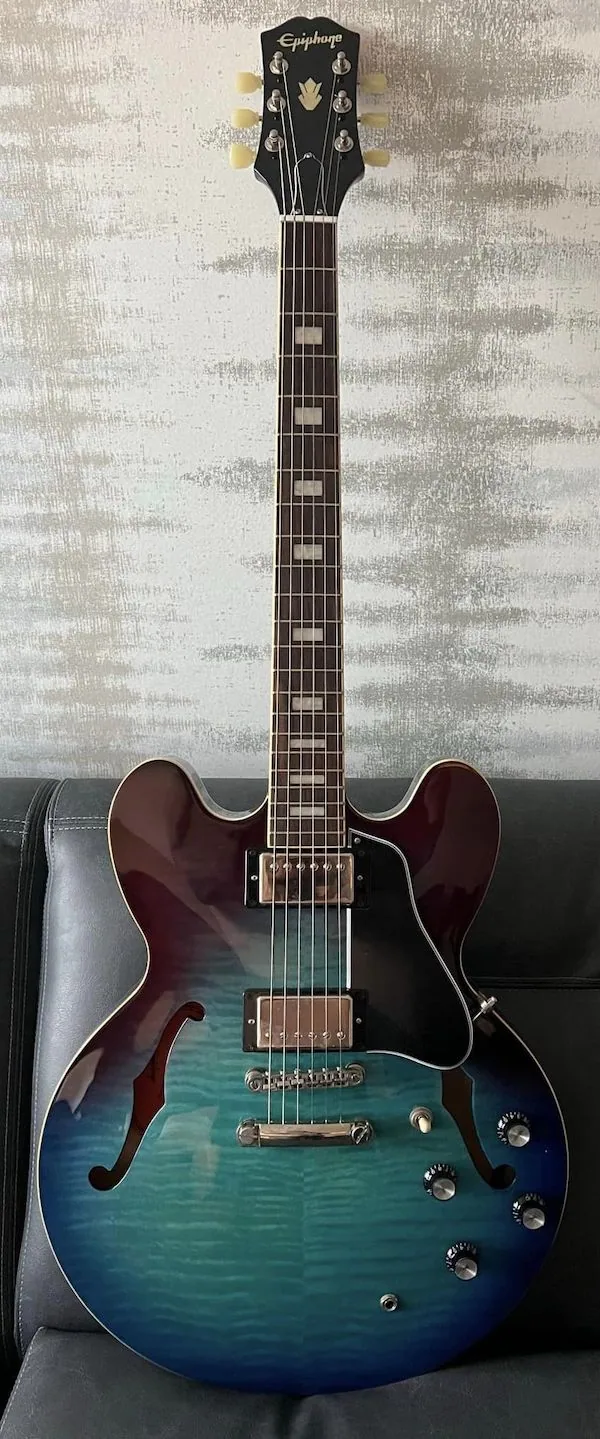
Epiphone ES-335
For those about to rock, it’s hard to argue with an SG for a bit of a brighter sound that maintains the Gibson bite. That doesn’t mean it can’t get heavy and dirty, though.
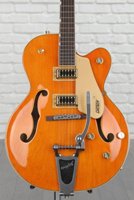
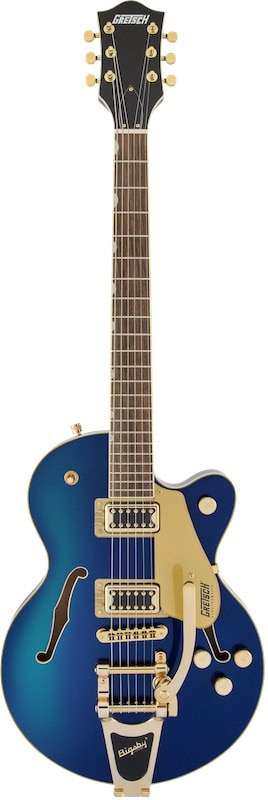
Still in the Electromatic line is Gretsch’s array of excellent hollow-bodied guitars.
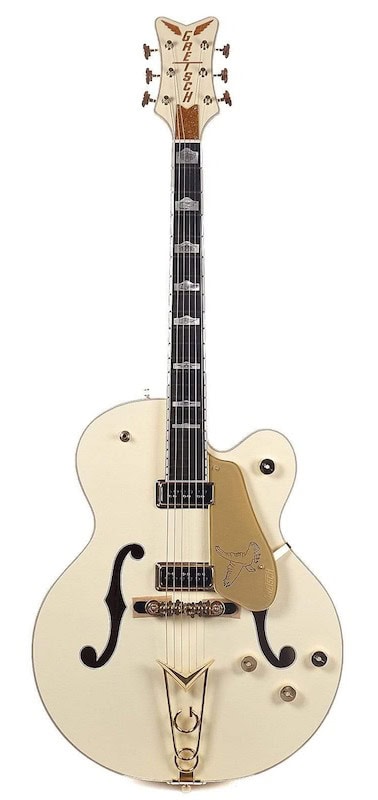
There might be no guitar cooler than the white-and-gold G5422TG. I took one to a country gig and felt like Vegas-era Elvis Presley!
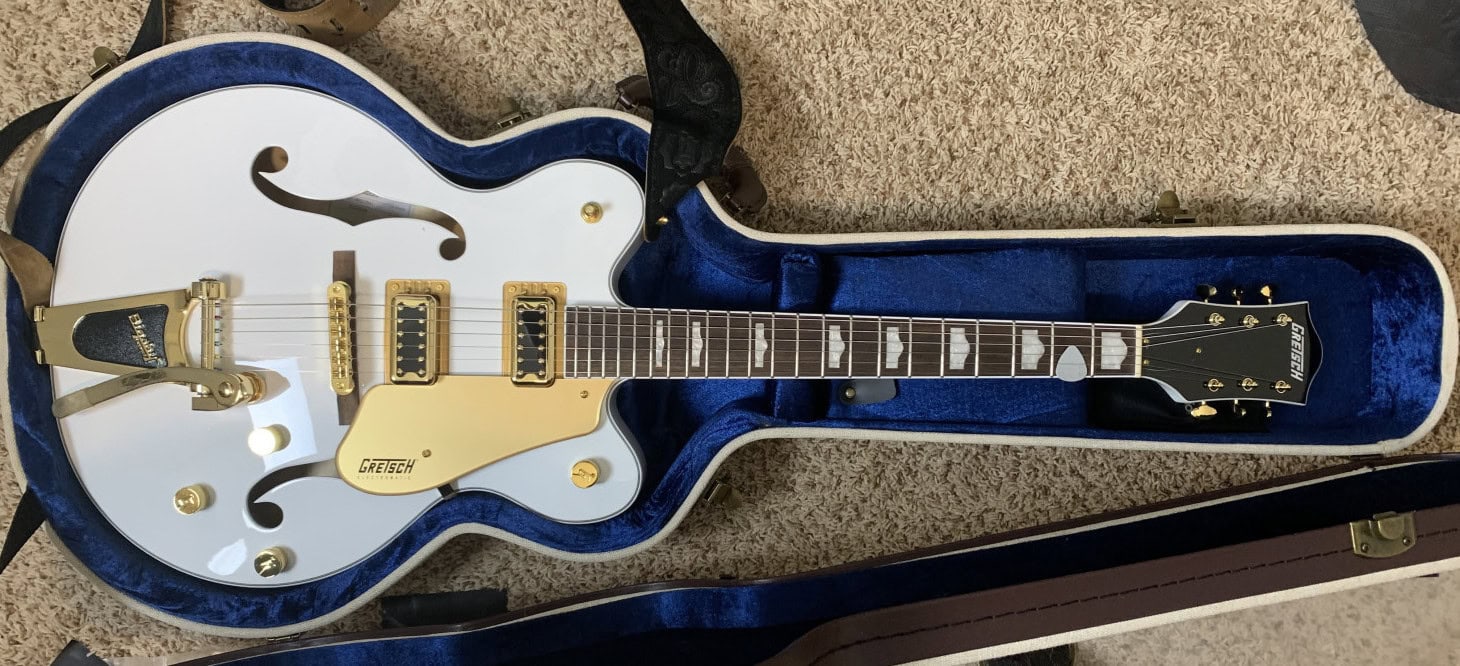
Gretsch G5422TG Electromatic
The singlecut 5655TG plays nicely, too. I find its warmer tone better suited to the blues than to rock and roll.
Even at this level, I feel like the twang of Filter’Tron pickups limits Gretsch guitars to a narrower range of tones than Gibsons are capable of.
Over $1,000
Past the price point of $1000 is where the flagship guitars for each brand enter the market.
The excellent Les Paul Studio is a bare-bones take on Gibson’s leading solidbody. Gretsch’s flagship solidbody is the 6128 Duo Jet that arguably competes more with the Gibson Les Paul Standard.

My Gibson Les Paul Standard.
The Les Paul Standard is my favorite guitar, and I love how easily they play, and the thick, versatile tone on offer. I’ve used a Duo Jet for hard rock gigs as well as country and even a Beatles tribute show.
When I’m looking to make a serious investment in a guitar, I want the best the brand has to offer.
Gibson’s flagship models guitars represent some of the best Gibson has to offer in terms of both sound and playability. These guitars are pure rock ‘n roll from headstock to bridge.
For years, I’ve been in love with hollowbody guitars. Blame my boyhood love of Oasis. One of my favorite guitars for recording, live gigs, and playing at home is my 335. It has a nice, thin neck for rapid playing, and a tone balanced between maple snap and hollowbody warmth.
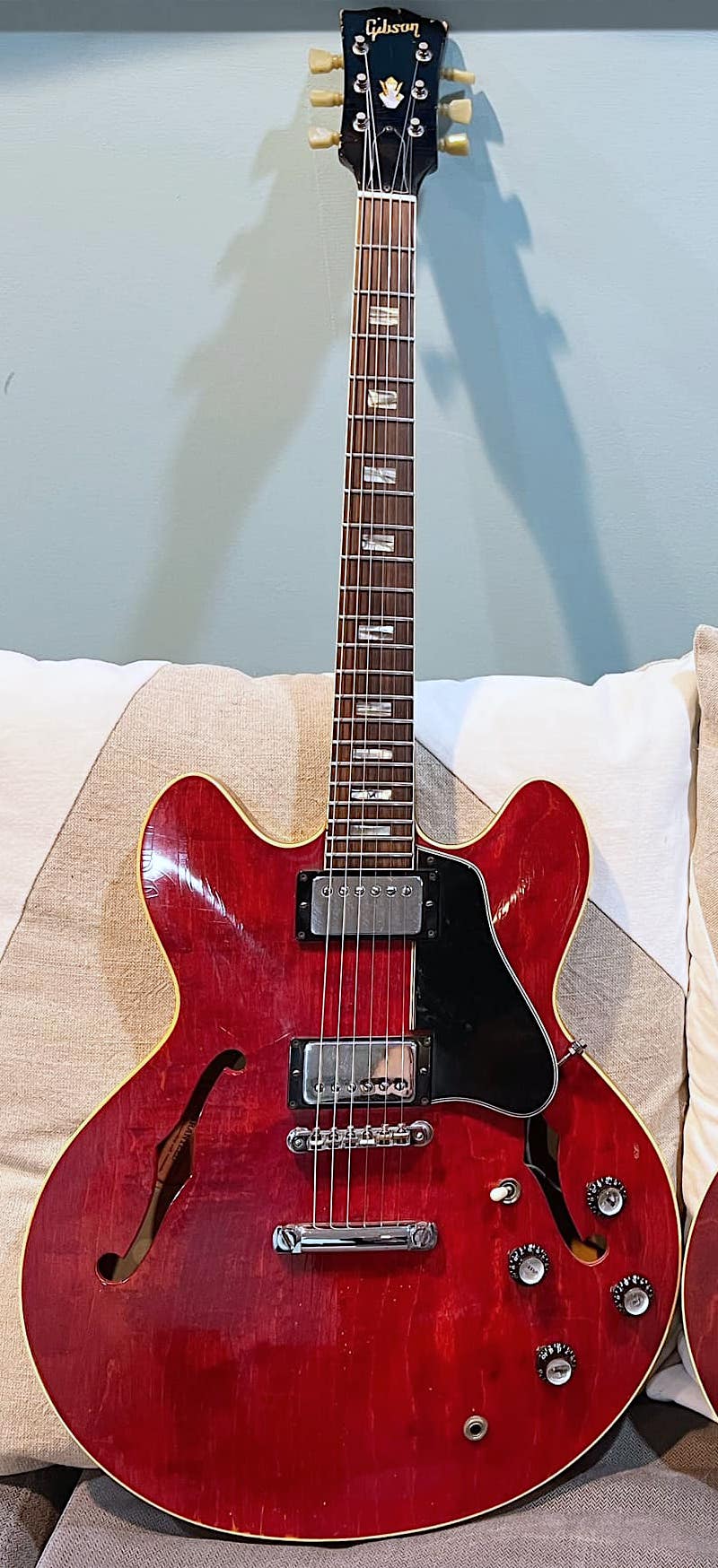
Gibson ES-335
However, when I was looking to buy my 335, I considered the Gretsch Tennessean. At the time, I chose the Gibson, because I was playing in a harder rock band that used a lot of overdrive.
However, the Tennessean was an awesome big-bodied guitar. It was just as comfortable to play as my 335, and the tone control allowed for rapid sound changes. I’m still fond of using my onboard volume and tone knobs to manipulate my onstage sound, so Gretsch’s tone switches are pretty cool for me.
The Tennessean also offered more discernible country twang than the 335. It really does sound like a country guitar. The slight muting of chicken picking and the clear character of pedal steel bends simply sounded right on this guitar.
Back then, I wasn’t playing much country music, so I picked the 335, but these days my choice might be different!
The starting point for name-brand Gretsch guitars is higher than that of Gibson, and that extra amount is for good reason. Gretsch guitars, especially their hollow and semi-hollow bodied axes, sound unlike anything else.
Gretsch’s top-of-the-line models are the White Falcon and the Country Gentleman.
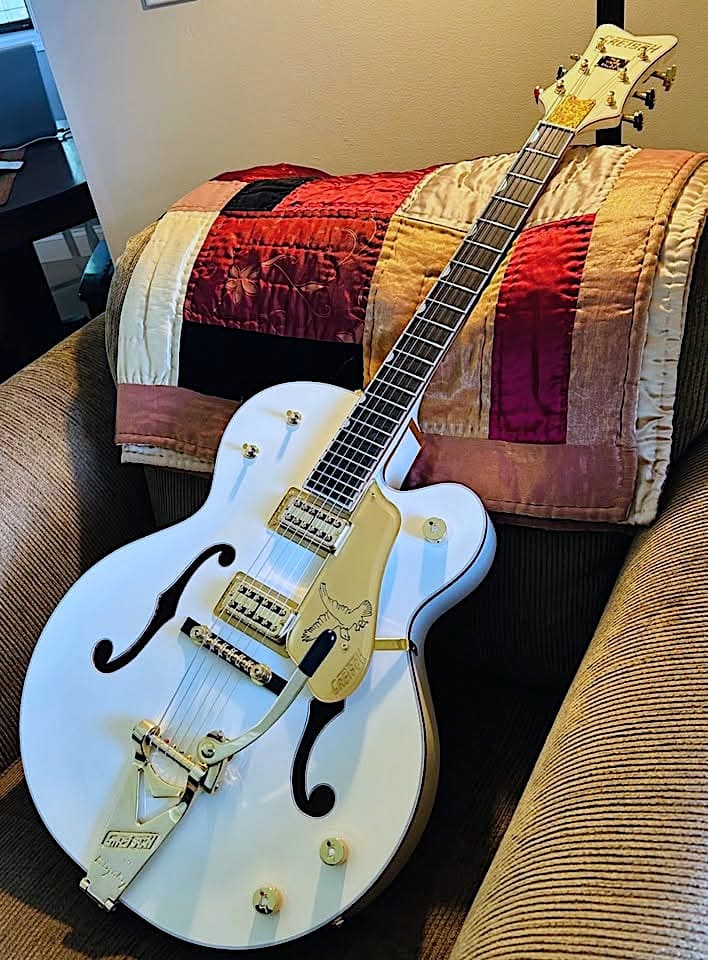
Gretsch G6136T-59GE White Falcon
I’ll always associate the White Falcon with Malcolm Young of AC/DC: it’s so big on him he looks like he could fit inside the guitar!
I’ve been lucky enough to try a Country Gentleman once, and the name fits it perfectly. I barely felt like I was a good enough player to play it. It’s a real gentleman’s guitar. Easy to play, and the Filter’Tron pickups sound better and better the harder you hit it.
For country-style hybrid picking, there’s really no better humbucker-equipped instrument.
It’s a big jump up in price, but Gibson’s top-of-the-line hollowbodies like the Trini Lopez and the 355 are similarly excellent instruments. When I tried out a Trini Lopez, I was struck by how limited its sound is, yet how applicable it is to different genres.
The Trini really only sounds like itself, but that sound works for pretty much all genres. There’s a reason Dave Grohl plays one in Foo Fighters!
The 355 is a similarly awesome instrument. I had a lot of fun playing my favorite Rush and Oasis riffs with it.
None of the hollow guitars at this price point are really built for anything heavier than AC/DC, however.
For blues, jazz, country, and rock and roll, it’s hard to beat a Gibson or Gretsch hollowbody. It’s really down to whether you prefer the unique Gretsch tone or the famous Gibson tone.
Similarities
There are some pretty obvious commonalities between the brands that led to their mid-50s rivalry.
Both pioneered humbucking pickups. As such, I heartily recommend either brand for those looking for a humbucker-equipped guitar.
Likewise, both excel at making hollow and solid-bodied instruments. I’m more partial to Gibson’s solid-bodied guitars, particularly the Les Paul, but Gretsch’s answer to the Les Paul - the Duo Jet - is an excellent instrument.
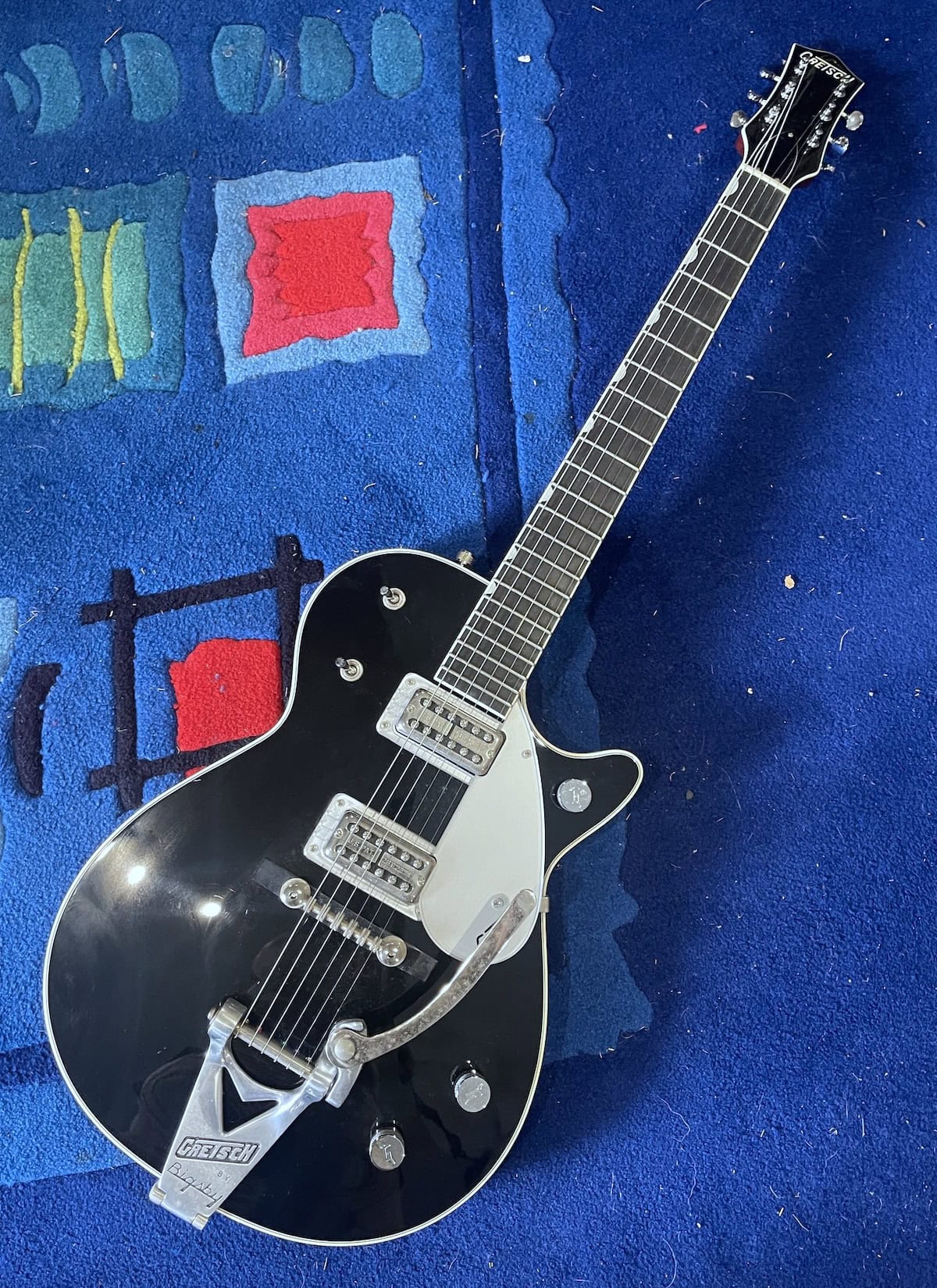
Gretsch G6128T Duo Jet
Both offer a range of high-quality hollow-bodied guitars. They boast similar construction, although the tones and applications thereof differ radically.
Differences
The most obvious difference is in market share: Gibson is rivalled only by Fender, modern Gretsch’s parent company.
However, there’s a major aesthetic difference between Gibson and Gretsch guitars. While Gibson pursued innovation in guitar design, Gretsch sought to perfect their extant ideas.
Early on, the spikier, more aggressive sound of the Filter’Tron allowed Gretsch to corner the market on rockabilly guitar and rockabilly tones.
Some rockabilly players - like Elvis’ axeman Sonny Moore - played Gibson, but for the most part, their early adopters were jazz and blues musicians.
The distinctive mid-century aesthetic of Gretsch guitars means they’re heavily favored by country and country-adjacent musicians. I tend to think of their offerings as country guitars first and foremost: their flagship instrument, after all, is called the Country Gentleman!
Gibson guitars, on the other hand, are found on stages across genres, from heavy metal to bubblegum pop.
Gretsch vs Gibson – Their Specialties
Each brand has an x-factor that makes it special and sets it apart from the other.
As I briefly mentioned before, what set Gretsch and Gibson apart from each other are the genres they are best suited for.
I see Gretsch as the soft rock brand. Gretsch guitars really shine in genres like jazz, funk, blues, country, and other genres that don’t rely on a ton of gain.
Gibson, on the other hand, might be the hard rock king. Gibson guitars thrive in high-gain conditions, making them nearly perfect for heavy genres of music. Gibsons can also handle softer genres like jazz and funk fairly well.
Gibsons are certainly more versatile than Gretsch guitars, but I would always choose a Gretsch for softer genres instead of a Gibson. The same goes for heavier music. I would always pick a Gibson over a Gretsch.
Famous Guitarists
These guitars wouldn’t be as iconic as they are without the help of some of the biggest names in music. The list of names for both Gretsch and Gibson are practically as long as their histories, but for me, there are certainly a few names that stand out.
Jimmy Page
For iconic Gibson guitarists, the one who would be at the top of my list would be Jimmy Page. Who better to cement one of the most iconic guitars than one of the most iconic guitarists of one the most iconic rock bands.
Page and the Les Paul were certainly a match made in heaven that shaped Led Zeppelin’s sound and reshaped the future of rock ‘n roll forever.
BB King
There are blues guitar players, and then there’s the king.
BB King’s custom-designed hollowbody - with no F-holes to minimize feedback - changed guitar forever. Here’s the simple proof: have you ever performed a bend on electric guitar?
You have BB King to thank for that.
His signature Lucille guitar is available in both as a Gibson and an Epiphone model. I’ve never played a better blues guitar.
Eric Clapton
Eric Clapton has played a range of guitars, from Les Pauls and SGs to Strats, over the years. I’ll always think of him as the ambassador for the 335, a guitar he played because he idolized Chuck Berry.
Noel Gallagher
The main reason I play hollowbodies to this day: for people of my generation, there’s no image in rock and roll more iconic than Noel Gallagher and his big, hollow Gibson guitars.
Brian Setzer
The godfather of modern rockabilly, Brian Setzer is a genuine shredder dripping with old-school cool. I’ll never forget seeing videos of him playing live, throwing his big orange Gretsch into the air mid-song and catching it only to keep playing, never missing a beat.
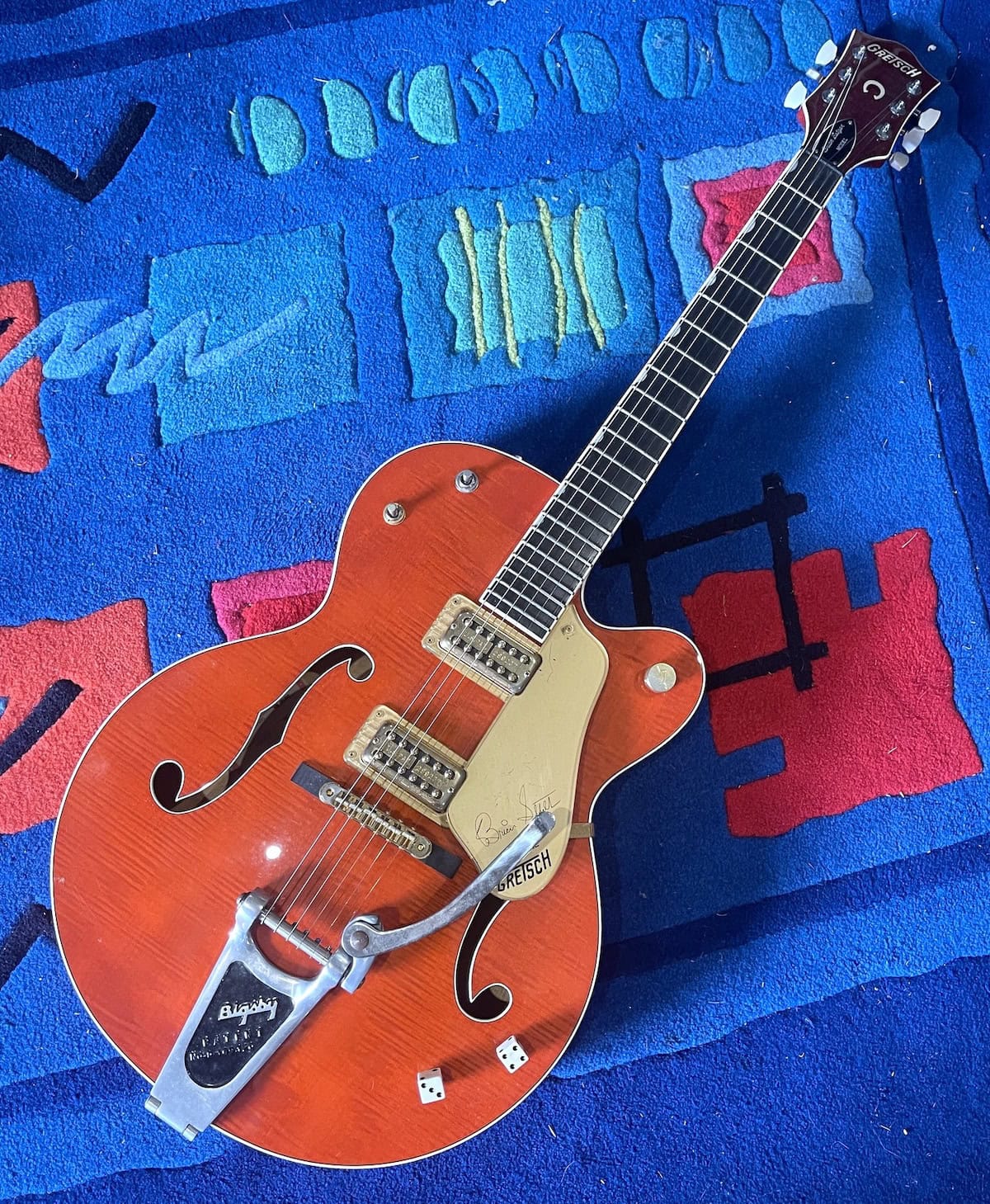
Gretsch G6120T Brian Setzer Signature
Chet Atkins
A master guitarist, combining jazz, country, and classical to create the Nashville Sound. Chet Atkins was a country pioneer that would quickly become the poster boy for Gretsch guitars. His Country Gentleman is one of the most recognized Gretsch guitars today.
George Harrison
If Beatlemania changed music history then George Harrison changed Gretsch's history. After performing with his Country Gentleman on The Ed Sullivan Show in 1964, the Gretsch name was on every guitarist’s mind and they all had to have one.
It’s safe to say that if it weren’t for George Harrison, Gretsch would most likely not be anywhere near as popular as they are today.
Final Thoughts
I love both Gibson and Gretsch guitars. For the kind of gigging that I do, I prefer the versatility of Gibsons. However, the distinctive, immediately recognizable tone of a Gretsch guitar is always a welcome addition to any arsenal.
Whatever your choice, Gretsch and Gibson make some of the best guitars around and either would make a worthy addition to your arsenal of guitars.

Filtertrons and the Mud-switch enable the player to choose; heavy bass, mid tones or treble. The treble is achieved by dispensing with the capacitor and the result sounds like a Telecaster single-coil. For versatility choose almost any Gretsch with this switch. In my case the G6120RHH
You should also mention that Gretsch is THE guitar for rockabilly. From Cliff Gallup in Gene Vincent and his Blue Caps in the 50’s to The Stray Cats. Super Guitar Slinger Brian Setzer has been Gretsch’s biggest artist since the early 90’s. He also led a Big Band playing his 6120..I’d say that adds to Gretsch’s “versatility.”
Both guitars very versatile and sounds great and warm!
Gibson is more versatile? Ever heard of Angus Young? That ain’t no soft rock!!! Billy Duffy? Yeah, he’s a smooth jazz guy . I think what you know about the versatility of Gretsch guitars wouldn’t fit in a Gibson tophat knob!
Woooops. Malcolm Young I meant.
Billy Duffy is an honourable mention. Let’s not overlook the importance of Eddie Cochran in shaping early Rock n Roll, with his Gretsch.