
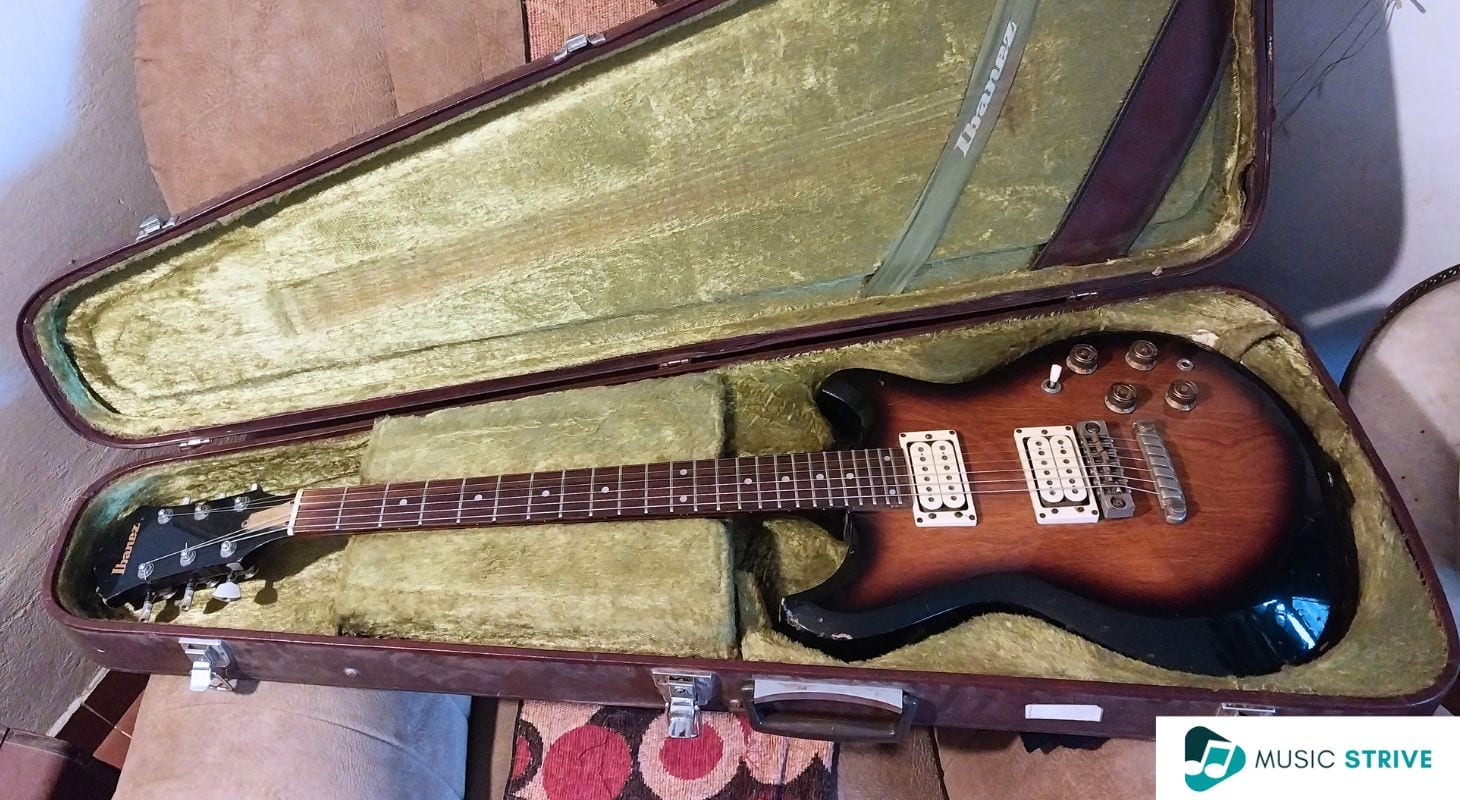
It’s a long story, an urban legend, a tale of a faraway land, an untold truth, a long-running gossip among guitar players. Ibanez lawsuit and post-lawsuit-era guitars are lost gems waiting to be unearthed and enjoyed for a lifetime at a fraction of the price a big-brand guitar of the same time would cost.
Well, I’ve had mine for close to two decades, and we’ve been through the good and the bad together. I guess I am here to tell you that some of the gossip is true, and some of the gossip is pure hype and smoke going up the air into nothingness.
Let me just unfold the things I learned in the past twenty years sharing the road, the studio, and the bedroom with my post-lawsuit Ibanez Studio ST70 (which you saw in the photo above).
I don’t mean no spoilers but… It’s a gem.
Read on and learn why.
Table of Contents
The Lawsuit Story
Let’s start with the lawsuit story so you have a better idea of what these guitars are, where they come from, and why they are a thing. Read until the end, so you’ll know what the current effects of this phenomenon are.
But let’s travel back to the wild ‘70s. After Beatlemania, the big arena acts preached the word of the almighty rock and roll in the biggest stadiums taking over the world — literally.
Well, all of that was being made with guitars as the absolute protagonists. Nothing was cooler than the Les Paul or Stratocaster solo and the heavy, crushing riffs with loads of fuzz and distortion.
With such a big exposure, the need for quality electric guitars in the world surged. It wasn’t like nowadays, that the list of guitar manufacturers is endless, and the processes are industrialized to elevate production and meet demand.
Harry Rosenbloom and Hoshino Gakki Gen
Harry Rosenbloom founded Medley Music in Bryn Mawr, Pennsylvania in 1954. After WWII, the need for guitars was huge. Both Fender and Gibson were going through their golden years, and Martin was at its quality peak.
The problem was they weren’t ready to handle the demand they had and thus the waitlist for Martin Guitars was about three years. That, for Harry, was a stock problem.
To solve it, he decided to start building quality instruments. He recruited a family of German violin makers and founded Elger Guitars. They made handmade, high-quality guitars that Rosenbloom sold at Medley Music.
This lasted until 1964, when Rosenbloom felt it was better business to import high-quality instruments than making them. Beatlemania was about to start.
Since Japanese-made was still a bad word for most people, he decided the neutral name Ibanez was better for the US market. These were well-made, great-sounding, and very affordable Asian-made copies of the most-demanded guitars of the time.
His company, Elger Guitars, became the sole North American distributor of high-quality Japanese copies made by the Hoshino Gakki Gen company in Japan.
Ibanez USA is Born
By 1971, Hoshino Gakki had become so proficient that they bought Elger Guitars from Rosenbloom and named it Ibanez USA.
They started to make and ship to their USA dealers affordable, well-made copies that looked like the original but sometimes utilized cheaper building methods that created unheard-of combinations.
For example, some Les Paul copies had bolt-on necks, and the routing and final detailing weren’t always at Gibson standards.
But they looked cool, like the real thing, and they also played great.
But Ibanez didn’t stop at Les Pauls and Strats, they also built Explorers, Firebirds, Rickenbackers, semi and hollow guitars and basses, and even acoustics.
They slowly became an option for most players and got even more interesting with the decay in quality of the originals.
Speaking of which…
The Local Market State
Big brands weren’t cheap anymore and manufacturers had relaxed with quality control standards. We’ve all heard the tales of the complicated endeavor of buying a “good” ‘70s Strat. Or even seen the price change between pre-CBS and post-CBS guitars.
Well, Gibson wasn’t much better, the lack of quality wood supply and the infamous pancake bodies, the volute on the neck, and three-piece maple necks made the historic Gibson Les Paul a much more budget-friendly guitar from a manufacturer’s point of view but cost the same or more than it always did.
In that scenario, big brands were losing territory against the more affordable copies coming from Japan. These guitars were replicas, great-playing imitations with different logos made by talented craftsmen and women.
For many, the problem wasn’t the copyright infringement that led to the lawsuit but that they were so good they meant a threat to the US-based companies.

What was the Lawsuit All About?
June 28, 1977, was the day that Norlin, Gibson’s parent company, chose to file a lawsuit against Elger Guitars (turned into Ibanez USA as we saw above) in the Philadelphia Federal District Court.
Norlin was suing them for two specific aspects of their guitars. The first was the “open book” or “mustache” headstock that’s a Gibson original patent and can’t be found on any other guitar brand.
The second was the bell-like truss rod cover that’s also a Gibson patent.
Although the lawsuit was filed after several cease-and-desist notifications sent by Norlin, the whole thing never made it to the court and was settled privately. Therefore, we will never know what the terms of the agreement were, but one thing was certain, Ibanez USA wasn’t going to build any more Les Paul copies.
Furthermore, this mini-scandal was the beginning of a new period for Japanese instruments, a time of heavy experimentation and lots of trial and error that left us with outrageous instruments from a wild era.
Yes, the Norlin lawsuit became a word of advice for all the other Japanese manufacturers making copies and most companies abandoned those projects to focus on making their own designs. Nobody wanted to be sued and lose their hard-earned money.
As you might know, Ibanez is the most prominent of those Japanese guitar makers and has become one of the go-to guitar manufacturers of our era for many guitar players, especially in the virtuoso, shredding, and metal scenes.
Endorsers like Steve Vai, Joe Satriani, Pat Metheny, George Benson, John Scofield, Tim Henson, Kiko Loureiro, Noodles (Offspring) Munky (Korn) Nita Strauss, Paul Stanley, and Yvette Young, among many others, play Ibanez instruments on some of the biggest stages in the world.
Therefore, we could say that the lawsuit became the turning point for an industry that’s been on the rise ever since. Yes, although Greco, Burny, Fernandes, and other copy brands ceased to exist, ESP, Ibanez, Takamine, and Yamaha represent the highest standards in technology applied to guitar making.
What are Lawsuit Guitars?
So, what can we consider a lawsuit guitar? This is often confusing, so let’s make it clear. For a guitar to be a lawsuit guitar, it needs to bear the copyright infringement appointments.
For example, it must have an identical headstock. In case it’s a Les Paul, it should have the open-book format and the bell-like truss rod cover.
These aren’t to be confused with post-lawsuit Ibanez guitars that remain lookalike guitars but don’t have the exact headstock shape.
Also, it’s useful to know that by 1976, Ibanez had already moved away from copyright infringement shapes and was developing its own kind of headstock and body shape. So, if you’re in the market for a lawsuit guitar, bear in mind it should be early ‘70s rather than late ‘70s.
Guitars Beyond the Lawsuit; Ibanez in the Late ‘70s and Early ‘80s
Ibanez didn’t just go out of business because they couldn’t make outstanding copies anymore. The company pursued its own identity and came up with some of its own designs and models.
Although they were outcasts in the mainstream music industry, some of the early models in the late ‘70s and early ’80s became quite popular and ended in the hands of players the size of Bob Weir (Grateful Dead), Paul Stanley (the famous mirror Iceman), Steve Miller, and Andy Partridge.
Yes, original designs like the Artist, Iceman, and Musician became increasingly popular for being good-sounding, well-made, affordable, and great-looking original instruments.
While the Performer Series still copied the shape of a Les Paul, the contours of the body, the shape of the headstock, and the hardware were all very different from the original Gibson.
These are what you can consider post-lawsuit Ibanez guitars, a transitional phase for the Japanese giant before finding its definitive niche among heavy rockers, virtuosos, and shredders who preferred fluo colors, spandex, floating tremolos, and wild appointments.
From these years came another line of guitars called Studio that was made to be the working musician’s workhorse with no fancy purfling or ornaments, but tone for days, coming from two humbuckers designed by a somewhat new player at the time, Larry DiMarzio.
My Ibanez ST70 Studio, Trash or Treasure?
I was playing a dual-humbucker Ibanez Talman in the late 1990s. These are guitars that come from the double-cut aesthetics of a Stratocaster but have their own mojo and vibe. I had a black Korean model with a pearloid pickguard and one of the best necks I’ve ever played.
One fine morning, walking by the window of Manny’s Music, I saw the Ibanez Studio with a big “SALE” sign on it. I got in to check it out and was instantly in love with it. I traded in my Talman and begged my dad for money (which I repaid by running errands for an entire summer), and I walked out of the shop with my new guitar in an odd bass case because it wouldn’t fit a regular TKL guitar case, and a big smile.
It had a big Rolling Stones tongue logo sticker that occupied the rear of the guitar. As soon as I removed it, I understood why it was there, underneath the sticker there was a love message written with a sharp object. It reads “Nora te amo” with a date from 1992.
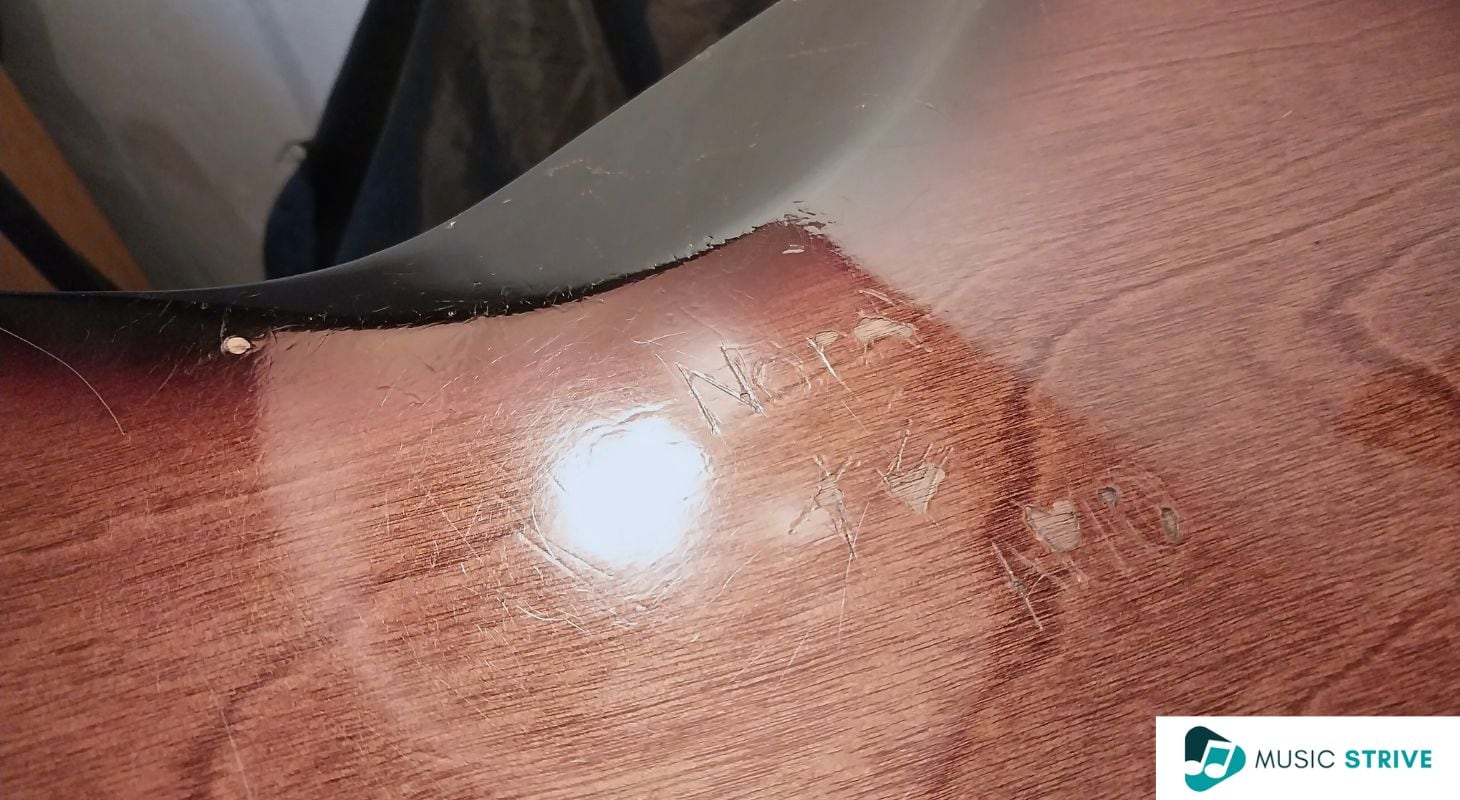
Yes, my guitar went through a lot with me, but it wasn’t a brand new, clean, minty ax when I got it either.
Guitar Specs
The Ibanez catalog describes the Studio series as “Clean, functional, and straight ahead”. Furthermore, the line aims to achieve “Simplicity of design and quality of performance.”
That’s exactly what the guitar is, nothing more and nothing less, just a reliable rocking machine with tone for days and no hassles or fancy appointments.
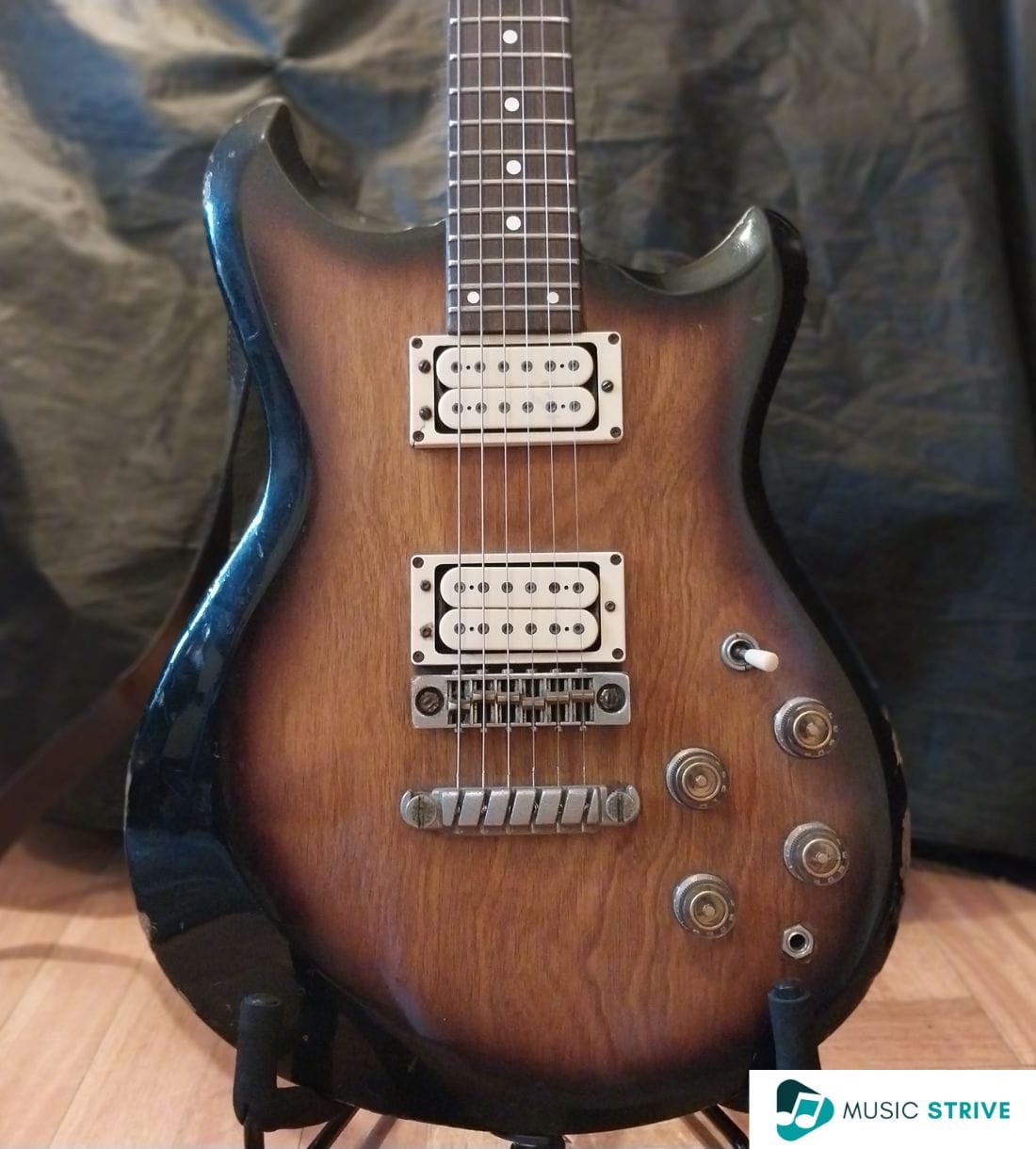
The Studio ST70 comes with four knobs like a Les Paul guitar but with the pickup selector where you’d find it in an SG. The body is one big, thick slab of mahogany (laminated mahogany according to the year’s catalog) as you’d find on a Les Paul guitar (without the maple archtop) but the shape with the double-cutaway and the horns are closer to an SG.
Furthermore, the entire body features contours (with some very welcome belly space in the back) that are close to what you’d find on an SG.
The guitar is a set-neck construction.
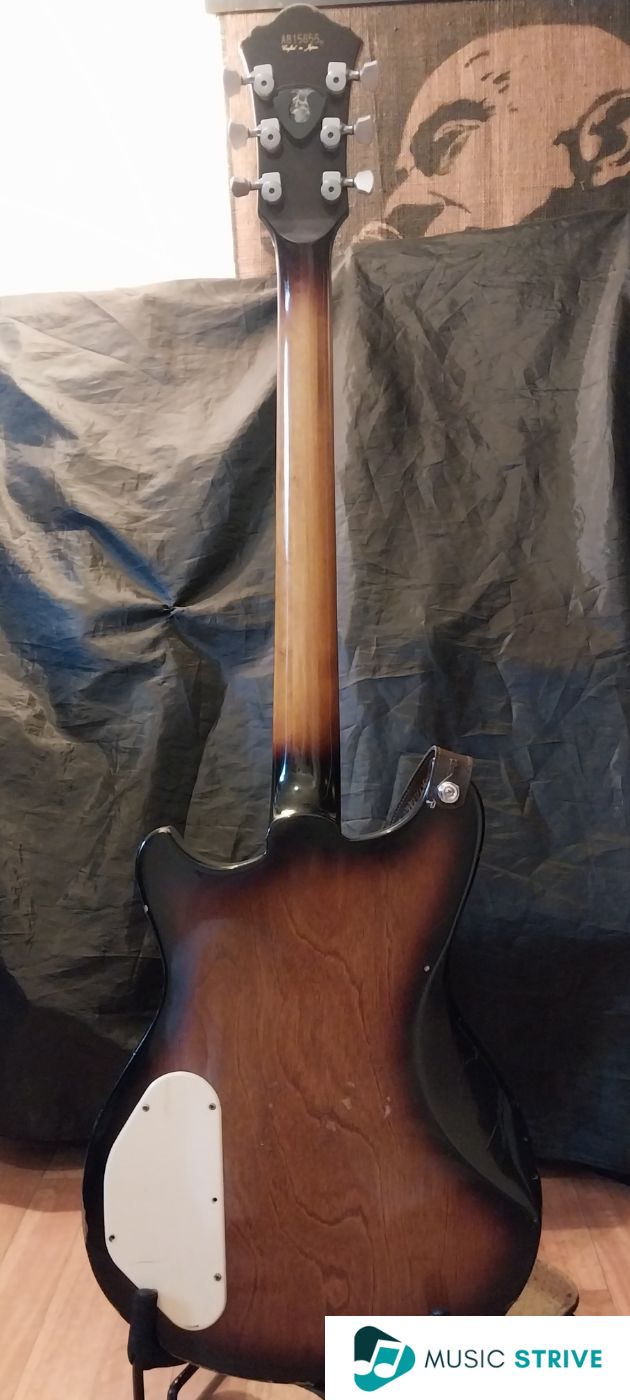
The neck is made of three pieces of maple and features a rosewood fingerboard with a surprising Fender-friendly 25 ½” scale. It also sports 24 small frets and dot inlays.
The truss rod cover isn’t made of plastic but of brass and it doesn’t feature Gibson’s bell-like shape but an Ibanez original with the word Studio on it. The Ibanez modern logo sits proudly on top of the headstock that’s far from having that open-book shape.
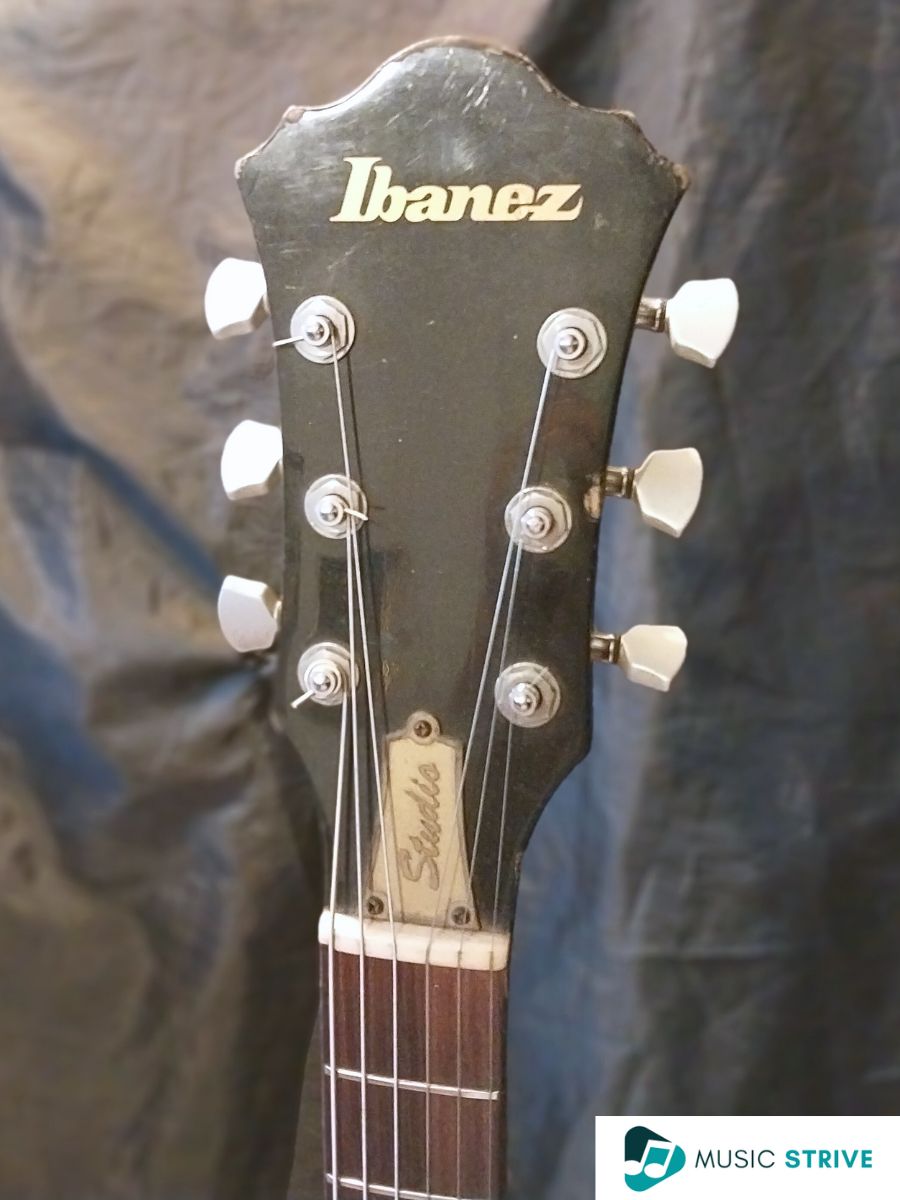
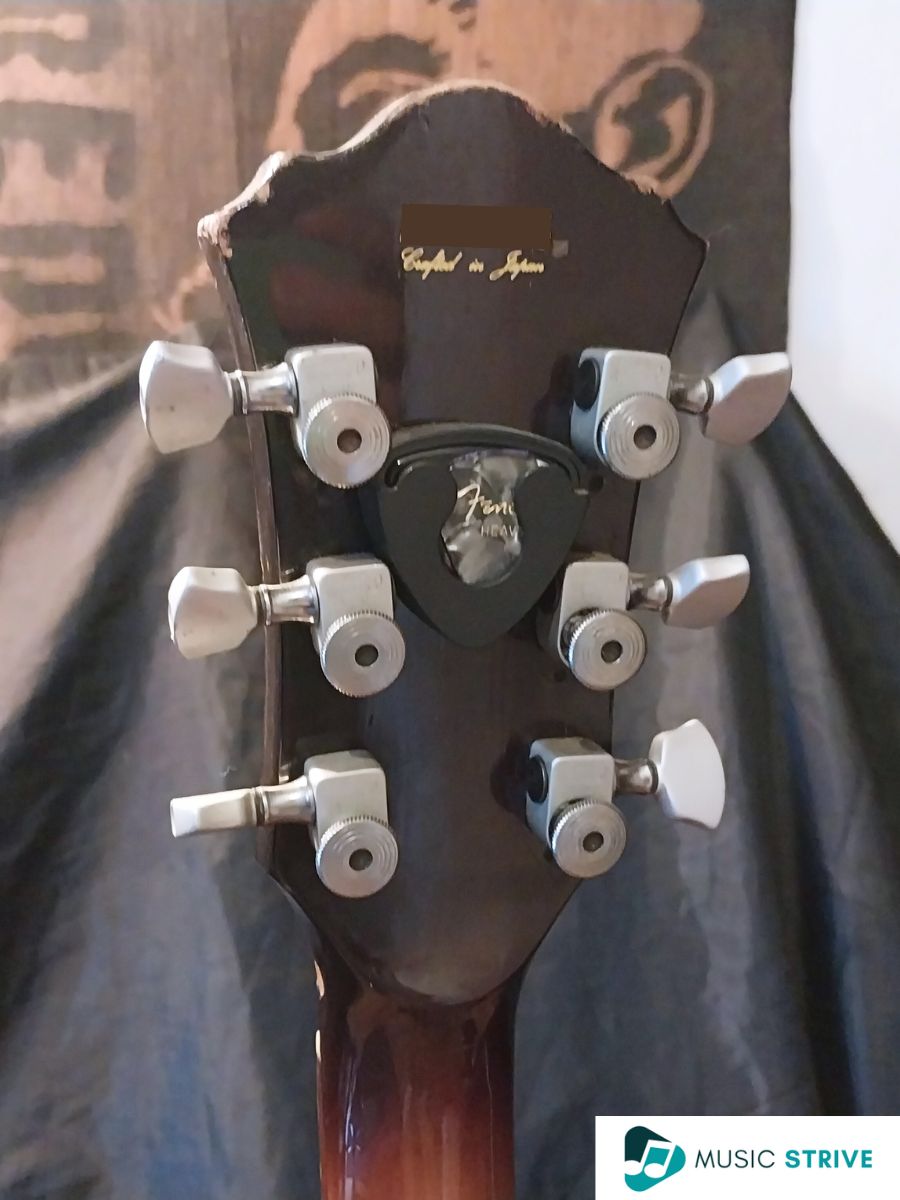
I don’t have them on anymore, but this guitar featured original locking tuners with a tulip-shaped button made of very sturdy iron. They lasted for years but finally, the D gave up and I ended up putting Sperzel locking tuners on it.
The bridge is a Gibraltar with dual height-adjustment screws and individual saddles for each string. They have plenty of room to move and the whole piece is a rectangle, unlike Gibson’s old and current TOM.
The tailpiece is a unique design by Ibanez and is called Quik Change. Its main feature is that you can simply slide the strings into them and make string changes quicker and easier.
The guitar has a three-way switch, Sure Grip knobs featuring a nice rubber band around. This tiny feature makes tone adjustments on sweaty nights easy and fast.
Finally, the pickups are two almighty V2 cream humbuckers with no covers that sound outrageously angry with more gain than you’ll ever need. They might just be the hottest pickups I’ve ever had on a guitar after my 2-battery-circuit EMG 81 pickup.
Yes, the Studio series is a no-frills approach to tone and performance, a guitar that has all you need to rock the night away every night, nothing more, and nothing less.
Sounds and Tones
As I already mentioned above, the pickups on this guitar are as hot as guitar pickups get without melting the frames or torching the wood. Furthermore, the Ibanez catalog reads, “scorching output of the V-2 pickups”.
So, the first thing you must do when plugging this guitar is turn off every gain stage in your chain. Otherwise, everything will go into overdrive and distortion mode. Yes, this guitar is that loud and powerful.
Although in my teenage years, I was in a “More means more, less is a bore” mindset, now my perception has changed. I can say that, because of all that gain, it’s not a guitar that bites with that mid-infused edge, but a creamy, round, fat, and powerful humbucker sound.
Back in the day I had it tuned down to a drop C and was using the famous wall of distortion to propel my Nü Metal chops forward. Let me tell you that the chugging sound these pickups give you is otherworldly. It feels like being in the driver’s seat of a very fast, stealthy car, going at full speed.
Plus, the longer scale gives you a spanking quality that’s not really found in Gibsons. Yes, one thing I did a lot when in the studio was playing this guitar with a completely clean setup and enjoying that big, percussive, clean, and fat tone with just some reverb and a pinch of delay.
I mean, I own a Custom Shop Telecaster (which I’ve written about extensively here), but nothing sounds like the Ibanez clean, especially with those pickups. They’re fat, menacing, and wild but get a percussive and utterly clean tone that’s hard to find anywhere else.
Also, when it comes to solos and lead tones, the neck pickup sounds creamy as you would expect without going into muddy territory; just lots of low-end. I usually use the tone knob of the distortion pedal to add some edge to the tone. Once you dial it in, though, it’s that nice, thick distortion to play sweet leads on that resemble (bearing in mind the distances, of course) the Santana sustain.
Finally, the pickups clean up very well and the tone knob is very responsive, giving you some usable jazz tones if you like but also some cleaner RnB-ready tones in the middle position with both volume knobs half the way up.
For a long time, this was my only guitar, so I tried to make it sound like a plethora of different guitars and I succeeded on most. It’s a responsive, low-oriented, spanking, ferocious guitar that can cut through most mixes.
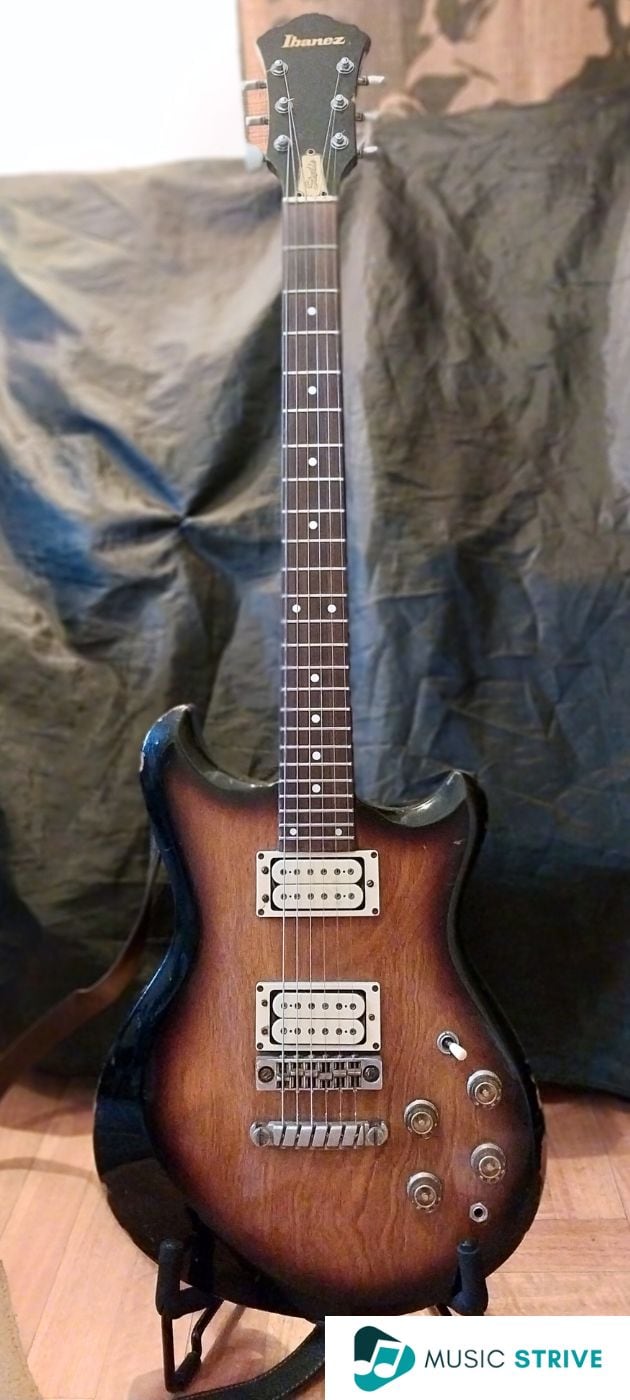
Yes, that combination of the brightness of the maple neck and the low growl of the mahogany body mixed with the sweetness of the rosewood fingerboard make this a rocking machine with an edge and huge versatility.
Now let me tell you what I think is hype that you shouldn’t believe.
This guitar doesn’t sound like a seventies or eighties Gibson Les Paul.
Perhaps the biggest difference with a Gibson guitar from the current era, this guitar isn’t Les-Paul deep. It doesn’t have that nice, round, low-end growl detached from the sparkling highs of the maple top. This guitar has a bigger midrange and edge than that.
It’s got a tight low-end, but it’s more midrangey than that of a Les Paul.
I’d say that the scale also changes your playing experience a lot too. It’s not the same bending the string of an LP or SG-style guitar as a Fender-scale instrument.
So, for those looking for a Les Paul replacement, this guitar isn’t it. In my opinion, it sits between an SG and a Les Paul in terms of sound, but with the percussiveness of a Stratocaster because of the scale and the maple neck.
Reliability and My Personal Experience
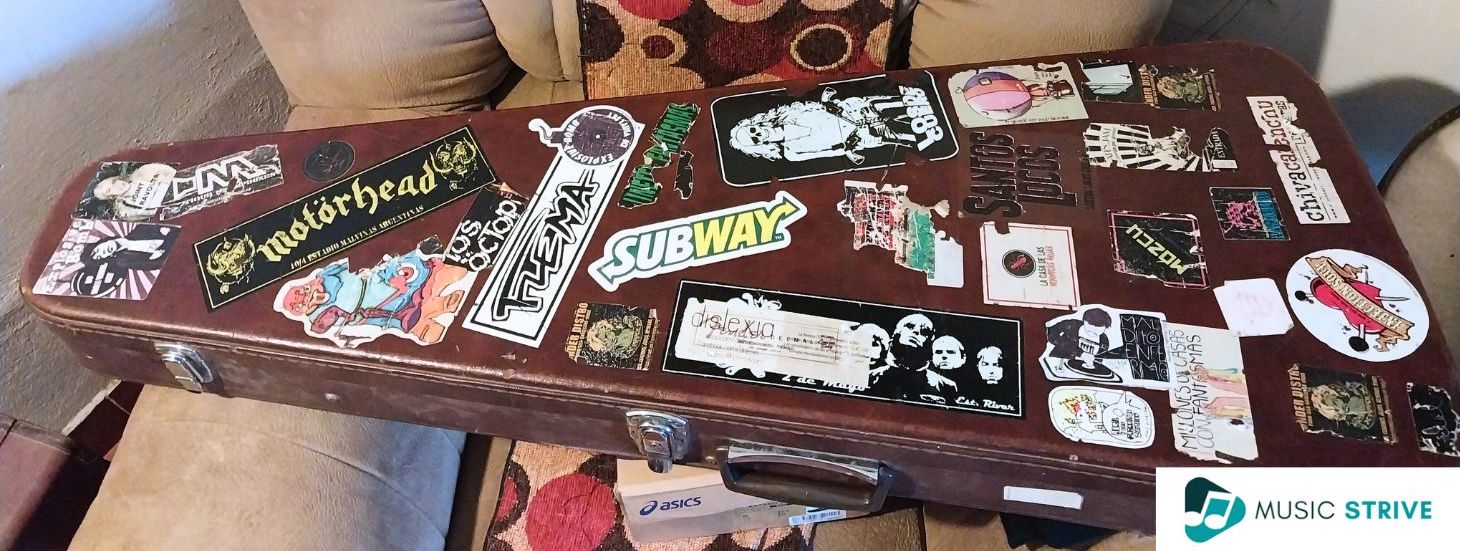
I gigged with this guitar for close to ten years. Then, I got my SG Jr., and my bandmate played it for some more years. It’s been a studio weapon exclusively for the past five years.
Reliability-wise, let me tell you that I’m more at ease when playing this guitar out because of the volute and the three-piece maple neck than playing my SG which has had its headstock glued twice already (only once by me, though).
I’ve had it fall to the floor; I’ve hit cymbals with it, thrown it in the back of the van, took boats, and even flown with it in the cargo bay of the plane more than once.
Never once did I have a problem with it other than replacing the tuners.
Does it need a fret job? Well, it surely does, but what guitar made in 1981 and played generously doesn’t?
The only performance flaw of this guitar is that it nosedives. It isn’t a lot, but you’ll notice your fretting arm gets tired half a show in. That’s because you’re pushing the neck up so you can play it.
Other than that, it’s the most solid guitar I’ve ever owned.
Should You Get a Japanese Guitar from this Era?
The answer to this question depends on what you’re looking for. Let’s dissect the answer.
- First, if you want an affordable rocking machine that’s well made, sounds great, and is very reliable, then you’re looking at the right instrument.
- Second, if you want a guitar that sounds great and doesn’t mean you’re too worried about its safety on the road, then this is an amazing era of guitars to look at.
- Finally, if you’re in the market for a vintage instrument that has a cool story and you have a limited budget, even the bolt-on versions of these guitars are great instruments that hold their tale (and value with time).
To put it simpler, these guitars are players’ instruments. They haven’t reached (and I doubt they ever will) the market value to make them collectible items. Sure, some people collect them, but they’re not collectors’ items, they’re hidden gems real guitar players know about, own, and play a lot.
So, this guitar is for players who aren’t too concerned about nailing “the look” and gravitate more toward the tone of the instrument than the way it looks.
Finally, most of these guitars are heavy pieces of lumber, so they’re also for those who can bear them on their backs.
The Lawsuit Era Effects are Still Here Today
I know, you might be scratching the top of your head with a pick and thinking, “What’s this guy trying to say?” Well, the idea that good-quality, affordable guitars can be made in Japan and other Asian countries comes from the lawsuit era.
Furthermore, Fender founded its Japanese branch in 1982. In 1983, Epiphone moved its production from Japan (home of another lost pearl, the Epiphone Genesis) to Korea in an allyship with Samick Guitars to make affordable versions of Gibson’s classic models. Soon after, Fender launched Squier to do the same.
The big companies began doing the same thing that Harry Rosenbloom did in the sixties and early seventies but through subsidiaries that would give them money for their original designs.
Nowadays, with the new Epiphone Inspired by the Gibson Custom Shop line of guitars, the “open book” headstock made its triumphant return and is being made in Asia and shipped to the world.
The Bottom End
Japanese guitar factories can make top-notch, world-class instruments. Back in the day, when the lawsuit was filed by Gibson, the copies that they were putting into the market represented a real alternative for many players.
Many of us have made a small and humble career in music because of these guitars made in the late ‘70s trying to meet the demand of these guitar-driven decades of music.
Although they don’t sound like the real deal, in an attempt to move away from copying other designs, companies like Ibanez created their own thing. Does my Ibanez Studio sound like an ’81 original Gibson SG? No, it doesn’t. Does it sound like an ‘81 original Gibson Les Paul? No.
These guitars are their own thing and can help you nail legendary tones without breaking the bank. Who knows, you might fall in love and be writing about it 20 years later like I am.
Happy (Japanese guitar) playing!

Great article. I remember these guitars and have been told that maybe PRS got their body shape from this guitar ? I don’t know if that is true or not.
I’m surprised the pickups are so hot though. I remember when anything Japanese was considered poor quality until about the early 80s. Then when I Ibanez made Vai guitars and the RG series they took off. I own an S series with the low pro edge trem from Japan and I holoflashed like the old Kramers used to be. It’s a killer guitar and plays so well and sounds great.