

Are you one of those who think that filters are pedals for nerds, ambient players, and weirdos? Well, you might be right about the last one, but the wah pedal is a filter, too, and it carved its own spot into the pantheon of guitar Gods.
I don’t think there’s a more expressive pedal out there right now.
You’ve heard it all over the place, all your heroes played one. I know it because it was my rock dream, too: playing a wailing solo, stepping on it. So, I did what every player does when we discover something new: I put it everywhere I could. I became a meme for the most annoying guitar player with a wah to ever exist.
That wild journey had its ups and downs, but surely taught me a thing or two about Wah pedals. They’re diverse, beautiful, and savage.
Come, let’s conquer Wah territory together.
Table of Contents
Wait, What Do You Mean the Wah is a Filter?
Yes, let’s get this out of the way first. Do you know what a filter does? It takes away a certain frequency. For example, an EQ can act as a filter. If you’re getting a low rumble from the bass player’s 1×15 cabinet, you can add a high-pass filter to the EQ and remove anything below 100Hz.
Well, think of the wah as a dynamic filter.
It’s similar to playing with the tone knob on your guitar. You can achieve a wah-like sound if you move it from ten to one. The thing is that, well, it’s your picking hand, and you need it to… pluck the guitar.
Having the same pot at your feet is much more useful. But there are two wah types, let’s talk about them. Oh, and spoiler alert! My favorite type of Wah pedal is the simplest of the pack.
Control It with Your Hands or Your Feet
The first few times I heard the word, it felt intimidating.
Let me tell you a quick story. I was trying to get on board a project for a funk band. I was playing clean bar chords and using my wah pedal like a maniac. That was the time I learned how to use a compressor live, but that’s a different story. The thing is that the bass player came to me before rehearsals and said he was going to try an envelope filter, and that we should share some licks.
“A what?” I thought. “Of course!” I replied.
It turned out the Envelope Filter, one of the most used effects in funk, is a recreation of the wah pedal. Instead of working with your foot, it works with your hand. You can dial in how much effect you want, and it will respond to the attack of the picking hand. The more you dig in, the more effect you’ll get. That allows you to move freely across the stage during a performance.
At the moment, I thought “Thank God it’s just a wah-wah wannabee”. But it turned out I was as wrong as a player can be. I tried his Q-Tron on my guitar, and it was a blast. I didn’t have to be holding my weight on one foot for a long time to get the cool, funky vibe going.
I ended up getting an AW-3 Dynamic Wah that offers way more options. For example, you can dial what vowel you want the effect in, and it changes drastically.
Guess what I did next. Of course, I put that effect on every song and lost the gig.
Once I got around to how and when to use it, though, that pedal became a secret weapon.
With or Without Knobs?
Wah pedals are widely known for being easier than a blender. Most of them don’t have knobs or buttons… they don’t even have an LED light to indicate being on!
That’s the case of the Jim Dunlop GCB-95 Cry Baby, for example. Yep, that’s the one for me; my favorite right now.

I went through many of them, offering everything from Q control to a built-in booster, and I guess I went full circle to the one I started it all with.
Here’s my advice about it: If you don’t know what to get, go for the Jim Dunlop GCB-95. It’s the quintessential wah tone we all love and nothing else. Consider it a tone knob with an on/off switch at your feet; that’s all there is to it.
What knobs do these pedals offer? Let’s take a look at the most common and why they might be useful for you.
Q Control
The Q control allows you to choose the filter’s span. For example, if you move the Q upward in the frequency range, you’ll cut more lows. If you do the opposite, you’ll cut more highs.
I used to have the Hiwatt Custom Wah (loved it, sold it, regret it), and it was amazing to accommodate the amp and the pedals. The Dunlop 105Q will do the trick, the Dunlop MC-404 CAE will do it for a little more, and the Fulltone Custom Shop Supa-Wah Multi-wah will do a lot more for a lot more.
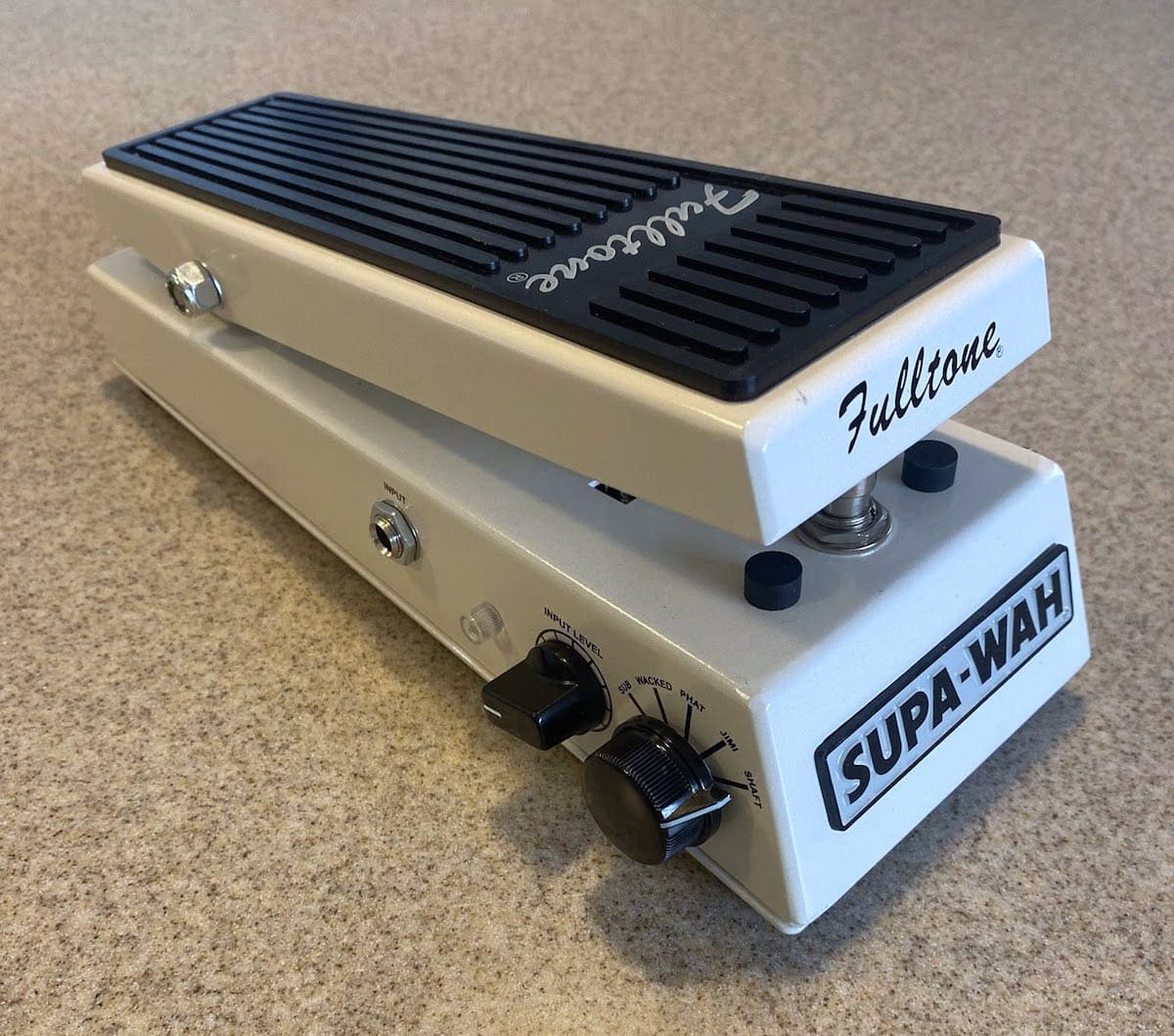
Built-in Booster
Booster, distortion, and fuzz are three things you might find in a Wah pedal. I had a fuzz wah and it is amazing for a rock, stoner, or heavy band. You can just step on one thing and fly out.
Distortion is also cool; the Slash Wah has a great one. Again, just step on it and wail on (Garth). But the real cool one, as I came of age, became the booster. You can just dial a bit in and go into any wah medley just a little above your tone. Combine it with some reverb and a compressor, and you’re in funk heaven.
In my humble opinion and experience, the Fulltone Clyde Deluxe Wah is the best option out there right now. When you make that buffer clip, you’re in Wah heaven instantly.
To Switch or Not to Switch
Most wah pedals need to be engaged by pressing your toes, and you need to do the same to turn them off. This has some benefits and some drawbacks:
On one hand, you can engage the pedal, leave it at a sweet spot, and use it like a mid-boost to send your signal bolting to the front of the stage, cutting through everything in the mix. Moreover, if you happen to have one with a boost, they’ll fetch your tone at Cape Canaveral.
On the other hand, you can only turn it on and off by pressing the toes. Therefore, you can’t start a line from the bottom and work your way to the top. Likewise, you can’t end a lick with a low rumble.
This is my wah of choice: The simplest around. I can live with the clicking and tune all my licks to end on a high note.
Now, that said, it wasn’t always the case for me. I started my journey with the GCB-95 and then went completely into Morley territory, following (on your feet, please) Mr. Steve Vai. I mean, it’s like magic. You just step on the thing, and it’s on. You step out of it, and it’s off.
I never got used to it, and I couldn’t do the razor-sharp trick, so I went back to switches, but it’s a good place to do some research.
Wah Pedals, Modulations, Time-Based Effects, and Gain Stages: Where Do I Put It All In My Signal Chain?
Now, one thing I learned after playing so many different Wah pedals is that all of them sound different. Yet, nothing causes a more drastic sound effect on these pedals than the position in which you put them in the signal chain.
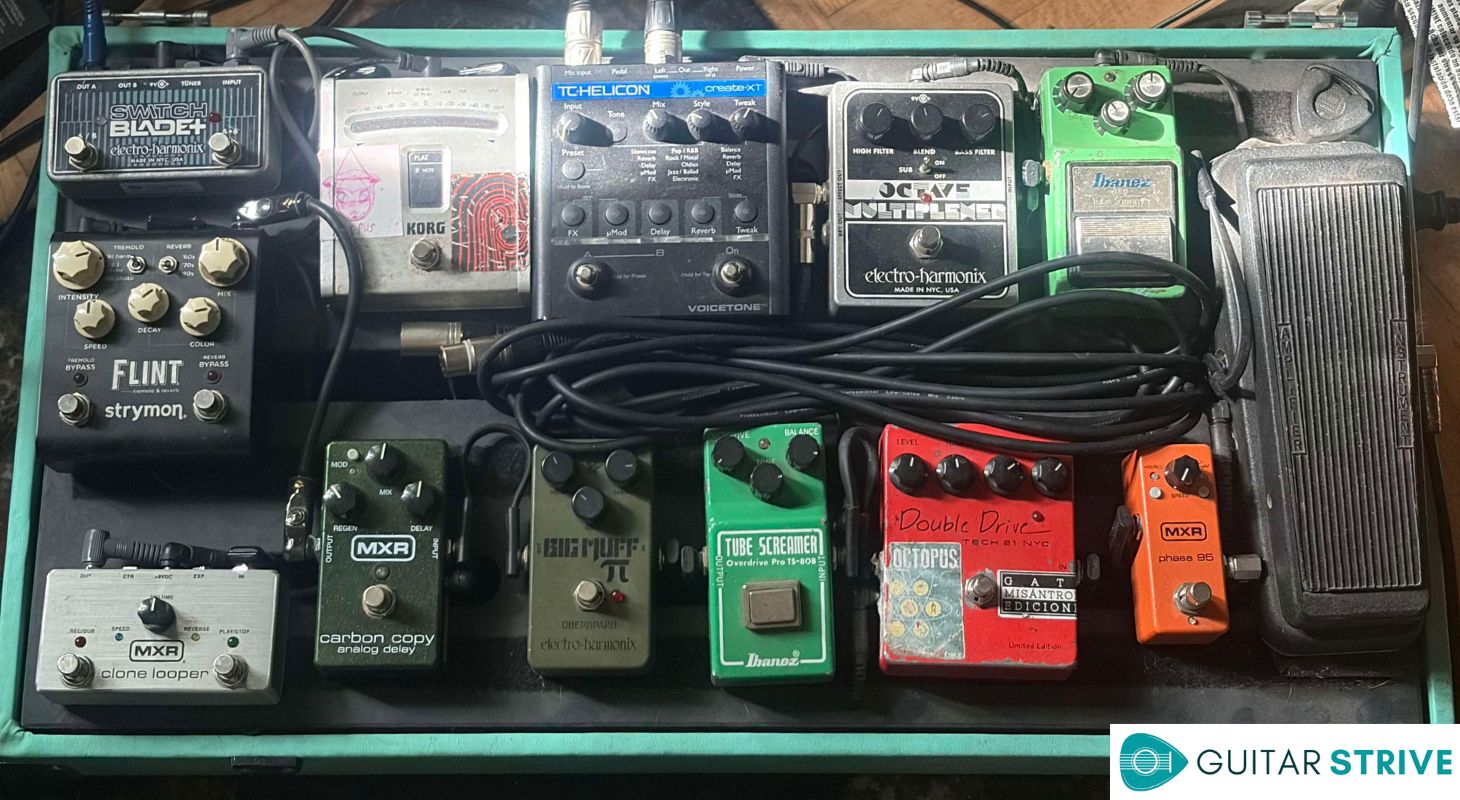
I put it first, and I go from the guitar straight into my Wah pedal. That gives me the most savage sound you can get from a Cry Baby. It’s raunchy, it’s bold, and it sounds a lot like what you think of when you hear Jimi playing Voodoo Chile for example.
Now, if you want to put that pedal after the gain stages, that will soothe its sound, and it won’t sound as wild, but it’ll be more compact, especially in the low-end.
I don’t recommend placing filters or octave pedals before a Wah unless you want to create a very unique tone. I mean, modulating a sound that you’re then feeding a wah makes the filter go a little crazy while sweeping frequencies that are at the same time modulating up and down in pitch.
Finally, I love what time-based effects do when they’re always last in the chain. That said, if you’re playing something like a shimmer reverb, place the wah after and play with the repetitions; it’s quite an experience. Add some delay to that, and you’ll knock off all plans for the weekend.
The Bottom End
Unlike what many of us believe, wah pedals have evolved, changed, and offer many different options to accommodate all players.
Whether you go for a more traditional approach like yours truly here and focus on making it as expressive as it can be while you shred your brains out, or you go in for some deep tweaking and find the tone of your dreams, there’s one for you.
If you do get one, be patient. You’ll want to put it on every riff, solo, lick, and chord that comes your way. It’s just a phase, it’ll pass, and when it does, you’ll surely master the art.
Happy (filtered) playing!
