
I started playing guitar in the 20th century (doesn’t it sound odd said that way?). We didn’t have many of the tools that beginners have today, our options ranged from limited to non-existent.
For those of us who continued to hone our craft into the 2010s, there is a plethora of new options to choose from. Some explored more and others less, but we were all changed by technology.
That line doesn’t just apply to guitar playing, btw.
I found ways of using the new tools available to perfect my technique and make better songs. It took me years to understand how to use technology to push my playing forward, but the moment it clicked, I discovered a new world.
That world is precisely what I want to share with you today in this humble piece. These tools have made me a better player and composer, and I hope they do the same for you.
Let’s do it!
Table of Contents
The Altered Perception of the Musician
I know, the above is a controversial line. However, it’s true. We usually don’t have the same objectivity when it comes to judging our own creations as we do with other people’s songs or playing.
This gap isn’t always positive, on the contrary, most of the time it’s a negative bias that makes us think what we do is substandard. But what if we could avoid these misconceptions and hear our music as it really is?
Well, read on because that’s what this is all about: Regaining our objectivity to make better music.
How It All Started
I was playing in a post-punk band in the 2010s. We had our own rehearsal room with no recording equipment, just the amplifiers, the drums, and a decent PA system so we could push vocals forward.
We rehearsed 60 km away from the country’s capital and got an invitation to play in four venues as a mini tour. The deal included sleeping on the floor of a studio where we could also rehearse. Our third album was in the making, so we had to rehearse some of the new songs we wanted to debut.
We fulfilled the indie musician dream and spent some days together as a band sleeping, eating, and playing in a proper studio.
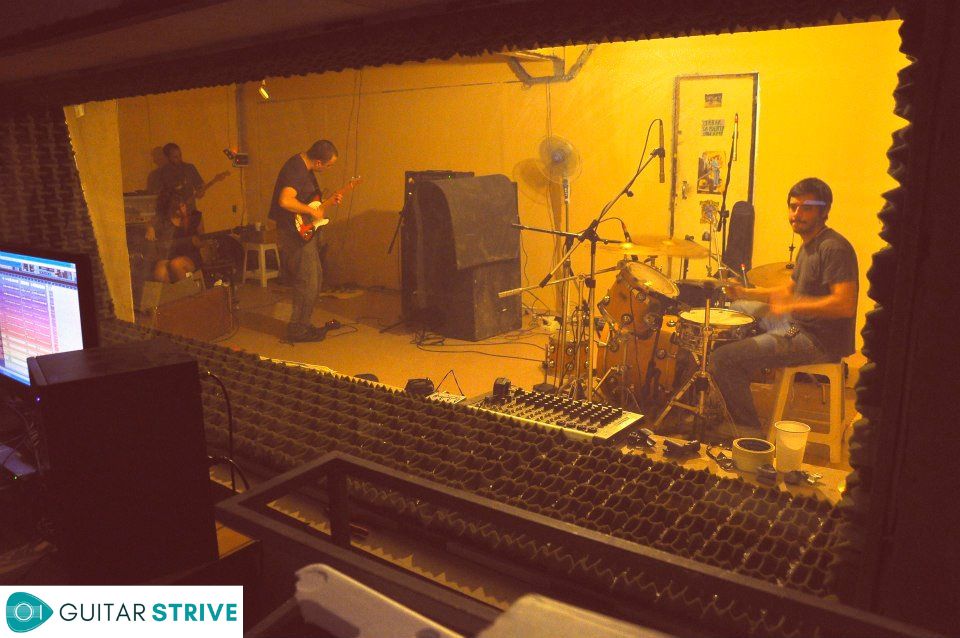
The day we were leaving, the studio owner said, “take this before you go!” He handed us a pen drive (yeah, I’m THAT old) with all the recordings of our rehearsals. We couldn’t believe just how insightful hearing our half-baked songs was. We started making comments and changing arrangements while listening to it on our way back home.
It was a Eureka moment.
Needless to say, when we got back to our own rehearsal space, we set up a condenser microphone and went straight into a computer. It didn’t sound as good as the multi-track studio recording, but it was a big help to finish that record.
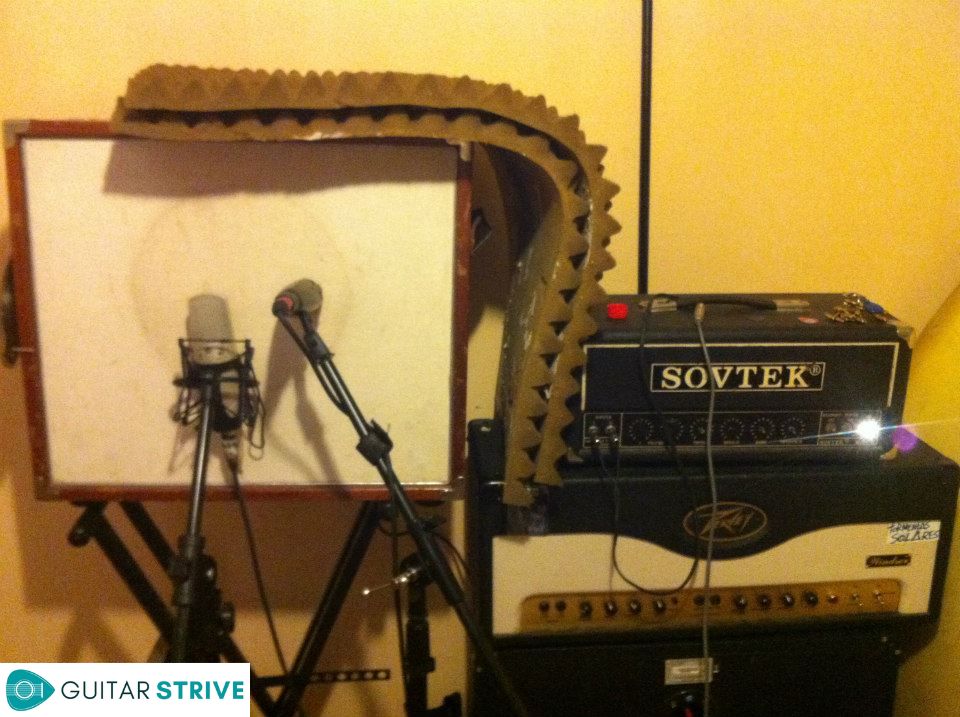
That band split up, but that is something I still do today.
What are the Benefits?
Song Structure
Songs are wild animals that tend to take their own shape and work their magic in their own way. That said, they always rely on a structure. That’s the first thing that we noticed; structures can be reduced to letters and formulas can be made. So, we made up a system: Verses were As, choruses Cs, and bridges Bs. That made it all so much easier, it allowed us to change structures on the fly and make major changes happen in minutes.
Arrangement Selection
Once the structure is down, you need to focus on the uniqueness given by the arrangements. What we did was try everything that came to our mind and let the microphone take it. We could then choose what was best for the song, not what was the most fun or challenging to play. Believe me, you gain a new perspective.
Vocals, Melodies, And Solos
A song without a melody is just a rhythm section. Yet, coming up with the right melody for each tune isn’t always an easy task. Yes, theory helps, but there’s an element of magic in melody creation that’s just stardust condensed in the atmosphere around you. By recording those parts afterward, we were able to dissect everything to its bare minimum and make better group decisions.
Live Performances
Applying the same logic to live performances helped us realize the weak points of our show. For example, we had this middle section with three slow songs in a row, and it was a bummer to hear even for us. It helped us perfect performance defects and make better song lists that would keep people engaged until the end of the show.
Some Tricks Time Has Taught Me
Take a walk
Nowadays, the time that goes by from recording a demo of a song to hearing it through your headphones is minimal. So, what I still do to this day is walk the songs. I upload them to my phone and go for a long walk with the song on repeat. My best ideas came that way. The bad thing is running home to pick up the guitar before forgetting!
Try it all
You think you know, but you have no idea. Yes, that’s another musician’s bias: Some things are fun to play but won’t help the song. We tend to fall in love with some licks or riffs and force them to fit the song. Hearing it without playing will give you perspective. In my case, it saved me from recurring fights with other band members to defend what I thought was great but was only fun for me to play and didn’t serve the song at all.
We all make mistakes
As a musician, making mistakes is a crucial part of the path. The more you make, the more you’ll learn. So, be your best critic and find the weaknesses in your playing. That’s how you get stronger, faster, and more creative. Don’t be afraid to push it further than you think you can, you might arrive at new sonic territories you didn’t think of before.
What Do You Need to Get Started?
I know you’re probably thinking of fancy recording equipment, a big wooden live room with a state-of-the-art mixing console in a comfy, dimly lit control room. Well, not many musicians are so lucky. Most of us have to improvise to make the best of it.
I recommend three different approaches.
First, if your budget is zero, and there’s no other choice, use a cellphone. You need to be creative to make the recording as clean as possible. If you can, place it far from the cymbals and the snare and at a high spot in your rehearsal space. It takes practice and trial and error, but once you have the base down, you can overdub all other parts over it or just listen to how the whole thing works when played together.
Second, a recorder with a built-in condenser microphone. If it can also capture video, you’ll have a clear idea of what your live shows look like and adjust details. Yeah, that includes those infamous dance moves of yours!
Finally, the best option is to have a laptop with a DAW and a couple of microphones set in the room to get a stereo image of the band’s sound. Just make sure you adjust the gain to match the band’s volume.
PRO TIP: When recording with multiple microphones, you might incur in phase issues. Make sure you fix those in your DAW matching the sound waves in the mix.
My Dirty Little Secret
Before finishing this piece, I would like to share a small secret that has helped me a lot.
Fender has a free DAW that’s called Fender Studio that will allow you to record with just one click. In my case, when I play with my looping project, I just plug the mixer to my oldest computer and go straight into it. I’ll capture two channels without spending a dime. Plus, since it’s so light and minimalistic, the computer won’t crash. One caveat to bear in mind, it doesn’t feature a drummer.
The Bottom End
Taking advantage of technology moving forward is something every musician should embrace. I know, there are many things I don’t like about it too, but if you learn to take what’s great about it and avoid the rest, you’ll find a gold mine.
Trust me, you’ll become a better musician by being more objective with your playing, your songwriting, and your band’s performance.
It’s so simple you can even do it with your cellphone; there are no excuses, just reasons to apply these tips and get better by the day.
Happy (objective) playing!
