
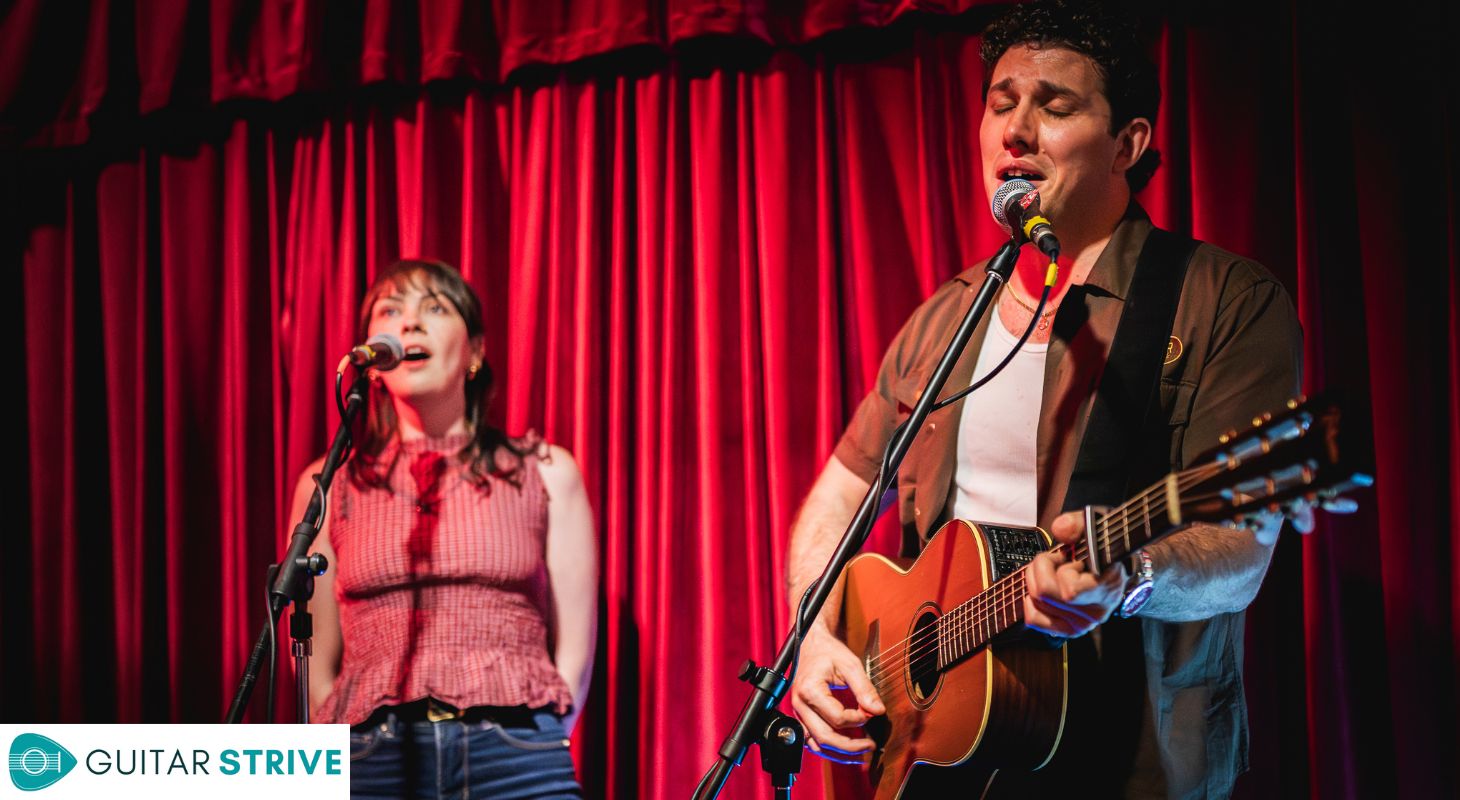
You’ve been practicing for months. You have the gear, the skills, and just the right amount of nerves before your first show! Whether it’s your first gig ever, the first gig with a new project, or the first in a genre you’re unfamiliar with, there’s a unique rush to getting on stage and playing music for a crowd.
I’ve spent most of my life as a gigging musician. I typically play between 150 and 200 gigs per year. My first ever gig was about twenty years ago now, but I’ve had plenty of “new firsts” along the way. I’ve also brought plenty of musicians along with me, and given them their first shows with me, either as an opening act or as a sideman in my band.
Here’s how I get ready for a gig, and how to make the most of a first gig.
Although I’m mostly writing for an audience without the benefit of my years of experience, I’ve poured enough of my hard-earned experience into the advice below, and there might be something in there for seasoned pros, too!
Table of Contents
What’s the Difference Between Good Enough and Great?
I’ve played enough shows to know how it feels when you’ve absolutely crushed, versus when you’ve been adequate. Not all gigs can be awesome. Even stadium-headlining bands have off nights.
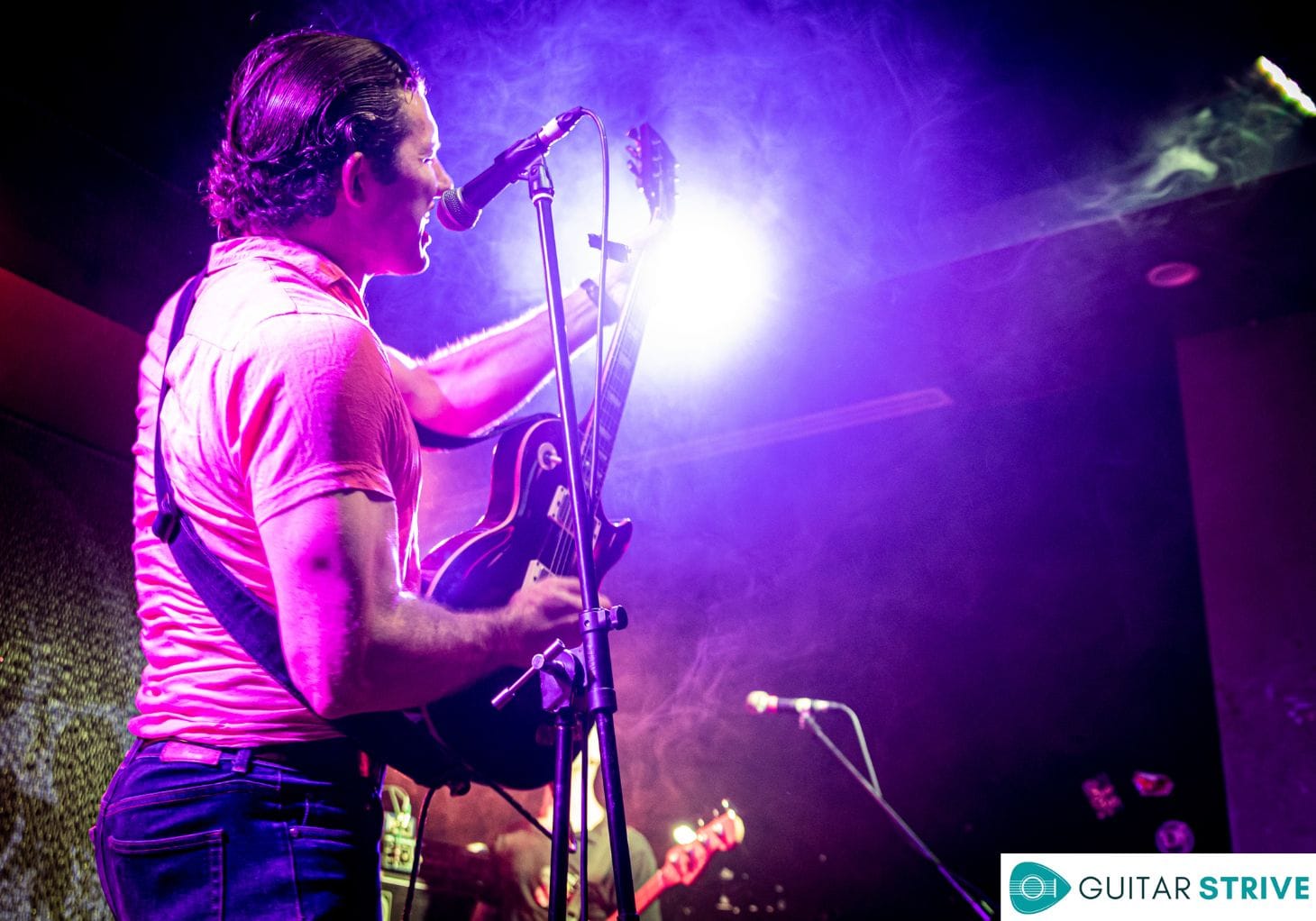
I’d say that the great gigs are those that go so smoothly it feels almost like the musicians are on autopilot. You’re on stage, performing, fully in the moment, and the crowd is fully in the moment with you.
A gig that goes “good enough” is one where you get through the performance, but it doesn’t transcend the way a great gig does.
I’ll never forget my first gig as a sideman after about nine years of fronting bands. We were playing a community festival gig to a crowd of a few thousand people at Sydney Harbor. The material was all old Irish folk songs I’ve known since I was a kid. It was, for me, a great opportunity. Unfortunately, I was just filling in for another guitar player, and I learned on the day that the singer I was playing for sang none of the material in the keys I was expecting.
I had to pull out a notebook and write charts to read from by hand, occasionally improvising chord changes on the fly. We sounded good, I didn’t make any major mistakes, and the singer was happy.
However, I wasn’t fully locked in, and my performance suffered. I felt adequate, not excellent.
I compare that to some of the gigs I’ve played where I’ve stood on stage, guitar in hand, leading the crowd in chorus like an orchestra conductor. That’s a great gig.
Knowing the Material
Keen eyed readers will notice the first issue with the first scenario: I wasn’t adequately prepared for the gig.
I should have asked the singer what keys we were in way ahead of the gig, instead of assuming. That was my mistake, and a lack of professional insight on my part.
Fortunately, in that case, I knew the songs well enough to get through the performance.
At any performance, knowing the material is vital. It’s even more important to know it inside out for a first gig. Without the familiar sequence of a well-practiced setlist, we have to be more conscious while playing, and it’s not enough to rely on muscle memory and a great ear.
I always dedicate hours of practice time to playing the material by heart, with or without backing tracks, before a performance, just so I never get caught out like that again.
If I’m playing sideman, I always make sure to ask for keys and any other arrangement notes (especially stops and upbeat/downbeat sections) that differ from the recorded versions of the material we’re playing.
Stage Moves
Here’s one that’s a little awkward: decide in advance how you’re going to move on stage.
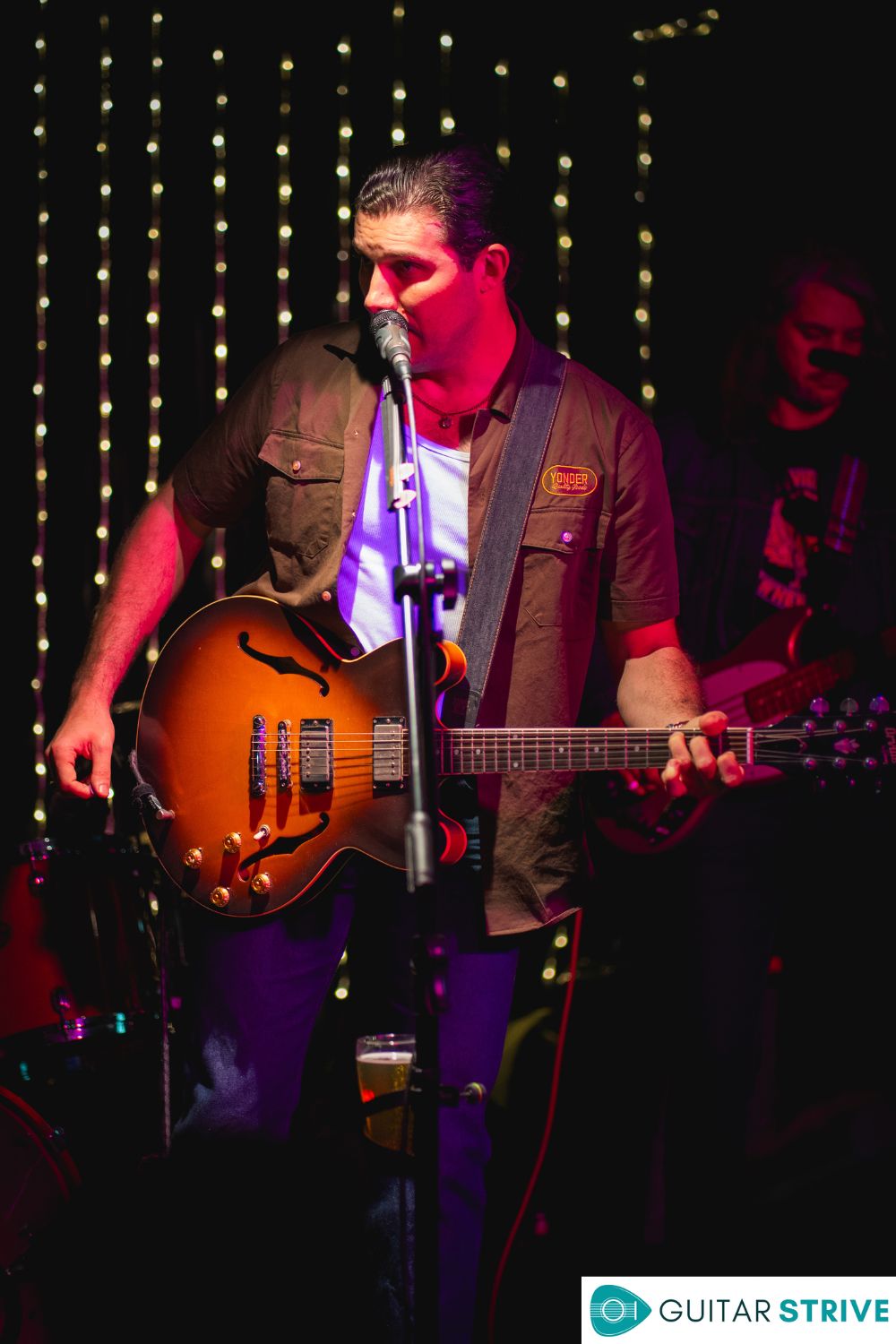
If I’m fronting a band, I never stay still. I’m roaming the stage, lifting my guitar to the audience, and pointing at random, doing my best Paul Stanley impression.
Even as a sideman, it’s important to look like you’re vibing the music. Nobody wants to see the guitarist at stage right standing like a statue. Work out a couple of classic poses, make sure they’re right for the gig, and work out your stage moves.
We don’t always need full KISS choreography, but a few well-honed moves are always welcome. The audience wants to feel like you’re having fun!
“Banter”
This might seem like conflicting advice coming from me, given my self-professed desire to be Paul Stanley, they king of stage banter.
Most of us just aren’t that good at talking to an audience through a microphone. At a solo gig, I often say as little as possible between songs. As a sideman, I say absolutely nothing into my microphone unless called upon.
As a frontman, I have a few pre-rehearsed bits I like to do to draw the audience into the show. Heading into the bridge of Luke Combs’ “1, 2 Many,” I make a point of finishing whatever drink is on stage with me.
Stage banter is a fine art, and it’s easy to come off as unprofessional and unrehearsed.
Just like you have to know your parts, it’s important to know what you’ll say to the audience and when to say it.
Really, the only thing they need to hear from you is at the start and at the end of your performance, tell them your name, and that you’ll be hanging out after the show to say hi.
Gear Testing
Most of the gigs I play these days are ultra-compact solo acoustic shows. I do play an awful lot of band gigs and sideman gigs, but life as a solo performer pays most of my bills.
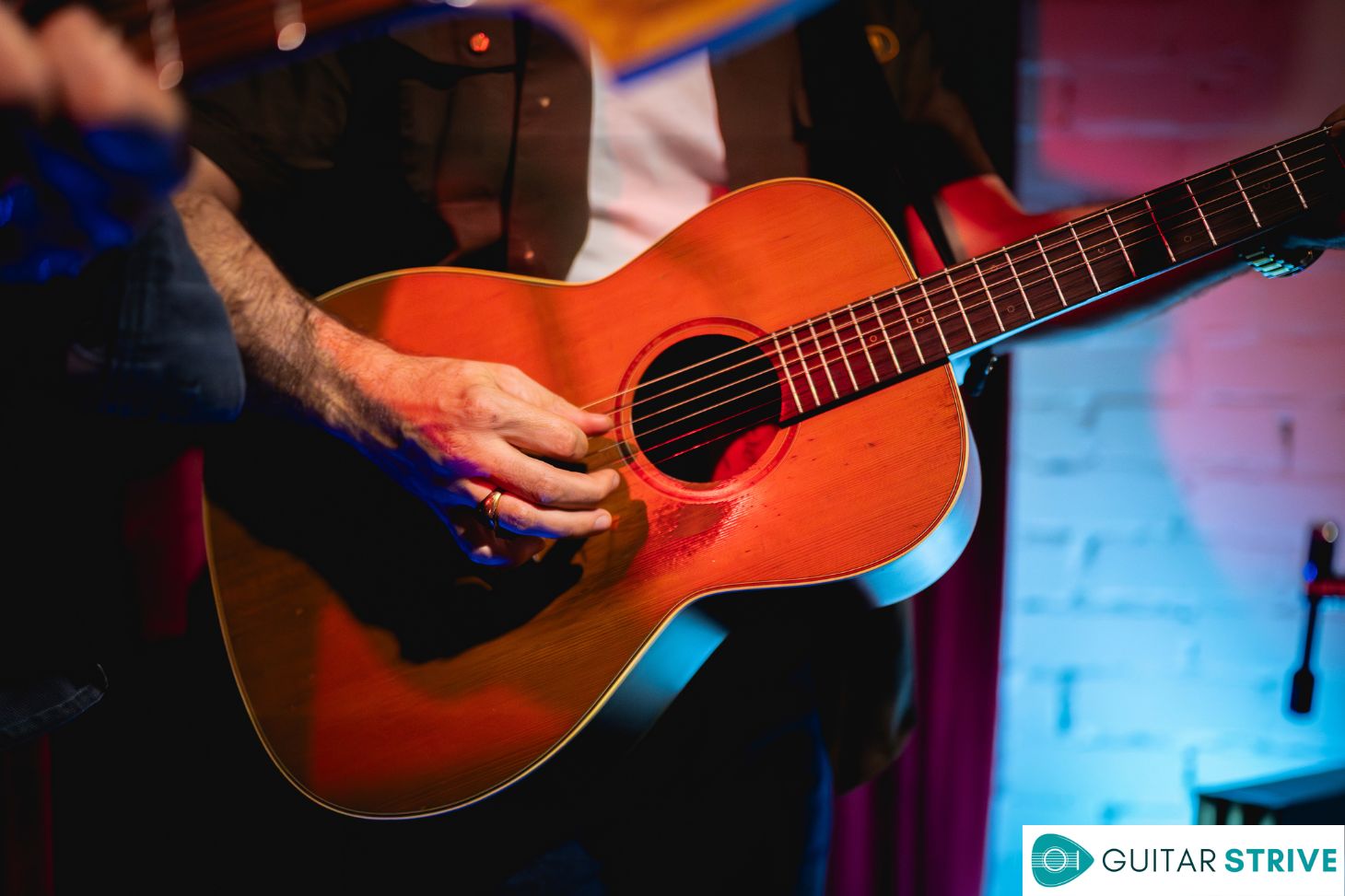
For your first gig, you want to be using gear you’re familiar with and that you can trust. I always play my Takamine New Yorker. I get it set up properly once a year, and I trust it for twelve months afterward.
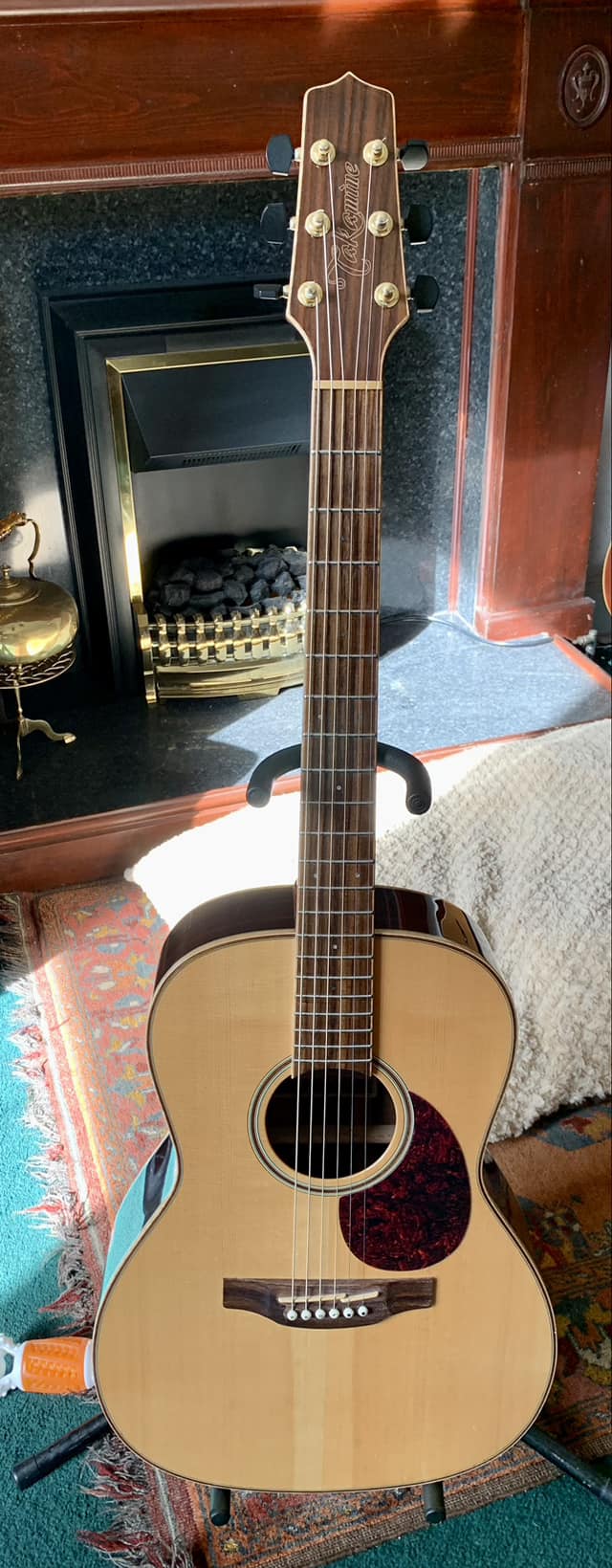
For a first gig, whether you’re flying solo or with an ensemble, it’s vital that your gear works. Test it out in gig format ahead of time. That means plugging everything in, playing through the set, or at least some of it, at gig volume. It’s a little annoying, and it won’t be necessary as you pick up extra gigs later on, but it’s absolutely critical for a first gig.
Think Like an Astronaut
Related to this: build in redundancy. A live show, especially away from home, is like going to space. The astronauts say “two is one, and one is none.” If a part is mission critical – that is, the show cannot go on without it – you need a spare.
For me, I travel with an extra microphone, extra cables, and spare batteries. I have a Boss TU-3 pedal tuner as well as a clip-on tuner as backup and a built-in tuner in my acoustic guitar. I bring two packs of spare strings wherever I go. Space allowing, I’ll even bring a backup guitar with me, just in case.
Two is one, one is none. Think like an astronaut and your first gig will be guaranteed to go smoothly.
Parking, Getting There
I got some invaluable non-musical advice from ex-KISS guitar player Bruce Kulick when I was a teenager.
He said being on time means showing up fifteen minutes early and sitting in your car for ten.
For a first gig, especially at a venue you’re unfamiliar with, call the promoter, booker, artist, or even the venue itself and ask about parking. Know if it’s hard to find a spot, if they have a loading zone, and how bad traffic is in the area, ahead of time. Build time in.
I never rely on the Google Maps estimated time of arrival: that’s when you get there, in your car, and I need time to park, unload my gear, get into the venue, set up, and soundcheck.
I always plan out my trip in advance so I’ll be on time and ready to rock.
It’s important to maximize downtime wherever possible in this business so you’re not stressed about running late or setup time at the gig. Things go wrong in show business: we can control our schedule pretty well for the most part, and venues and other artists really appreciate the professionalism.
I always say that being able to play gets the gig, but being professional keeps the gig.
Always Offer More than You Ask for
The final piece of the first gig puzzle is to always offer more than you ask for. That means showing up early, helping other musicians load in if there’s an ensemble, and generally being as easy to work with as possible.
Know the material better than they expect you to. Be relaxed and confident on stage, more than the artist expects. Give the audience an encore if they ask for it, even if it means going over time (and the venue’s OK with it, of course!)
Last of all, music is supposed to be fun. Playing your first gig, whether it’s your first gig ever or the first in a new project, is exciting, and I hope this article gives you the confidence to go out and truly nail the show. There’s no better feeling.
Photo courtesy: Ben Pittorino (photos of Liam Whelan)
