
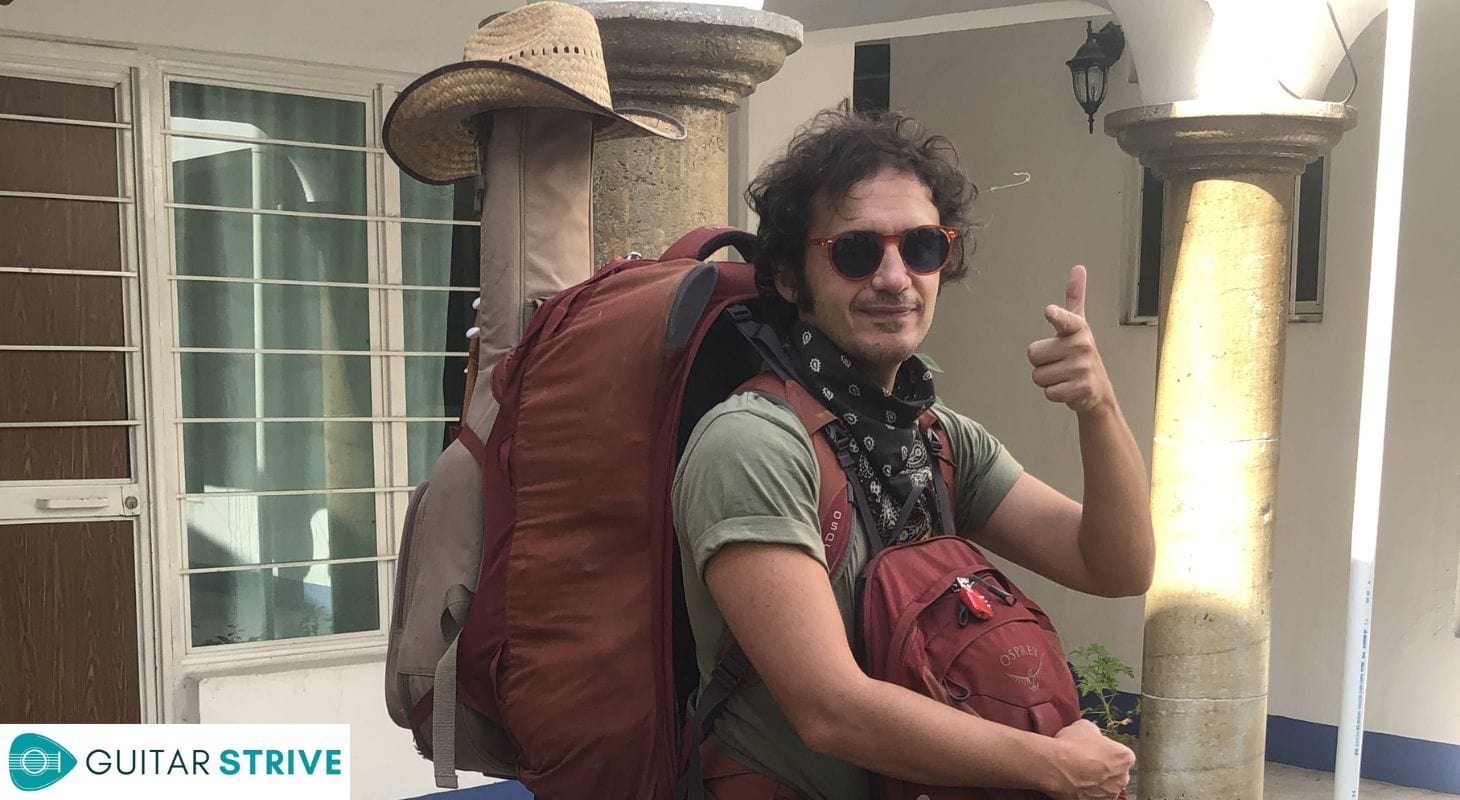
I want to share my beliefs with you. In my opinion, our best songs come from putting ourselves in the right conditions for inspiration. I’m positive that some songs that came to me strumming the guitar on a rooftop, 7,000 miles from home, wouldn’t exist if I were sitting on the couch.
To catch lightning in a jar and turn it into a hit, you need to have the tools ready.
After 18 months and 20 countries traveling and making music, I have a thing or two to say about it. These are my backpack essentials, Les indispensables that make music on the road an option.
Buckle up, because here we go.
Table of Contents
The Brains of the Operation
Every operation needs brains, and in this case, it’s your laptop. This will be the brains of the studio. Not only where the music will be stored, but also where it will be mixed to make it ready to go. This is not about making sketches of songs you’ll later finish in your fancy home studio. Oh no, this is about getting the music done and out.
In my case, I just have an old i7 Samsung computer that can push a decent DAW with some plugins and instruments. It can be anything that’s powerful enough for music production and portable enough to take on the road with you.
I’d say you need to have 16GB of RAM or more and a powerful processor. Other than that, any decent laptop will do.
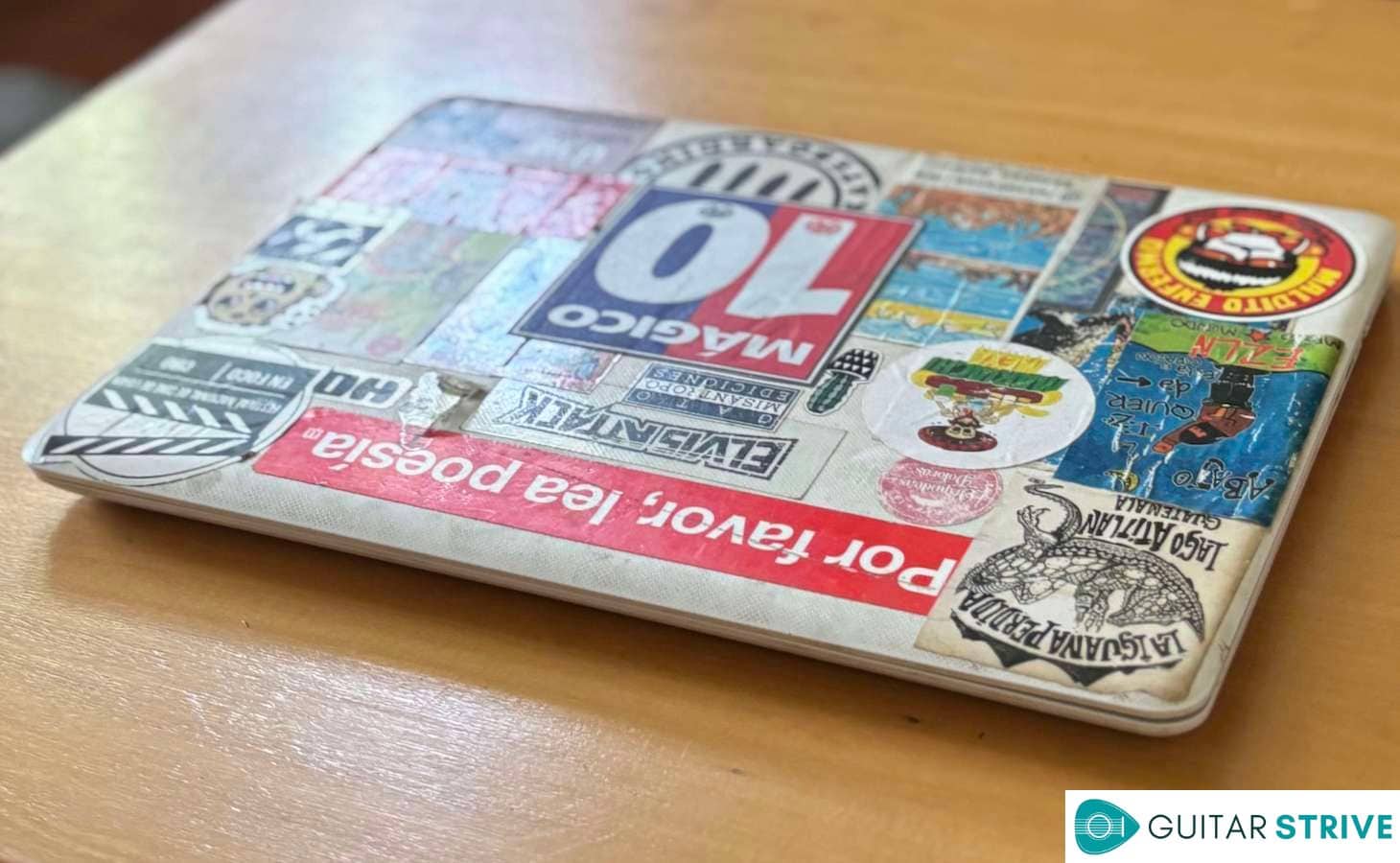
If you do like I did, and cover it up with stickers, it’ll carry more than one anecdote from where you’ve been.
PRO TIP: Mind the computer’s battery. There will be many working occasions on the road, but not all of them will have a power socket nearby. Therefore, having a healthy battery inside your laptop will be a big plus.
The Translator
To make music inside a computer, you need to turn analog waveforms into binary information. You need a translator, AKA, sound interface. This little device will allow you to plug analog instruments into the computer.
In my case, I have a very old and trusty M-Audio Fast Track. If I had to buy one now, though, the Kontakt Komplete Audio 6, the Apollo Solo, the Apogee Duet, and the Focusrite Scarlett Solo are all great choices.
Does the quality of the interface change the resulting sound? The answer is yes; it does. That said, it’s not a game-breaker. You can get away with a great, passionate take and a regular interface. You’d need to be an audiophile to be able to tell the difference. Plus, while making music on the road, you’ll be working with samples and virtual instruments mostly. But more on that in a bit.
In summary, any of the above will do, your budget can determine it.
The Cans
This is not a good category to cut corners. The cans, the headphones you’ll be using to make and mix music online, should, in my opinion, have these three characteristics:
- They should withstand the hardships of the road – I know, studio-grade headphones are great, but most aren’t built to endure life on a backpack and on the move. So, make sure they’re sturdy. Bonus points for foldable headphones.
- They should be familiar – The worst thing you can do is get new cans to hit the road. Every pair of headphones colors the sound in a different way. The ideal scenario is getting flat-response cans; nevertheless, if you’re very familiar with how yours sound, they’ll be a much closer reference than new ones.
PRO TIP: Work with reference music for each production and make sure you hear it through the same cans. That way, you’ll be closer in sound and feel.
- They shouldn’t be too pricey – I know, in the audio world, more expensive usually means better or better-sounding. Well, pricey stuff on the road is another worry in the back of your head, and you don’t need that. Plus, expensive cans tend to be bulky and more fragile.
The Input
Making music on the road requires a hybrid approach. On one hand, you can use software to create sounds that are impractical while moving. On the other hand, you’ll want to add some organic, analog stuff.
Let’s divide this into three distinct categories.
Analog Instruments
I’m a guitar player, so I took my Baby Taylor with me.

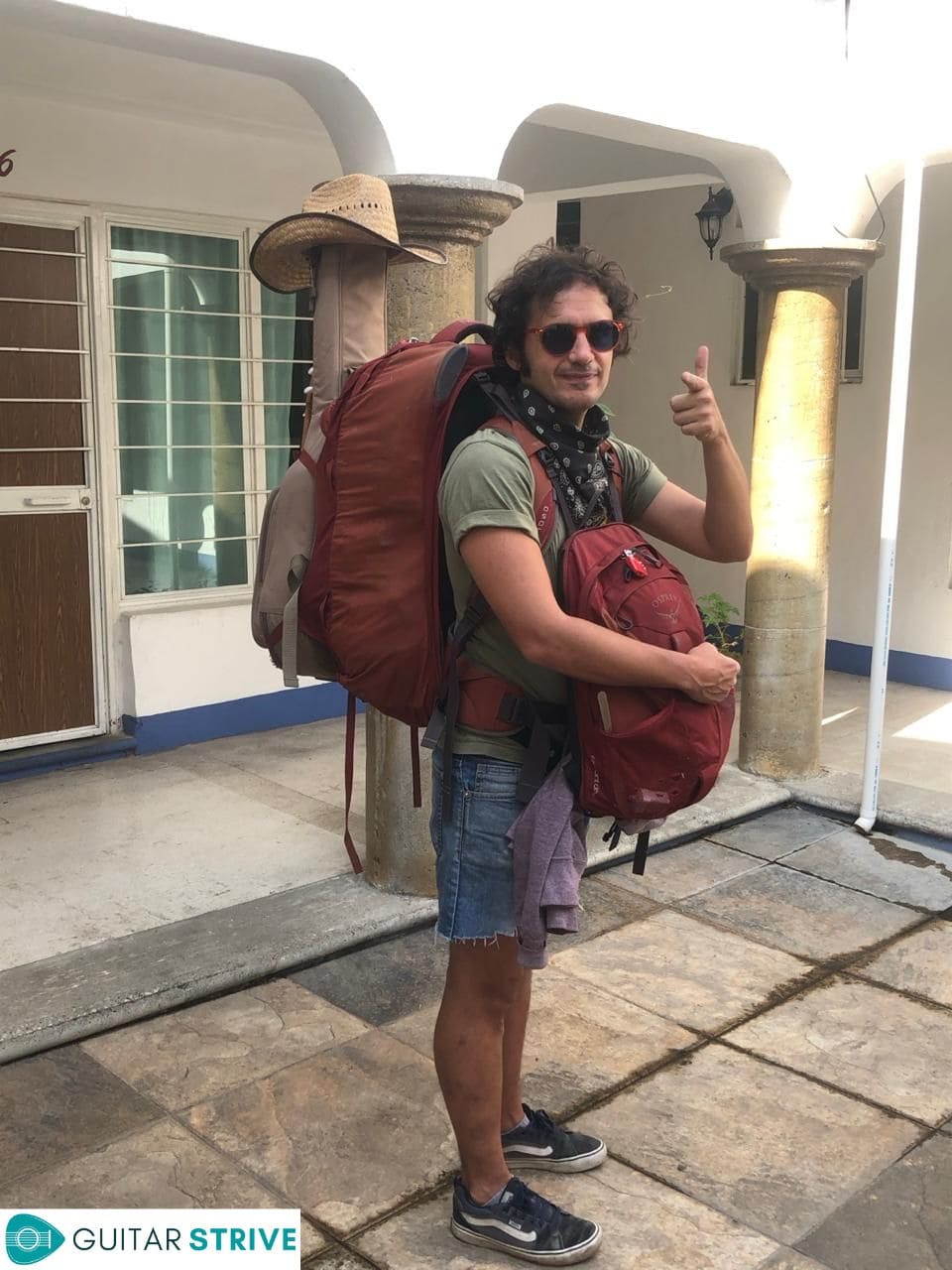
Before going out, I installed a Fishman piezo pickup. This allowed me to record it straight in without worrying about environmental noises.
Virtual Instruments
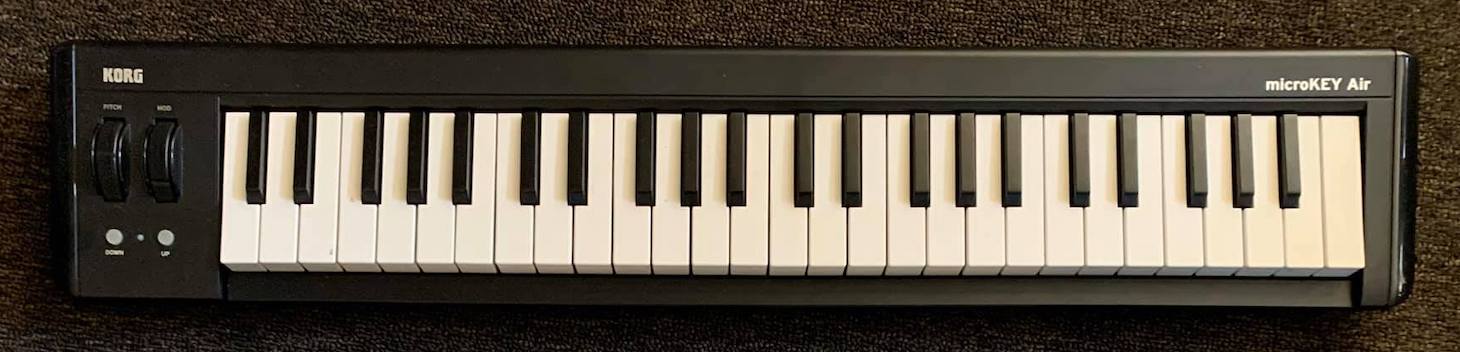
Nowadays, you can emulate almost anything with a MIDI keyboard and the right software. Something like a Korg Microkey Air is a great choice. You can play a plethora of instruments and build sonic landscapes in minutes.
Microphones
You’ll find a lot of people telling you that a condenser is needed for vocals and to capture instruments. In my opinion, that’s not the best approach. I did bring a condenser on my first trip and never used it. Instead, I did everything with my Shure SM58. That microphone could have conquered Normandie on D-Day, and it sounds great once you learn how to work the EQ curve.
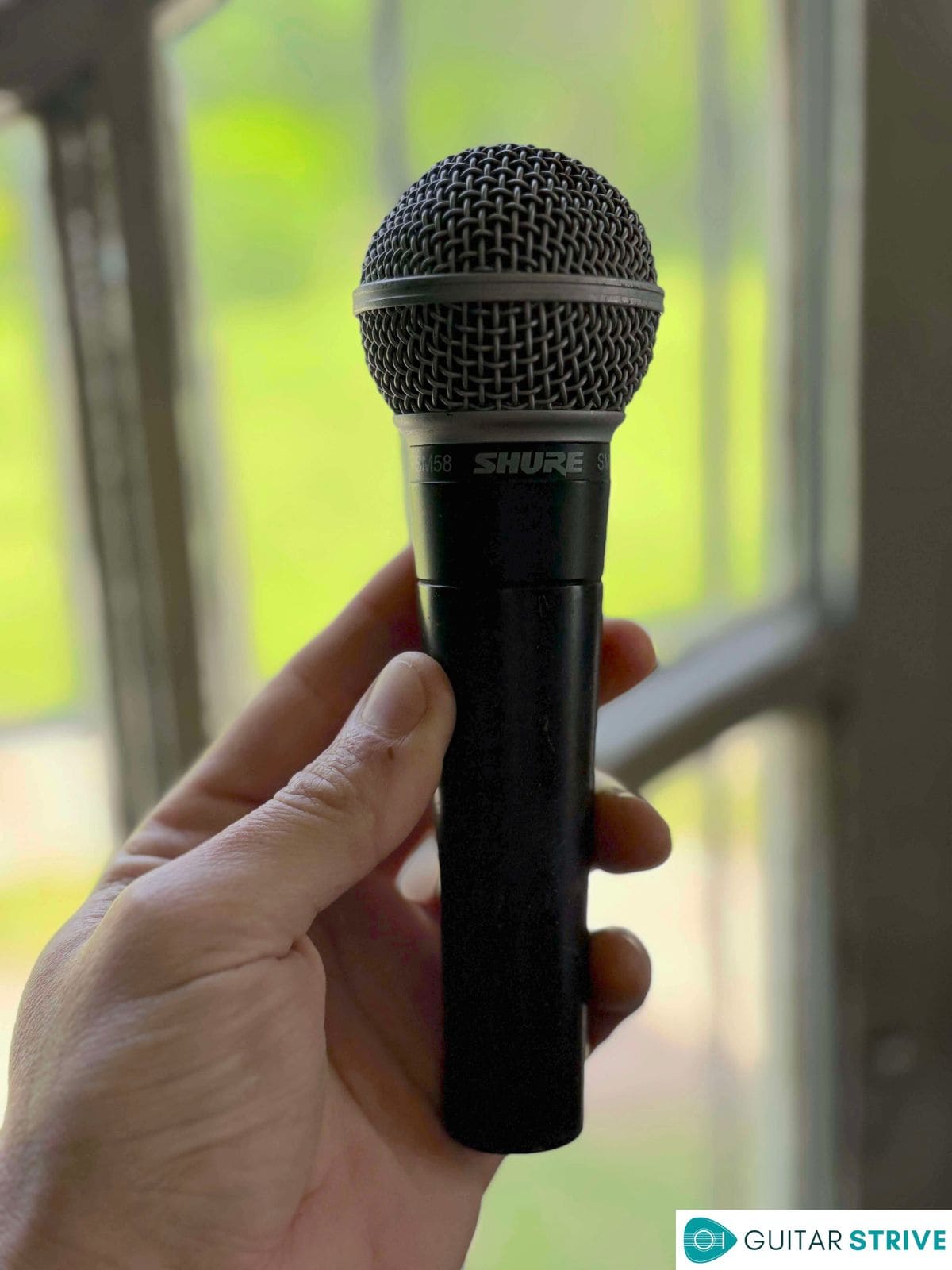
PRO TIP: Bring a windshield like the A58WS. It doubles as a pop filter.
The Eyes
Consider this a bonus track. The thing is that in today’s world, bringing something to capture video as well as to record sounds might be a game-changer. In my case, I just love the Zoom line of recorders, but there are many out there that can get the job done.
I recommend the Q2n, a great camera that’s super small and features a pair of condenser mics that are just great. You’ll get two for the price of one and can upload 4K videos.
That’s my choice; you can do this with something even more bulletproof, like a GoPro, with great results as well.
Some Lessons I Learned the Hard Way
Here’s the list so you won’t make the same mistakes I did.
Space is Worth More than Comfort
The first time I took off on a long, one-way ticket kind of trip, I didn’t know the importance of this rule and broke it. When on the road, traveling light is more important than working 15% more comfortably. Stuff like external keyboards or screen extenders is stuff you can do without.
You Can’t Save on Certain Items
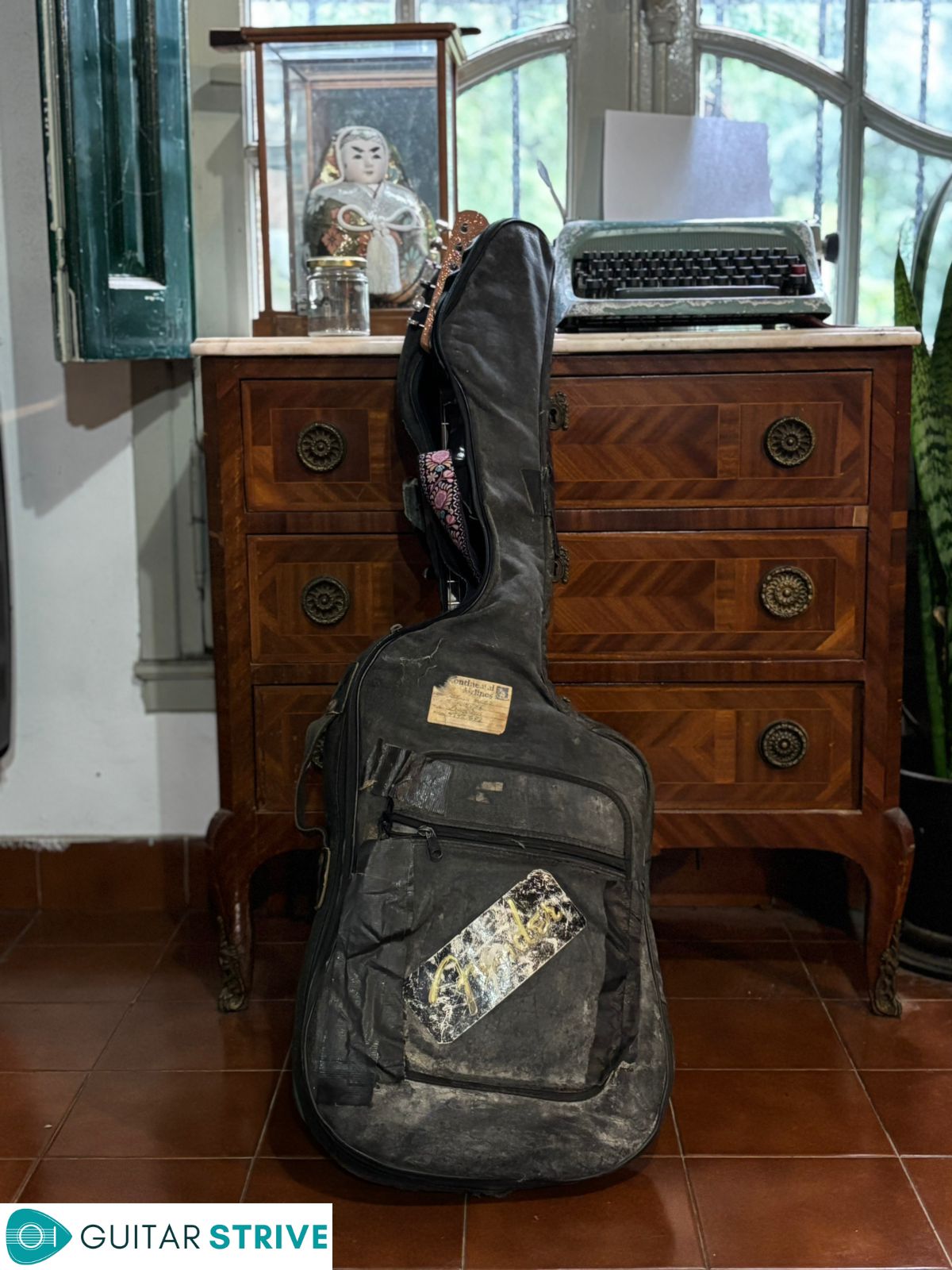
We already agreed that you can’t save on the cans because they’ll be your ears. You can’t save on the brains of the operation either, but that’s a given, too. What most people overlook is the importance of carrying everything around. Yes, you guessed it! You need a good backpack. If it has dedicated zippers and padded spaces, it’s better. Oh, and I recommend buying something that can fly under the radar. Nothing too flashy, so it won’t draw attention.
Limitations Can Be Creative
At home, I have many guitars, pedals, basses, synths, microphones, and a comfortable home studio. Yet, I find reducing it all to the minimum gives me a creative push; I must be more creative to overcome the lack of gear.
Instead of focusing on what you lack, pay attention to what you can do with what you have. You’ll amaze yourself with how far you can stretch your imagination.
The Road is Tough on Stuff
Things break. On the road, they break faster. Yes, you should consider this as a byproduct of the nomad lifestyle; it’s hard on things. You’ll wear more sneakers and clothes out, too. So, bring an extra for each cable. Believe me, finding a good USB cable is more difficult in a little town in Nicaragua or Cambodia than it is at home. The same goes for regular 1/4” cables and XLR cables. They will eventually break.
Be Ready for the Unexpected
My final piece of advice is one that I learned the hardest way. Preparing for the unexpected means always being ready to change plans. You see, plans are made by humans, but the road is almighty and will tear them apart.
Let me give you an example. I was in Rishikesh, hanging out and learning yoga in an ashram. Two guys showed up and started jamming. A guitar and a sitar. I ran to the room, got the camera, and recorded the thing with the condensers.
Music became our universal language, and we ended up making an Asian-flavored trip hop mix and playing together until dawn. It was just a fun project, we never did anything with it, and I never saw them again, but it wouldn’t have happened if I wasn’t ready for plans to change.
Always, always be ready, or you’ll miss the spark.
The Bottom-End
Making music on the road is the best way to stay inspired and meet musicians from all over the world. It was my icebreaker, my bridge over troubled waters, and my universal language.
These were the essentials that kept me going for months at a time. Now, I share this knowledge with you. Use it wisely and show the world your true colors.
Happy (traveling and) music making!
