

This is something I’ve been thinking about for a long time. I own and regularly gig with a ’68 SG Jr. (my article on it) and a ’66 Mustang (my article on it). They obviously sound amazing through anything you plug them into.
The thing is, I know I’m taking a big investment on the road, and half the time the PA is so cheap people can’t tell the difference between them and a brand-new version of the same guitar.
Yet, my hands and ears can tell that difference and life’s too short not to love every second of playing live. So, I refuse to keep them at home and miss the chance to hear them in all their glory every night.
With time, I developed a road-tested method to keep them safe and sound throughout every tour, and I want to share those strategies with you.
Here we go!
Table of Contents
Transportation & On-Stage Safety
Let’s draw an imaginary line here because there’s a big difference between the care I have for the SG and for the Mustang. Yes, you know why: Gibson necks tend to snap, and maple-made Fender necks take the hardships of the road better.

I always recall the ’67 Monterrey Pop Festival in which Jimi smashes the Strat against the stage, the body breaks, but the neck stays in one piece. That eases my nervous system; there’s no way I’m snapping the headstock off the Mustang.

The bad news is that my SG did break, and it was all my fault. I don’t want to share the story with you because I wouldn’t want to transfer my own trauma to your imagination, but it wasn’t nice. It was a dreadful experience I wouldn’t wish for anyone.
So, after that happened, I made two decisions:
- If I’m going far, the SG is going in a case – This might seem like a no-brainer, but when the SG broke, it was in a gig bag. Don’t get me wrong, a tough, heavy case is a burden, I know. Yet, it’s the only thing that will stop such a delicate neck from snapping. Furthermore, I add padding under the headstock (maybe it’s just my OCB). You can also get something in between, like a MONO bag with their headstock lock technology.
- I won’t use any stand that won’t grab it by the neck – I own several guitar stands that work by keeping the guitar steady from the bottom. Those won’t help when the other band’s roadie turns around and accidentally knocks it off. You can’t say “I’m sorry” after dropping a ‘60s SG, right? Well, with a neck-grabbing stand, it will swing but won’t fall. I like the Hercules. They’re bulky, but worth the hassle.
Regular Maintenance
Let me clear something out here before starting. I perform regular maintenance on all my guitars when I’m not on the road, but what I’m about to share with you is something time has taught me about vintage instruments specifically. These tips will not only keep your instrument in top playing condition, but they will also help extend their lifespan.
Fresh Strings & Clean Hands Are Key
Our hands carry a lot of stuff. In a recent article, Time Magazine reported that cellphones are 10 times dirtier than toilet seats. Well, those same hands go on your guitar. That’s a lot of ugly stuff to pile up on the fretboard, neck, frets, and electronics for decades. This is especially true for guitars like the Mustang with all the sliding switches.
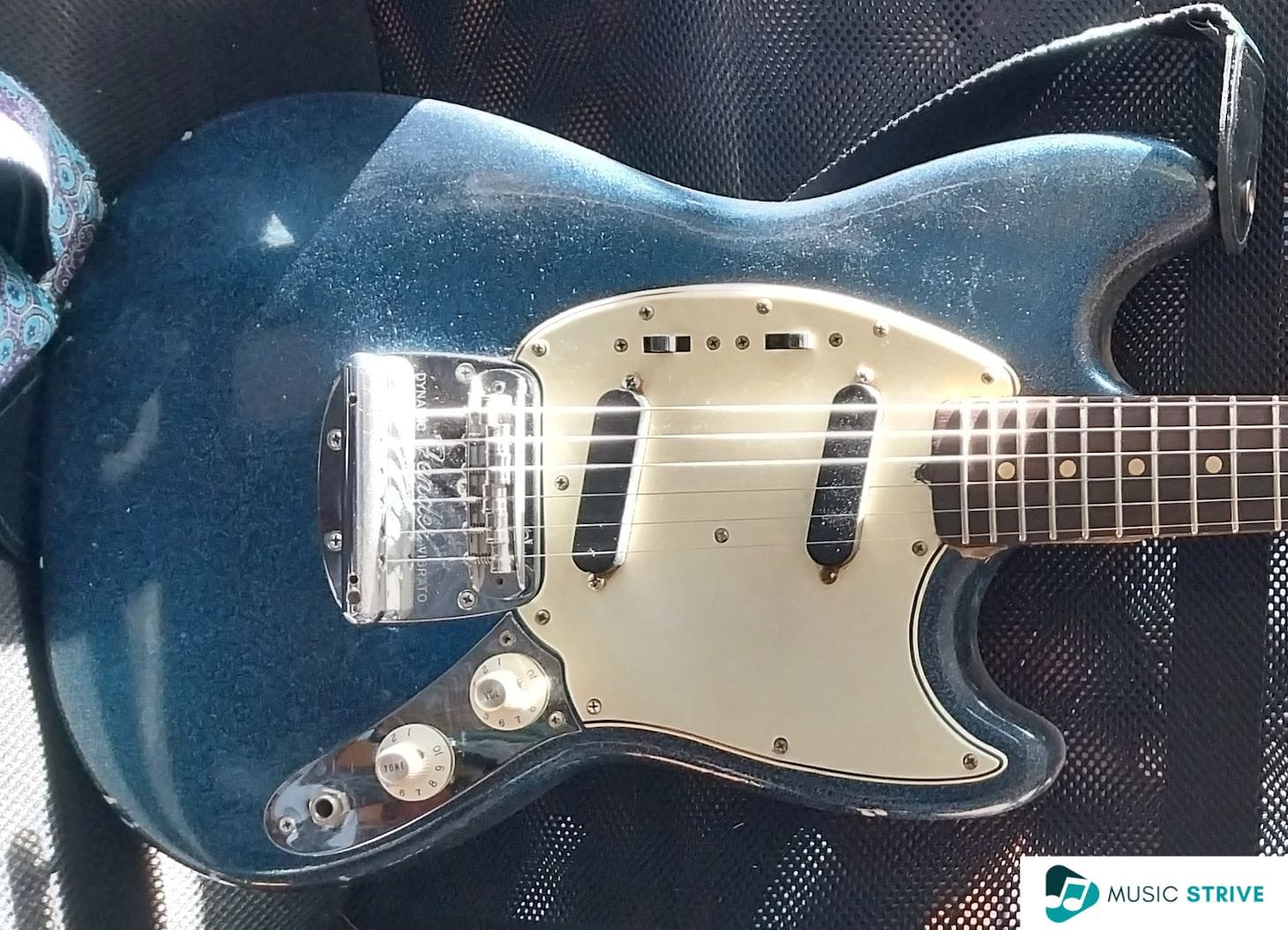
So, wash your hands before playing and keep the strings always fresh. They will extend fret life and prevent the fretboard from getting clogged up with dirt, grime, bacteria, fat, dead skin, and… well, the list could go on forever.
Check Neck Relief & String Gauge
Let me start with a brief anecdote. I don’t know if you’ve ever played a short-scale guitar such as a Mustang (24”). It feels as if the guitar needs more tension, especially for a Fender. So, I put .011s on mine to fix that.

But I never addressed the neck relief on it. It started feeling funky, so I took it to a random shop in a random city, and the technician had to put it in a press to straighten the neck.
I was lucky; it was close to being irreversible.
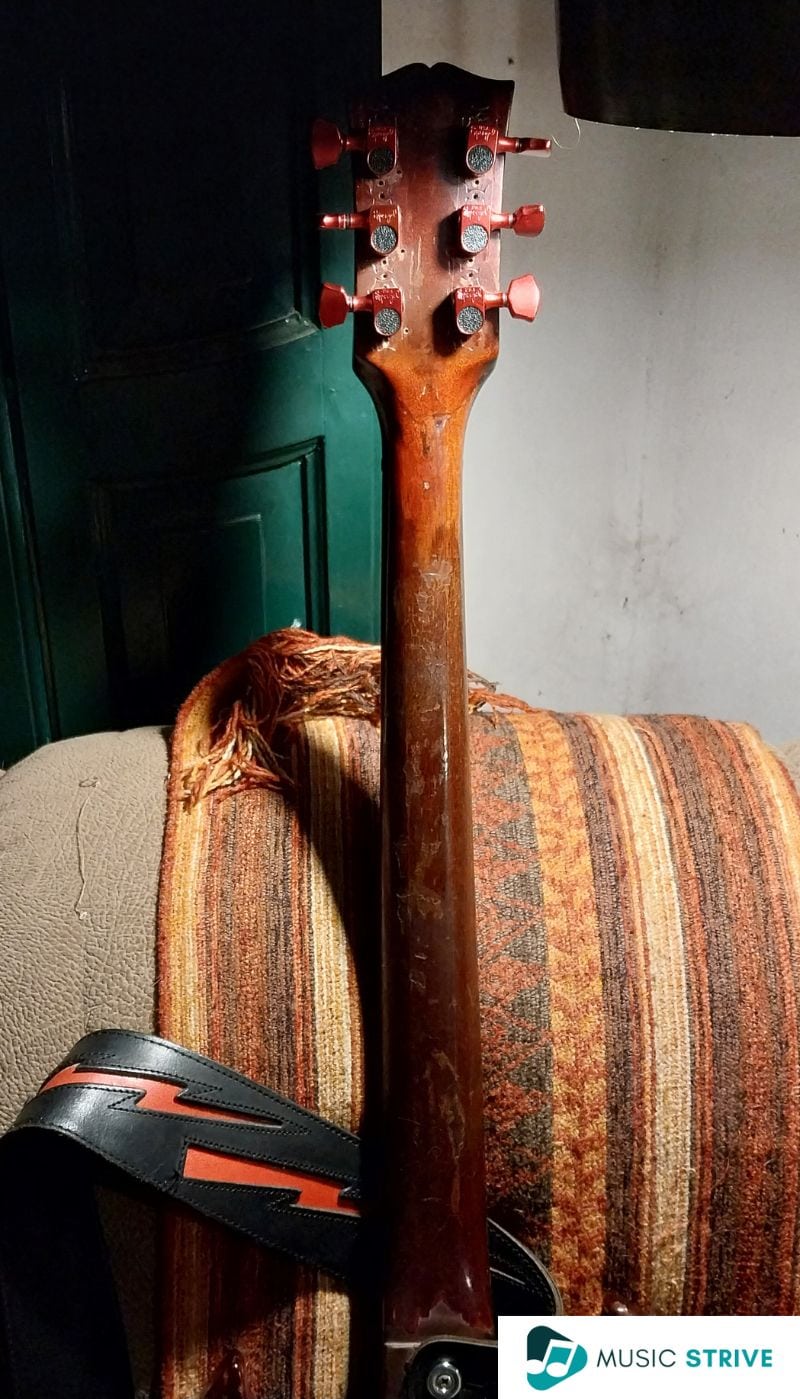
As for the SG, things are more dramatic. Maple is way harder than mahogany, so you risk your vintage instrument even more seriously. Oh, and one more thing about Gibsons, especially old ones: Never leave them without strings and with the truss rod engaged. Once the neck becomes twisted, it’s very hard (if possible at all) to bring it back without breaking it. Believe me, I’ve seen it with my own eyes. They will never be fully in tune again.
(Don’t Get in a) Rusty Cage
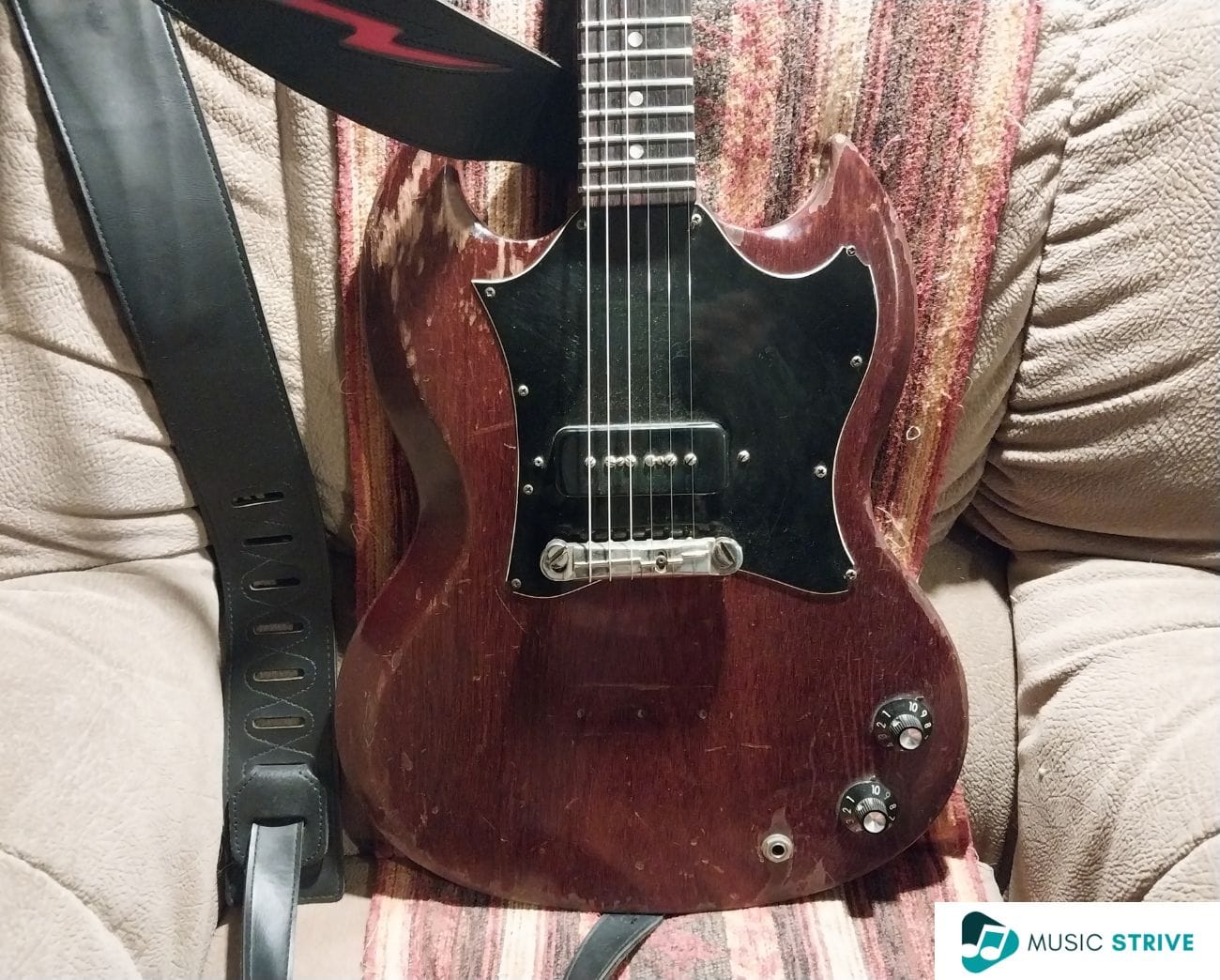
Sweat is hard on metals. I know, the relic’d guitars big companies sell add rusty bits here and there to make it look cooler. Yet, a guitar like my SG with exposed springs on the pickups can suffer greatly from my own sweat.
For that, I have two rules:
- I keep a towel in the case and wipe off sweat after the show – This is something I always do like a programmed robot; it’s like brushing my teeth in the morning. It saves electronics and hardware from getting rusty.
- I remove and clean every metal piece after a tour – Well, it’s not me who does it, but a technician. This needs to happen, at least once a year, or even more often if you gig a lot. You can’t get to some corners with your towel, so a deep clean is a must to keep accessories pristine and working.
Oh, and it really helps resale value. If you need to change the bridge on your guitar, it will drastically lower its price.
Picks & Straps
I don’t want to be obvious, but these are two of the most neglected items in every guitarist’s head. When dealing with vintage guitars, though, you need to have some extra care in every gig.
First, vintage guitars are finished with nitrocellulose paint. This isn’t hard and sturdy, thick polyurethane on modern, affordable guitars. Picking too hard will remove the finish. I know, it looks cool and elevates the mojo factor. That said, it can also lower the instrument’s price. What do I do about it? I use nylon medium picks so that they won’t be as hard on the finish.
Secondly, strap choice is very important for a couple of reasons.
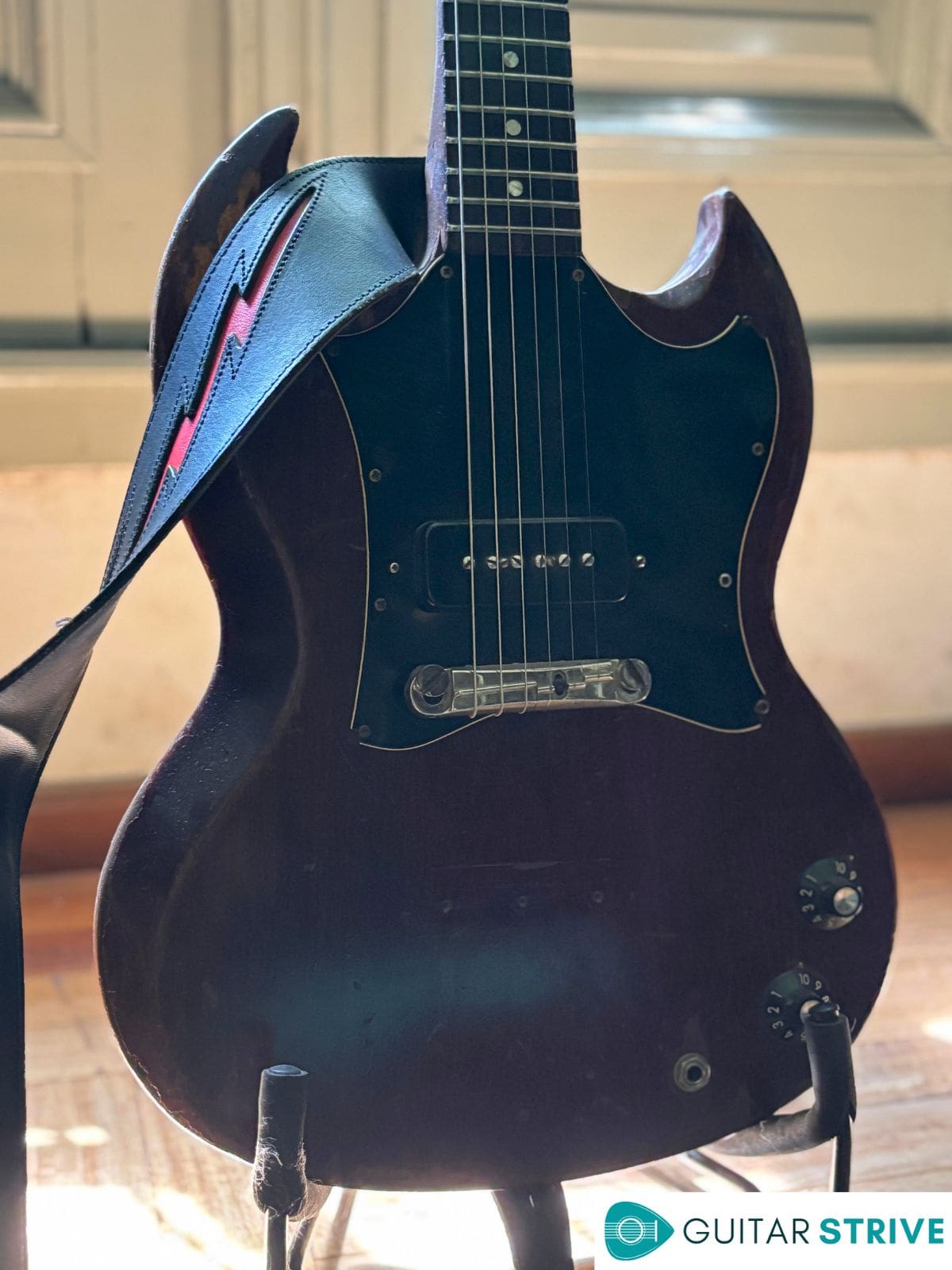
On one hand, it needs to be trustworthy enough to let your guitar hang from it for an entire show. I always check it, stretching it with both hands to check that the leather, cotton, or nylon isn’t too old or worn out.
On the other hand, some straps (and stands) might have negative reactions on your guitar’s nitro finish (yep, those are delicate!). So, if you buy a new strap on the road, which is likely to happen, check regularly to make sure there are no odd effects on the guitar’s paint around the pins.
My First Golden Rule: Safe Storage
I never let my guitars out of sight unless they’re stored behind a lock. Yes, it’s not uncommon to catch me talking to people in the audience, holding a two-guitar case, trying not to look too odd. I’ve mastered the arts of chatting-and-holding, holding-and-eating, and holding-and-drinking.
If you’re playing out, never leave your vintage guitars out of sight. That’s my numero uno golden rule I’ll never break.
Oh, and don’t take them to the car parked outside, a window is easily breakable.
My Plan B
If I’m playing at a sketchy place that I know is not going to be safe, I go for plan B: backup guitars.
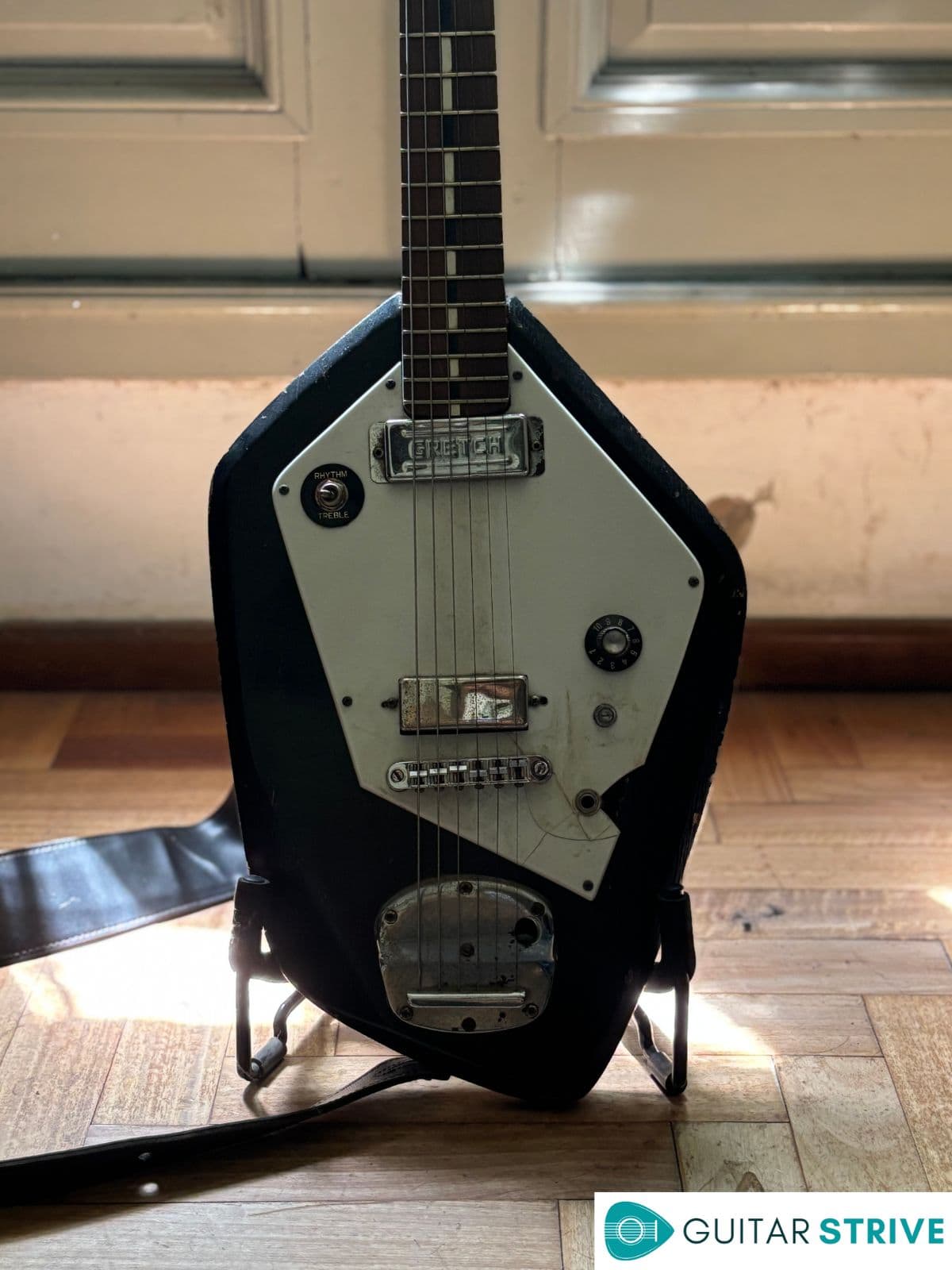
My SG Jr. gets replaced by an old Gretsch copy with a misspelt name on the headstock and one of the oddest shapes and finishes I’ve ever seen. I just installed a DiMarzio minihumbucker in the bridge position (amazing pickup), and it’s all I need to make it rip. Yes, it’s not as amazing as the SG, but it gets the job done.
My Mustang is replaced by another Mustang (made by a friend) with a couple of Rio Grande pickups. The bridge is a Rio Grande Muy Grande, and the neck is a Tall Boy. It’s got a 3-way switch and gets the job done, too.

Having plan-B guitars, especially on the road, can be a lifesaver.
The Bottom End
I love my vintage guitars; they sound like nothing else. The depth and weight to each note are just not there elsewhere, even in Custom Shop instruments.
But in the end, that’s what they are: instruments designed to make music.
So, I try not to be too precious and play them as much as I can. After all, it’s a privilege not everybody has.

If you’re in that situation too, don’t miss the opportunity to enjoy them live. Just follow these tips and let them shine. They’ve been doing exactly that for six decades, in my case, long before I was born.
Happy playing!
