
12 years ago, I had just lost my job, and I had some money from the layoff, so I decided to buy some recording equipment to make the best use of my time while I looked for another job. It turned out to be a healthy parenthesis in my young life, and it led me to record my entire first record in my tiny one-bedroom apartment.
Well, I don’t have to tell you how many hours I spent on it. Basically, it was a time supernova, and it sucked me in entirely. On the other hand, I was learning as I went, so it ended up being the best possible school for me as well as my debut.
Over ten years have gone by since that moment, but I still feel the same when I hit record. This is how I got good acoustic tones out of high hopes and thin air.
Table of Contents
Why this is the Greatest Time in History to be a Musician
Before we begin, let me get this out of the way. There has never been a better time to be a musician than right now. This is especially true if you have some songwriting sensibility. It has never been easier to record yourself at home with a minimal budget. Entire records wouldn’t exist if this technology weren’t available.
So, no excuses. Read on, learn, and apply. We need to hear the music you have to make.
Tips for Recording Acoustic Guitars in Small Spaces (Like My Apartment)
Back in 2013, when I made this record, I didn’t have many of the fancy guitars I have now. I didn’t have the Martin or the Baby Taylor (read my travel experiences with it). I had this cheap Ibanez acoustic-electric, and I had to make it sound like a million-dollar instrument.
I had the sound in my head, but the challenge was to get it down to track.
These are the things that have worked for me so far.
Microphone Selection
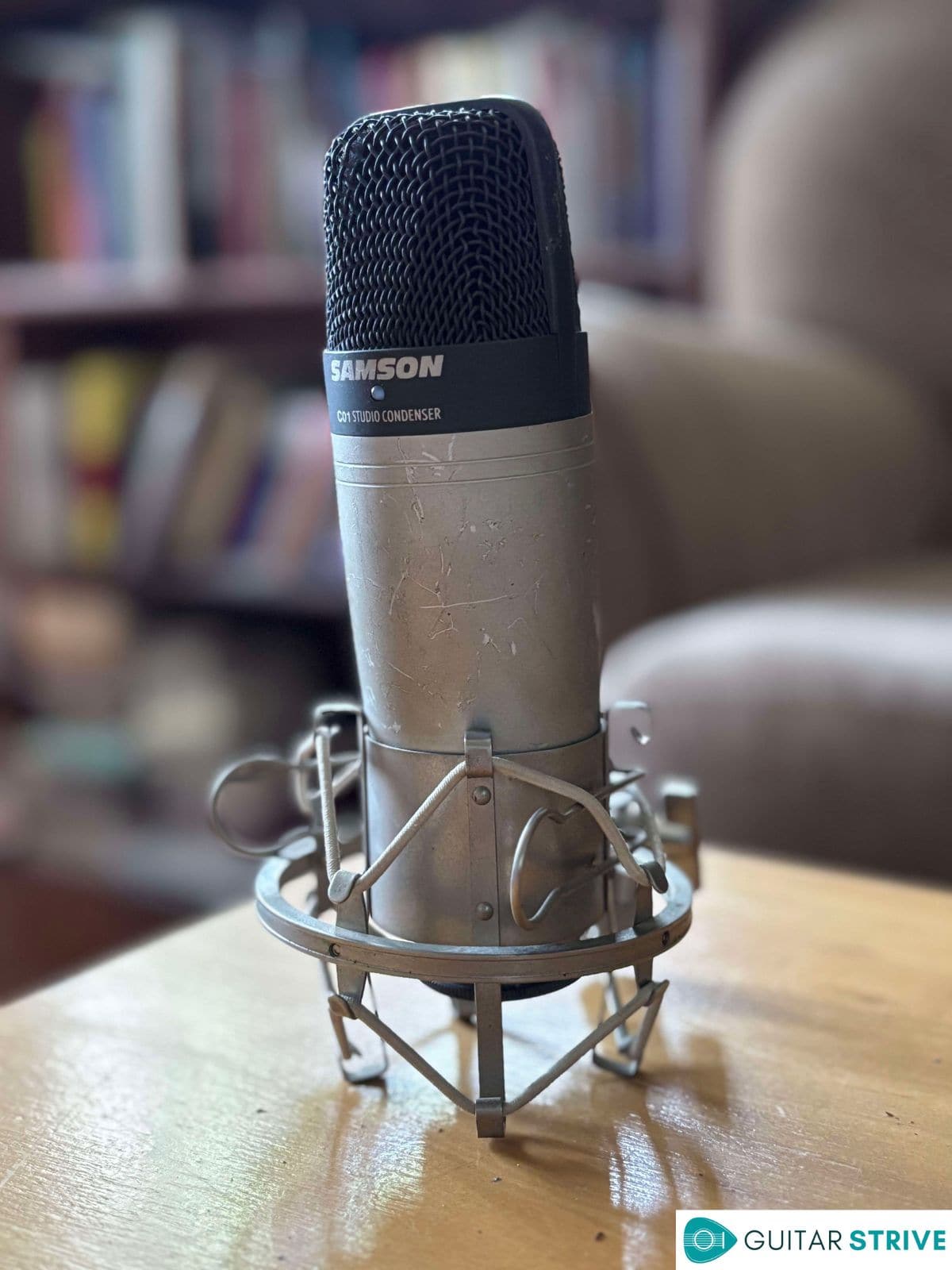
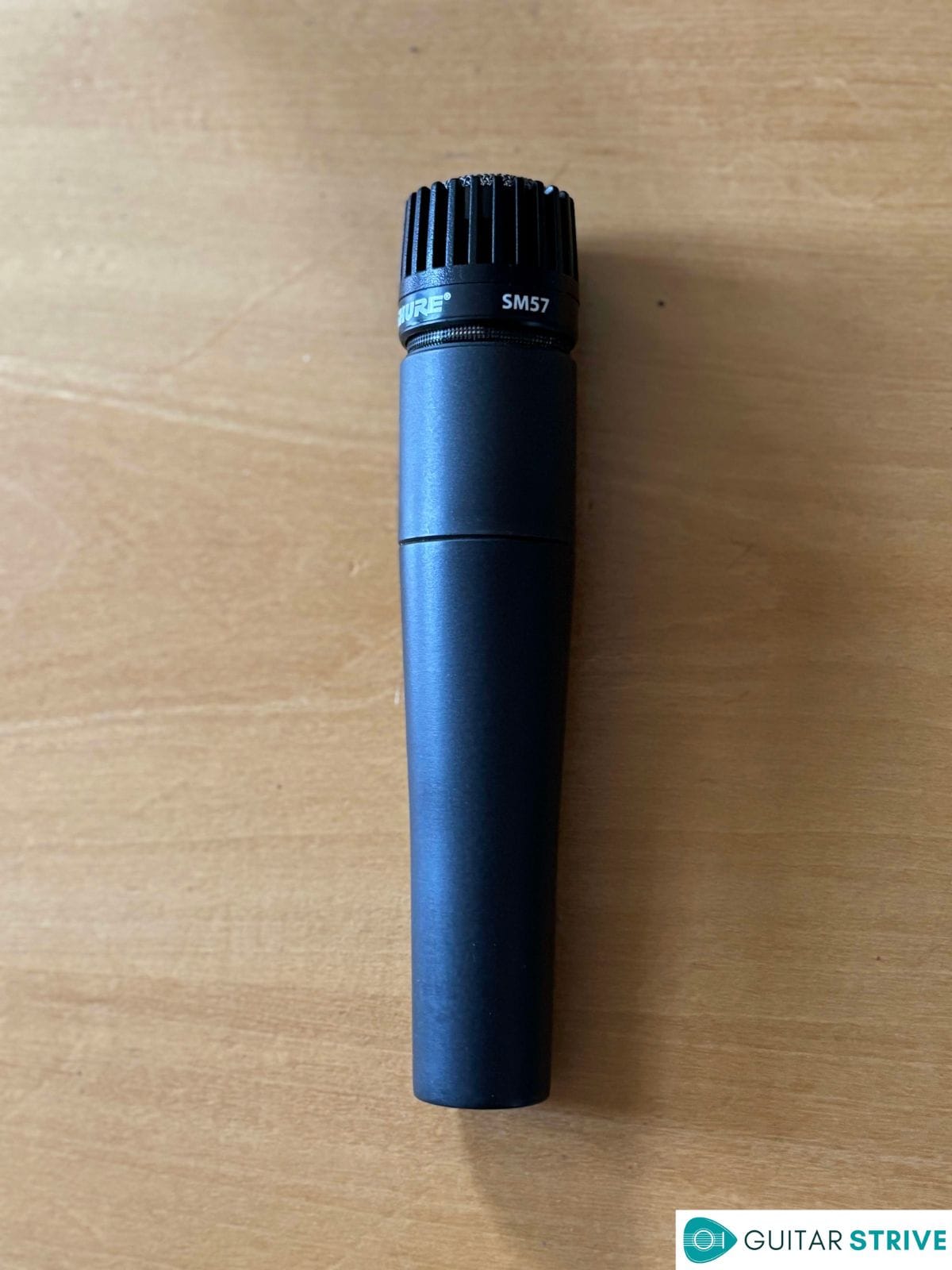
The first thing to do is choose your microphone. If you’re starting out, like I was back then, you might just have a big diaphragm condenser (I had a cheap Samson C-01) and a nice dynamic (I had the almighty Shure SM57, a guitarist’s best friend).
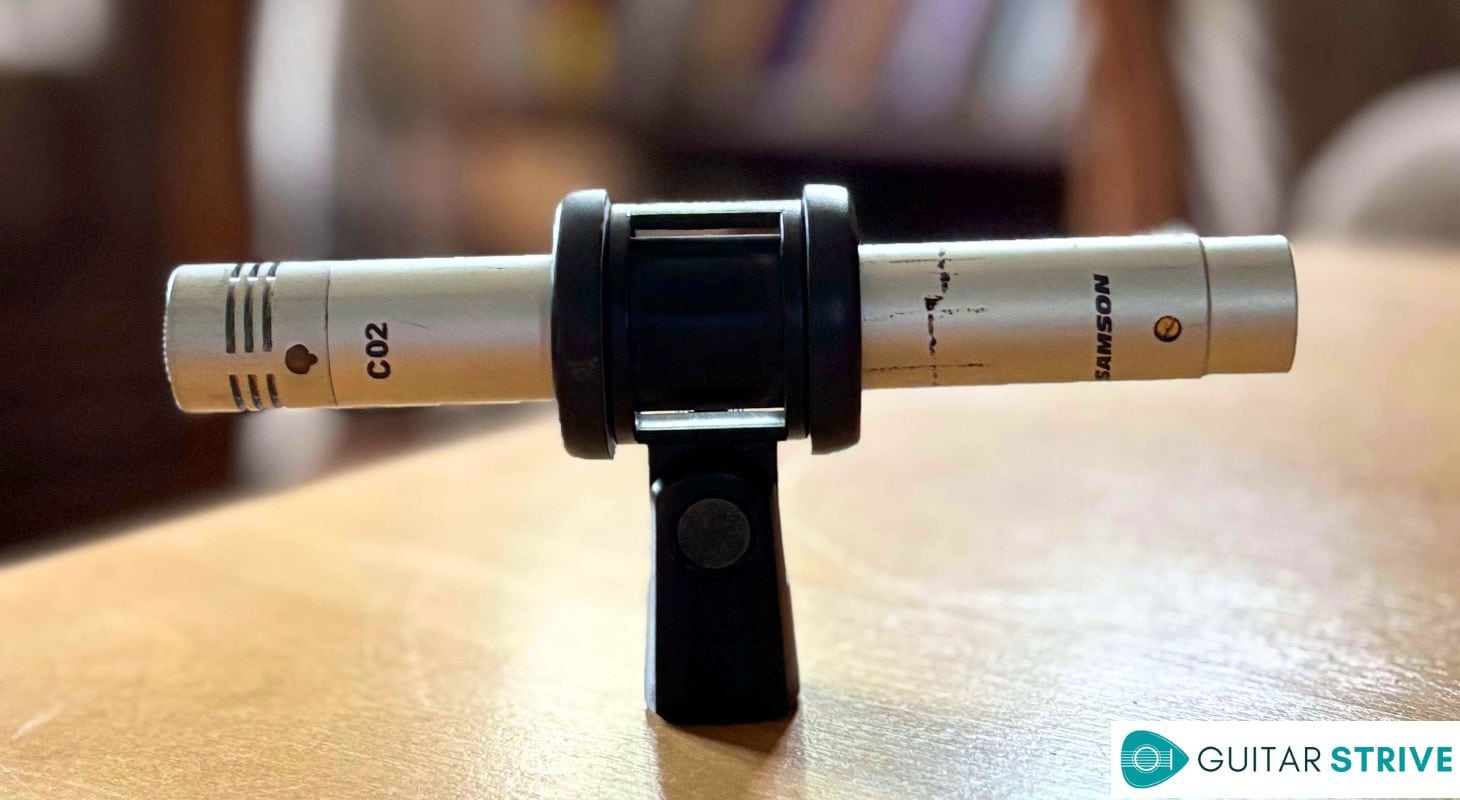
Well, to be honest, I also had a C-02, which is a small diaphragm condenser.
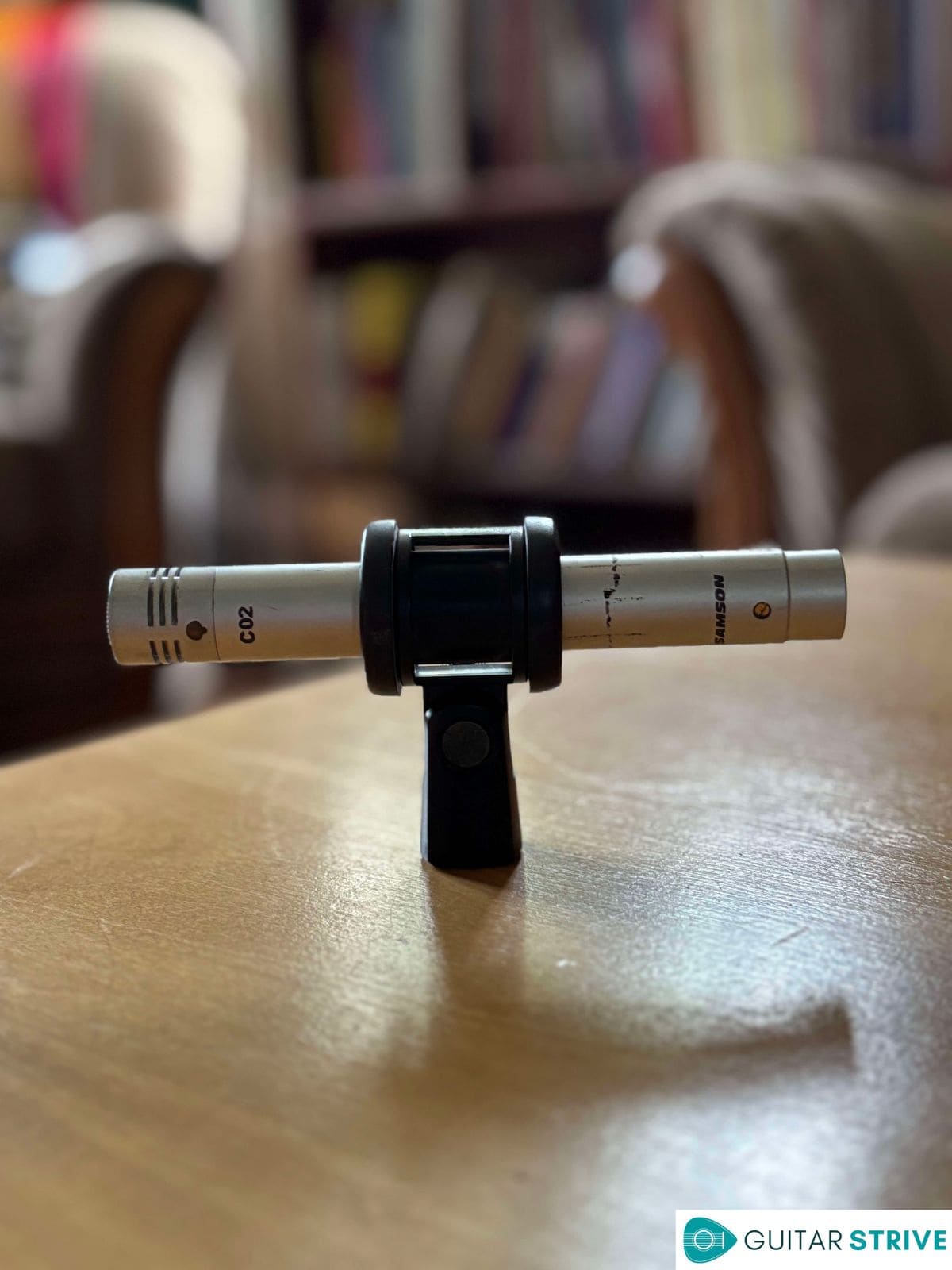
So, for mellow, fingerpicked, arpeggiated, or easy strumming, I’d use the condensers. They will pick up the small nuances and those beautiful string-to-finger noises. Some of that natural warmth will go in, too.
If you’re going to be hitting the guitar hard, as in strumming, I would go for the dynamic. You won’t get as much of the natural dexterity and full complexity of your guitar, but it’s very good for noise-cancellation, and, if you experiment enough, you can easily find the guitar’s sweet spot and get great tones.
This is the solution to deal with the volume difference when recording. It’s never ideal to push the volume up too much in the DAW afterwards; you’ll also boost noise levels.
Microphone Placement
There’s so much information about this online that it’s just defeating. To be honest, by the third tutorial, I gave up. They were all saying different things! So, I did it the old way: experimenting.
Here are three great ways to record the acoustic in a small space.
- The big diaphragm condenser is the perfect microphone to place at two to four feet from the guitar and capture it in all its glory. That is, of course, with low noise from the outside. Your annoying neighbor shouting will ruin every take. This is cool if the guitar sits in the middle of the mix. It might be too much for details or textures.
- The small diaphragm or the big diaphragm condensers will also do a great job when aimed at the 12th fret or where the body meets the neck at about 11 to 12” (30cm.) of the guitar. This is perfect for capturing the best of both worlds, but it tends to be more on the higher-mids side. Great for textures with little bottom-end.
PRO TIP: If you do the same as above but with the microphone aiming at frets 5 to 7, you’ll get a much more metallic, trebly sound. It’s great for a dense mix. You’ll hear the acoustic is there somewhere, embellishing the song, but it doesn’t take up any real space.
- Using your SM57 can be a double-sided knife. You must be very careful with boominess if you’re too close to the sound hole. You can move it on a horizontal axis from the neck to the bottom until you find the guitar’s sweet spot. Remember, dynamic microphones have less gain, so make sure it’s a loud, strumming part, or that you can get your microphone close enough to avoid adding gain afterward and push the noise floor forward as well.
The Double-Tracking Trick
This is a technique that works wonders with any 2-input sound interface. I had my trusty old Fast Track back then.
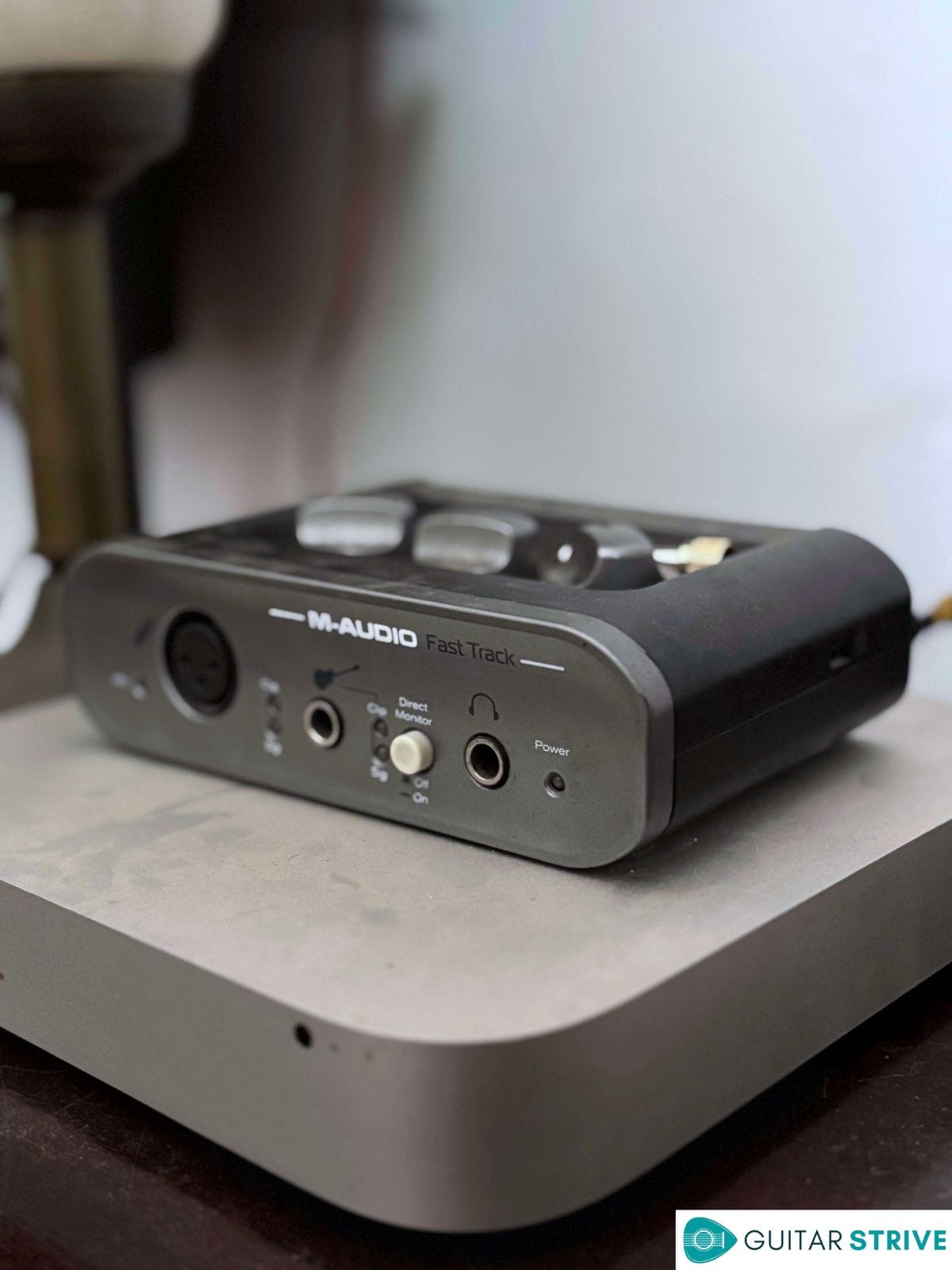
I would plug in the guitar to use the piezo pickup and add the 57 to the second input and record both at the same time.
You can dial in how much low-end you want precisely by adding or removing the 57 from the final mix, while the piezo gives you the high-end and definition you need.
Is a Good Pickup Enough?
Time went by, and I got my first all-mahogany Martin, trading that Ibanez, money, pedals, and a little of my soul in for it.

I was scared the piezo pickup would ruin its glorious sounds, so I installed one of those that has a goose-neck condenser inside.
I’m telling you, it works wonders live, and it adds some of that woody flavor to the mix. That said, there’s nothing even close to recording your acoustic guitar with a microphone. The air and sweetness of the resulting tone are completely absent from the Fishman. That’s for recording music, though. In a live scenario, it’s a beast.
So, my answer is no, it’s not enough, mic that thing up!
Environmental Noise? Do This
The first problem I encountered when I hit record and listened back was the overwhelming, building noise. I mean, between the soap opera playing and the laughing, the whole thing was pandemonium.
I wasn’t going to let that stop me, was I? Of course not.
I got creative, that’s what I did. I put two chairs on each side of my couch and extended a thick blanket between the back of the couch and the chairs. I found that the empty space inside stopped the noise and gave me a drier room to play in.
It can also be a rack with your clothes hanging, or anything else that can reduce noise.
Other than that, try recording during silent hours. I used to get my best takes late at night and close to midday, when everyone was at work.
Bad Acoustics? Do This
Another thing that will surely happen to you is that the reflections on the walls will come back in an unmusical way and sound weird in the take. Well, I take it you’re not going to put acoustic panels in your living room, just like I didn’t.
What can you do? As a rule of thumb, you should avoid direct reflections of the sound, so I would sit with my back 50cm from the wall and with the other three walls in front of me. That way, projection came back to me as uniformly as possible.
Also, if you happen to have a wardrobe that you can fit inside, use it as your dry room. Move away those colorful jackets of yours and get in there. It will not only kill reflections but also help you find that lost shirt you’ve been looking for forever.
The Bottom-End: Venturing into the Unknown, The Solo Record Dream
When I started recording the first tune, I realized right away that making music to then record it was a path I needed to follow. I was alone in my apartment for days at a time. Just obsessed with getting these songs out. Minutes turned into hours, and hours into days.
I did so many takes and experimented so much that, by the time I was done, I had recorded the same part fifty times. What I’m trying to say is that you shouldn’t fear making a record at home. It’s the best way to learn by doing, even more so if those are your songs.
The world needs more sincere artists willing to pour their hearts into music, so we want to hear what you have to say.
Go on, make that record, it’ll be a great experience.
Happy (acoustic guitar) recording!
