

Playing a single-pickup guitar is a one-way ticket to rock and roll. Furthermore, if that guitar has a P-90 or a mini humbucker, you’re talking about instant, effortless rocking tones at your fingertips.
These instruments’ simplicity and no-nonsense approach to tone allowed them to carve a niche of their own. Musical Mount Olympus has a specific spot for these guitars, and believe me, it’s well deserved.
I’m lucky enough to own and play a ’68 Gibson SG Jr. regularly. That was my entry door to one-pickup guitars, but since then they’ve become very popular. Yes, the good news is that they’re all over the music stores now. Reissues and new iterations are flooding the market.
Who knows, maybe this was the info you needed to find the one you can take home.
Table of Contents
One-Pickup Guitars
One-Pickup guitars were there to witness the beginning of the electric guitar. The famous Rickenbacker frying pan, the very first electric guitar ever made, had a single pickup (and it weighed a ton!).
Then came the Cadillac-sized, heavily ornamented jazz guitars with a P-90 in the neck position. These were enough to propel guitarists like Charlie Christian to stardom but aren’t rock and roll material.
Finally, something not many people know is that Fender’s Esquire model pre-dates the Telecaster with a single pickup in the bridge position.
It was Fender’s first solid-body electric guitar, and it made its debut in 1950. Before that, Fender had been making pedal steels with single pickups to moderate success.
Gibson joined the game with the Les Paul Jr. in 1954. This was the traditional single-cut version. A double-cut version and the Epiphone Coronet would join in 1958.
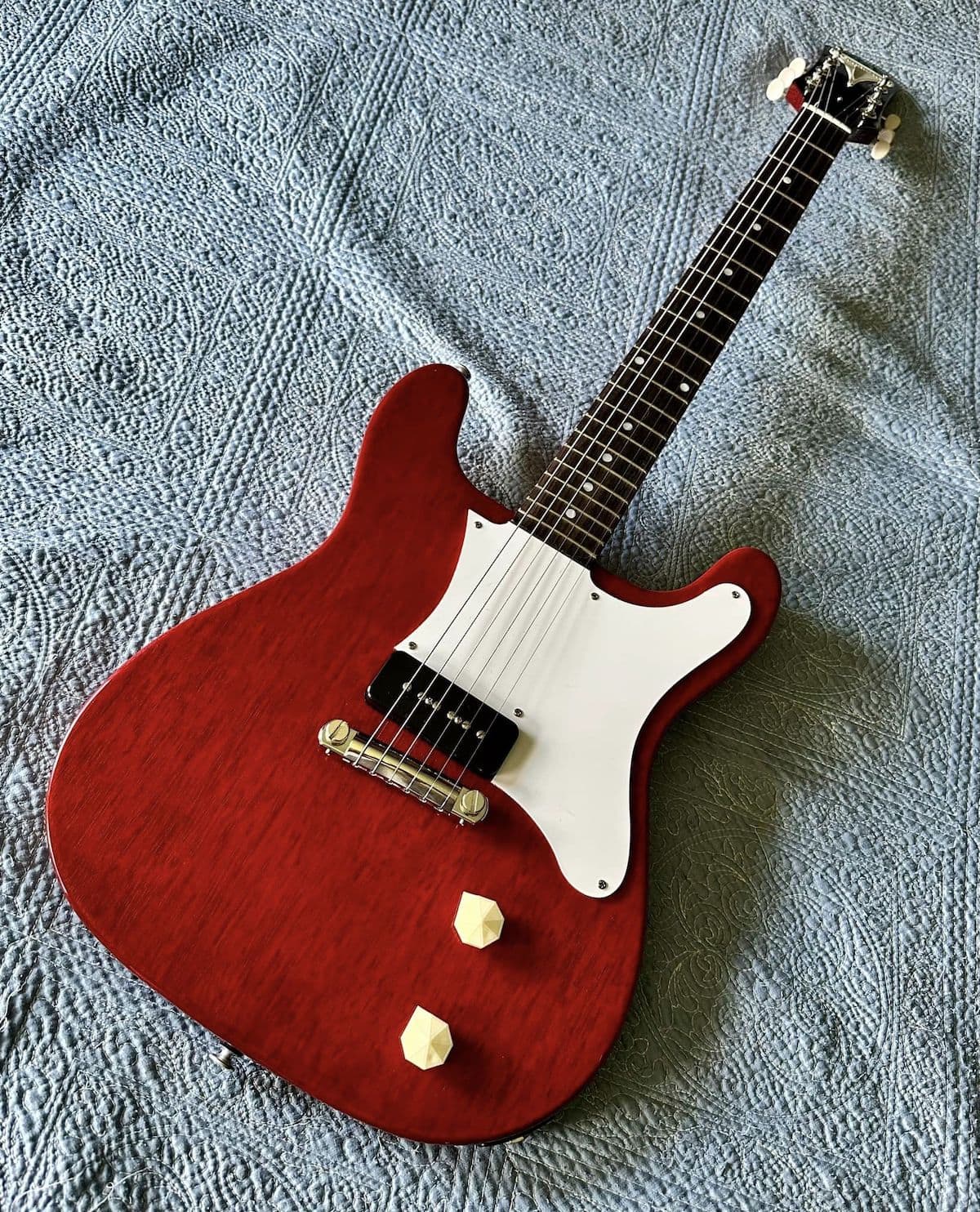
By 1961, the Gibson SG Jr. was released.
Nowadays, and after Van Halen did the Frankenstein experiment, you can also find many metal-oriented axes with just a bridge pickup and a volume knob. You can check out all the currently available single-humbucker guitars here, and all single-single coil or single-P90 guitars here.
I’ve owned a single-pickup guitar for close to a decade and I play it very often both live and in the studio. It’s an amazing guitar, but it’s more than just that.
Let me tell you all about it.
My ‘68 Gibson SG Junior
I was working in a music store when a guy with gray hair and dressed like a rockstar walked in with two guitar cases. One of them was the cardboard brown old Gibson case and the other was an ‘80s Gibson chainsaw case.
He was a friend of my boss’s and was leaving the guitars to be sold. He looked me in the eye and said: “Just like Townshend!” and threw the vintage SG Jr. at least 10 feet up in the air and caught it again.
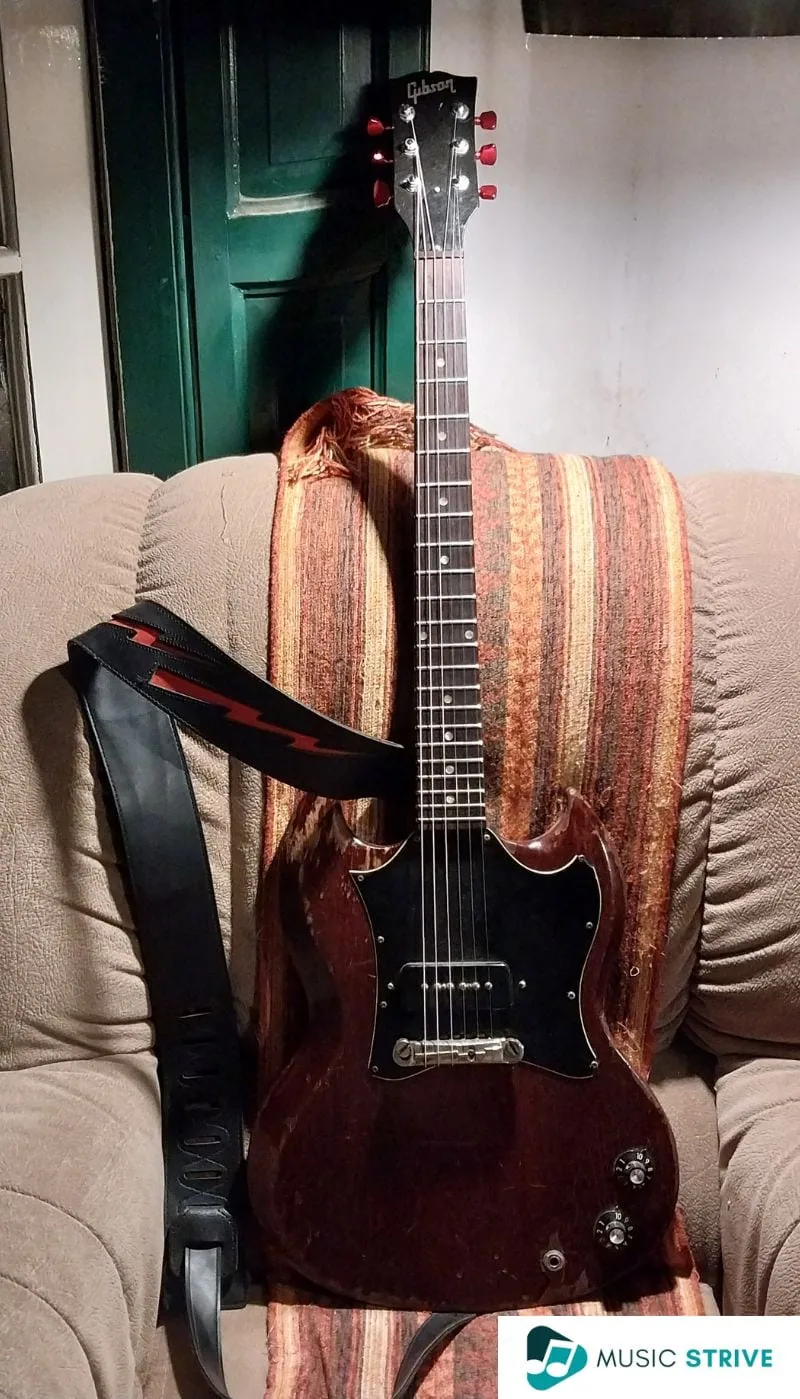
I disregarded the guitar entirely. I was into Telecasters and humbuckers back then. Nevertheless, I ended up buying it because it had been through hell and had a big baseball bat neck none of our clients really liked. That made its price tag quite affordable for a ‘60s Gibson. Plus, I got an employee discount.
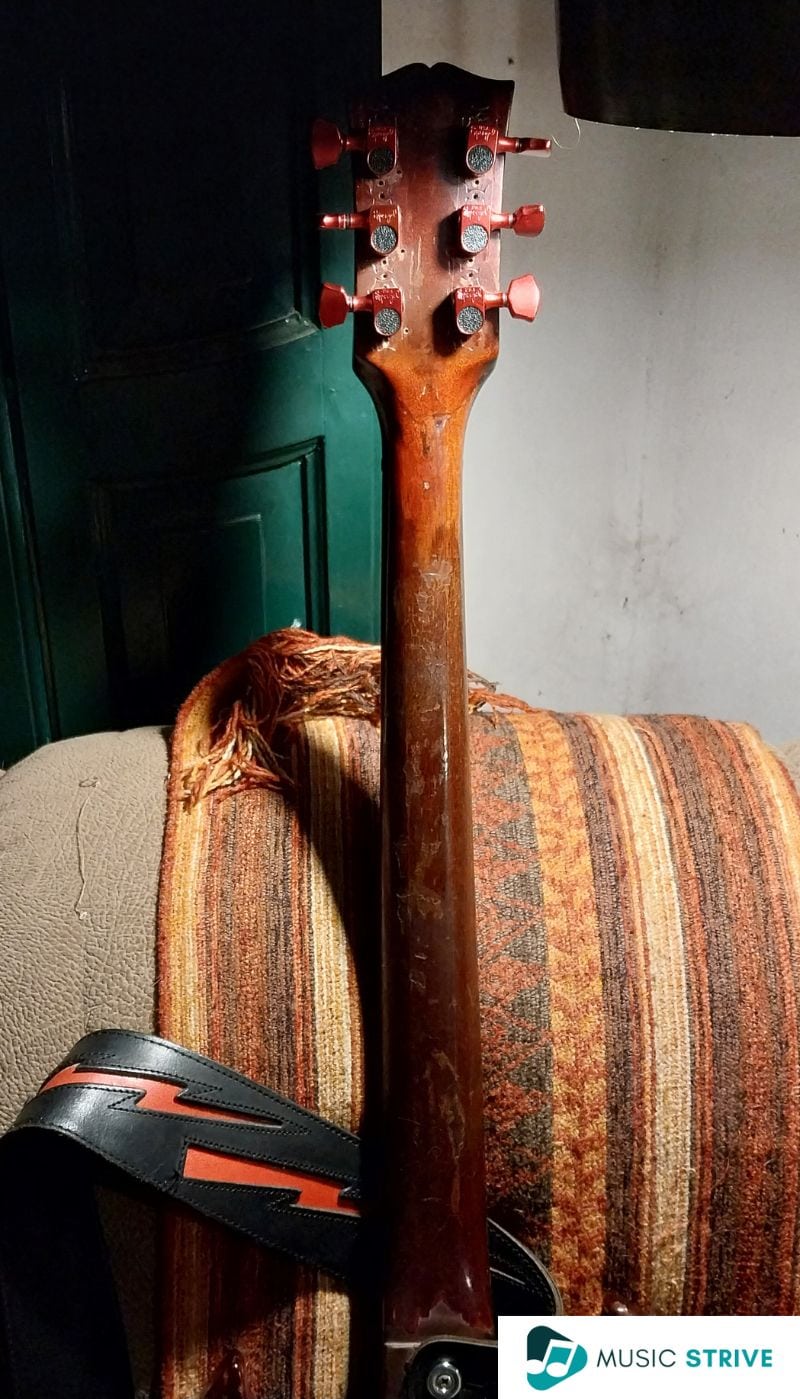
I had The P-90 Experience. Less than a week later, I was completely sold.
Moreover, there are so many sounds hidden with just the combination of the pickup and the volume and tone knobs that I’ve used that guitar in the most unexpected scenarios.
Read on, let me tell you all about it.
How Does It Sound Live?

My SG Jr. is not just a neck turner because it’s a beautiful guitar, it’s also a great-sounding instrument.
Let me begin by talking about the pickup. The P-90 is not a single-coil pickup on steroids as some people say. On the contrary, Fender-style single-coils and P-90s aren’t built using the same principles. Fender uses six alnico magnets wrapped in copper wire. The P-90, on the contrary, features steel poles touching a massive magnet underneath.
This difference gives the P-90 an edge that most people call “bite”. The bite comes from the mid frequencies. You feel that the guitar not only drives the amp and the pedalboard with generous gain and sustain but also cuts through the mix like a single-coil pickup.
To my ears what you get is that low-end behind a nice edge that’s sharp enough for the mix but always stays in a Gibson-friendly territory frequency-wise.
Therefore, when I plug it into my pedalboard and put it through the Tube Screamer and a distortion pedal, I get this razor-sharp, fat, chunky killer sound.
Furthermore, since it’s not a humbucker-equipped guitar, it takes fuzzes great too. You never feel it’s too much, on the contrary, it adds some of that edge to the mountain of gain fuzzes offer.
Perhaps what I wouldn’t recommend this guitar for is super-clean neo-soul or pop because it’s too midrangey and bitey. That fierce, rock-and-roll-friendly tone will drive anything into overdrive just with the dynamics of your right hand.
Although I guess you could clean up everything enough to play those styles as well, to get those tones out of this guitar is like killing its spirit in a way.
Likewise, I wouldn’t recommend it to play heavy metal or thrash because the P-90 is a single-coil pickup with the 60-cycle hum. Feedback might be an issue.
That said, let me tell you a couple of secrets about an SG Jr. in the studio.
How About Studio Work?
One trick I’ve done a million times with the SG Jr. and the Telecaster is to double guitar parts with them. I would throw all the sauce on the SG Jr. amp. This means it would go through overdrives, distortions, effects, and such.
That into any Plexi-style, JCM800, or Bassman-style amp (or software) is what I call la crème de la crème. The tone is grainy, fierce, and instantly rocking.
If you double that with a Telecaster and a Deluxe Reverb but hide it behind the SG, you have rocking riffs that are perfectly clear and have a great “open” sound.
But beyond the traditional SG Jr. rocking tone, I’ve done some great recordings using the tone knob of the guitar in zero. That sound can be awesome with fuzz for a strange, dark, menacing part or riff.
If you keep the tone knob in zero but turn off the gain stages and lower the volume knob of the guitar, you’ll find this beautiful, articulate dark tone that’s great for jazz, clean ornaments, and fast chord changes.
Likewise, working with a maxed amp and the volume knob on the SG Jr. allows you to get at least three or four sweet spots out of most valve amps. You have the pushed clean, the mild overdrive, the riffing sound, and the solo tones.
That’s something you can achieve in a studio situation where you can take your time to work the knob’s position perfectly. One small tip about it, don’t even try it while sitting close to the amp, 60-cycle hum will kill you. Try recording from the control room.
But let me give you a couple more tips this last decade with this one-pickup beast has taught me.
Some Useful Tones and Tips I’ve Learned This Decade
I had a really fun time finding creative ways to overcome the options shortage with the SG Jr. these last ten years. So, beyond the tips above for specific tones, these are some general tips for the SG Jr. and any other one-pickup guitar.
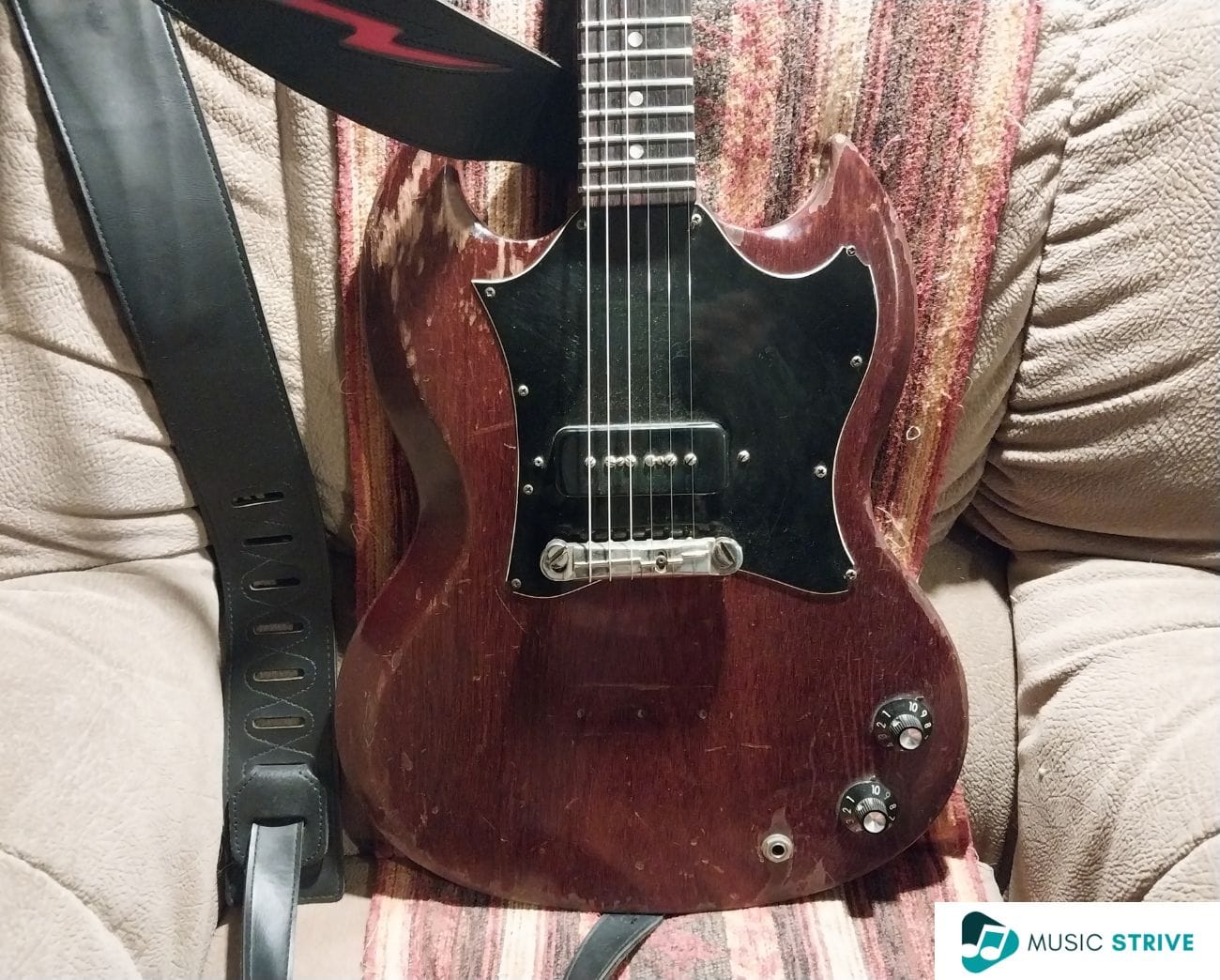
The Volume Knob, It’s All in the Volume Knob
This is something I love doing in a live scenario. I have two Tube Screamers, a distortion, and a fuzz on my pedalboard. Coupling that with the SG, I have 5 gain stages.
The first one is the guitar’s control volume, a territory unknown to me before this guitar. I would just change pickups or turn off pedals, but the way the SG retains the high end when you lower the volume is exceptional. That was a limitation that pushed me to be creative.
Moreover, if the venue has good, clean power, you can leave everything on and then clean up your tone with the volume knob. That way you can have the compression, weight, and thickness of the pedals with the natural chime of the guitar.
Then, by the chorus or the solo moment, you can max the volume pot and unleash hell.
The same happens when trying to play clean, the darkness of the mahogany adds something to the mix that an alder/ash strat or tele can’t. You can then max the volume knob and go into that beautiful, drenched-in-delay solo section.
Wait, There’s a Tone Knob?
The tone knob is, perhaps, the most overlooked control in the history of guitars. Most of us don’t use it at all. Perhaps, a little tweak here and there on an exceptional occasion, but most of us play with it on 10 98% of the time.
Well, the lack of a neck pickup forced me to use it. The thing is that the mahogany-made body and neck of the SG are very much blues material, but the bright top end of the bridge position might get in the way.
I play a lot with the tone control of the guitar midway (between 5 and 6) and get a nice, dark, slightly overdriven, punchy tone that’s great for playing the blues. Also, with the tone control below 3, what you get is a muffled sound that can do a fine jazz tone and, coupled with gain, a creamy distortion that’s solo-friendly.
Finally, and this is something that took me a long time to learn, you can do a nice wah-wah effect by just turning the tone knob. It sounds cool but there’s a learning curve to it, just like learning to do volume-knob swells.
The One-Pickup Guitar Magnetic-Pull Myth
A very common myth around guitar players is that a single-pickup guitar sounds better.
A guitar’s pickup is a magnetic field. Whenever the strings move, they disturb the field and create an electric current. That current is then translated into sound by the speaker. So, even if you’re not playing through that pickup, it’s still creating the same magnetic field and affecting the strings.
Some people say that this kills sustain because the strings are slowed down by the magnetic field the other pickups generate.
You’ll find a lot of material about this online, here’s a video with an experiment for you to judge it with your own ears.
In my opinion, though, the difference is very minimal if any. I would say that buying a one-pickup guitar can offer you a plethora of other benefits described here that go way beyond the subtle difference in string pull and tone.
Recent One-Pickup Models
Let me share with you some of the affordable and not-so-affordable single-pickup guitars that have recently hit the market by some of the biggest brands out there. I’m leaving out metal-oriented axes, but you’ll find many of those too by brands like Jackson, Schecter, Charvel, and such.
Epiphone Firebird
Sporting all the magic that made the original 1963 Firebird I an outrageous guitar, this single-pickup Epiphone is nothing short of a bomb.
The Epiphone remake uses the same neck-through construction mixing walnut and okoume (Gaboon mahogany) and adding two solid okoume wings. But that’s not all, you also get the cool banjo tuners, a Gibson USA Firebird pickup, Switchcraft Jack, Mallory cap, and CTS pots.
Finally, this one-pickup glory comes in a hardshell case in 5 different colors.
Epiphone Jared James Nichols Les Paul
Seeing Jared James Nichols play live is the closest you can get to a close encounter with a force of nature. He plays raw, uncompromising, heartfelt rock and roll with such power and sensitivity for melody it’s just incendiary.
Well, he’s got two Epiphone signature models (Gold Glory and Blues Power), both featuring a single P-90 dogear pickup in the bridge position and an ebony fingerboard.
These are the perfect guitars to play all kinds of rock and some cleaner stuff working the tone and volume knobs as you read above.
Epiphone Coronet
The Epiphone Coronet comes in two versions. It’s one of Brit rock’s unsung heroes that has wowed crowds in the hands of bands like The Libertines and, more recently, the Arctic Monkeys.
The Coronet is a P-90-fueled rock machine with just two knobs and a pickup. The entire thing is made of mahogany and the fretboard in the case of the Asian-made version is laurel while the USA version is proper rosewood.
The Asian version is a great entryway for those who want to try a single-pickup guitar. For those who want a little more, the USA version is a great instrument at a price that’s still affordable.
Epiphone Les Paul Jr. Billy Joe
As the frontman of punk legends Green Day, Billy Joe has been an advocate for the no-frills approach to tone since day one. His guitar is among the most affordable on this list and is a great instrument, a Les Paul Jr. in all its glory.
Fueled by a single P-90, made entirely of mahogany, and with an Indian laurel fretboard, it has all you need to play any and all your Green Day favorites and much more.
The big difference with the Jared James Nichols signature is the high-end because the ebony fingerboard and the maple top of Jared’s guitar add those frequencies, absent from the all-mahogany slab Billy Joe’s model is.
Fender Stratocaster
No list of single-pickup guitars could be complete without a Stratocaster. Well, Tom DeLonge, the guitarist and singer in punk legends Blink-182 plays this single-humbucker guitar that’s been in and out of Fender’s catalog twice (the number of times he was in and out of Blink).
The combination of the single Seymour Duncan Invader with the alder body, maple neck, and slab rosewood fretboard makes this a pureblood rocker. Also, the hardtail bridge maximizes resonance and adds sustain to the tone.
Finally, the single volume knob might make this a more reduced option than the guitars described above. That said, it’s a wild modern beast when unleashed.
Fender Starcaster
The collaboration between Tom DeLonge and Fender didn’t end with the Stratocaster. The company and the artist also revamped one of Fender’s most overlooked guitars, the semi-hollow Starcaster.
The company released this guitar with a single medium-output Seymour Duncan USA ceramic humbucker pickup in the bridge. This laminated maple, lightweight guitar with its rosewood fretboard and roasted maple neck is a joy to play and, thanks to the pastel colors it’s available in, a neck-turning guitar too.
Fender Esquire
Finally, last but not least, the one that started it all for solid-body one-pickup electric guitars, the Fender Esquire. The only model currently available by Fender outside the Custom Shop is the Brad Paisley signature guitar.
This country icon and legend has made arenas and stadiums around the globe weep, sing, dance, sing, and jump while holding an Esquire. Yet, his guitar is not technically a one-pickup guitar because they hid (yes, literally hid) a neck pickup underneath the pickguard.
If you check on the video below, you’ll hear the man himself talk about the raw power and uninterrupted wild vibration an Esquire is capable of creating.
The Bottom End
I wasn’t a believer until I tried one myself. Since I did, I can’t stop gravitating toward this kind of guitar, I even modded an old Vox Phantom sixties copy to have a single mini humbucker in the bridge position.
Believe me, after ten years of having my SG Jr. I’m totally sold, so much so that I’m writing this love letter to all one-pickup guitars out there and recommending you to get started on that path.
They do the rocking thing unbelievably well, but they also hide a wide array of sounds that are easily obtainable by just tweaking knobs and being creative.
Go out there, try one, and join the club of one-pickup guitar lovers, we’re waiting for you with arms wide open.
Happy (one-pickup) playing!
