
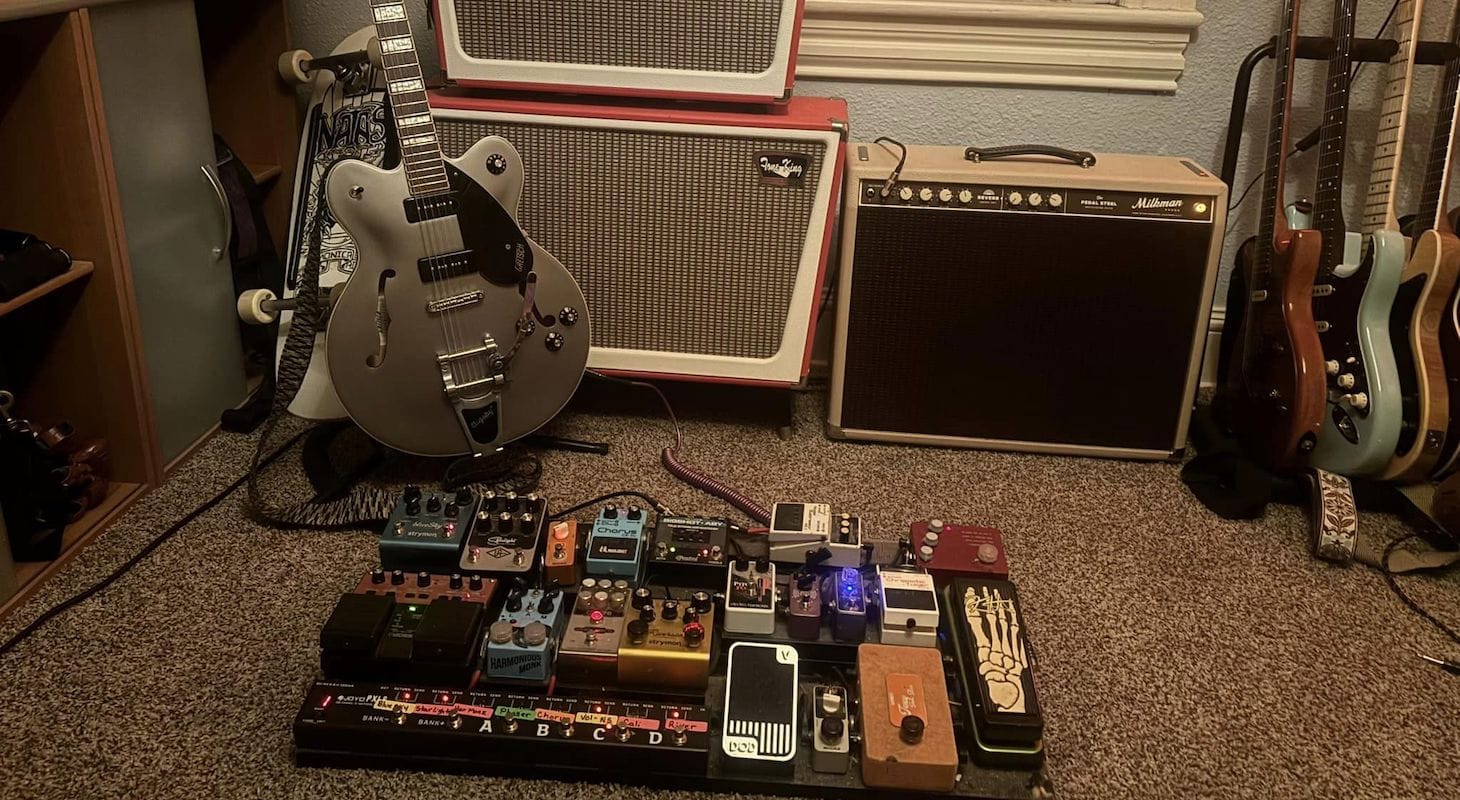
You have two amps that you love equally, but having to switch between them is a bit of a chore. Or maybe you have two Marshalls that you want to combine to really blow the roof off of the venues.
How do you connect one guitar to two amps at the same time? Simple! By tone stacking them! But how exactly does tone stacking work? How do you split your guitar signal between two amps?
Methods for Splitting a Guitar Signal
Fortunately, there are a few different ways you can go about splitting your guitar’s signal into two amps. Each method has its pros and cons, so the one you choose to use will depend on what you want to do and how much you are willing to spend.
Daisy-chaining
The first method is also the cheapest and easiest. It involves simply connecting your two amps with a standard instrument cable, or daisy-chaining.
To do this, you’ll need at least one amp with two or more inputs. This amp will be the one that you connect your guitar to. Simply plug the guitar into the first input on the amp, then connect the second input to the first input on the second amp.
The signal chain should then be: guitar – amp 1 first input – amp 1 second input – amp 2 first input. The guitar’s signal will then go through the first amp and into the second.
There are a few big downsides to this method. The obvious downside is that both amps will be used at the same time and you won’t be able to switch between using one or both.
The second downside is that the amps will likely be out of phase. This means that the amps will cancel each other out resulting in the overall sound of both amps being slightly weaker. You can resolve this by simply reversing the speaker cables on one of the amps, putting the amps back into phase.
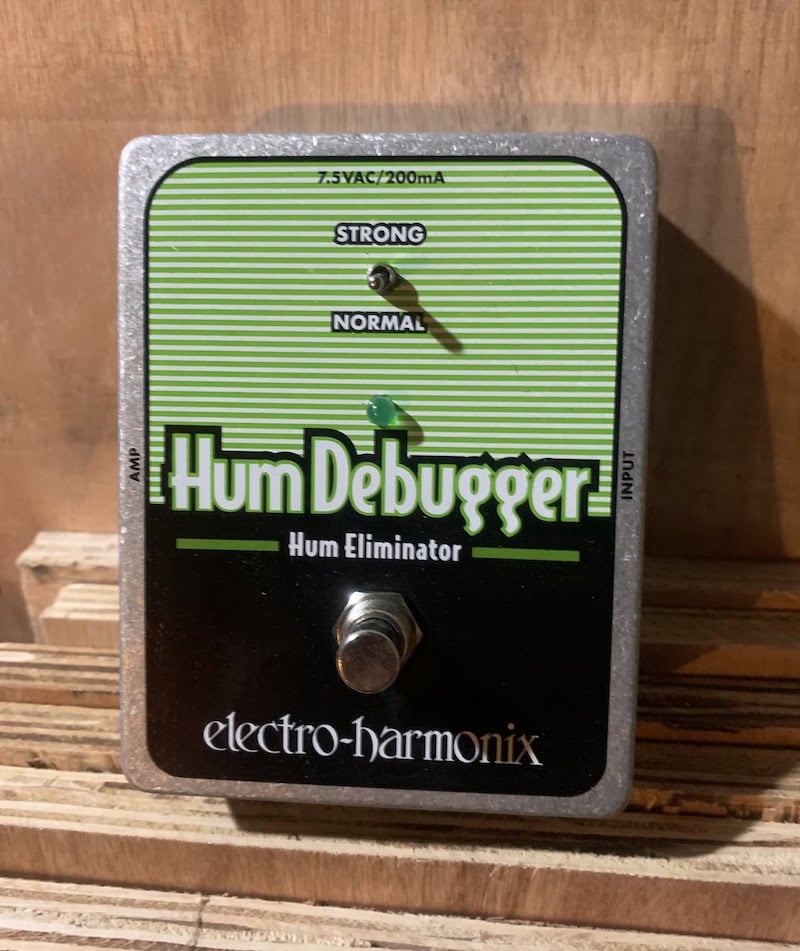
There might also be increased hum and noise coming from the amps due to grounding issues. Amps with ground lift switches are much better suited for daisy-chaining or try using a noise-reducing pedal like the Electro-Harmonix Hum Debugger.
Effects Pedals
Another method is to split the signal using an effects pedal. This is fairly simple and a common method used by many guitarists.
To split the signal with this method, all you really need is an effects pedal that has stereo outputs. Something like the Electro-Harmonix Nano POG is a good example.
An Ideal Effects Pedal!
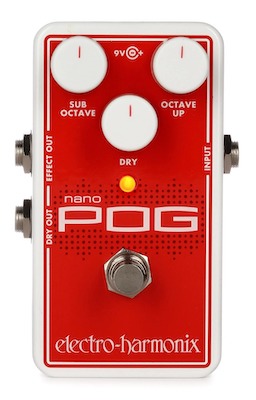
It's quite easy to use this pedal to split your guitar signal. Simply connect your guitar to the pedal’s input, then connect each amp to either of the outputs. The pedal will then act as a splitter.
Just keep in mind that once you turn the pedal on, the amp connected to the effect output of the pedal will then have that effect applied to it. This method is great for thickening up your sound since the signal from the dry channel will still be present once the pedal is activated.
A/B/Y Splitters
The last method, and perhaps the best method, is to use an A/B/Y splitter. These allow you to switch between amps or use both simultaneously.
The setup is essentially the same as using an effects pedal. Simply connect your guitar to the input on the splitter and then connect the amps to the outputs. Alternatively, you can also put your entire effects chain before the splitter if you are using pedals.
There are a few things to keep in mind when using a splitter. Firstly, make sure the one you are using is buffered. A buffered splitter helps to preserve sound quality, especially over longer cables.
Secondly, use an active splitter instead of a passive one. Passive splitters weaken the signal strength of your guitar, effectively halving it. Active splitters maintain the signal strength but do tend to color the tone a bit.
That is where having a buffered splitter comes in handy as well. A dedicated splitter like the Orange Amp Detonator is a perfect one to use as it is both active and buffered.
My Favorite A/B/Y Splitter
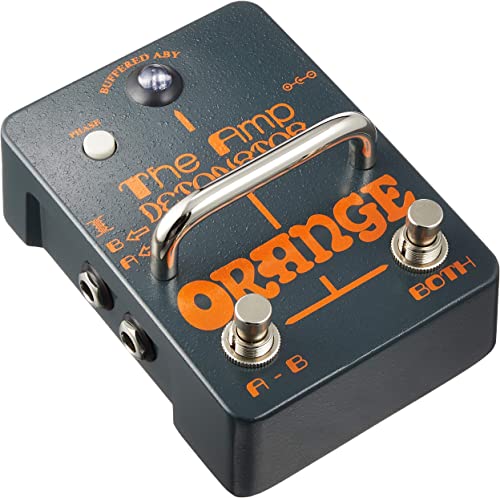
This is an extremely capable active A/B/Y switcher pedal with a noise-free output. Switching between amps is also seamless without any additional noise. Quiet and compact!
Direct Boxes (DIs)
One of my favorite ways to achieve the best possible split mirror image signal is by using a good direct box. One of my favorites is the Avalon U5, an active direct box.
Firstly, it features classy circuitry and a fantastic hi-z input for your guitar, which already improves the signal just by plugging in. It also includes a preamp with a nice 30 dB boost and a hi-cut filter button.
My Favorite DI Box
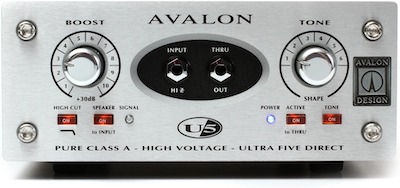
The magic happens when you utilize the through quarter inch output, which allows the exact unboosted and uncolored signal to be sent to a secondary amp source.
I personally have two of these, and they work incredibly well not only for splitting a signal between two amps but also for sending an incredibly clean signal to your effect pedals before going into the secondary amp.
It is crucial for the split signal to be as clean and noise-free as possible.
Mixers
Another trick that I learned while working on an experimental cinematic rock album was using a summing mixer to split a guitar tone among different amps and effects.
For this particular session, I used an SSL SiX Analog Mixer. If you haven't tried one of these, you're in for a very pleasant experience.
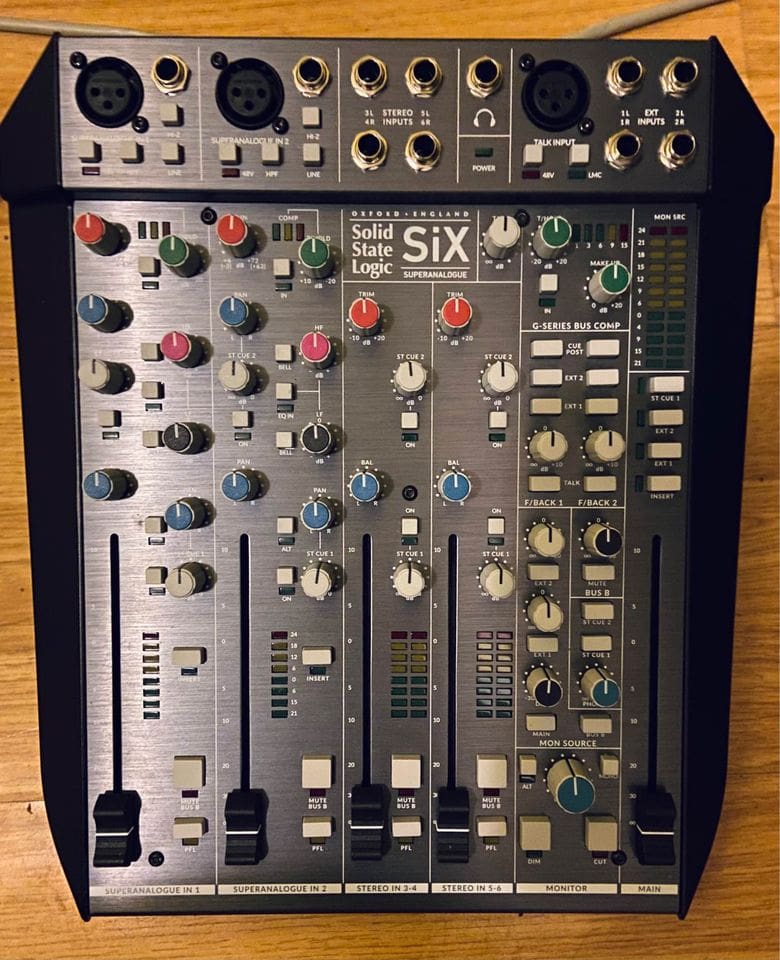
There's a big difference between a guitar tone with common split cables and using neutral-sounding boxes to split an enhanced, harmonically richer, and beautifully EQ'd signal.
What's cool about using a mixer to split a guitar is that you can choose to either use some of the EQ and gain on the console or simply send out a clean signal and apply effects in return.
There's a good argument to do it both ways. Sometimes, you want both amps to work their magic without starting with a very harmonically rich signal. It might be overkill to send an already slightly driven or dirty signal to two amps, especially if they distort heavily.
Another cool thing about using an analog mixer like the Six is that you can send a compressed signal to one amp and a clean signal to another, getting two very different tones.
Another trick I like is to use the send and returns on a mixer to bring in a slight bit of slap delay or maybe even reverb from a space echo or an old vintage pedal, and then split the signal with a bit of the effect's return.
This is cool because the amps react differently to a dry signal versus a wet signal, and you can achieve some very interesting tones this way.
Final Word
If you have ever wanted or wondered how to split your guitar’s signal between amps, these five methods are easy and effective. You’ll be switching between your favorite amps or jamming the heaviest sounding riffs in no time.
If you enjoy experimental guitar music and using effect loops, these methods will provide new ways to enhance your guitar sound.
Hearing your guitar through two different amps simultaneously can be enlightening. Often, you might not realize how distinct they sound, and one might be a better choice even if you don't end up using both in the final mix.
This technique also offers a way to control your distortion level if you want to keep one amp clean and the other dirtier. In production and mixing, having options is key.
As the legendary guitarist Carlos Santana once said, "You know what's better than using a guitar amp? Using two!"

Great article.
so, I have 2 Peavey Studio Pro 112 amps. I use up to 5 effects pedals through the FX loop at any given time. I purchased an AB/y switch and am hoping I could use one amp in a strictly traditional paring; Guitar-Volume-wah-distortion and the full complement of looped pedals through second amp. Is this possible? Any loss of tone or signal?
much obliged
I have multiple pedals with two outputs: a dry and a wet. How to I connect all of the dry outs to one amp? Is there a device I can connect all of the dry outs to and then run one out from it to the second amp? I already have all of the wet outs going to the first amp because all of the pedals are in the same chain.
I hope this makes sense.
I don’t see why would need to do this. I would just run the dry amp from the dry output of the first pedal in your chain.