
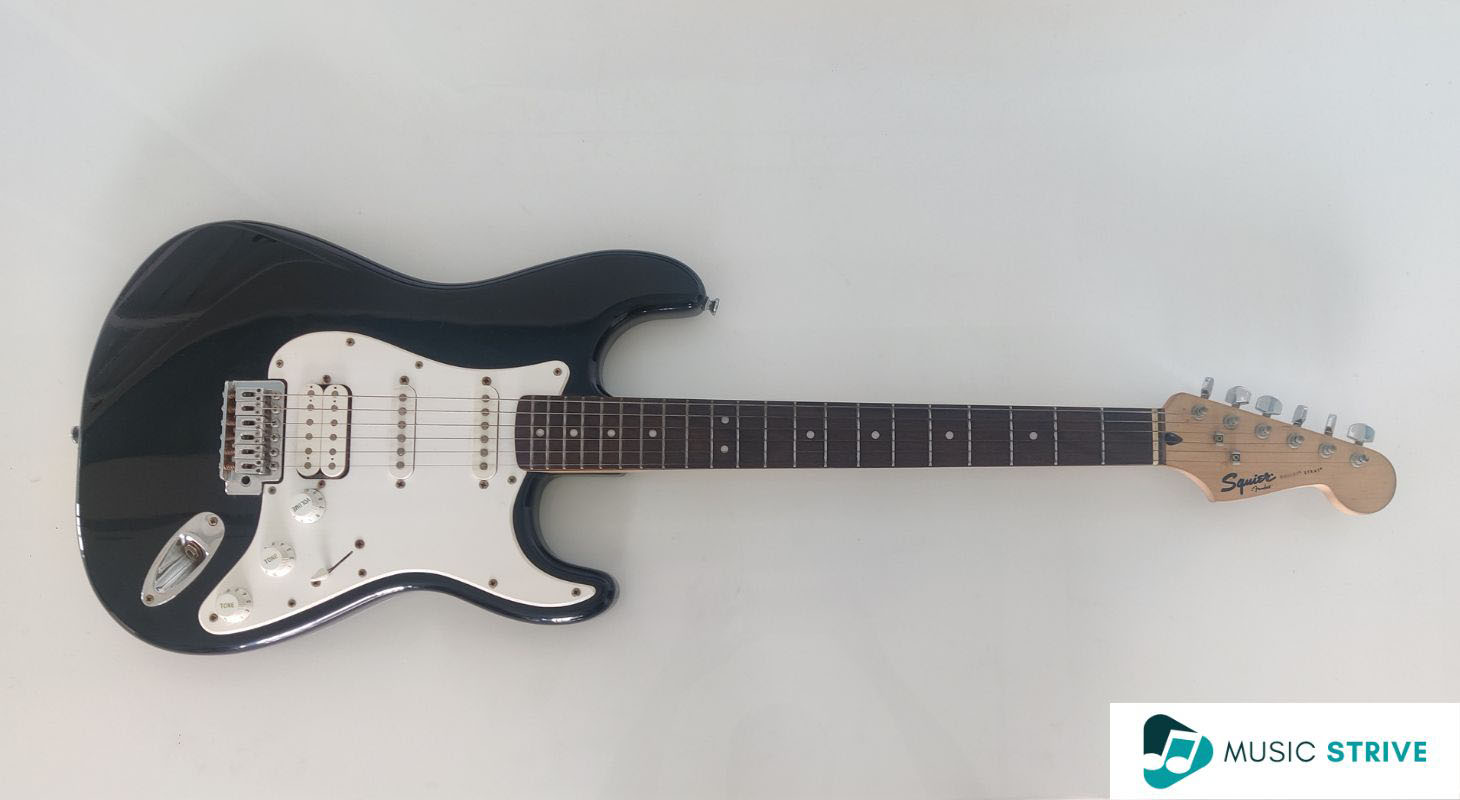
After serving as the cheapest Fender-endorsed Stratocasters for a long, long time, the famous Bullet Strat was finally retired to make way for the new Fender Sonic series of guitars.
But how different are they from the Bullet models that they just replaced? Are they now more capable to be on-par with other similarly priced or cheap Strat-style guitars like the Yamaha Pacifica?
Let's find out in this hands-on review of the Squier Sonic Stratocaster!
Squier Sonic Strat HSS - Overview
Best Budget Squier Strat
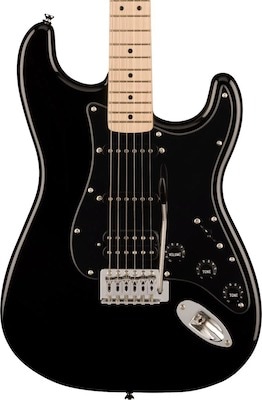
Replacing the well known 'Bullet Strat', the Squier Sonic Strat packs a lot of features that are praiseworthy for an entry-level guitar meant for beginners and as a backup guitar.
At the sub-$200 price point, the Squier Sonic Stratocaster promises a lot, but the question is whether it lives up to the expectations. Based on my in-depth testing of the guitar over a few days, I can confidently say that it won't disappoint you as long your expectations are realistic for a guitar of this price range.
The playability is excellent, tones are reminiscent of the classic Strat sound, and especially the HSS model is plenty versatile to tackle a wide range of genres and musical styles.
Yes, it does come with its fair share of limitations. The build quality is decent, but the finish isn't excellent. Some users complained of uneven frets and non-ideal action out of the box, so you might have to shell out some extra money for a proper professional guitar setup.
The pickups are the most basic Squier standard pickups that you'll find across their entire Sonic range, which is their cheapest range for full-sized guitars (only some 'Mini' models are even cheaper).
With that basic bit out of the way, let's dive deeper into the guitar itself and understand how it fares in different aspects.

PROS
CONS
Design & Build Quality
Just by looking at them, it's hard to tell the new Sonic Strats apart from the Bullet Strats that they replaced. However, there are quite a few new color options this time around.
The poplar body is as lightweight as ever, making these excellent beginner-friendly instruments for anyone who's just getting started with an electric guitar.
It's very comfortable to hold and play, and despite the lighter body, the full-sized guitar feel will be familiar to experienced players.
The tuners are one area where Fender has brought in some improvement. They look a bit different from the pegs on the Bullet Strat that you can see below.
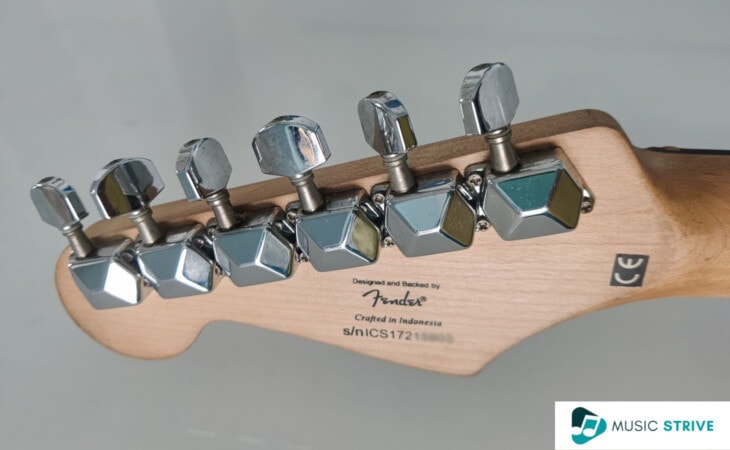
Tuning Pegs of the Bullet Strat
The pegs on the newer Sonic guitars are differently shaped (more rounded).
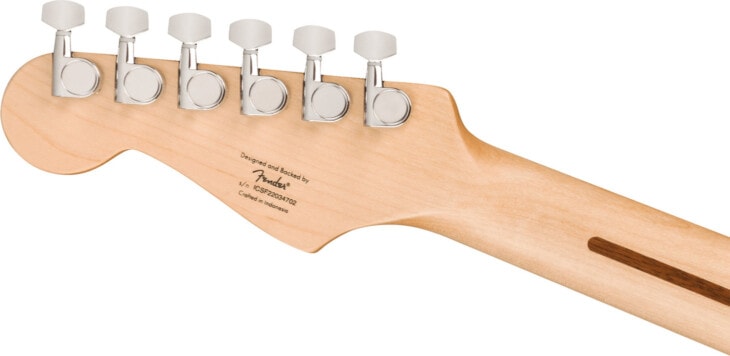
Tuning Pegs of the Sonic Strat
The old model had lots of complaints about tuning stability. I've found that the newer tuners do a much better job at holding tuning during long jamming sessions.
When it comes to neck and fretboard, you have two options. The familiar Indian Laurel fretboard over a Maple neck, and an all-Maple fretboard and neck.
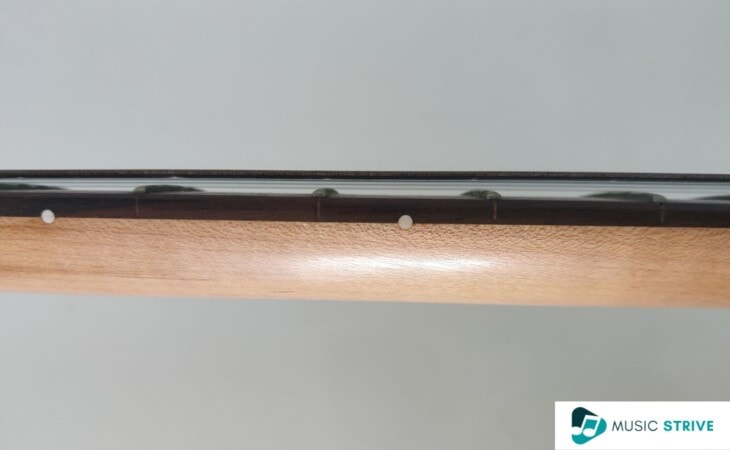
The neck, fretboard and the frets seemed well finished to me, even though you’ll see some user reviews complaining about things like uneven frets.
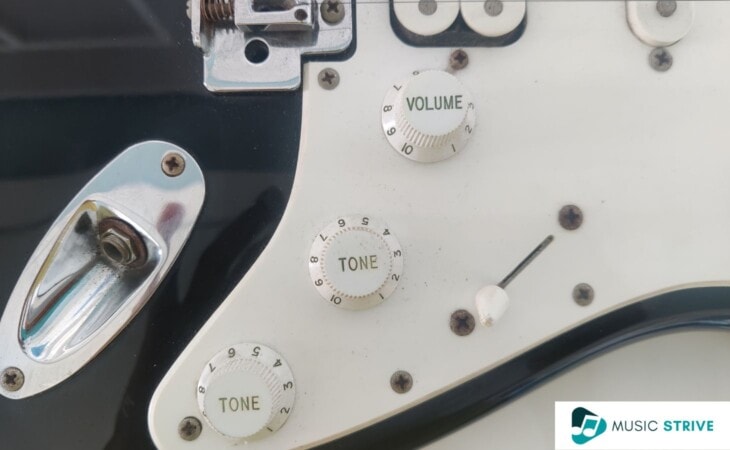
The plastic parts aren't finished as well as the rest of the guitar, but at this point I might just be nitpicking. Another area they likely didn’t improve on from the Bullet Strat is the input jack. With regular use, I felt it could become loose pretty soon in a similar way.
Playability
You get a familiar modern C-shaped neck that is pretty slick and comes with a satin finish. That results in effortless maneuverability. The model I tested had the Indian Laurel fretboard, which is quite similar to Rosewood in appearance and overall feel.
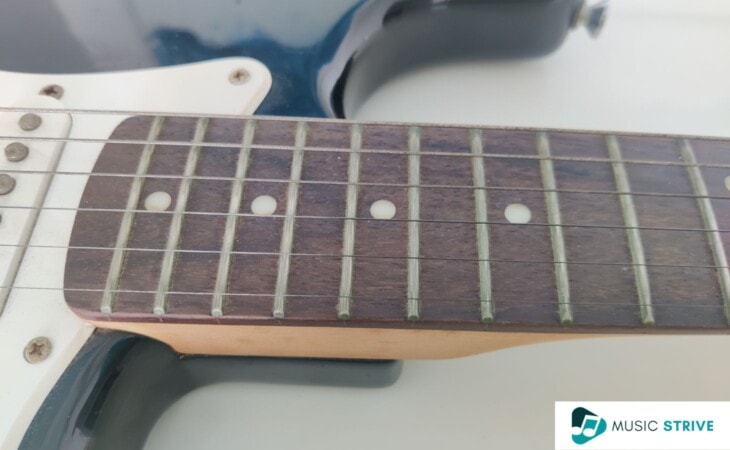
Due to the lightweight design, you won’t have any problems playing these live either.
The action on my guitar was spot on out of the box, but it could be a bit of a hit or miss. And owing to the low cost, even a retailer like Sweetwater won’t set it up properly before shipping.
The stock strings are… not the greatest, as you’d expect. If you can tell the tonal difference between cheap $5 sets and some quality strings, definitely upgrade them to a better set ASAP.
Sound Quality
For the pickups, they’ve basically taken them from the Affinity series this time. This means slightly better mid-range, cleaner highs, and a tiny bit more aggression from the bridge humbucker.
The improved pickups still share the same tonal characteristics as the outgoing series, which is the typical Squier Strat sound. In short, it’s a bright, twangy sound. Even the bridge humbucker doesn’t offer enough warmth.
The noise levels from the single coils are quite low, but don’t expect ‘noiseless’ pickups at this price point. The humbucker is capable enough to pull off some aggressive rock or even metal tones when paired with the right kind of amp.
I had great fun playing along a few tracks from Rage Against the Machine, Tool and Lamb of God.
At times you might be missing the growl and heaviness in the tone, but some tinkering with amp settings would be able to make you ignore that. Of course, you can’t expect the tonal signature of a Les Paul, Ibanez or even the most basic Seymour Duncan humbucker from the cheapest Strat.
If you go for the SSS models, you can still get pretty close to the sounds of a lot of well known artists. As a huge fan of Green Day, I was playing some old numbers from Dookie, and it didn’t sound bad at all.
If you’re seeking that signature Strat sound, however, the neck and middle pickups will surely impress you.
You can try everything from jazz, country and blues, and the bright, clean tones generated by the upper pickups would surely impress you. When overdriven, they deliver the ideal tone required for bluesy leads.
This time they’ve also introduced models with just a single humbucker at the bridge. Yeah, I know, Tom DeLonge-style guitars. They’re pretty good, though.
From what I’ve heard from a friend who’s bought one mainly for modding purposes, the elimination of the magnetic interference of the other two pickups has resulted in the bridge pickup gaining a bit more character and offering slightly higher output.
I would, however, advise beginners against going for the single-humbucker models. You’ll gain from the versatility of a 3-pickup configuration much more in your guitar journey, in my opinion.
Value for Money
At less than $200, you can’t argue against these when it comes to getting what you’ve paid for.
Sure, you could spend even less and get something from an unknown/lesser known brand (and many of those tend to sound pretty good as well), but obviously the build quality would be even more questionable on those.
If you decide to step up, there’s always the Classic Vibe lineup from Squier, and going a bit higher than that, there’s Fender’s very own made-in-mexico Player Series.
Alternatives
My Top Pick
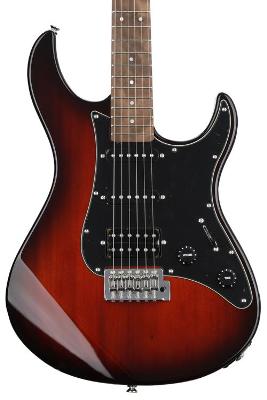
These are pretty similar to the Squier Strats in appearance, but feature a real Rosewood fretboard and an Agathis body as opposed to Poplar. The pickups have a slightly different tonal profile with increased warmth that many people prefer over the Squier models.
Ideal for Metal
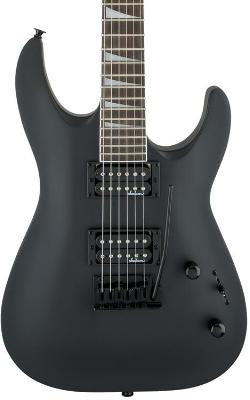
This could be ideal if you play mostly hard rock / metal and still want a double-cutaway guitar like the Strat. Costs basically the same and offers a much more aggressive tone at the cost of versatility. I also like the tremolo on these better than the Squier Strats. Our complete review.
Versatile Alternative
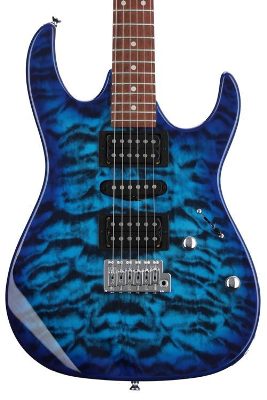
Featuring a similar design, this Ibanez features a less common HSH pickup configuration that’s geared more towards heavier forms of music, while still offering plenty of versatility. Plus, many love the necks on these Ibanez guitars.
Final Word
With better tuning stability, slightly better pickups and a range of new color options, and especially at the same price point as its predecessor, the Squier Sonic series of Stratocaster guitars are likely to do well.

Just picked up a squier sonic esquire telecaster and unbearable for the dollar and With a small handful of parts.. bridge saddles pickup, pots and wiring, a basic fret leveling and Polish which evern expensive guitars benefit from, this guitar destroys my mim telecaster of which was $700.00 and took a lot of fretwork to get playable without severe feet buzz… The two things I see on bullet’s Sonic and affinity s are cheap paint job and lackluster bridge saddles. bridge saddles are cheap, so are pickups, fret Leveling and set-up are easy to do, a fret leveling beam, end file some 500 gritty, some 1200 grit, a straightedge a crow file if you desire partd for guitar 60.00 setup you can do yourself (videos and instructions all over the net, just take your time. You’ll have a really good performing guitar for less than 300 that plays, sounds and has the attitude of a much more expensive guitar and learn fretwork and customizing to boot..
They use a nice, dark fretboards in the marketing pictures, the kind everyone wants, but what they sell has those ashy-looking Indian laurel boards.