
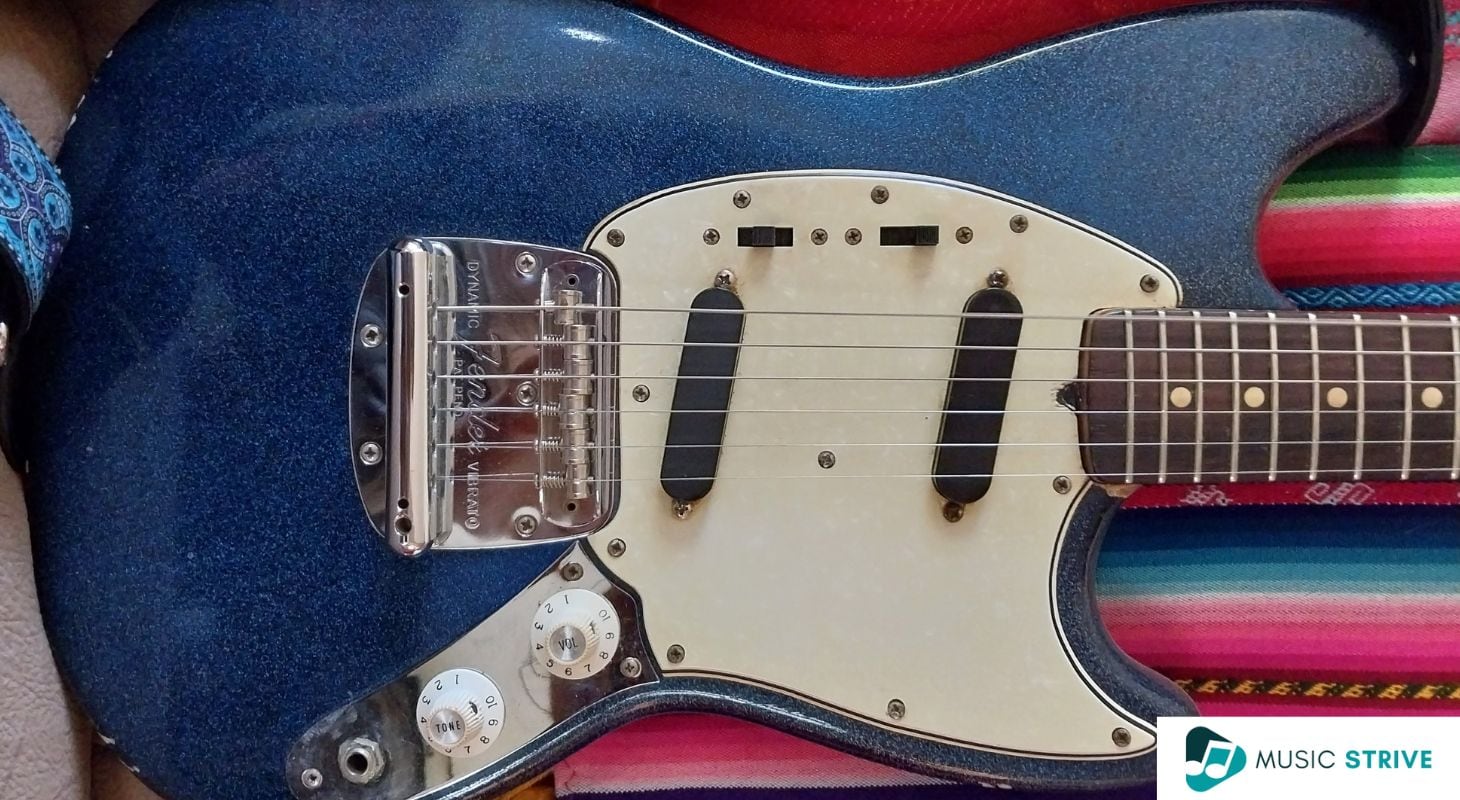
It all started when I was in my early twenties. You know how it goes; you want to stretch the fabric of reality as far as you can possibly take it and transform the planet. Well, my first step to changing the music world with my six-stringer was going FAT on strings.
Yeah, I was playing the blues and listening to a lot of The White Stripes back then and, in my mind, to get that ultra-thick tone, I had to follow the myth. Wait, what myth? It comes from SRV playing those .013s on his battered ’59 Stratocaster.
After a while, I went heavily into surf music, and found out Dick Dale, the master champion of the genre, used strings as thick as .016. By the time I made it into Nu Metal and tuned it down to drop-C, the .013s didn’t seem menacing at all.
But here’s the deal, I’m back to playing .009s on my guitars. Do you want to know why I scaled down? Well, read on and find out!
Table of Contents
Reason 1: The Thickness Myth
Let’s address the elephant in the room right away. Some people have been saying that thicker strings will give you a fatter tone. I’m sure you’ve heard that a zillion times on the internet and in real life. I was there once, too.
However, there’s no real evidence to back that statement up. You might think that a thicker gauge creates a bigger magnetic field, and thus, you give your pickups more to work with. While that might be true, there are many examples of guitarists with monstrous, humongous, stadium-ready tone playing .009s the entire set.
James Hetfield from Metallica, Carlos Santana, and Eddie Van Halen are three examples.
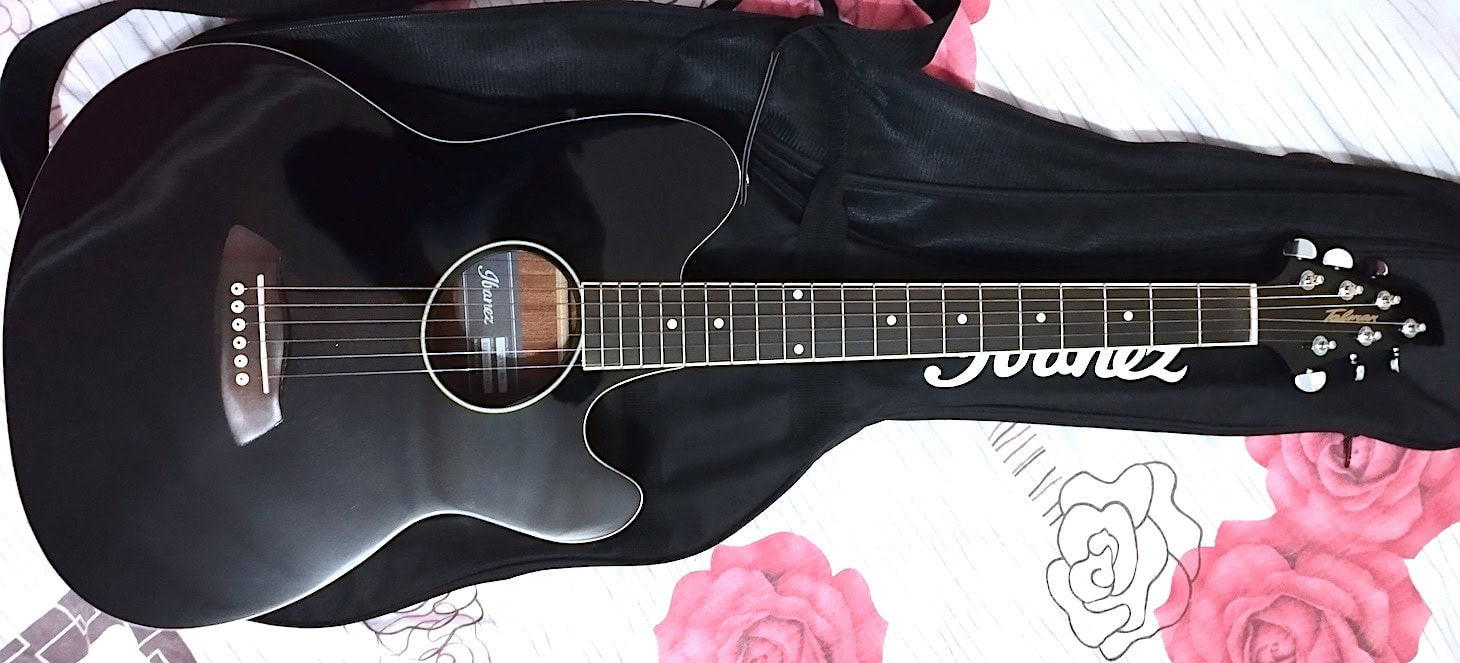
Believe me, for someone who went as far as stringing his Ibanez Talman (loved it, sold it, regret it) with .013s and tried bending the second and third strings, it’s not as fun as it looks.
What I mean to say is that, if there’s a marginal gain in tone, you’re adding a big handicap to playability.
That’s unless you’re Stevie, but he worked his way there playing hours-long sets every night and… well, being one of the best in history, right?
So, the myth is debunked.
What I Learned from Billy Gibbons
A while ago, I watched an interview with one of the most influential heavy blues rock players in the world, Billy Gibbons from ZZ Top. Yes, the only thing that’s bigger than his beard is his tone. Oh, and if you’ve ever seen him playing live, you’ll know he can fill an arena with a single note.
But what’s absolutely surprising is that another heavyweight champion of the guitar (on your feet, please) Mr. BB King, suggested he played lighter strings. I mean, you know what BB could do with just a handful of notes and his uncanny vibrato. Well, he had a few strums at Billy’s guitar in the dressing room before a show and told him, “Why you working so hard?” To which Billy answered that he needed thick strings to get a fat tone. That statement made BB King laugh.

It turned out, he didn’t, and now he’s gone way further than anyone else in the opposite direction, and playing .007 strings made especially for him. Have you tried those already? I would love to know your thoughts. I’m not quite there yet, I’m navigating my .009s at ease for now.
Reason 2: My Hands Spoke Loud and Clear
Another side that not many people talk about when we talk about string gauge is the strength needed to play them. Yes, the thicker the strings, the more powerful your hands need to be. It’s not the same to bend a .008 string, a tone and a half, than a .010 string the same length.
Believe me, that can take a toll on your hands. It happened to me while I was playing six to eight hours a day on .013s at standard tuning. I had to stop playing for 45 days and get 15 sessions of ultrasound and laser on my wrist to allow the swelling to go down. My left wrist would get warm, and I would feel a lot of pain.
Fun fact, I tried playing the drums during that time (my brother is a drummer), and I realized it’s much harder than it seems and that I’m really, really bad at it.
In my case, after playing guitar for almost three decades, it would be easier to reach the Moon than to stop playing the guitar. Luckily for me, I’m back at it, full throttle.
But don’t just take my word for it, Mike Eizinger (Incubus) went through something similar.
The Recovery Phase: Adjusting to New String Gauge
I had to go through a recovery phase after the wrist incident that involved gradually playing more, moving up on the gauge little by little. Yes, I started on .008 and graduated on .011. When my hand was strong enough to handle those, I knew I was ready to play again.
During that time, though, I had to adjust my playing to the new gauge every time I changed. That taught me a few things:
Mind your bends
Bending a guitar string is emotionally beautiful, soulful, melodic, and expressive, but it’s also an art to be mastered. You can’t just bend it as much as you want; you must make it to the note you intend to. So, as exercise one, just bend three plain strings a semi-tone, a full tone, a tone and a half, and two tones. Try nailing the interval and let muscle memory do the rest.
Mind the picking hand
Heavy guitar strings require a heavy picking hand to get in motion. I mean, it’s not the same to make .013s rattle and hum than to make .009s twist and shout. You’re going to have to work your wrists and hands to have a gentler touch and achieve the same aggressive sound. It’s a process, but you got this.
This is one of those (many) lessons I learned the hard way: Always keep a spare pack in your gig bag. What I did back in the day was keep the ones I removed as spares every time I installed fresh strings on a guitar. Nowadays, I can afford the absolute luxury of keeping a pack of fresh strings every time I play out and bring a spare guitar. But believe me, thinner gauges need a plan B.
What Role Does the Scale of the Instrument Play in String Choice?
To finish this piece, I want to talk about the guitar scale and the string gauge of choice. As you might know, there are 4 main scale lengths you’ll find in the guitar world. Two of them are very common and two are not so common.
Nevertheless, having played all four, let me break it down to give you a little advice.
Short-scale guitars (24”)
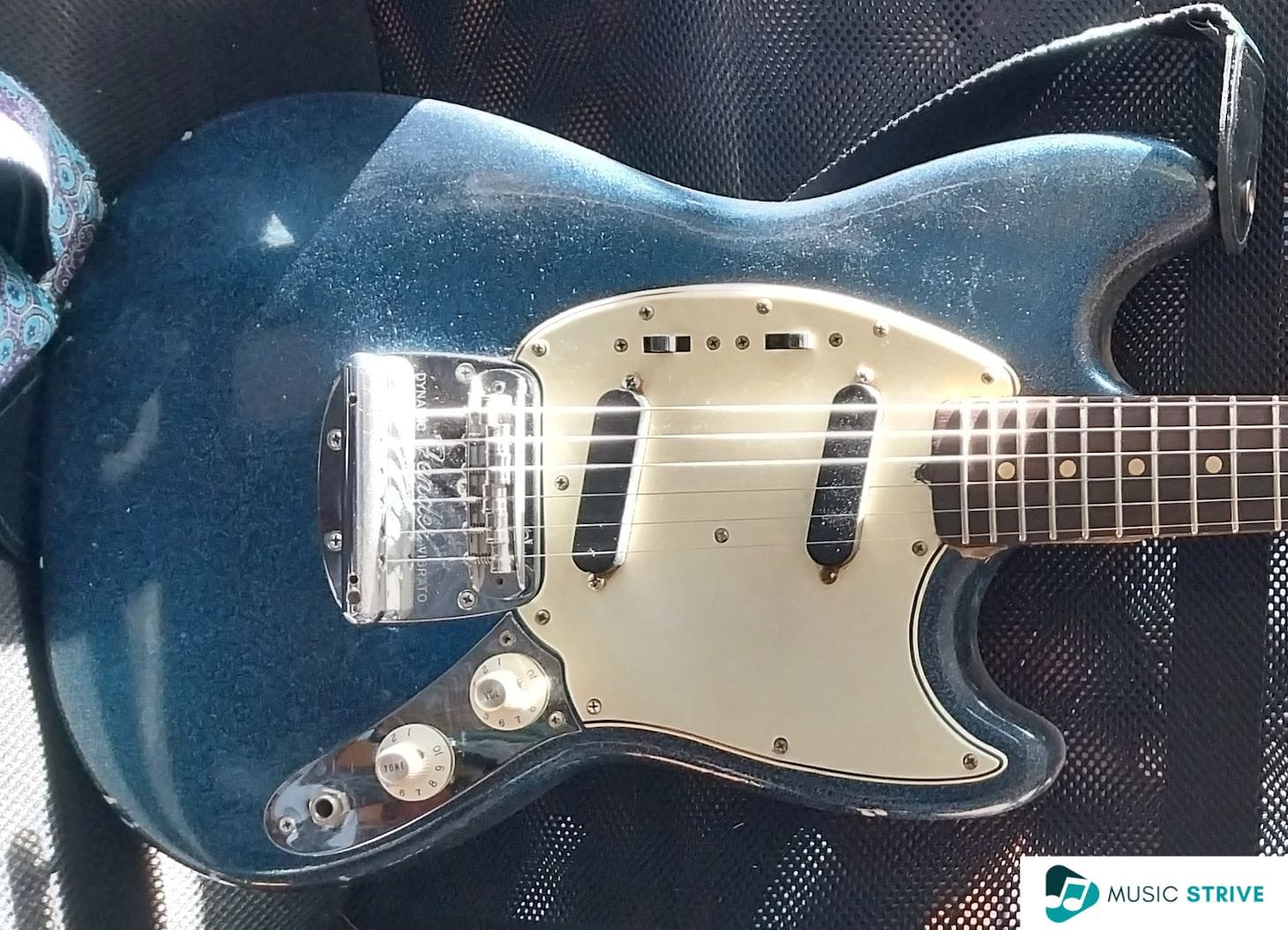
Short-scale guitars are not so common, but if you’ve played a Jaguar or a Mustang, you’ll know they’re great. These guitars require a thicker set of strings to maintain the tension and perform like any other guitar. My Mustang currently has .011s, and it plays like a dream.
Gibson-scale guitars (24 ¾)
In my humble opinion, nothing sounds as sweet as bending the G string on a Gibson guitar. The scale is somehow perfect for 0.10 strings. They’re the right tension for my hands. They might not be as percussive, but they’re big and blue like the late and great BB King.
PRS-scale guitars (25”)
Yes, believe it or not, Paul Reed Smith didn’t just make a guitar that’s the perfect mix of a Stratocaster and a Les Paul in terms of wood combination and shape, and electronics and tremolo; it’s also the combination of their scales. What do we get as a result? Well, it’s a healthy in-between that will give you the spank of a Fender and the sweetness of a Gibson. I’d say these guitars keep it tight enough to go for .009s.
Fender-scale guitars (25 ½”)
The highest tension of the four, Fender-scale guitars (which includes most super strats and fancy strats, too) feel like they respond to pick attack aggressively. Yes, for that fierce, raunchy, treble-oriented spank and twang, nothing gets better than this scale. Here’s where I think you can go bananas and try .008 and .007 strings and still get useful bends and beautiful tones.
The Bottom End
String gauge is the cheapest tone experiment out there. You can move from one gauge to another with a few minor touches on your guitar’s intonation and perhaps half a turn of the truss rod and try it out to see how it feels and sounds.
As for me, I’m sticking with .009s for my guitars, except for the Mustang that loves .011s. Who knows, maybe in a few years, I’ll scale it back up and make it more difficult on my fingers. For now, I’m sticking to the advice given by BB, and I’m not working so hard anymore.
Hey, if the King says so, we better listen!
Happy (easy and effortless) playing!
