

It was March 2019, and I was holding an electric drill with one hand and my guitar with the other. I was about to embark on a nine-month trip from India to Vietnam and my Baby Taylor was coming with me.
That was the first trip that I made with that guitar strapped behind my backpack. It endured the dustiest of buses and the roughest of rides.
But that wasn’t all because it also traveled that way from Mexico to Colombia.
Over fifteen countries after installing the Fishman Sonitone and wandering around with a laptop and a guitar, I figured I had a thing or two to say about travel guitars.
So, I wrote this piece about what to look for, what to expect, and how to take care of your guitar on the road.
I also dropped the review of the brand-new Guild Westerly 300, a worthy, sturdy, great-sounding traveler guitar that’s got my kudos for a season on the road. No time to read the whole article? Click here to jump directly to my take on the Guild Traveler guitar.
Speaking of roads, let’s go!
Table of Contents
Why Take a Guitar on the Road?
This is the first question that needs answering. When hitting the road, every extra gram of luggage is a big decision. You might imagine just how important it is to carry a guitar with you.
Let me tell you that I was there too, thinking about it, pondering the possible outcomes, and making the decision to take the guitar with me.
I don’t regret that decision, not for a split second.
Don’t Underestimate Inspiration Moments
First, if you happen to be a songwriter, there are few moments in our songwriting life as fertile for songs as being on the road. Yes, although you need some room alone to ruminate those ideas and turn them into songs, the constant change of setting, mood, landscape, and people might (and surely will) trigger creativity.
When that happens, it’s important to have an outlet close so you can transform that sudden rush into something. For example, I remember being on the rooftop of a hostel in Varanasi, India, and feeling a sudden blow of inspiration.
I took out my guitar and my notepad and apologized to those there with me because I was going to be noisy for a little while. To my surprise, everyone ended up not only being cool about it but also becoming interested in what I was doing.
Oh, and I came back home months later with a cool new song I play to this day.
So, a guitar on the road can help you capture a volatile moment of inspiration (of which you’ll have many on the road).
The Perfect Ice Breaker

In times like these, if you know a handful of megahit bonfire songs, you’ll get along with people from all over the world because songs travel far more than humans.
Strumming the Day Away
Finally, if you’re, let’s say, at a convention or a fair, and you have some dead time, what can be better than strumming that time away lying in bed with your guitar?
Yes, whenever traveling gets lonely or boring, a guitar can change your day. I’ve strummed my guitar in countless airports and train stations just waiting for my ride. Believe me, it’ll take waiting to the next level.
What to Look for in a Travel Guitar?
Did I convince you already about bringing a guitar on the road with you? Well, I’m glad you want to join the club.
Now, let’s talk about what to look for in that guitar before you purchase anything.
Size
When on the road, size is what matters the most.
Yes, if you travel as a backpacker the way I did, you’re deciding whether to keep or leave a single T-shirt, so a guitar is a major choice. If you’re traveling for a holiday only, space also matters since airlines and guitars aren’t best friends.
I have three pieces of advice to give you about this –
- No-Hands Carry is a Must – Being able to carry your guitar without using your hands is a must if you’re planning a long trip. You’ll have to use your hands for multiple tasks while moving, and if the guitar becomes this annoying item to carry everywhere, you’ll regret bringing it. So, strap it to your luggage.
- Full-sized Guitars Need Your Own Ride – If you’re moving around by car (your own or others) you can bring a full-sized guitar. Otherwise, it’s a recipe for disaster. You’ll feel you’re dragging another bulky piece of luggage.
- Keyword: Overhead Compartment – Finally, if you’re flying to your destination, your guitar must fit the overhead compartment of the plane. Other than that, your ax will have to travel in the storage room with all the other luggage. That requires a very sturdy case with some serious padding.
Easy to Service
A guitar that you bring on the road needs to be easy to service. For example, some guitars like the Lava are complex digital machines that require specialized personnel for servicing.
If it breaks down on the road and you’re hopping from place to place, you might end up with a bad-sounding instrument that occupies a lot of space and won’t work with headphones.
If a regular guitar breaks, you can have a tuner replaced almost everywhere in the world.
So, on the road less is always more. That means, trying to simplify your rig as much as possible.
Sturdy and Durable
The guitar you’re taking on the road with you will go through a lot. In my case, my Baby Taylor traveled with me on a myriad of dusty buses, packed trains, and walked miles strapped to my back. We walked under the dazzling sun, the cold wind, and the rain.

So, when looking for a guitar to take on the road, look for something sturdy and durable. A great example is refraining from guitars with mahogany necks and an angled headstock that’s not reinforced. Also, cheap tuners or a fragile-looking nut and saddle can be a red flag.
Acoustic or Electric?
When holding the electric drill ready to make a hole in my Baby Taylor I had only one thing in mind: Make it an acoustic-electric instrument to take it on the road. (Taylor makes an acoustic-electric version of the Baby Taylor, too!)
If you’re planning on gigging while on the road, you must be able to plug your guitar. Therefore, I would say an acoustic-electric travel guitar is the perfect choice.
That said, traveling with an all-acoustic or an all-electric guitar has pros and cons.
To begin with, electric guitars are no fun unplugged. You might take something like a tiny amp (Fender Mustang, Vox Amplug, Spark Go) and a good pair of headphones to rip the fabric of reality and play face-melting heavy tunes late at night.
That can be great if you’re planning to use your guitar for your own enjoyment or to kill some time in the hotel room but won’t be an ice breaker or something to connect with others through.
Plus, from my own experience, if you need to set many things up and isolate yourself, you’ll probably end up getting that endorphin push from scrolling social media numbly rather than strumming your instrument.
In that sense, an acoustic travel guitar is easy to set up, can be the soul of any party, and will let you connect with fellow travelers better.
Just don’t do what I did and let a professional install your piezo pickup.
Let’s Talk Gig Bags
Last but definitely not least, the gig bags that companies make for these guitars deserve an extra paragraph. In the case of my Baby Taylor, the gig bag has been with me through hell and back and, although they got sand, dust, and dirt, the zips are still working perfectly.

Also, it’s not easy (closer to impossible, I would say) to get a gig bag for your travel guitar while on the road.
So, before you decide on the guitar, also have a thorough look at the gig bag because it will be essential on the road.
That was one of the main reasons I chose the Baby Taylor over the Little Martin, which has a more generic, less sturdy gig bag.
What to Expect from Your Travel Guitar?
Some people, especially those who have never played a travel guitar, have a misconception about them. They think these guitars are toys that sound dull or small because of their size.
Well, bracing has changed the acoustic guitar market ever since it was first implemented, and travel guitars aren’t an exception.
Sound & Size

Let me start this item by saying that I own a Baby Taylor and a Martin D15M. While audio differences are notorious, especially in the low end, I can’t say my full-size Martin is louder than the Baby Taylor.
The size of the parlor or travel guitars makes the sound more focused on the midrange. This means two things to our ears. One, they’re surprisingly loud, and two, they lack the low-end of dreadnought guitars.
So, they sound loud and proud (bonfire loud if you like) but don’t cover the entire frequency range. So, you can expect a good, loud sound with great projection focused on the midrange.
Fretboard & Size
Along with the reduced body size, travel acoustic guitars tend to have a shorter scale. For example, a Baby Taylor features a 22 ¾” scale, the GS Mini a 23 ½” scale, and a regular Stratocaster a 25 ½” scale.
If you have big hands, I suggest you try one before buying one. It can get a little too small, especially in the higher frets.
In that case, or if you’re a natural-born shredder, you can take along a full-scale travel guitar. Yes, that’s a concept Steinberger based an entire company on. The Traveler Guitar and the Yamaha Silent are good to try too.
If you feel comfortable strumming with the Baby’s scale, you can go for an acoustic travel guitar.
How to Take Care of Your Guitar on the Road?
Now that you know what to expect and what to look for, it’s time to talk about keeping the guitar in shape while enduring the hardships of the road. If you ask me, my Baby Taylor had to be glued at some point because I fell down the stairs.
It also has a ton of blemishes, scratches, and a lot of sand blown into it. Yeah, I learned how to take care of my guitar on the road the hard way.
But hey, it’s still playing like butter to this day, 15 countries after!
Extra Strings are a Must
Putting fresh strings on your guitar after traveling a country or two feels like having a shower after going through the desert. But beyond the feeling, strings tend to rust much faster when on the road.
If you let them corrode, they might stain your fretboard and/or damage the frets.
So, bring extra strings. Consider a pack every two months as your minimum.
Mind Humidity and Temperature Changes
Speaking about rust in the strings, if you’re moving your guitar a lot through different temperatures and humidity levels, you should do something about it. This is especially true for guitars made of wood and doesn’t apply to carbon fiber guitars, like this Journey. Those don’t suffer from humidity changes.
Carrying a humidifier and keeping the guitar inside the gig bag for as long as possible is a good way to minimize the environment’s effect on your instrument.
Guild Traveler Westerly 300, a Great Bang for the Buck
Like most of us, I assume, I’m always looking for more of what I like. Therefore, since I swear by my Baby Taylor and am always on the verge of taking the next plane, I look for travel guitars.
I ran into the Guild Westerly 300 simply because of its outrageous price tag. I mean, this guitar is priced like a much cheaper instrument. Well, let me spoil the review for you a little; it makes an amazing bang for the buck.
Why is that? Well, read on and find out!
Road-Ready Appointments
The first thing I look at when I’m looking for a travel guitar is the neck joint. A travel guitar needs to be ready to take the road lifestyle. Either you’re going to drop it on its head or someone else will. Maybe by mistake.
Well, the Guild features the same sturdy neck joint the Baby Taylor does, so it’s a good start. The composite material the nut and the saddle are made of looks and feels solid. Also, the open tuners look solid and are easily serviceable.
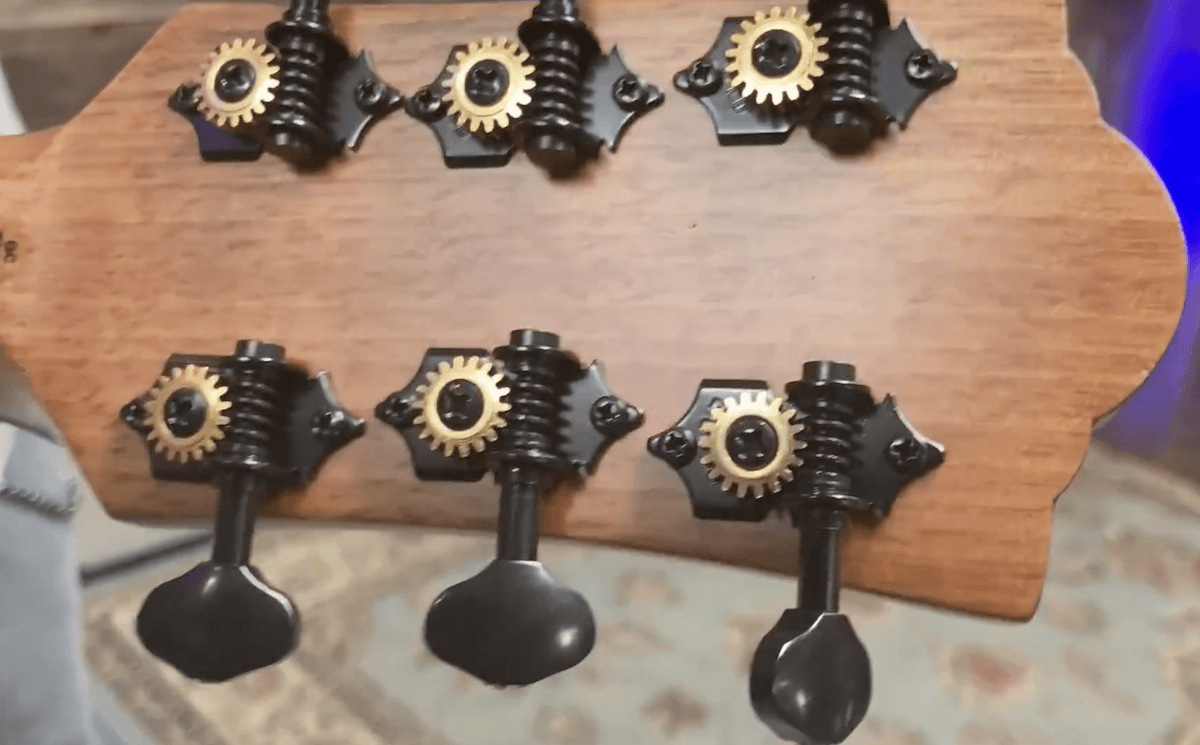
The satin finish on the neck is great for playing in different humidity levels since it will never get sticky. Finally, the gig bag, although not the toughest in the market, will keep the guitar safe and sound even when moving around in an old dirty bus.
That Legendary Guild Sound
Guild guitars, if you’ve never played one, are BIG guitars. They sound big, full, round, and have a nice bottom end. They’re not as big in that territory as Martin guitars but aren’t that far either.
The combination of laminated mahogany back, sides, and top along with the rosewood fretboard gives this guitar that quintessential Guild sound in a much smaller package.
The scalloped X bracing and the arched back help the overall volume of the instrument which offers clarity and projection while remaining powerful.
Of course, when compared to a bigger guitar it’ll sound midrangey, but on its own, it does a terrific job.
Costing almost half the price, you couldn’t expect a solid top from this guitar as you could in the Baby Taylor. That said, the tone is so powerful that you don’t miss the natural ring of the Taylor so much.
The company managed to capture the Guild sound in a small, road-ready package.
Guild Westerly 300 Verdict

My verdict on this new addition to the Westerly family of guitars by Guild is that I would take it with me on the road anytime. It’s well-built, sounds good, and it sports an almost unbeatable price tag for its features.
I loved the black hardware with 16:1 open tuners, the rosewood fingerboard, and the sound projection. Speaking of which, I didn’t like the resonance and timbre so much because it has a laminated top. That said, it’s very expectable in a guitar at this price.
The Bottom End
Taking the guitar with you on an adventure can be a life-changing experience. Songs are out there, hidden behind fear, waiting for you to be in that mood to visit you.
The road can put you in that mood several times a week. So, it’s better if it catches you with a guitar nearby to transform it into something more than just a feeling.
Have you been around with your guitar too? Tell me all about your experience.
I’m signing off here, cheers and happy playing!
