

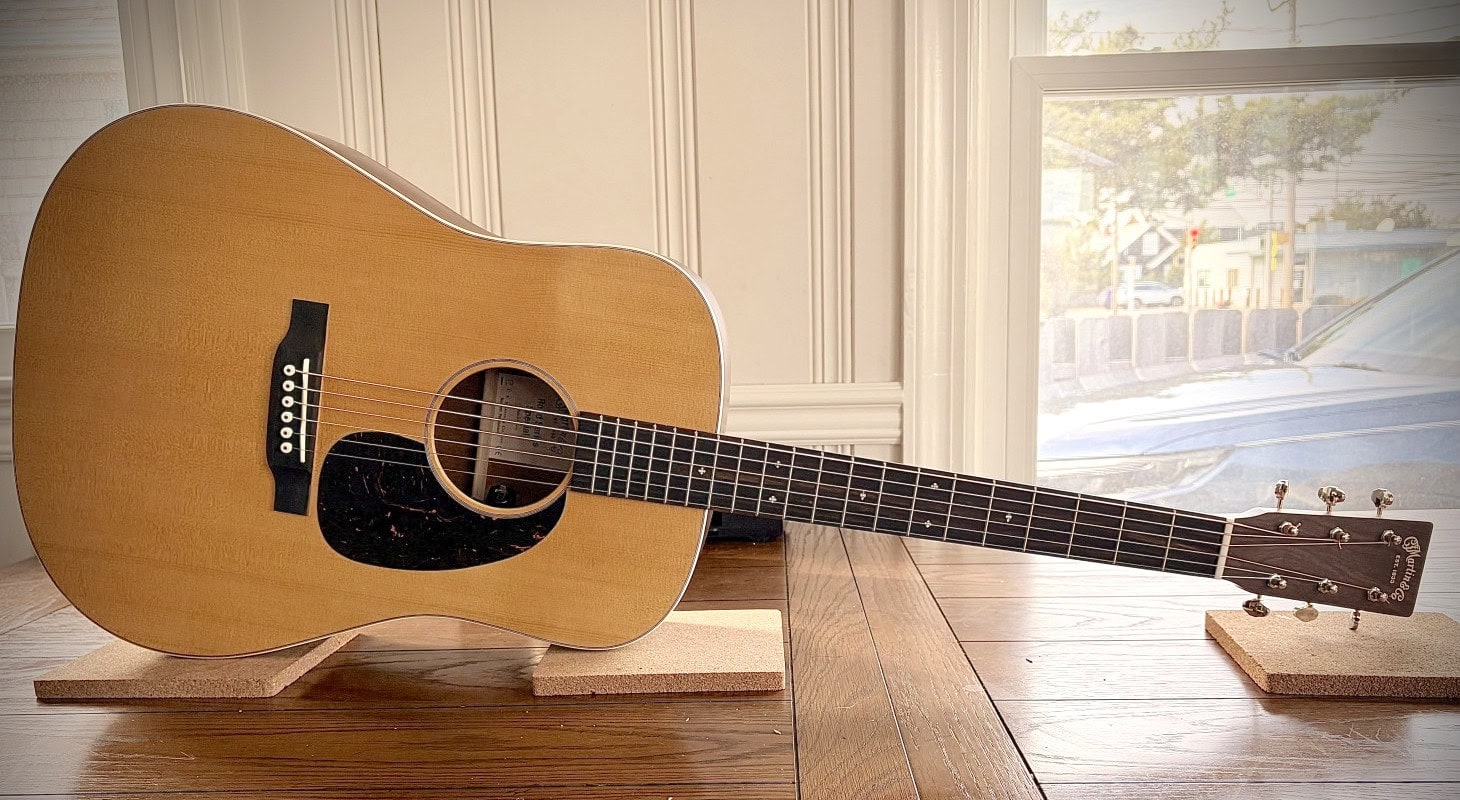
When it comes to acoustic guitars, it’s really hard to argue against solid wood. The tone, reverberation, and natural dynamic variation are far superior to laminate bodies, or those rogue non-wood instruments made from acrylic or carbon that show up every so often.
I proudly prefer solid, old-school wood acoustic guitars, particularly for country and related styles where strumming, fingerpicking, and hybrid picking are all heavily featured techniques.
The reason for this is that acoustic guitars genuinely reflect the player. There’s no technological solution to sound issues on a good acoustic once it’s properly set up. It’s just down to playing well and getting the best out of the instrument!
Top 3 - Affordable All Solid Acoustics
Preview | Product | Price |
|---|---|---|
 | ||
 | ||
 |
Of course, as a gigging guitar player, I’m always on the lookout for value. That’s why I compiled this list of the best dollar-to-quality acoustic guitars on the market today.
Best All Solid-Wood Acoustic Guitars Under $1K
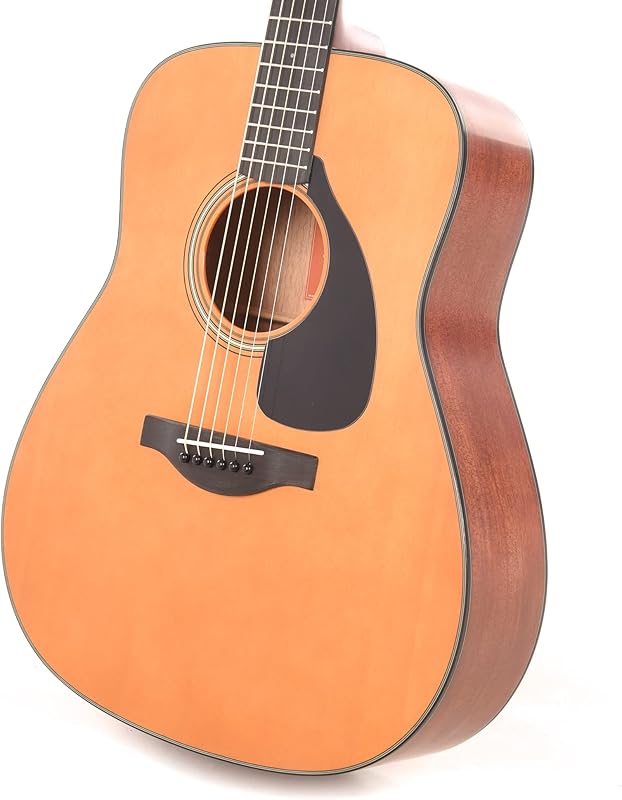
1. Yamaha Red Label FG3
It should be no surprise that some of the best value solid acoustics come from the Far East. Yamaha, a Japanese builder responsible for some of the finest guitars on the market today, have a terrific product in the Red Label FG3.
The mahogany-spruce tonewood combo is tried and tested. The guitar isn’t too heavy, but has enough weight to feel like a serious instrument. The spruce top adds a nice amount of snap and sparkle to the guitar’s voice: an open E chord sounds downright delectable. I’m a fan of African mahogany, too, and the neck profile isn’t too chunky.
The action, too, was nice and low right out of the box. I tried out a few trusty bluegrass licks transitioning between G, C, and D chords and was very impressed by how encouragingly fast the setup is.
The dreadnought body is reasonably beefy, and wouldn’t look out of place on stage with George Strait.
The ebony fingerboard, too, feels nice and hard under my fingers, really encouraging faster, more expressive playing. As acoustic guitars go, it’s very resonant, and kind of feels like the pony car of acoustic instruments: affordable, powerful, and fun to drive!
I could literally feel the guitar vibrating against my torso while sitting down. It’s a great feeling to know that the whole instrument reverberates as one. The big body might make flying or driving with it a little difficult (especially as it ships without a hard case) but, for the price, I’d happily take this guitar out gigging.
Overall, an excellent instrument from a highly reputable workhorse builder.
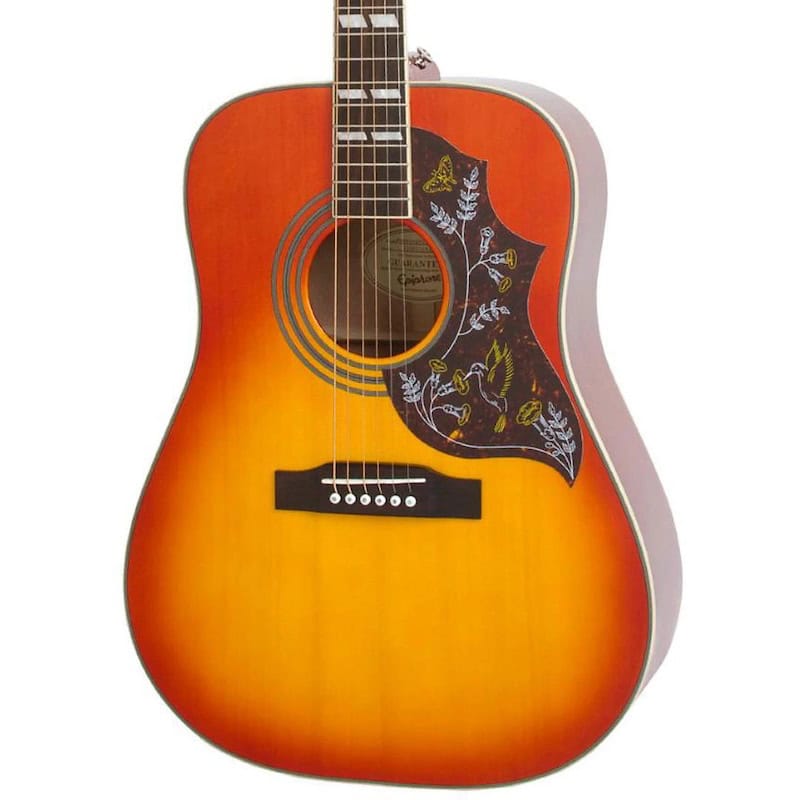
2. Epiphone Hummingbird Standard
A more affordable clone of the ever-popular Gibson Hummingbird, the Epi equivalent is an awesome big-bodied guitar.
The Epiphone Hummingbird follows the tried-and-tested American acoustic dreadnought build: mahogany back and sides, spruce top. It’s built in China, which means it’s affordable for working musicians, and features a built-in pickup for amplified performance, ideal for players like me who often run their guitar through a PA.
The Hummingbird stands out immediately for its stellar good looks. The finish is classic Gibson sunburst style, reminiscent of those gorgeous old late-50s Les Pauls. Unfortunately, it seems to me that the finish on this acoustic guitar is thick enough to somewhat choke out the guitar’s natural voicing. I didn’t find it as resonant or as deep as I’d have hoped: the brighter, more brittle overtones sing out more than the deeper, warmer tones of a solid acoustic.
The plugged-in tone, too, leaves a little to be desired. It’s got plenty of presence and zing, and I’d happily use it live. However, I did have to add some reverb and EQ it for a warmer sound. The pickup is perfectly passable, but there are nicer built-in acoustic pickups on the market (like, say, Takamine’s palathetic pickup).
However, the guitar’s neck is slender, and it is a joy to play. I couldn’t help but run through some old Elvis songs and a couple of big-body country standards. Cowboy chords sound good, and it’s hard to resist playing some old Willie Nelson rhythms.
Overall, the guitar is about what I’d expect from Epiphone: a very reasonable, affordable take on the full-fat Gibson classic.

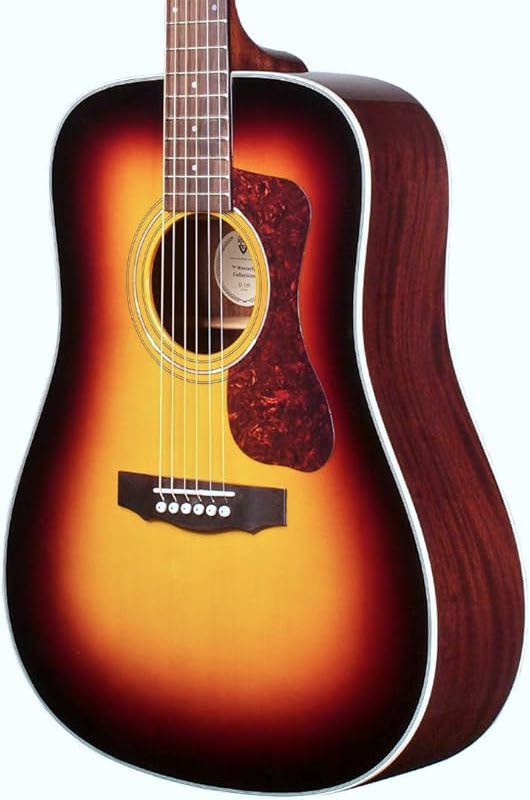
3. Guild D-140
The D in the Guild D-140 surely stands for Dreadnought. Rightly so: this is a classic American dreadnought style, with an attractive sunburst solid spruce top and solid mahogany back and sides.
I was immediately struck by the gorgeous grain of this wood. Guild did a great job in top selection.
The rosewood bridge is very nice, although I did need to apply some lemon oil to it to really make it look as beautiful as it possibly could. Plus the tortoiseshell pickguard really adds some vintage-cool vibes to this big-bodied solid guitar. As a long-time Les Paul player, I like rosewood fingerboards, and was happy to find the board on this guitar feeling great under my fingers, not dry at all.
The tone that emanated from this guitar upon playing, too, was fantastic. Nice and crisp, with plenty of volume and definition. Arpeggios and big block chords alike sounded and felt great. I could feel it reverberating against my torso when playing particularly enthusiastically.
Sometimes, guitars like this can be overly bright and obnoxious. That’s not the case here at all. The tone is balanced, warm, and woody, perfect for fireside singalongs or running through acoustic classics.
Guitar players demanding a little less body and more upper-fret access might be frustrated by this instrument’s big, blocky linebacker-sized shoulders. Fortunately, Guild’s D-120CE offers a very similar playing experience with a convenient cutaway for all the upper-fretboard heroics an acoustic guitar player’s heart desires. I, armed with my loop pedal, found it to be enough to get through the solos in “Hotel California”!
4. Eastman Guitars E1P
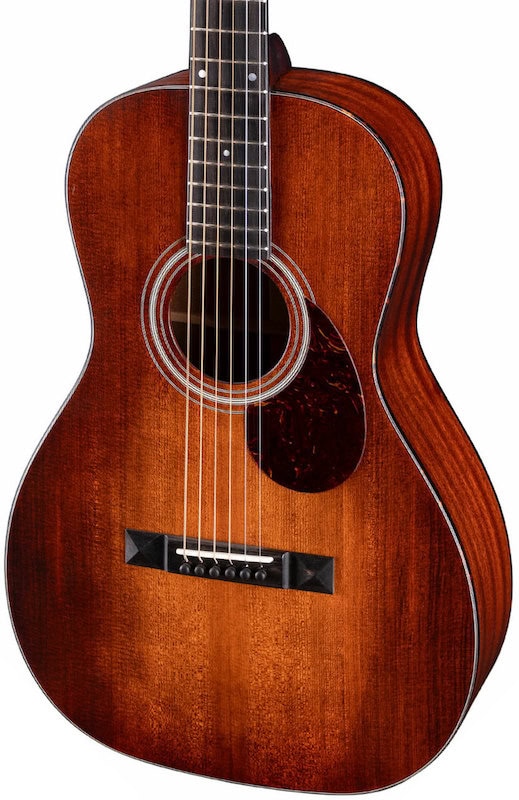
As much as I love a big dreadnought, I’ve a soft spot for parlor bodies, too. My main guitar, after all, is a well-worn Takamine New Yorker. Eastman’s E1P is a small-bodied acoustic guitar with the classic spruce/mahogany (or, in this case, sapele, or “African mahogany”) tonewood combo. It’s all solid, and offers a great playing experience.
The smaller body is very comfortable, and fits neatly into a Toyota Yaris. Not bad.
The tone is very crisp, and not too treble-forward: it’s articulate enough, with plenty of warmth and depth. In my opinion, it prefers fingerpicking and Travis picking to full-power strumming: I ran through the intro to Jason Isbell’s “Ride to Roberts” quite a few times, just because of how good it sounded. I’d be tempted to keep it in DADGAD tuning full time and just play Travis parts on it!
I would call this more of a '60s-style folk guitar than a country strummer or a loud acoustic rock machine. The natural voicing is very sweet, so I found it far more rewarding to lean into that sweetness than to try and force this guitar to be something it’s not.
That’s not to say it can’t handle strumming and cowboy chords.
It gets much louder than I expect from a parlor guitar, most likely due to the all-solid wood construction. Really, it’s just that I love how it sounds when playing arpeggios and fingerpicking! For a louder, more authoritative voice better suited to big strumming, I’d recommend this guitar’s big brother, the E10M.
A great guitar from a great builder, at an extremely competitive price point. It’s very easy to put this Eastman up against just about any more expensive parlor guitar on the market.
5. Martin Road Series D10E
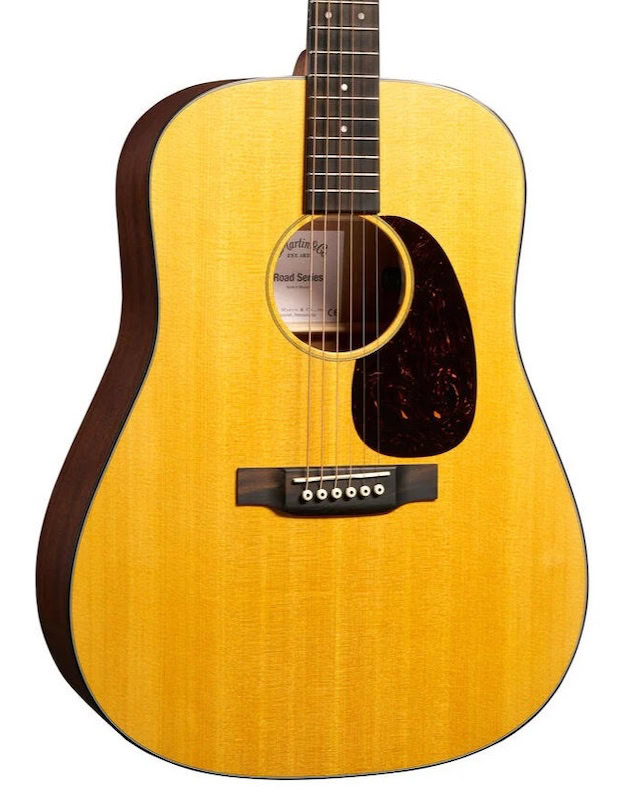
It would be remiss to write a list of all solid wood guitars and leave out the biggest name in the game. Legendary American builders Martin set the standard in the early 20th century, and they made the acoustic guitars against which all others are compared. How does their competitively priced modern instrument, the Road Series D10E, measure up to the brand’s reputation?
First of all, this Martin looks stunning. The blonde-yellow of the spruce top is gorgeous, with just enough grain to remind you that it’s a solid piece of wood. It sounds even better than it looks: chords are full-throated and authoritative, with plenty of volume and dynamic range even by varying my picking technique. Arpeggios, too, sound playful and sweet.
It was hard to resist the temptation to break into classic campfire country songs and bluegrass standards. I even ran through a few bars of Chet Atkins-style Travis picking over “Crazy” and found the guitar added depth and dimension even to that demanding technique.
The neck very much encourages expressive and technical playing. I expected no less of Martin, but it’s nice to know that even at this price point a guitar like this will play extremely well. It won’t make a beginner sound like Tommy Emmanuel, but an advanced player will get awfully close.
The pickup is nice enough. It’s a little prone to feedback, especially around the G to B range, but that’s to be expected on a big-bodied resonant acoustic guitar.
An excellent instrument from a reputable builder, at a highly competitive price.
6. Alvarez MD60
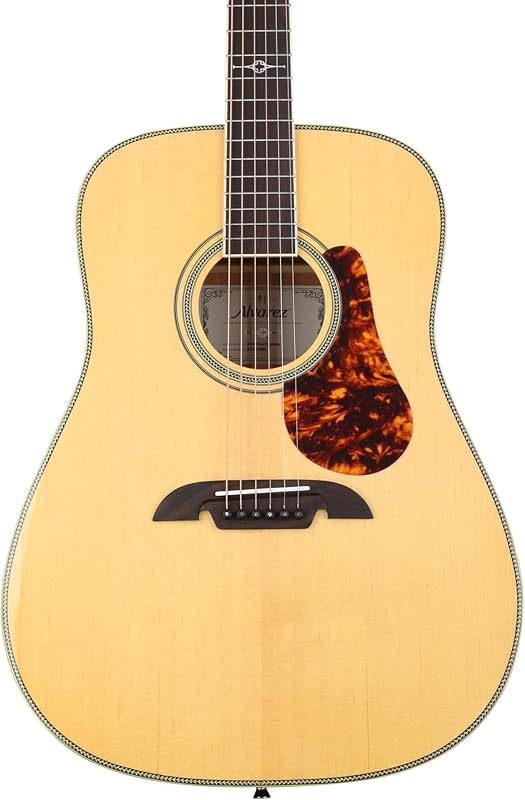
I’ve long seen Alvarez guitars as something of a dark horse in the acoustic world, and it’s nice to see them keeping up their reputation. They don’t have the head-turning market share of Gibson or Martin, but these are awesome guitars and they tend to seriously hold their own, even against the heavyweight American brands.
The MD60 features, as expected, a spruce top and mahogany back and sides. The top offers plenty of snap and sustain, with classic mahogany warmth and resonance. It felt almost as if the guitar was warming up and “breaking in” like a new pair of boots or raw denim as I was playing it!
Really, where this guitar shines, is playing rapidfire flatpicked bluegrass. The neck is about as close to Fender’s C/V neck as I’ve ever felt on an acoustic guitar: it reminds me of a friend’s old Fender-era Gretsch Duo Jet, or a vintage Telecaster. It’s astoundingly comfortable in my hand, and lends itself very well to extremely fast, expressive picking.
Barre chords felt nice and comfortable. Even Hendrix-style double stops and hammer ons work well here. I’d go as far as to call this the lead guitarist’s acoustic guitar.
Of course, experienced players will have no issue here generating classic dreadnought volume. It projects and booms as expected: ideal for picking circles!
A great guitar from Alvarez, and a serious competitor at this price point.
Why Solid Wood for Acoustic Guitars?
When it comes to wood, acoustic guitars benefit from quality far more than electric guitars. The reason is simple: there’s acoustic guitar has fewer pieces of the puzzle!
Think of a meal. A complicated dish with dozens of ingredients might demand quality ingredients, but if one or two elements are not up to scratch, the dish as a whole does not suffer nearly as much. On the other hand, when I’m eating a whole food, like a juicy peach or a nice steak, I want that single ingredient to be as good as possible, because there’s nothing else in the mix.
Acoustic guitars are more like steak than a complex dish. The main “ingredient”, so to speak, is the wood from which they are crafted. Higher-quality, solid pieces of wood mean more resonance, more projection, and a truer representation of that wood’s true voice.
Try knocking on a wall, then on your front door. They sound different. Different materials for building a guitar work the same way. A single, solid piece of wood will sound better, deeper, and more beautiful than a bunch of different pieces glued together.
Solid tops are generally considered the bare minimum for higher quality acoustic guitars, but solid back, sides, and neck are vital, too.
Generally, you get set-neck construction, so there are fewer pieces of wood, and a better-sounding guitar.
Final Word
A solid wood acoustic guitar is a vital step in any serious player’s journey. As the saying goes, if it sounds good, it is good, and I’d always recommend a solid acoustic over one made of laminate.
This list contains some of the best, most competitively priced acoustics on the market today. Any of them would be a great choice for most players.
